One plate at Mosu Seoul was worth the whole bill
Mosu Seoul is chef Anh Sung-jae’s restaurant, and when I went it was in Hannam-dong with two Michelin stars in the 2020 guide. The tasting course was ₩240,000 a person, about US$200 (2020/05). I picked nearly every dish apart and still loved the meal, because one plate, acorn noodles buried in black truffle, was worth the whole bill, so yes, I’d go back. Mosu has moved since: it closed in early 2024, reopened in March 2025 at 4 Hoenamu-ro 41-gil in Itaewon, and holds two stars in the 2026 guide. When I checked in 2026/11, dinner was listed at ₩420,000 (about US$310) and bookings go through CatchTable.
monster gourmetFrom my 2020/05 video
- My share
- ₩240,000
- about US$200, tasting course, per person, no alcohol, 2020/05 video
- Highlight
- Acorn noodles under a pile of Umbrian black truffle
- Skip
- The spoonful of plain nuruk before the ice cream
- Video
- 17:36
- 2020/05
- Where
- Itaewon, Seoul
Mosu has moved since I went
Mosu Seoul is chef Anh Sung-jae’s restaurant. When I went, it was in Hannam-dong, by Itaewon, in a white building I honestly took for the rich family’s house in Parasite. It had picked up its second Michelin star in the 2020 guide a few months before. The tasting course was ₩240,000 a person (about US$200, 2020/05).
That building isn’t Mosu anymore. Mosu closed in early 2024 when its partnership with its investor, CJ CheilJedang, ended, and reopened in March 2025 at a new address in Itaewon, 4 Hoenamu-ro 41-gil, up the hill near the Grand Hyatt. When I checked in 2026/11, its MICHELIN Guide page gave it two stars in the 2026 guide, open Tuesday to Saturday.
The price moved with it. When I checked in 2026/11, CatchTable listed lunch at ₩320,000 (about US$240) and dinner at ₩420,000 (about US$310), and CatchTable is the only place Mosu takes bookings.
Everything below is the 2020 meal in Hannam-dong. The course ran six one-bite snacks, aged madai, black sesame tofu with uni, turbot, red mullet, a burdock tarte tatin, acorn noodles with truffle and hanwoo striploin, then desserts down to yakgwa with tea.
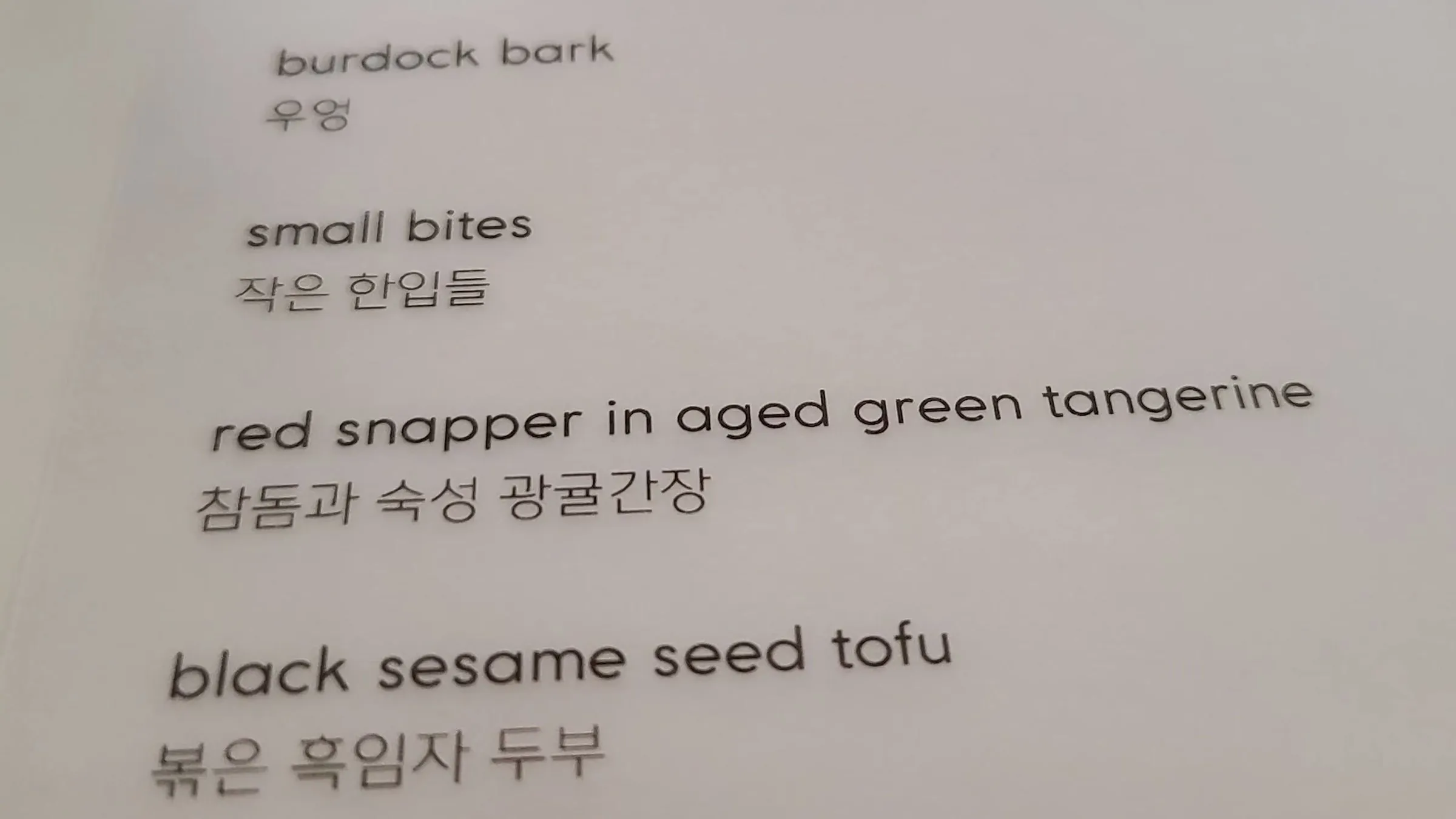
Who Anh Sung-jae is, and the stars by year
If the name rings a bell, it’s probably from Netflix. Anh Sung-jae is one of the two judges on Culinary Class Wars, the Korean cooking show with the black spoons and the white spoons that blew up in 2024. Before Seoul he cooked at The French Laundry and Benu in California and ran the first Mosu in San Francisco, which had a Michelin star. He closed it and opened Mosu in Seoul in October 2017.
Stars by guide year: one in the 2019 guide, two in the 2020 guide, the year I went, three in the 2023 guide, when Mosu was the only restaurant promoted to three, and two in the 2026 guide after the move.
I don’t put much stock in the Michelin Guide. But there weren’t many two-star places in Seoul back then, so I went for the rarity. Also, it was pretty. Not so much the interior, the building itself.
Break the burdock with your fist
The welcome drink was mung bean makgeolli with a foam made from nuruk, the fermentation starter behind makgeolli. The foam was nutty and good. The makgeolli I’ll leave to people who drink.
Then a wet towel, at the same moment a sushi counter hands you tebuki, the little hand towel, and for the same reason. The first snacks are finger food. Usually the staff explain every dish and I get to coast, but here they asked me to film without their voices, so I had to do the talking.
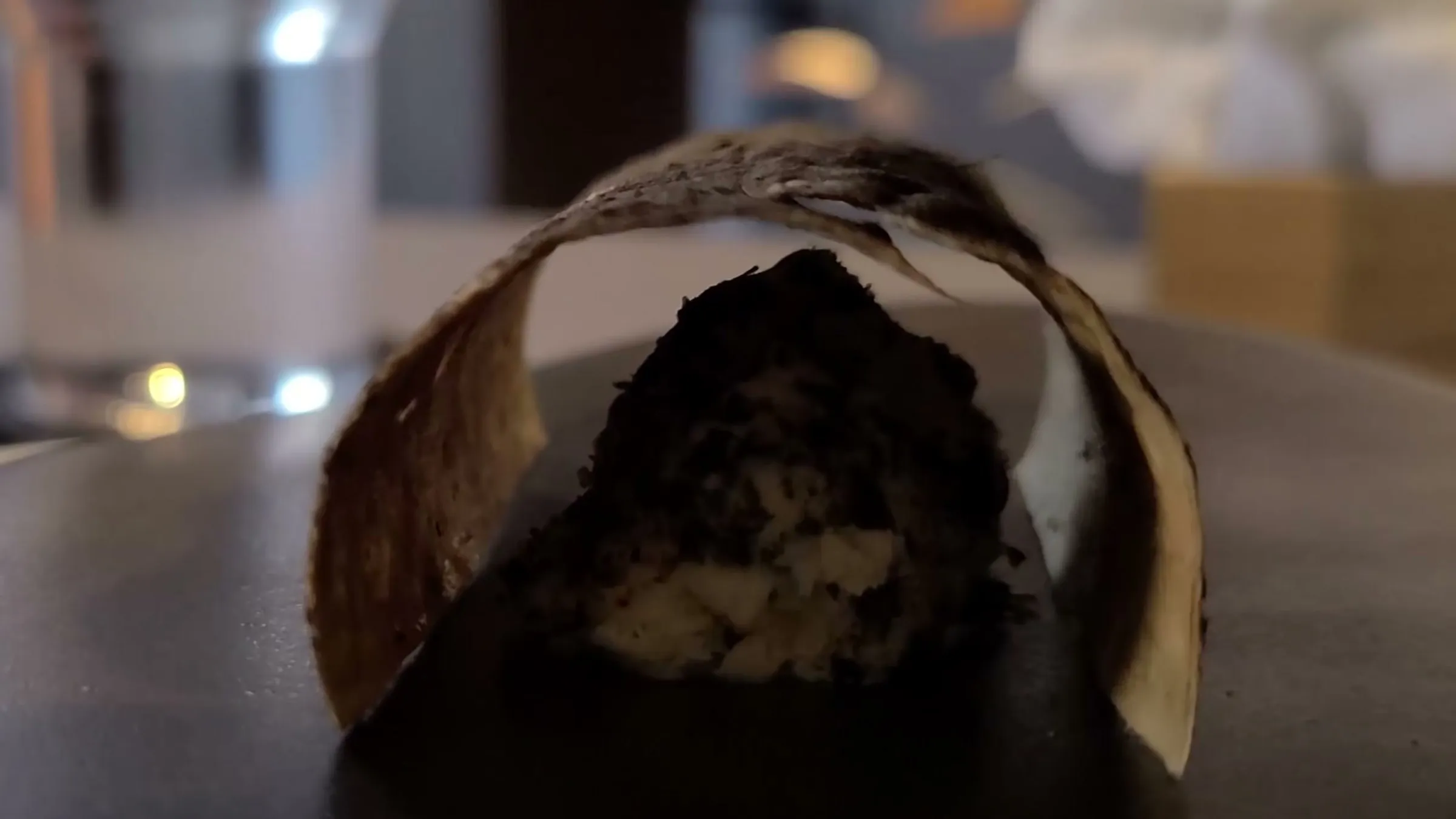
The log is burdock. They roast the skin in the wood-fired oven, and underneath is butter mixed with kale, kelp, sesame and chili. You break the skin and scoop the butter with the pieces. I went with a falcon punch.
Surprisingly good. Done this way, burdock doesn’t taste like burdock. It tastes like the fried kelp chips I ate nonstop in front of the TV as a kid, and the butter underneath is nutty and soft.
Snacks that keep coming, one at a time
My friend called the next one an ama-ebi macaron. Sandwich, maybe. The shells are meringue made with green laver, and inside is East Sea ama-ebi with potato salad. Not bad, but all I tasted was shrimp. The meringue was just sweet, the laver barely there, the potato salad nowhere.
The one-bites didn’t come together. They kept coming, one after another, and it reminded me of Gaggan in Bangkok. I wondered whether Mosu was aiming for Asia’s or the World’s 50 Best.
Then a deodeok tart, fermented deodeok, a bitter mountain root, on a tart shell over hollandaise cream. I love deodeok, the grilled marinated kind most of all. This was Western, creamy and nutty with just a bitter edge of deodeok. Beside it, eggplant brushed with its own fermented juice and roasted in the oven. You know insam jeonggwa, ginseng candied in honey, soft and sweet with a bitter edge? This was eggplant jeonggwa minus the bitterness. Very sweet.
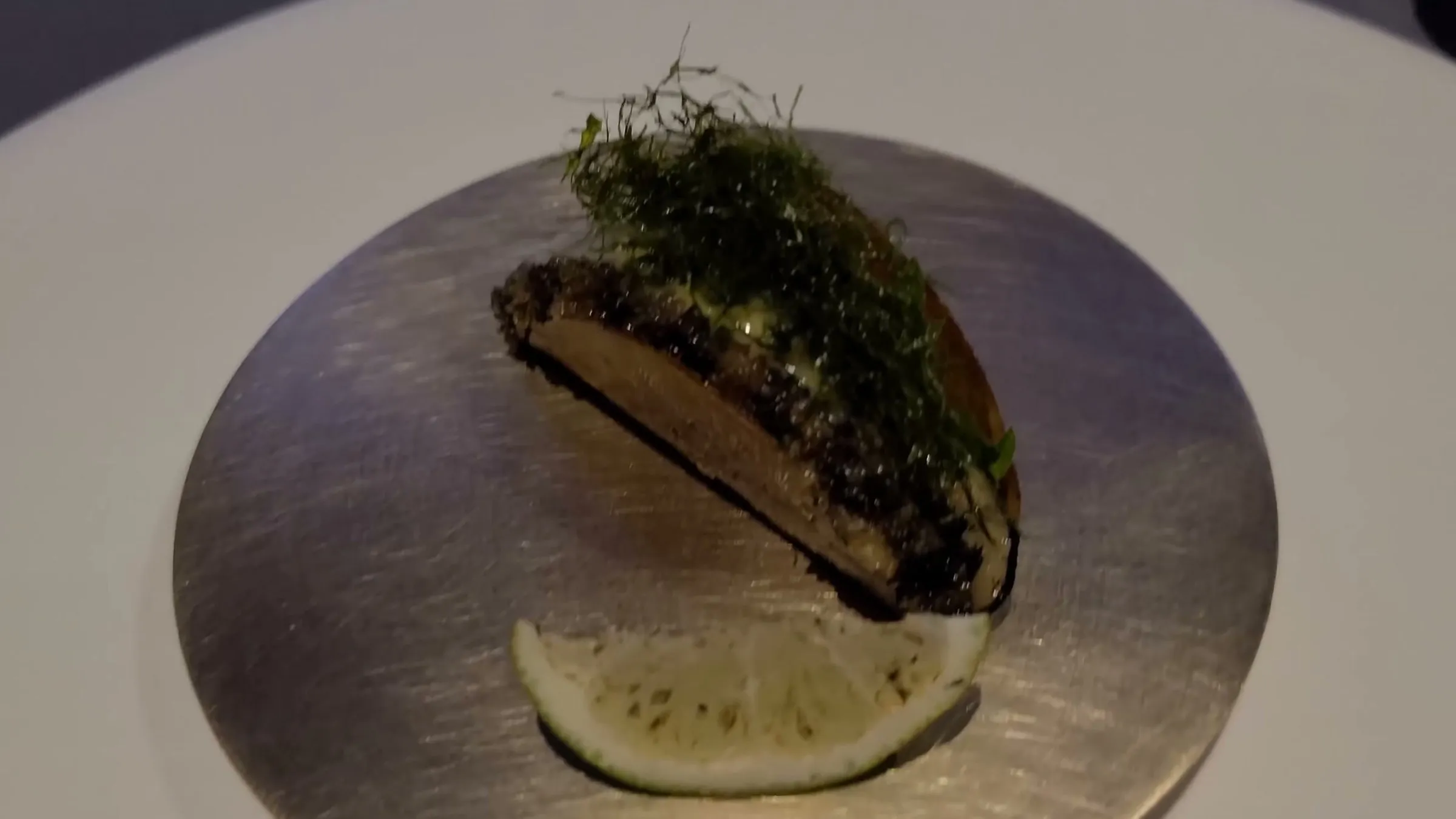
The abalone taco: the tortilla is yuba, with gamtae seaweed, shiso and mustard inside and a grilled lime to squeeze. The abalone was roasted, not steamed, and still softer than most steamed abalone at sushi counters. Not better than Sushi In’s, which I love, and with that much else in it the abalone flavor wasn’t sharp. But the texture, and the shiso with it, worked.
The best yukhoe of my life
“More coming? Is this it?” My impatient friend. It was the last one-bite.
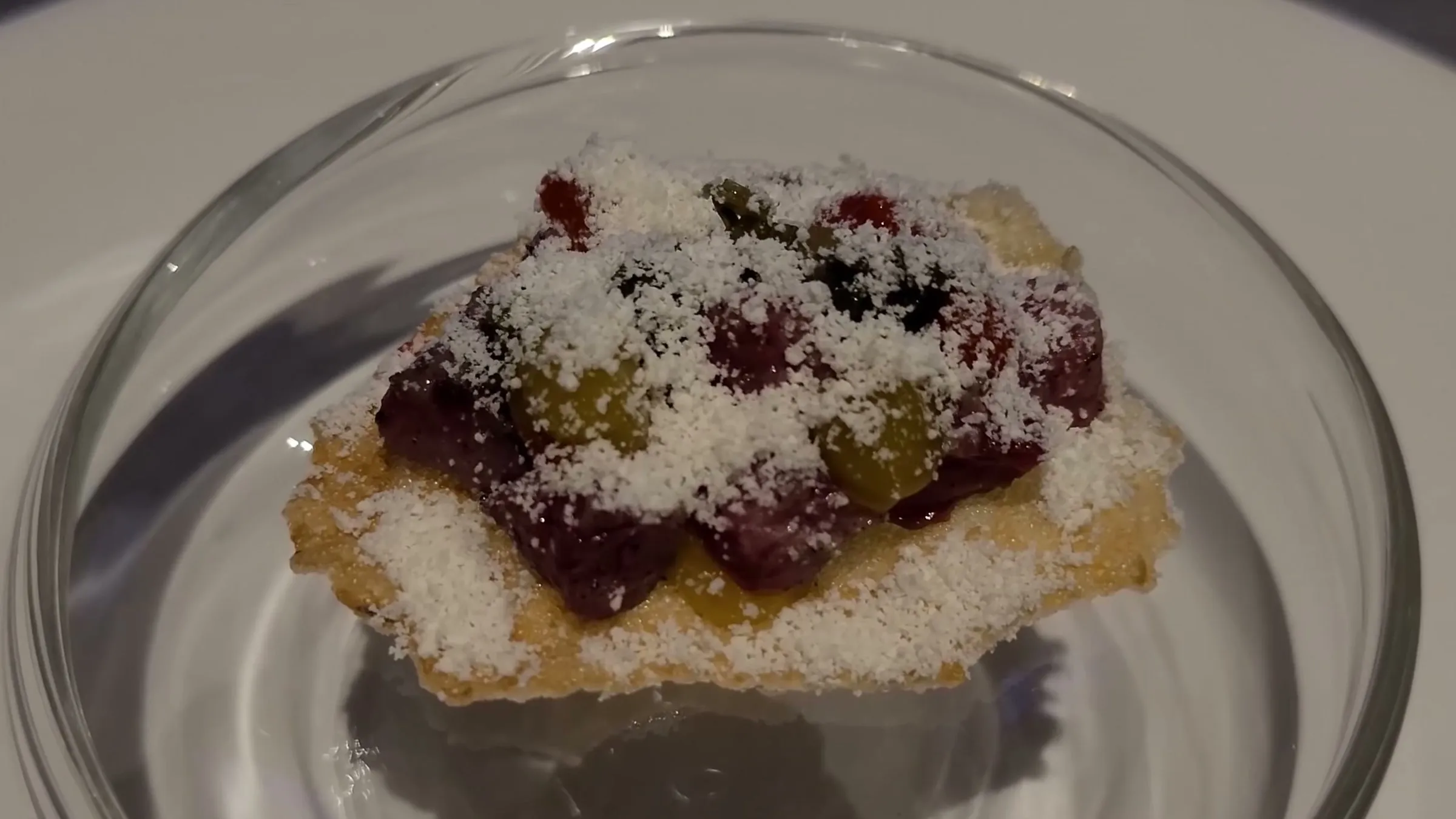
Brown rice cracker on the bottom, hanwoo sirloin lightly fired in the oven on top, a jam made of egg yolk and a sauce made of gochujang. Read that list back and it’s yukhoe, Korean beef tartare.
I like yukhoe any style. This one was seared on the outside by the oven, so it had that smell too, plus the crunch of the cracker. Best yukhoe I’ve eaten in my life, and I’ll stand by that. I also poked the plate, which turned out to have plastic wrap over it. Amen.
Aged madai, and tofu that isn’t tofu
Madai, red sea bream, aged three days, with scallion, shiso and wasabi inside and a soy sauce made with gwanggyul, a Jeju bitter orange. This kitchen uses a lot of shiso.
Those are the things that go inside a madai nigiri anyway, so of course they match. But aging madai is something sushi counters do better. Fluffy and sweet, except the sweetness came from the sauce, not the fish.
Then black sesame tofu. Not real tofu, the jelly kind you’d make for mochiri-dofu, made with roasted black sesame, uni inside, dashi around it, grilled scallion and wasabi on top. It tasted the way you’d guess. Sweet dashi, salty umami, nutty sesame. The problem was the uni, a little bitter. My friend asked why it was bitter, and I told him that was the uni.
Two fish, two sauces
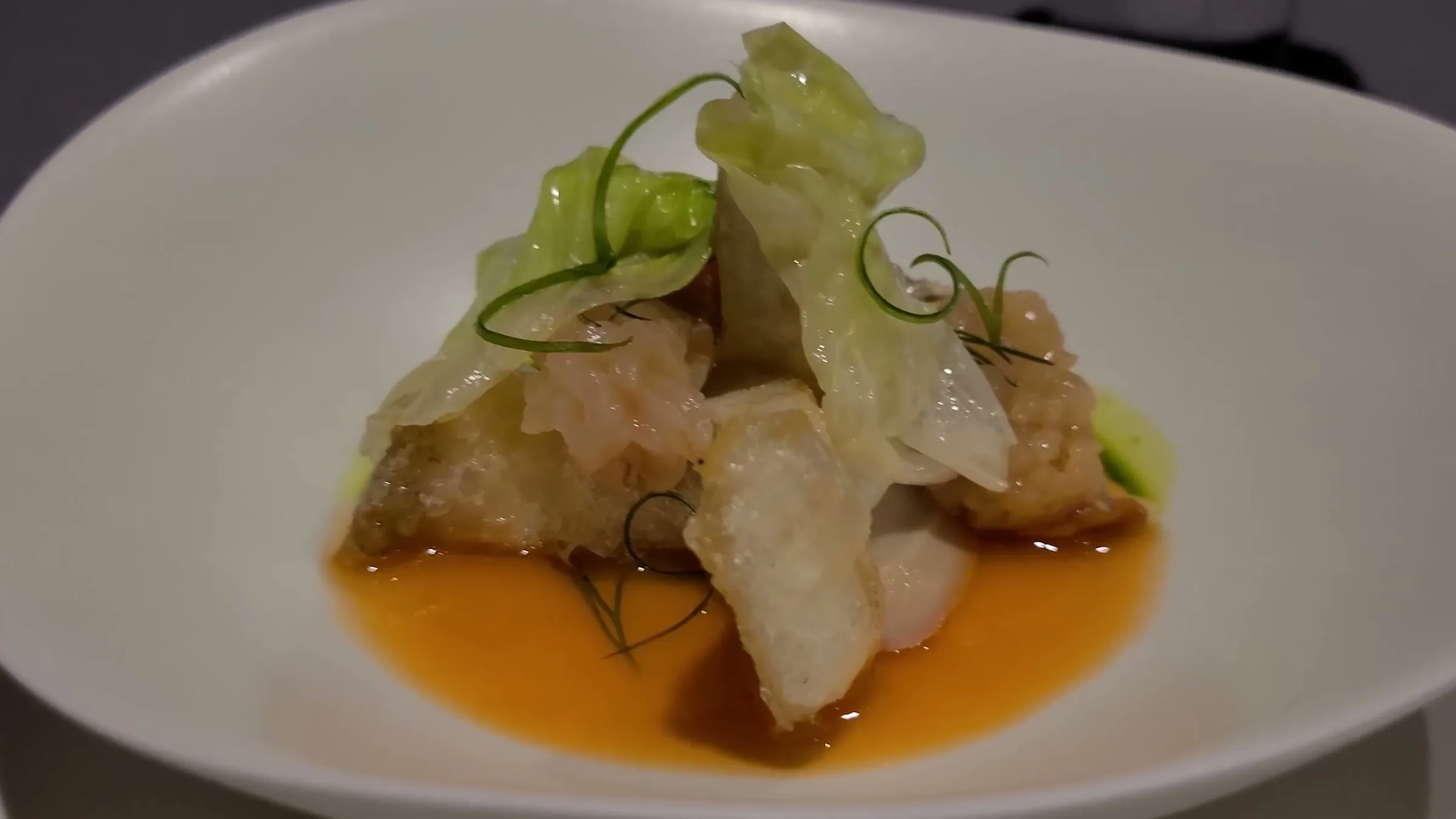
Next came the stuff I like, grilled things and protein. The menu said ingulbul, glowing embers, which sounds like an item from Diablo. Also, that day I learned the standard Korean name for turbot is daemunjjak-neopchi, roughly door-sized flatfish.
The turbot was fried, over a sauce made the way you make fish soy, from the heads and bones, with ark shell from Yeosu, lettuce and what I think was shiso oil. The ark shell was meh and didn’t fit. I couldn’t tell you what the turbot itself tasted like, or what the dish was going for. But fried fish and fish soy make deep umami, sweet and salty, so it was tasty.
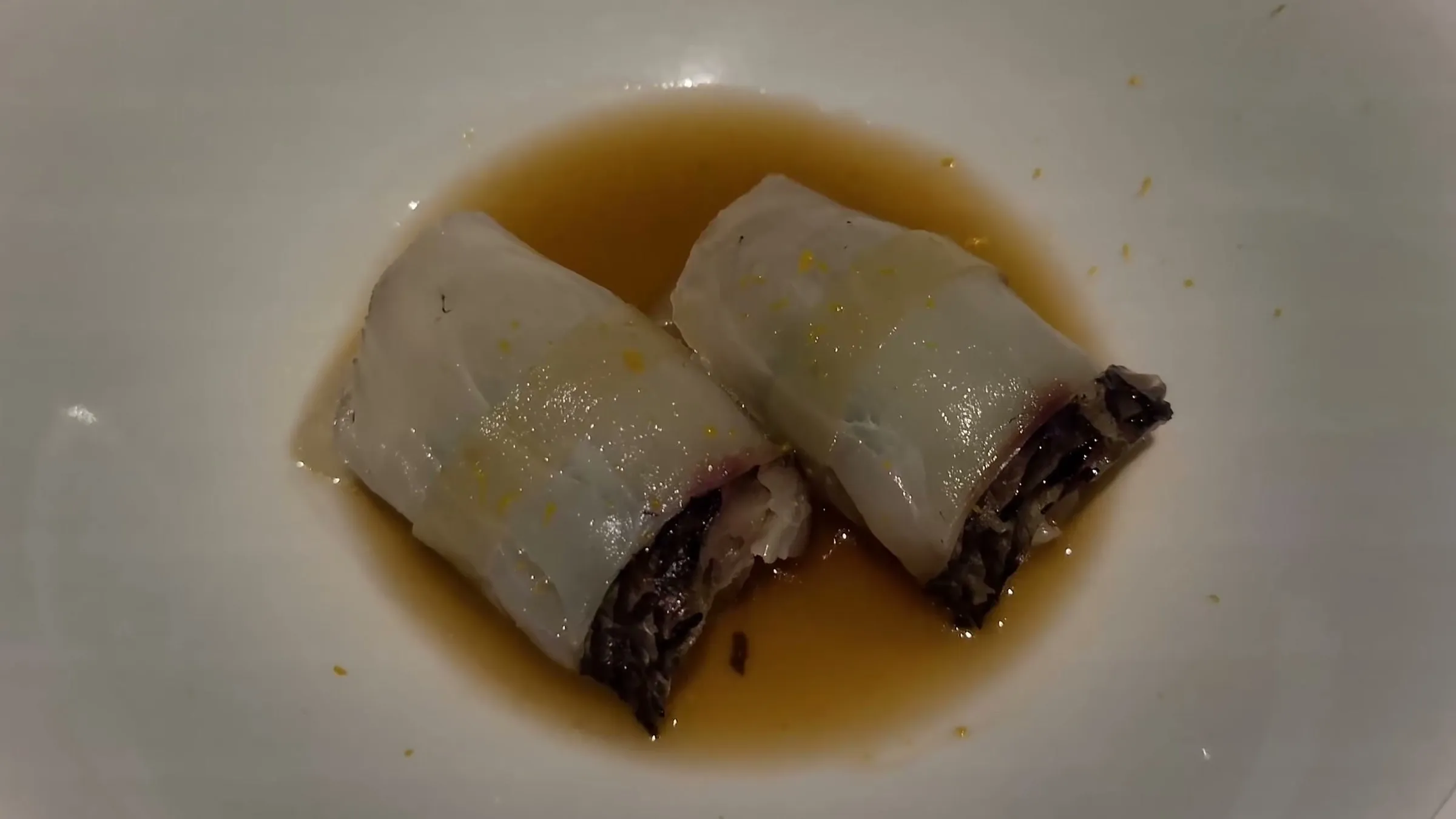
Then red mullet, which you rarely see in Korea but often in Western restaurants, with a saffron sauce and dureup, spring aralia shoots, for the season. Grilled, it looks a bit like kinmedai. The texture is dry, like grilled flounder, not my style, but the flesh tastes like shellfish. Apparently it grows up eating crabs and shrimp. This one had more of that than any I’ve had.
My friend said the sauce tasted like detergent. Spices all have a bit of that, but this had the bitterness of shampoo that gets in your mouth in the shower. With fish that good, I really wanted a bisque-type sauce instead.
A burdock tarte tatin, and why it worked
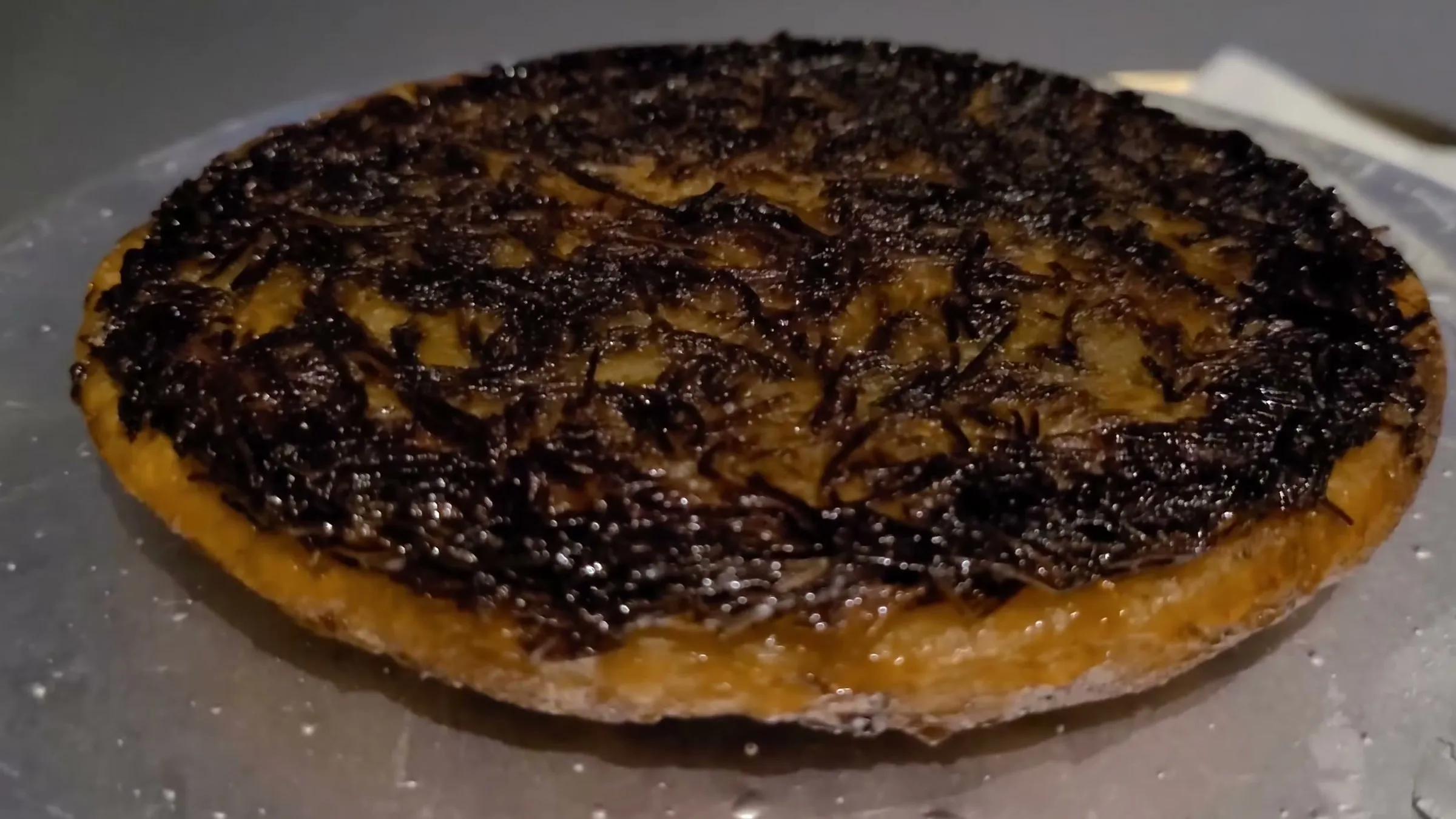
Earlier they’d shown us a whole tarte tatin, just for the look. Usually it’s apples. This one was burdock, and it looked like a burnt mung bean pancake.
Sliced, it looked more like a burnt potato pancake, the kind made from potato cut super thin, or a potato galette, which I love. Pastry underneath. And it was really good.
That day I figured something out. Korean vegetables with a bitter streak, burdock and deodeok, need something heavy pressing down on them. Lots of butter, a sweet sauce, the cream in the deodeok tart. Then it’s sweet, nutty and soft, and the slight bitterness at the end ties it all off.
Acorn noodles worth the whole course
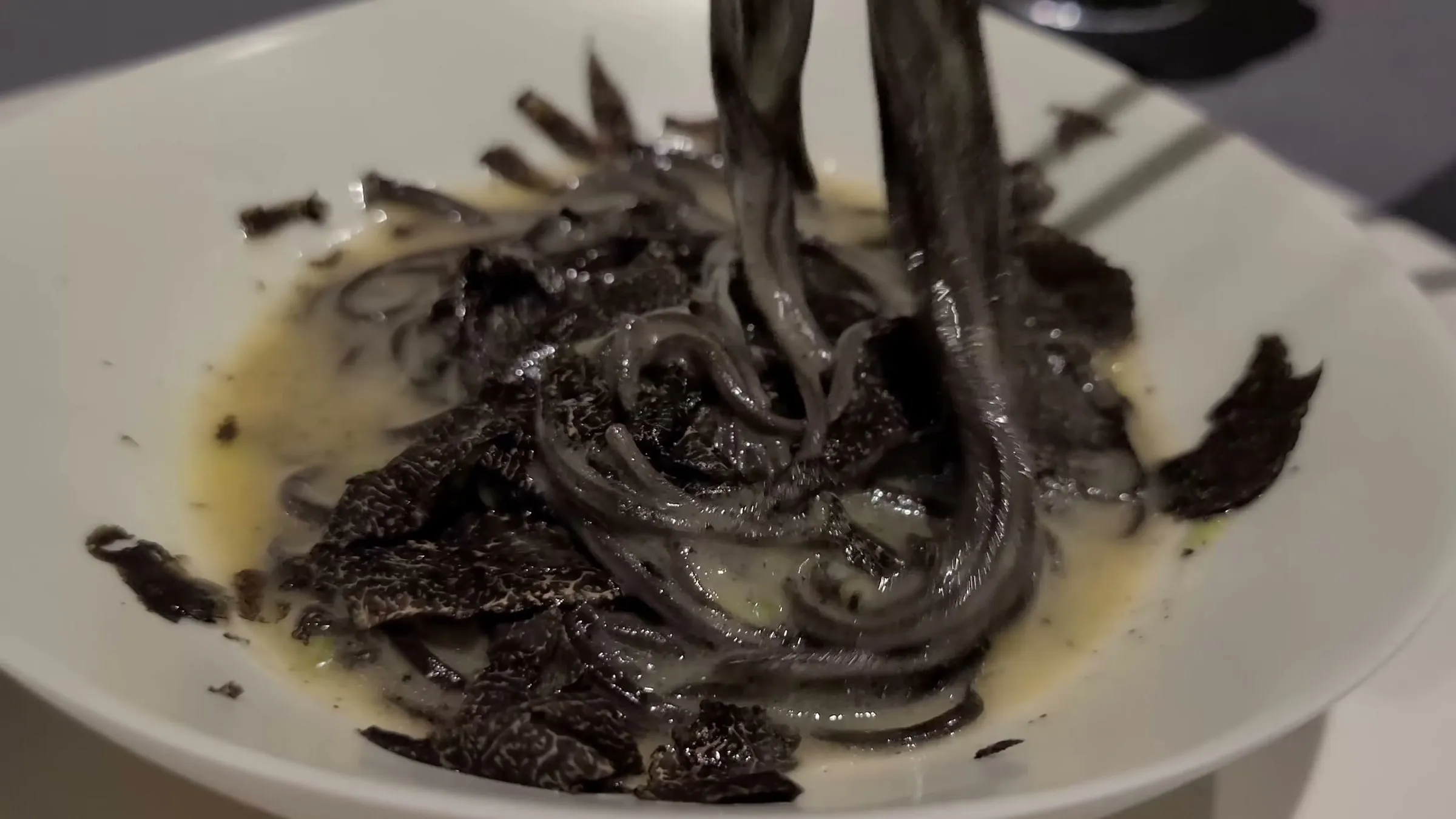
The highlight. Remember ingulbul? The dish was acorn noodles stir-fried over embers, buried under Italian black truffle from Umbria. The smell alone was crazy, and the truffle was good quality.
I can’t say whether the noodles tasted of acorn, because the truffle was that strong. But the texture was great, somewhere between fresh pasta and well-made soba. The sauce was butter and parmesan, the two things I always say go best with truffle. Seasoning spot on.
If I’m a critic about it, the acorn and the chamnamul in the sauce don’t do anything. It’s a delicious truffle pasta. A critic could say anyone can make something tasty with truffle, one of the big three delicacies, and a lot of butter. Fine. It was better than any truffle pasta I’ve ever had.
The course was ₩240,000 (2020/05), and this one plate was worth it. Full at the end, I was still wondering if I could pay extra for another.
Hanwoo striploin with a konowada sauce
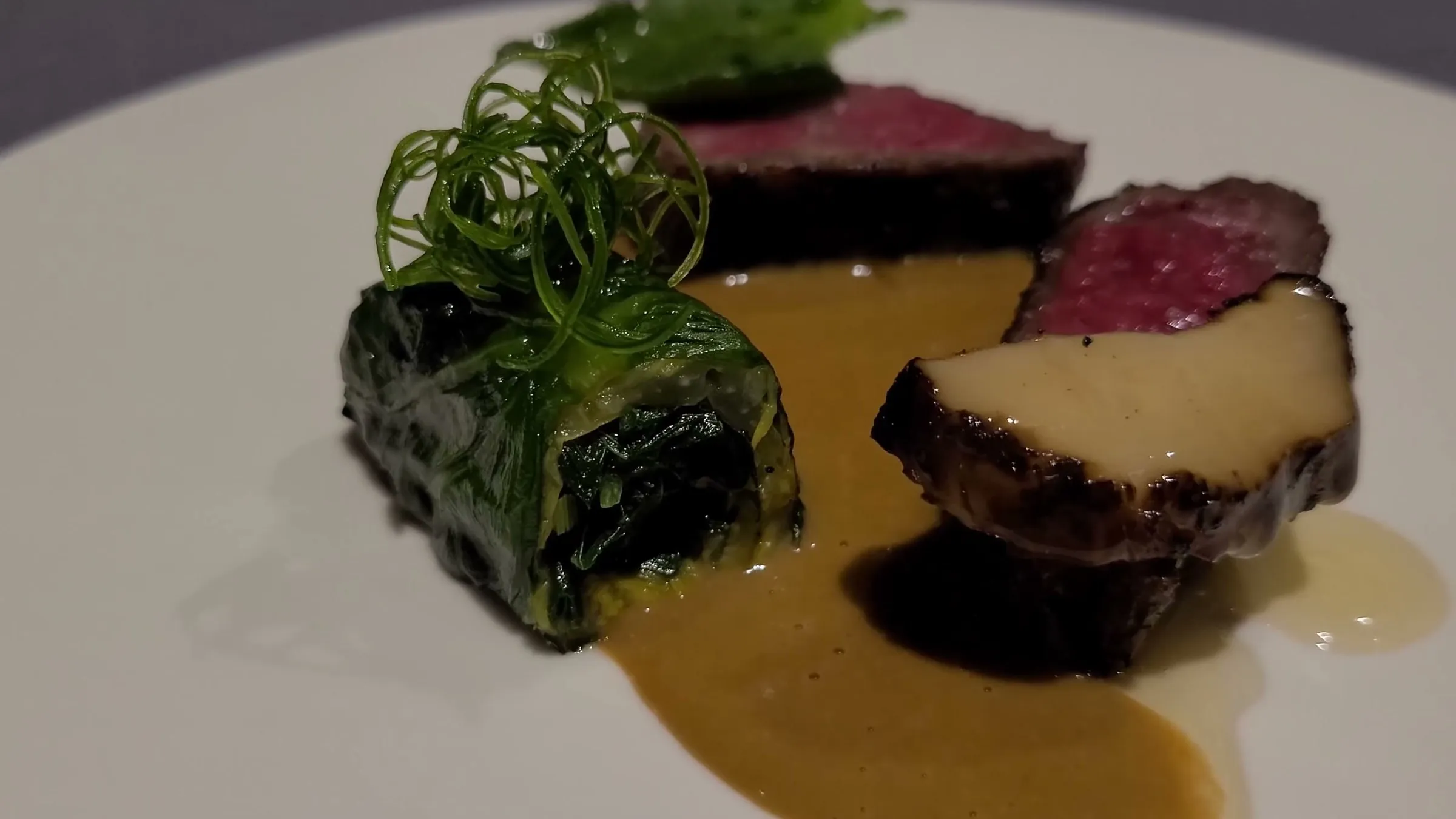
The meat main was hanwoo striploin with a sauce made from eoran, dried mullet roe, and sea cucumber. On the side, lettuce roasted in the oven with green garlic and bangpung greens inside, and fermented shiitake on one piece.
The steak tasted like a well-grilled striploin, and the shiitake tasted like shiitake. The sauce was the unusual part. Deep, nutty umami from the roe, salty, and behind it, clearly, konowada, sea cucumber guts. I don’t like konowada.
Here it worked. Only the second time that’s happened to me. The first was at Shinohara, a kaiseki restaurant in Ginza, where a konowada sauce came on scampi, and that was delicious too.
Desserts, and a lot of nuruk
Dessert started with jasmine sorbet, jasmine kombucha jelly and a jasmine leaf candy. Didn’t stay with me. Then sultteok, makgeolli-steamed rice cake, packed into a lemon peel. I couldn’t taste the lemon, and that’s a real peel, so don’t eat it. The kombucha was made from Uva, a black tea from Sri Lanka, and tasted like sweet and sour persimmon vinegar. I liked that one.
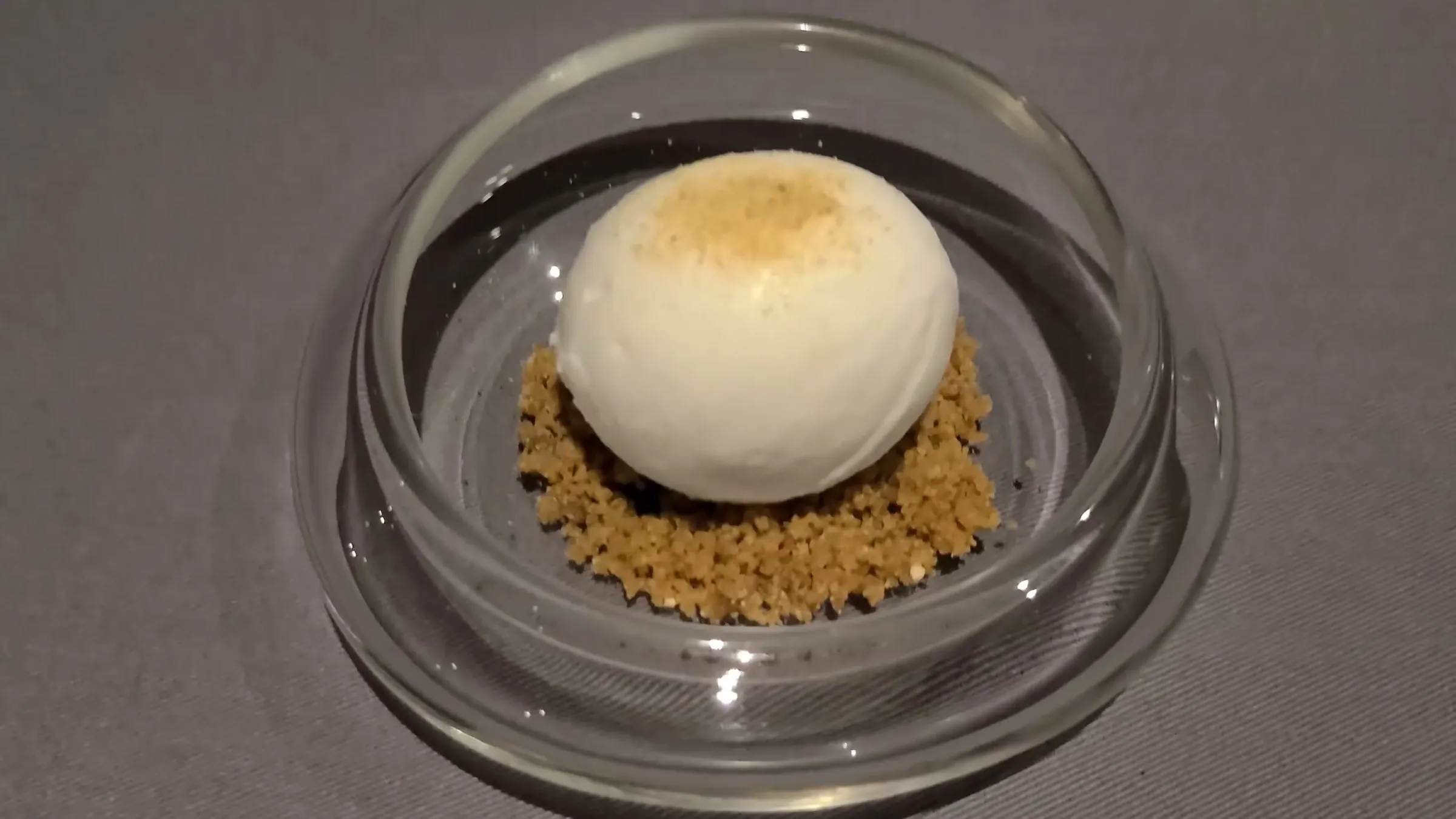
Last, nuruk ice cream with nuruk caramel, and a little plain nuruk to taste first. This place really pushes nuruk. A lot of Korean fine dining leans on one ingredient or theme for Korean color. Here it’s nuruk, elsewhere it’s fermentation. If it’s strange to me, imagine how new it is to foreigners, so I get why it helps with stars and best-restaurant lists.
The ice cream was a sweet caramel ice cream. The plain nuruk tasted bad, with a bitter note I took for burdock, though they said there was none in it. My friend wondered why they were so into it, since it isn’t that good. Without the nuruk I’d have just thought, nice ice cream.
Coffee or tea at the end. I took herb tea, and it came with yakgwa, a honey cookie. More Korean color. I don’t care about that. I want food so good it flattens me.
₩240,000 a person (2020/05)
2020/05 video
The course was ₩240,000 a person, about US$200 at that month’s rate (2020/05). Neither of us ordered drinks. I don’t drink, and my friend was driving, so all we had was the course, welcome drink and tea included. Two people, about ₩480,000 for the table, around US$390 (2020/05).
When I checked in 2026/11, CatchTable listed lunch at ₩320,000 (about US$240) and dinner at ₩420,000 (about US$310). Mosu’s own site allows one bottle of wine per table (750 ml) as corkage; when Mosu reopened, the Korea Times put the fee at ₩200,000 a bottle (2025/03).
Would I go back?
Yes. Reading this back, it sounds like I picked every dish apart, and I did. But I was really happy with that meal, and maybe it was the acorn noodles. I’d go back for that plate alone.
It’s a different building and a ₩420,000 dinner now (2026/11). I’d still recommend Mosu.
How to book
- CatchTable
The only way to book. Mosu’s own site says every seat is by reservation, through CatchTable only, not by phone, email or social media. In 2025/03, after fraudsters posing as the restaurant asked people for advance payments, Mosu said it takes deposits only through CatchTable and never by bank transfer. Deposit rule on the site when I checked in 2026/11: cancel 3 days ahead for a full refund, later cancellations or changes to the date or party size get nothing back. CatchTable’s English page listed lunch at ₩320,000 and dinner at ₩420,000, with the next two weeks already full. The app works in English and doesn’t need a Korean phone number.
- Official site
Not a booking route, but read it before you go. The site says phone, email and social media bookings aren’t taken, and to use the phone or [email protected] only for private hire and other questions. It lists the address, valet parking at the entrance, corkage of one bottle per table and the deposit refund rule. Hours on Mosu’s MICHELIN Guide page when I checked in 2026/11: Tuesday dinner 18:00 to 22:00, Wednesday to Saturday lunch 12:00 to 15:00 and dinner 18:00 to 22:00, closed Sunday and Monday.
Checked 2026/11. Booking rules change, so look at the official page before you go.
Where it is
- Address
- 4 Hoenamu-ro 41-gil, Yongsan-gu, Seoul 04344서울 용산구 회나무로41길 4
Plan the Seoul trip
The boring bits I’d sort before flying, so the eating days stay free.
- Hotels in Seoul*
Pick the room by where you eat, not by the sights. After a long dinner, a short ride back is the real luxury. This place is in Itaewon, Seoul.
- Korea eSIM*
Data as soon as you land at Incheon. Install it before the flight.
- AREX airport express*
Incheon to Seoul Station in under an hour, with no traffic to think about.
- T-money card*
One card for the subway, the buses and the convenience store. Tap on, tap off.
- Gwangjang Market street food tour*
Bindaetteok, mayak gimbap and yukhoe, with someone who knows which stall.
- Korean cooking class in a Bukchon hanok*
Cook a few home dishes in an old hanok, then sit down and eat them.
Links marked * are affiliate links. If you book through them I may earn a small commission, and you pay the same. How it works
More places I have eaten at
All of Seoul →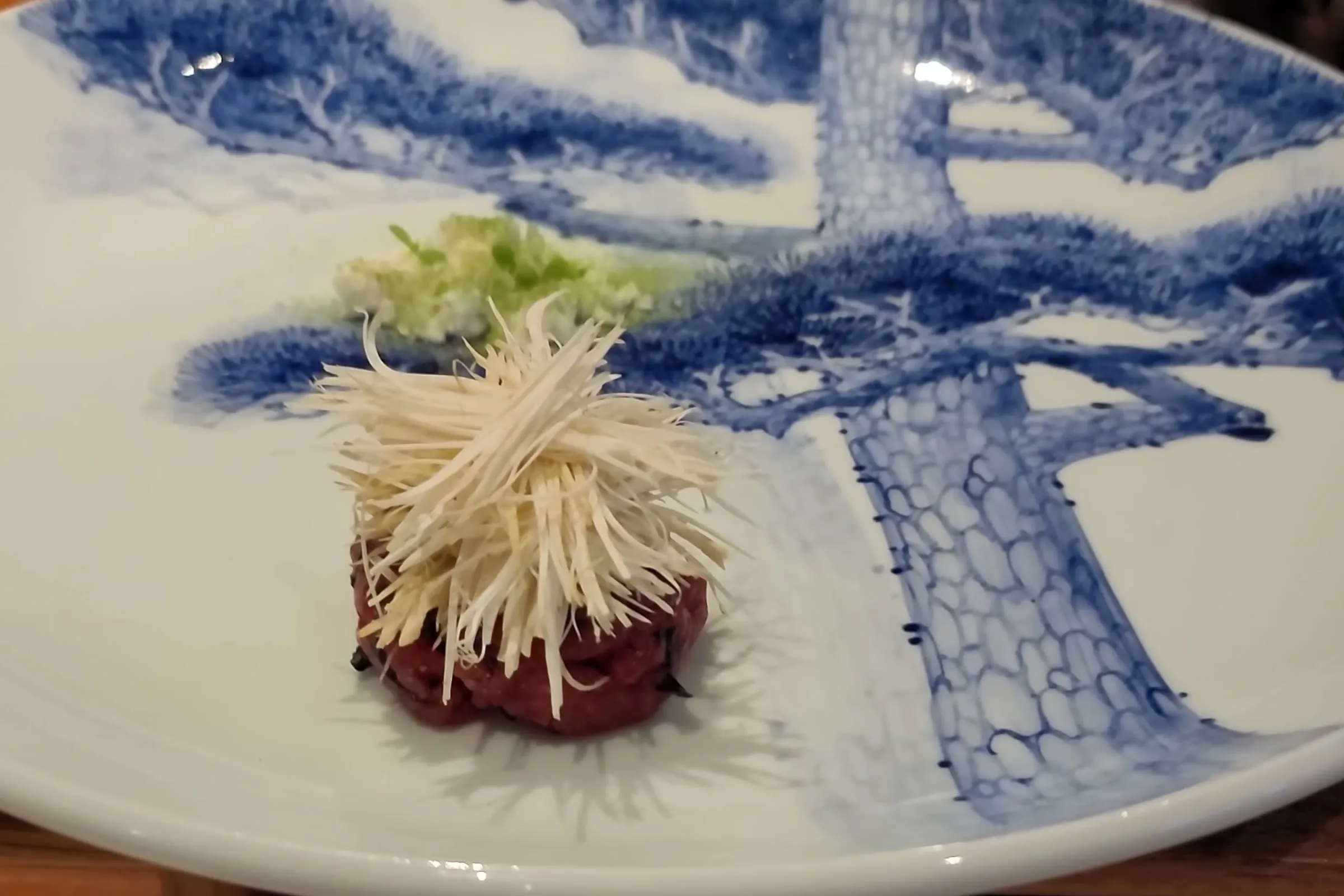 Cheongdam-dong, Gangnam, Seoul
Kwonsooksoo
Two Michelin stars, a tray of drinking snacks, and soybean noodles I didn’t want to like.
₩219,000 2020/09 video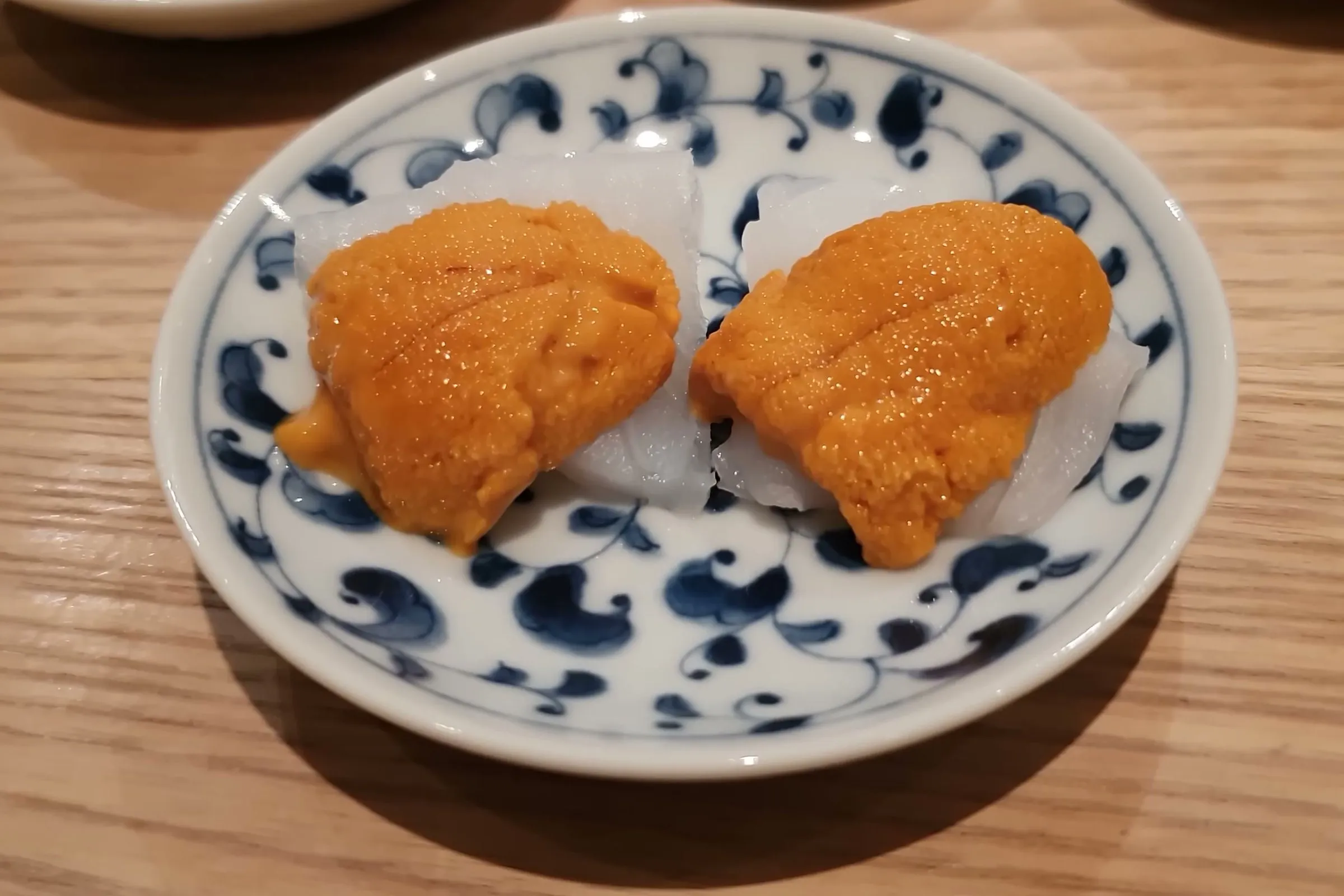 Apgujeong Rodeo, Sinsa-dong, Seoul
Sushi Tsubaki
Apgujeong omakase, ₩110,000 dinner in 2020. Salty, tough, and not for me.
₩110,000 2020/01 video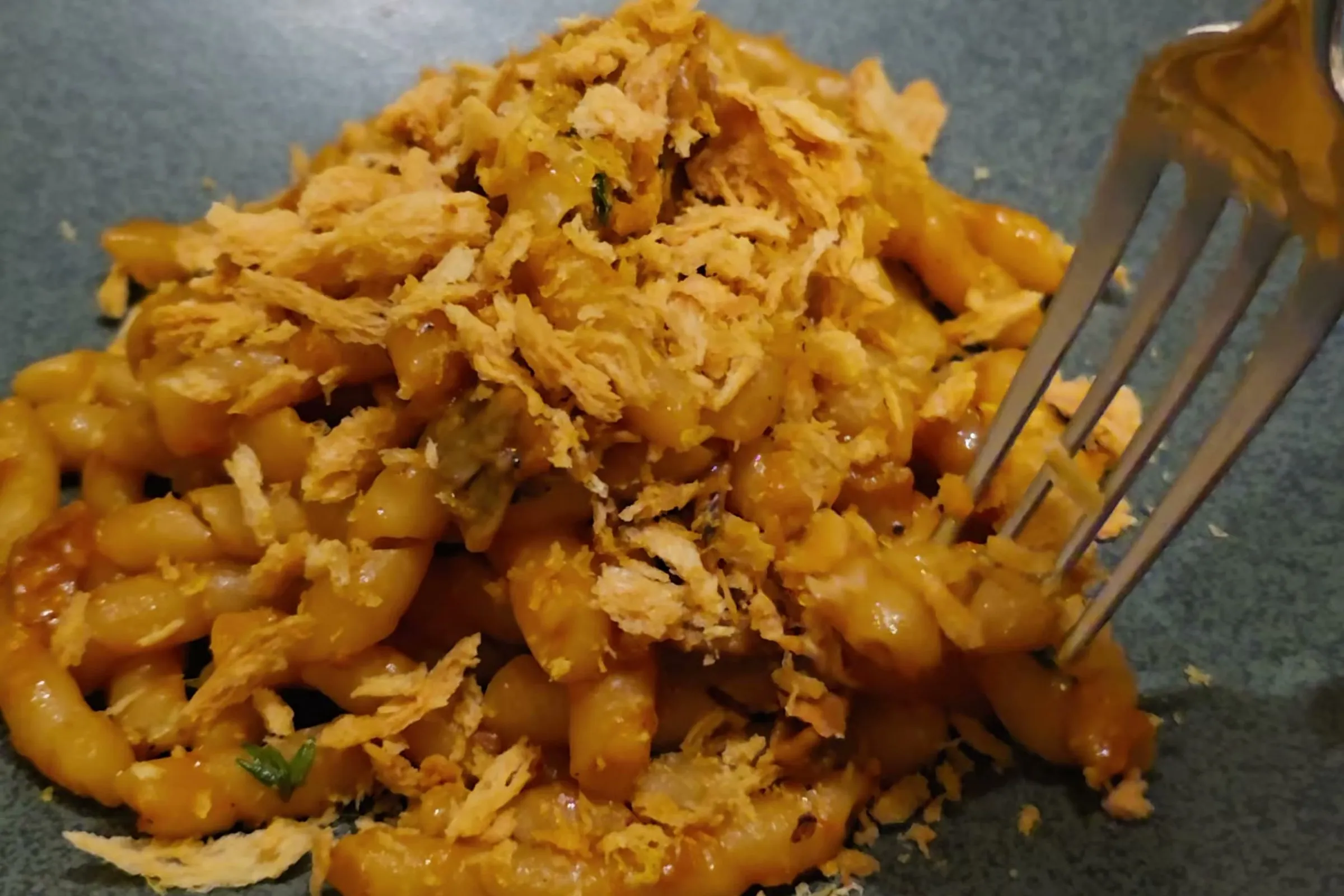 Cheongdam-dong, Gangnam, Seoul
Topa
A basement Italian place in Cheongdam, dried pasta, and a duck lasagna worth the second trip.
₩46,000 2026/08 videoSources
- Mosu MICHELIN Guide
- Mosu Seoul: Inspector Reveals All About Sung Anh's Newly Reopened Two-MICHELIN-Star Restaurant MICHELIN Guide
- MICHELIN Guide Seoul 2023 selection announcement MICHELIN Guide
- 모수 안성재 셰프가 가족과 함께 하는 시간을 중요하게 여기는 이유 MICHELIN Guide
- Netflix series page, cast Paik Jong-won and Anh Sung-jae Netflix
- Chef Anh Sung-jae's Mosu Seoul to reopen in Yongsan The Korea Times
- Fraudsters impersonate star chef's restaurant in reservation scam Korea JoongAng Daily
- MOSU Seoul, prices and availability CatchTable
- MOSU Seoul, reservation and contact Mosu Seoul