I flew to Bangkok for Sugita’s student
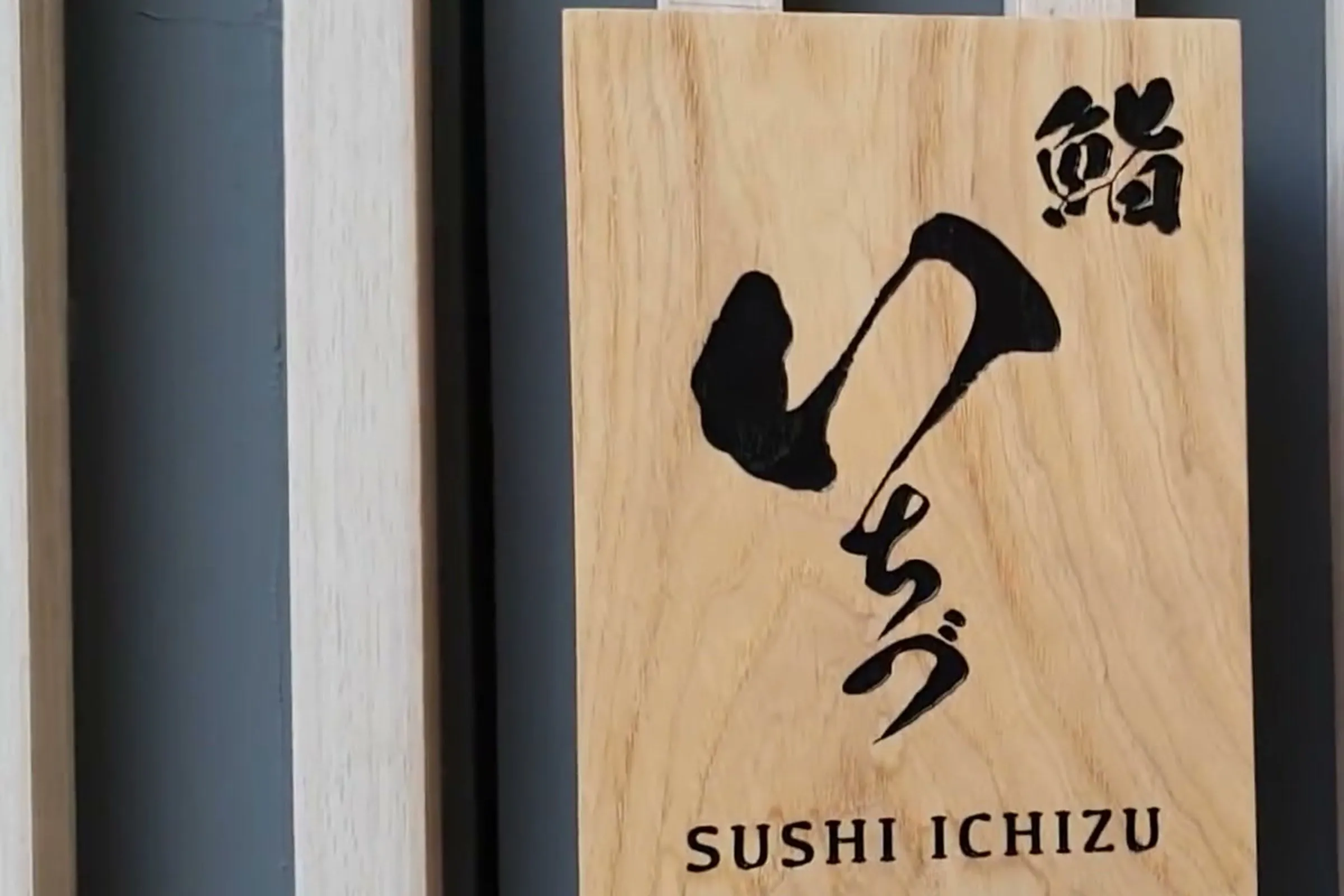
Sushi Ichizu (鮨いちづ) is an Edomae sushi counter on New Phetchaburi Road in Bangkok. It opened in 2017 with Riku Toda at the counter, a chef who trained at Sushi Mizutani and then worked under Sugita in Tokyo, my sushi god. I flew to Bangkok on a Lunar New Year trip mostly to eat here. The nigiri course was 4,000 baht, about US$130, and with every nigiri I added, my bill came to 6,200 baht, about US$190 (2019/05). The fish is flown in from Japan and beats the average Korean counter. The rice is very sweet. Worth a flight? Not anymore. Toda has left, and in 2024 he opened his own counter in Tokyo.
monster gourmetFrom my 2019/05 video
- My share
- ฿6,200
- about US$190, my bill, the nigiri course plus every nigiri I added, 2019/05 video
- Highlight
- The chopped yari ika and the kawahagi with its whole liver
- Skip
- Adding uni when it isn’t in the course
- Video
- 12:41
- 2019/05
- Where
- Huai Khwang, Bangkok
Sugita’s sous chef, in Bangkok
Sushi Ichizu (鮨いちづ) is an Edomae sushi counter in a Japanese house on New Phetchaburi Road, on the Sukhumvit 39 side of Bangkok. I flew to Bangkok over a Lunar New Year holiday, and this was the reason.
The reason was the chef. Riku Toda trained under Hachiro Mizutani at Sushi Mizutani, then worked for Takaaki Sugita, first at Miyako-zushi and then at Nihonbashi Kakigaracho Sugita, where he was the sous chef. Sugita is my sushi god. Then his student opens a place in Bangkok, out of nowhere. I had to see it. The owner is someone else, of course. The restaurant opened in 2017.
Toda isn’t there anymore. Time Out Bangkok reported in 2019/10 that he’d stay one more year and then hand the counter to Taigo Narizuka. In 2024/09 Toda opened his own counter, Sushi Riku, in Hiroo, Tokyo. Ichizu’s official site still shows his profile, so ask who’s behind the counter when you book.
It isn’t on the MICHELIN Guide Thailand 2026 star list (checked 2026/11). The restaurant’s own awards list has it at No.26 on Opinionated About Dining’s Asia list in 2019.
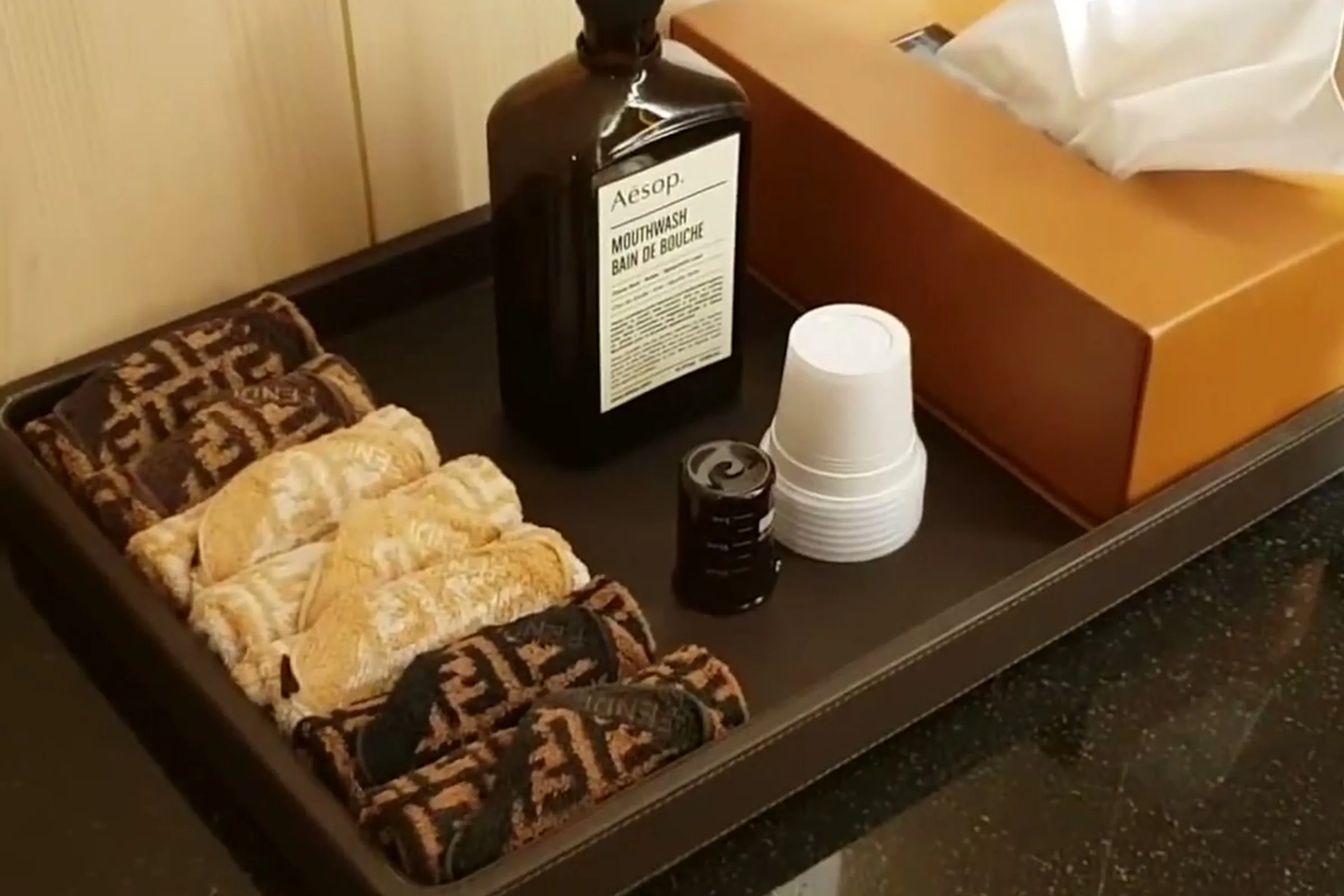
Fendi in the restroom
People told me the sushi in Southeast Asia is serious. So is the restroom. Look at the hand towels. Fendi. I thought long and hard about taking one home.
I’d heard the tsumami, the small dishes, were the weak side and the nigiri the strong side. So I ordered only the nigiri course and planned to add nigiri on top. The course is short. A few small dishes and six nigiri, for 4,000 baht (2019/05).
Ordered at dawn, flown in the same day
You’d think a hot country means soft, tired fish that tastes of nothing. It doesn’t work that way. They order from Japan before dawn and it comes in by air that same day. So they can use high-end Japanese fish as freely as they like. Nothing local goes on the rice.
That’s why it costs. Eat until you’re full and you’re past ₩300,000 a head, about US$250 (2019/05). Price and fish both beat Korea, in both directions.
Not every piece is top grade, though. The hokkigai, surf clam, felt a little budget for something flown in. With the air freight on top, I get it.
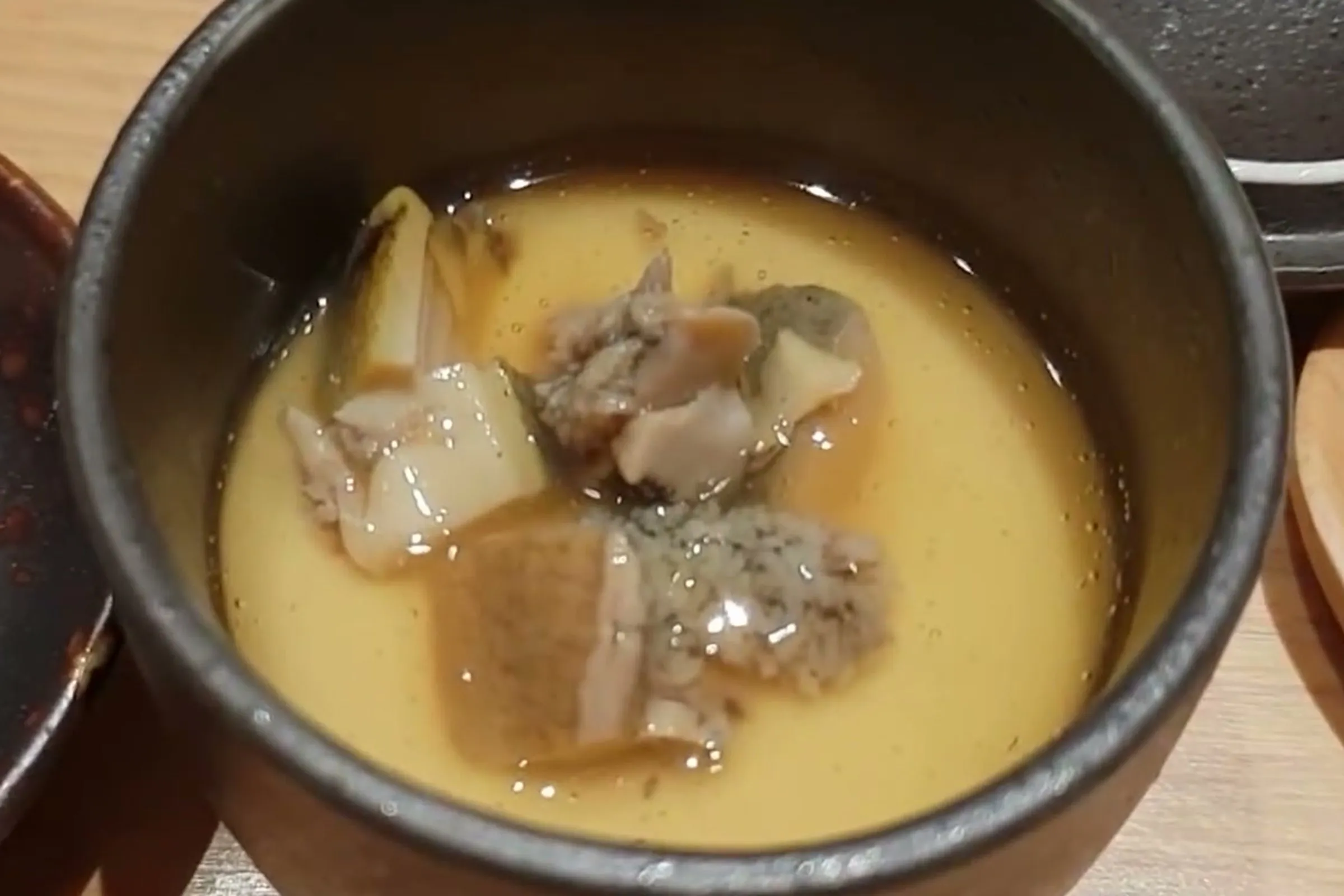
Chawanmushi and a very big anchovy
First came chawanmushi, the steamed egg custard, with steamed abalone in it. I don’t remember how it tasted, and that’s normal. If it had been amazing, I’d remember. It wasn’t that.
Then something the menu called mezashi. I looked it up later. Sardines skewered in a row and grilled. Basically a big grilled anchovy. Nutty and a little bitter.
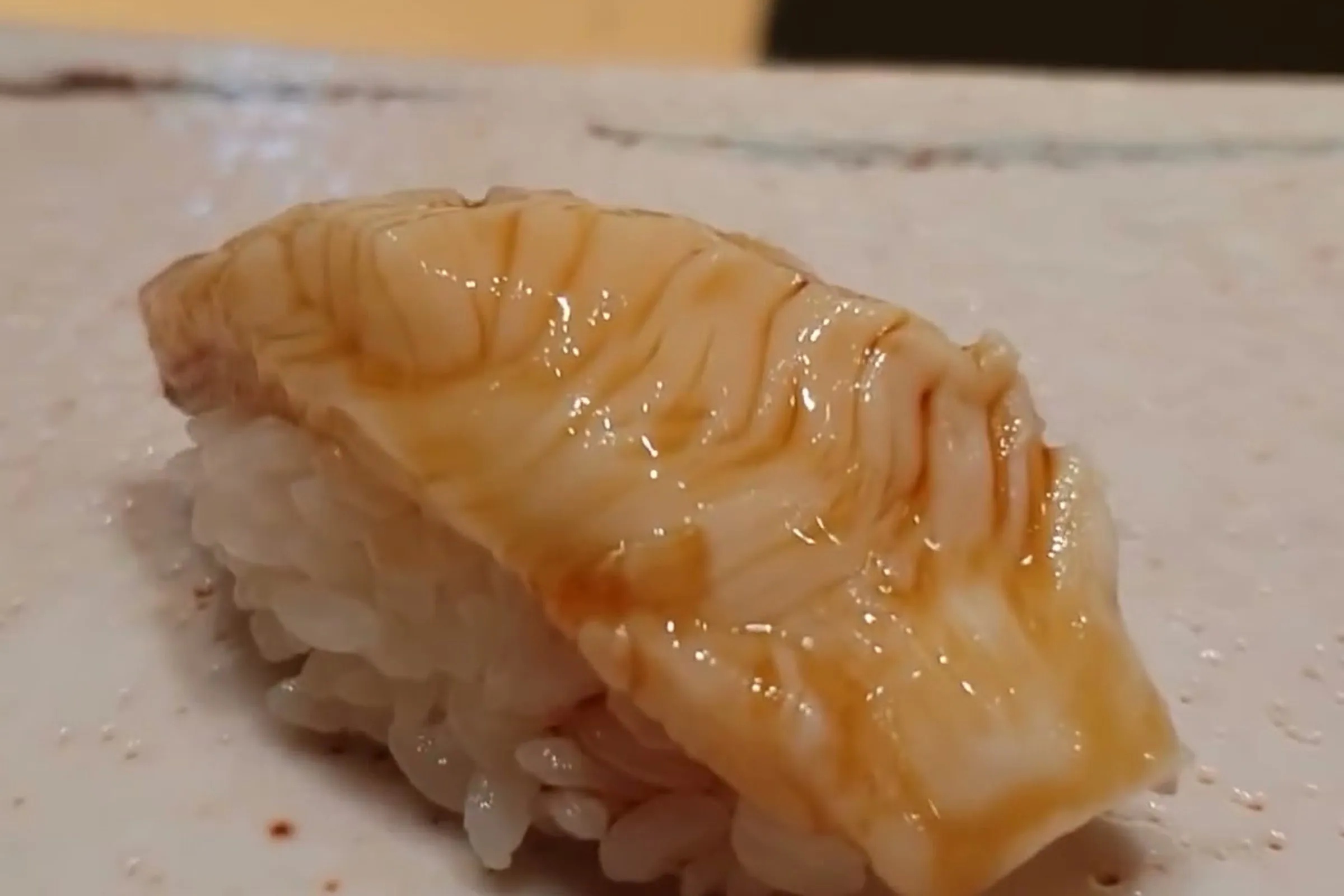
Kohada first, and sweet rice
Then straight into nigiri, and the first piece was kohada, gizzard shad. Sugita’s student, all right. My hopes went way up.
Bottom line first. The shari, the rice, was very sweet. Someone I know who came in the early days said the rice seemed to have changed. Thai diners love sweet, the sushi around town runs sweet, so I guess they made it sweeter too.
The kohada itself was good. Who did he work under? Sugita. And before that? Mizutani, who’s famous for kohada too.
Like at Sugita, they wipe your plate clean after every piece. Very tidy. His way of shaping is kotegaeshi, rolling the piece over sideways, the most common method around.
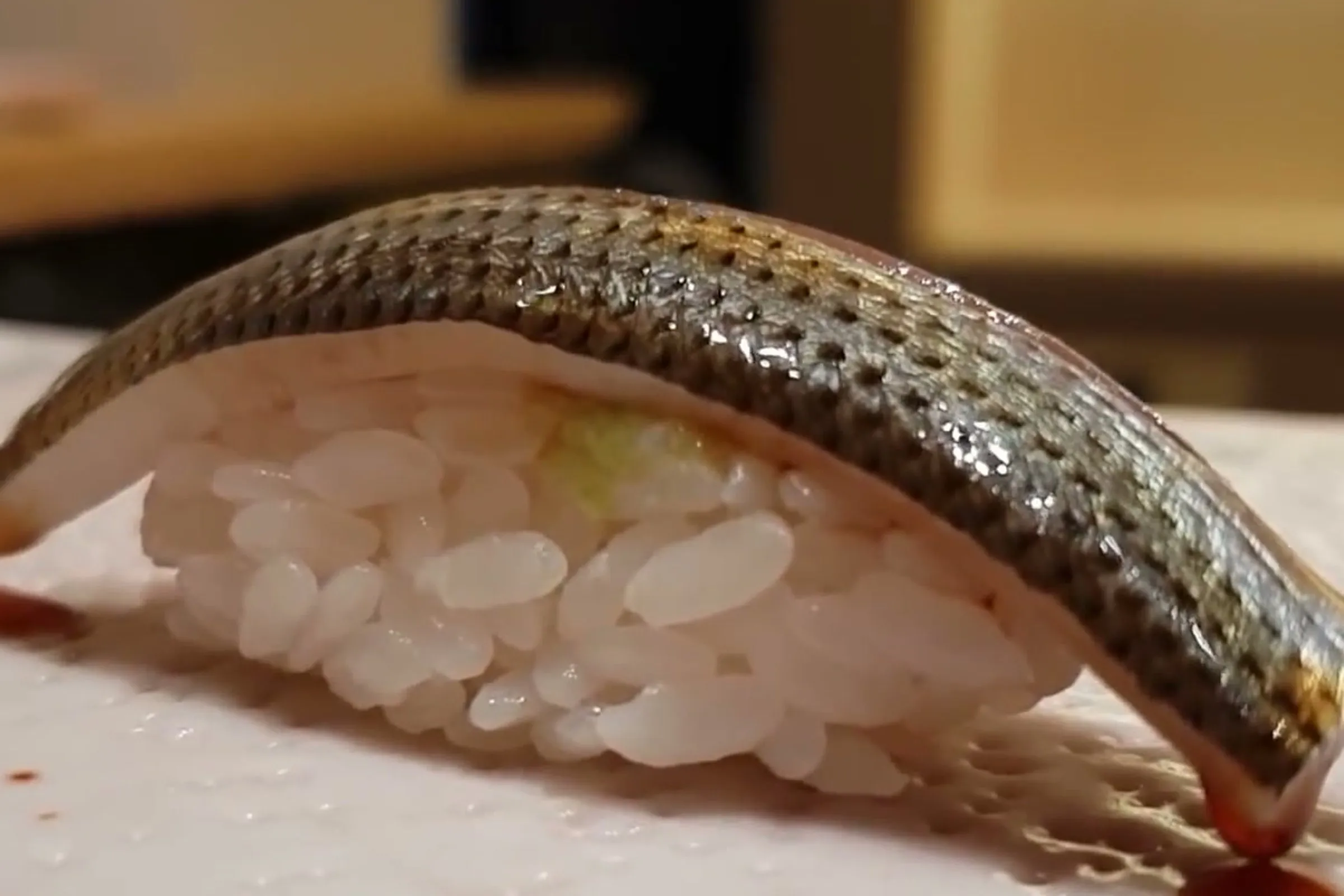
The whole liver on top
Earlier he was slicing kawahagi liver. Kawahagi is filefish, and the usual move is to mash the liver into a paste or a sauce and spoon it on. Here the slices go on whole. You see that a lot in Japan, much less in Korea.
Filefish with filefish liver always works. Of every liver I’ve eaten, kawahagi liver is the best.
The order wanders a bit. In the middle came anago tempura, sea eel, with yuzu zest in the salt. I don’t like fried eel, not at tempura counters, not at sushi counters. Grilled, yes. Fried is too greasy.
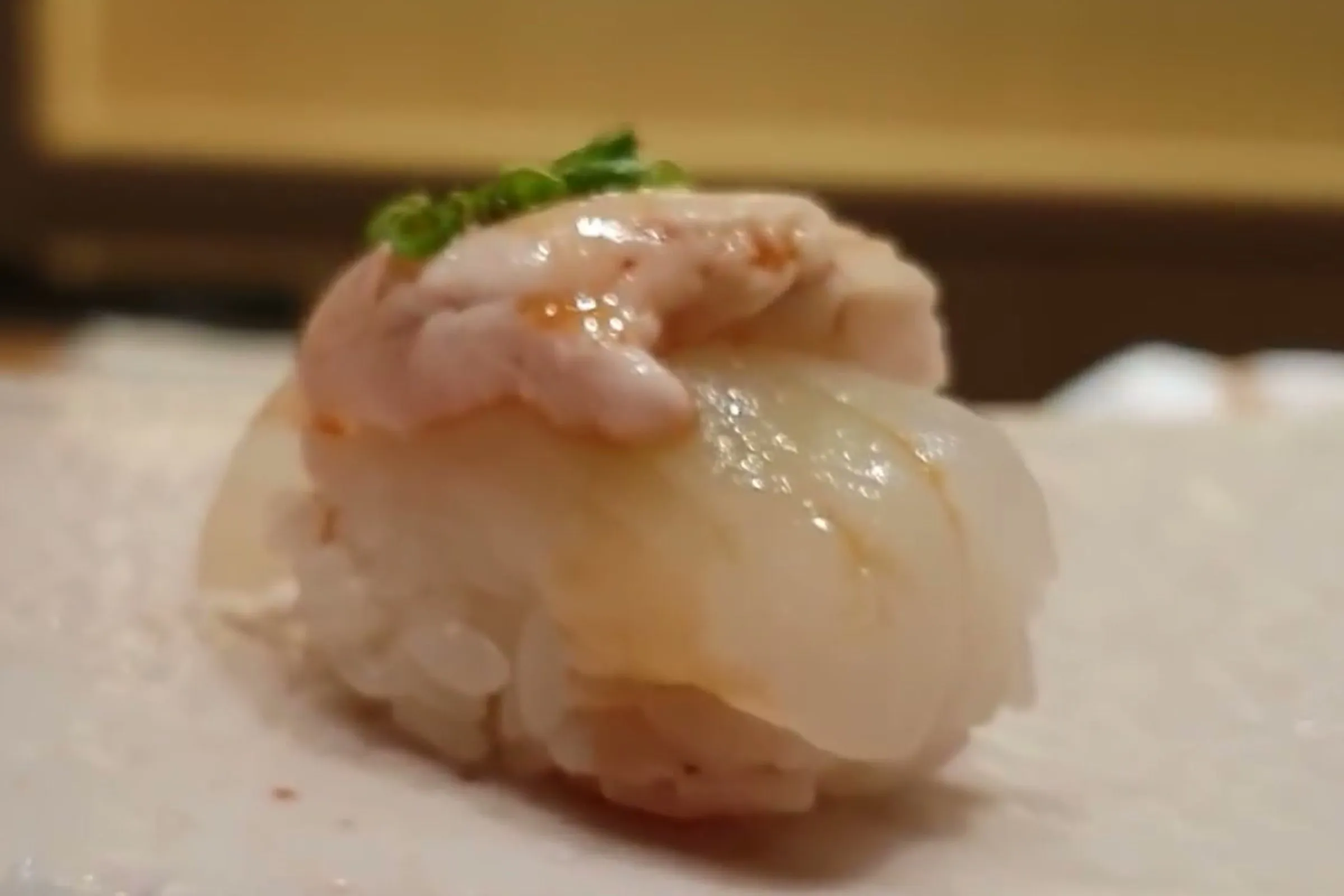
Chiba tuna, and a sear by sign language
Everything comes from Japan, so the tuna does too. Chiba, if I remember right. It wasn’t mind-blowing. Even Sugita-san, the teacher, isn’t about mind-blowing tuna, so his student in Bangkok wasn’t going to be either.
That doesn’t make it worse than the Spanish or Moroccan tuna common in Korea. Of course not. The fish at Ichizu is much better than at the average Korean sushi place. They’re pushing this with money.
The chutoro, medium-fatty tuna, was very fatty. Japanese tuna can be as fatty as Spanish, which I find just greasy, yet the Japanese one somehow feels cleaner. Maybe that’s because I know it’s the expensive one. I’m shallow like that.
Toda-san doesn’t speak English, so we talked with our hands. That gesture meant: otoro, fatty belly, want it seared on top? It wasn’t in the course. I’d asked for every nigiri they had. He held a huge piece of charcoal over it, heat only, a style people tie to Sushi Sawada in Ginza. Special? No. Fatty tuna, warmed a little, a bit softer.
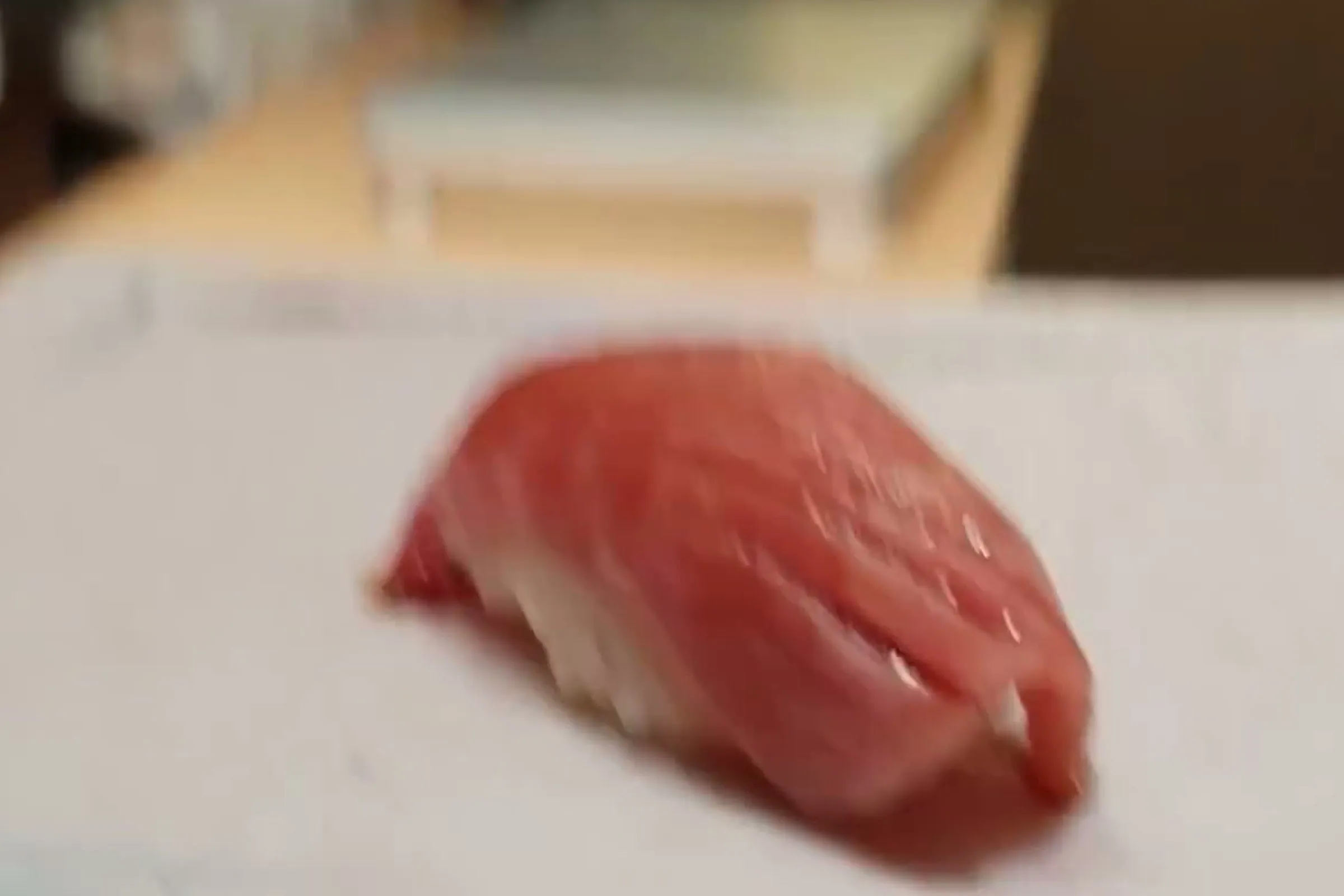
Chopped squid that finally worked
The little bits on top are yari ika, spear squid, as I remember. Chopped like that, I get the idea. It breaks up with the rice and mixes in your mouth like something out of a manga. Korean sushi places do this a lot.
I’d never once liked it. Sticky, vaguely sweet, just strange. Of every version I’ve had, Ichizu’s came closest to what it’s going for. It came apart cleanly in my mouth. That one I rate highly.
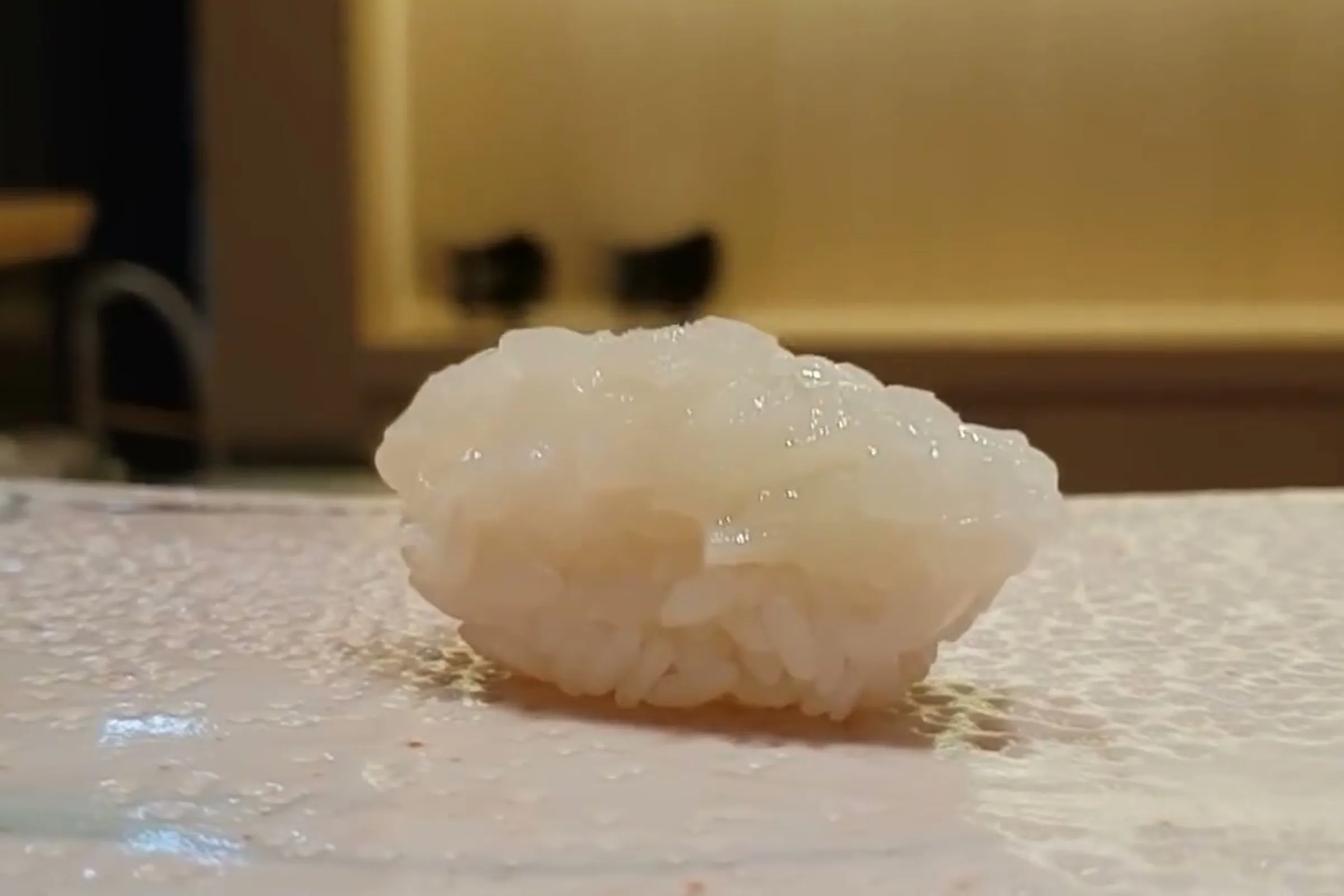
Sugita-san doesn’t like that
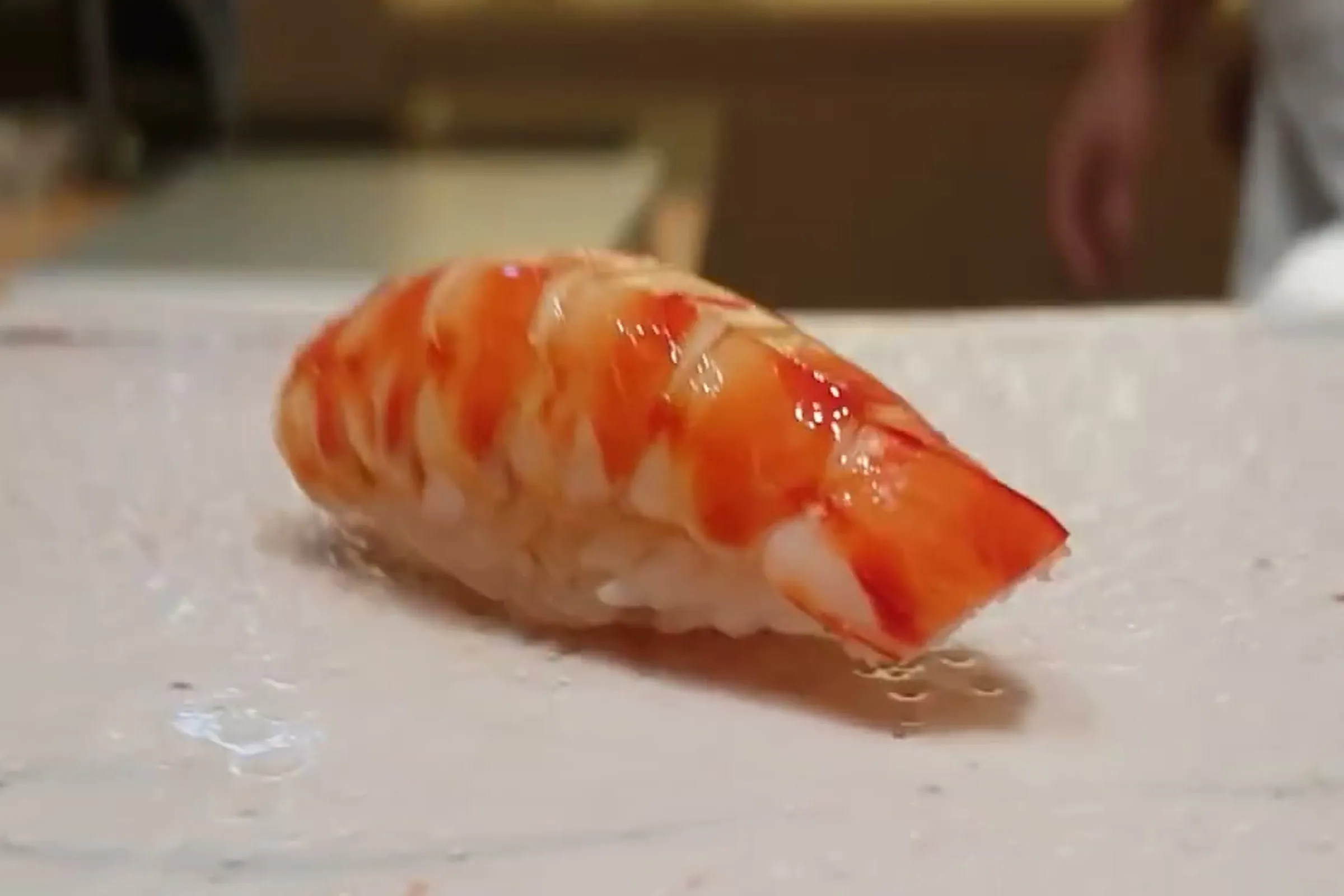
One thing I always envy about Japan. In Korea, some fish you only get for a short season. Japan has them nearly all year, because the country is long from north to south and the season is always on somewhere. Kuruma ebi, Japanese tiger prawn, is one of those.
I asked if he’d stand the prawn up against the edge of the plate, the way some counters do. No, he said. Sugita-san doesn’t like that.
Sugita’s kinmedai, same recipe
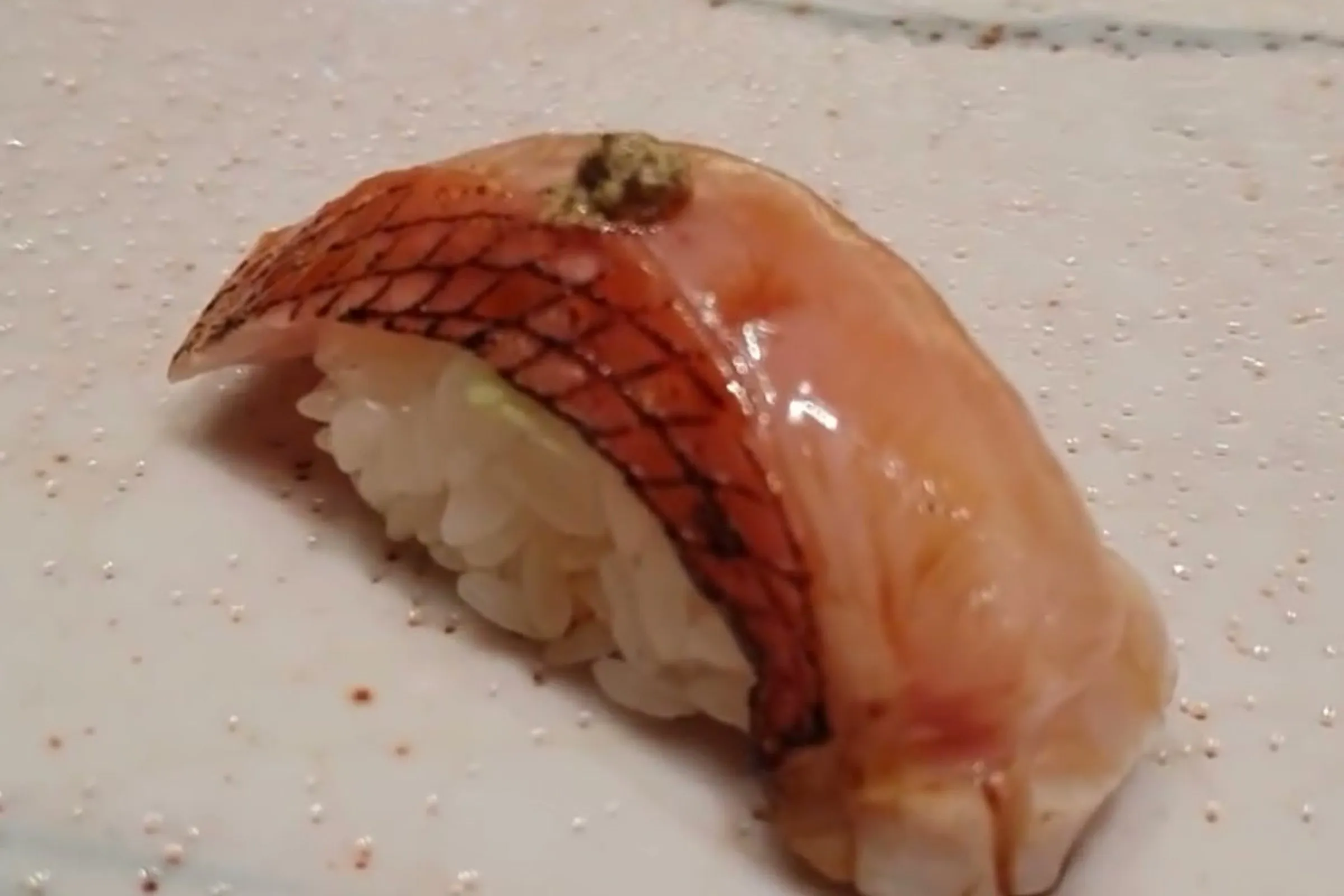
Sugita-san means kinmedai, splendid alfonsino. If you follow sushi at all, you’ve seen him set it out on the counter. Some people write that it brings a tear to your eye.
Here it was good too, because it’s made the same way. The recipe is identical. The problem is the shari. Not his fault. The neighborhood likes sweet and he adjusts.
He pushed his ankimo on a Sugita regular
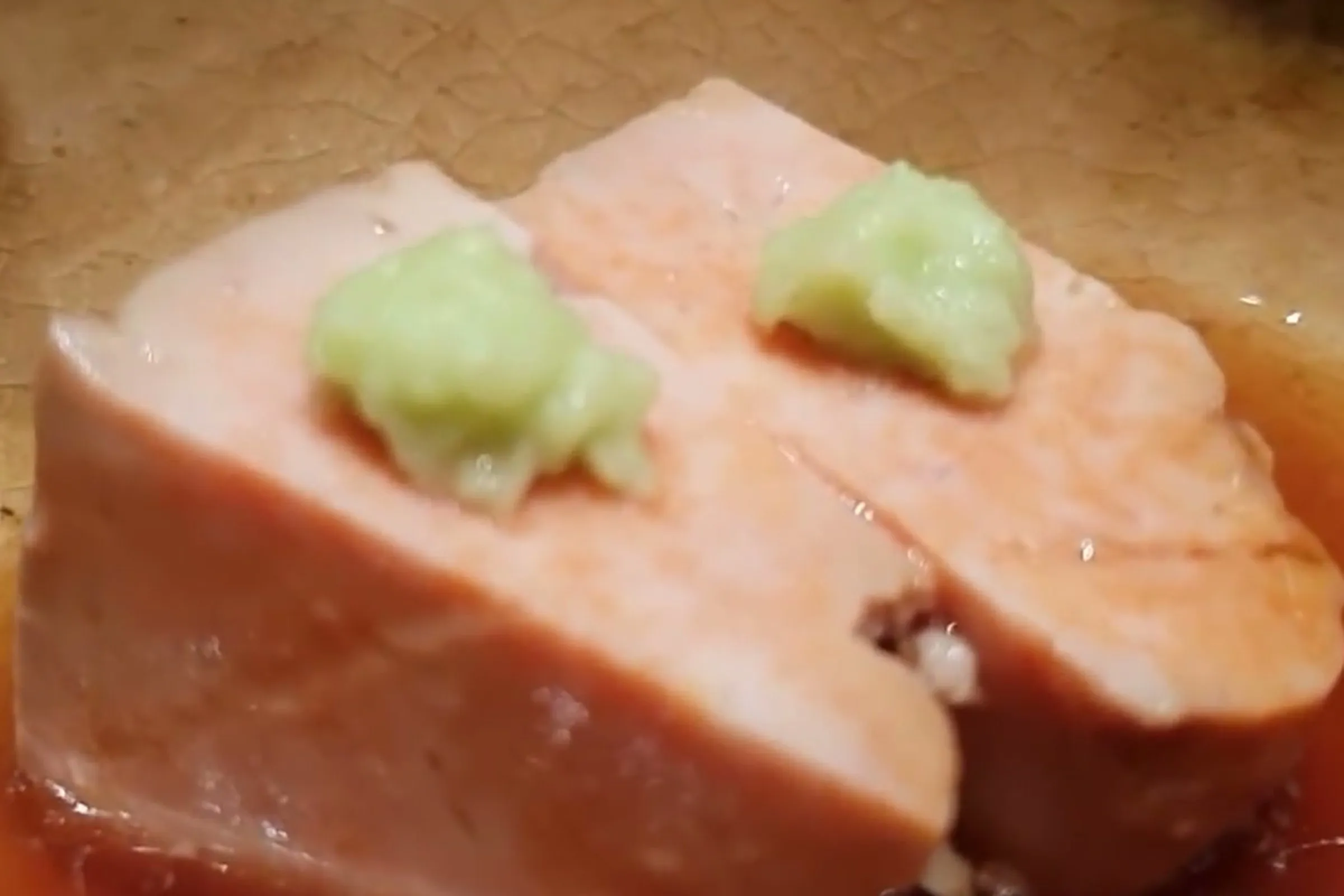
I was adding every nigiri, and out of nowhere he asked if I’d had the ankimo at Sugita. Obviously. Sugita’s ankimo, monkfish liver, is ridiculously good. Then he recommended his own.
Think about it. He worked there. He knows that ankimo. And he’s pushing his to someone who’s eaten it. You don’t do that without serious confidence. So I fell for it and added it.
I took too long to decide, so it had gone into the fridge and came out a little cold. The taste was almost the same as Sugita-san’s. Sweet, soft, nutty, and nokjin.
People hate the word nokjin, and so do I, because food bloggers wear it out. It isn’t a taste, it’s a texture. Something that clings between your teeth and gums and melts down slowly, a little dry at the same time. That kind.
Every nigiri they had, and regret
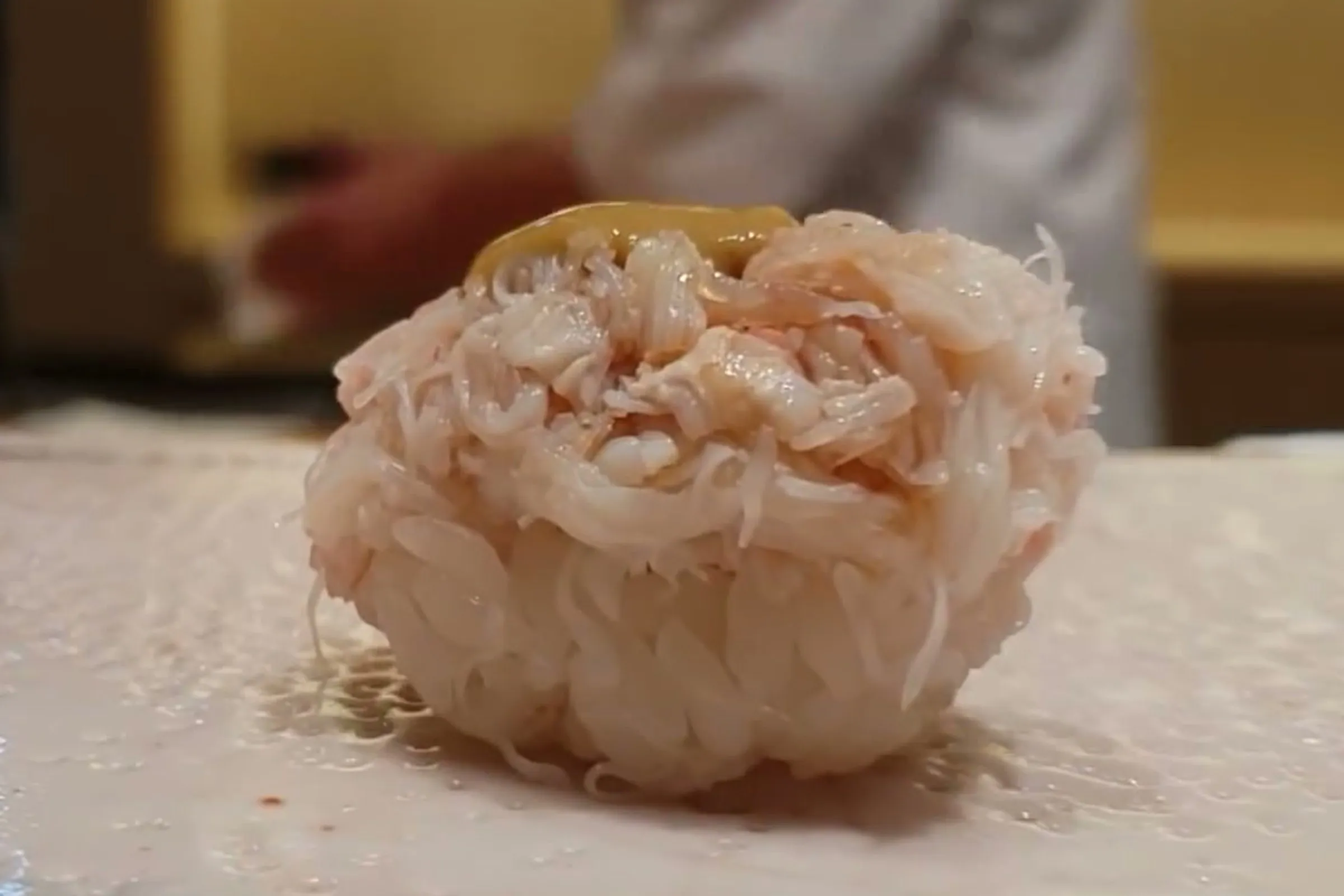
Then another one only I ordered. Kegani, horsehair crab, the meat pressed into nigiri, with yellow crab miso on top. Everyone around me had finished the course by then. I was the one who’d said give me everything you’ve got today.
I regretted it. With rice like this, it fell short of what I came for. I wanted Sugita.
Then uni, sea urchin. Not the expensive kind the top places in Japan use, but it’s flown in, so decent. Tip, here and at cheaper places in Japan too: if uni isn’t in the course, don’t add it. Japanese uni isn’t automatically amazing. It’s money gone.
To finish, red miso soup, nothing special. Then tuna rolls and kanpyo rolls, since I clearly look like a guy who needs feeding. Sweet rice always suits rolls, and those were good. Tamago shaped like a pound cake, which I’ve never understood. And unlike in Japan, a dessert, the way Korean sushi places do it. Warabi mochi, bracken starch, a bit like injeolmi. I never like it.
6,200 baht, and the crab isn’t on it
2019/05 video
The course I ordered, the nigiri course, was 4,000 baht, about US$130 (2019/05). Looks cheap. Look at the menu again, though. A few small dishes and only six nigiri. That’s the 4,000.
With everything I added, my bill came to 6,200 baht, about US$190 (2019/05). And the kegani isn’t on it. I came out ahead.
On the official site in 2026/11: Nigiri Course 4,000 baht, Mini Omakase 6,000, Omakase 8,000, each plus tax and service. That’s about US$120, US$180 and US$240 at 33.65 baht to the dollar. TableCheck also lists a donburi lunch course, with no price shown.
Fly to Tokyo instead
Worth a flight? I flew to Bangkok for a Sugita student, and the student is in Tokyo now. So no, not for this alone.
If you’re in Bangkok anyway, it’s a counter that runs on fish from Japan, the chopped squid is the best version I’ve had, and the kinmedai and the ankimo follow Sugita’s recipes. Take the course, skip the uni add-on, and expect sweet rice.
One more thing. Toda-san told me about an izakaya in Ginza where he and Sugita-san used to go at night, and said to get the oysters. I forgot and never went.
How to book
- TableCheck
The online booking link on the official site. After you book, they send deposit details by email or SMS, and the seat is yours once the deposit is paid. The donburi lunch course needs no deposit. Cancel on the day or within 3 days and you may be charged. Seatings at 12:00, 13:00, 17:30, 19:30 and 20:00, and more than 15 to 20 minutes late may mean no seat.
- Phone, LINE, email
+66 65 738 9999 or +66 62 594 6555, LINE @sushiichizu, [email protected]. The official site says same-day bookings are by phone only. Open every day, five seatings a day, nine guests each.
Checked 2026/11. Booking rules change, so look at the official page before you go.
Where it is
- Address
- 1982 New Phetchaburi Road (Sukhumvit 39 side), Bang Kapi, Huai Khwang, Bangkok 103101982 ถนนเพชรบุรีตัดใหม่ แขวงบางกะปิ เขตห้วยขวาง กรุงเทพฯ 10310
Plan the Bangkok trip
The boring bits I’d sort before flying, so the eating days stay free.
- Hotels in Bangkok*
Pick the room by where you eat, not by the sights. After a long dinner, a short ride back is the real luxury. This place is in Huai Khwang, Bangkok.
- Thailand eSIM (AIS 5G)*
Data from the moment you land. Plans from one day to a month, QR code in the voucher.
- BTS Skytrain Rabbit Card*
The Skytrain card with 100 baht already on it, picked up in the Suvarnabhumi arrival hall. Skips the ticket-machine queue in the heat.
- Samyan street food tour by tuk tuk*
Four hours, small group, the flower market and Chinatown-side eateries. Good for the night you are not eating sushi.
- Thai cooking class at House of Taste*
Morning market run in Asoke, then four dishes you cook and eat. About three and a half hours.
Links marked * are affiliate links. If you book through them I may earn a small commission, and you pay the same. How it works
More places I have eaten at
All of Bangkok →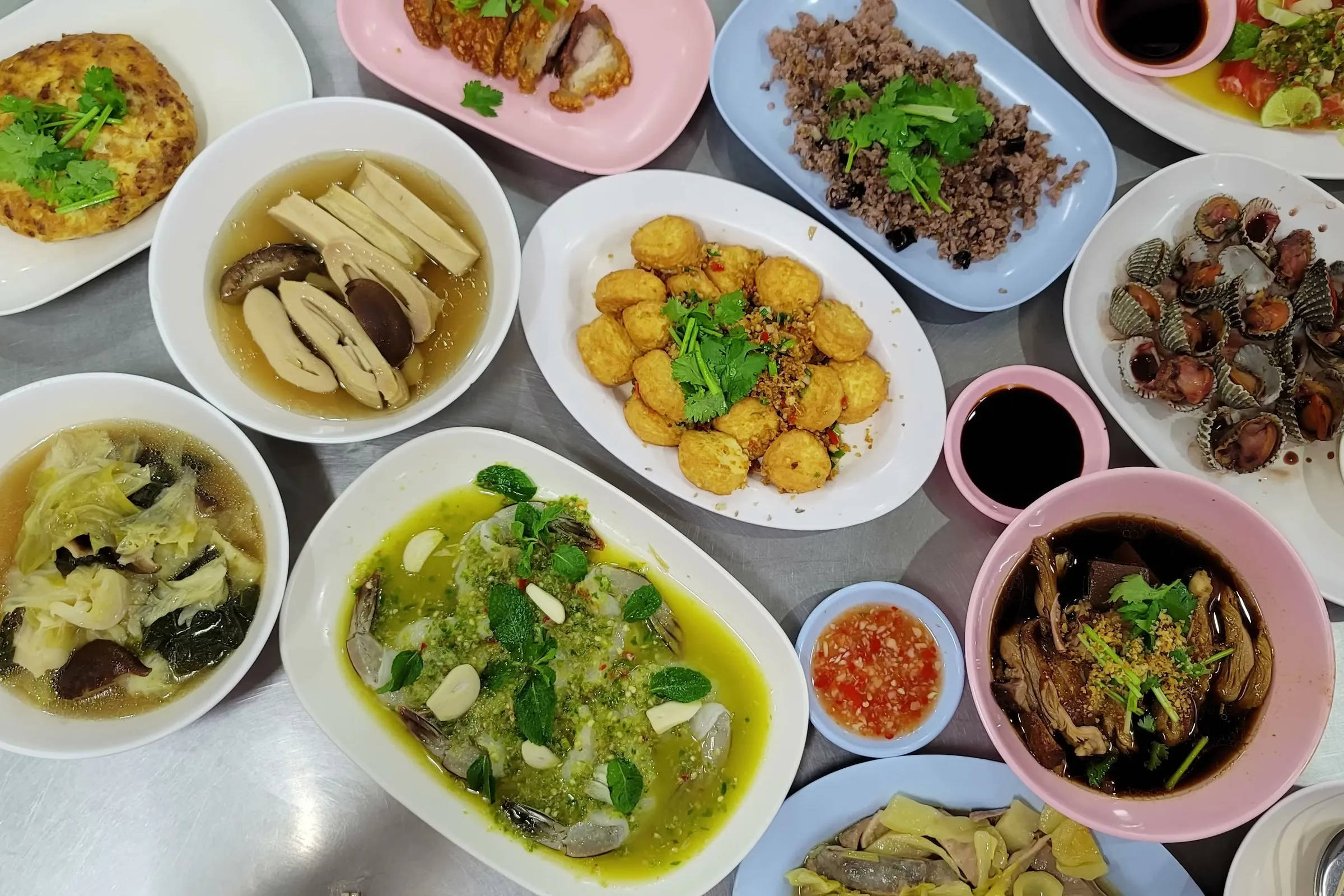 Banthat Thong, by Chulalongkorn University
Jeh O Chula
Bangkok’s tom yum Mama noodle queue. Decent, bold food. Take a number and eat around it.
฿150 2023/05 video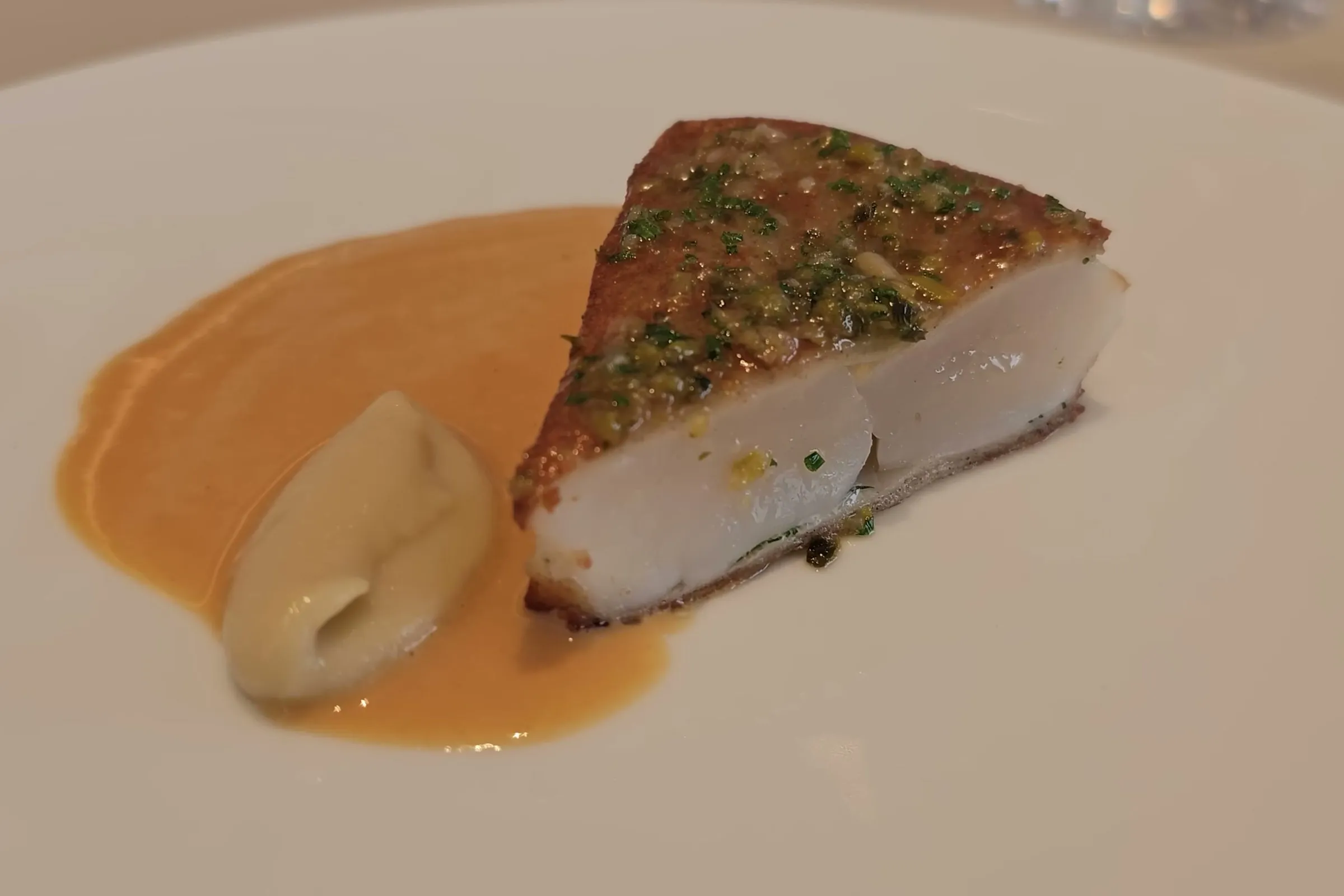 Marunouchi, by Tokyo Station
Sézanne
Four Seasons Marunouchi French. Clean, polished, ¥73,000 lunch for three in 2023.
¥24,500 2023/05 video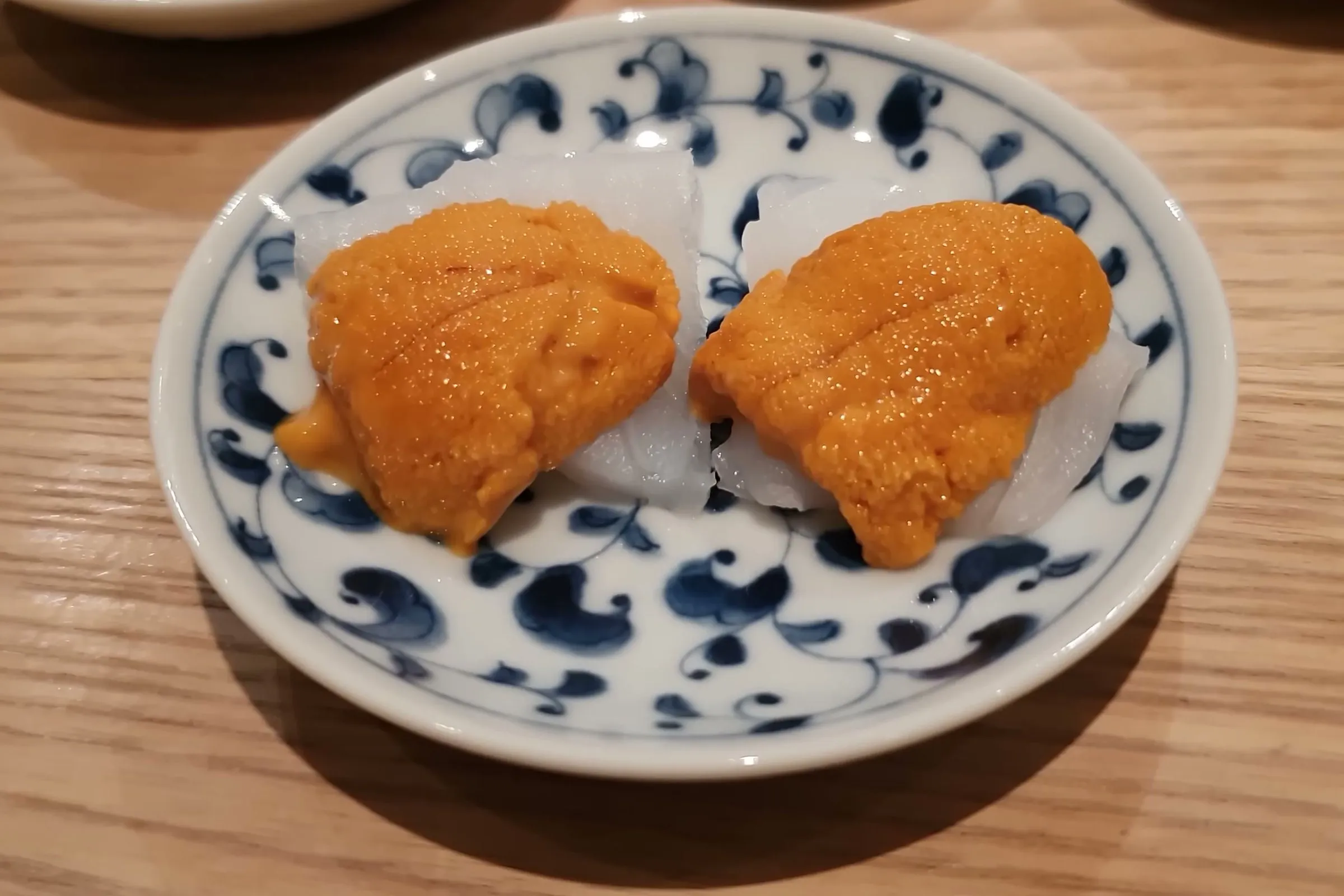 Apgujeong Rodeo, Sinsa-dong, Seoul
Sushi Tsubaki
Apgujeong omakase, ₩110,000 dinner in 2020. Salty, tough, and not for me.
₩110,000 2020/01 videoSources
- Sushi Ichizu Thailand Sushi Ichizu
- Sushi Ichizu reservations TableCheck
- Sushi Ichizu Time Out Bangkok
- Sushi Ichizu welcomes a new chef to helm its sushi counter Time Out Bangkok
- Sushi Ichizu BK Magazine
- Sushi Ichizu (Thai) Naewna
- Sushi Riku TABLEALL
- The Full List of MICHELIN Star Restaurants in The MICHELIN Guide Thailand 2026 MICHELIN Guide