The best sushi in Seoul, and you can’t book it
Sushi In (스시인) is chef Lee Jin-wook’s eight-seat sushi counter in Sinsa-dong, Gangnam, and it’s the best sushi in Seoul. Dinner omakase is ₩360,000 a person from 2026/10, about US$270. My last bill, just before the rise, was ₩330,000, about US$250 (2026/10). The bad part: you probably can’t book it. Newcomers haven’t been able to phone in since 2020, and the way in is a regular who brings you. Would I go back? I’ve gone since opening day, about once a month, and I’m going next month too. The rice is the reason. The misses are real as well: tuna and uni that cost the most and matter least to me, and silver fish that were weak on my last visit.
monster gourmetFrom my 2026/10 video
- My share
- ₩360,000
- about US$270, dinner omakase per person from 2026/10; my last bill just before was ₩330,000 (about US$250), 2026/10 video
- Highlight
- The kanpyo maki, and the shari under every piece
- Skip
- Expecting the tuna and uni to be the stars
- Video
- 8:05
- 2026/10
- Booking
- Regulars only. No public booking since 2020, you need someone who already goes.
- Phone (regulars only)
- Where
- Sinsa-dong, Gangnam, Seoul
₩360,000 now, and still the best value in Seoul
Sushi In is dinner omakase only at night, one course, no menu. It’s ₩360,000 a person from 2026/10, about US$270. My last bill was ₩330,000, about US$250, the price just before the rise (2026/10). I don’t drink, so that’s the whole bill. I’ve never ordered so much as a beer here.
Nobody in Seoul raises prices slower. Ten years ago Sushi In was the only hard booking in town, and other chefs used to say they were waiting for Sushi In to go up first so they could follow. Then the Covid years filled Gangnam with new sushi counters raising prices like it was a race, and Sushi In stayed where it was. That’s when I started calling it the best value in Seoul.
And a price rise never makes a single piece better. Every place says fish costs went up, and what changes is the lineup, not the quality. So when I say best value, I mean the taste, not the number. Even if every other counter in town cut its price in half, I don’t think any of them could compete with this one.
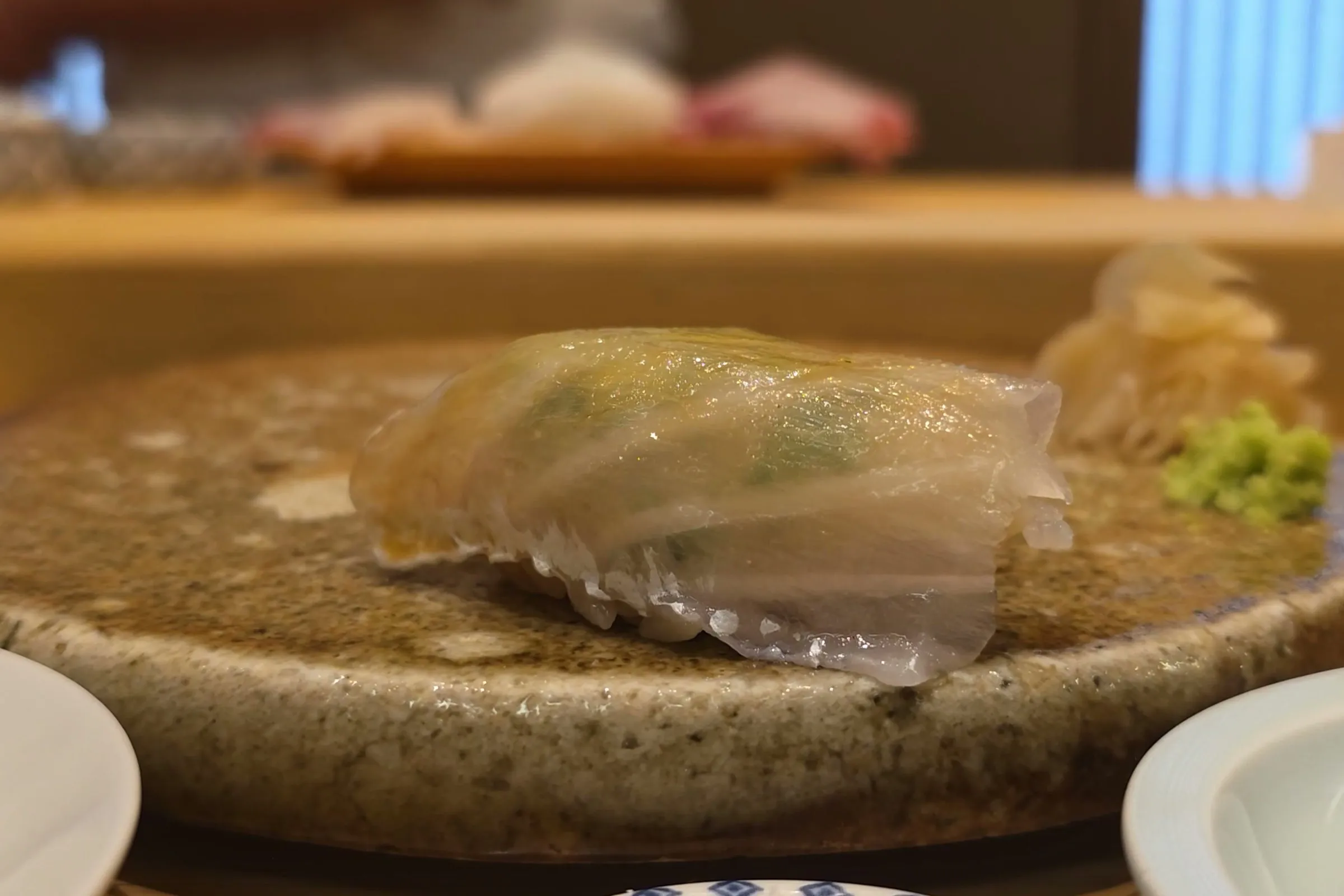
Why newcomers can’t book Sushi In
The bad news, straight. First-timers can’t book. The number, 02-543-7636, is on Google Maps, but a first-timer can’t get a seat by calling it, and I found no online booking. When I checked in 2026/11, Diningcode’s reviews still called it a members-only counter that doesn’t take new guests, and a visitor’s blog from 2026/09 said new bookings still looked impossible. The way in is someone who already goes.
It wasn’t always like this. Early on anyone could phone, regular or not. No-shows got so bad that a month or two out was full while the same day almost always had a seat. Regulars and the chef used to say same-day was the easiest booking. Ninety percent of the no-shows were first-timers, so newcomers went on a waitlist, phoning on the 1st of each month for the next month’s cancellations. Regulars almost never cancel, and in six months the waitlist got one group in. Then the waitlist ended too, and newcomers now come with people who already go (2020/02).
Sushi In was also early with deposits: ₩50,000 for one to three people, from bookings for 2018/10. People still skipped the deposit and showed up anyway, or no-showed and demanded it back. Lee once told me no-shows weren’t about money for him. He hates throwing away seasoned rice. Anyone who’s talked with him knows he means it. And no, the regulars-only thing isn’t about selling drinks. I’ve never bought one.
Me? Regular since opening day. Twice a month the first year, then once a month when my money ran low. That’s how this counter fills: regulars rebook on the way out. Back in 2024/01 people around me said omakase demand in Seoul was cooling and seats elsewhere were getting easier, so maybe this door opens one day. Don’t hold your breath.
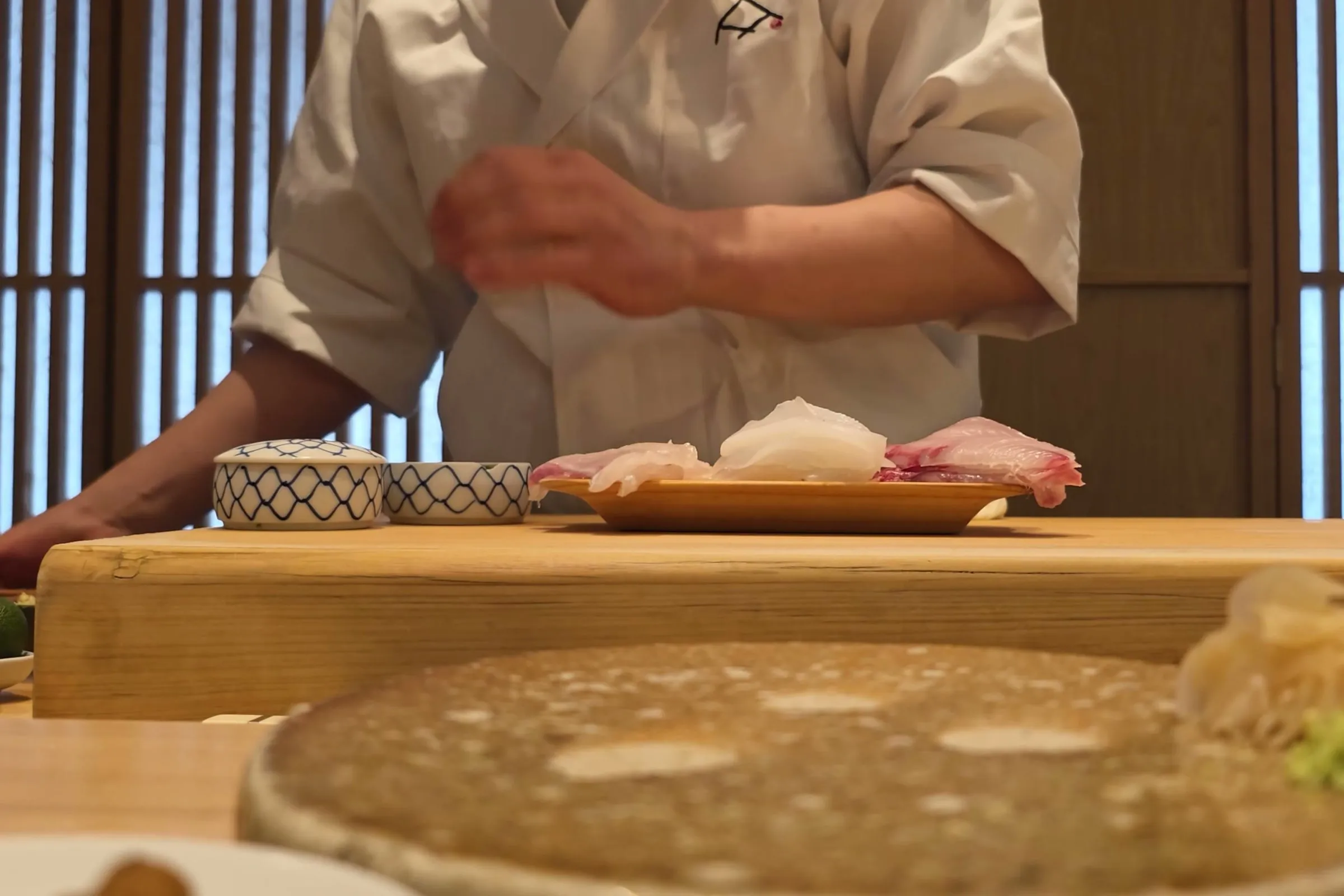
The rice is the reason
Lee Jin-wook came from Sushi Cho at the Westin Chosun and opened Sushi In in 2016/04. The vinegar comes from Ginza Kyubey. His shari is my reference for salt: salt first, vinegar behind it, springy and plump.
I’ve drifted toward firmer rice for years, and Sushi In’s is on the soft side. Still, of all the rice this soft on the planet, it’s the only one I like (2025/10). It isn’t mushy. Plump is the only word I have. For two or three visits in a row it got firmer too, closer to my taste (2024/10).
It moves around. Lately the red vinegar, akazu, has been getting stronger (2026/10). Sushi In’s rice used to be perfect with squid, and that match has slipped a little. One night in 2024/01 it came out oddly salty, and two days later it was great again (2024/01). TMI: they cook the rice twice in each sitting, so halfway through you get a fresh batch (2020/02).
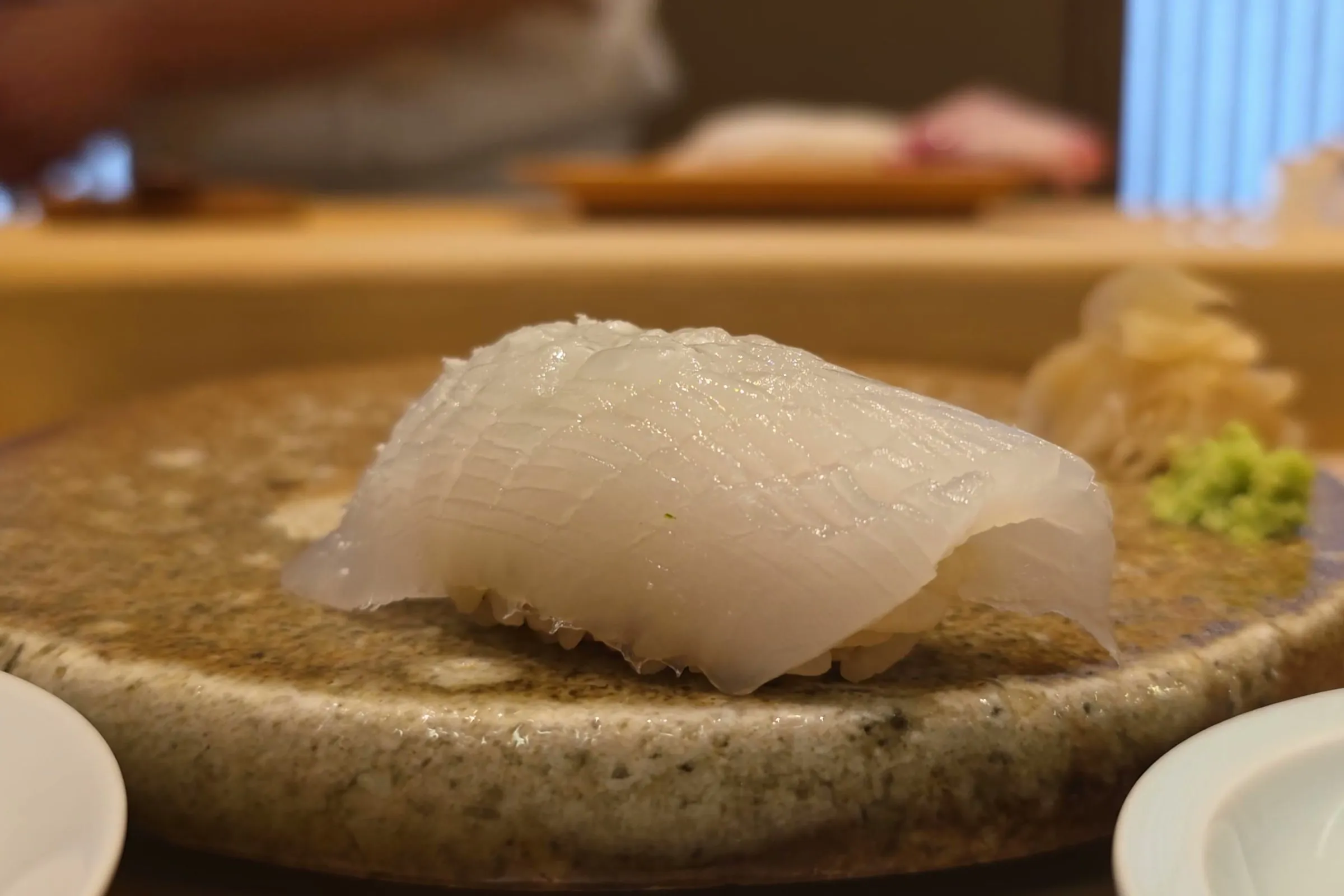
Shima-aji or aji? Put it in your mouth
I brought a friend who hadn’t eaten much sushi, and they asked what the difference between aji and shima-aji is. That’s when I realized I’d never explained it. Shima-aji is striped jack, aji is horse mackerel. What they look like alive doesn’t matter. What they taste like does.
Shima-aji is firmer, with less flavor of its own, closer to buri, yellowtail. Aji is closer to mackerel. So if the chef names some kind of jack and it tastes like buri, it’s shima-aji. If it tastes like mackerel, it’s aji (2026/10).
Sushi In’s shima-aji is the best I know in Korea (2020/02). The aji depends on the day, and Lee tells you without a word. He doesn’t brag about fish. When the aji is great, two pieces just show up in front of me (2024/01). This time it came as one (2026/10). You can work out what that means.
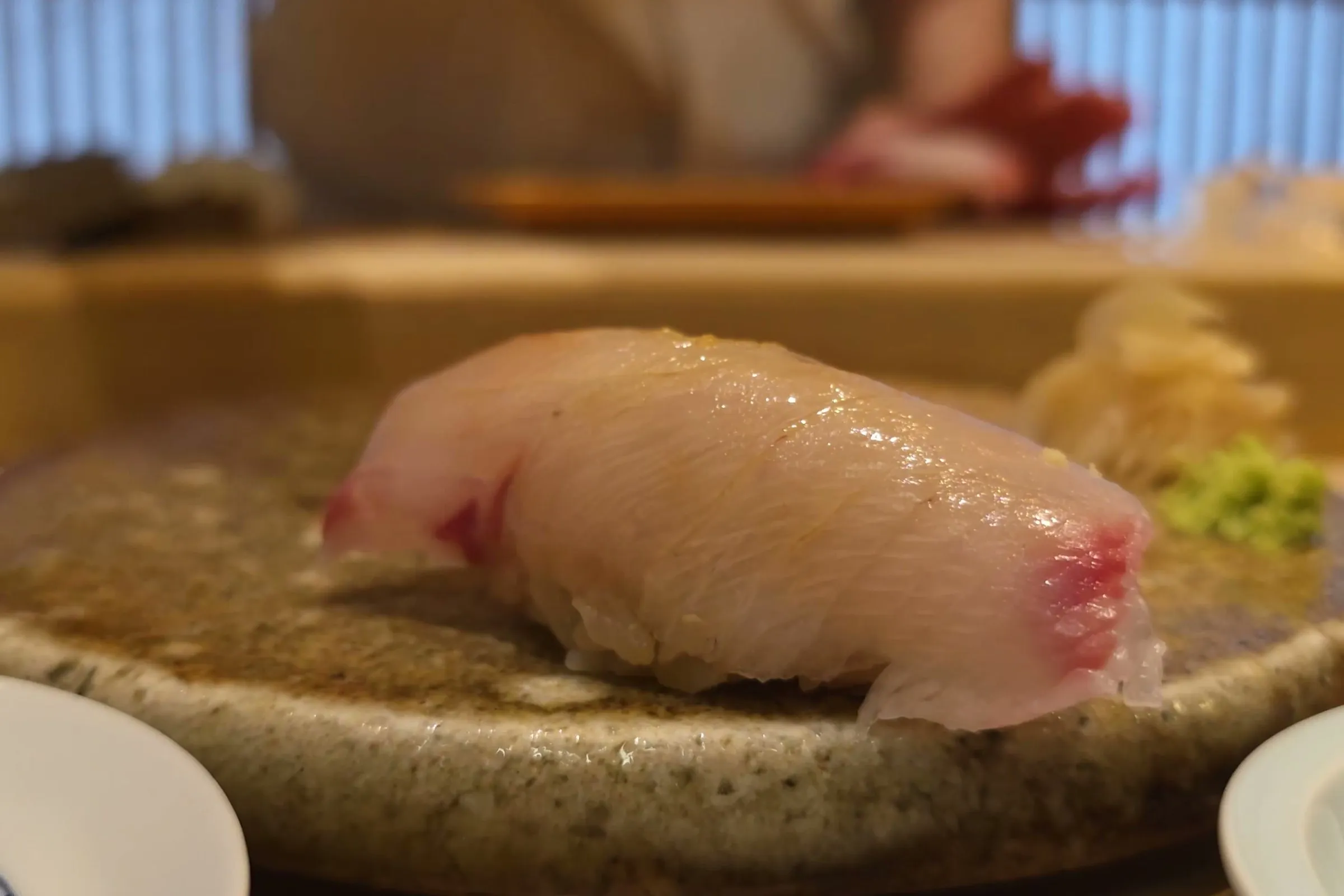
Matsutake, ikura, and the season turning
The season had just turned. A matsutake tsumami showed up. I’m not thrilled when matsutake appears, but you do feel autumn arrive (2026/10).
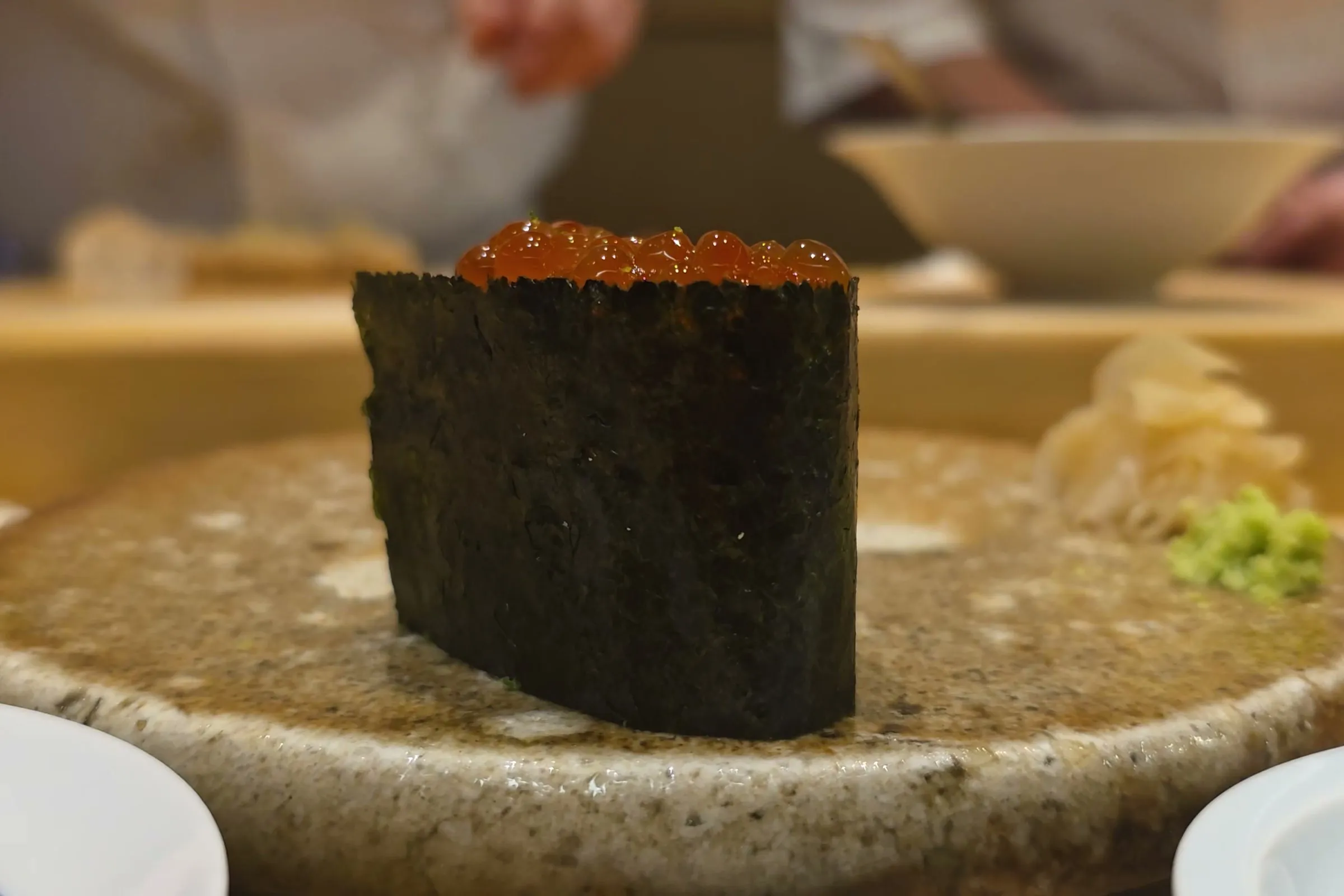
The real signal for me is ikura, since matsutake isn’t a sushi ingredient anyway. I didn’t like ikura as a kid, and until recently I still didn’t. Shimazu in Tokyo did most of the converting.
The kind I like is nutty, a little sticky, and not too salty or sweet, not floating in brine. In Korea, Sushi In’s ikura is the closest to that (2026/10).
Kohada, a fish I don’t even like
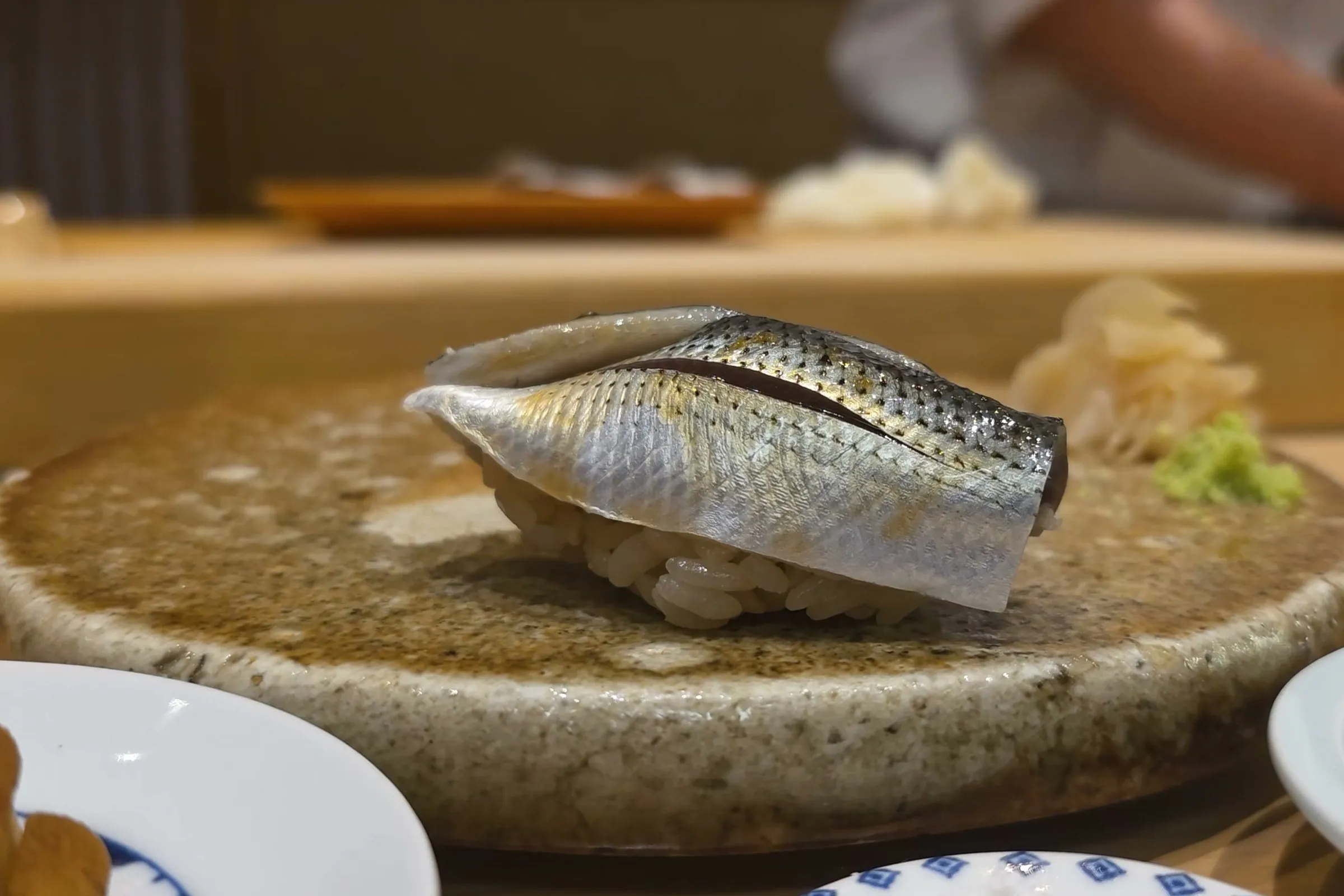
I don’t like kohada, gizzard shad. The chefs who know me know it, so at Sushi In Lee serves everyone else first and then asks if I want one. If he seems unsure, I pass (2024/10).
In 2019/11 I had one so fat and juicy I ordered another, maybe the third extra kohada of my life. As good as Sugita’s on its best kohada days, and Sugita is basically my religion (2019/11).
Then one night he didn’t ask. He just put it down. The best kohada I’d had in two or three years, fat and oily, and he said he knew the moment he touched it. The course was ₩300,000 then, and I’d have paid that for the one piece (2024/10). Within a week I ate kohada at two Tokyo counters I love, and the one I kept talking about was still this one.
On my last visit Lee hesitated before serving it. Korean kohada is often thin and short on juice, and this one was juicy for Korea. He knows I like it juicy and a bit sweet, while plenty of people like it stiff with a strong anchovy smell (2026/10).
The best kanpyo maki in the world
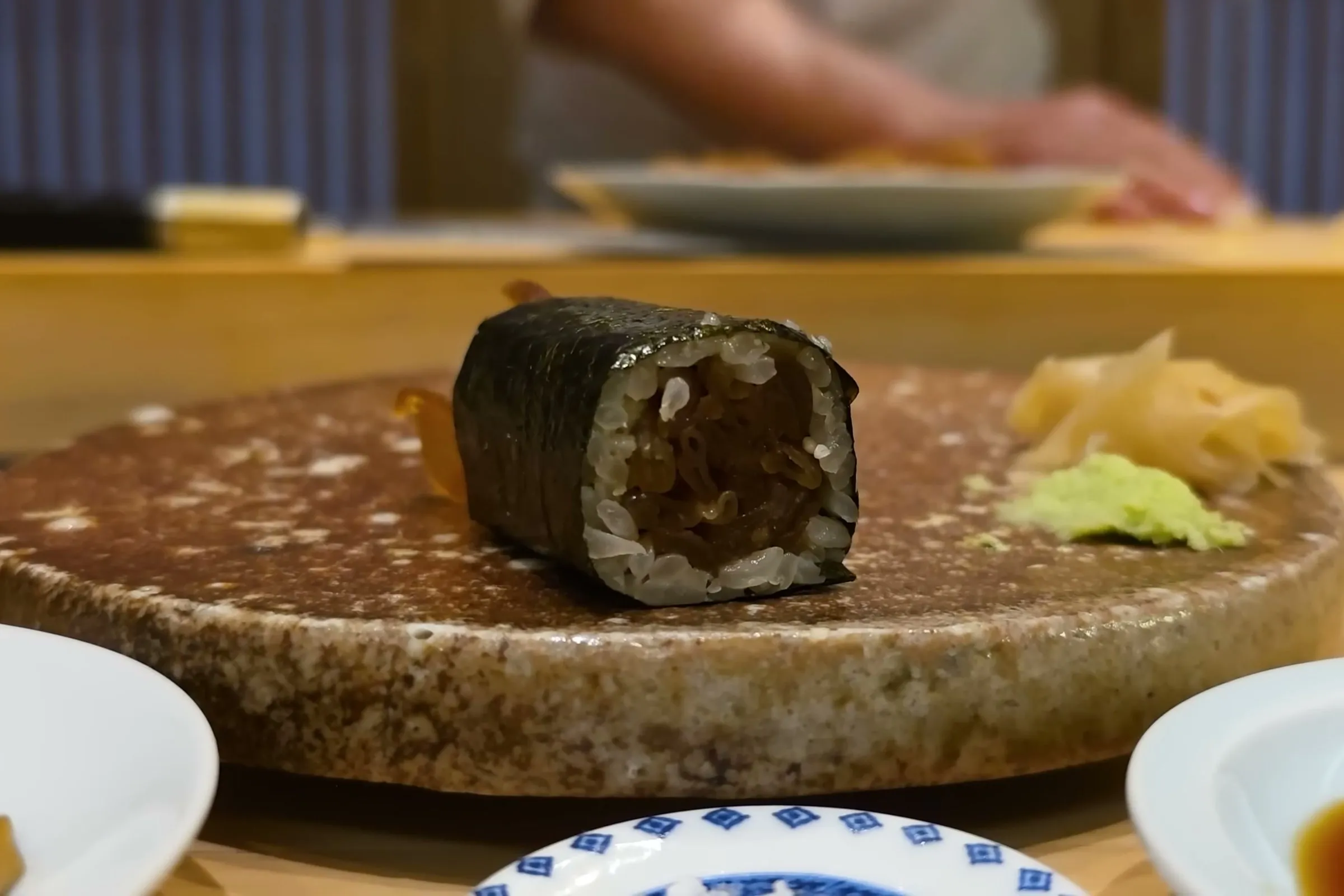
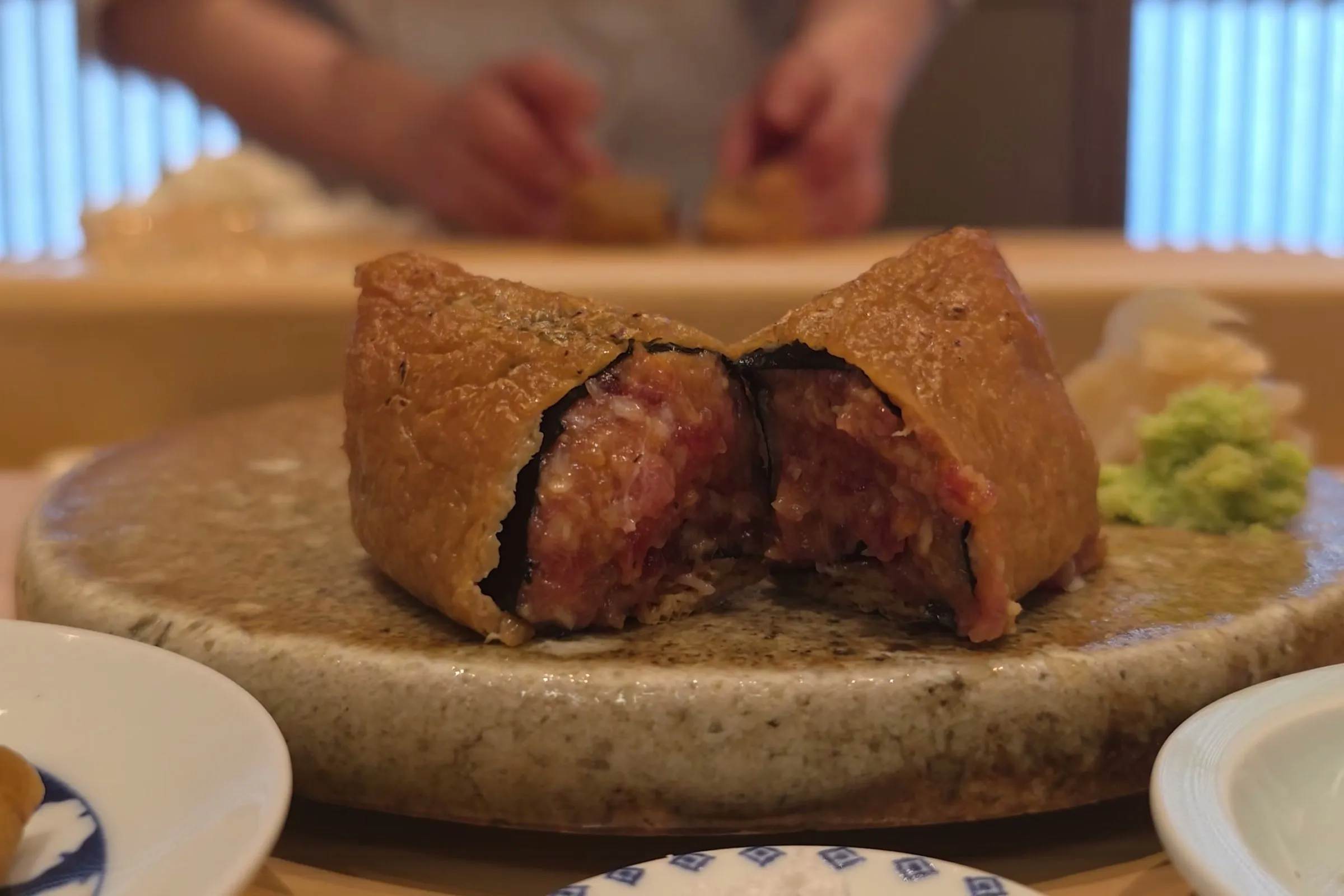
The real last piece at Sushi In is the kanpyo maki, the dried gourd roll. I’ve called it the best in the world for years. The taste has shifted a little over time, but the color is still number one. Lee clearly picks through the strips that go on top with care (2026/10).
In 2024/01 I got one piece, and my friend next to me was too full and gave me theirs. Then I skipped dessert because I was full. Sure.
The other thing I rank that high at Sushi In: the grilled galchi, hairtail. Fat, a shame to stop eating, and for hairtail I’d put Sushi In above anywhere I’ve had it (2024/01).
Where it falls short
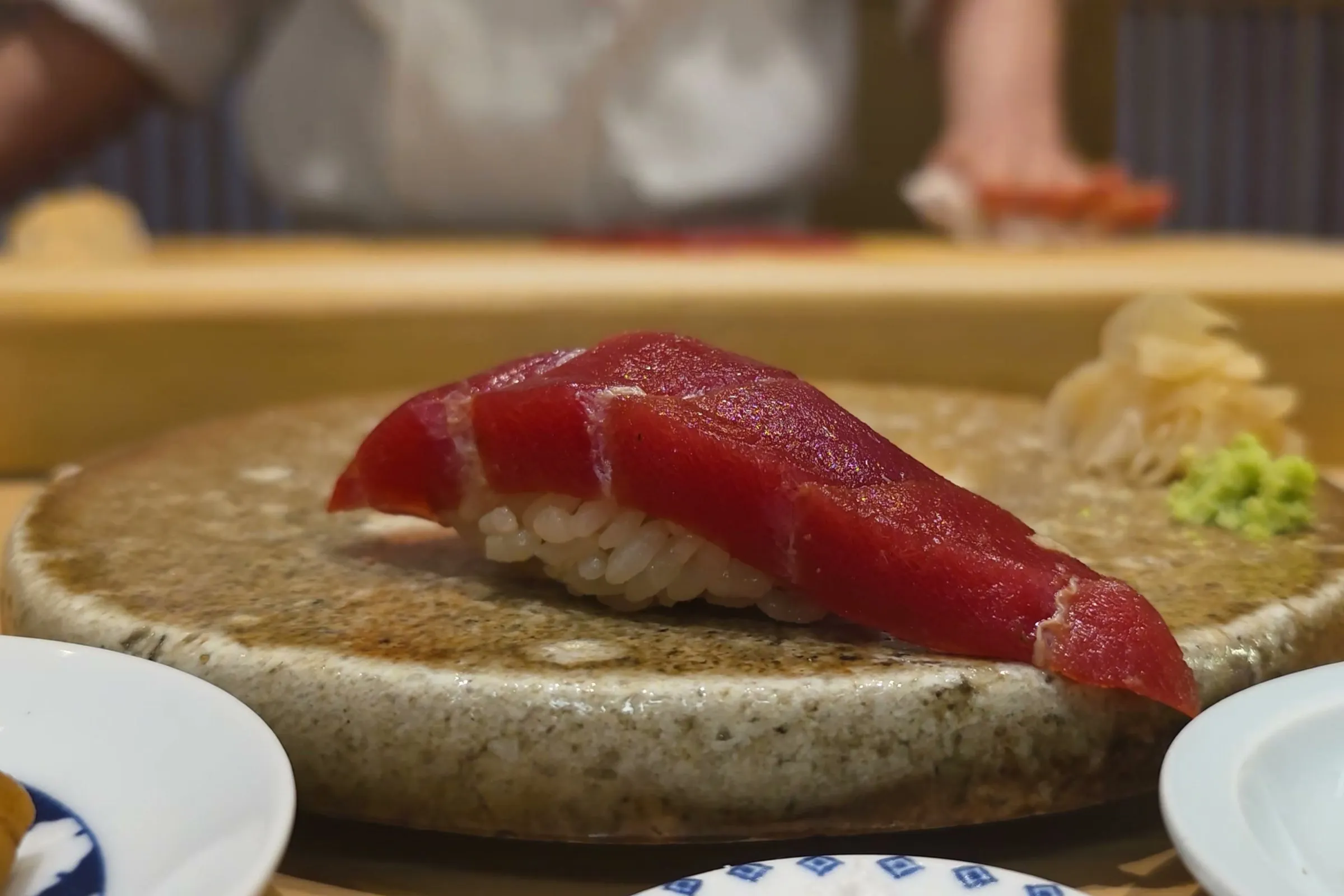
Tuna and uni are most of what an omakase course costs, and the smallest part of why I go. If it were up to me I’d drop both and add more white fish and shellfish (2026/10).
The tuna was below its pedigree for a while (2019/02), then turned mochi-soft and sweet after the switch to Yamayuki (2019/11). It still swings. One night the akami had a jelly-like texture I hadn’t had in ages, and the night on camera it didn’t (2025/10).
Uni can be bitter on a bad day. In 2019/11 the uni on a negitoro and caviar bite was bitter with a musty finish, while the uni gunkan later was sweet. Lately it’s been better, he seems to be bringing in better boxes (2025/10). Wasabi dips in summer too. One night it was so weak I piled it on, then overshot and paid for it through my nose (2025/10).
On my last visit the silver fish were weak. The aji was ordinary, and the herring, usually the famous piece here, was just okay. By my own stats, when one of the two is off the other makes up for it. Not that night (2026/10).
A Hong Kong foodie, and Seoul’s honor restored
A friend from Hong Kong who eats a lot of sushi came to Seoul. They’d had a sushi meal on an earlier Korea trip that disappointed them so much they decided to eat only Korean beef this time. I gave them one name: Sushi In (2025/10).
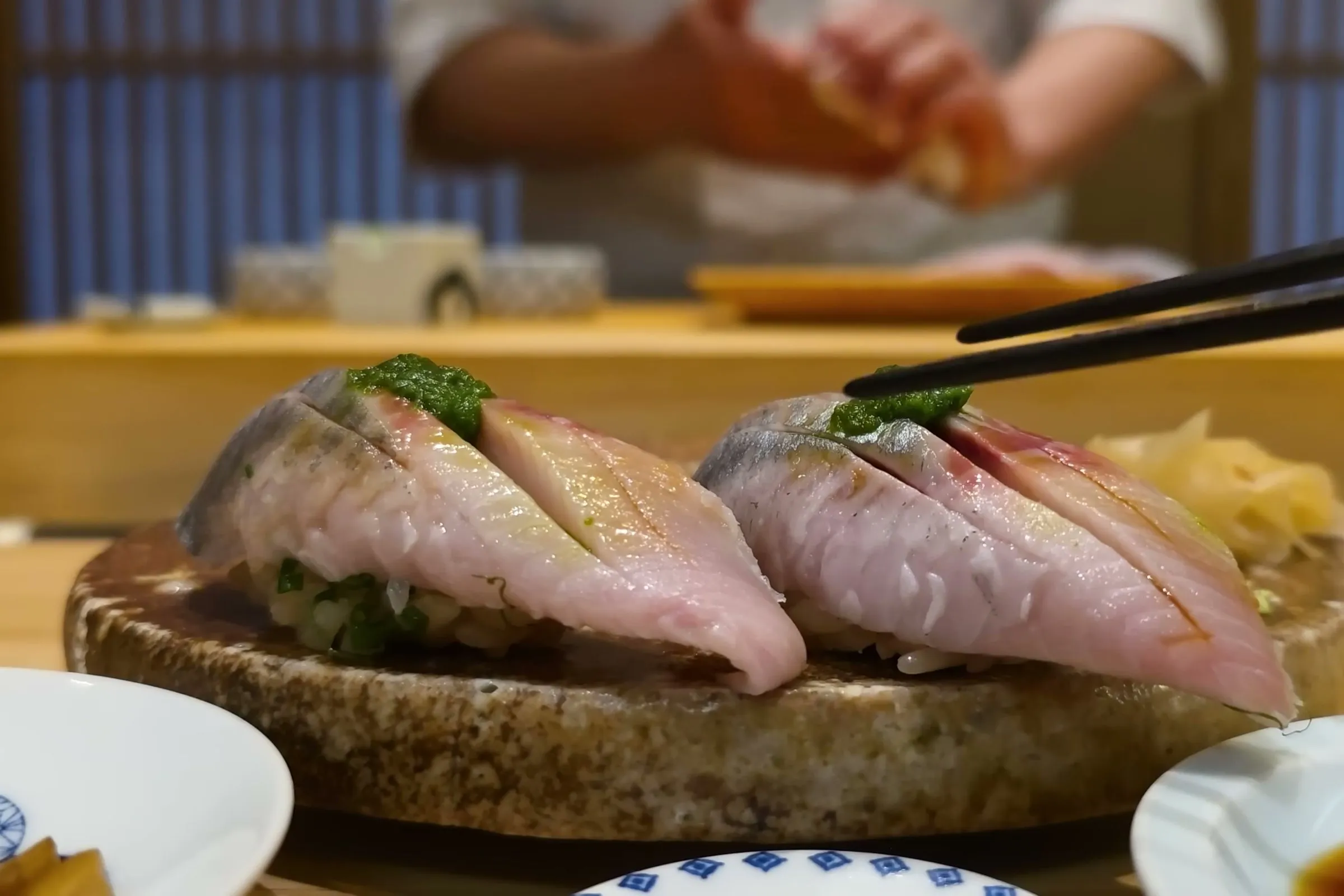
They’d never had herring nigiri. During the aji they said wow, this is oily, and I told them to wait for the herring. That night the herring was oilier than usual, and Lee served it as two pieces. Afterward they said, now I get why you go every month. Sushi In restored Seoul’s honor (2025/10).
The opening pieces barely change: tai belly, then aori-ika squid, then shima-aji. The tai belly is scored so the chewy, fatty fish goes down at the same time as the rice, and the fat just pours out while you chew (2025/10).
Lee almost never brags about fish, even when you ask. In 2024/01 he did. A 13 kg buri, short and fat, the biggest and best of his career, he said. He served it as zuke, and the sweetness went through the roof with none of the muddy taste buri can have (2024/01). Whatever your nationality, whatever style you like, nobody can argue. It’s the top of Seoul (2025/10).
Ten years of Sushi In prices
Opening week had two dinner courses: ₩200,000 for sushi and ₩250,000 with sashimi, about US$170 and US$220 (2016/04). Then one dinner course at ₩250,000 for more than two years, about US$230 (2018/05). The first rise, to ₩270,000, about US$240, came in 2018/09, with the deposit from bookings for 2018/10.
₩270,000 held through my 2020/02 visit, about US$230, and through the first Covid year (2021/02). It went to ₩300,000 from 2021/12, about US$250 (2022/02), and was still ₩300,000 on the kohada night, about US$220 (2024/10). Then 10% up to ₩330,000, about US$240 (2024/11), and ₩360,000 from 2026/10, about US$270.
So ₩250,000 to ₩360,000 in ten years, up 44%. The top Tokyo counters I go to went up two to four times over the same stretch. In dollars it barely moved, because the won fell. The chart below has every price I said on camera or wrote on my old Naver blog.
₩330,000 a person, ₩360,000 from now on
2026/10 video
My last dinner was ₩330,000 a person, about US$250 (2026/10). That was the price right before the rise. From 2026/10 it’s ₩360,000 a person, about US$270. One course, no drinks on my side.
Lunch exists, but I’ve filmed it once: ₩160,000, and I paid ₩110,000 on the day because the ₩50,000 deposit was already in, about US$140 for the lunch (2019/02).
What Sushi In has cost me, visit by visit
9 visits where I said the bill on camera or wrote it on my blog. ₩250,000 in 2016/04, ₩360,000 in 2026/10. Up 44%.
Dinner, per person, no drinks (I don’t drink). Each point is a price I said on camera or wrote on my old Naver blog, dated by the month the video or post went up. 2024/10 is the course price I named that night, not a receipt. Each month is when that video or blog post came out. Hollow dots come from my Naver blog.
All 9 visits
| Source | Per person | US$ |
|---|---|---|
| 2026/10The new price from 2026/10. My own bill that night was still ₩330,000 (about US$250). | ₩360,000 | ≈ 270 |
| 2024/11A 10% rise | ₩330,000 | ≈ 240 |
| 2024/10The kohada night | ₩300,000 | ≈ 220 |
| 2022/02Second rise, from 2021/12 | ₩300,000 | ≈ 250 |
| 2021/02No change through the first Covid year | ₩270,000 | ≈ 240 |
| 2020/02A friend booked and paid | ₩270,000 | ≈ 230 |
| 2018/09blogFirst rise | ₩270,000 | ≈ 240 |
| 2018/05blogOne dinner course, unchanged for two years | ₩250,000 | ≈ 230 |
| 2016/04blogOpening week, the course with sashimi. The sushi-only course was ₩200,000 (about US$170). | ₩250,000 | ≈ 220 |
Would I go back
I’m going back next month, like every month. It’s the best sushi in Seoul, and I’d still rank it near the top counting Japan.
The catch is the door. If you don’t know a regular, plan Seoul without it. If you do, be nice to them.
How to book
How I booked
I’ve been a regular since opening day in 2016. Twice a month the first year, then once a month when my money ran low. Regulars rebook on the way out, which is how the eight seats fill. The first-timer route by phone closed in 2020, so I can’t tell you how to get your first seat other than going with someone who already goes.
- Phone (regulars only)
02-543-7636 is listed on Google Maps and Diningcode (checked 2026/11), but first-timers can’t book by phone. Diningcode reviews call it members-only with no new guests, and a 2026/09 visitor’s blog said new bookings still looked impossible. I found no online booking route. Newcomers get in with a regular. A deposit has been taken since bookings for 2018/10 (₩50,000 for one to three people back then).
Checked 2026/11. Booking rules change, so look at the official page before you go.
Where it is
- Address
- 49 Apgujeong-ro 42-gil, Gangnam-gu, Seoul서울 강남구 압구정로42길 49
Plan the Seoul trip
The boring bits I’d sort before flying, so the eating days stay free.
- Hotels in Seoul*
Pick the room by where you eat, not by the sights. After a long dinner, a short ride back is the real luxury. This place is in Sinsa-dong, Gangnam, Seoul.
- Korea eSIM*
Data as soon as you land at Incheon. Install it before the flight.
- AREX airport express*
Incheon to Seoul Station in under an hour, with no traffic to think about.
- T-money card*
One card for the subway, the buses and the convenience store. Tap on, tap off.
- Gwangjang Market street food tour*
Bindaetteok, mayak gimbap and yukhoe, with someone who knows which stall.
- Korean cooking class in a Bukchon hanok*
Cook a few home dishes in an old hanok, then sit down and eat them.
Links marked * are affiliate links. If you book through them I may earn a small commission, and you pay the same. How it works
More from this restaurant on the channel
- Nobody can stop Sushi In9:122025/10
- One piece worth ₩300,000 on its own | Sushi In11:002024/10
- The peak of sushi in Korea | Sushi In12:072024/01
- Legendary Sushi restaurant in Seoul, Korea. Impossible to book!10:102019/11
- The one and only introduction-only sushi omakase in Seoul15:592020/02
More places I have eaten at
All of Seoul →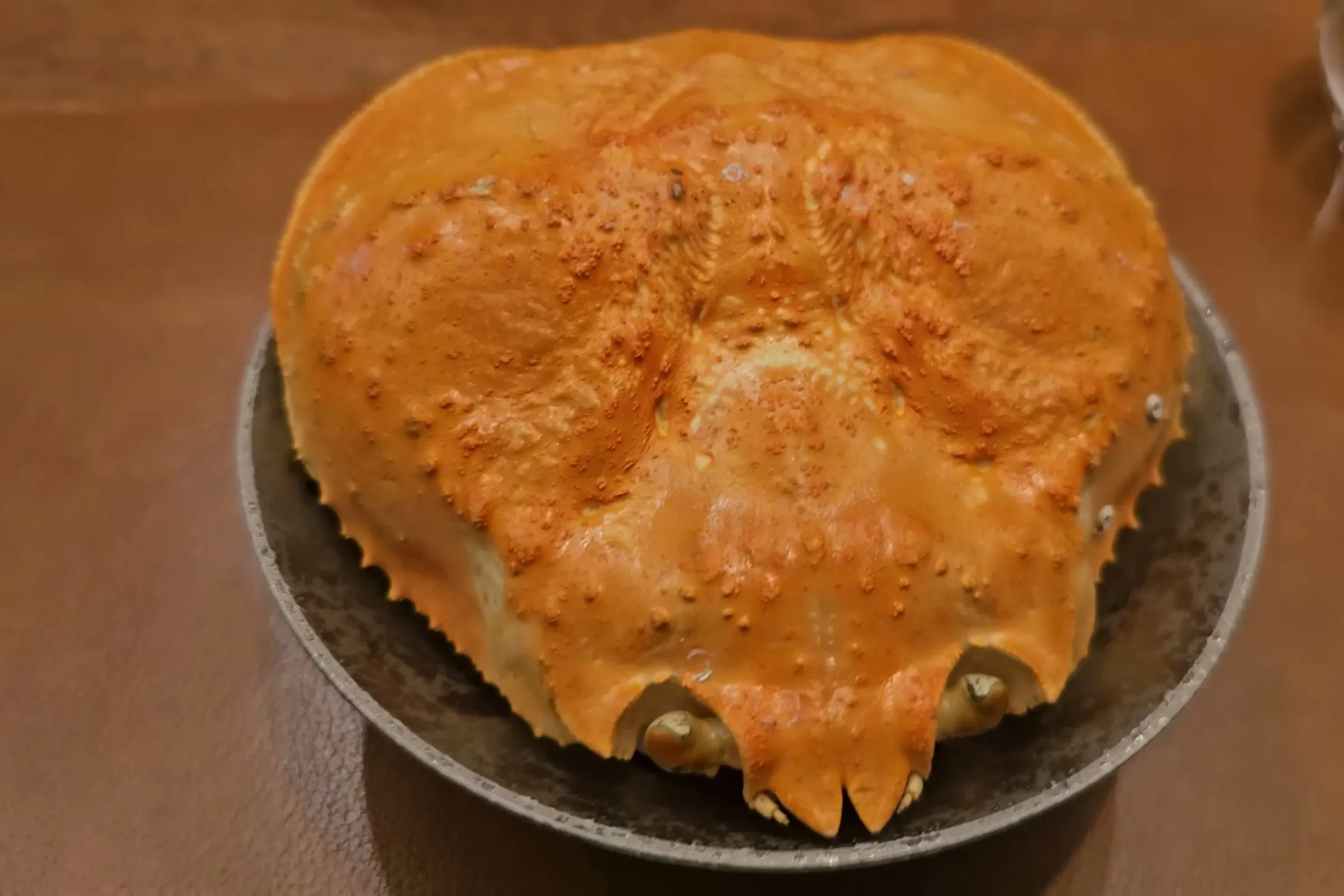 Cheongdam-dong, Seoul
Tenjimon
Den meets Toc Toc on a Cheongdam fourth floor. Kuruma ebi, a whole crab, wagyu, and pot rice you ask seconds of.
₩180,000 2024/07 video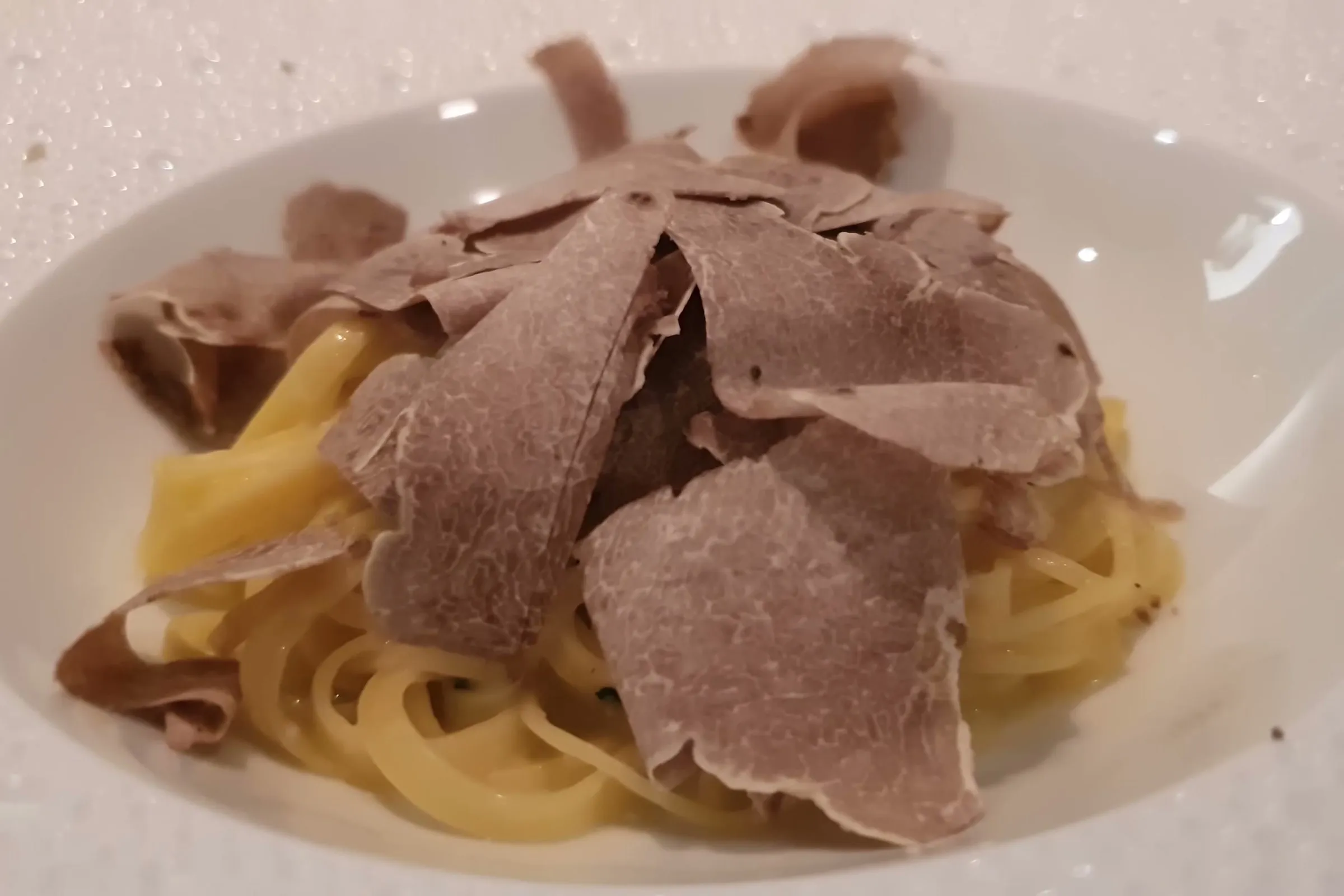 Cheongdam-dong, Seoul
Toc Toc
Alba white truffle on egg, oyster, abalone, king crab, steak, tajarin and a soufflé. Over ₩1,000,000 for four.
Over ₩250,000 2019/12 video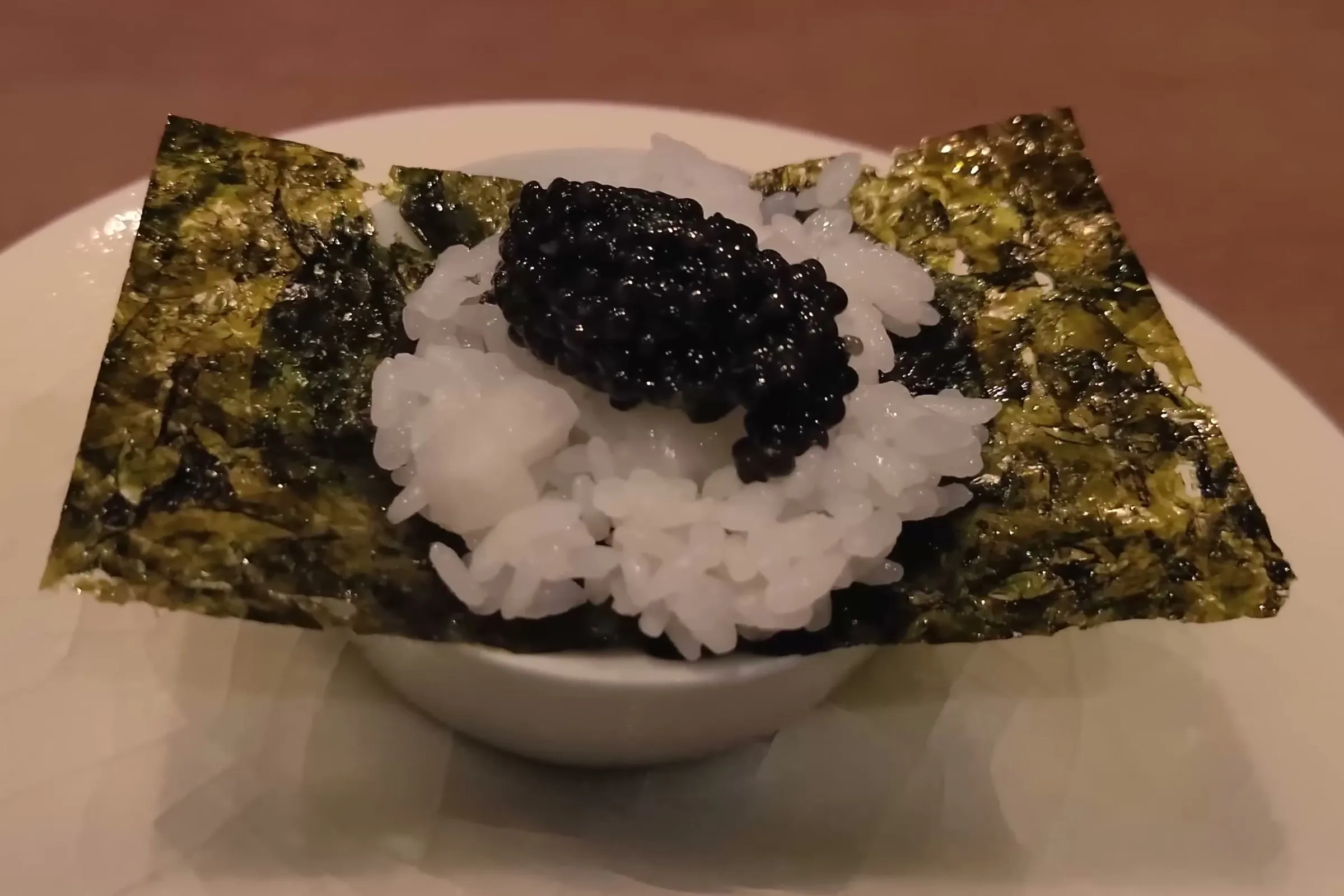 Cheongdam-dong, Seoul
7th Door
Kim Dae-chun’s fermentation counter, right after it opened. Thai-tasting rockfish, a bisque-style lobster sauce, caviar gimbap rolled at the table.
Sources
- 스시인 (Sushi In) DiningCode
- Sushi In's opening week, 2016/04 (Korean) Naver Blog
- Sushi In's 2018/09 price change (Korean) Naver Blog
- Sushi In's deposit from 2018/10 (Korean) Naver Blog
- South Korean Won to U.S. Dollar Spot Exchange Rate (AEXKOUS) FRED, Federal Reserve Bank of St. Louis