I still can’t tell you what cuisine 7th Door is
7th Door is chef Kim Dae-chun’s tasting counter in Cheongdam-dong, Seoul, built around Korean fermentation and aging, on a fourth floor it shares with Tenjimon across the hall. When I checked in 2026/11, dinner was ₩320,000 (about US$240) and weekday lunch ₩180,000 (about US$130); when I went back, lunch was ₩180,000 (about US$140) and dinner ₩280,000 (about US$220), both 2022/06. Would I go back? I did: my first visit in 2020, right after it opened, was tasty, filling, strange in a good way and poor value, and the second was the freshest, tastiest meal I’d had in a long while, so I booked again on the spot. You book on CatchTable, by phone or by email, it’s at the same address, and it has one Michelin star in the 2026 guide.
monster gourmetFrom my 2020/03 video
- Highlight
- The three-year jangajji tart with ginger fromage blanc
- Skip
- The chili on the dongchimi noodles, more salty than spicy
- Price
- Lunch ₩180,000, dinner ₩280,000 when I went back (2022/06); now ₩180,000 to ₩210,000 lunch, ₩320,000 dinner (2026/11)
- Video
- 22:03
- 2020/03
- Where
- Cheongdam-dong, Seoul
7th Door today, same floor, one star, ₩320,000 dinner
7th Door is chef Kim Dae-chun’s tasting counter on the fourth floor of 41 Hakdong-ro 97-gil in Cheongdam-dong, Seoul, the building where I’ve eaten at TocToc for years. The theme is Korean fermentation and aging, and you walk to your seat down a hallway past a glass fridge full of things fermenting and aging.
I went in 2020, when it had just opened. It hasn’t moved. When I checked in 2026/11, its MICHELIN Guide page gave it one star in the 2026 guide, open Tuesday to Saturday for lunch and dinner, and it was No. 49 on Asia’s 50 Best Restaurants 2026.
Price, when I checked in 2026/11: the official site takes a deposit of ₩180,000 for weekday lunch (about US$130), ₩210,000 for Saturday lunch (about US$160) and ₩320,000 for dinner (about US$240), and Polle lists the courses at those same three figures. When I went back for a weekend lunch, it was ₩180,000, with dinner at ₩280,000 (2022/06). Booking is CatchTable, phone or email.
Everything below is the 2020 meal. Wild chive porridge, five amuse-bouches, truffle tofu, shima-aji, a steamed rockfish that tasted Thai, lobster, dry-aged ribeye, caviar gimbap, dongchimi noodles and three rounds of dessert.
Kim Dae-chun’s playground
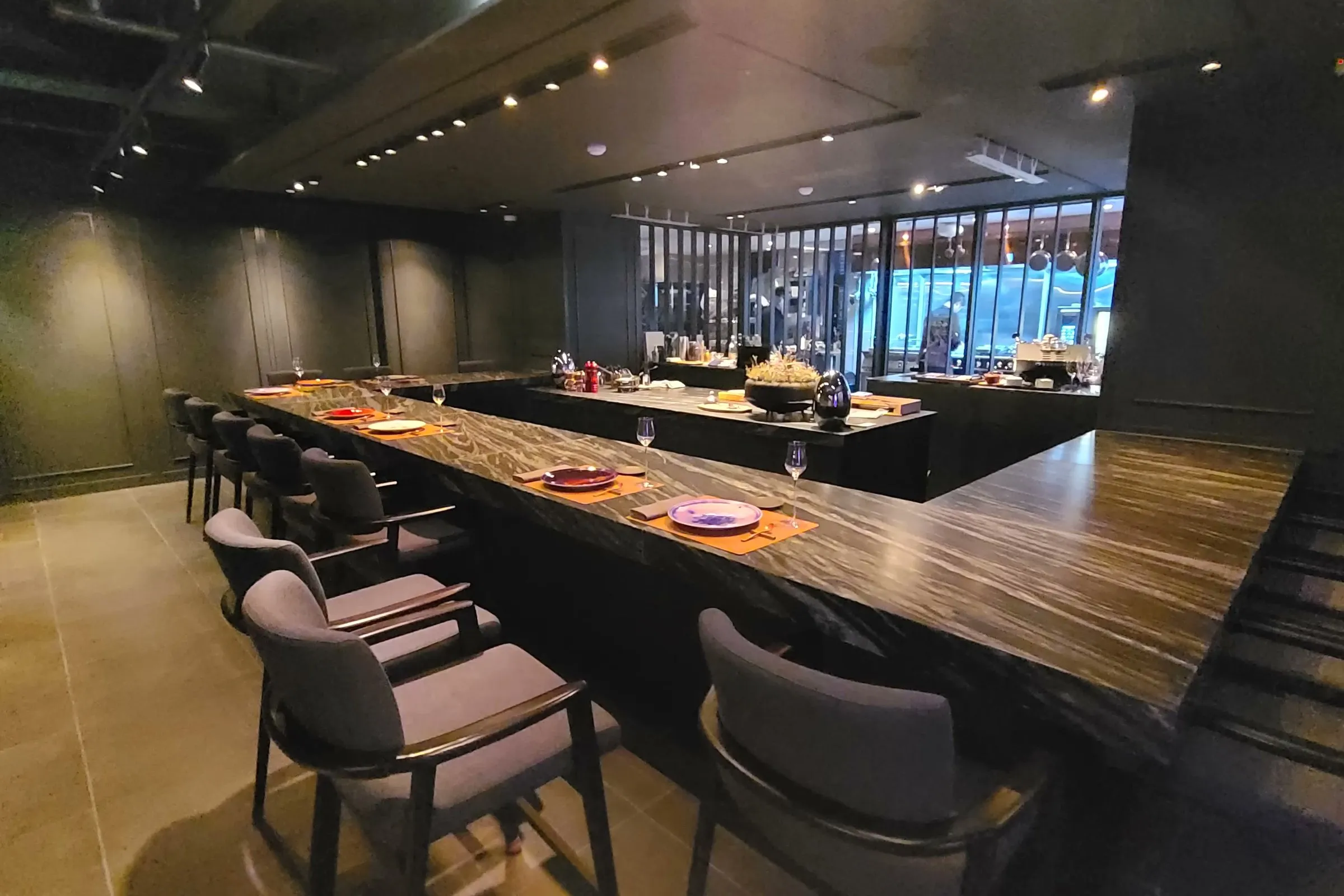
Kim Dae-chun is the TocToc chef, and TocToc is my regular spot. When 7th Door got its first star, he’d been running TocToc for eight years. 7th Door felt like his playground, a room built so he could try everything he ever wanted to try.
And the room is huge and pretty. A long counter faces an open kitchen with an island in the middle, and it reminded me a little of Florilège in Tokyo. The official site says 14 seats.
The name is seven tastes. The five basic ones, then fermentation and aging as the sixth, and the chef’s own touch as the seventh. That’s how the MICHELIN Guide explains it.
TocToc had just come 27th on Asia’s 50 Best Restaurants 2020, and I got carried away and asked whether 7th Door would make the top 10. On the 2026 list it’s No. 49. Michelin gave it a first star in the 2021 guide, the edition after my visit, and it has one star in the 2026 guide.
Kombucha is not kelp tea
Welcome drink: sparkling wine or sparkling kombucha. Kombucha, obviously. For years I thought kombucha was kelp tea. If you just went “wait, it isn’t?”, confess in the comments. It has nothing to do with kelp. It’s tea, black tea or similar, left to ferment. In my defense, in Japanese, kobucha (昆布茶) really is kelp tea.
The fermentation made it sour, almost like booze. I picked it because I don’t like alcohol.
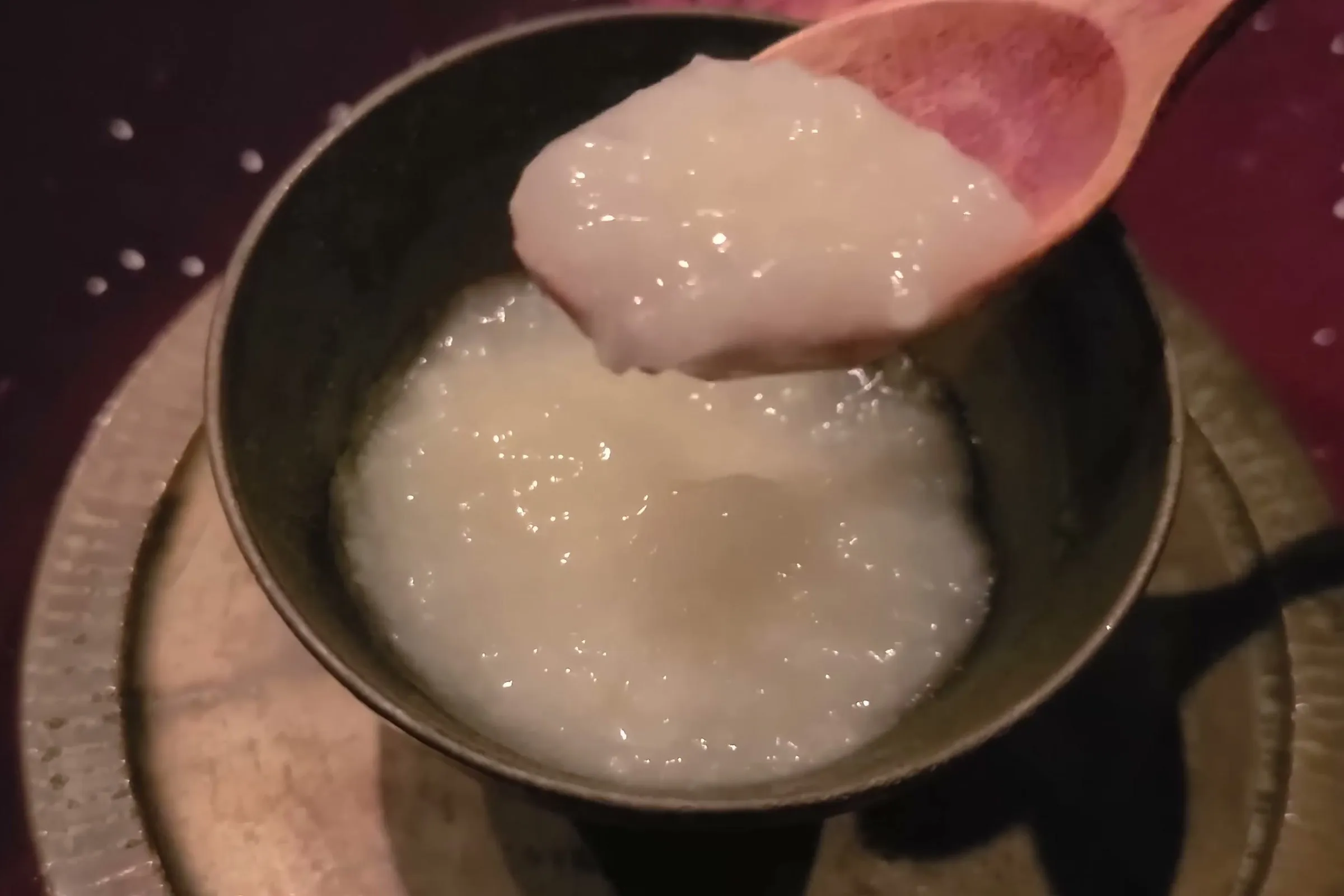
First dish, because it was spring: wild chive porridge. Dallae, Korean wild chive, makes me think of dallae-jang, the soy sauce with chopped wild chive you just mix into rice. When I was a kid with no appetite, that was the best thing ever. Sweet, salty, a bit sour, fragrant. Or it goes in doenjang stew.
Porridge was new to me. They used only the white bulb at the bottom, like the white part of a scallion, and it was nutty, as if there were chunks of potato in there. I had no idea wild chive could taste like that.
Five amuse-bouches, and a tart that’s a new food
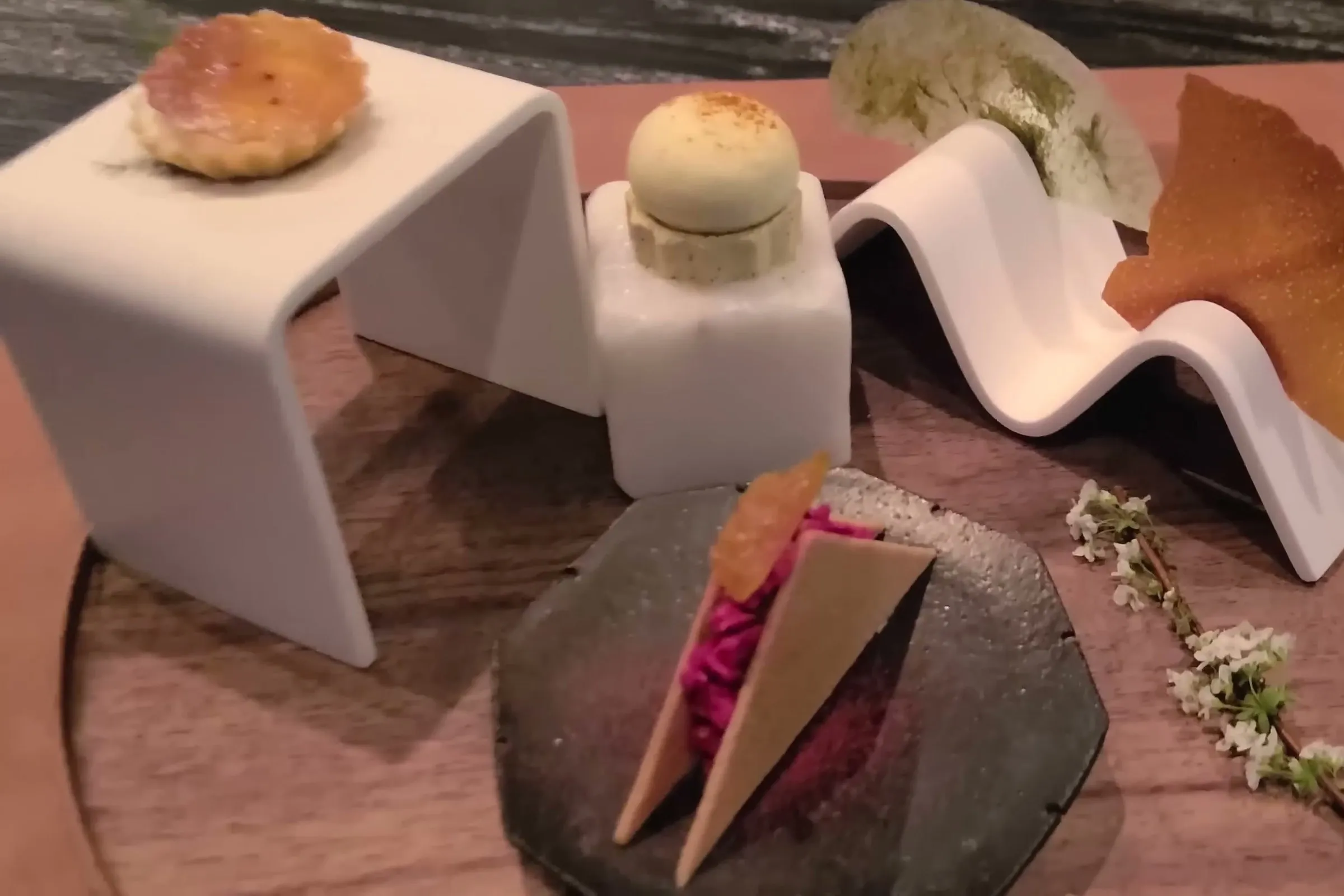
Five at once, eaten from right to left. A shrimp chip and a gamtae seaweed chip. A cake of gajuk namul, young Chinese toon shoots, under a meringue made from fermented citrus syrup. A tart of three-year-old jangajji, Korean soy pickles, topped with ginger fromage blanc. And foie gras aged in sulbap, the steamed rice used for brewing, and maesil, green plum, with cherry crumble and a little chocolate cookie.
The gamtae chip didn’t taste of much. The shrimp chip tasted exactly like fried shrimp shells. The toon cake wasn’t cake in texture, more like songhwa dasik, the powdery pine pollen tea cookie that sticks to your mouth.
The jangajji tart was the one. Fermented pickle, very soft fromage blanc, the nutty, sweet shell, all of it together. It didn’t read as Western food with a Korean touch or the other way round. It tasted like somebody had invented a new food.
The foie gras couldn’t lose. Foie gras monaka is everywhere in Japan these days, usually with dried persimmon or mango. Plum and cherry crumble made this one lighter, with a sharper sweet and sour bite. Little bites perched on things like this reminded me of El Celler de Can Roca in Spain, or L’Impression near Dosan Park.
The last truffle of the season
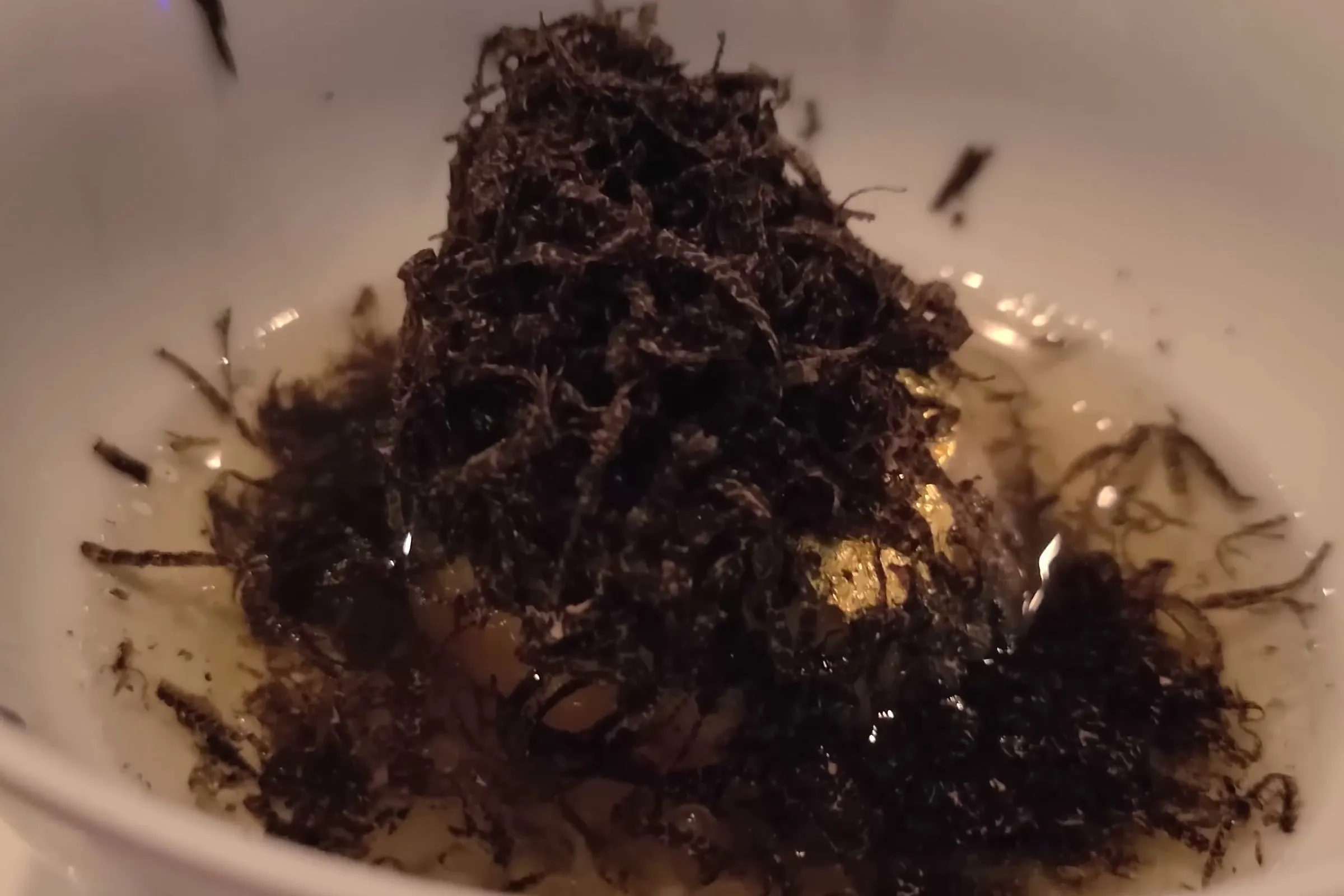
They’d set a truffle on the table, and I have a truffle fetish, so I noticed and wondered why. Then came a truffle soup kind of thing. The chef said it was their last truffle, right when it smells strongest. So that’s me waiting another eight months or so for truffle that good.
Tofu made from pecorino cheese, in a truffle consommé, with truffle and gold leaf on top. Truffle smells best while it’s being shaved, from a little distance. Once it lands on something warm and goes in your mouth, it’s less perfume and more potato.
I expected the pecorino tofu to be strong. It was very soft and mild, and so was the whole dish. Afterwards I was seriously deciding whether to lick the leftover truffle bits. They cleared them away first. Thanks for saving my dignity.
Shima-aji under dongchimi snow, and a stage too far away
The non-alcoholic pairing started here. Even the alcohol pairing has one non-alcoholic drink out of five. First, a drink of their own native peach syrup with an ice ball of bokbunja, Korean black raspberry, to sip as it melts. The sweetness was meant for the fish.
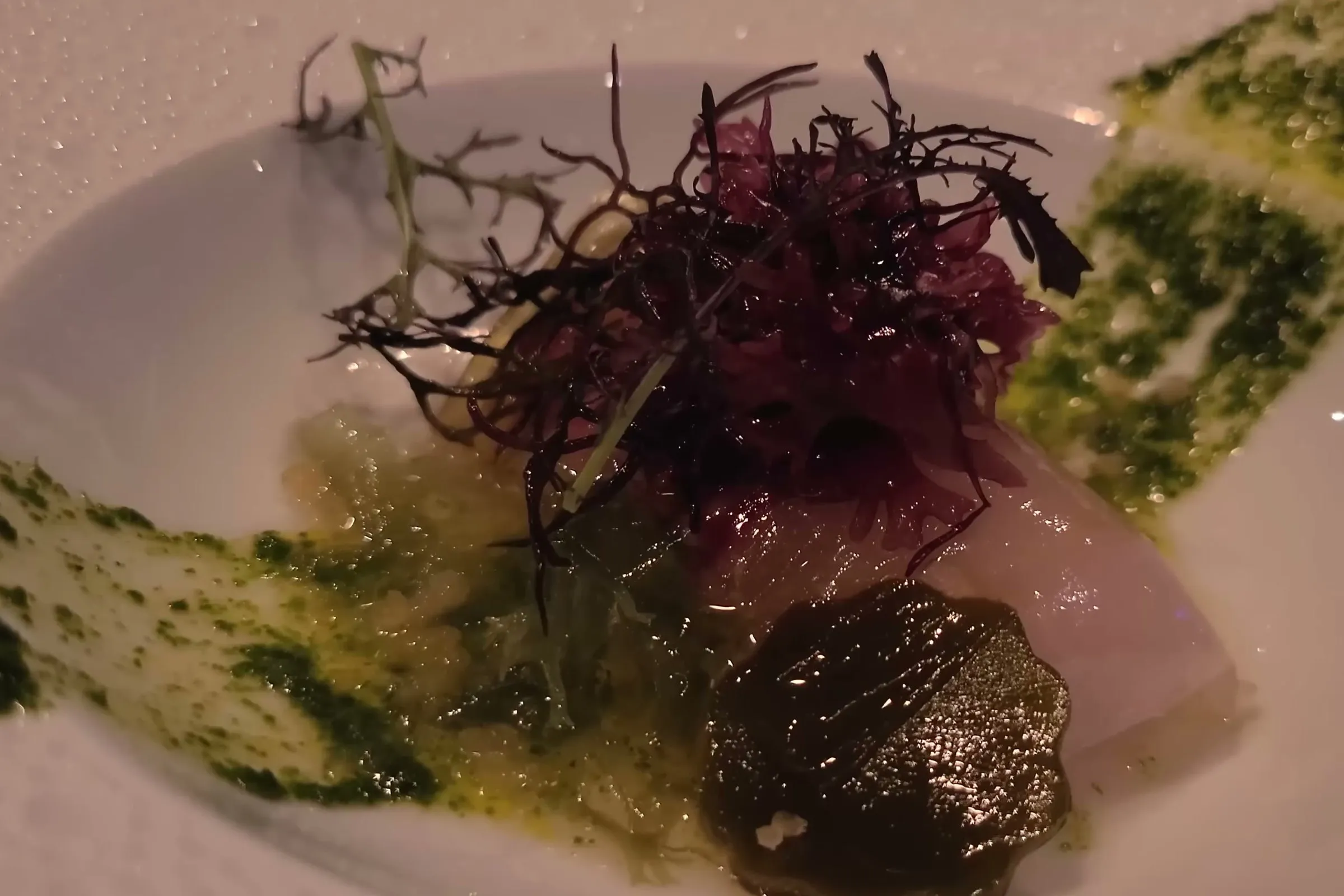
The fish was shima-aji, striped jack, under a film of kelp and five kinds of seaweed, with a house pine vinegar and a pesto of bangpung, a coastal herb. The staff left one thing out: the white stuff they’d shattered with liquid nitrogen and spooned on top was dongchimi sherbet, frozen radish water kimchi.
The shima-aji was firm, fatty and nutty, and the seaweed and vinegar were sweet and sour. I really liked it. The bangpung pesto was faint.
The kitchen has an island in the middle of the room. Quick seafood gets cooked right there, slower dishes come from the kitchen in the back and get finished on the island, and the last touch happens at your seat: truffle shaved, sherbet spooned, oil poured. The island is a stage, and I wish it were closer to the counter. I zoomed in 2x and still couldn’t see much.
Korean jars, Thai flavor
Before the steamed course the chef asked: cilantro oil or lemon verbena oil? He said both. Both, then. He poured them at the counter.
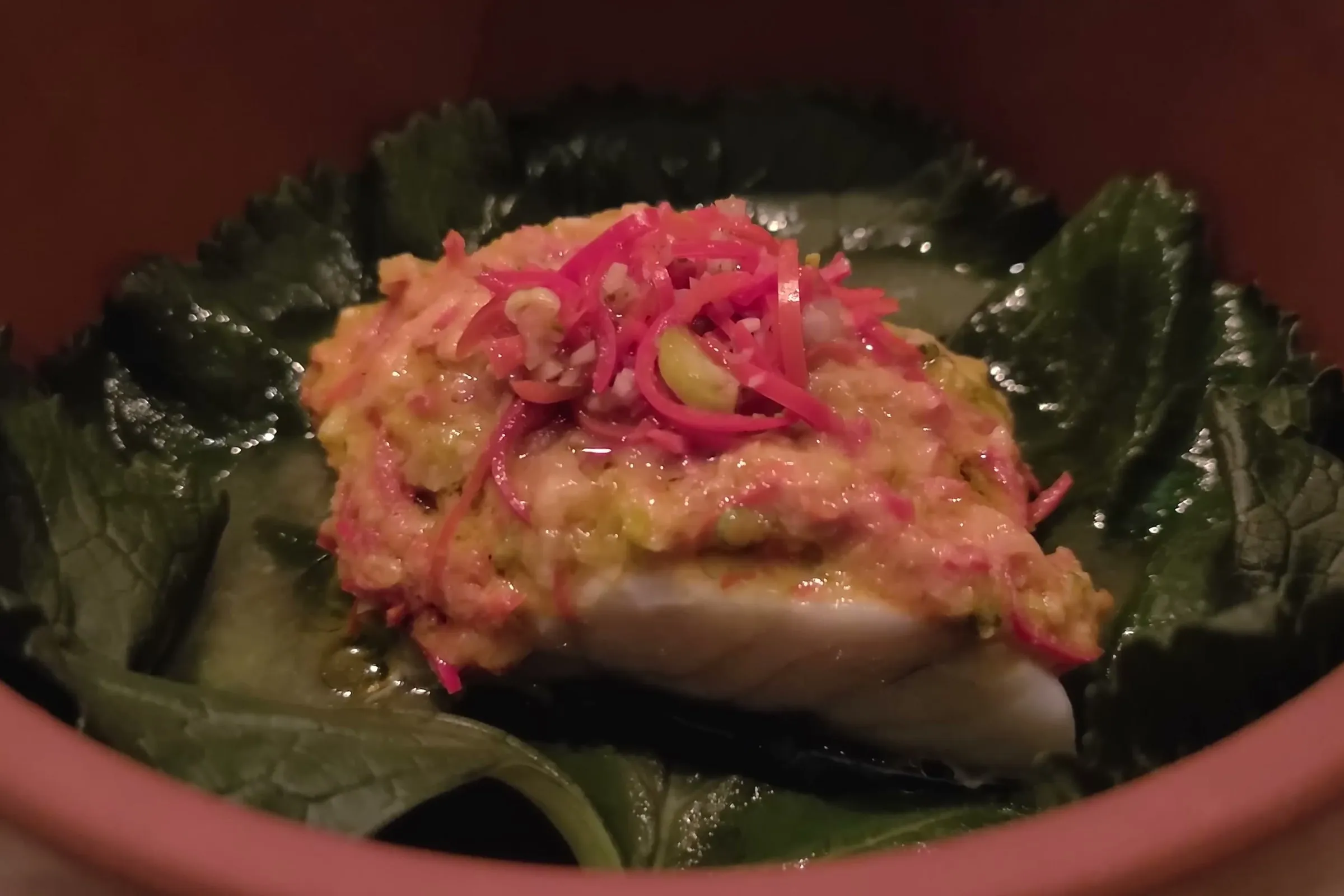
The fish was rockfish aged four days in sulbap, topped with chili, scallion, ginger and pickled garlic, over a peanut sauce with anchovy fish sauce underneath. Southeast Asian flavor from Korean ingredients, they said. My friend took a bite and said “Thai.” Correct. It tasted like a Thai red curry, and everything in it was Korean.
My guess at the trick: the ginger does most of the red curry work, and the anchovy sauce and pickled garlic stand in for fish sauce. The peanut sauce was mild and the chili just adds heat. The fish itself was Korean, chewy like a half-dried fish, with deeper umami.
There were big leaves under the fish, so I asked if I was meant to eat them. Gomchwi, they said, for decoration, you can but you don’t have to. I eat everything in front of me. The lemon and lime pairing drink tasted like lemon juice to me.
Lobster, shelled for me
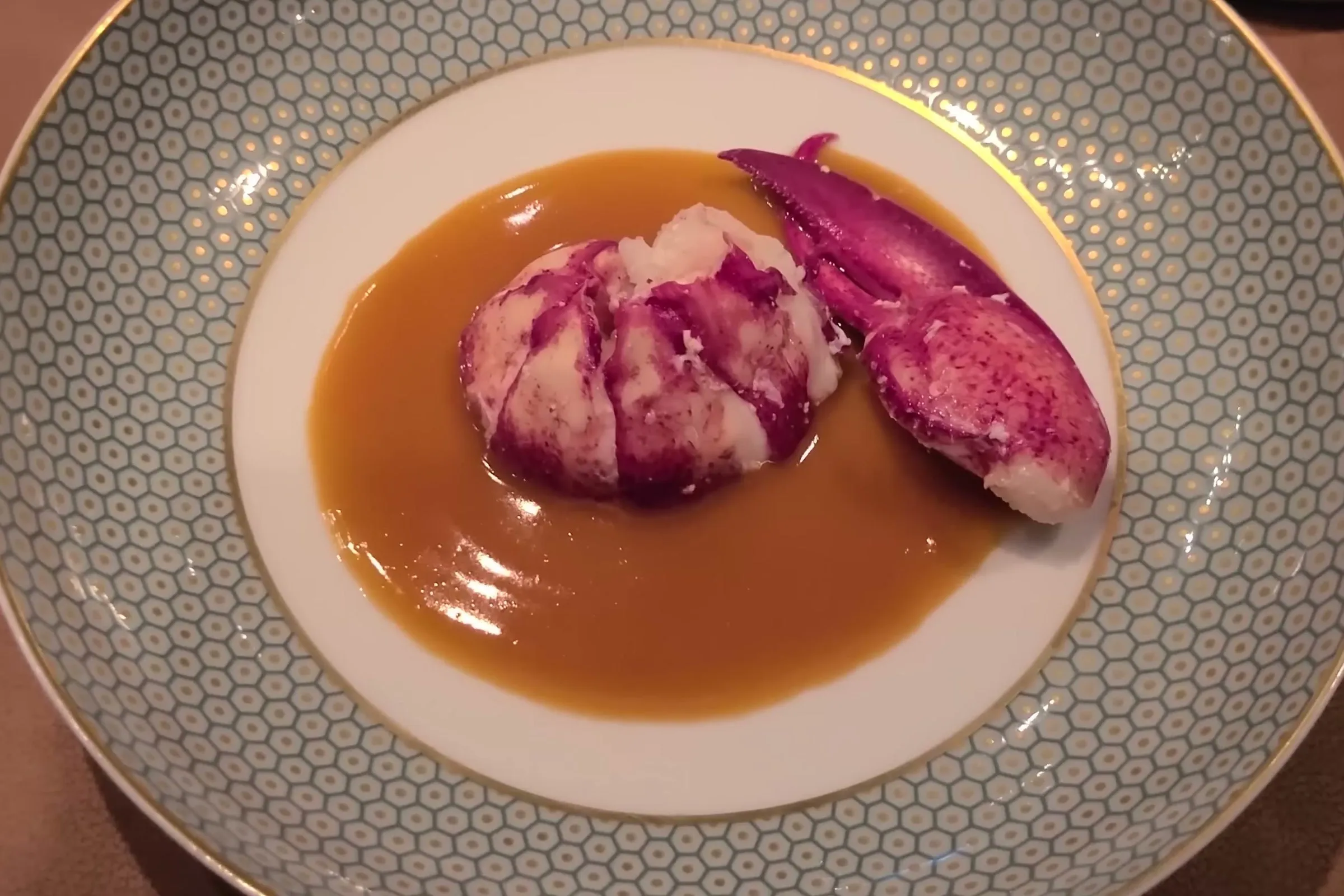
It was supposed to be blue lobster. The supply got cut off the day before, so the chef phoned around for the biggest regular lobster he could get. Fine by me.
They showed it to us in a big silver egg, Christofle, and it was cooked on the island from start to finish. Hearing the shell crack from my seat confirmed it: crustaceans taste best when someone else shells them.
Steamed with their own cheonggyul syrup, green tangerine, over a sauce of lobster butter, lobster jus and grapefruit reduction. The lobster was just big, well-steamed lobster, cooked right, not tough. The sauce was the thing. I love a bisque-style sauce, and this one was thick, with a sweet and sour grapefruit note that didn’t overdo it.
Dry-aged ribeye in a hairtail sauce
Before the beef, you pick a knife: Perceval, known for cutting, Nontron, the odd-looking one, or Laguiole, the famous one. I took the odd one.
The drink came in a jar scented with binchotan, because the beef was grilled over binchotan. Inside, their own fermented syrup with perilla leaf and crown daisy, plus jasmine. To me the jasmine smelled like the incense at jesa, a Korean ancestral rite. The pairing drinks all smelled interesting, but I never got what they did for the food. Water or sparkling water is my pairing.
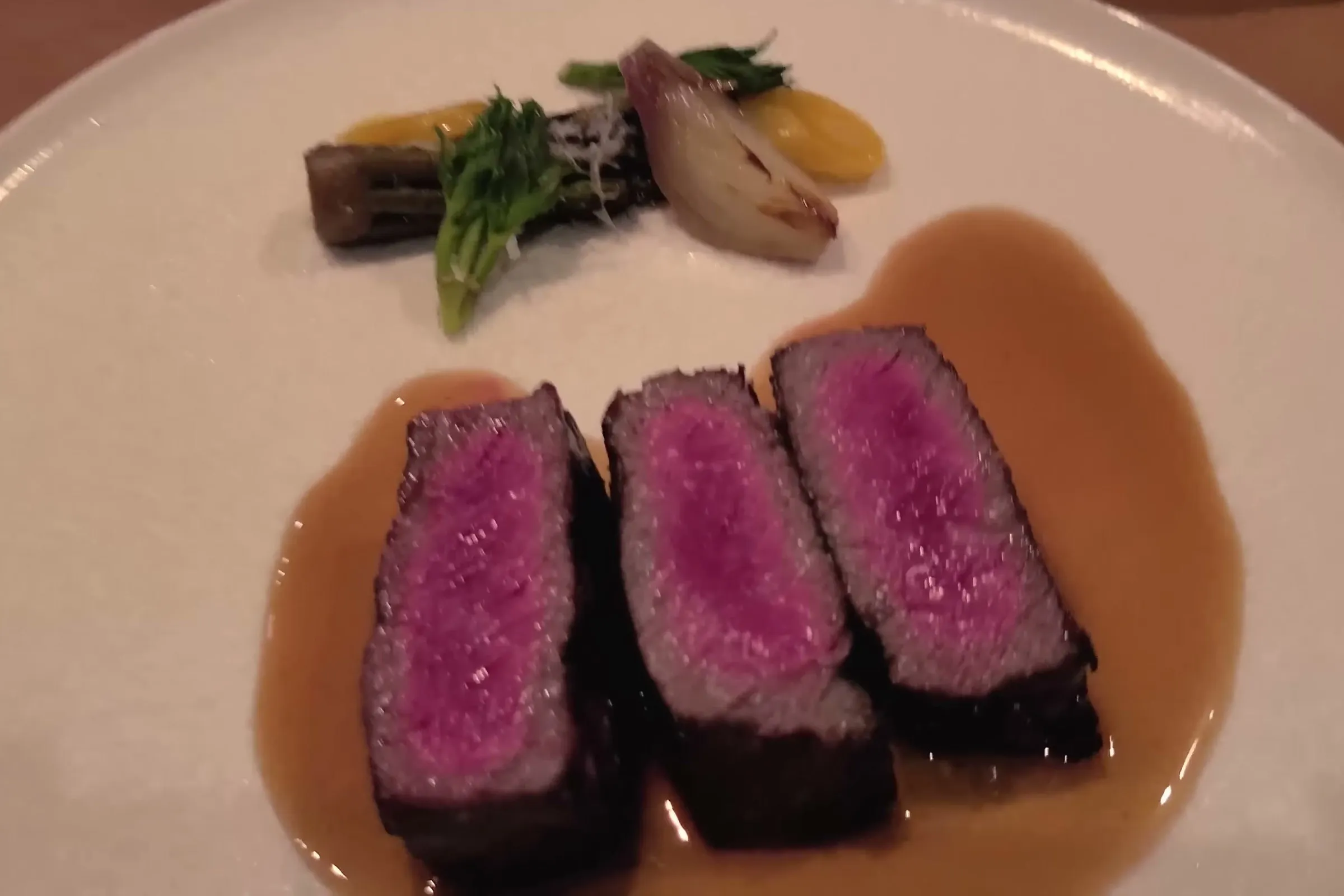
The beef was ribeye aged 23 days, the eye and the cap grilled separately. Korean butchers call the cap saeu-sal, shrimp meat, for its shape. TocToc almost always does striploin, so ribeye was a change, but the doneness and texture were close to the TocToc striploin I always order.
The sauce was black garlic and galchi sokjeot, salted hairtail guts. I expected funk. It was sweet and tasted like a Western sauce. The cap came after, with a tangy, kimchi-like topping that was great with the beef. Of the garnishes, pickled dureup, aralia shoots, was my favorite.
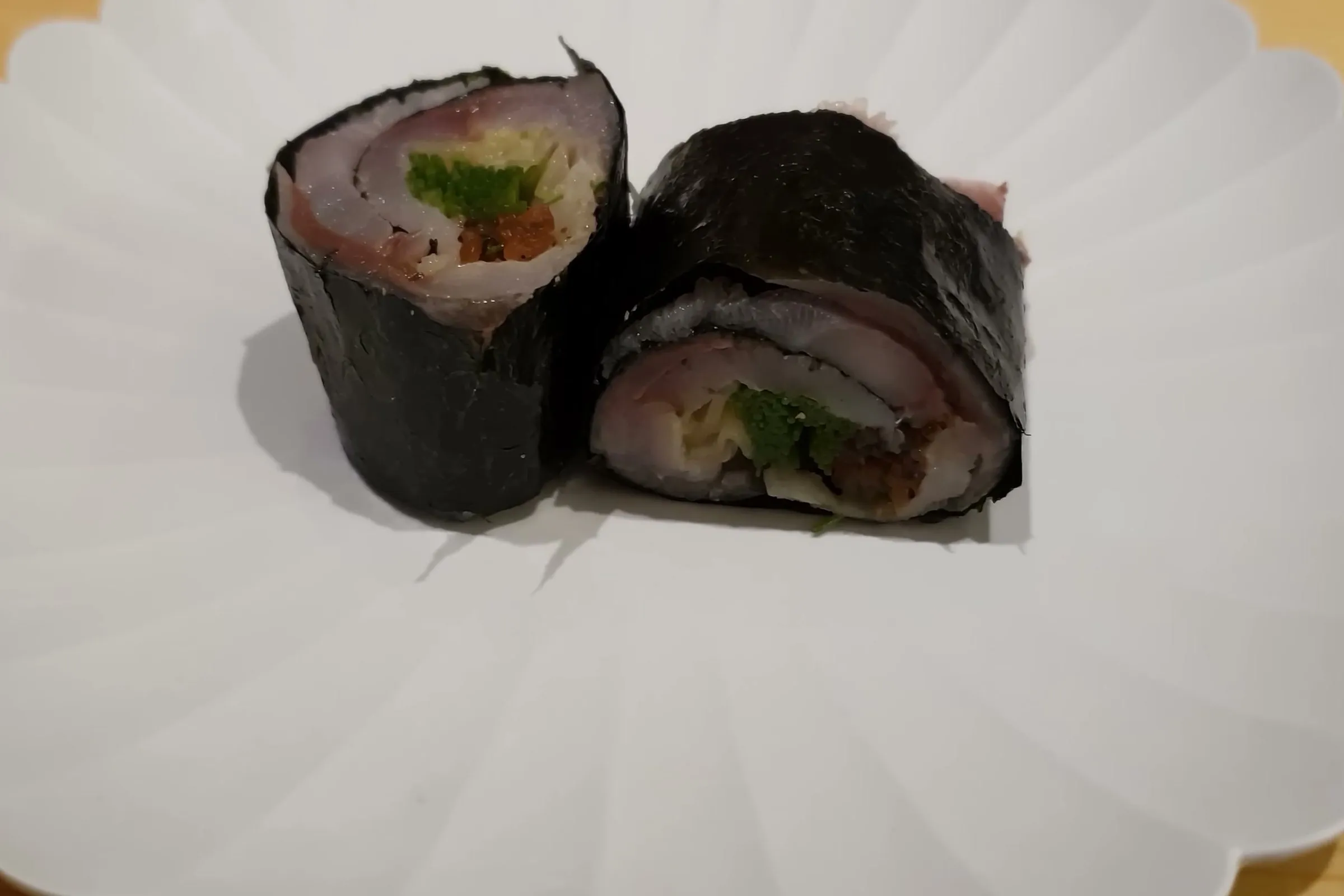
Caviar gimbap in the chef’s own laver
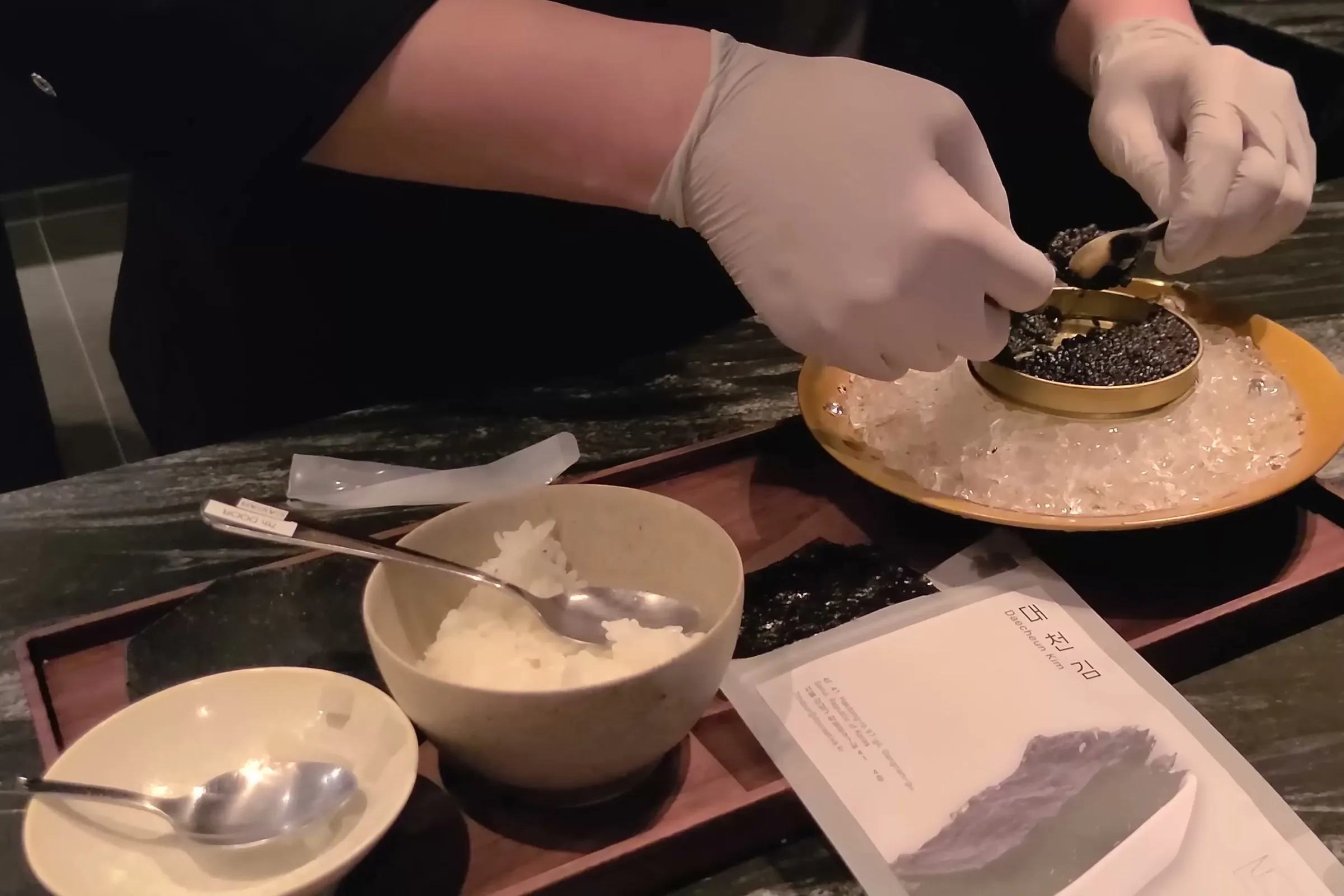
Another wet towel, because the next one is finger food. I’m always touching my phone, so I eat this stuff with dirty hands anyway. An empty plate came first, because this one gets built at the counter.
My friend had read up before coming and recognized the laver: “Daecheon gim?” Dae-chun, also spelled Daecheon, is the chef’s given name, and gim is Korean for laver. My friend thought the name was a coincidence. It isn’t. The chef designed the packet himself, with the restaurant’s address and logo on it. The laver comes from Gijang in Busan, and they season it and grill it over charcoal.
So, caviar gimbap. Under the caviar, a bit of pickled radish for crunch, like chicken-mu, close to the radish pickle at Tenjimon. The laver tastes like the seasoned laver every Korean home has, salty, nutty, a little oily, very thin. The rice is plain, soft everyday rice, not firm sushi rice.
Luckily the caviar wasn’t very salty, mostly umami. If it had been, with that salty laver, it would’ve been too much. Balanced. At the end the chef handed us a packet of the laver to have for breakfast.
Dongchimi noodles, then three rounds of dessert
Last savory course: dongchimi guksu, noodles in their own radish water kimchi with a strong beef shank broth, and minced chili that tastes a little fermented, to add like a garnish. Cold, sour noodles at the end are welcome. The flavor isn’t mine, though, and the chili was more salty than spicy. I don’t like this kind of noodle much, and the whole time I was thinking about TocToc’s pasta.
Pre-dessert: a mandarin tuile you tap to break over a red-hyang granita. Red-hyang is a Jeju citrus. More tart than sweet, a palate cleanser really. Then a drink they call aurora water, lemon, orange, cinnamon and star anise. That one tasted Thai to me too, like the sweet tea they hand you after a massage.
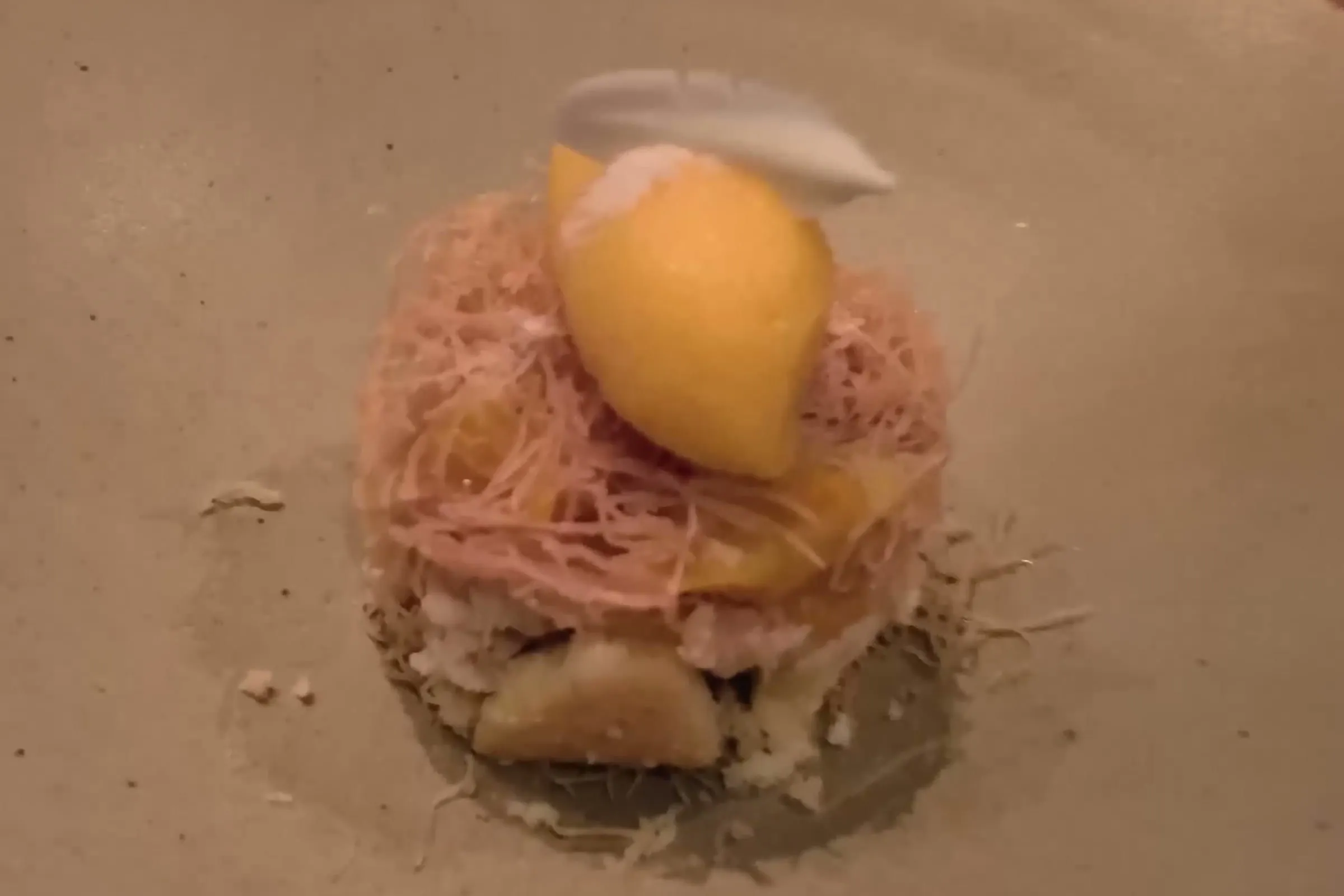
Main dessert, a bird’s nest: hallabong pulp and coconut crumble in a nest of crisp kataifi, with hallabong sorbet and white chocolate on top. Heavy and a bit oily, probably the coconut and the kataifi, and I usually like light desserts. I still loved it. The hallabong sweetness and smell, very complex.
Petit fours: guimauve, a French marshmallow, with red-hyang confit, and a macaron made from sulbap. And the tea of the day turned out to be the fruit tea I always drank at TocToc, my Juicy Fresh. TocToc stopped serving it and I’d missed it. In 2022 it was there again, reblended: Assam in, Earl Grey out, less sour and more like real tea (2022/06).
Take the other elevator
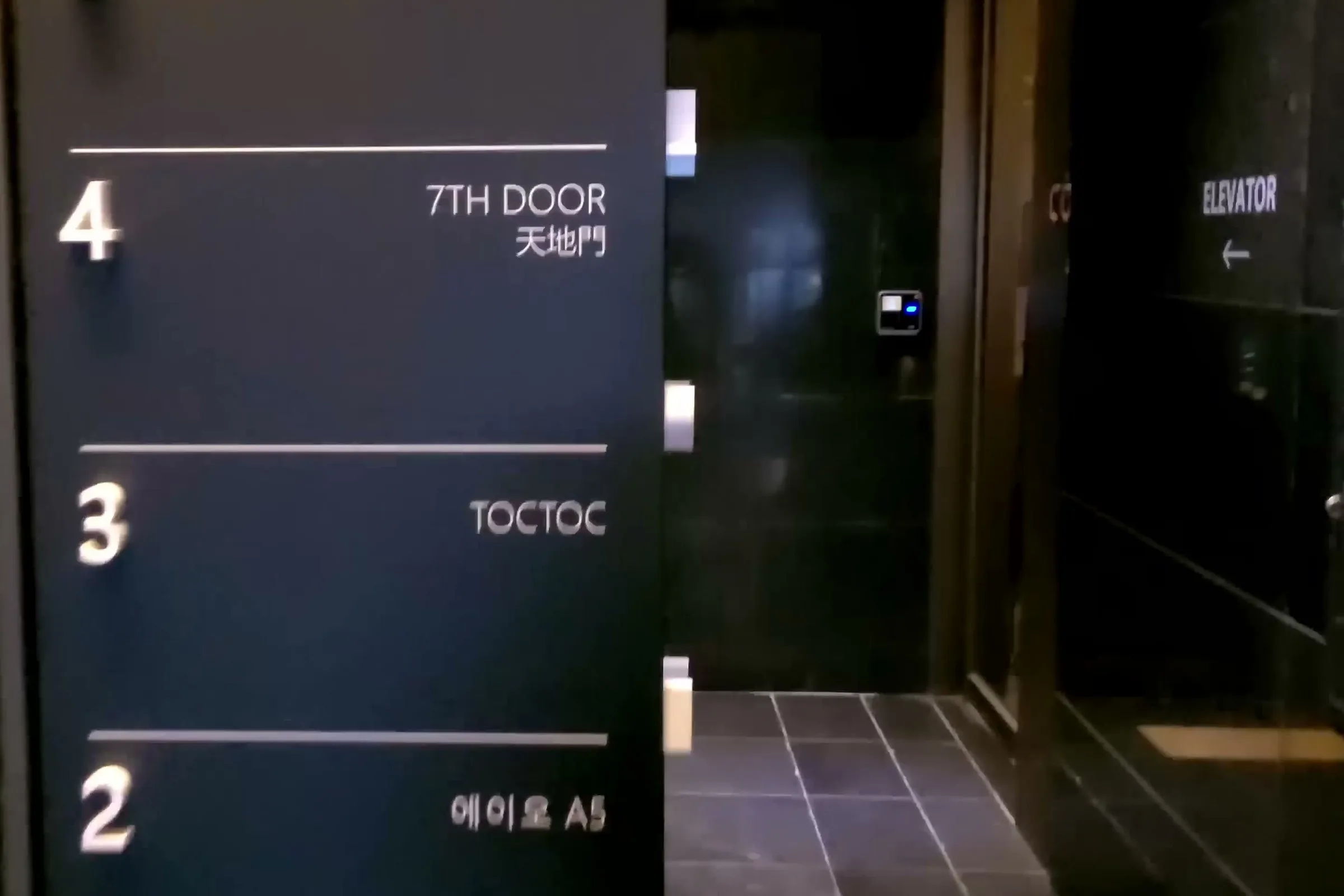
When I went, the elevator you’d take for TocToc was the wrong one. For 7th Door and Tenjimon on the fourth floor, you take the one on the other side, at the back.
Tenjimon and 7th Door share the entrance. Facing the reception, Tenjimon is on the right and 7th Door is on the left, down the hallway with the fermentation fridge I once showed in my Tenjimon video.
The address is 4F, 41 Hakdong-ro 97-gil, Gangnam-gu. When I checked in 2026/11, the official site listed lunch 12:00 to 15:00 (last order 13:30) and dinner 18:00 to 22:00 (last order 19:30), Tuesday to Saturday, closed Sunday and Monday. No children under 13, and it asks for neat clothes: T-shirts, track pants, shorts and slippers may be turned away.
No 2020 bill, so 2022/06 and 2026/11 instead
I don’t have the 2020 number, so I’m not going to guess. I had the non-alcoholic pairing. What I remember is the feeling after: tasty, filling, interesting, and somehow poor value. Maybe it was the Korean touch on every plate that made the money feel wasted, even though most of it didn’t taste very Korean.
On my second visit, a weekend lunch, it was ₩180,000 a person (about US$140, 2022/06), and when I asked, dinner was ₩280,000 (about US$220, 2022/06). Lunch at that price surprised me a little, but with dinner at ₩280,000 it didn’t look like much of a rise from before, and the lunch course was very full for the money.
When I checked in 2026/11, the official site asked a deposit of ₩180,000 for weekday lunch (about US$130), ₩210,000 for Saturday lunch (about US$160) and ₩320,000 for dinner (about US$240). It’s a guarantee against no-shows and gets cancelled when you walk in on the day. Polle lists the three courses at those same figures. So the weekend lunch I paid ₩180,000 for is ₩210,000 on Saturdays now, weekday lunch is ₩180,000, and dinner went from ₩280,000 to ₩320,000. Corkage is one bottle, ₩100,000 (about US$70).
Would I go back?
I did. In 2022 I went back for a weekend lunch, ₩180,000 a person (2022/06), and that video’s title calls 7th Door a door that sends you to heaven with flavor. It was the freshest, tastiest meal I’d had in a long while, and the menu was changing the next week, so I booked again on the spot.
Why so long between visits? Now and then I’d remember, ask for a seat, hear there wasn’t one and let it slide. It isn’t sushi, the one thing I go crazy chasing, so I’d just forget. It’s pricey, so I won’t push it on just anyone, but if the price doesn’t bother you, go at least once.
After that first meal my answer was simpler. It’s delicious, the season shows on every plate, and I still can’t tell you what kind of food it is. Fermentation is supposed to be the theme. Mostly it’s an unusual meal, and an interesting one. Go once and see.
How to book
How I booked
Through the manager. I usually ask whether 7th Door has a seat on a given day, and if not Tenjimon, and how TocToc looks, all three at once, then go wherever there’s room. For my second visit I asked late: the weekend dinner was full and lunch still had a seat (2022/06). I’d thought lunch was weekends only. It isn’t, I’m just an office worker who can only go on weekends.
- CatchTable
The online route on 7th Door’s own reservation page when I checked in 2026/11. A deposit holds the seat: ₩180,000 for weekday lunch, ₩210,000 for Saturday lunch, ₩320,000 for dinner. The site calls it a guarantee against no-shows that gets cancelled when you walk in on the day. Cancel 3 days ahead for a full refund, 2 days ahead for half, nothing back from the day before, and the same if your party shrinks. Tell them about allergies when you book, because nothing gets swapped on the day. The CatchTable app works in English and doesn’t need a Korean phone number.
- Phone or email
The official reservation page lists 02-542-3010 (+82 2-542-3010 from abroad) and [email protected] (2026/11). If you can’t give card details for the deposit, it says to contact the restaurant to pay it another way. Lunch 12:00 to 15:00 (last order 13:30), dinner 18:00 to 22:00 (last order 19:30), Tuesday to Saturday, closed Sunday and Monday. Corkage is one bottle, ₩100,000. No children under 13. Neat clothes: T-shirts, track pants, shorts and slippers may be turned away.
Checked 2026/11. Booking rules change, so look at the official page before you go.
Where it is
- Address
- 4F, 41 Hakdong-ro 97-gil, Gangnam-gu, Seoul 06072서울 강남구 학동로97길 41 4층
Plan the Seoul trip
The boring bits I’d sort before flying, so the eating days stay free.
- Hotels in Seoul*
Pick the room by where you eat, not by the sights. After a long dinner, a short ride back is the real luxury. This place is in Cheongdam-dong, Seoul.
- Korea eSIM*
Data as soon as you land at Incheon. Install it before the flight.
- AREX airport express*
Incheon to Seoul Station in under an hour, with no traffic to think about.
- T-money card*
One card for the subway, the buses and the convenience store. Tap on, tap off.
- Gwangjang Market street food tour*
Bindaetteok, mayak gimbap and yukhoe, with someone who knows which stall.
- Korean cooking class in a Bukchon hanok*
Cook a few home dishes in an old hanok, then sit down and eat them.
Links marked * are affiliate links. If you book through them I may earn a small commission, and you pay the same. How it works
Guides that mention this place
More from this restaurant on the channel
More places I have eaten at
All of Seoul →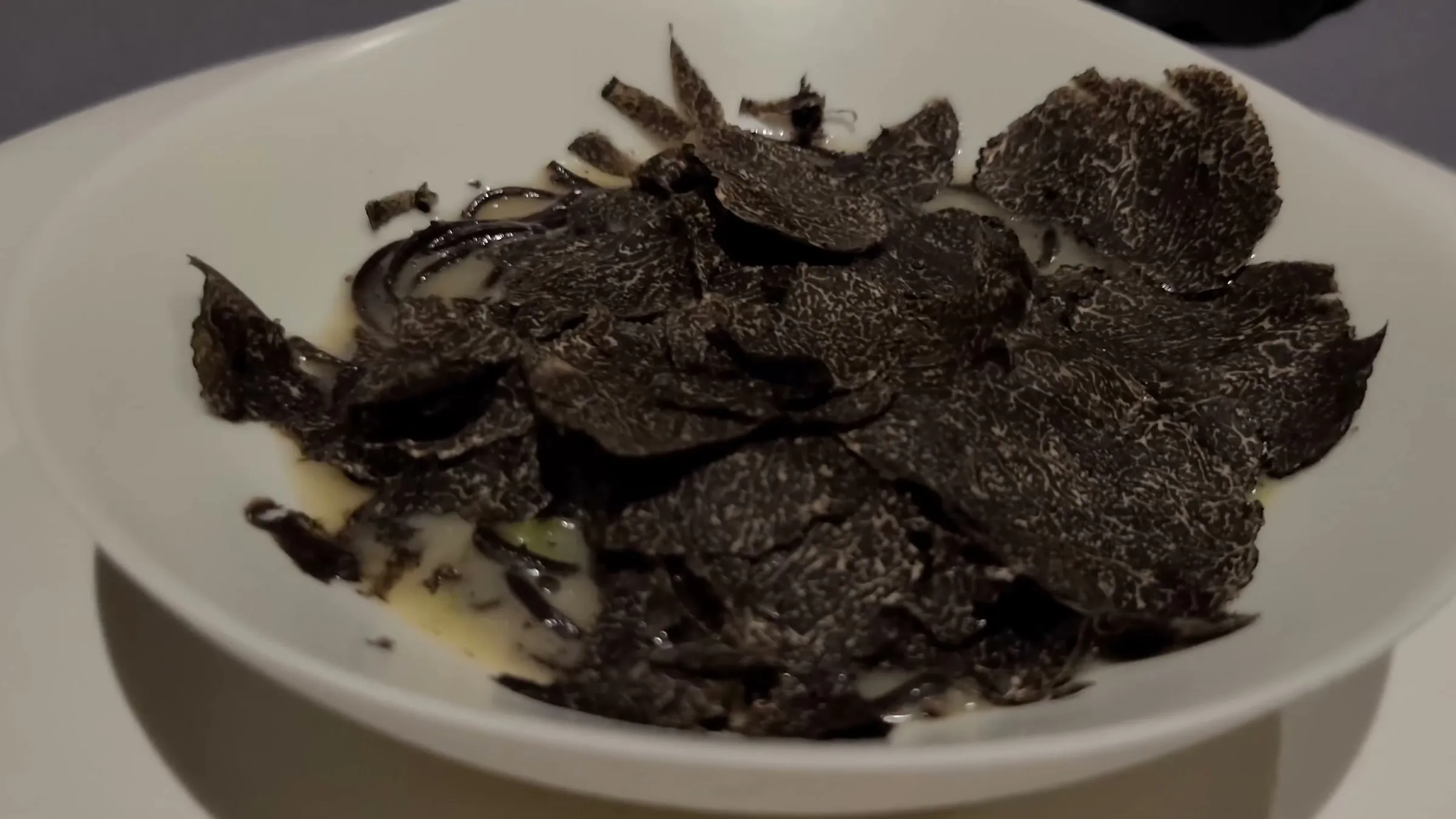 Itaewon, Seoul
Mosu Seoul
Chef Anh Sung-jae’s Mosu in 2020. Burdock you punch open, the best yukhoe of my life, truffle acorn noodles.
₩240,000 2020/05 video Cheongdam-dong, Gangnam, Seoul
Kwonsooksoo
Two Michelin stars, a tray of drinking snacks, and soybean noodles I didn’t want to like.
₩219,000 2020/09 video Apgujeong Rodeo, Sinsa-dong, Seoul
Sushi Tsubaki
Apgujeong omakase, ₩110,000 dinner in 2020. Salty, tough, and not for me.
₩110,000 2020/01 videoSources
- 7th Door MICHELIN Guide
- The First Day We Got Our Star: 7th Door's Kim Dae-chun MICHELIN Guide
- 7th Door, reservation (English) 7th Door
- 7th Door, reservation (Korean) 7th Door
- About 7th Door 7th Door
- 7th Door, Asia's 50 Best Restaurants 2026 Asia's 50 Best Restaurants
- 세븐스 도어, menu and prices Polle
- CATCHTABLE: Book Restaurants App Store