The ¥84,700 sushi dinner I changed my flight for
Hatou (波濤, also spelled Hato) is the sushi counter the Ishikawa group opened in Kagurazaka, Tokyo, in 2020, with a young chef named Kumagiri Daichi. Two of us paid ¥84,700 (about US$570, 2023/09), so ¥42,350 each (about US$290), for not much food. Would I go back? Yes. The price is steep for what lands on the plate, but almost every bite hit, and the hamo soup was the best I’ve had anywhere. Booking is the hard part. I got in on a cancellation that came up while I was at the gym, and when I asked about a next visit they were full until the following August. Since then the shop has moved within Kagurazaka. In 2026/11 its official site gave hours but no way to book, and Tabelog’s new listing was on hold. So watch for cancellations.
monster gourmetFrom my 2023/09 video
- My share
- ≈ ¥42,350
- about US$290, dinner omakase, half of ¥84,700 for two, 2023/09 video
- Highlight
- The hamo soup, sweet from the fish’s own fat
- Skip
- The vegetable sushi that opens the meal
- Video
- 14:18
- 2023/09
- Where
- Kagurazaka, Tokyo
- Kagurazaka (Tozai Line), exit 1a, 3 minutes on foot
¥84,700 for two, and not much food
The bill for the two of us was ¥84,700 (about US$570, 2023/09). That’s ¥42,350 each (about US$290). For that money the meal was small. Really small.
Halfway through, Daichi-san asked if the amount was okay, because the friend I often bring along is tiny. Their courses aren’t big, he said, so they’d be fine. Aren’t big? I’d call it on the light side.
So the price is a bit wild for what you get. And still, almost every piece left me happy. It heads somewhere different from the sushi counters I’ve loved so far, and all night I kept telling the chef how good everything smelled.
A cancellation, a gym, and a changed flight
From the day it opened, Hatou was the rising star the big foreign foodies kept talking about. It opened in early 2020, so as a foreigner I had no way to go for years. It blew up with locals during the pandemic, and after that there was no way to book it at all.
This seat was a cancellation. I was at a gym in Tokyo, done working out, about to fly straight back to Seoul, when someone tipped me off that a seat had opened. I booked it on the spot and changed my flight.
At the end they told me to get in touch about my next visit, and Daichi-san and I followed each other on Instagram. Am I a regular now? I got in touch. Full until the following August.
Cancellations do come up, the way mine did. Don’t miss them.
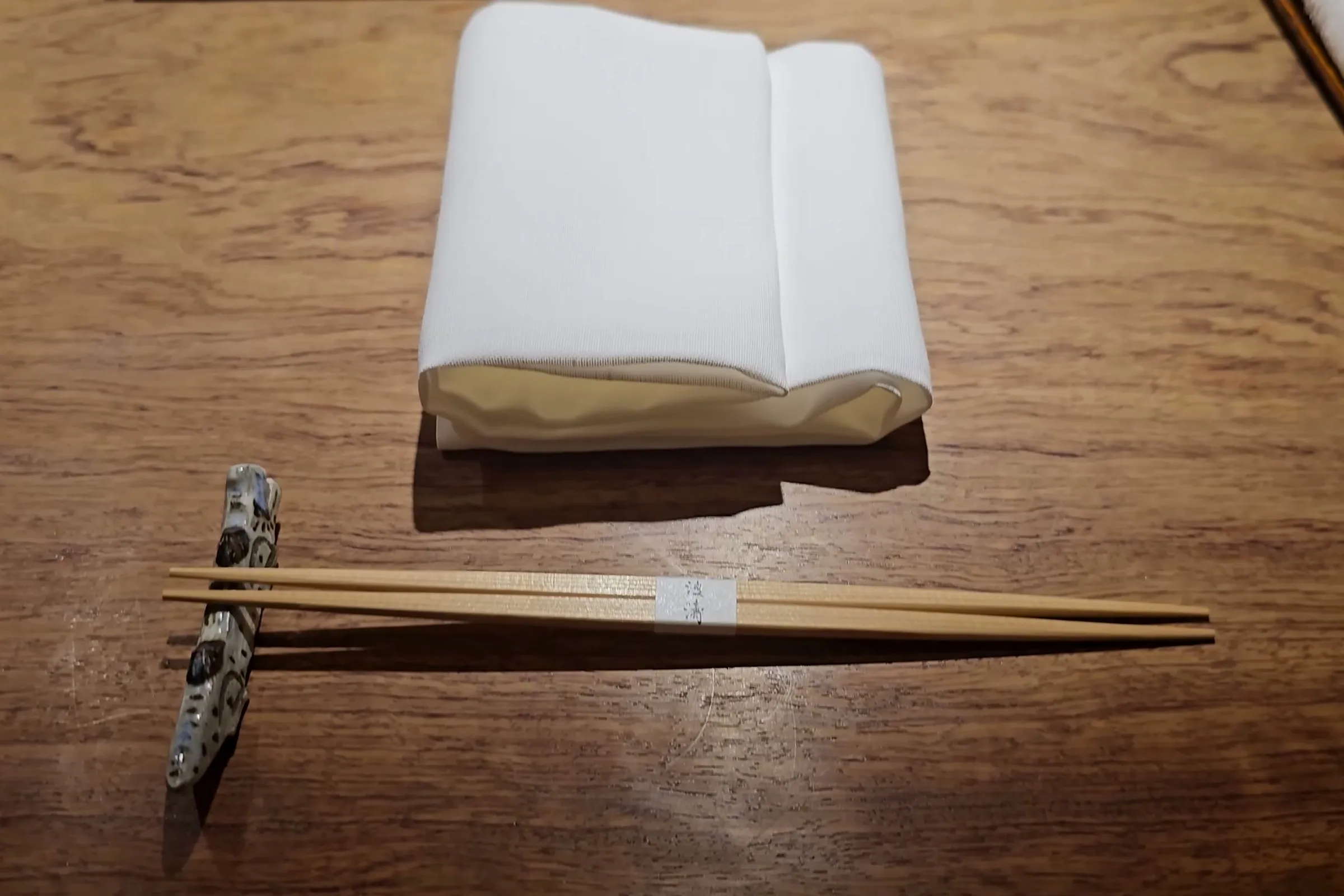
Ishikawa’s sushi counter, with a very young chef
Kagurazaka is famous for Japanese restaurants that aren’t sushi. Kaiseki, nihon ryori. Ishikawa and Kohaku, both three-star places when I went, belong to the same group, and Hatou is that group’s sushi counter.
The chef is Kumagiri Daichi. Tabelog says he trained inside the Ishikawa group, then learned sushi at Higashi-Azabu Amamoto, and has run Hatou since it opened in 2020/02. I didn’t know his age. Very young. The official site says he was born in Shizuoka in 1991. Handsome, too. And since he’s young, the whole crew behind the counter is young.
Then the hospitality started and suddenly I remembered Ishikawa and Kohaku, which I hadn’t been to in a while. Their food is great, but their service is something else. They go looking for common ground with Korean guests, bring up Sushi Cho, and with me they talk a lot about chef Lee Jin-wook of Sushi In in Seoul.
Same here. He asks where I’m from. Korea. Sushi In, he says. You know Sushi In? He knows Lee-san. He used to go to the Chosun Hotel twice a year, for the Ishikawa gala dinner and the Kohaku gala dinner. I think I saw him at Ishikawa once, too.
A shaky start with vegetable sushi and fried amadai
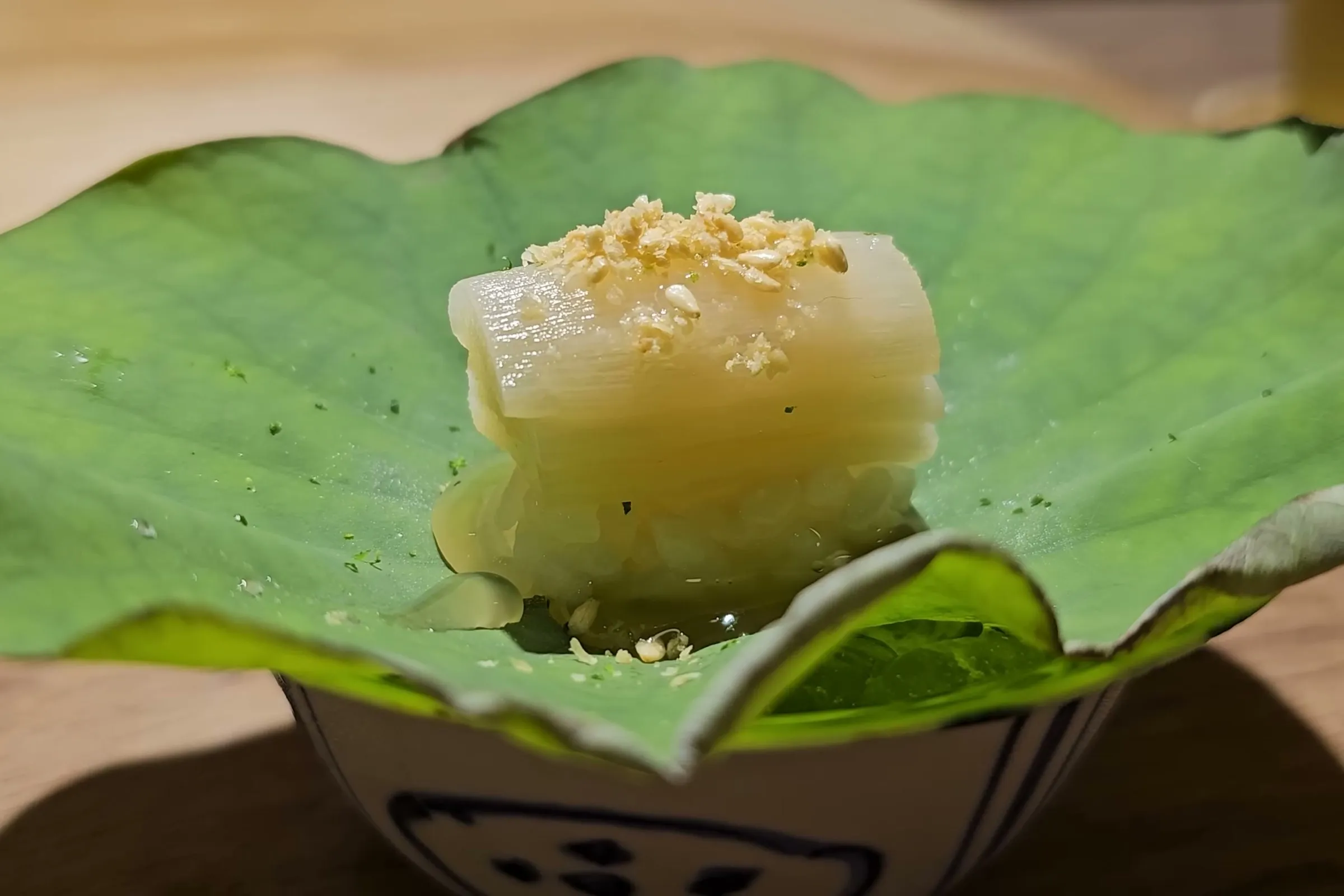
First came the tsumami, and it was vegetable sushi. Looks a bit sad, right? It tasted about the way it looks.
I’d lowered my hopes on the looks, then raised them a little. I don’t go back to Kohaku much, only because I’m so sushi-focused, but of all the Japanese cooking I’ve eaten, Kohaku was the best. Maybe this place pulls the same trick, plain looks and huge flavor. Nope. The vegetable sushi was just okay.
Then fried amadai, tilefish. Not a showstopper either. The fish was good and the frying was well done, so it was tasty. Kohaku would serve some odd combination you’d never think of. Up to here my expectations kept sliding.
What kept me interested was the room. Everyone around me seemed to be a regular. The chef asked about their families, the staff talked about what they did on the weekend. A family vibe, and they never left me out of it.
Two hamo dishes, and a soup I’d fly back for
The hamo, pike conger, was strange in a good way. The flavor wasn’t about fat. The cooking was the unusual part. Hamo is usually scored and cooked shabu-shabu style until it opens like a flower, with a fluffy bite. Even shabu-shabu cooks it more than this. This was barely dipped, blanched or maybe not. That chewy texture was something else.
Then a soup, and I was shocked. The best thing so far. Barely a tsumami, but the sweetness was so good I asked the chef if it came from soy sauce. He asked if I was a cook. No, nothing like that, I said, I’m a sushi freak. The sweetness was the hamo’s own fat, he said. It was a broth made from hamo.
That sweetness, with the smell of kinome, young sansho leaves, on top. I’ve never had a better hamo soup, and I’ve had it at some famous kaiseki counters. On soup alone, the best under heaven. A one-of-a-kind dish, the way Sushi In’s kanpyo maki is.
And then the tsumami were over. One dinner omakase, a single course, and the small dishes were already done. Huh.
Kasugo first, and rice that sinks
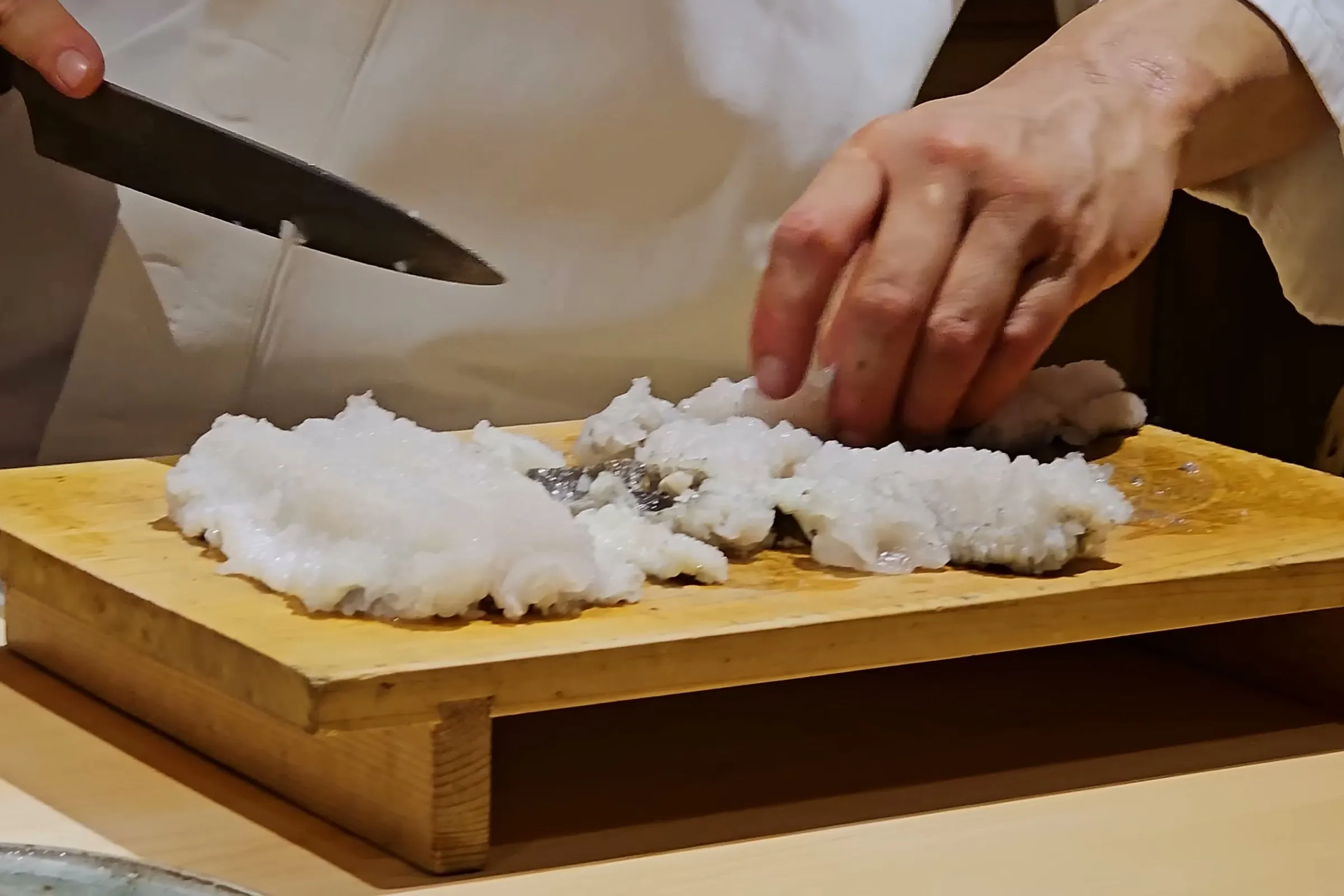
The first nigiri was kasugo, baby sea bream. An unusual opener, prepped in an unusual way. Daichi-san said he likes his kasugo a bit fuwa-fuwa, fluffy. It was. Soft and pillowy.
The rice has a slight sweetness, and the vinegar smell is the kind nobody will dislike. And look at that topping. Did you see that piece sink? The nigiri here settle dramatically, the rice comes apart nicely in your mouth, and the grains have a great texture.
The toppings have great textures too. A lot of them lean soft, but each one keeps its own character, the way the hamo did.
Everything smelled amazing, and I can’t explain why
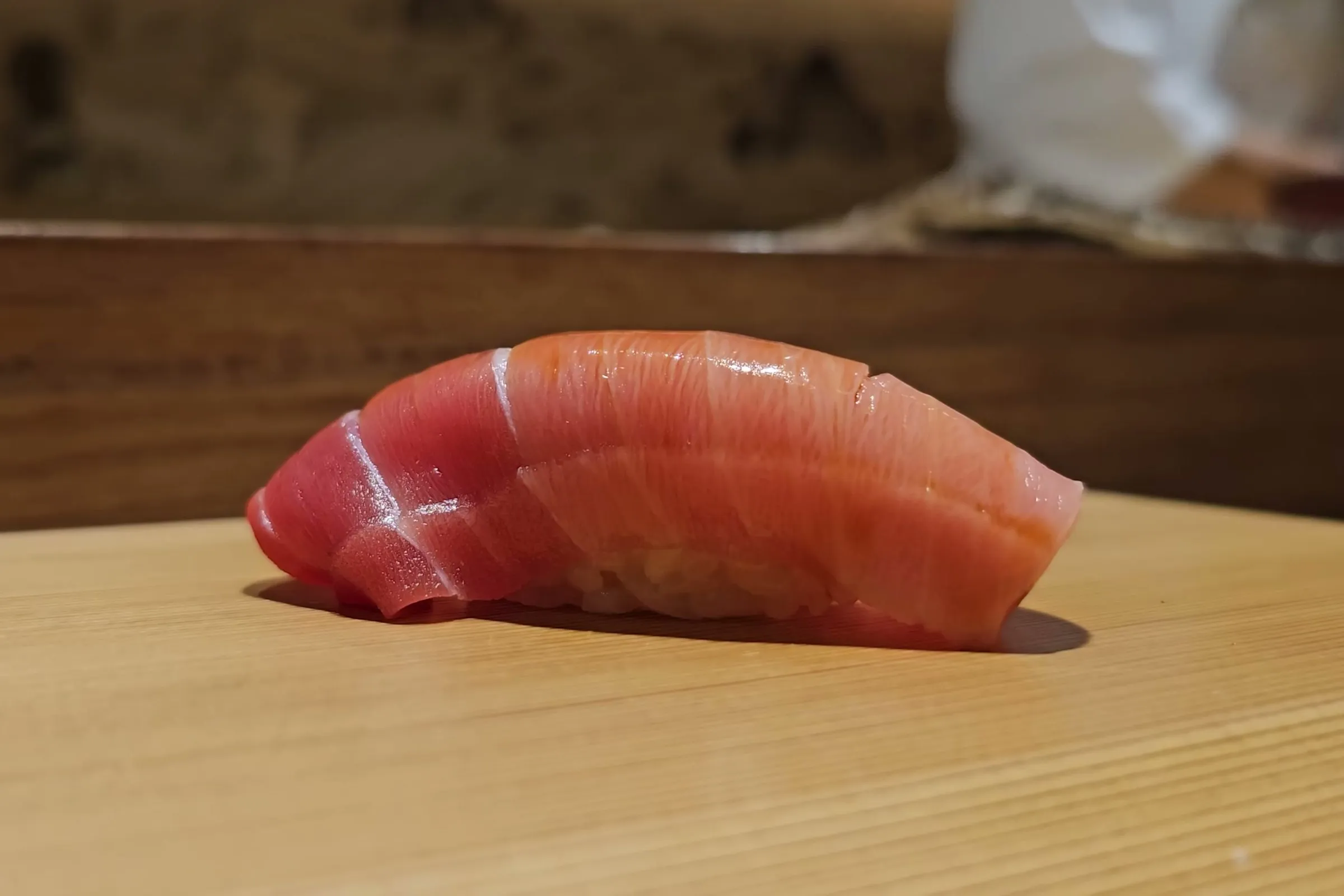
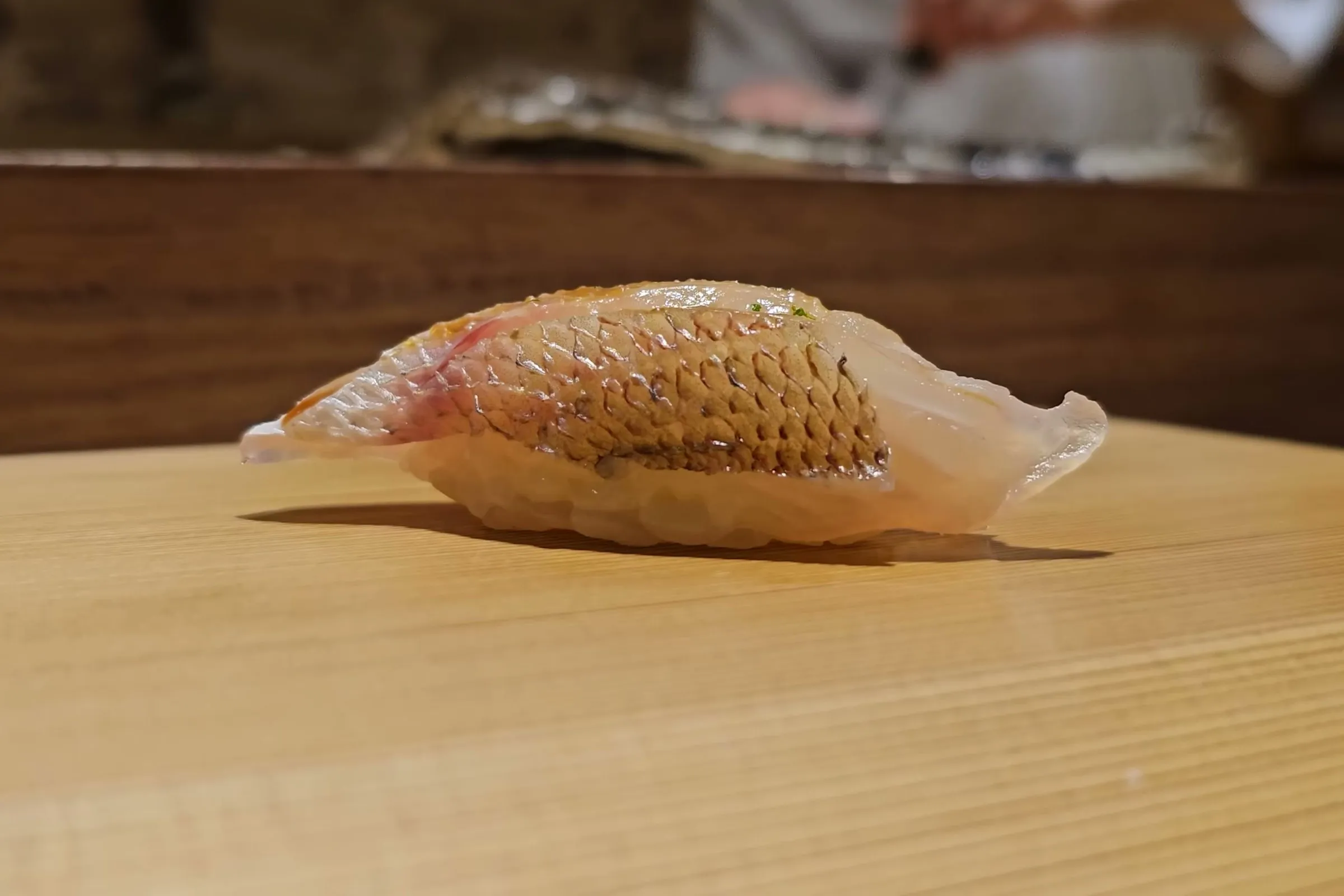
The kohada matched my taste. Thick and juicy, the sweet and sour soaked all the way through, and that clear blue-fish smell still there. The kinmedai, golden-eye snapper, was very fatty. Raw amadai or kinmedai sometimes leaves a damp, musty smell at the back that I don’t like. With all that fat, this one didn’t. Loved it.
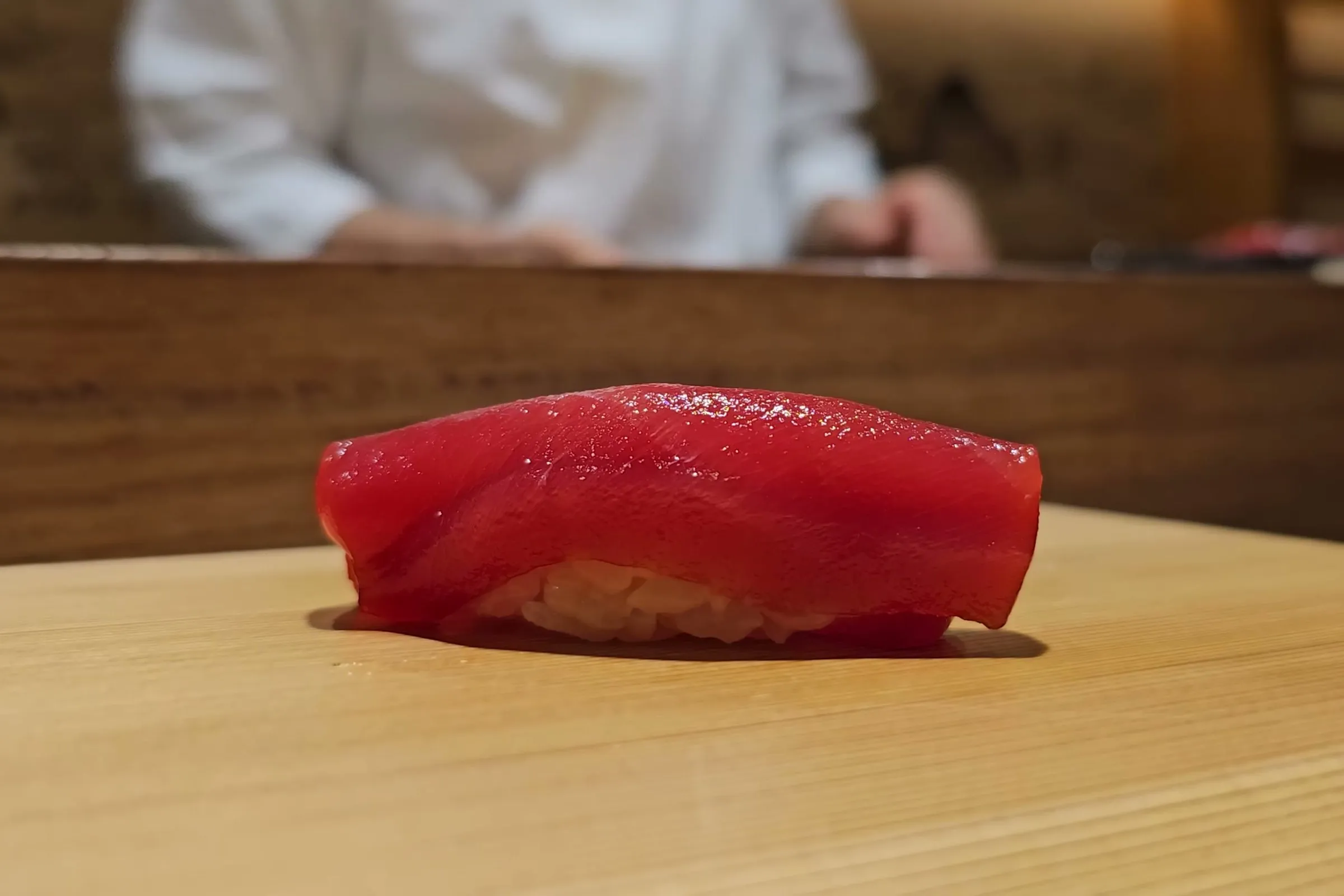
Then the akami zuke, and here’s the strange part. Nearly every dish here smells incredible, and it isn’t the smell the ingredient came with. They’re doing something else. The tuna doesn’t smell of meat and blood. It doesn’t smell of the soy marinade either. They pulled something off.
I used to think this at Kohaku. Put their ingredients together and the combination goes crazy. The ingredients aren’t simply great, and no single flavor punches you. Eat everything on the plate together and you taste something that makes no sense. Kohaku did that kind of magic, and Hatou does too. The aroma doesn’t come from any one place.
After the meal I told the chef the textures and smells across the whole course were amazing, and he lit up. That’s exactly what he’s after. He doesn’t want people to leave saying that place was tasty. He wants them home, a while later, thinking that was a place that smelled wonderful.
Kuruma ebi, the one piece that didn’t sing
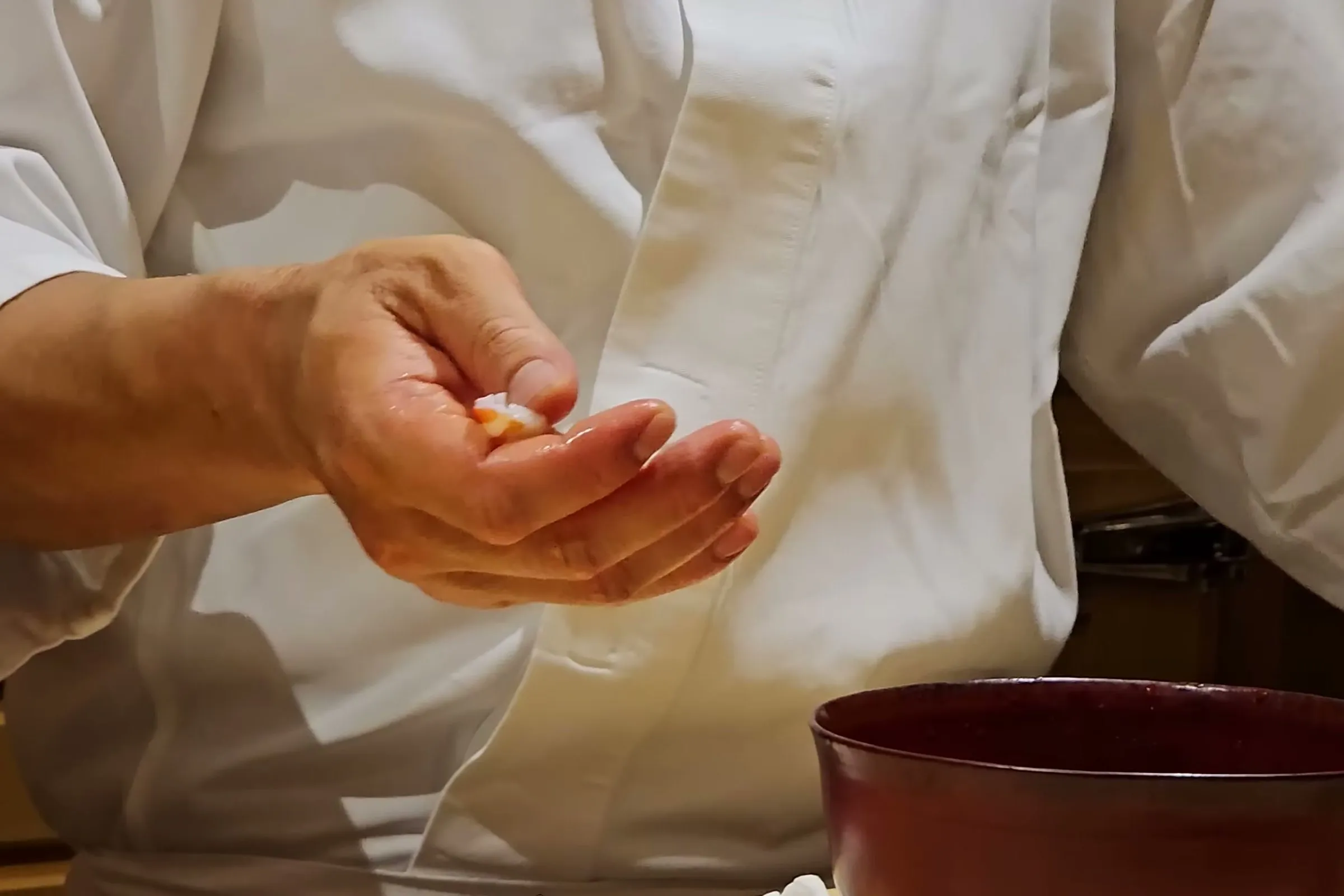
Cute detail: the staff get along really well. When the kuruma ebi came, the team peeled them fast, side by side, so they wouldn’t lose temperature. One at a time, and Daichi-san shaped each nigiri right away.
This was the piece where the magic aroma didn’t show up. The day before, I’d been at Sushi Arai. The prawn isn’t in my Arai video, but I’ve said a few times that Arai’s kuruma ebi smells amazing, overwhelming. So of course I compared, and the prawn was the one ingredient where Hatou’s charm didn’t come through.
Lean katsuo that smells like nothing I can name
Next, katsuo, skipjack. There’s hatsu-gatsuo, modori-gatsuo, and something called mayoi-gatsuo. One look and you can see there’s no marbling, no fat. This is hatsu-gatsuo, the lean fish just starting to swim north.
The fatty ones usually win more people over, with that sweet, nutty taste of fat. But some people love hatsu-gatsuo because the acidity is so strong. Iron from the blood, like sucking on a coin. That’s hatsu-gatsuo.
That’s not what they’re going for here. Look at the texture, it looks like jelly. Jelly-like and also incredibly soft. The smell isn’t the iron, and it isn’t the sea either. I hate the phrase smell of the sea anyway. That’s fishiness. Why does everyone keep calling it the sea?
So I can’t put it into words. First time in my life. The smell is so good and I have no way to describe it. Kohaku and Hatou both feel like places that cook brilliantly by putting things in harmony, more than by the ingredient itself. That’s also why the uni had a harder time. Uni lives and dies by the raw product.
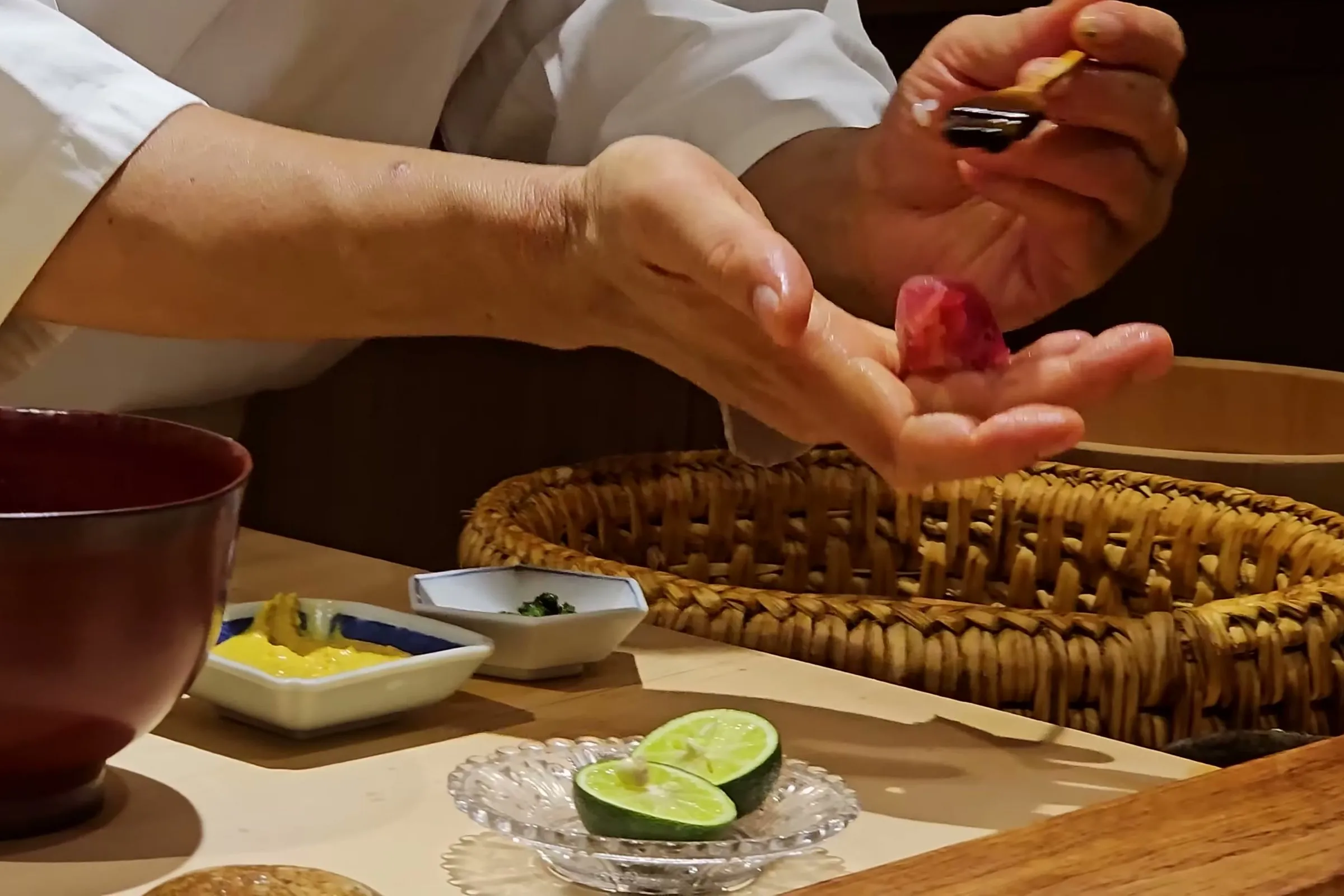
A counter built like a stage
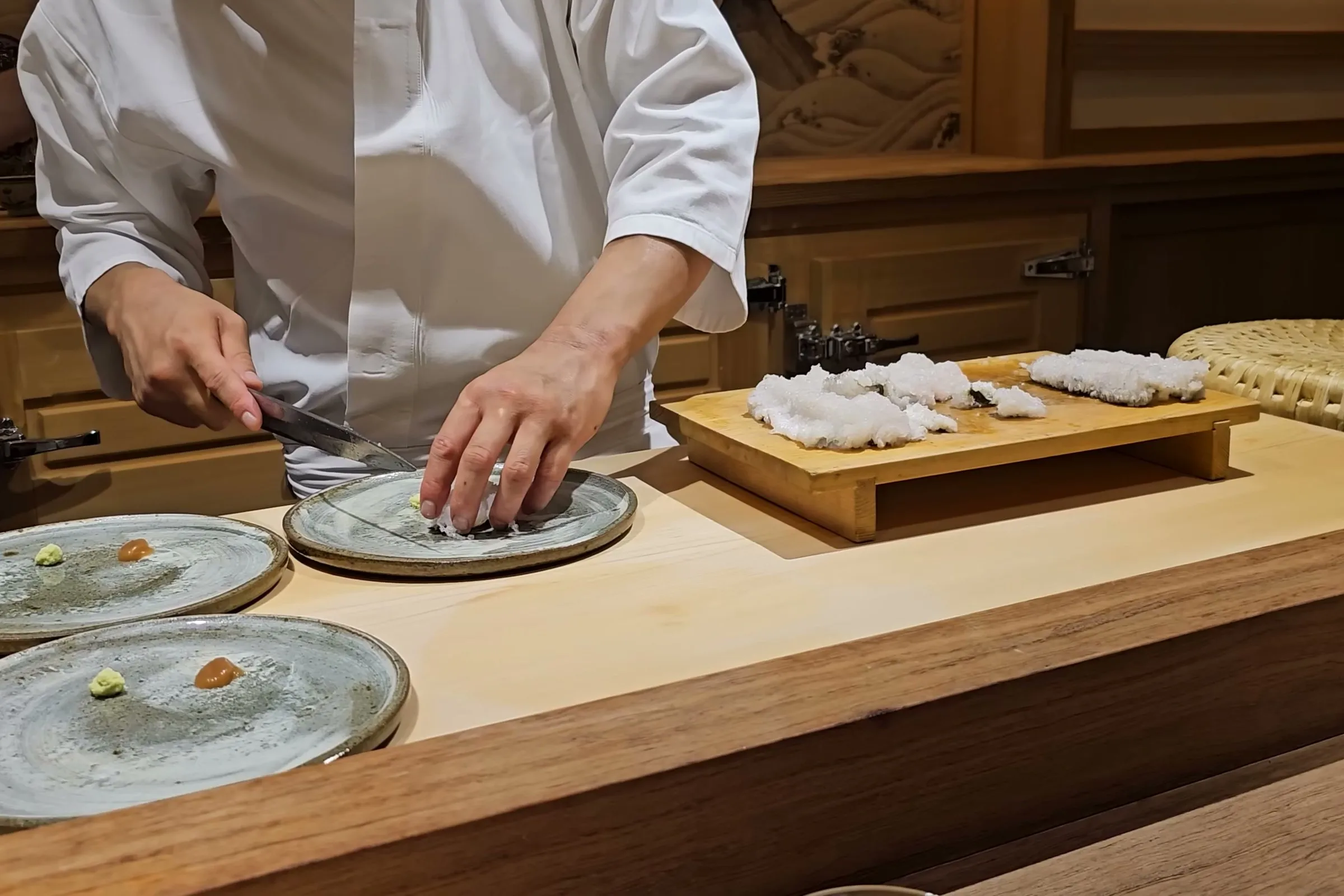
The front of the counter is set up like a stage. I shot it at 0.6x, ultra-wide, to get the whole thing in.
For the rolls, like the uni gunkan, they toast the nori one sheet at a time, one person at a time. Toast it, hand it over, wrap the roll, serve, toast the next one. The interior isn’t the only stage. Watch them for a while and it feels like a show. No big thrills, but I never got bored.
The ikura, salmon roe, was soft on a ridiculous level. Like soy sauce egg rice with a raw yolk stirred in, rich and nutty, and nothing chewy on the outside to get in the way. Loved it.
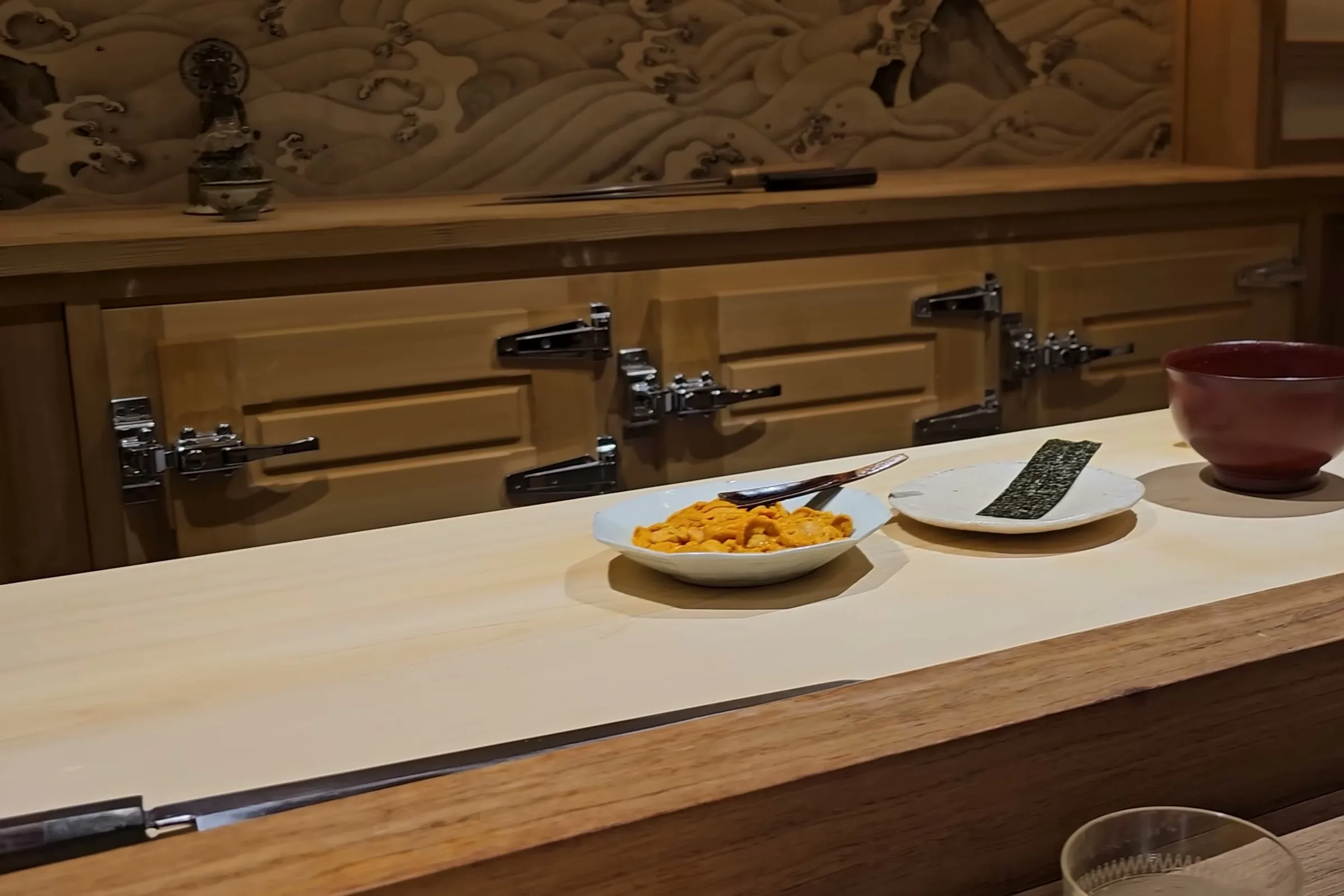
No tamago, then noodles, turtle, melon and ice cream
Then they started on the anago. Wait. Yes, that’s the last nigiri. The course was over.
No tamagoyaki here. The egg comes as something like a Chinese egg drop soup, with somen noodles inside. That felt almost Korean to me, because dessert came after it too. Plenty of sushi counters in Japan end on tamagoyaki and skip dessert. Here, no tamagoyaki, a noodle course, and a separate dessert.
The noodles weren’t alone in there. Suppon, soft-shell turtle. Another broth dish, so of course it was delicious, and I drank every drop.
Dessert started with two pieces of melon. Look how sweet it looks, almost falling apart. Japan has a lot of very expensive fruit that smells great and isn’t that sweet. This one was sweet for real, juice bursting out when you bite. And that wasn’t the end. Ice cream too.
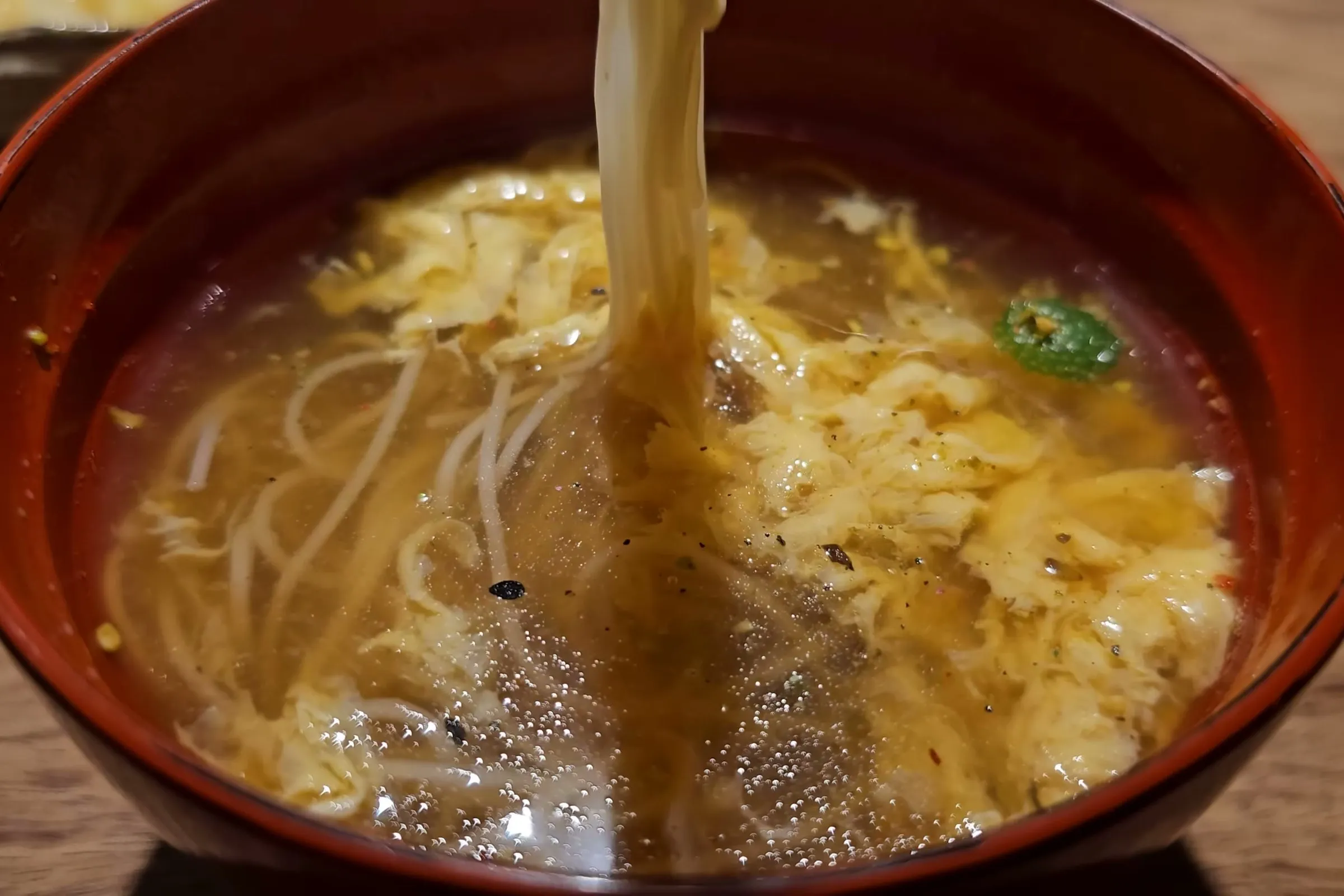
Where it is now, the hours, and getting a seat
When I went, Hatou was at 5-7 Kagurazaka. It has since moved a few streets over, to 1F NEO Kagurazaka, 6-21 Kagurazaka, Shinjuku-ku, and opened there in 2026/02. It’s 3 minutes on foot from exit 1a of Kagurazaka Station on the Tozai Line, or 5 minutes from exit A3 of Ushigome-Kagurazaka.
The official site, checked in 2026/11, gives the hours: Tuesday to Friday 17:00 to 22:00, Saturday 12:00 to 15:00 and 17:00 to 22:00, closed Sunday, Monday and holidays. Still 8 seats at the counter. It shows no phone number, no course price and no way to book.
Tabelog’s new listing, checked the same month, is on hold, which means Tabelog couldn’t confirm the shop is operating, though reviews there describe eating at the new place. Its budget band is ¥40,000 to ¥49,999 a person (about US$250 to US$320, 2026/11).
The record is solid. The old page lists The Tabelog Award Silver for 2026, Bronze from 2022 through 2025, and the Sushi Tokyo top 100 in 2021, 2022 and 2025. Michelin’s page for Hato shows one star and credits Daichi Kumagiri’s ideas, with tsumami served kaiseki-style and a rice vinegar that changes by dish.
As for booking, I found no route that works today. The old Tabelog page listed a phone line and a booking site, but that was the old shop, so I’m not printing either. Check the official site and the new Tabelog listing, and grab a cancellation when one shows up. That’s how I got in.
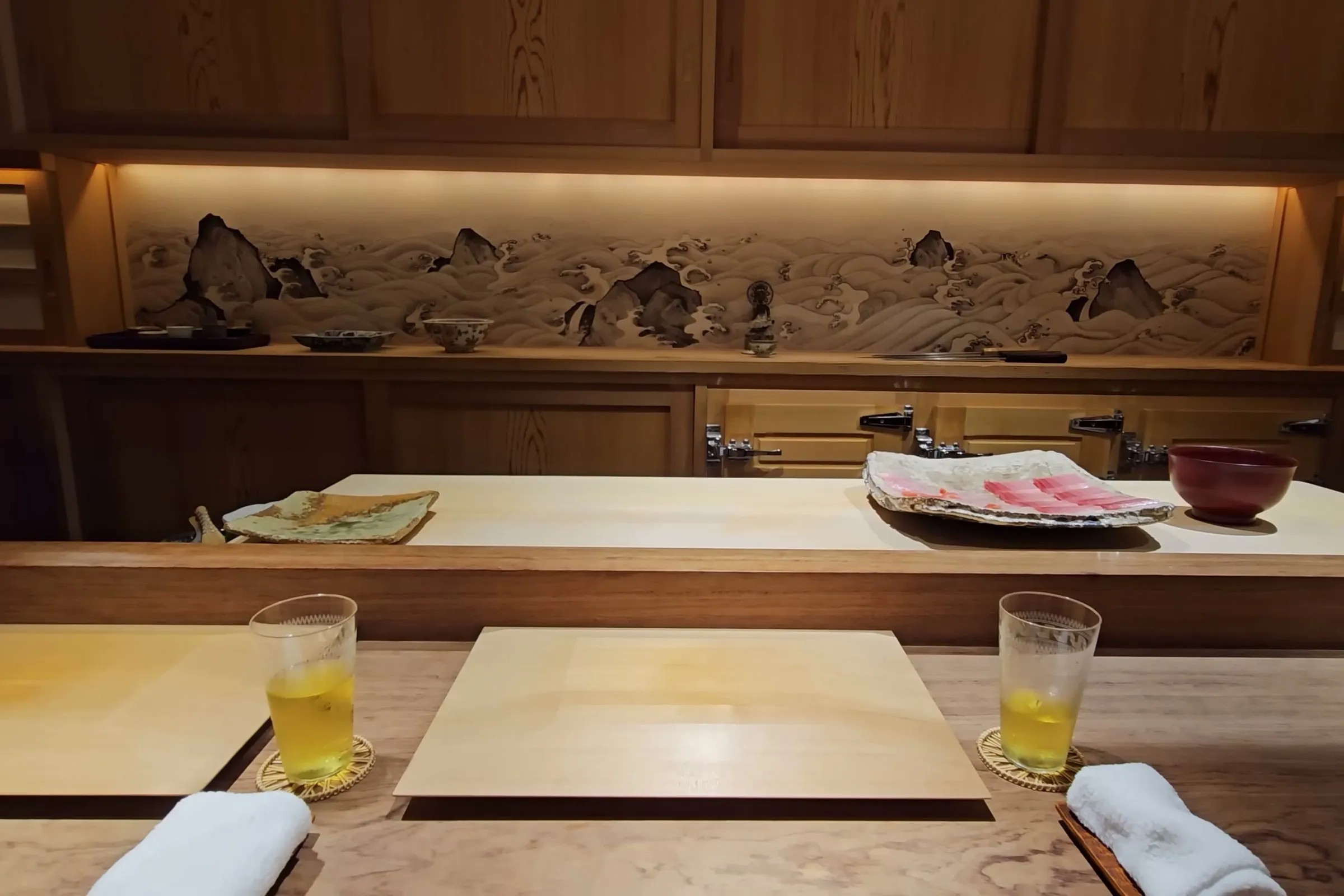
¥84,700 for two
2023/09 video
Two of us, the single dinner omakase: ¥84,700 (about US$570, 2023/09). Split two ways that’s ¥42,350 each (about US$290).
On Tabelog in 2026/11 the new address shows a budget band of ¥40,000 to ¥49,999 a person (about US$250 to US$320) and no course price.
Would I go back
Yes, and I tried. The price is steep for how much food you get. But this is one you have to try. It goes in a different direction from every sushi counter I’ve loved, aroma first, and the hamo soup alone was worth the changed flight.
If a cancellation shows up, take it.
How to book
How I booked
I got in on a cancellation. I was at a gym in Tokyo, about to fly home, when someone tipped me off that a seat had opened, so I booked it and changed my flight. When I asked about a next visit afterward, they were full until the following August.
- Official website
Open this first. When it was checked in 2026/11, the official site gave the new address (1F NEO Kagurazaka, 6-21 Kagurazaka), the hours (Tuesday to Friday 17:00 to 22:00, Saturday 12:00 to 15:00 and 17:00 to 22:00), closed days (Sunday, Monday and holidays) and 8 counter seats. It lists no phone number, no course price and no way to book.
- Tabelog (new listing)
When I checked in 2026/11, the listing for the new address (6-21 Kagurazaka, opened there in 2026/02) was on hold. Tabelog couldn’t confirm the shop is operating, and it showed no hours, no course and no booking route. Budget band ¥40,000 to ¥49,999 a person (about US$250 to US$320), cards accepted. The old page (5-7 Kagurazaka) listed a phone line and a booking site, but those belong to the old shop, so they’re not here. Watch the listing and take a cancellation when one appears.
Checked 2026/11. Booking rules change, so look at the official page before you go.
Where it is
- Address
- 1F NEO Kagurazaka, 6-21 Kagurazaka, Shinjuku-ku, Tokyo東京都新宿区神楽坂6-21 NEO神楽坂 1F
- Nearest station
- Kagurazaka (Tozai Line), exit 1a, 3 minutes on foot
Plan the Tokyo trip
The boring bits I’d sort before flying, so the eating days stay free.
- Hotels in Tokyo*
Pick the room by where you eat, not by the sights. After a long dinner, a short ride back is the real luxury. This place is in Kagurazaka, Tokyo.
- Japan eSIM*
Data from the moment you land, no counter and no SIM swap. Set it up the night before.
- Keisei Skyliner from Narita*
Narita to Ueno in about 40 minutes. Buy it ahead and walk straight to the platform.
- Haneda airport limousine bus*
Landing at Haneda instead? The limousine bus drops you at the big hotels and stations with no transfers.
- Tsukiji Outer Market food tour*
A market morning with someone who knows which stalls are worth the line.
- Sushi-making class at Tsukiji*
Shape nigiri yourself once and the counter makes a lot more sense.
Links marked * are affiliate links. If you book through them I may earn a small commission, and you pay the same. How it works
More places I have eaten at
All of Tokyo →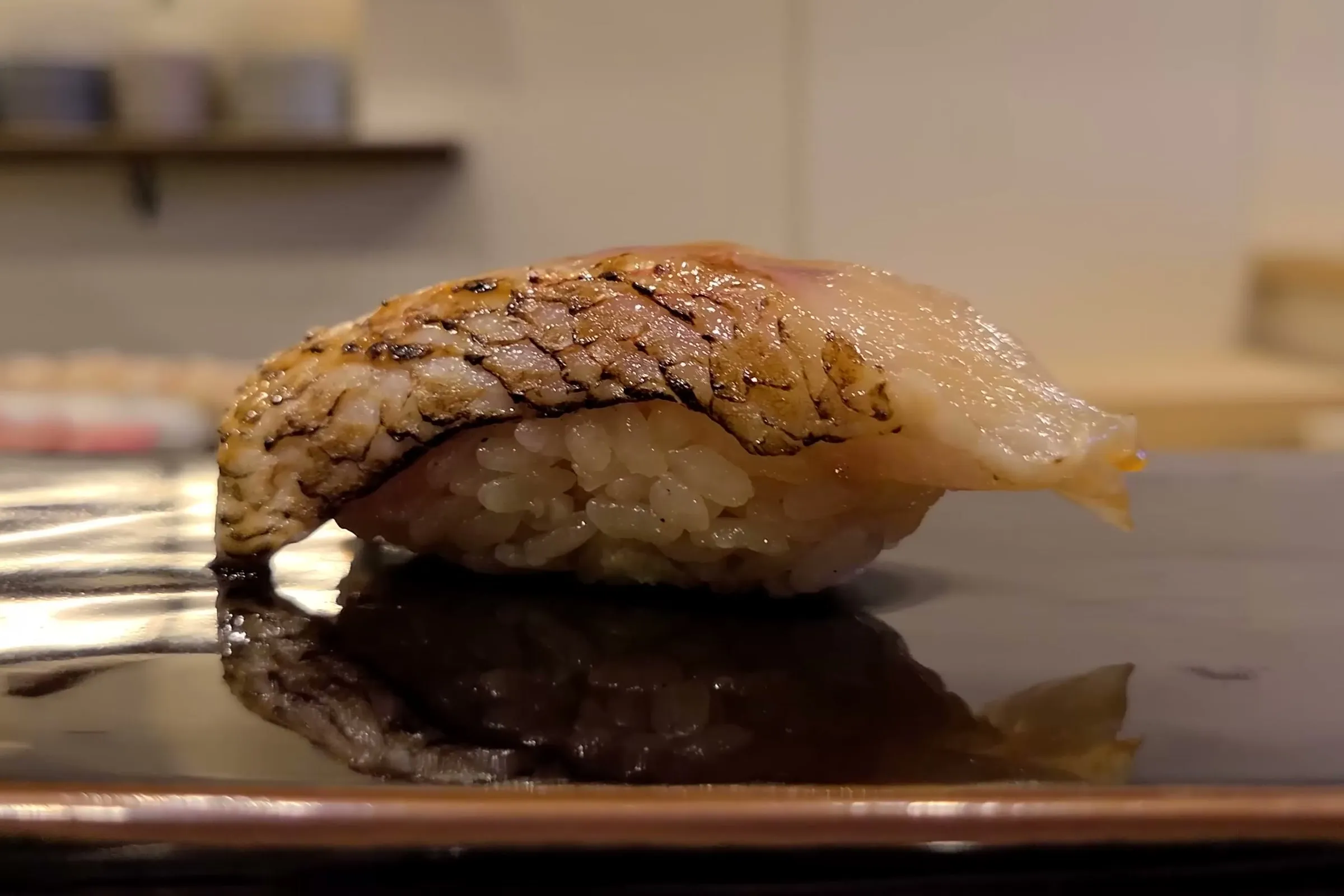 Meguro, Tokyo
Sushi Ranmaru
The cheap omakase I sent everyone to. Its chef now runs Shimazu.
≈ ¥8,300 2020/04 video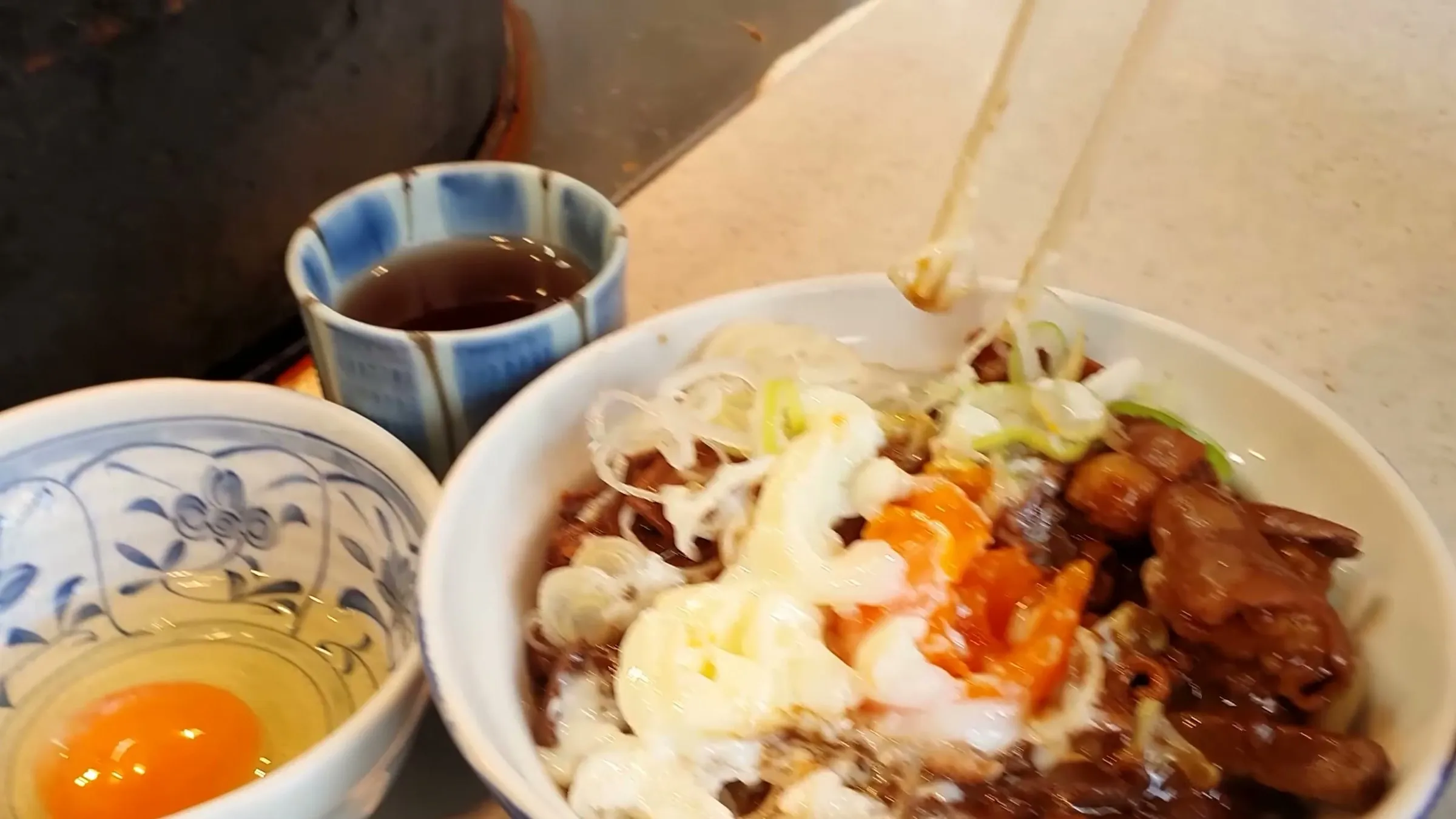 Tsukiji Outer Market, Tokyo
Kitsuneya
Tsukiji’s TV-famous offal bowl, softer and milder than it looks.
¥1,650 2019/07 video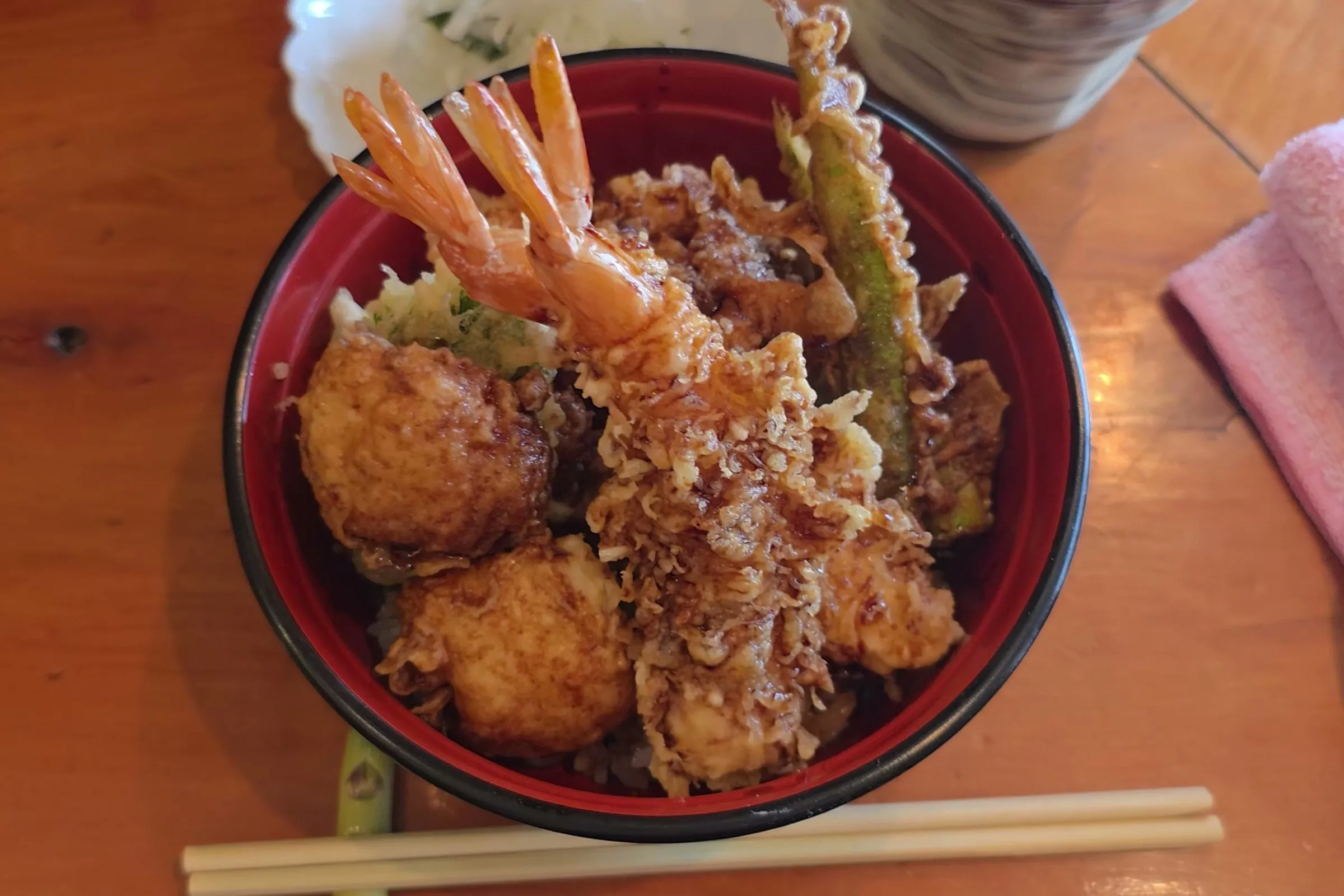 Asakusa, Tokyo
Tempura Ichikawa
A walk-in tendon lunch near Kappabashi. Great rice, cash only.
¥2,880 2025/11 videoSources
- 波濤 Hato Hato (official site)
- Hatou(はとう) Tabelog
- 波濤(ハトウ)移転前の店舗情報 Tabelog
- Hato Tabelog
- Hato MICHELIN Guide