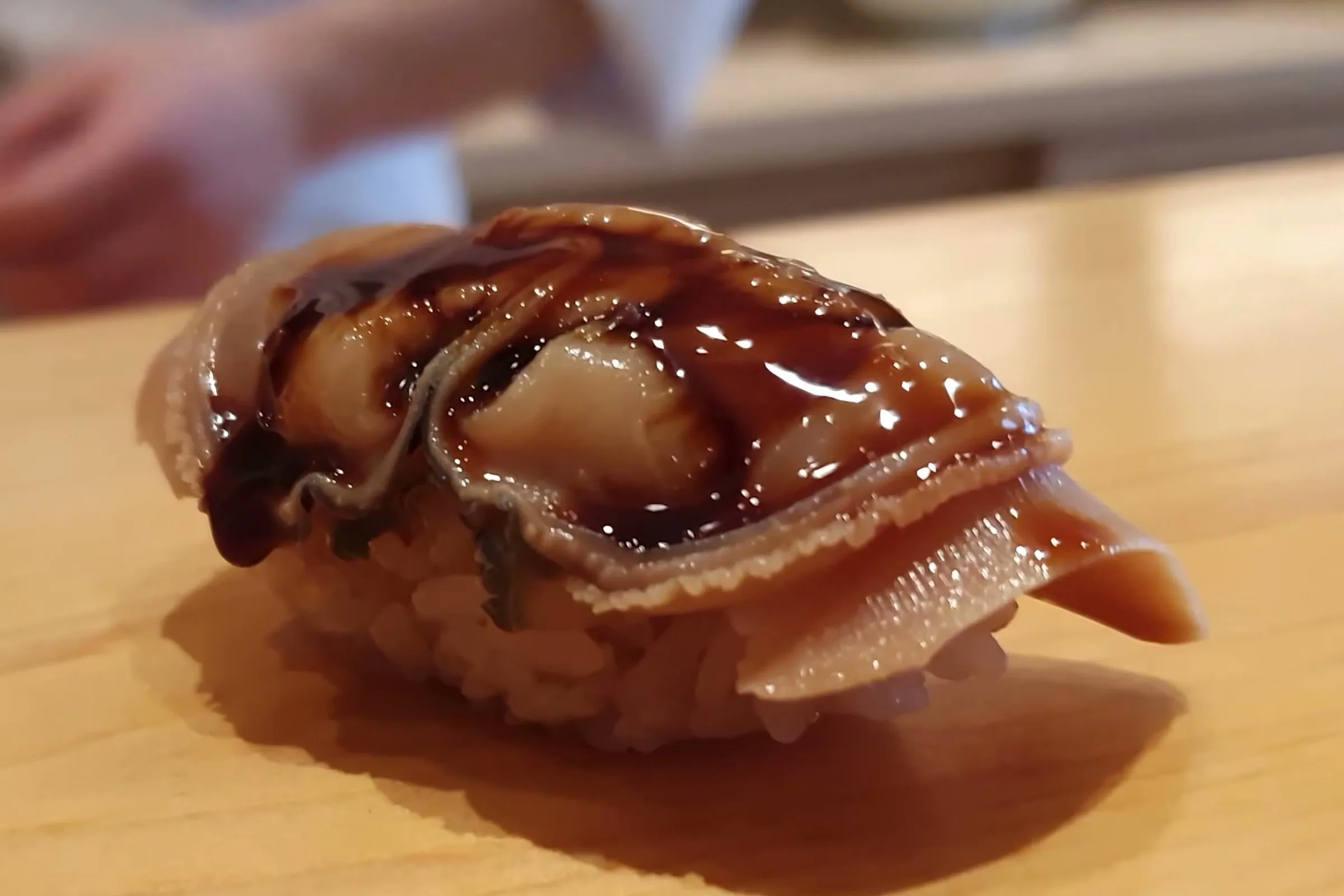
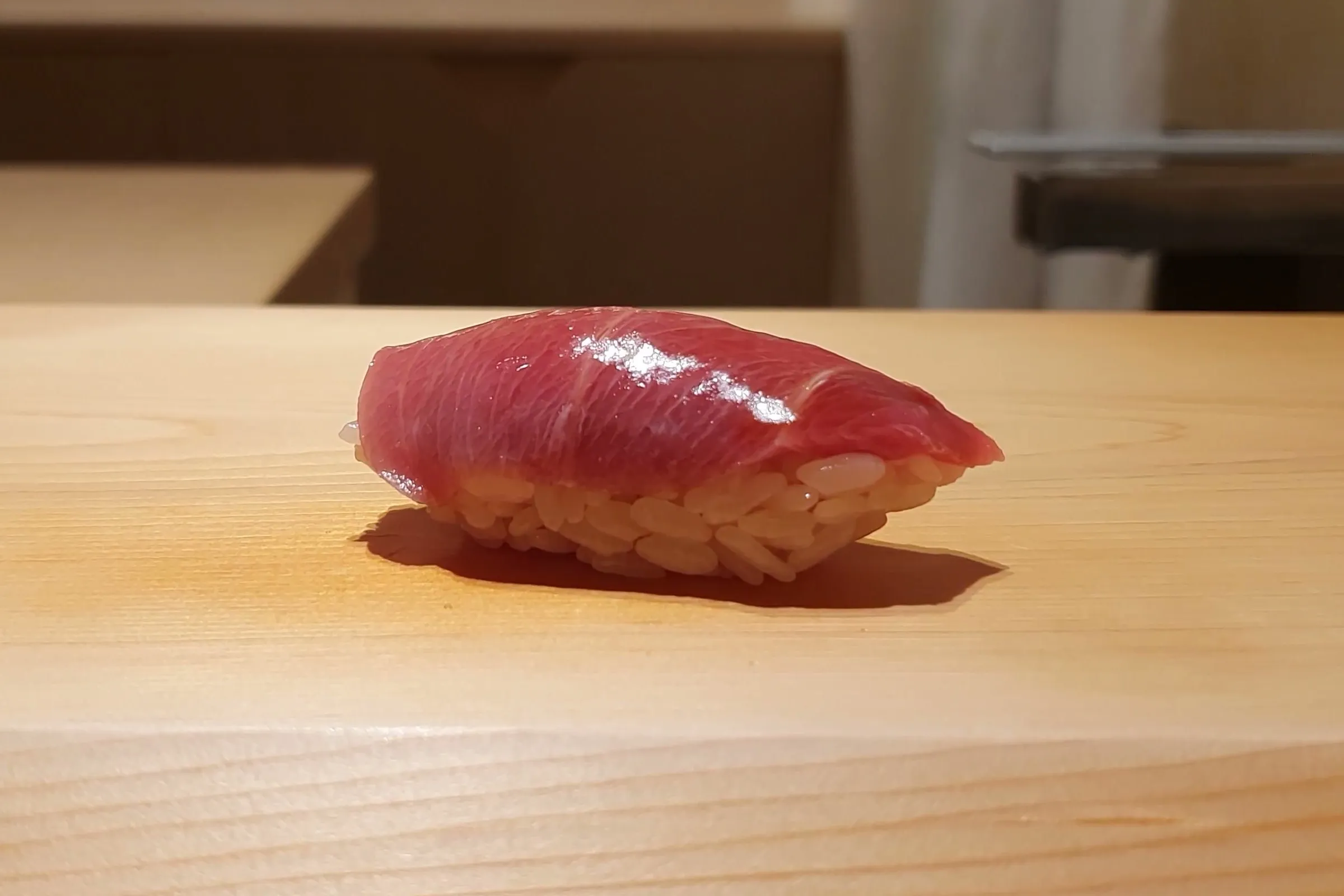
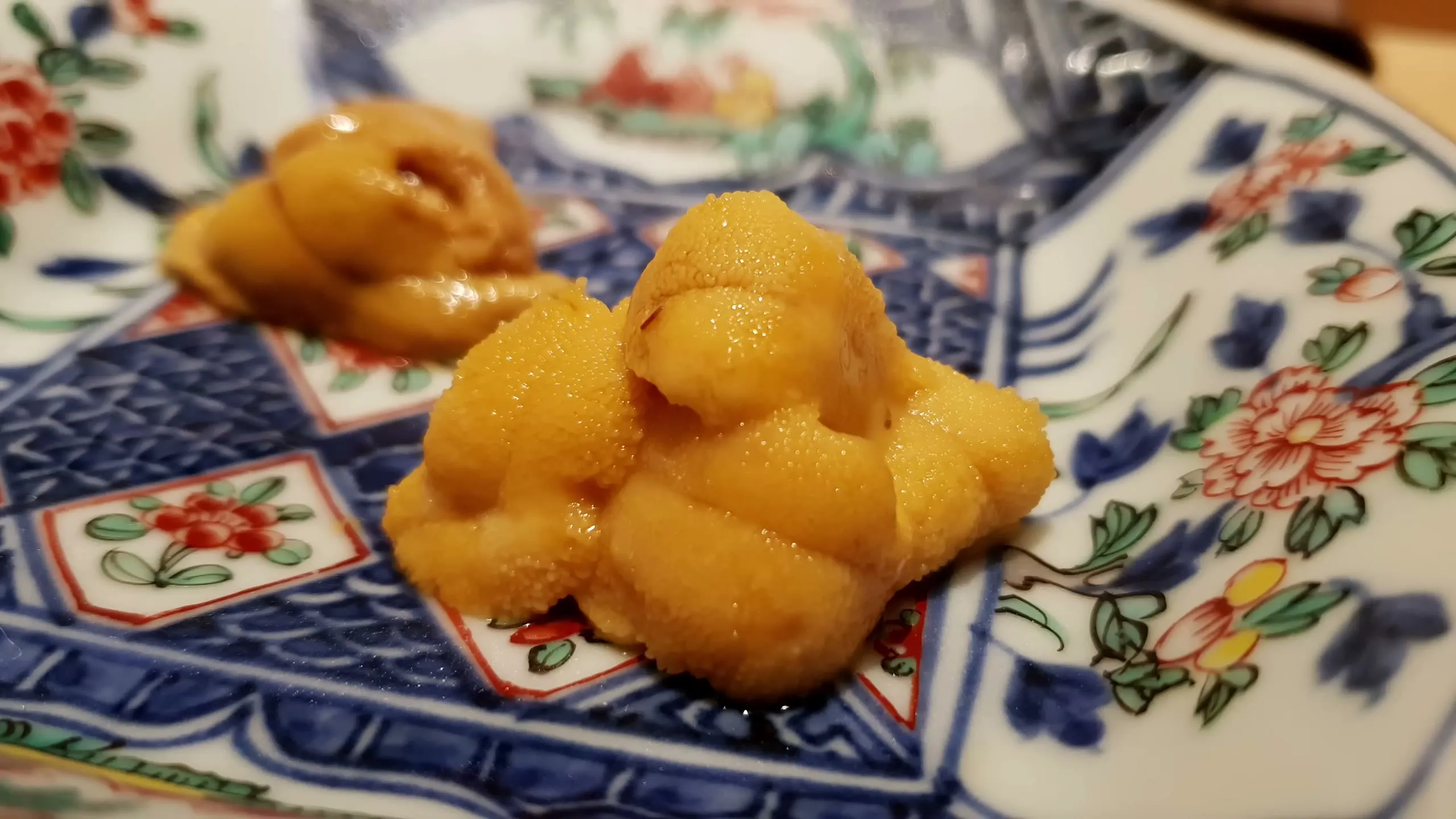
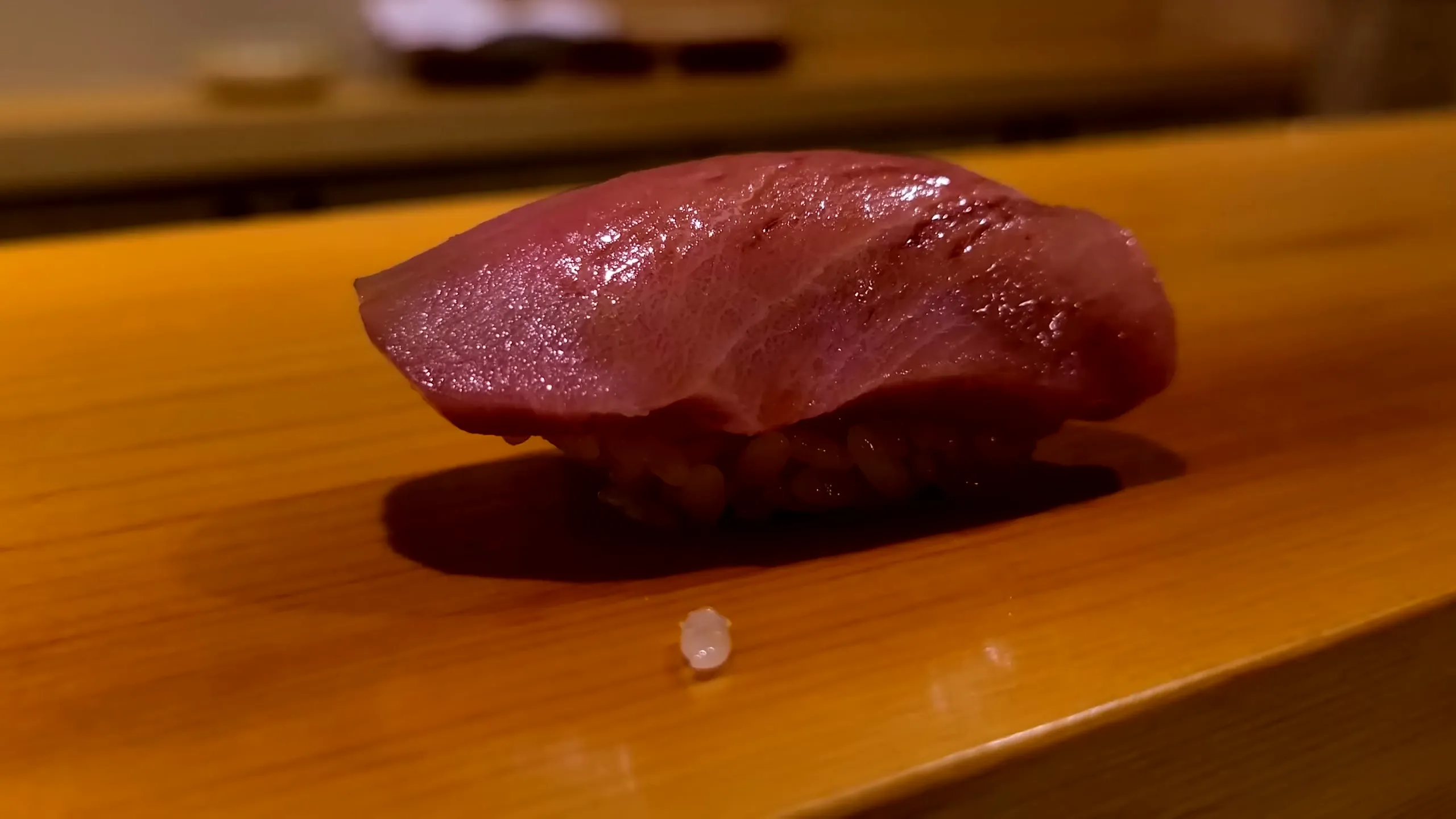
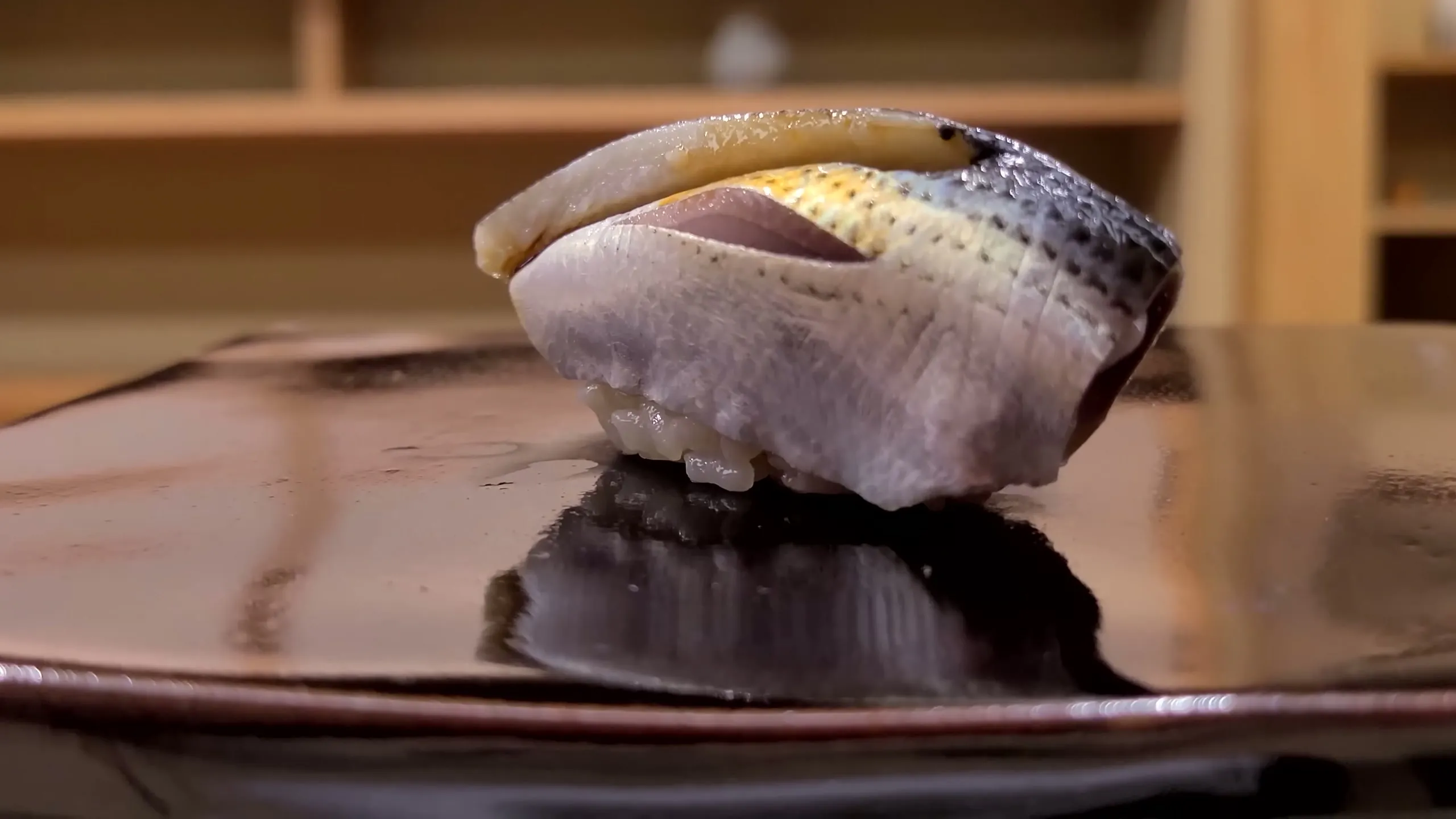
Zuke 漬け・ヅケ
Also called soy-marinated tuna, maguro zuke, zuke maguro, marinated tuna
Fish, usually lean tuna, soaked in a soy sauce mix before it goes on the rice. It started as a way to keep tuna in the Edo period.
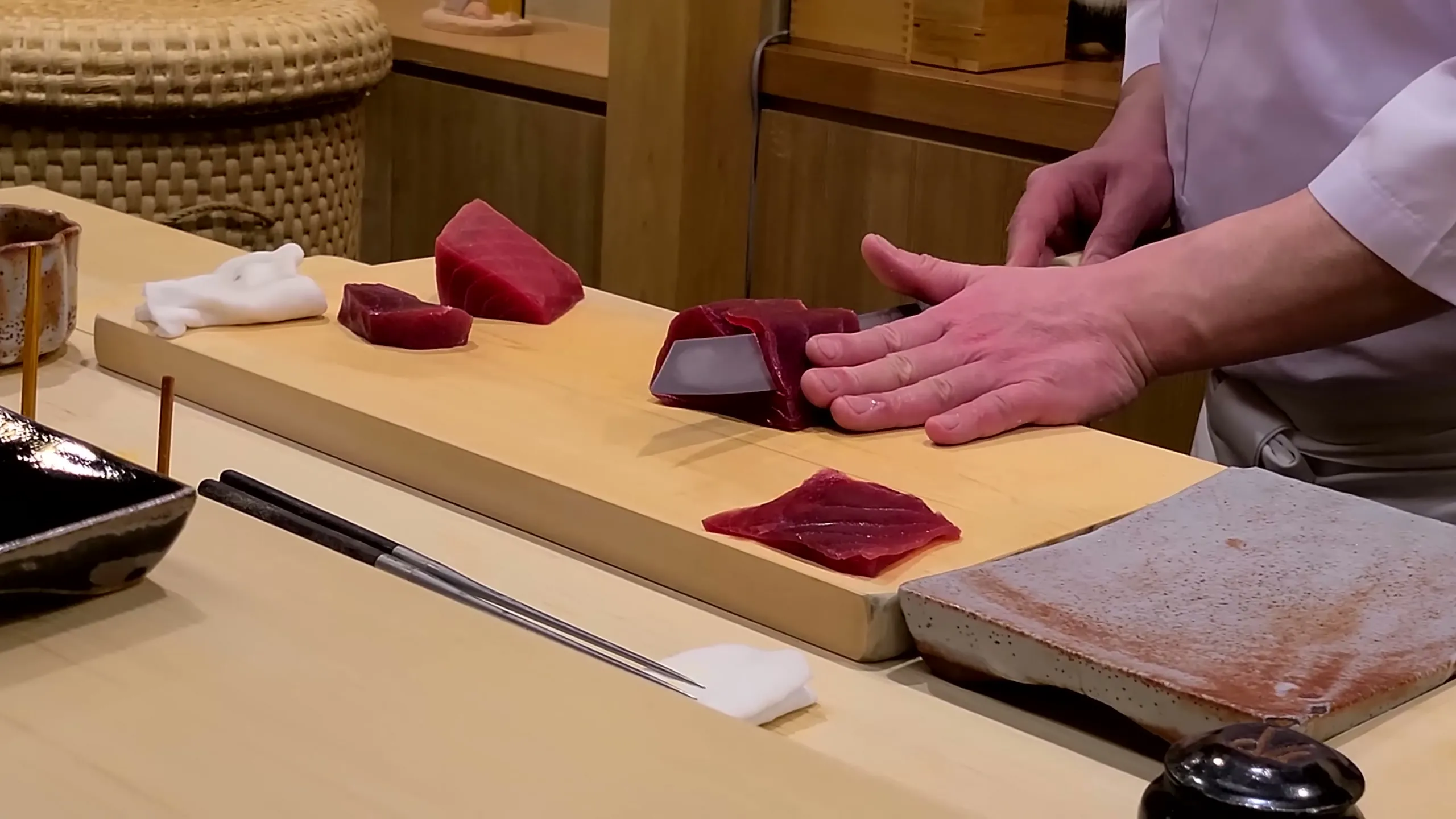
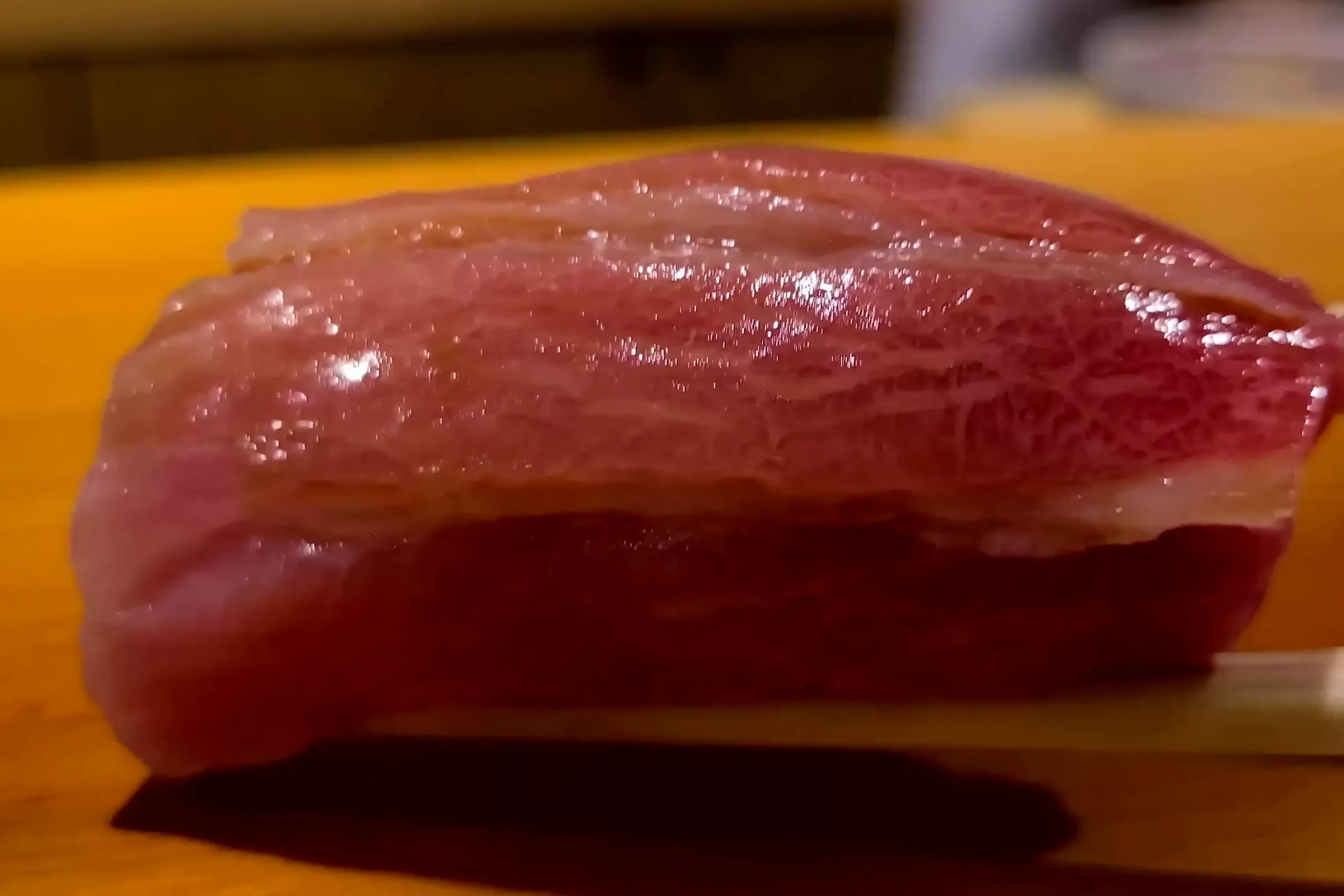
Zuke means marinated. At a sushi counter it usually means akami, lean tuna, soaked in a soy sauce mix for a while before it’s sliced onto rice. The soy firms the surface and pushes the tuna’s iron-y flavor forward.
It started as preservation. Tuna spoils fast, and before refrigeration it was an unpopular fish. Once soy sauce spread in the mid-Edo period, people started keeping tuna in it, and by 1831 the soy-soaked tuna was being used for nigiri. Fatty toro was so unpopular back then that it was nicknamed nekomatagi, the fish even a cat steps over.
Some tuna-proud chefs say great tuna doesn’t need zuke. I never agreed until Sushi Arai, where the plain akami made the point for them. At Sugita the zuke is cut wide and left in soy for a while, and it’s the better version of a piece I already loved.
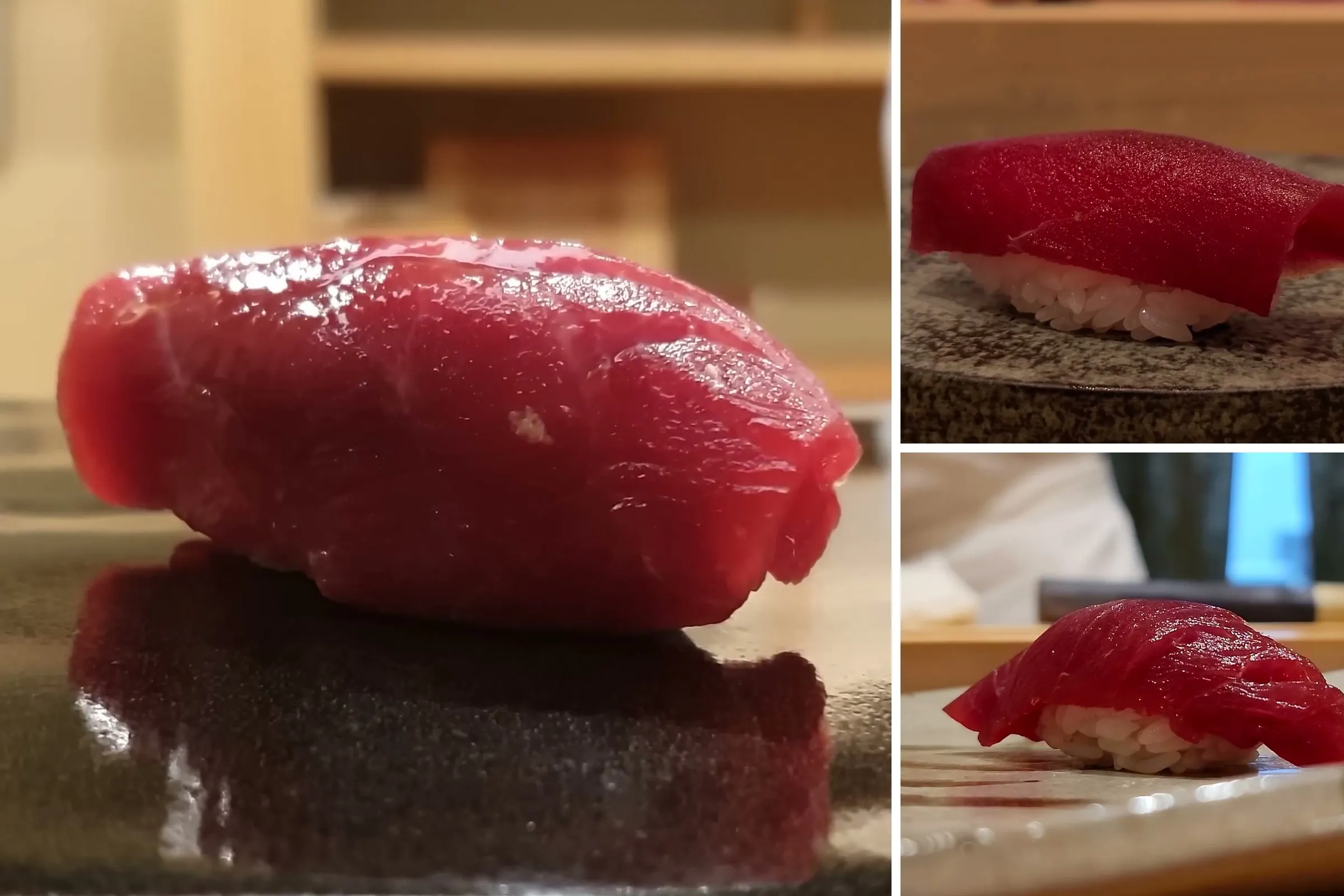 Guide16 Japanese food words you can’t guess, from ankimo to zukeZuke, with how it tastes and where I’ve had it →
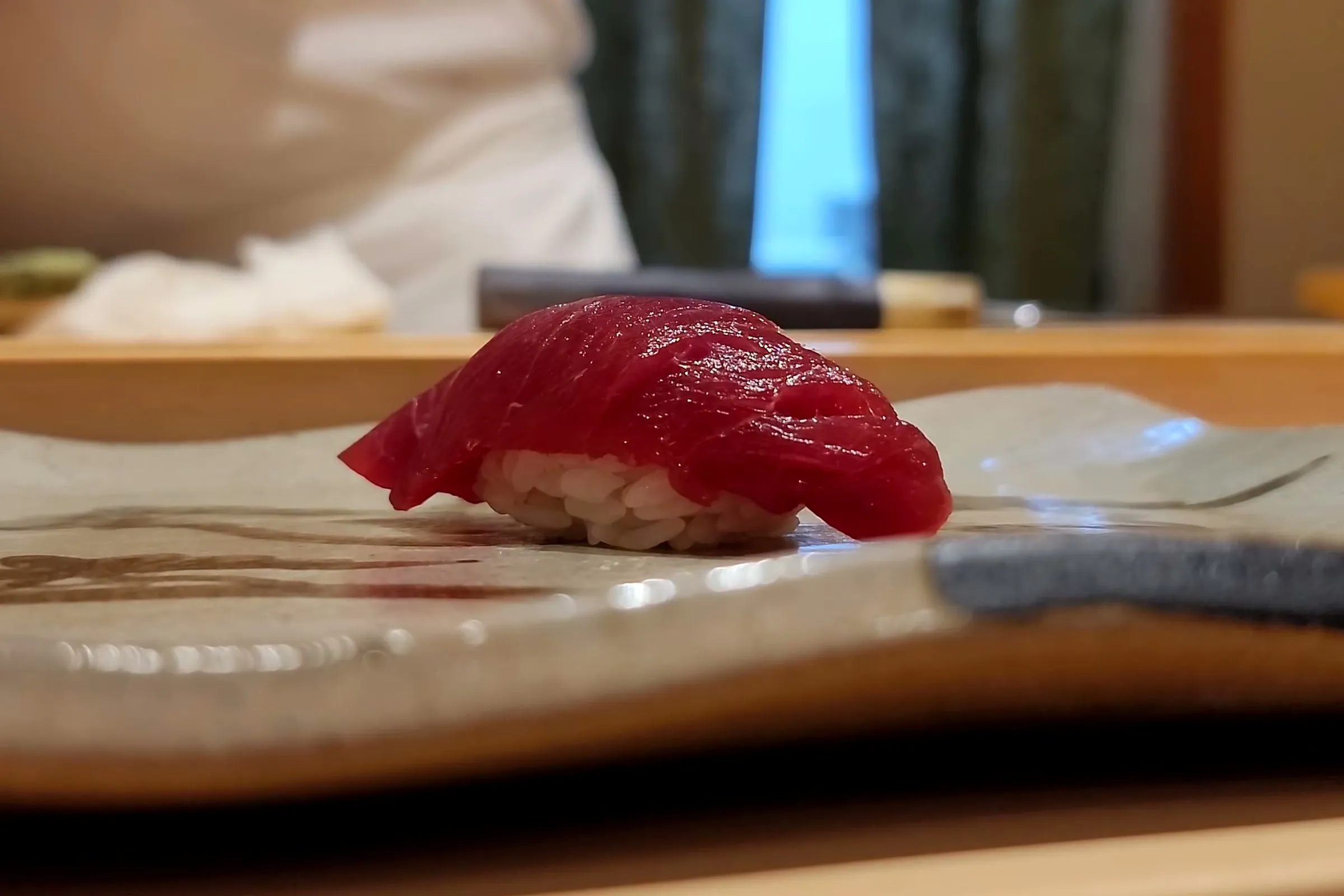 GuideTuna cuts at a sushi counter, from akami to otoro and the ones nobody explainsZuke, with how it tastes and where I’ve had it →
See alsoAkami, chu-toro and o-toroShari
Sources
- マグロ Wikipedia (Japanese)