Guide
Sushi is rice first. Shari, red vinegar and what edomae means
Everyone films the fish. I’m the guy who won’t stop talking about the rice. I’ve forgotten every topping of a meal because the shari was that good, and I ask for more rice, not less. So here’s what edomae sushi actually means, why some sushi rice is brown, how a chef shapes it, and what I check in the rice at Tokyo counters like Arai, Sugita, Saito and Namba, plus a few in Seoul.
monster gourmetFrom 13 of my videos, 2019/07 to 2025/12
The short version
- Edomae first meant fish from the water in front of Edo. Now it mostly means Tokyo-style nigiri with work done on the fish.
- Shari is the sushi rice. The first edomae shari was seasoned with red vinegar and salt, no sugar.
- Red vinegar, akazu, is made from sake lees. It turns the rice tan and tastes rounder than white rice vinegar.
- Most serious counters blend. Arai uses one red vinegar and three rice vinegars.
- I check texture first: a firm skin on each grain, a bite in the middle, and grains that come apart in my mouth.
- Temperature changes piece by piece at counters like Sugita and Namba. On purpose.
- Loud rice suits oily or cured fish and buries a light one.
- Don’t ask for less rice before you’ve eaten two pieces.
What edomae means
Edomae (江戸前) means in front of Edo. In the Edo period it pointed at the fishing grounds right in front of Edo Castle. Later it meant anything from Tokyo Bay, and then a whole style, as in edomae sushi.
In 2005 a Fisheries Agency panel said fresh seafood from anywhere in Tokyo Bay can carry the name. Nobody at a counter uses it that strictly. Edomae on a sign in Tokyo, or in Seoul, means nigiri done the Tokyo way, not fish from the bay.
Nigiri took off in Edo in the 1820s. Hanaya Yohei of Ryogoku is the name you usually hear, though other names come up too. It was quick food, and with no fridges the fish got work done on it first: salted and cured in vinegar, soaked in soy, simmered. Counters call that work shigoto (仕事), and it’s still what makes a counter edomae to me.
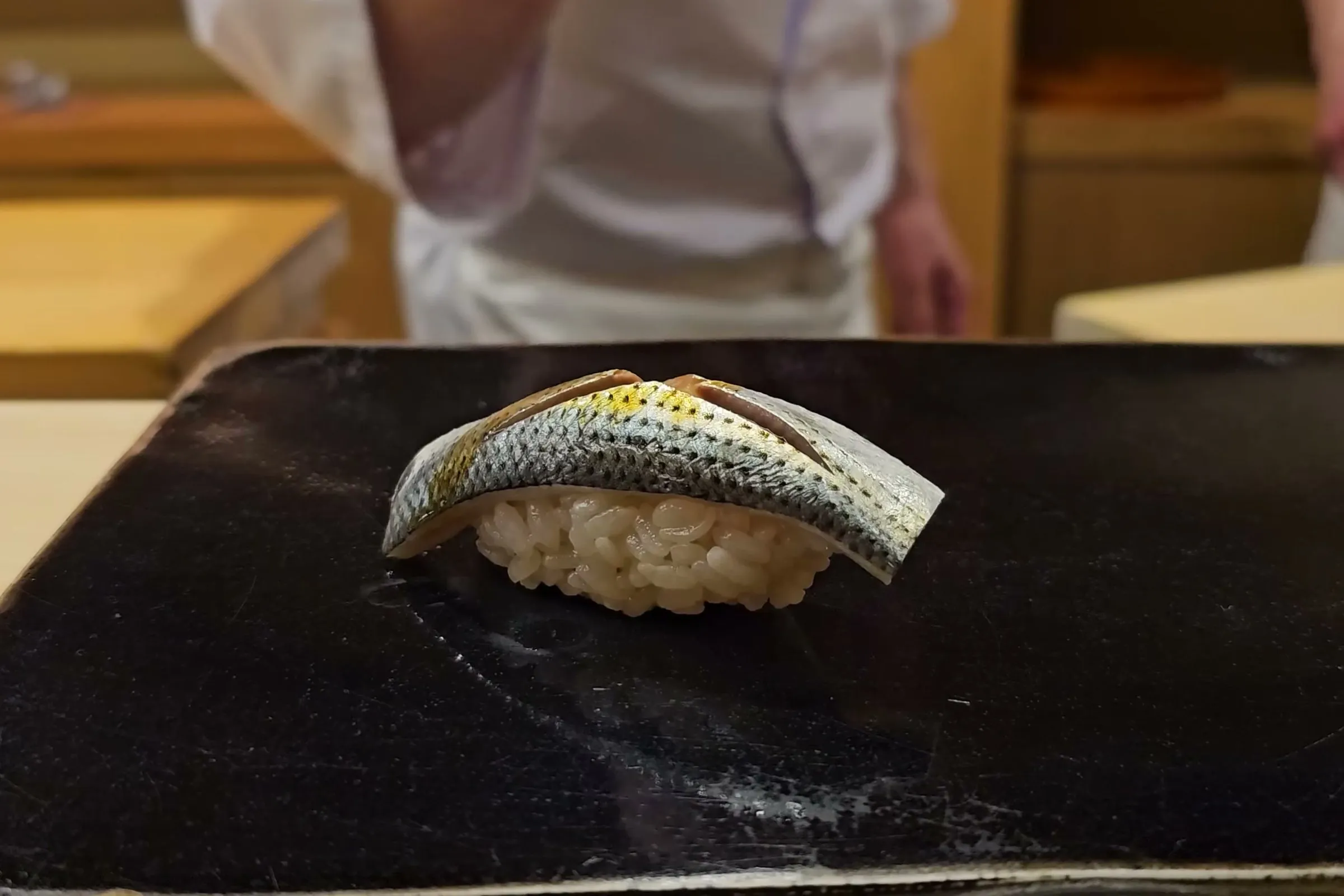
Kohada is the test. Salt, then vinegar, and the balance tells you a lot about the chef. Sugita opens with kohada every time, and I don’t even like gizzard shad, but there I’ve ordered two more pieces at the end (2024/05).
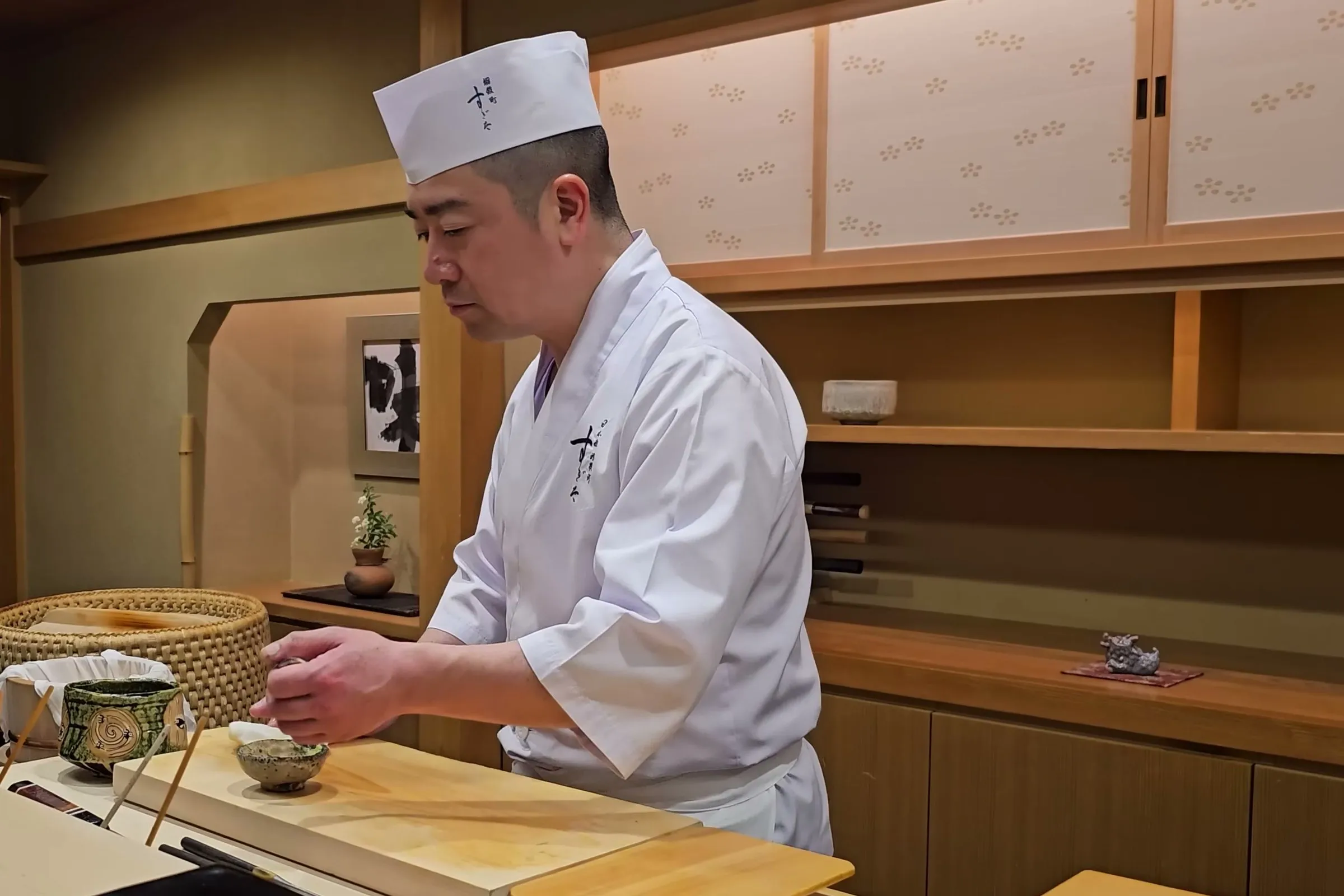
Where this happenedSushi Sugita→
Red vinegar came first
The first edomae shari was seasoned with vinegar and salt. No sugar. The vinegar that won Edo over was red.
Akazu (赤酢) is brewed from sake lees, what’s left after the sake is pressed. In 1804 a sake brewer from Handa, near Nagoya, named Nakano Matazaemon saw hayazushi in Edo, the quick vinegared-rice sushi that came before nigiri. Rice was short and rice vinegar was expensive, so the brewery made vinegar from its lees and shipped it to Edo along its sake trade routes. That company is Mizkan.
Fermenting the lees turns their starch and protein into sugars and amino acids. So the vinegar comes out brown, sweet and savory, and rice seasoned with it turns tan and doesn’t need sugar.
After the war white rice vinegar took over. The yellowed-rice scare made people wary of colored rice, and sugar went in to make up for what white vinegar lacks. Now red vinegar is back at most serious counters in Tokyo, usually blended with rice vinegar.
| Red vinegar, akazu 赤酢 | Rice vinegar, komezu 米酢 | |
|---|---|---|
| Made from | Sake lees | Rice |
| Rice color | Tan to light brown | White |
| Taste | Round, savory, sweet on its own | Sharp and clean |
| Sugar in the shari | None in the old recipe | Usually some |
| Where you meet it | Edomae counters, mostly blended | Almost everywhere |
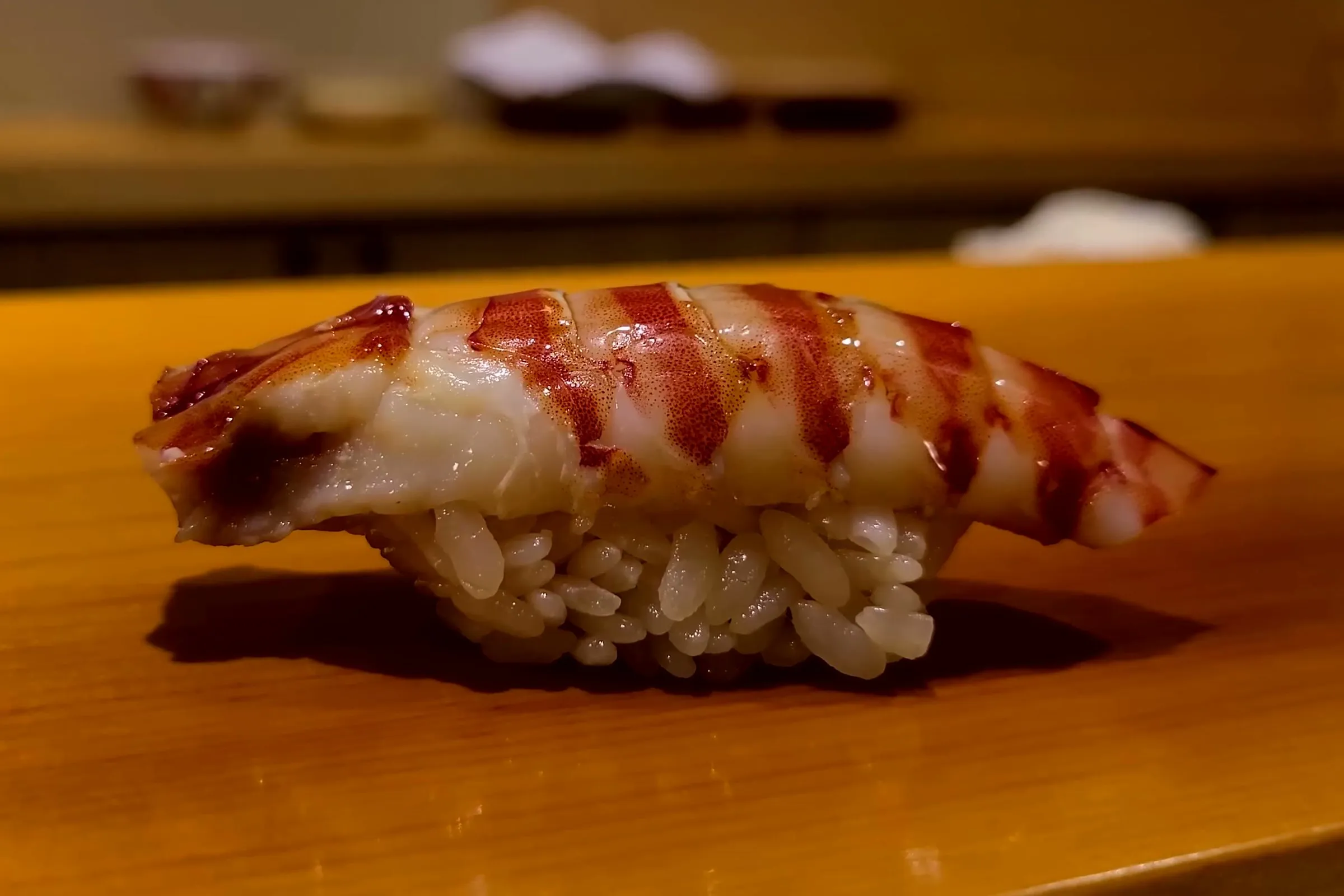
Arai’s one red and three white
Arai’s blend is built from the vinegars used at the counters where Arai worked, the famous ones being Kyubey and Sushi Sho. The word was one red vinegar and three rice vinegars, though I don’t know if the recipe has changed since. My guess is Yohei, Yokoi Vinegar’s red, and Mizkan’s Shiragiku. Sushi Sho once did a gala dinner at the Lotte Hotel in Seoul while Arai was there, and Arai came along and talked about how Korean and Japanese vinegars differ. That’s where the Shiragiku guess comes from. Pure guesswork on my part.
When I first went, the rice was soft and wet, a texture I don’t like. I still went around telling chefs in Korea that Arai had the best shari on earth, and that was after I’d eaten at Sugita. The seasoning alone did it.
Yohei turns up all over Tokyo. At Takagaki no Sushi in Suitengumae I could see the vinegar in the rice and taste Yohei’s heavy, funky aroma (2019/08). At Takemoto in Gaienmae the smell was so familiar I asked if it was Yokoi vinegar. It was, but not Yohei. A newer top line the shop had switched to that summer (2025/12).
Where this happenedSushi Arai→
The color can fool you
Tan rice usually means red vinegar, but not always. At Saito the rice looked like plain rice vinegar to me. In my mouth it was a red vinegar smell I know too well, something like Yokoi’s Kohaku at the base. Mild vinegar, mild salt, a lot like other counters from the Kanesaka family (2020/04).
Some counters run two rices. When Namba first opened in Hibiya, white rice came first, then red rice heavy on akazu from the kohada on. The red one was so sweet it reminded me of yakbap, Korean sweet rice with dates. Next time the red rice was gone (2019/07).
Where this happenedSushi Saito→Sushi Namba→
Salt first or vinegar first
Shari also leans one way. Some rice leads with vinegar, some with salt.
Sushi In in Seoul is my reference for salt. Its rice tastes of salt before vinegar, almost a sweetness from the salt, and the vinegar never jumps out. Sushi Sumire is the same type. When I first said Sumire’s rice was like Sushi In’s, I meant the salt, not the texture (2020/07).
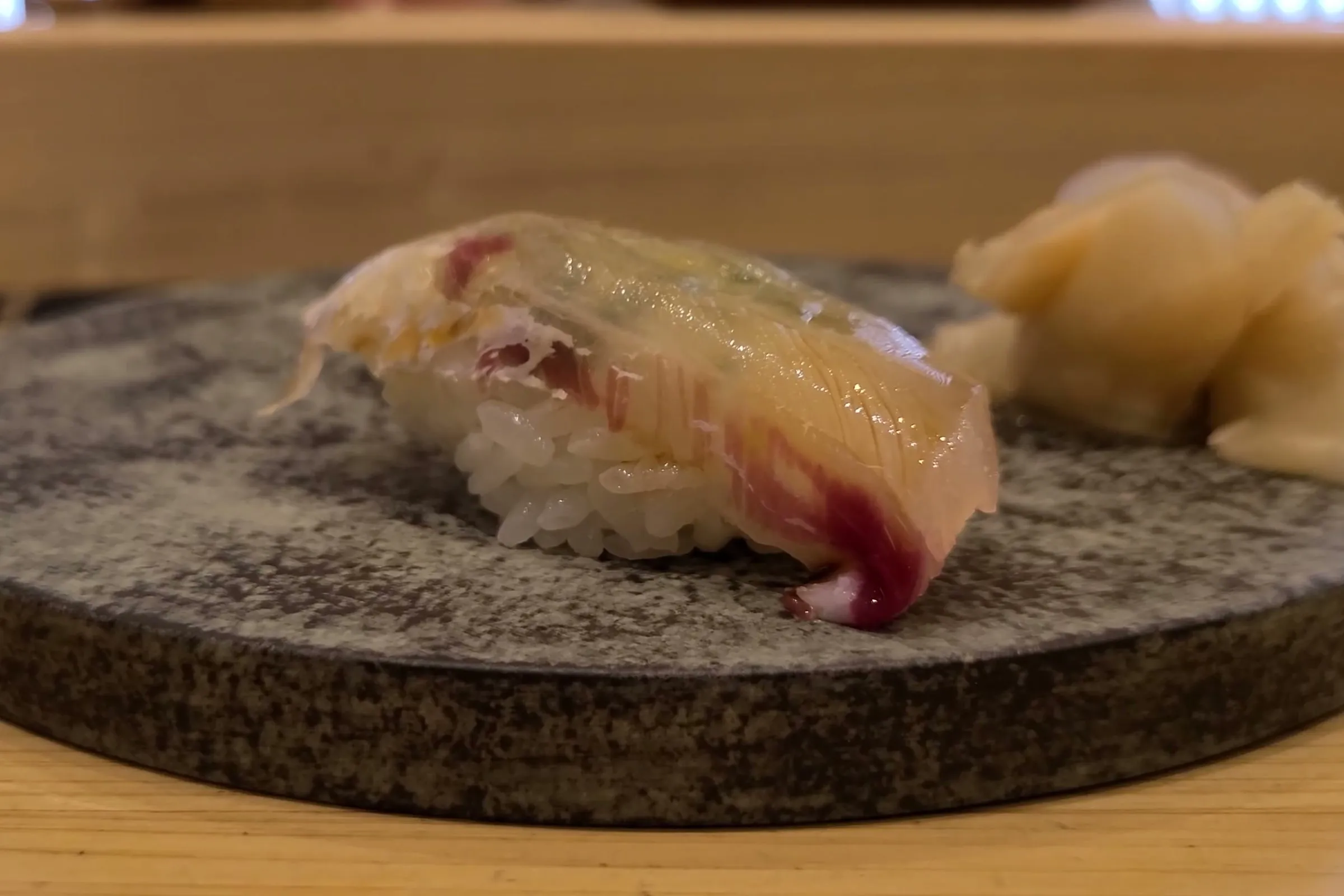
Then one lunch at Sushi In the vinegar came forward instead, deeper and louder (2020/07). I wanted to eat the rice by itself. But the first three pieces, hirame, white squid and sea bream, vanished under it. The rice ate the fish.
Two kinds of firm
Texture is where I’m fussiest. I like al dente: a skin on the outside of each grain and a bite in the middle, so the grains roll around separately once the piece comes apart.
When I say firm, I mean one of two things. One is pasta al dente, a core that snaps. The other is springy and plump, which is Sushi In’s rice. One day Sumire’s rice hit that second kind, as good as Sushi In’s, and I got so lost in it I barely remember the toppings (2020/07).
Then the surface of the grain. Sushi Ito in Seoul swings less on that than anywhere I go. The first rice of the course comes after the abalone, stirred into the abalone liver sauce. Every grain is smooth with sauce on the outside, and that’s when I remember why I keep going back (2021/07). At Takagaki the middle of each grain was fine but the outside was split and soggy (2019/08).
For a while Japan drifted my way. Arai’s rice went from soft to very al dente, hard on the outside, every grain running loose in your mouth (2020/03).
How hard it’s pressed
Then the press. A good nigiri holds together on the way to your mouth and comes apart once it’s in.
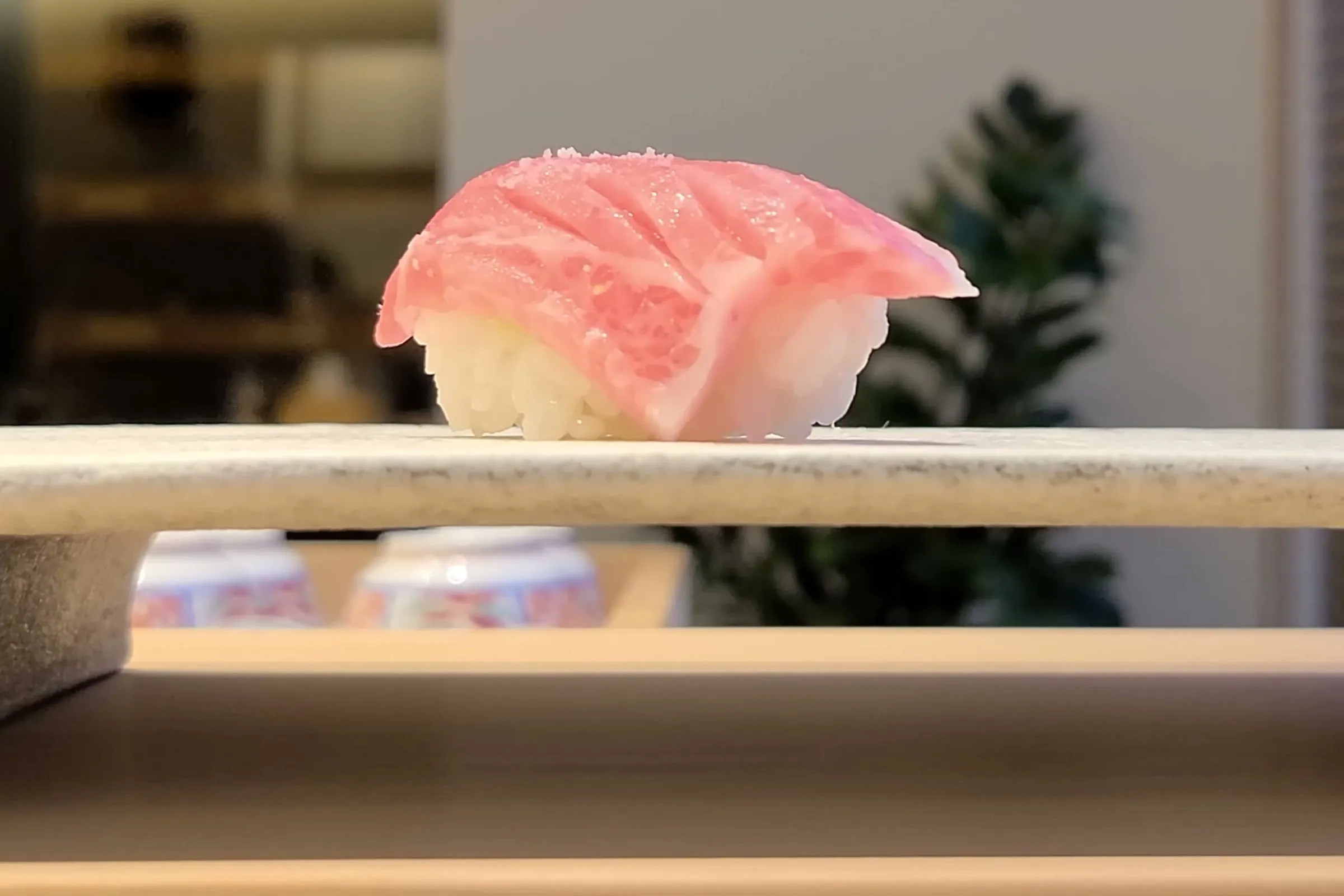
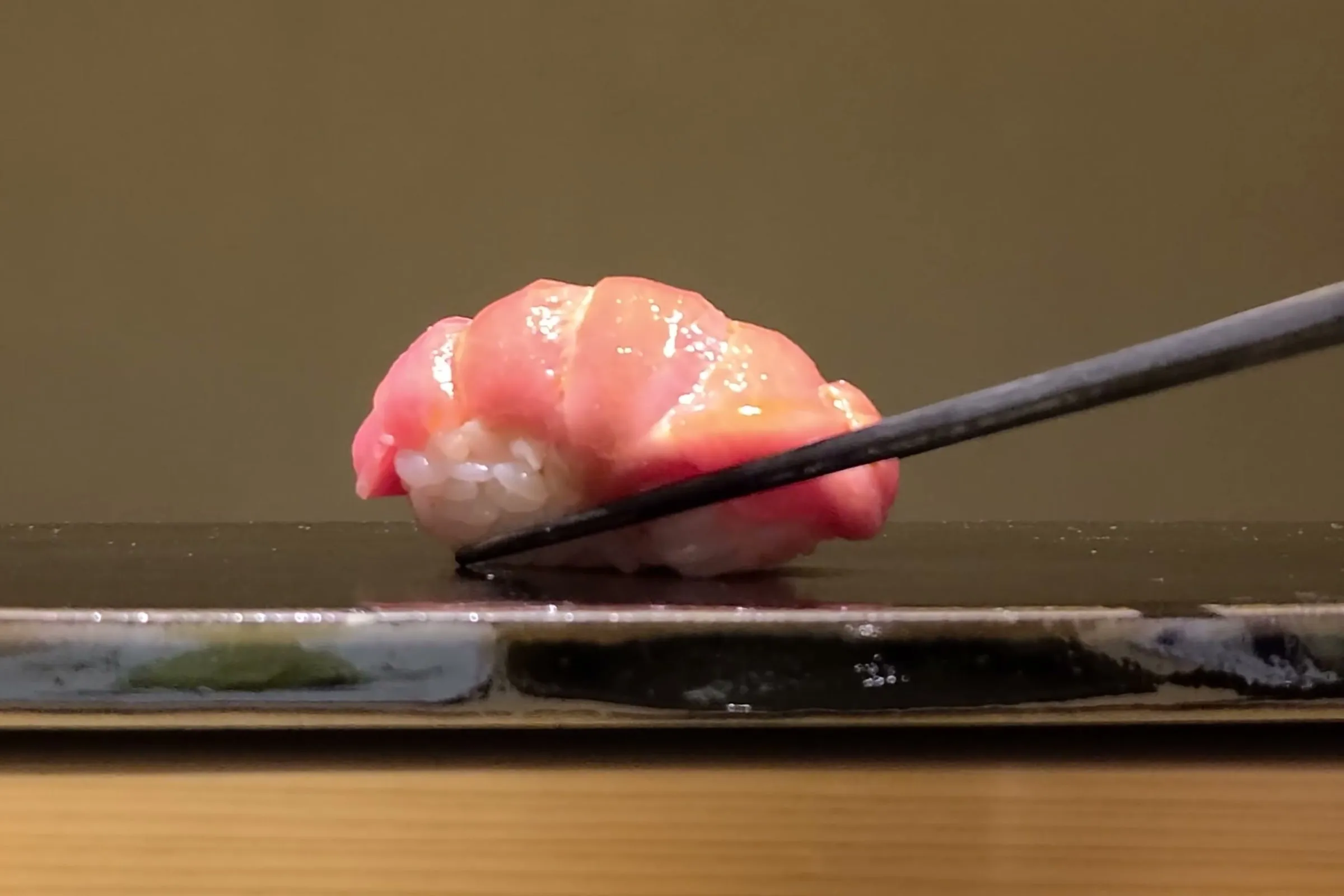
Saito presses big rice tight (2020/04). You can see it sitting up on the plate, not settling, and in the mouth it doesn’t loosen much. Sushi Ito’s usually falls apart beautifully, so I noticed the day it came out pressed harder than usual. Not clumps, just tighter. I joked the chef must have had a rough day (2020/07).
Namba cuts squid into thin threads and stacks three or four layers. In your mouth the threads and the rice come apart together (2019/07). Namba’s rice is very good too, small grains, firm and plump. I was told it comes from near Fukushima.
Where this happenedSushi Saito→Sushi Namba→
Temperature, piece by piece
Hot rice smells too sharp of vinegar, and cold rice turns stiff and clumpy.
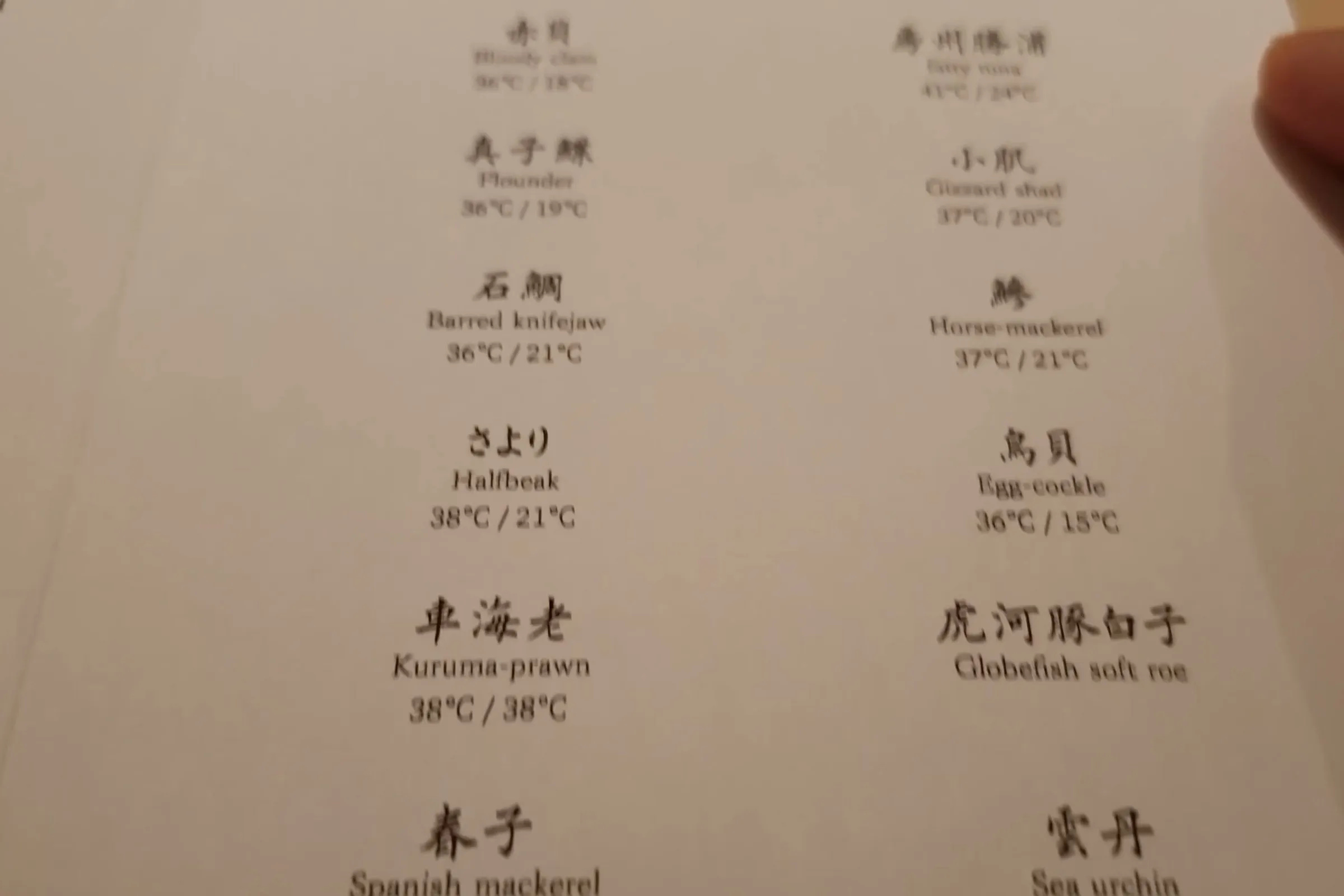
Namba writes it down. Every piece on the menu has two numbers, the rice and then the topping. Broad squid 36°C and 20°C, egg cockle 36°C and 15°C, kuruma prawn 38°C and 38°C, and the fatty tuna on that page got the warmest rice, 41°C (2019/07). If you doubt it, they’ll show you the thermometer.
Sugita does it without a card. People used to say Sugita doesn’t care about rice temperature because it varies. It varies on purpose. The big rice tub has a double wall with hot water in it, so rice by the wall and the bottom is warmer and rice in the middle cooler. Where the scoop goes in depends on the topping (2024/05).
The old boast was sameness: the same number of grains, the same temperature every piece. Changing size and temperature to fit the topping is the harder skill. I still notice when it’s off. Arai’s rice was a little cold one day (2020/03).
Where this happenedSushi Sugita→Sushi Namba→
Fresh rice needs a few pieces
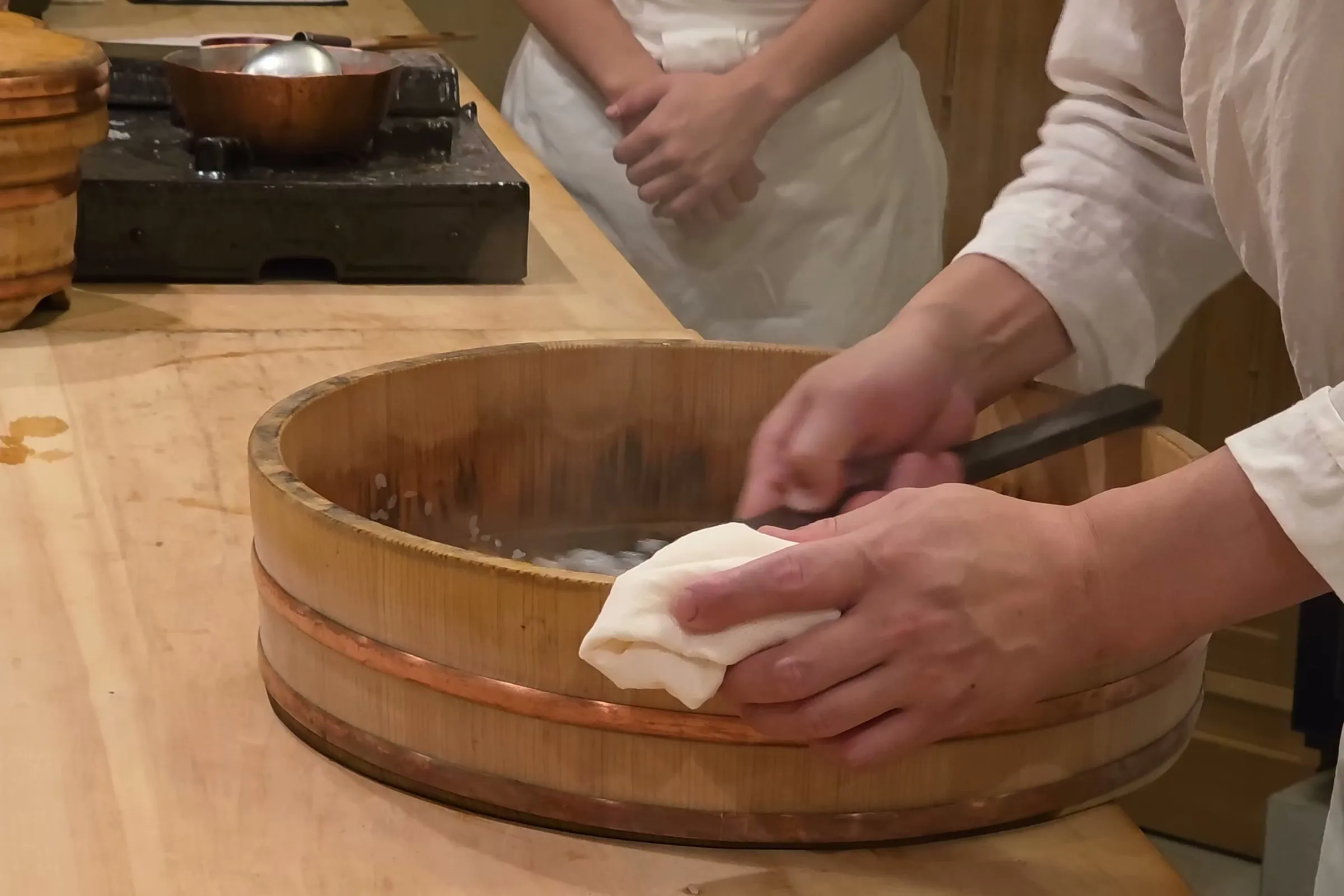
Shari gets mixed in a wide, shallow wooden tub, the hangiri. Folding the vinegar through is called kiri, cutting. Keep at it too long and the surface goes sticky.
The tub matters more than you’d think. One day at Sushi Shimizu in Seoul the rice was sharper and saltier than usual (2020/12). Chef Lee Kwang-yeol said a dry wooden tub drinks the vinegar the second it’s poured, so the rice gets less. On days the chef mixes it, the tub gets a long soak first, so the rice takes more.
And a fresh batch hasn’t settled. At Takemoto the vinegar hadn’t mellowed yet, so the first few pieces were sticky and sharp, almost like rice cake. My friend asked if the rice was too wet, or pressed too tight. I said neither, just wait. Four or five pieces in, it was as good as Arai’s back when the shop was in the basement (2025/12).
Loud rice wants loud fish
Rice and topping have to match. Strong vinegar and salt suit oily fish and anything cured. That loud day at Shimizu, soy-cured akami and yellowtail tasted great and the lighter fish came off weaker (2020/12).
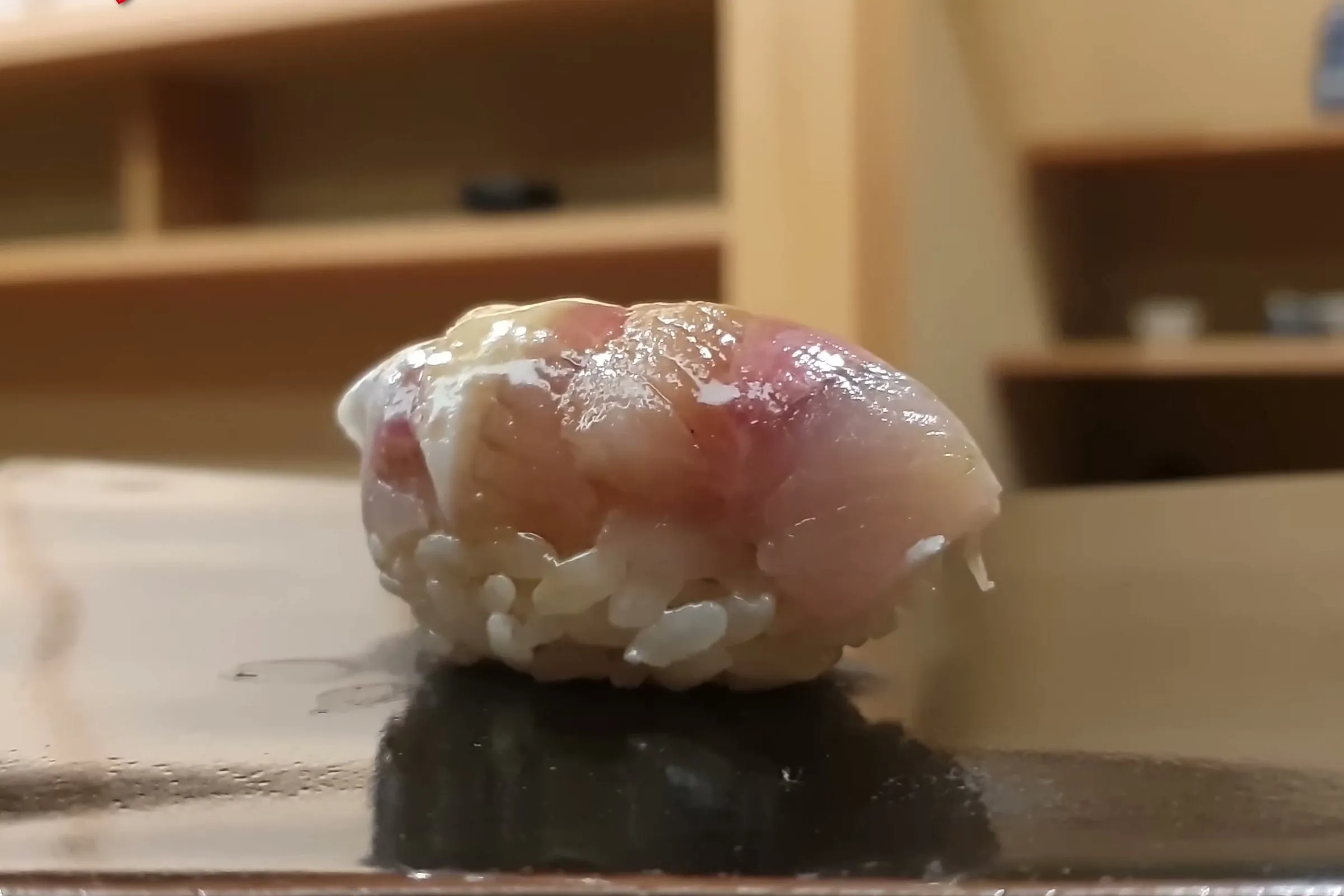
Sugita’s rice has a smooth surface, and that’s why sardine works so well there. The oil coats every grain and they scatter in your mouth together. Oily, strong-smelling fish wants rice with strong vinegar and strong salt (2019/09).
Tuna works the same way. Fatty cuts need rice strong enough to carry their oil.
Where this happenedSushi Sugita→
Why Tokyo rice went soft
After COVID a lot of Tokyo rice got softer and wetter. Sugita’s too. At the 2024/05 dinner the first kohada came on rice that was cold and clumped like rice cake. My friend from Hong Kong said I was being fussy.
Then the middle of the course was right where I like it, and the extra kohada I ordered at the end was cold and tight again. So it was on purpose. That’s the rice Sugita wants under kohada.
Arai’s rice changed too. In the basement days it was the best shari I’ve had. After the move upstairs and COVID it slipped a lot (2025/12).
It isn’t bad rice. It’s moved away from my taste, and it seems to be what the chefs want. The foreign foodies I eat with feel the same, and they’re even more into al dente than me. With visitors back, I’m hoping al dente comes back too.
Where this happenedSushi Sugita→Sushi Arai→
How the rice gets shaped
Kim Seong-bok, the chef at Sushi Ito in Seoul, walked me through the ways to shape nigiri (2019/11). Most chefs use some version of the five in the table, and each has its own variations.
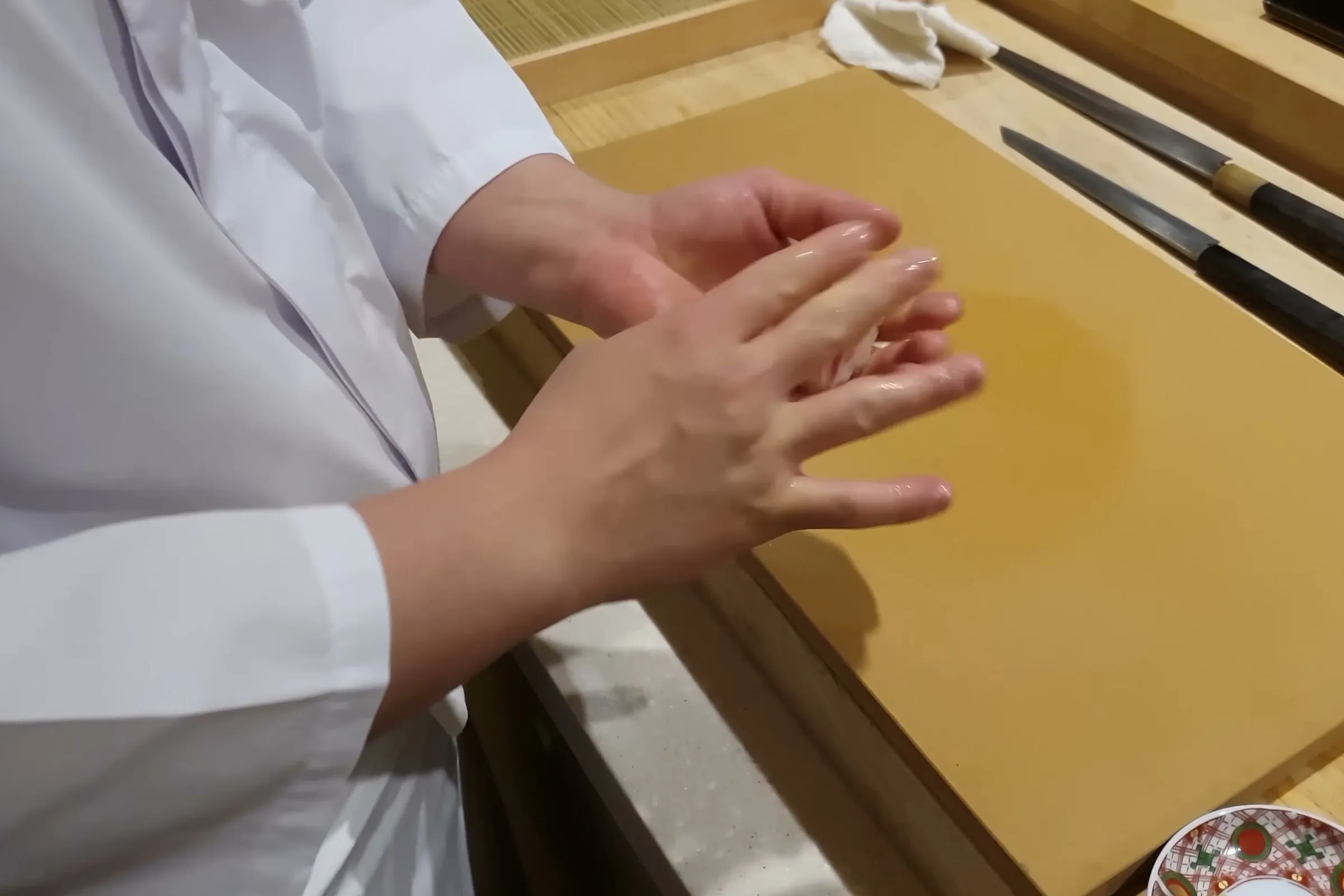
Hontegaeshi (本手返し) is the original. I heard that in the old days it was the only proper way, and sushi for the emperor had to be made with it. It has one move that looks pointless, where the piece flips front to back, and that flip is what makes it symmetrical. The hontegaeshi video everyone watches is Niitsu-san, the second-generation master of Kiyota.
Kotegaeshi (小手返し) drops that flip, and almost everyone uses it. Yokotegaeshi (横手返し) rolls the piece sideways with the right-hand fingers, and that’s what Kim does every day. Tategaeshi (立て返し) stands it up and turns it top to bottom. Kim learned that one first and still uses it when a topping falls apart rolling sideways, like amaebi, or when squid sticks to the hand. There’s no pull toward the wrist, so it’s the fastest.
Kim was taught that the bottom should come out like a boat. Some chefs press with the thumb, some don’t. The way Kim explains pressure: a kilo of iron and a kilo of cotton weigh the same, but the cotton is fluffier. Press ten grams of rice softly and it looks bigger, so do the grains, and it’s softer in your mouth.
Which method doesn’t matter much to me. If it tastes good, that’s the end of it.
| Method | The move | Who I’ve seen use it | |
|---|---|---|---|
| Hontegaeshi | 本手返し | The original. One extra flip, front to back | Kiyota, Morita-san at Ariake in Seoul now and then, Sugita now and then |
| Kotegaeshi | 小手返し | Hontegaeshi without the flip | Almost everyone, Sugita, Saito and Jiro included |
| Yokotegaeshi | 横手返し | Rolled sideways to the right with the right-hand fingers | Kim Seong-bok at Sushi Ito, every day |
| Gyaku-yokotegaeshi | 逆横手返し | Rolled the other way, to the left | Hashiguchi in Tokyo, Lim Sang-hyun at Sushi Kurumi in Seoul |
| Tategaeshi | 立て返し | Stood up and turned top to bottom. The fastest | Sushi Namba |
Don’t ask for less rice yet
Sushi Ito fills you up more than anywhere, and I see people ask for less rice before the first piece even lands (2021/07). The chef has already cut every topping to fit the normal rice. Shrink the rice and the balance breaks.
Eat two pieces first, then decide. If you get full, stop. A few pieces that taste right beat a lot that don’t. The one exception is a counter that slices its fish thin. There I’d rather cut the rice to match.
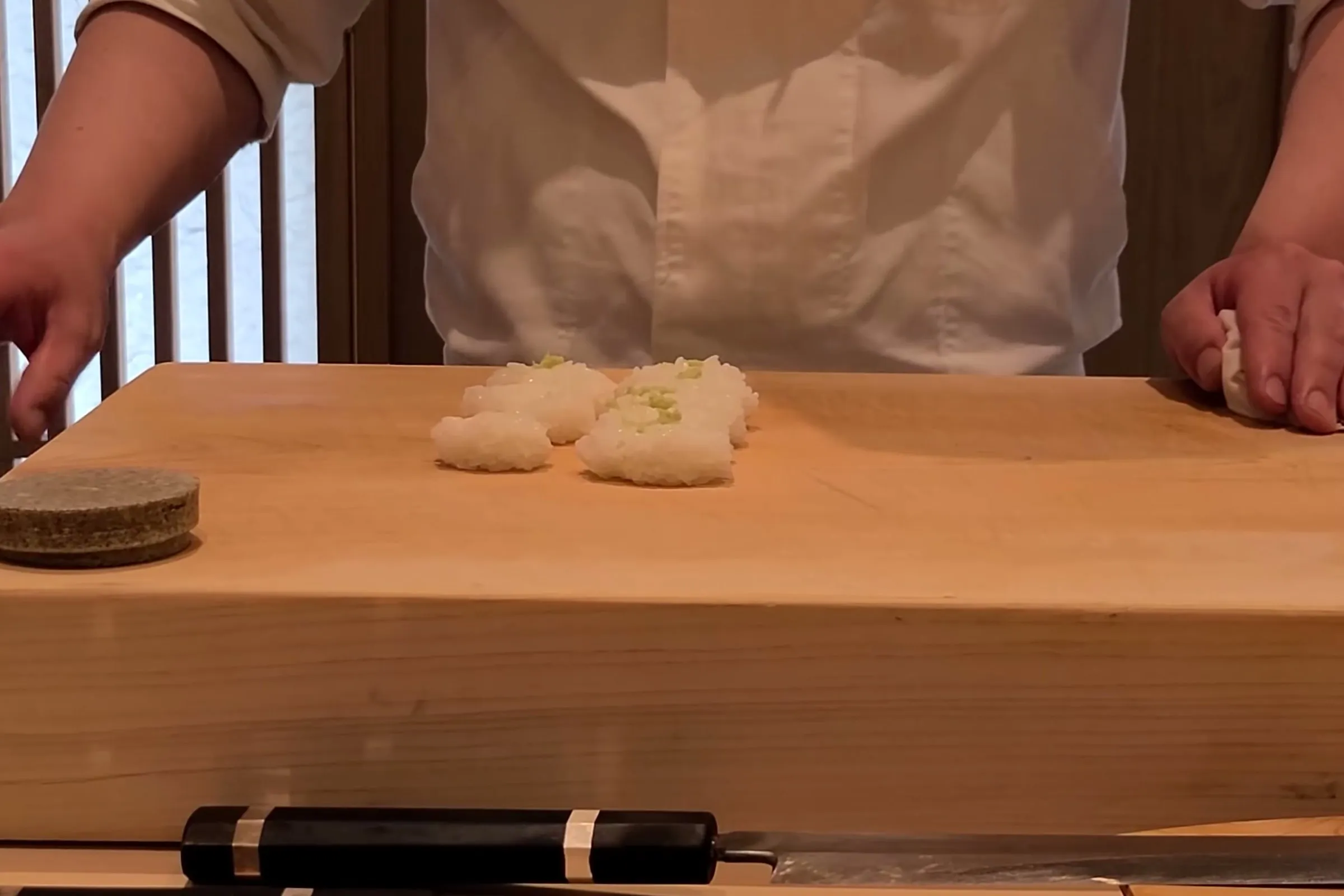
I go the other way. At Sushi In the chef rolls the rice for uni in a different size for each guest, and mine is always the biggest, because I keep asking for more (2020/07). At Arai you’ll hear the chef yell shariyo! all night, more rice, and the staff yell back (2020/03).
Where this happenedSushi Arai→
Plan the Tokyo trip
The boring bits I’d sort before flying, so the eating days stay free.
- Hotels in Tokyo*
Pick the room by where you eat, not by the sights. After a long dinner, a short ride back is the real luxury.
- Japan eSIM*
Data from the moment you land, no counter and no SIM swap. Set it up the night before.
- Keisei Skyliner from Narita*
Narita to Ueno in about 40 minutes. Buy it ahead and walk straight to the platform.
- Haneda airport limousine bus*
Landing at Haneda instead? The limousine bus drops you at the big hotels and stations with no transfers.
- Tsukiji Outer Market food tour*
A market morning with someone who knows which stalls are worth the line.
- Sushi-making class at Tsukiji*
Shape nigiri yourself once and the counter makes a lot more sense.
Links marked * are affiliate links. If you book through them I may earn a small commission, and you pay the same. How it works
The videos this guide comes from
- How to Make Nigiri Sushi! Just by watching this, you can pretend to be a nigiri expert anywhere!!12:352019/11
- You can Try the Best Tuna Sushi in the World Here [Sushi Arai]15:392020/03
- Surprise Worship21:442024/05
- The Best Sushi in the World, Sugita (Vol. 2)12:262019/09
- A Living Legend Who Rejected Michelin 3 Stars?! | Sushi Saito13:212020/04
- The 3rd best sushi restaurant in whole Japan!14:422019/07
- A hidden sushi gem in Tokyo?13:102025/12
- The great value, classic sushi omakase in Tokyo | Takagaki no Sushi14:012019/08
- Fluffy rice + Fatty fish = Incredible Sushi13:272020/07
- Amazing sharis (sushi rice)!!! What an experience. [Sumire] Part 2/26:522020/07
- The rice texture is top-tier at Sushi Ito as always8:222021/07
- Authentic Sushi, with the fluffy rice [Sushi Ito] (2/2)6:332020/07
- The rice carries the sushi.5:452020/12
Sources
- 江戸前 Wikipedia (Japanese)
- 江戸前寿司 Wikipedia (Japanese)
- 酢飯 Wikipedia (Japanese)
- Mizkan Room Handa City