Sugita in Tokyo is my sushi god. Even gods have off nights.
Sugita is a sushi counter in a basement in Nihonbashi Kakigaracho, Tokyo, and the place I call my sushi god. I’ve been more than thirty times. With every extra, my bill was about ¥50,000 (about US$460, 2020/04), and about ¥73,000 by 2026/10. It had one bad night in 2024. I keep going back.
monster gourmetFrom my 2020/04 video
- My share
- ≈ ¥50,000
- about US$460, oolong tea + my extras, 2020/04 video
- Highlight
- Kinmedai chawanmushi
- Skip
- Tamago nigiri
- Video
- 29:54
- 2020/04
- Booking
- OMAKASE. Seats open in rounds, one booking a quarter, photo ID at the door.
- OMAKASE (omakase.in)
- Where
- Nihonbashi, Tokyo
- Suitengumae, exit 4
Online service for my sushi god
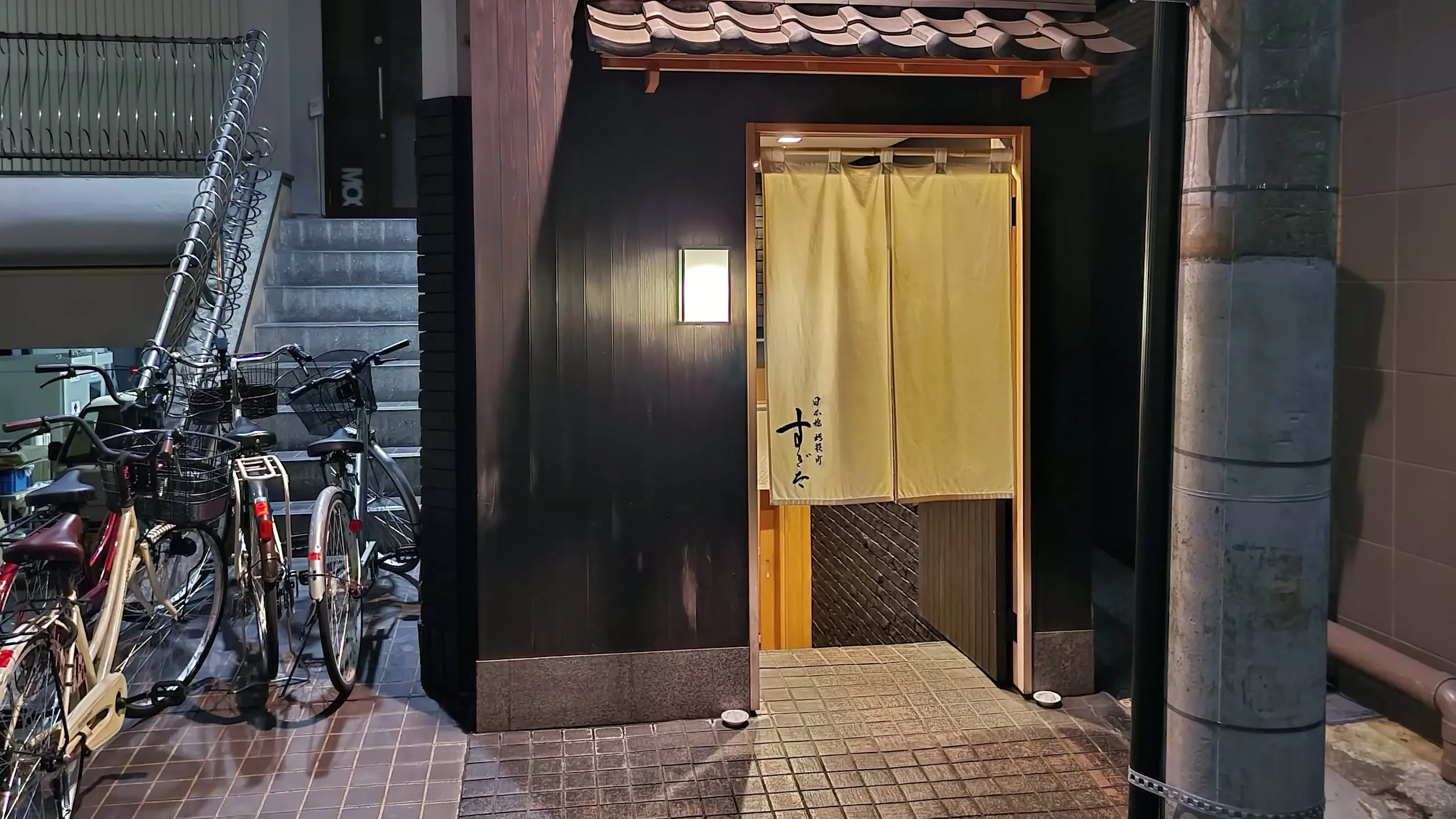
Sushi Sugita is a counter in the basement of an apartment building in Nihonbashi Kakigaracho, Tokyo. Chef Sugita Takaaki spent over twelve years in the Miyako-zushi family of shops, ran the counter at Tachibanacho Miyako-zushi, and opened Sugita in October 2015 on the site of his father-in-law’s old shop.
Tastes differ, sure. This is still the best sushi counter in the world to me, and Sugita-san is my sushi god. Tabelog gave it a Gold award every year from 2019 to 2026. In my 2019 videos it was number one on Tabelog in all of Japan, and in 2024 it was number one again.
This video went up in April 2020, when churches had moved their services online. So I made my own online service and went to meet my god. Mine, at least, takes bookings.
I’d had lunch at Sushi Arai that day. Arai didn’t bring me oolong tea, so here I started with oolong tea.
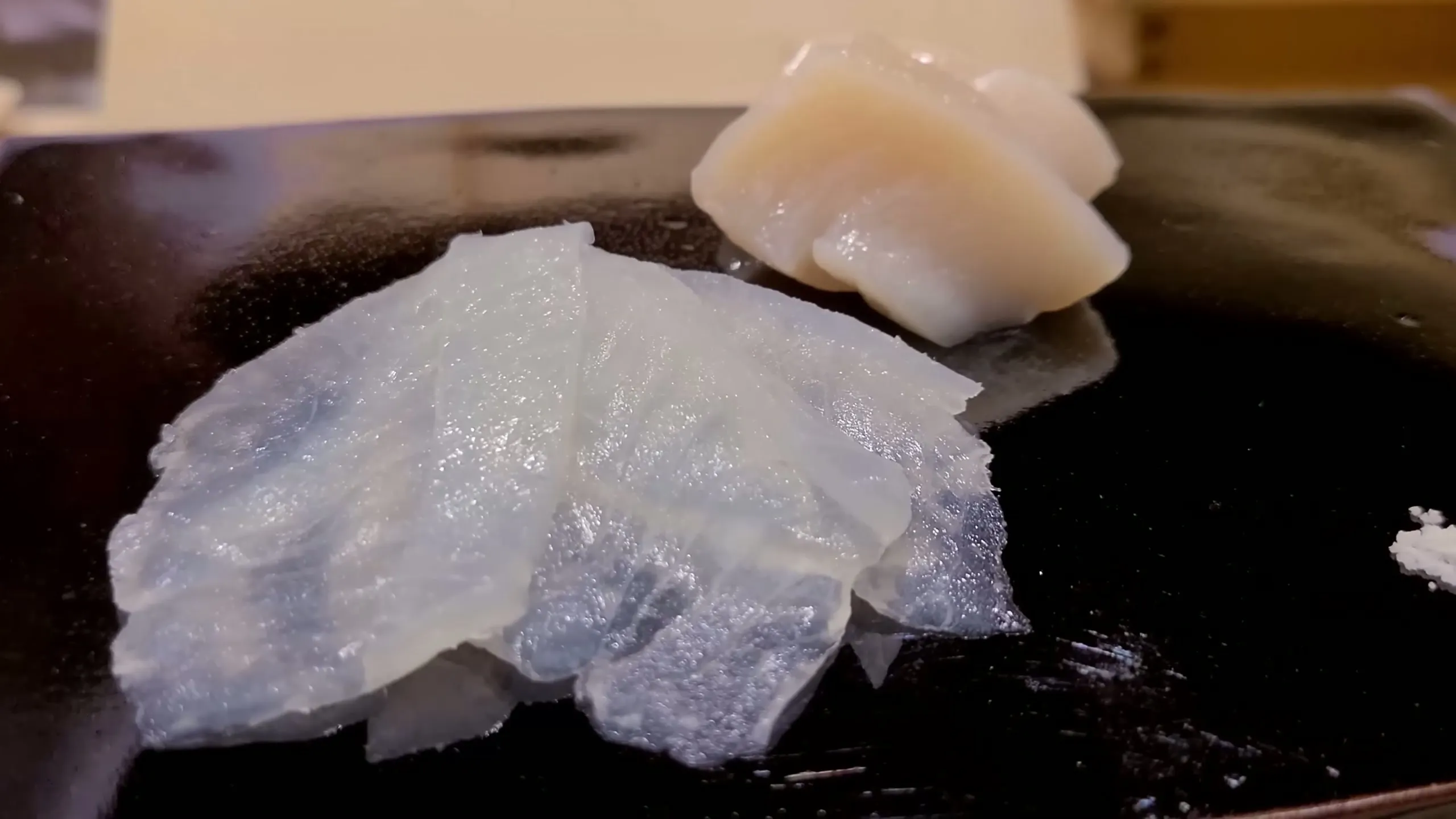
Wasabi, scallop, filefish
For me the first tsumami is the wasabi. Real wasabi root is pricey everywhere and brutal in Korea. Ask a Korean sushi counter what they pay for Japanese wasabi root and you hear over ₩200,000 a kilo (2020/04). It’s twice the price of the ¥12,000 to ¥13,000 a kilo stuff they grate here (2020/04), and it isn’t close in quality.
Then the white part of a young scallion with bonito flakes. Gently crunchy, faintly sweet, very soft.
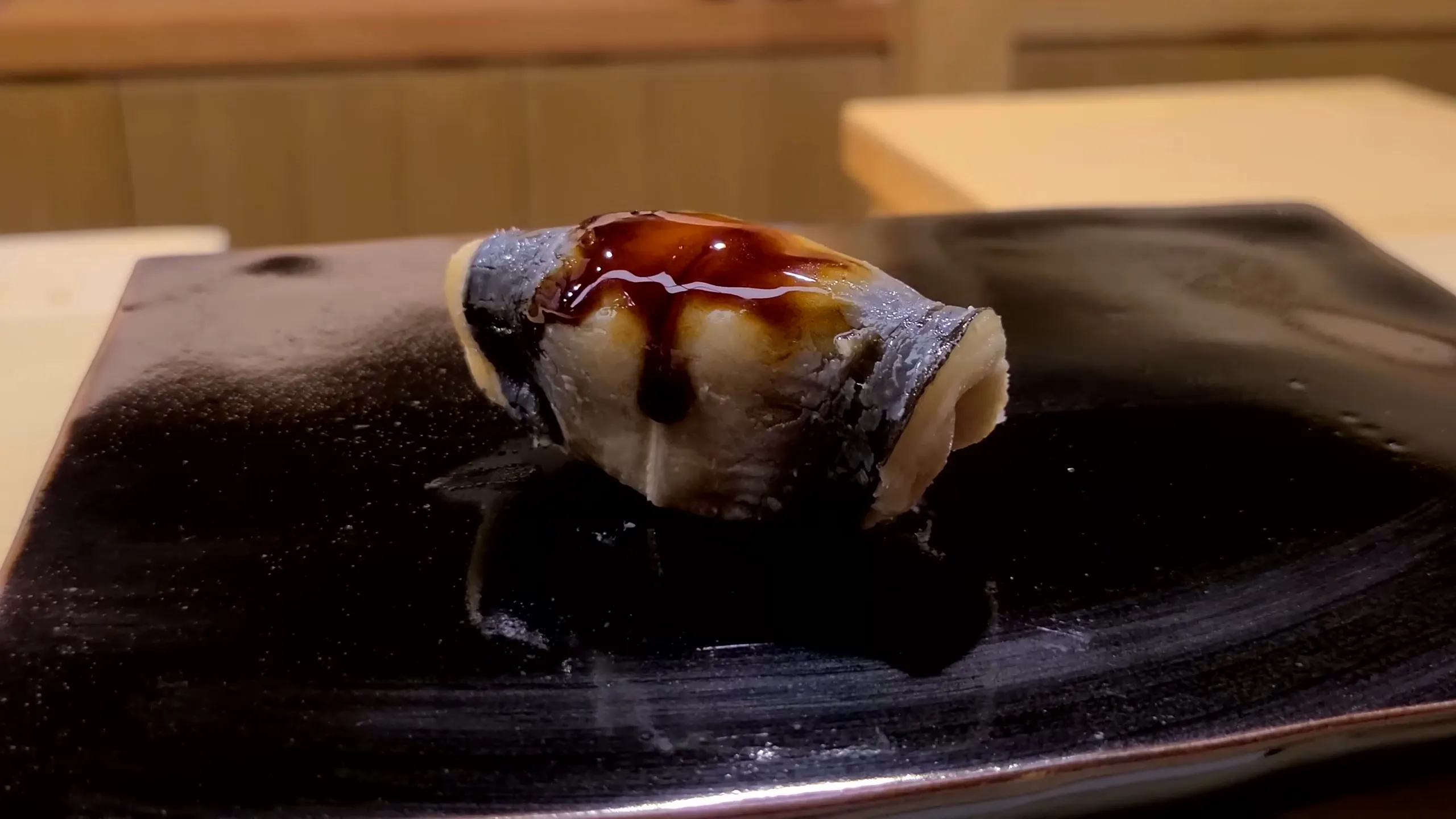
The first plate is usually one shellfish and one white fish as sashimi, changing with the season. Tonight it was wild scallop, then filefish from Kumamoto. I have zero patience, so I finish the scallop before he lays down the filefish. One night, setting down the next piece, he laughed and said, “Finished already, you greedy pig?”
The scallop tasted exactly like it looks. Insanely sweet and soft. The filefish comes with soy sauce that has its liver mixed in. Filefish alone is mild, a little chewy with a cool sweetness, and often leaves a bad aftertaste. This one was clean, and the liver made it nutty. The soy was way too salty, though. Dunk it like I did and you’ll regret it.
Nobody wipes the plate like Sugita. After every piece. It’s glossy lacquer and every mark shows, so maybe that’s why.
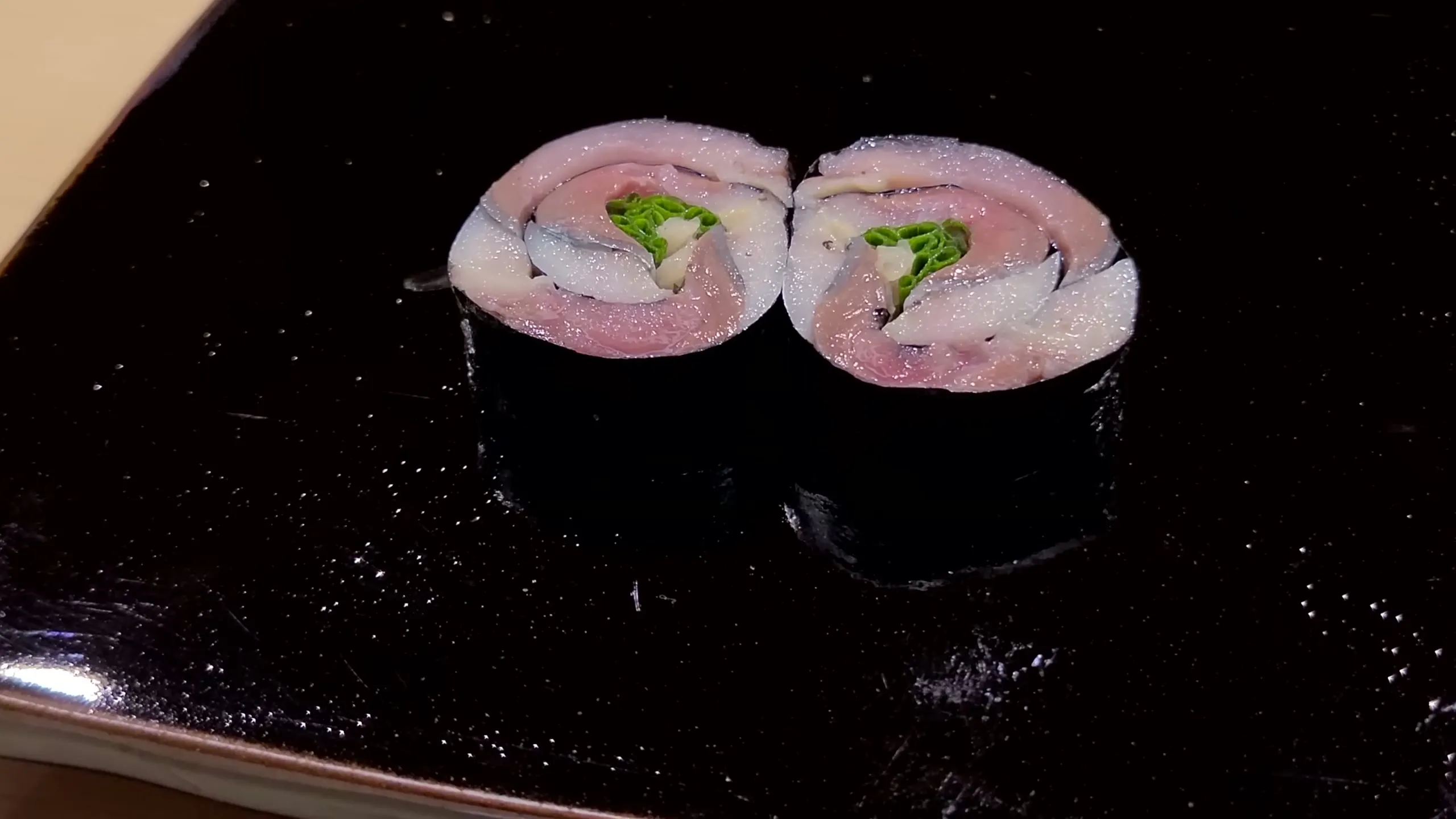
The mackerel roll he’s made for fifteen years
Isobe-maki, oily blue fish rolled in nori, is everywhere now, in Japan and in Korea. Sugita is close to where it started. By 2020 he’d been rolling this mackerel for fifteen years, and GOETHE says he’s rumored to be the first to do it.
Even a god tears the nori. He saw it, said “Oh! The nori tore,” got a fresh sheet from the back and rolled it again from scratch. The nori must have been short on faith that day.
The cross-section at Sugita is unusually pretty, and I think that’s because the mackerel is huge. Try the same thing in Korea and the fish won’t fill the roll edge to edge. Sardine or herring make a prettier roll, because you lay the whole fish in, like the pickled radish in kimbap, and sardine’s dark meat has a gorgeous color. Sugita’s sardine roll is gorgeous. The mackerel roll tastes much better.
He throws the ends away. Some nights you get them. It seems to depend on how many people are on the full course, and that night a few guests left early. Give them to me. I’d love more every time, but an extra means he rolls a whole new roll, and a whole roll fills me up before everything else I’m planning to eat.
“Shime-saba. Lots of wasabi, a little soy.” Lots usually means half of the wasabi he first set down, on each piece. With mackerel this oily, it works perfectly. And the scallion inside has an aroma I’ve only found at Sushi In.
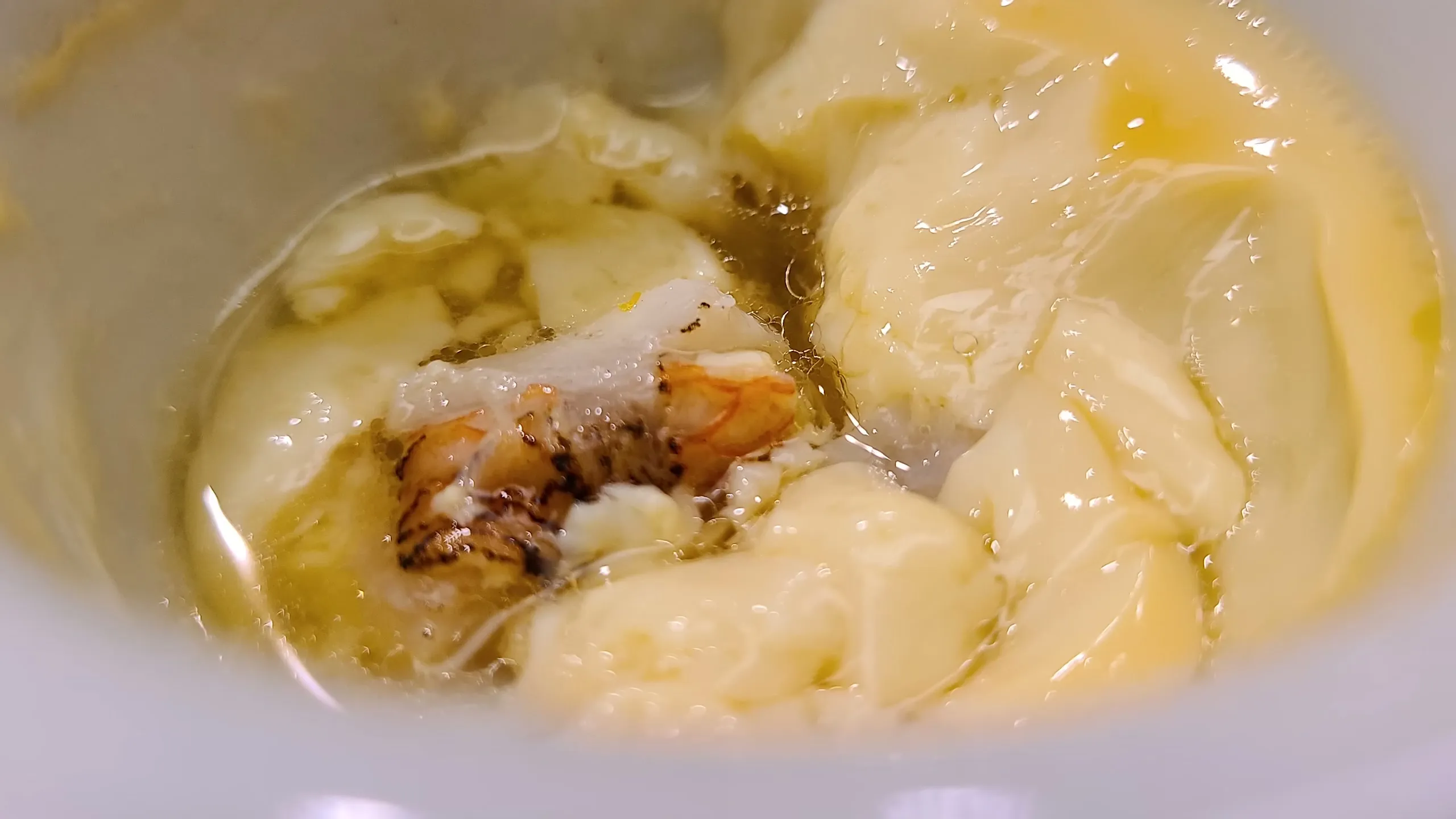
The best chawanmushi of my life
I think chawanmushi tastes about the same everywhere, unless the texture is bad or something I hate is inside. Sugita has done both. I’ve had one with anago, and one with konowata, sea cucumber innards, which I don’t like. So I expected nothing.
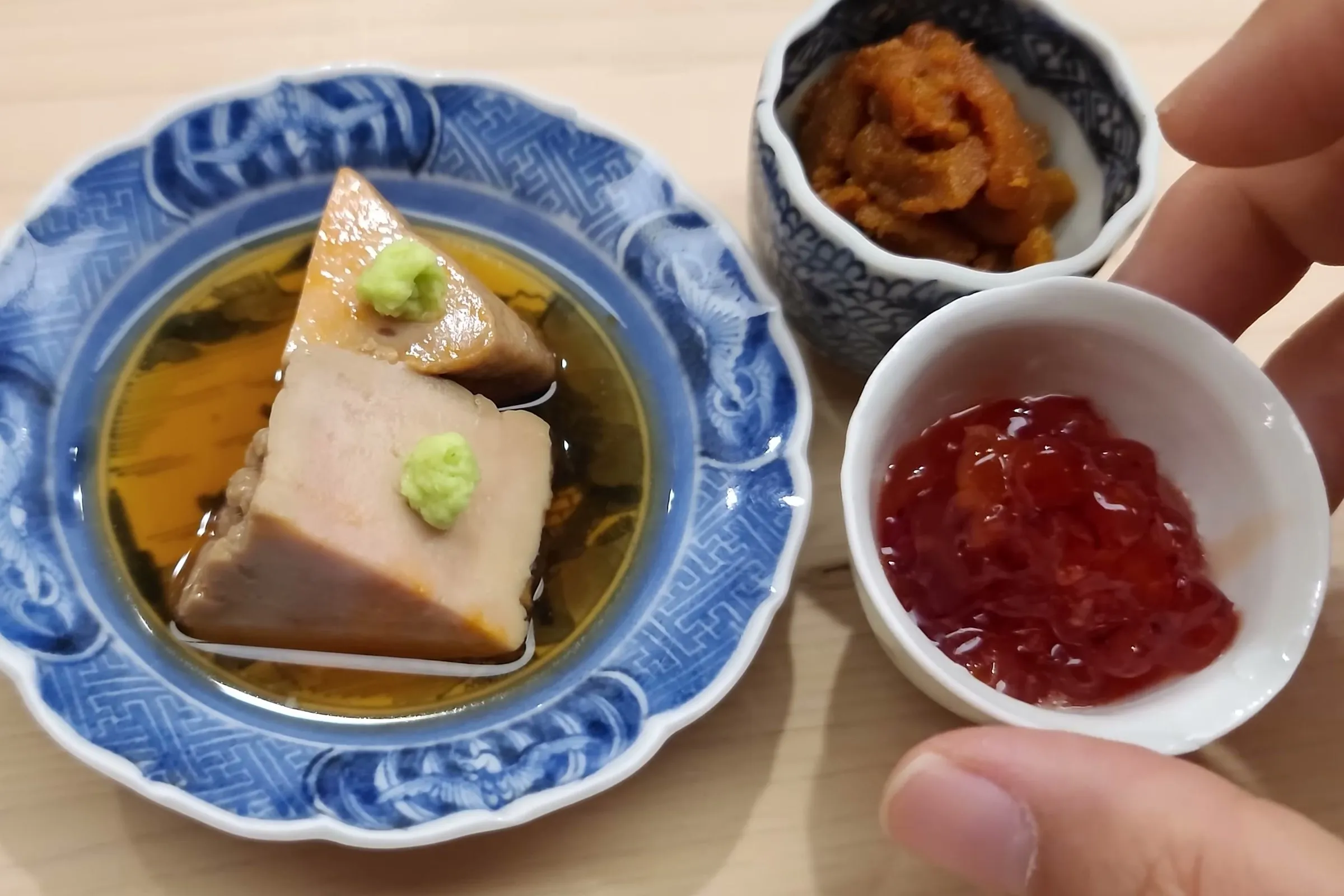
“Kinmedai chawanmushi,” the server said. Grilled kinmedai inside. The fat, the liver, that nutty sweetness of grilled kinmedai. Looking at the footage later, I had to stop recording to swallow. The best chawanmushi of my life. I was sure nothing would beat it.
The garnish on top does nothing. In my 2024/10 video, it was still the chawanmushi I measured every other one against.
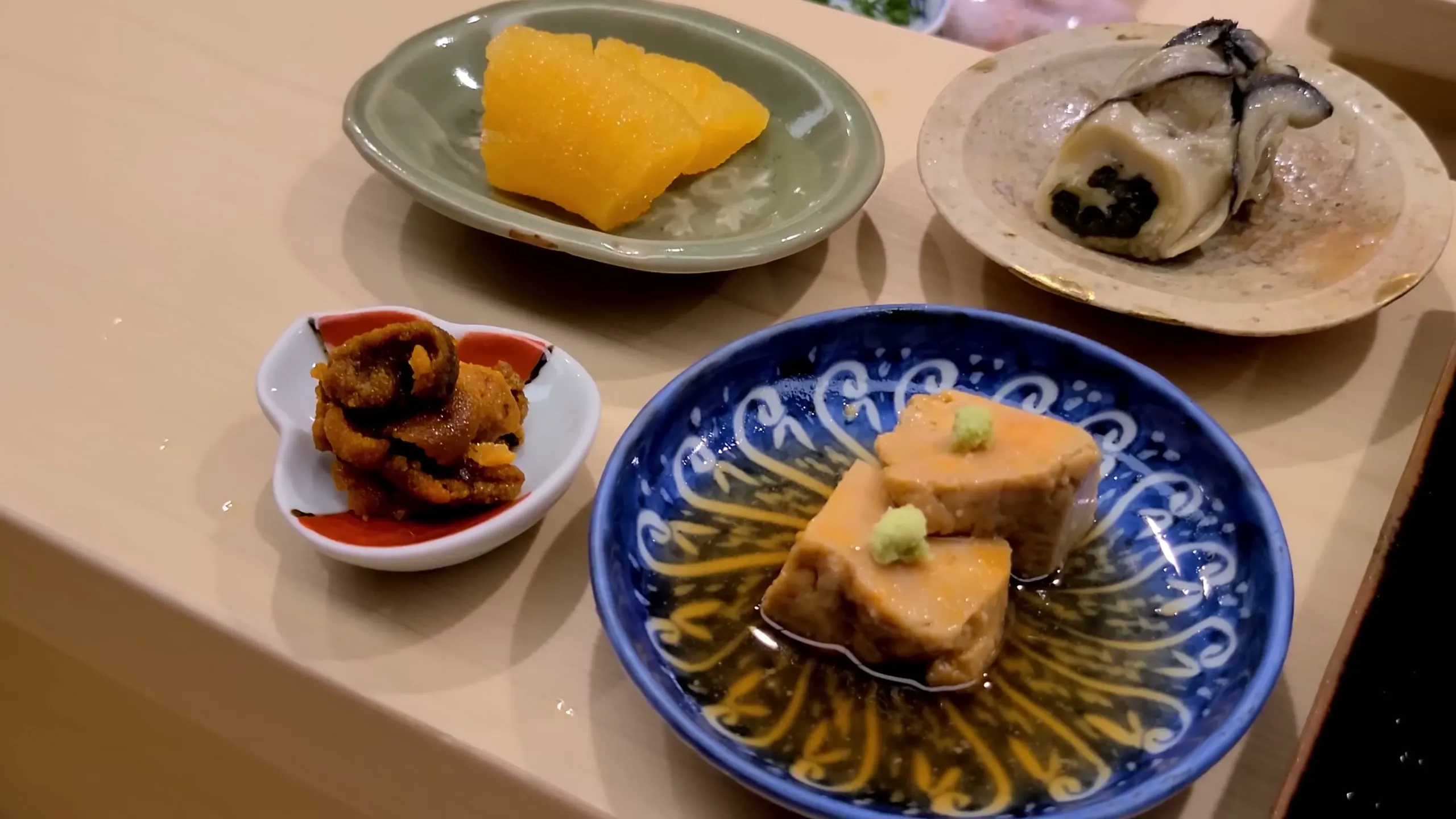
Assorted tsumami, for the ankimo
Next, the moment I always wait for. A plate of assorted tsumami. I don’t drink, and I still wait for it, because of the ankimo, monkfish liver. Best in the world. That deep, clear sweetness looks easy to make, and nobody else gets it right. I’d love every chef in Korea to taste it.
Oyster and abalone liver are things I usually avoid. Here I’ve loved them so many times that I look forward to this plate anyway. The oyster is steamed in sake and pickled in miso. I’d already met the best oyster of my life at Sushi Arai for lunch, and this one was sweet and great too. Cooked and seasoned beats raw for me.
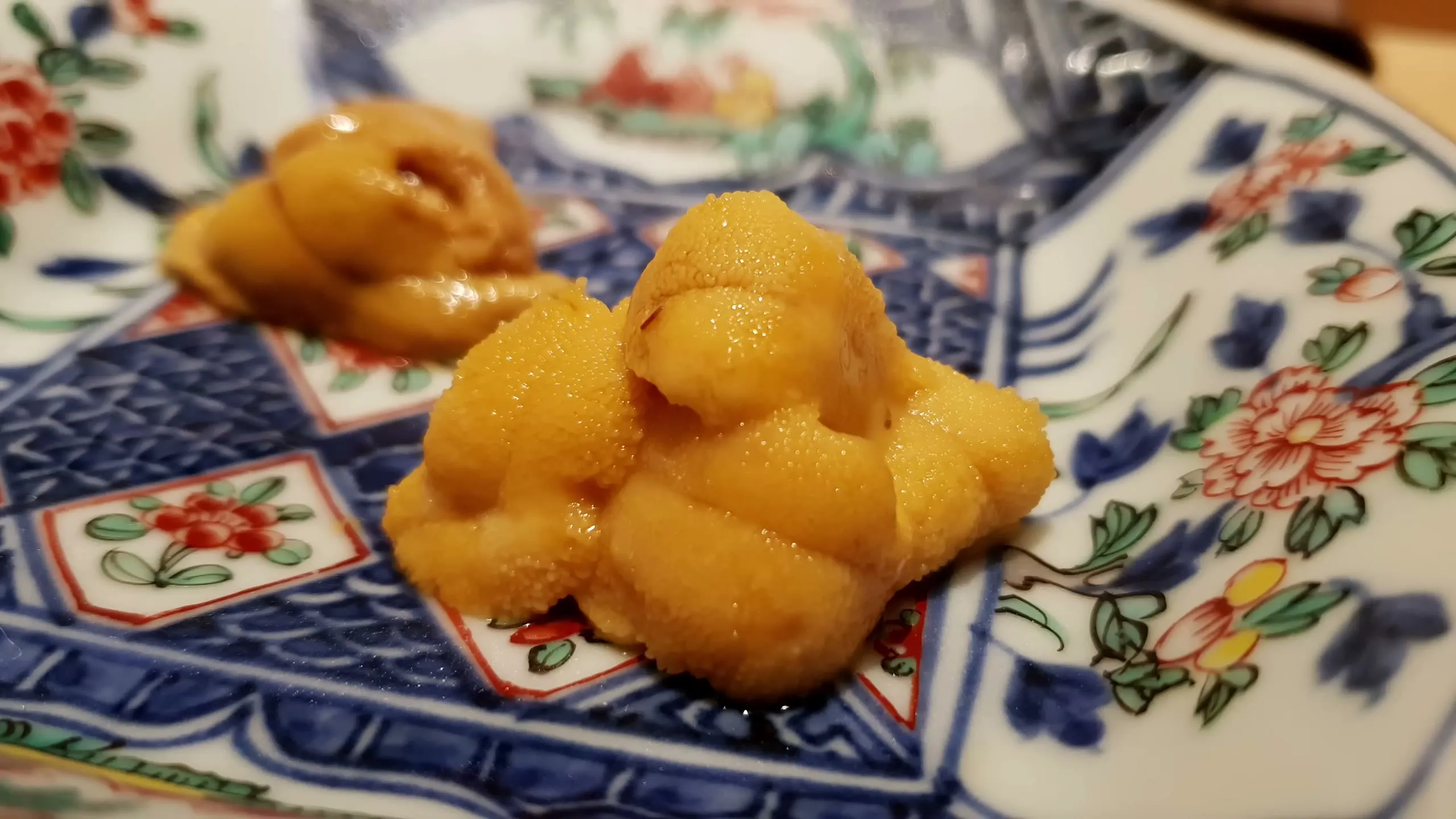
Uni tsukudani, sea urchin simmered in soy, and later kazunoko, herring roe. Everything is sweet and salty, heavy on the salty. That’s why they’re drinking snacks. I drink a lot of tea with them. I don’t want to miss any of them, so I always ask for all of them.
Tenmi, the tuna cut that faces the sky
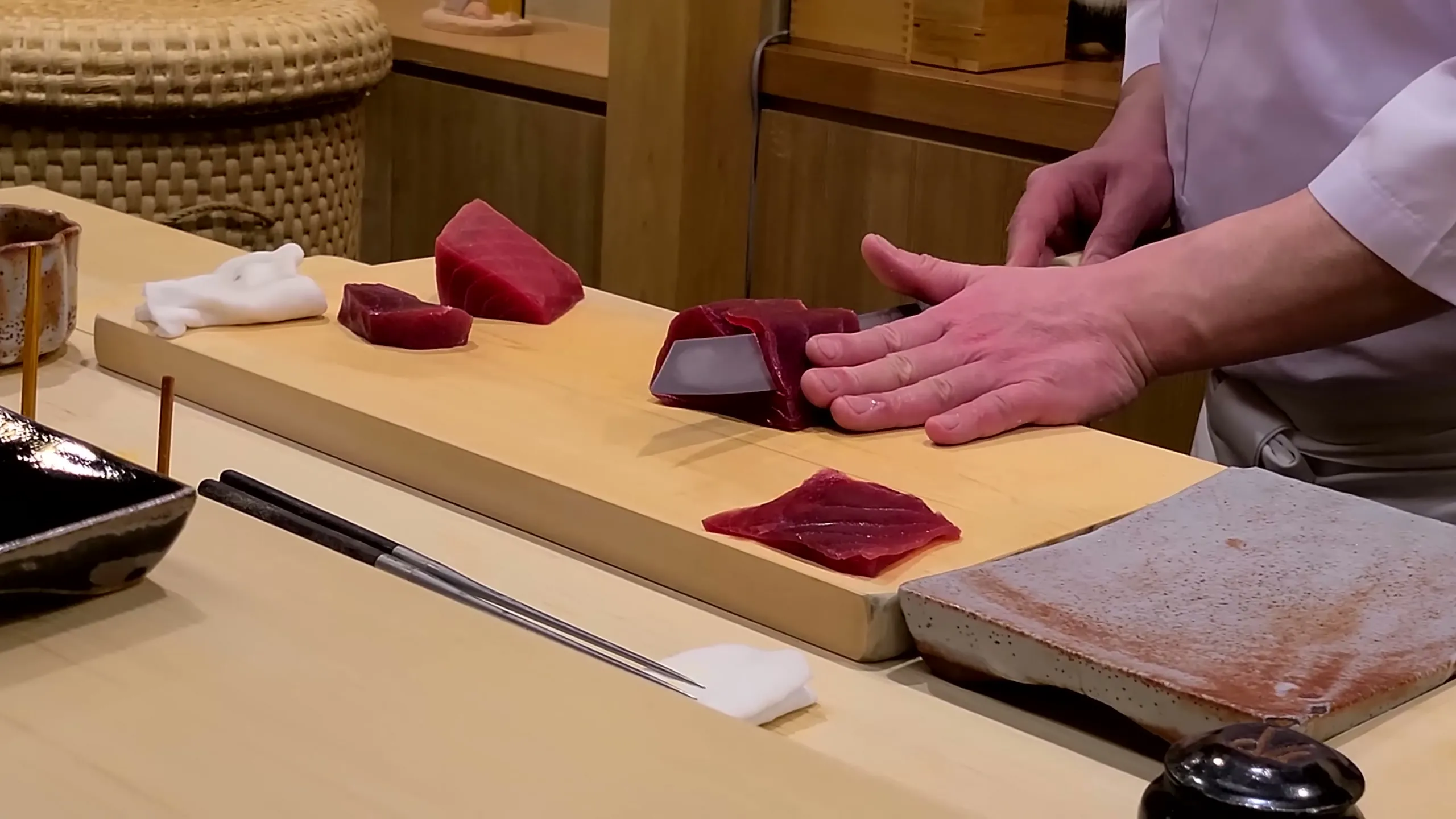
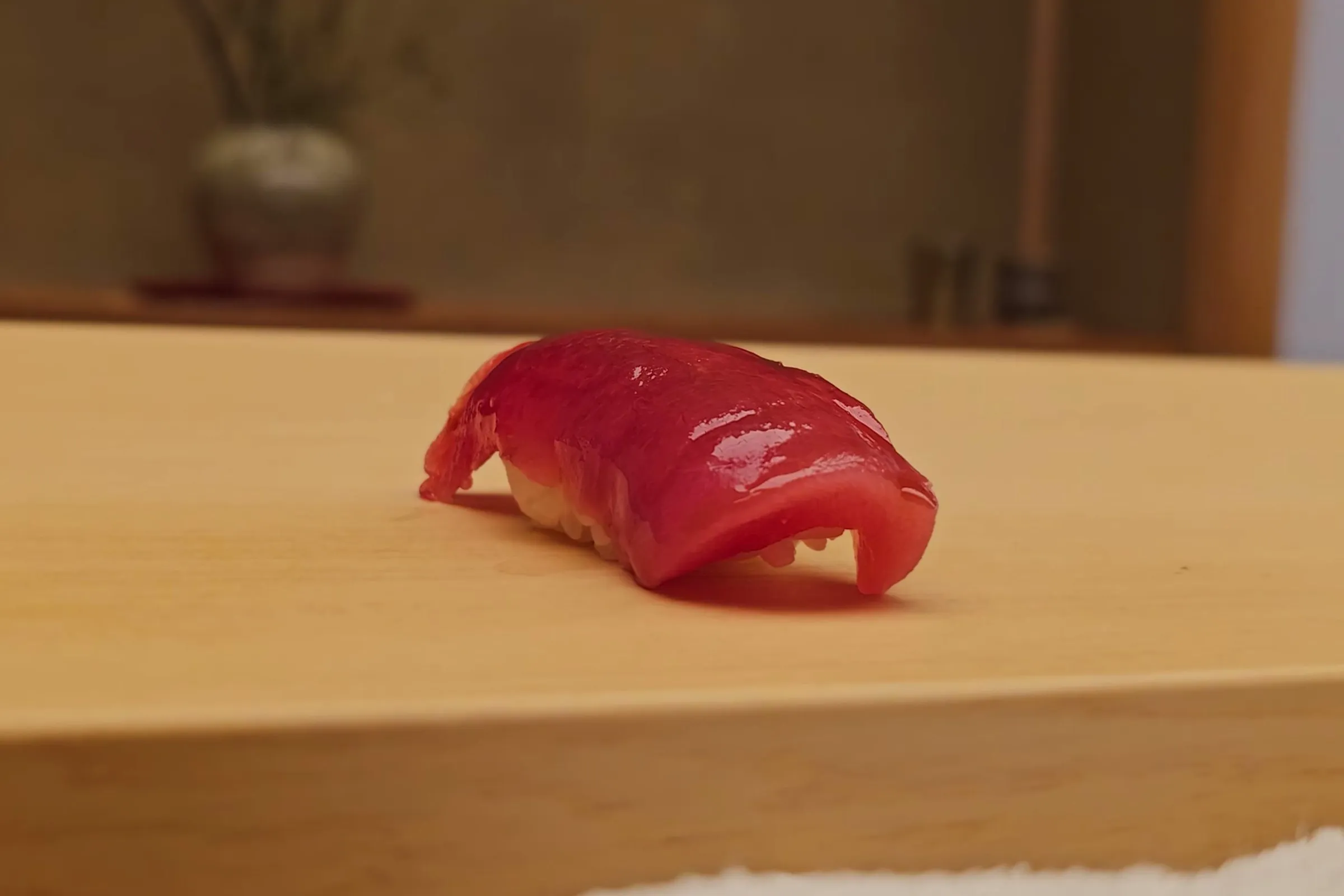
Sugita doesn’t chase tuna. He isn’t someone who buys only the most expensive cuts. Take this akami, which he calls tenmi.
Set a tuna block on the board upside down, Snoopy-shaped, and the deep red strip at the top, by the dark meat, faces the sky. Ten is the kanji for sky, so tenmi. It’s an inexpensive cut. He thinks it has a strong iron-y flavor and good aroma, so he sticks with it.
He slices it wide like a blanket and leaves it to soak in soy for a while. We’ll come back to it.
Pomfret, too strong for me
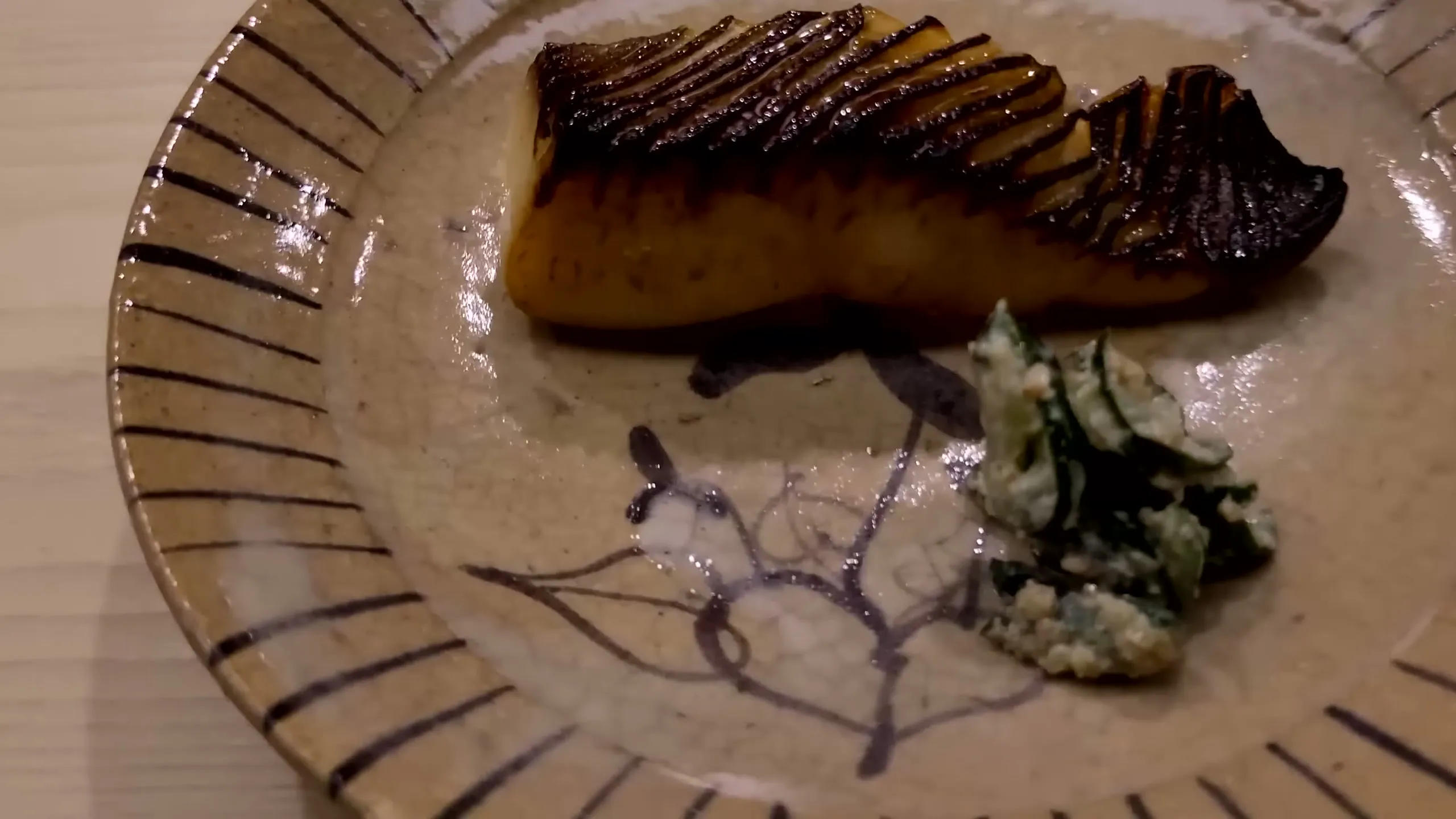
The grilled dish changes every visit. Nodoguro some nights, beltfish others. Same as Sushi In, come to think of it. Tonight it was pomfret yuan-yaki, grilled with a soy and yuzu marinade.
I expected rich and soft. It tasted like half-dried fish, grilled. Deep umami is fine, but the flesh was dry, and with that strong glaze my mouth got tired. Too intense for me.
Courses here vary by guest. Same number of dishes, different lineup. So anything someone else gets that I didn’t, I ask for. Usually I just ask for everything they have that day. That’s how I got grilled squid legs too.
Shirayaki, shirako and octopus
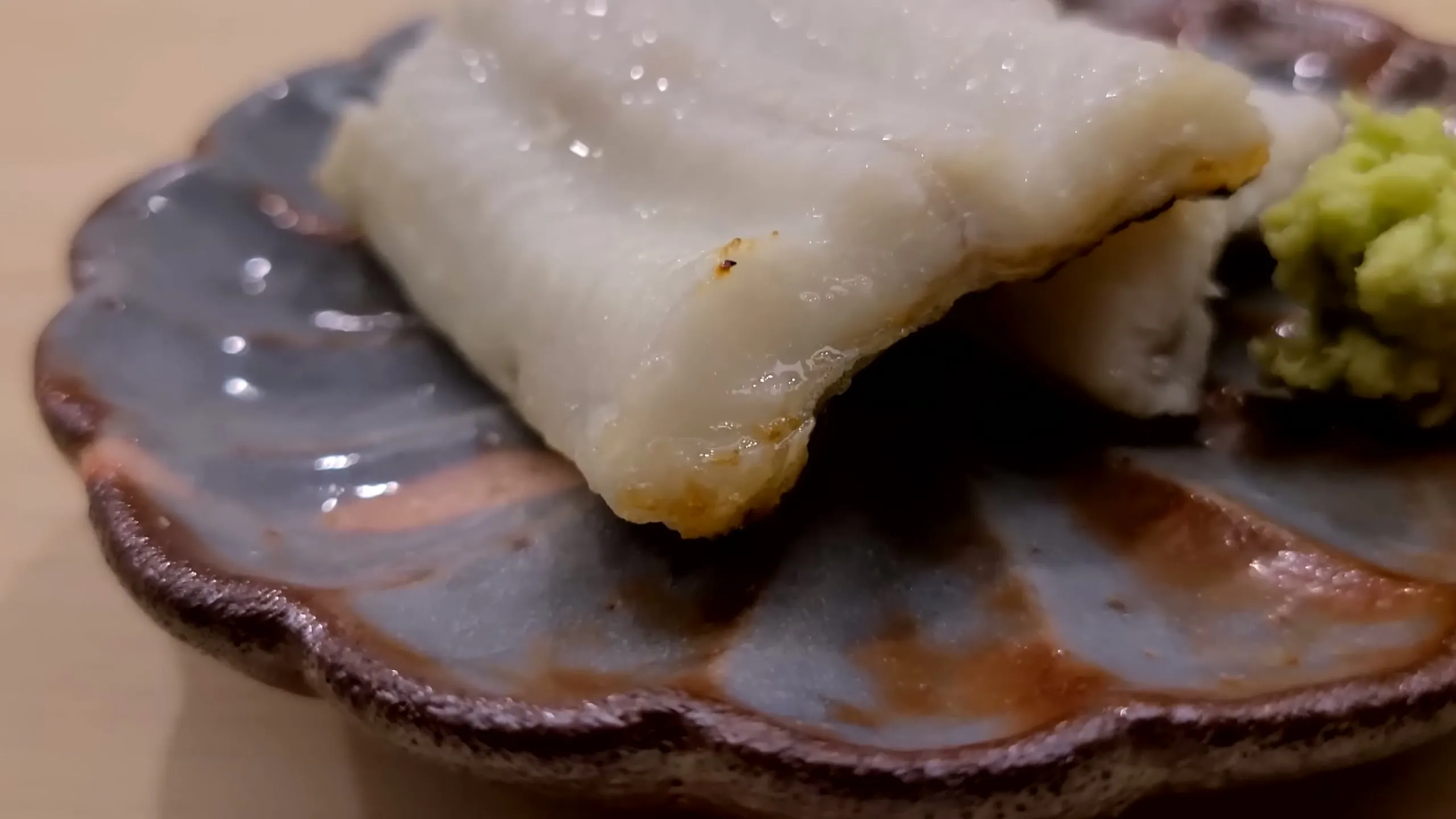
Anago shirayaki, grilled with no sauce, and white enough to earn the name. Lots of places serve grilled anago. Sushi In, Sushi Saito, everywhere. This texture is Sugita’s alone. The white flesh isn’t merely soft. It’s bouncy, like a balloon. The surface is almost Kyoho grape jelly, and the chewy skin finishes it.
He had shirako and hadn’t given me any. For my subscribers, I had to order it. Cod milt, served cold, which was unusual. Cold shirako isn’t for me. I like it hot enough to burn the roof of your mouth, creamy and nutty all over. Cold, it went flat. Not fishy at all, I’ll give it that.
Simmered octopus. Look at the cut surface. It looks like it’ll tear easily in your mouth, and it does. Very soft and fairly sweet, with light seasoning.
That’s the long tsumami course, plus every tsumami they had that wasn’t in mine.
Kohada first, always
Ginger comes out, so it’s nigiri time. At Sugita the first nigiri is almost always kohada, gizzard shad. I don’t even like kohada, and this is the best in the world.
Sugita treats kohada as special. Ask him for one piece that represents the shop and it’s kohada. He wrote that in his book and said it on TV.
By his account, he changes the cure for each batch by where it’s from, its size, its fat and how tough the skin is. The scoring and the shape change too. This shape, per his book, is mostly for kohada from Amakusa in Kumamoto: smallish, moderately fatty, thick flesh. He leaves the tail end attached, splits the front and folds it, and gives it one straight score.
If you hate kohada like I do, this is the one to try. When the video went up, I couldn’t get there myself. My May booking had been cancelled by a DM from him saying they’d be closed that day.
Kobujime, not kombujime
Hirame, flounder, cured in kombu. Listen up, kombujime crowd. Hear what my sushi god says: “Hirame kobujime desu.” Kobujime. You can stop showing off now.
The kombu makes it firm and chewy and deepens the umami. Overdo it and it turns bitter, which I hate.
For a while people said Sugita doesn’t care about rice temperature, because it varies. It varies on purpose. He changes the temperature for each topping. His rice tub sits in hot water around the sides. For cooler rice he scoops from the middle. For warmer rice he takes it from the bottom or the walls, where the hot water touches. He never just scoops from the top.
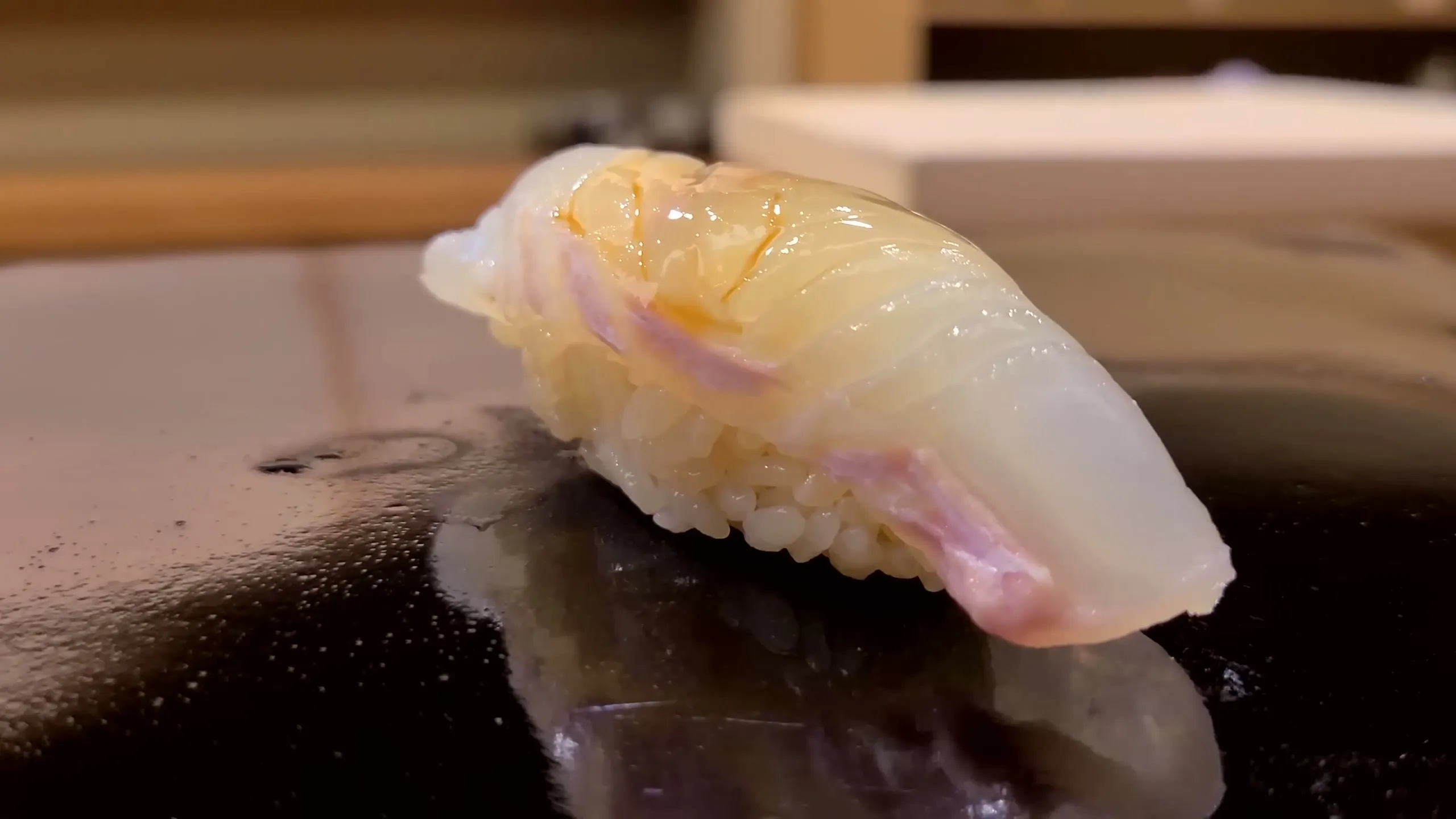
The sea bream I’d work for free to learn
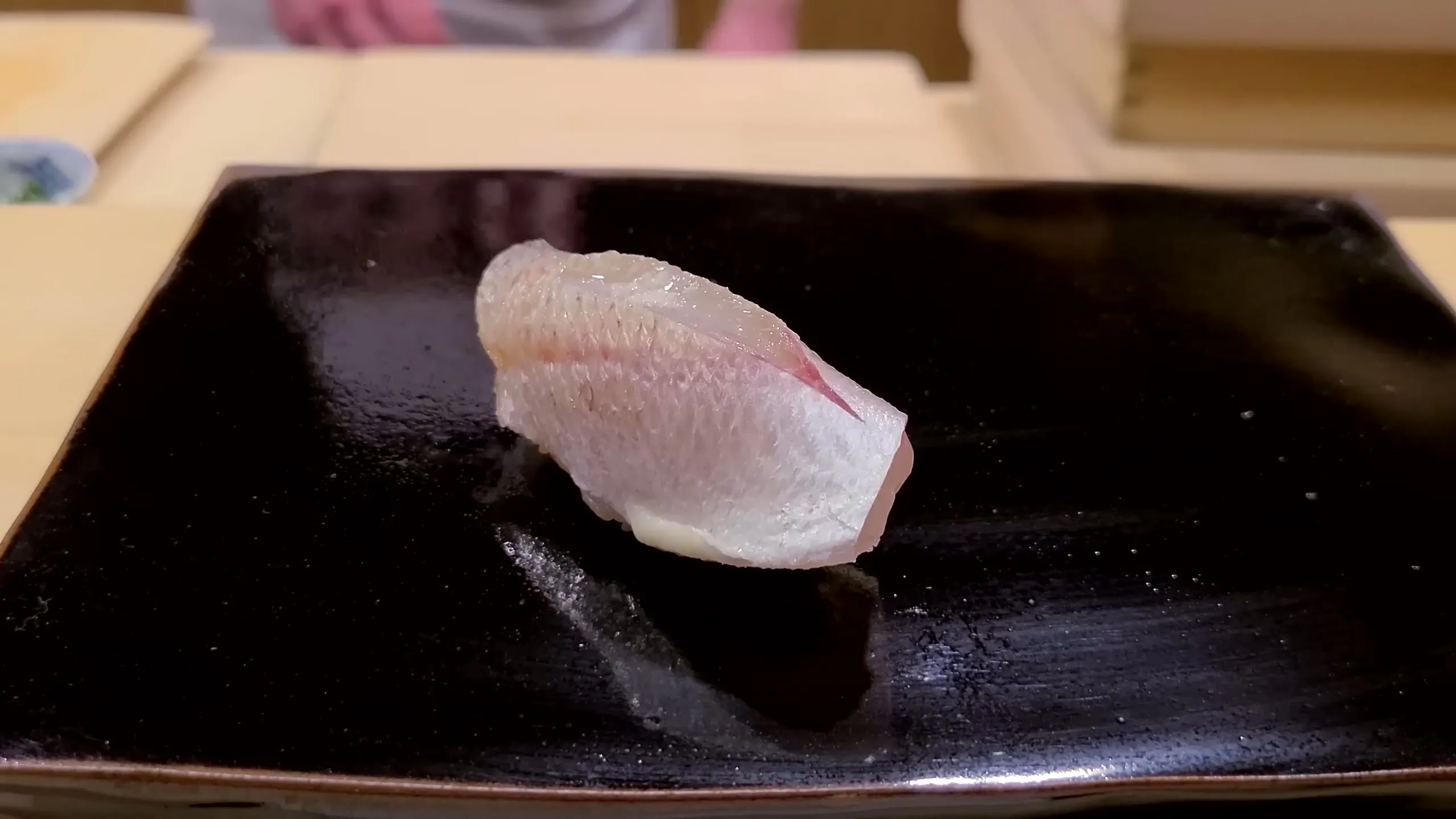
What does he do to this sea bream? I can’t get it anywhere else. White fish sweetness plus the sweetness of all that fat. Did you see the fat lines? Usually fat makes fish crisp and nutty. This goes way past that. It isn’t crisp. It’s fluffy. Really fluffy.
I asked him about it once. My best guess is that salt is the culprit, but the sweetness and nuttiness are still a mystery. If I were a cook, I’d offer to work here unpaid to steal that technique.
Then kasugo, baby sea bream, which I usually say tastes bad everywhere. Even at Sugita the cure swings, and when it’s too strong it’s bitter and too salty. That day it was right on. Sweet, with sudachi aroma, balanced. Maybe the first time I really enjoyed kasugo. Hallelujah. Amen.
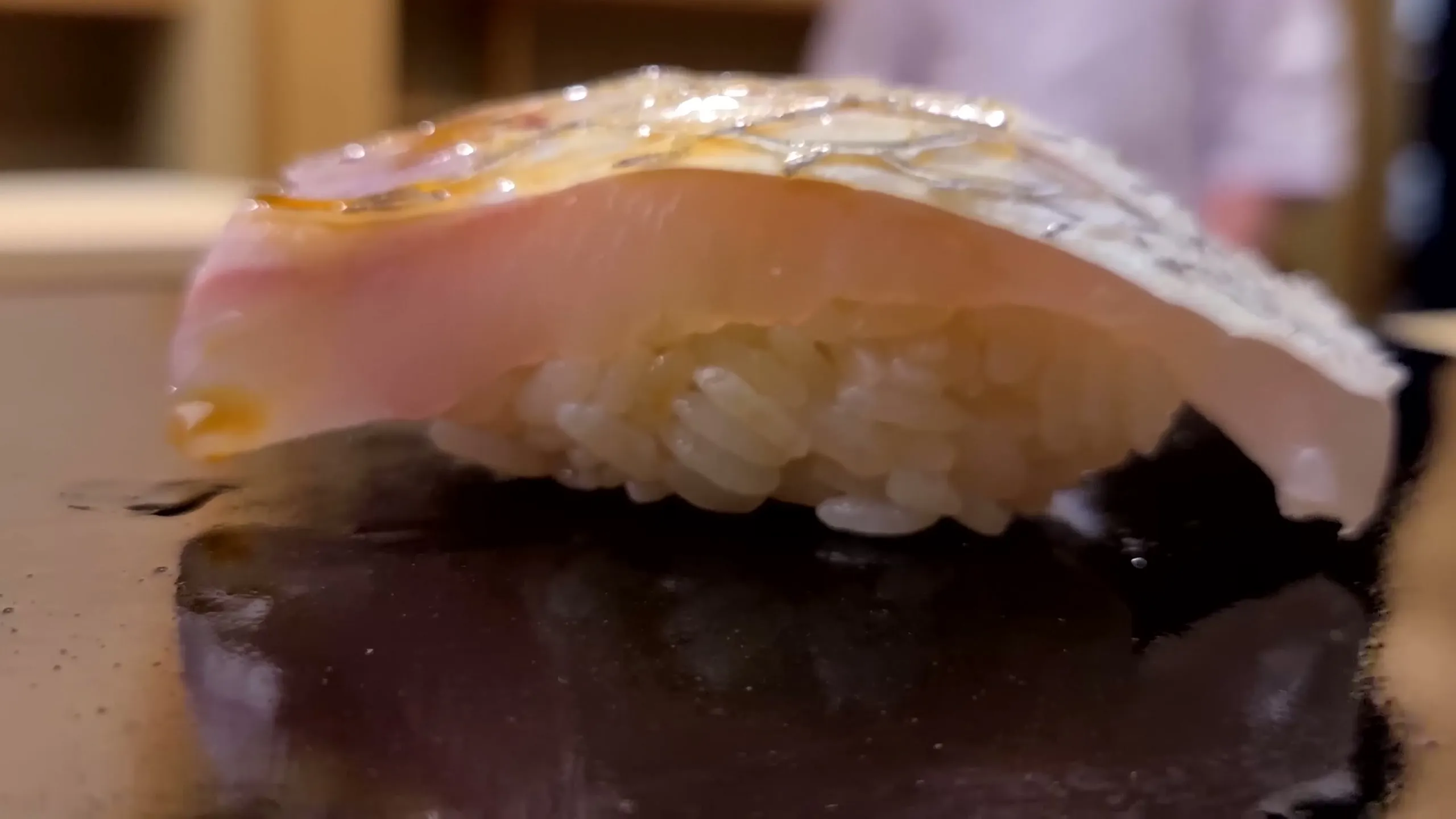
Zuke, the upgrade
The tuna that was soaking in soy. The night before, at Sushiya Shota, I loved their zuke, made from tuna that isn’t even expensive. This is the exact upgrade.
Firmer chew, more sweetness, acidity and umami. A little stronger on every count. I decided on the spot to order another one later. You’ll see how that went.
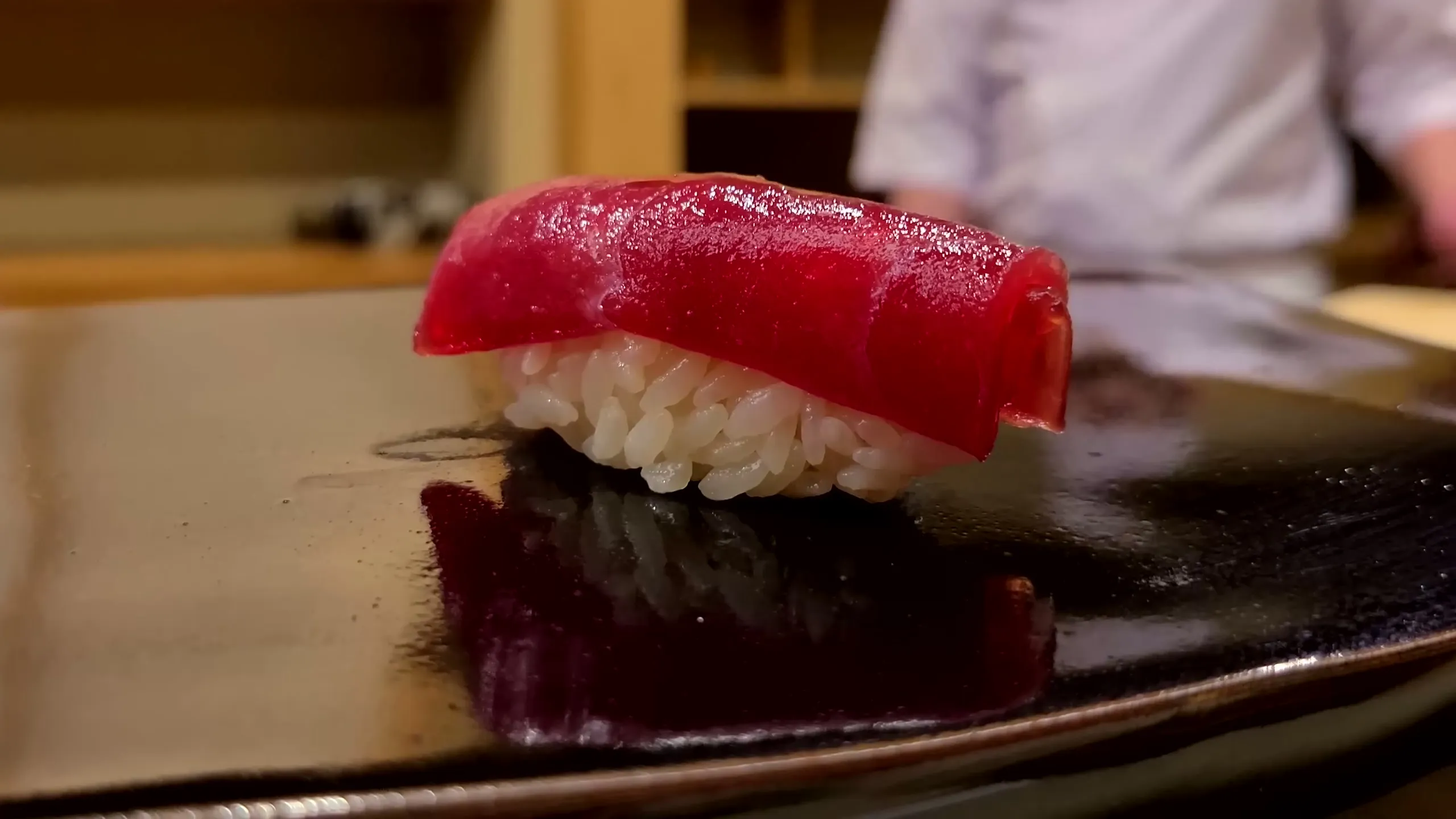
Sardine, fingerprints, kuruma-ebi
Iwashi, sardine. Look at the red by the dark meat. Too red to call pink. Herring and saury are similar, but sardine’s fat is on another level, and its umami, which you could also call fishiness, runs deeper than herring’s.
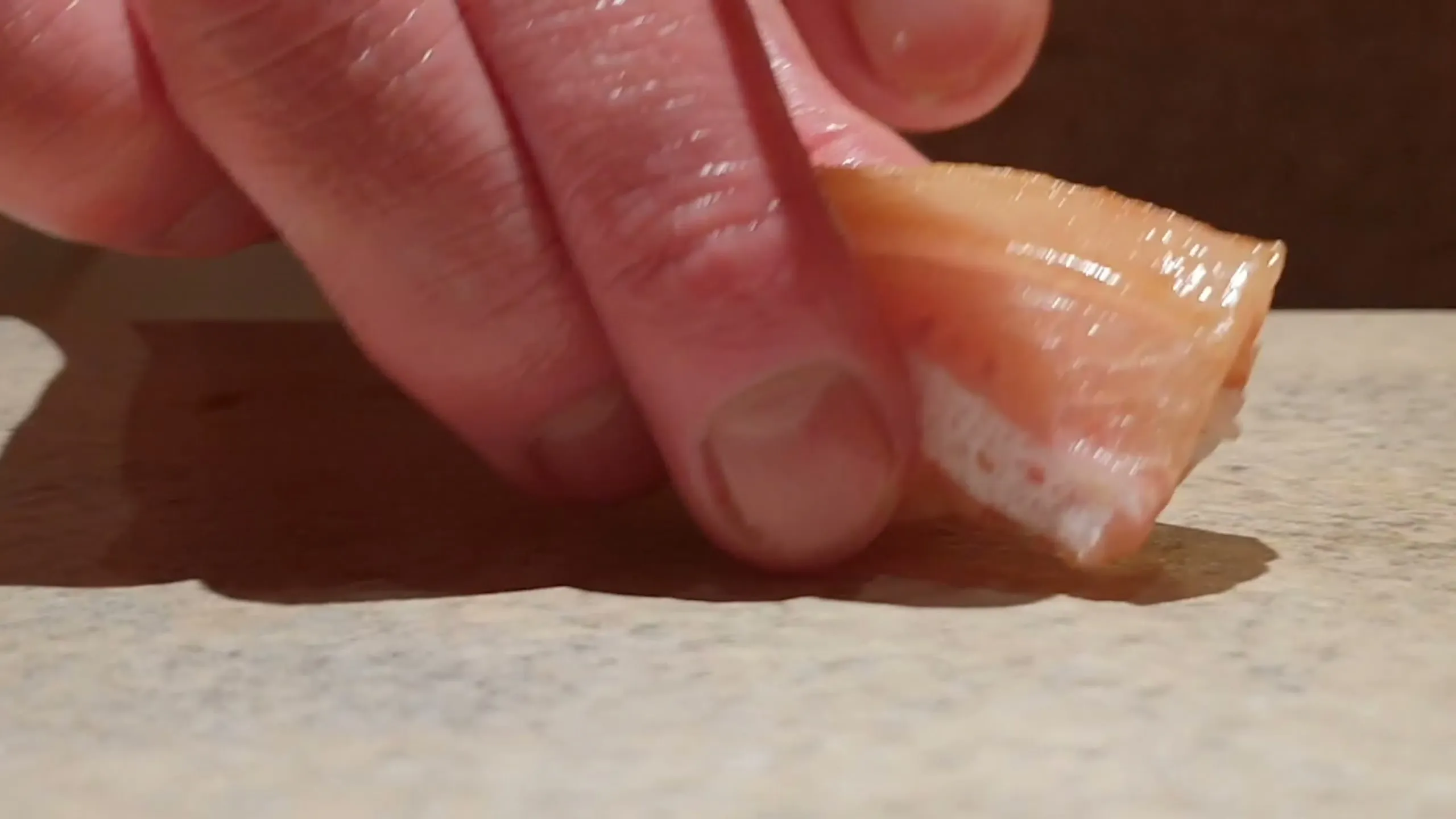
Every time he sets a piece down, his thumb, index and middle finger touch the plate and leave three little marks. I found that cute, so I took a picture.
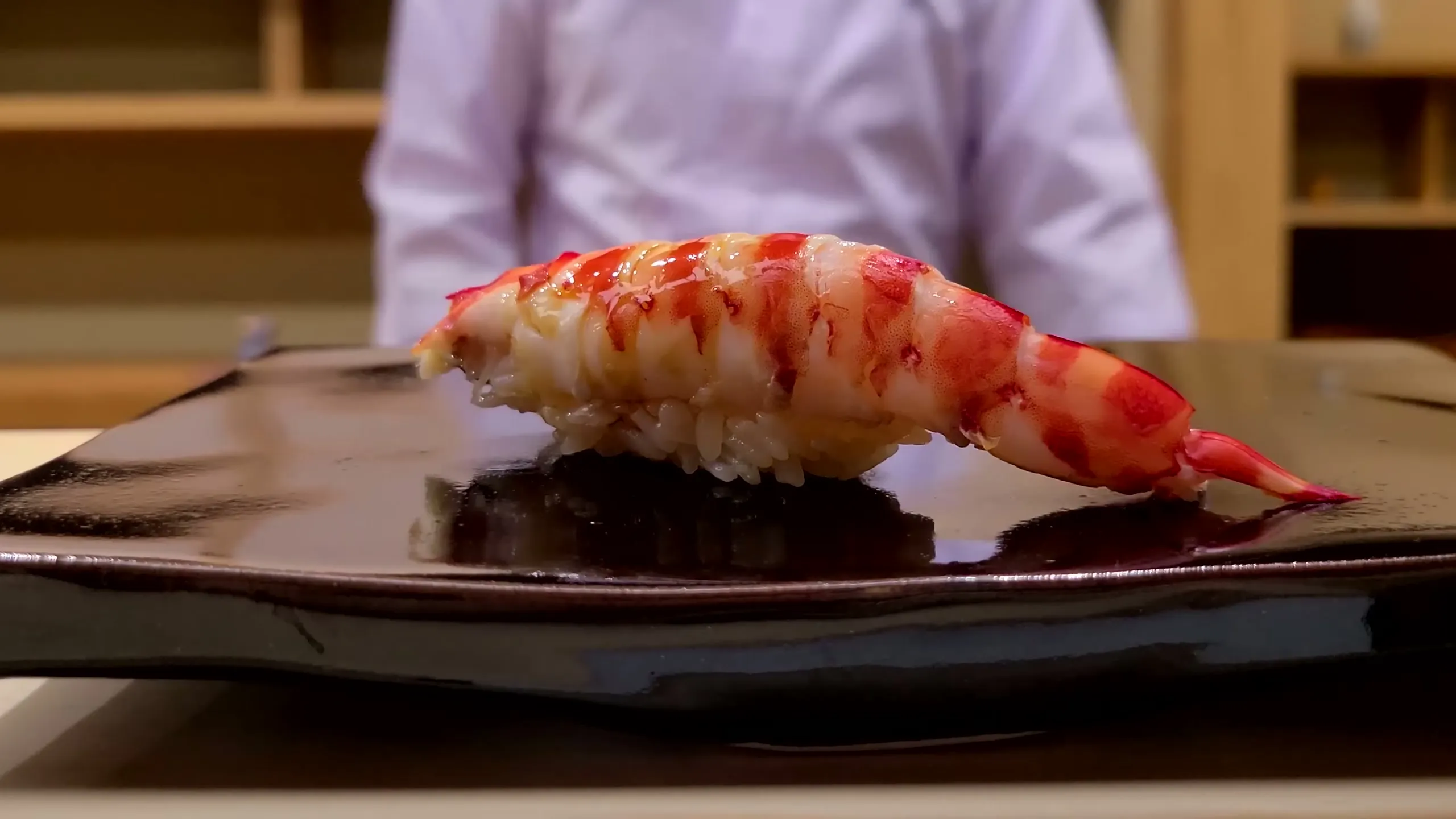
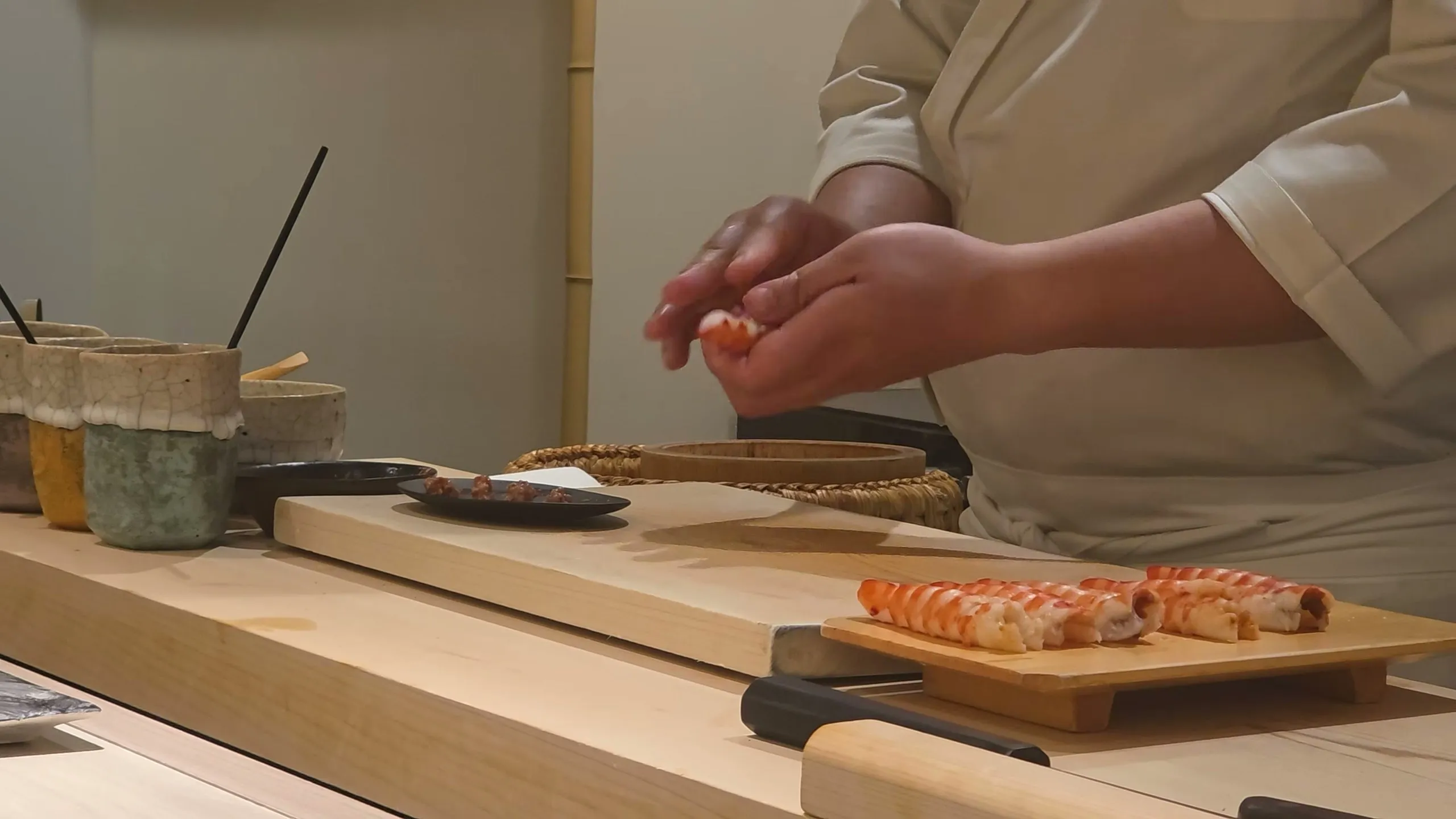
Kuruma-ebi, the prawn I’m always happy to see in Japan. In Korea it shows up only for a short season, because Korea’s are all wild. Japan farms them, so they’re around all year. I’m not even sure wild is better. Sugita’s taste much better than the ones I get in Korea.
He keeps the head innards on top for that nutty bitterness, and that day the flesh was much sweeter than usual.
Komochi yari-ika, again on the spot
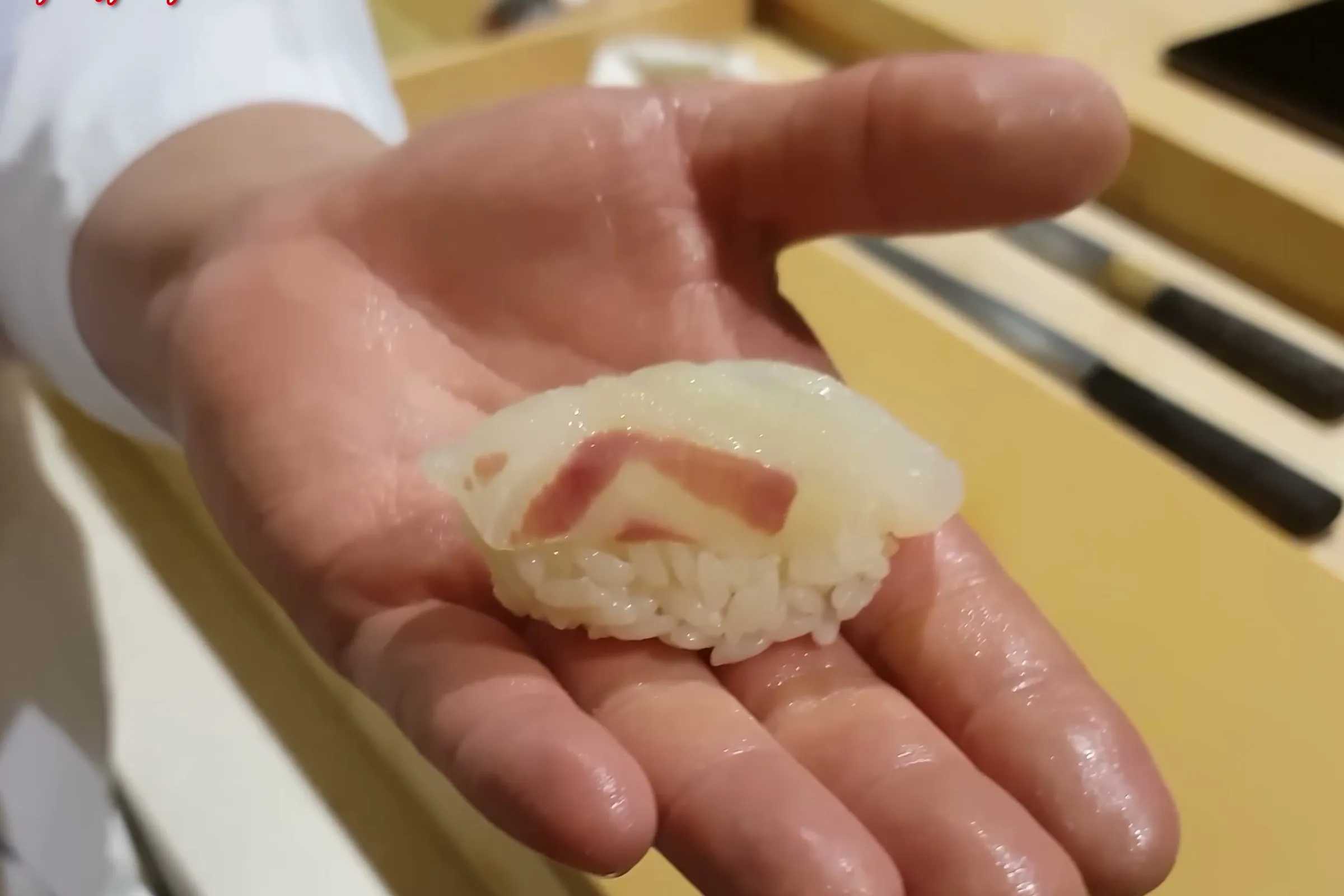
Komochi yari-ika, spear squid carrying eggs. The clear stuff inside is roe.
The first time I had it, Sugita said he made it so guests couldn’t tell what it was unless he told them. It works. That soft texture and sweetness, I’d never have guessed squid.
Later in the season the squid grows and gets firmer. The soft early stage is more mysterious, and this was the best timing. I asked for another one right after the first. At Sugita that was a first for me, ordering the same piece again on the spot.
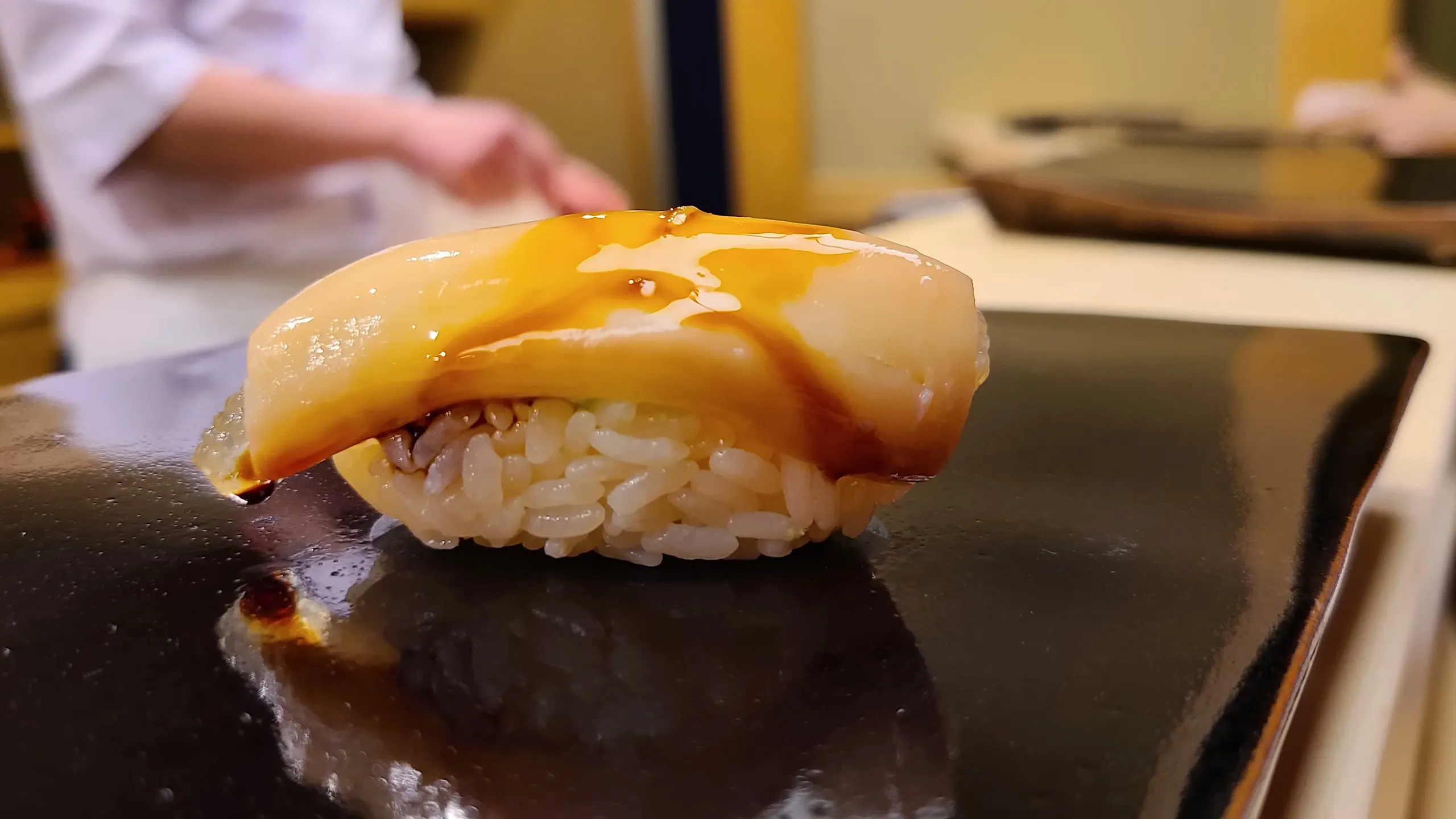
Why my bills at Sugita are big
Sugita isn’t an expensive sushi counter. My bills are big because I add a ton beyond the regular course.
Before the uni he usually asks, “You have uni, anago and tamago left. Anything else you’d like?” I ask what they have that I haven’t had. He lists it. I say, all of those. Everything after the uni was extra.
Uni and tuna track price. The more expensive the counter, the better those two, statistically. Exceptions exist, but not many. Sugita doesn’t focus on either, and that day both were great. That’s why my faith keeps growing, and why I’m holding online services.
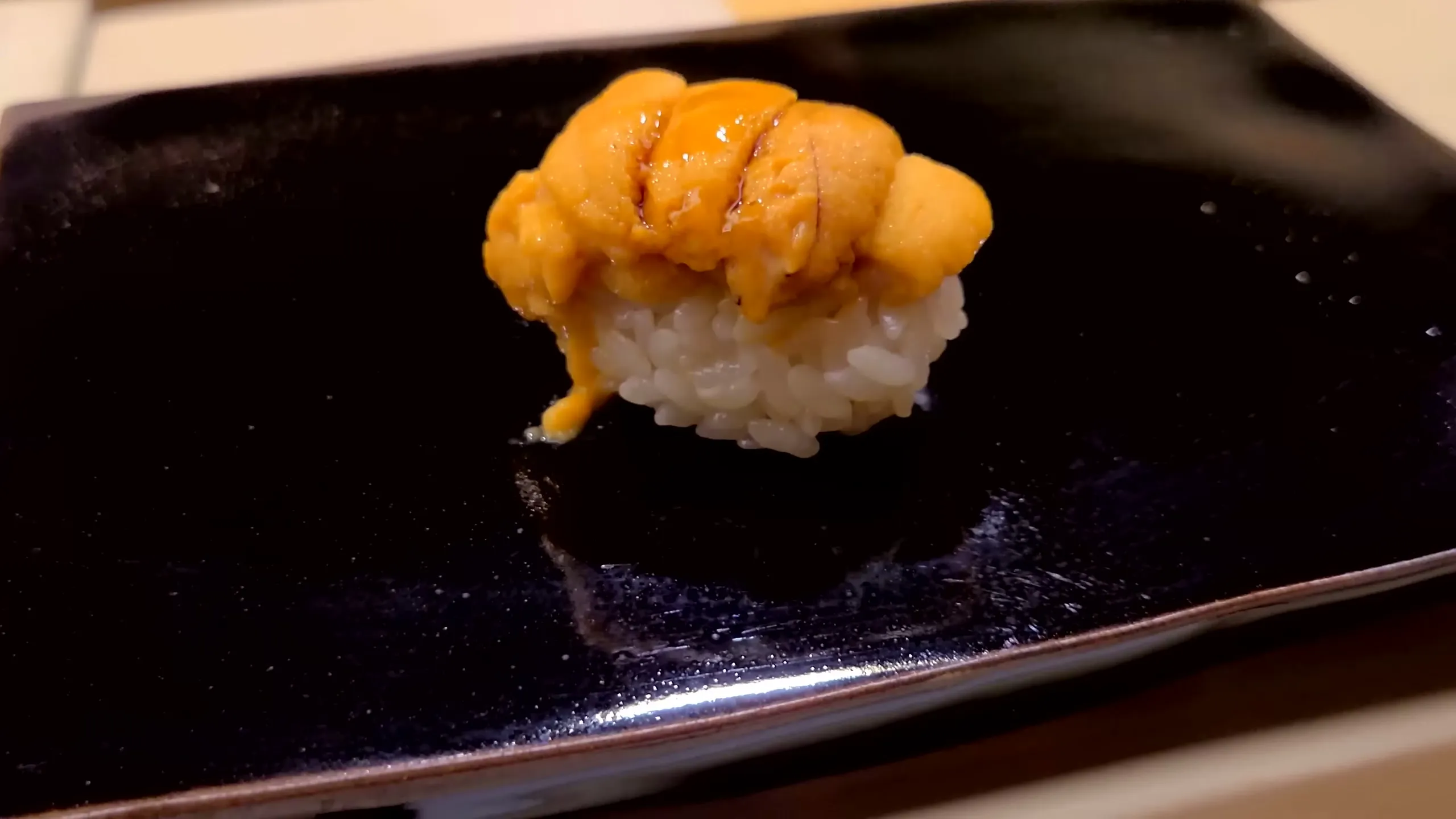
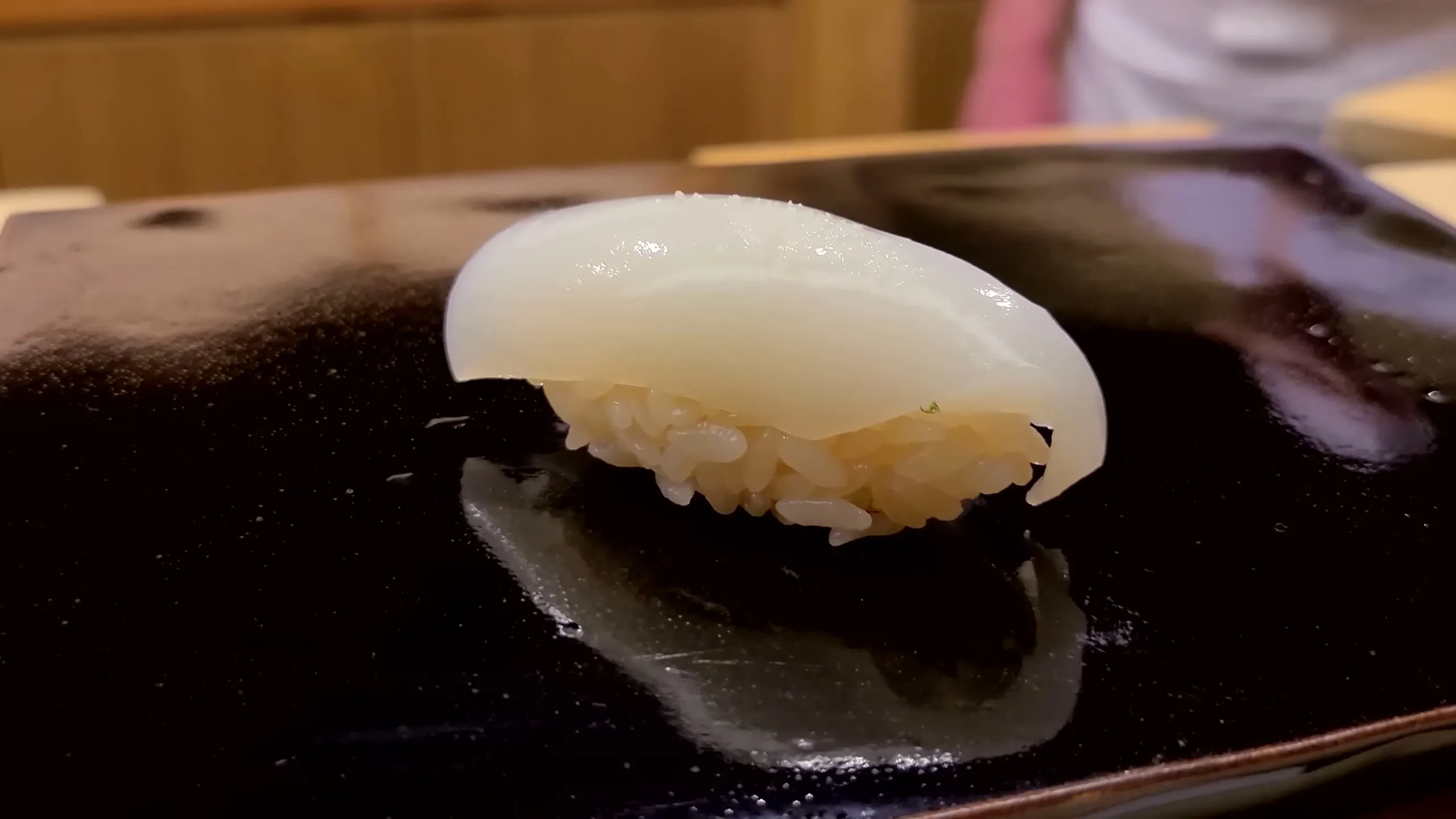
Sumi-ika and a blind test
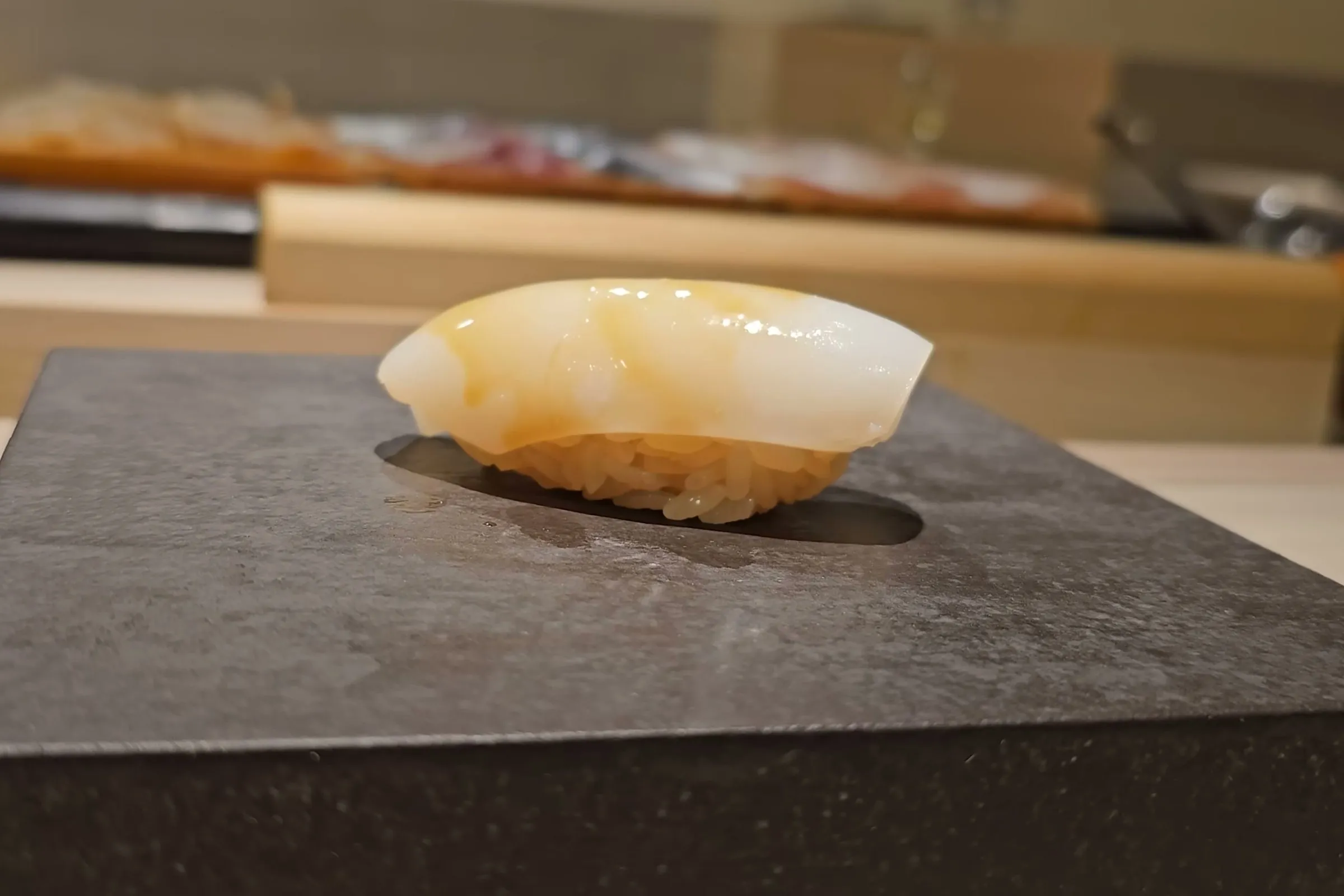
Squid sushi in Korea is mostly aori-ika, bigfin reef squid, or what people call yari-ika. A friend who knows fish says Korea’s is actually kensaki-ika, a different species. In Japan, squid sushi is almost always sumi-ika, cuttlefish.
Eaten on separate days, they all seem about the same. Line up all three blind and the difference is obvious. I did that a lot at Sushi Koji years ago and never got one wrong. Sumi-ika is the lightest and cleanest of the three. The texture is the thing. The surface pops when you bite, like the skin of a green grape.
Mirugai, geoduck, crunchy and very sweet. Why isn’t this in the regular course? The extra akami I’d promised myself turned out to be a different cut and tasted nothing like the first. Shouldn’t have ordered it. Then hokkigai, surf clam, gently blanched. He’s great with shellfish.
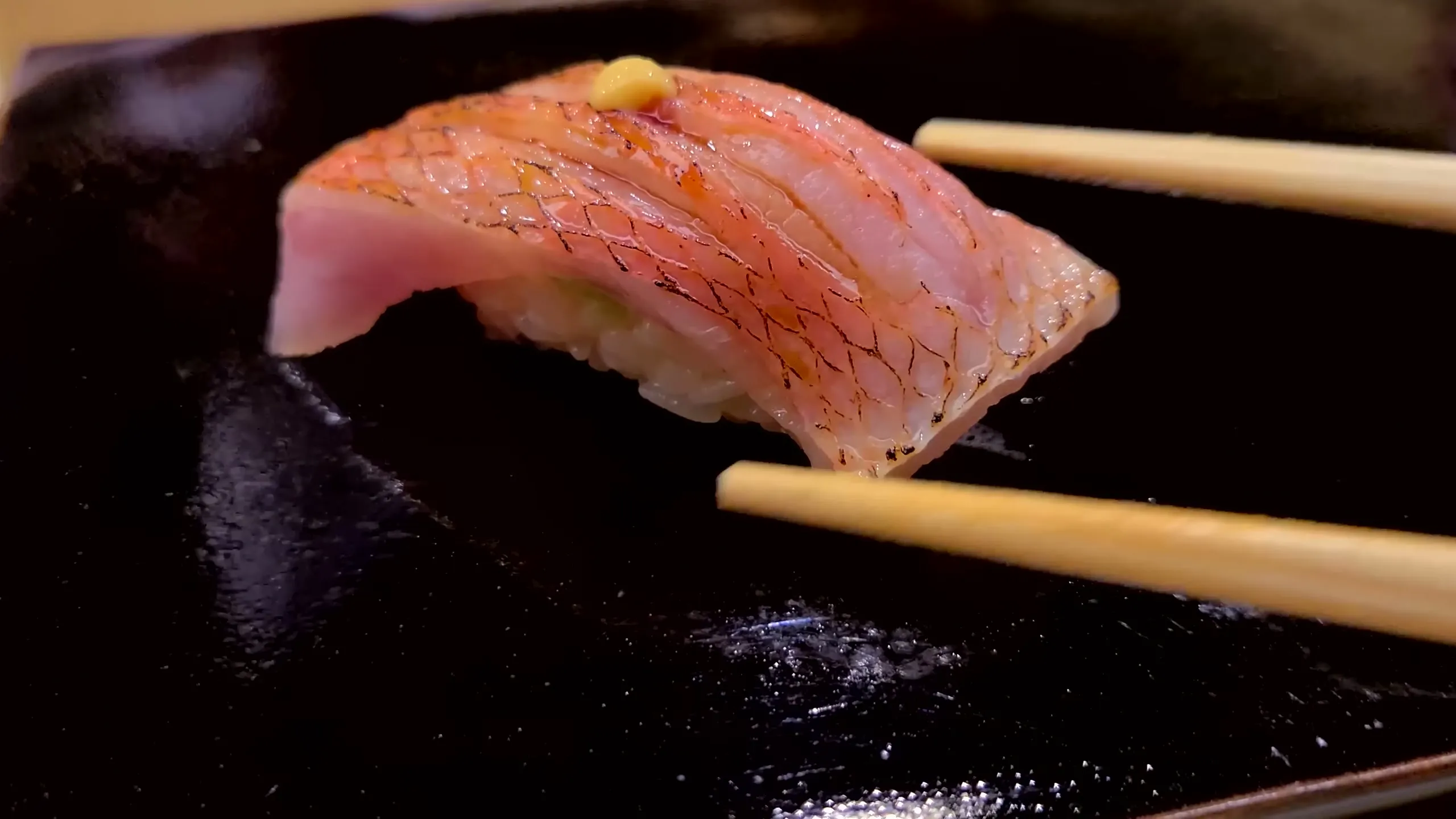
Ask for kinmedai
You can’t come to Sugita and skip kinmedai. I saw it go out to another guest. Why isn’t it in the regular course? I don’t get it.
Some people say they cry eating it. I didn’t cry and I’ve never seen anyone cry, but I understand. The sweetness of the fat is another dimension. I don’t even think kinmedai is a great fish in general. This one is on a different level. If they have it, eat it. If they don’t offer, ask.
Thick belly, fat glistening all over. Screenshot this, print it, hang it on your wall and pray to it every day. Someone on my stream said exam prep was crushing them. Hang this up and pray for a good score.
Anago, both ways
Before the anago he always asks: salt, or tsume, the sweet sauce? He could stop asking by now. Every single time, I’ve said both.
I don’t know what I did right, but Sugita-san likes me a lot. I book and change bookings with him by Instagram DM. The only reason I don’t go more is money and time.
Still, every visit, I think this might be the last. When I’m this happy, I get scared something equally bad is on its way. So however full or tired I am, I ask for every piece they have. I already know what the anago tastes like, and I still want it both ways.
A regular here posts the tamago nigiri on Instagram all the time, so I tried it, thinking the tamago must go well with the rice. It doesn’t. No need to order it.
Thirty visits, one bad night
By 2024 I’d been more than thirty times. When I first went it was about ¥25,000 a person, and he didn’t put much into pricey things like tuna. Then the tuna kept getting better, and the price went up with it. In 2024/05 my bill was ¥69,300 (about US$440, 2024/05). At least it got pricier and better at the same time.
I stopped filming at Sugita around 2023/09. Word had gone around that YouTube filming was banned. When I asked, Sugita said some guests disliked it and that the way I film was fine, but I told him I’d stop anyway. That night the rice was back in form, and I spent ¥69,200 (about US$470, 2023/09) on my own with no drinks, because I kept ordering.
Then 2024/10, my sad night. The rice was a little sticky and sweeter than it used to be, and it stopped matching the squid. Once the rice slips, the whole course slips. The aji, horse mackerel, which I loved so much I used his for my channel banner, was the worst of the dozens he’s given me. The iwashi was the fishiest I’d had in years, and the kohada was a bit fishy too.
I had no drinks and my share was over ¥80,000 (about US$540, 2024/10). Add flights and hotels and the gap with good sushi in Korea got too wide. My faith dropped, and I stayed away longer than usual.
Then the comeback. In my 2026/10 Shimazu video I mentioned I’d just been back to Sugita, and he was in form again, like Faker coming back at Worlds 2023. Even the kasugo was good. Nine or ten years ago, when I thought Sugita was worth dying for, I still said the kasugo wasn’t. That visit came to about ¥73,000 (about US$460, 2026/10).
About ¥50,000 for one, with every extra
2020/04 video
With oolong tea and every extra they had, my bill was about ¥50,000 (about US$460, 2020/04).
The regular course on its own was about ¥27,000 to ¥28,000 (2019/07). GOETHE listed the omakase from ¥28,000 (2021/06). The booking page now says ¥45,000 with tax and service, market-priced, and Tabelog reviewers put dinner at ¥60,000 to ¥79,999.
I don’t drink. When I go with someone who does, they keep adding drinks while I keep adding pieces, and our bills come out about the same, mine usually a bit higher. If you want to give the place more money, pieces beat drinks. I’ve seen people at Sugita drink too much and fall asleep at the counter. Better a greedy pig.
What Sushi Sugita has cost me, visit by visit
11 visits where I said the bill on camera or wrote it on my blog. ¥23,800 in 2016/11, ¥73,000 in 2026/10. Up 207%.
Per person. If I said my own bill, that’s the number. If I only said the table total, it’s split evenly. Extra pieces are in and drinks mostly aren’t (I don’t drink), so the line moves with how much I ordered. Each month is when that video or blog post came out. Hollow dots come from my Naver blog.
All 11 visits
| Source | Per person | US$ |
|---|---|---|
| 2026/10About, from my Shimazu episode, the month before | ¥73,000 | ≈ 460 |
| 2024/10Mine, over ¥80,000, no drinks | ¥80,000 | ≈ 540 |
| 2024/05Mine, I ate a lot | ¥69,300 | ≈ 440 |
| 2023/09Mine, no drinks. Not filmed, told in my Arai video the next day | ¥69,200 | ≈ 470 |
| 2023/01Three of us, ¥160,000, every tsumami extra | ¥53,300 | ≈ 410 |
| 2020/04About, with oolong tea and every extra | ¥50,000 | ≈ 460 |
| 2019/09Mine, more than I expected | ¥45,000 | ≈ 420 |
| 2019/07Nine of us, private booking, ¥450,000 | ¥50,000 | ≈ 460 |
| 2018/03blogTwo of us, ¥64,000, split evenly | ¥32,000 | ≈ 300 |
| 2017/08blogTwo of us, ¥58,600, a small sake and a beer in | ¥29,300 | ≈ 270 |
| 2016/11blogTwo of us, ¥47,600 | ¥23,800 | ≈ 220 |
Would I go back?
I keep going back. More than thirty visits, one bad night, and then it came back in form. If you get a seat, order every extra, ask for kinmedai, and take the anago both ways.
The end.
How to book
How I booked
I’m a regular, so I book and change bookings with the chef by Instagram DM. That’s something he does for regulars, so it isn’t a way in for a first visit.
- OMAKASE (omakase.in)
The official online booking. Tabelog says phone bookings are closed for now. When I checked, the page said ¥45,000 with tax and service, market-priced, plus a ¥390 booking fee per seat. Seats open in rounds, and the next round was still to be announced. One booking per quarter. Cancel three days before and you pay 50%, the day before 100%. Seatings at 12:00, 17:30 and 20:30, closed Mondays.
- House rules
Every guest needs an original government photo ID. Booking for someone else gets both the account and the guest banned for good, so skip resellers and concierge bookings. More than 15 minutes late cancels the booking. Plan on about three hours. Smart casual, no strong perfume, hats off. The page also says filming to upload to YouTube or similar sites isn’t allowed.
Checked 2026/10. Booking rules change, so look at the official page before you go.
Where it is
- Address
- View Heights Nihonbashi B1F, 1-33-6 Nihonbashi Kakigaracho, Chuo-ku, Tokyo東京都中央区日本橋蛎殻町1-33-6 ビューハイツ日本橋 B1F
- Nearest station
- Suitengumae, exit 4
Plan the Tokyo trip
The boring bits I’d sort before flying, so the eating days stay free.
- Hotels in Tokyo*
Pick the room by where you eat, not by the sights. After a long dinner, a short ride back is the real luxury. This place is in Nihonbashi, Tokyo.
- Japan eSIM*
Data from the moment you land, no counter and no SIM swap. Set it up the night before.
- Keisei Skyliner from Narita*
Narita to Ueno in about 40 minutes. Buy it ahead and walk straight to the platform.
- Haneda airport limousine bus*
Landing at Haneda instead? The limousine bus drops you at the big hotels and stations with no transfers.
- Tsukiji Outer Market food tour*
A market morning with someone who knows which stalls are worth the line.
- Sushi-making class at Tsukiji*
Shape nigiri yourself once and the counter makes a lot more sense.
Links marked * are affiliate links. If you book through them I may earn a small commission, and you pay the same. How it works
Guides that mention this place
The best sushi in Tokyo, ranked by someone who paid for it.
Eight counters from Sugita down, what I paid at each, and how to get a seat.
In Tokyo, getting the seat is harder than eating the sushi.
omakase.in rounds, cancellation seats, lunch side doors, and how regulars really get in.
The fish gets the photos. The rice decides the meal.
What edomae means, red vinegar or white, and what I taste for in sushi rice.
Ankimo, shirako, zuke. The words nobody explains at the counter.
What ankimo, shirako, ikura, zuke and 12 more Japanese menu words mean, and how each one tastes.
Every Michelin sushi counter in Tokyo I’ve paid for, with the stars then and now.
Three stars down to one, what I paid at each, and how to get a seat today.
Sushi counters are less scary than you think.
Hands or chopsticks, soy, cameras, the bill. What actually matters at the counter.
Every day is a sushi day. Late August is a better one.
What’s in season at Tokyo sushi counters, month by month, and the day to avoid.
The bill doubled. Some counters are still worth it.
Ten years of my Tokyo sushi bills on one chart, from a ¥4,000 lunch to an ¥80,000 dinner.
Every Tokyo sushi booking route, compared by someone who paid the fees.
omakase.in, Tabelog, TableCheck, TABLEALL, Pocket Concierge, byFood and the hotel desk, side by side.
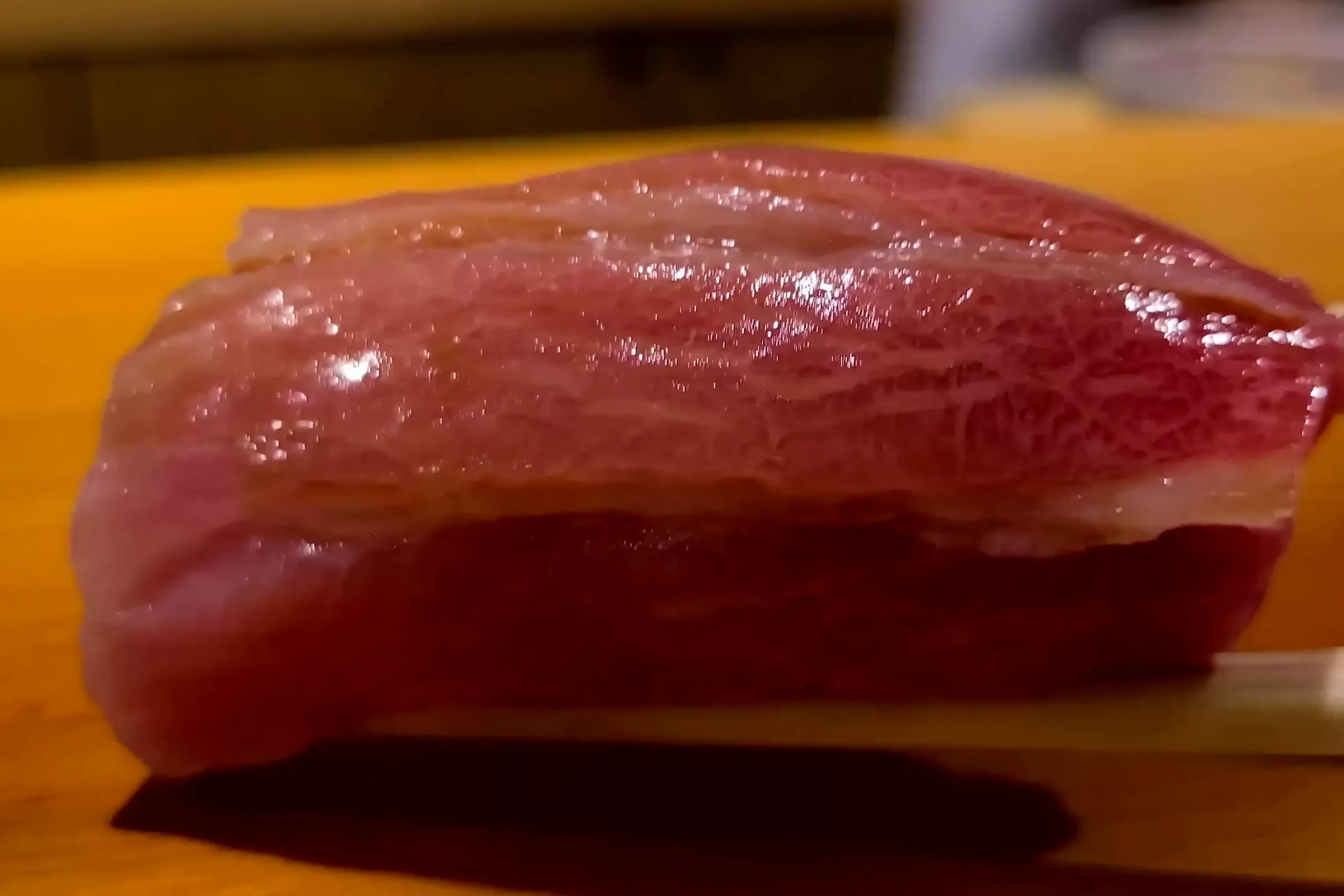
With tuna, fat isn’t the whole story.
Akami, chutoro, otoro and the rare cuts, and where each one sits on the fish.
More from this restaurant on the channel
- A Slightly Sad Omakase From the God22:482024/10
- Surprise Worship21:442024/05
- The God of Sushi Makes Even ₩530,000 a Person Feel Fair22:202023/01
- The Best Sushi in the World, Sugita (Vol. 2)12:262019/09
- The Best Sushi in the World, Sugita (Vol. 1)11:522019/09
- Tokyo Sushi Sugita: ¥450,000 for 9 Guests | My Sushi God (2019)22:522019/07
More places I have eaten at
All of Tokyo → Nihonbashi, Tokyo
Tempura Asanuma
The first time tempura felt like cooking to me.
¥26,870 2026/10 video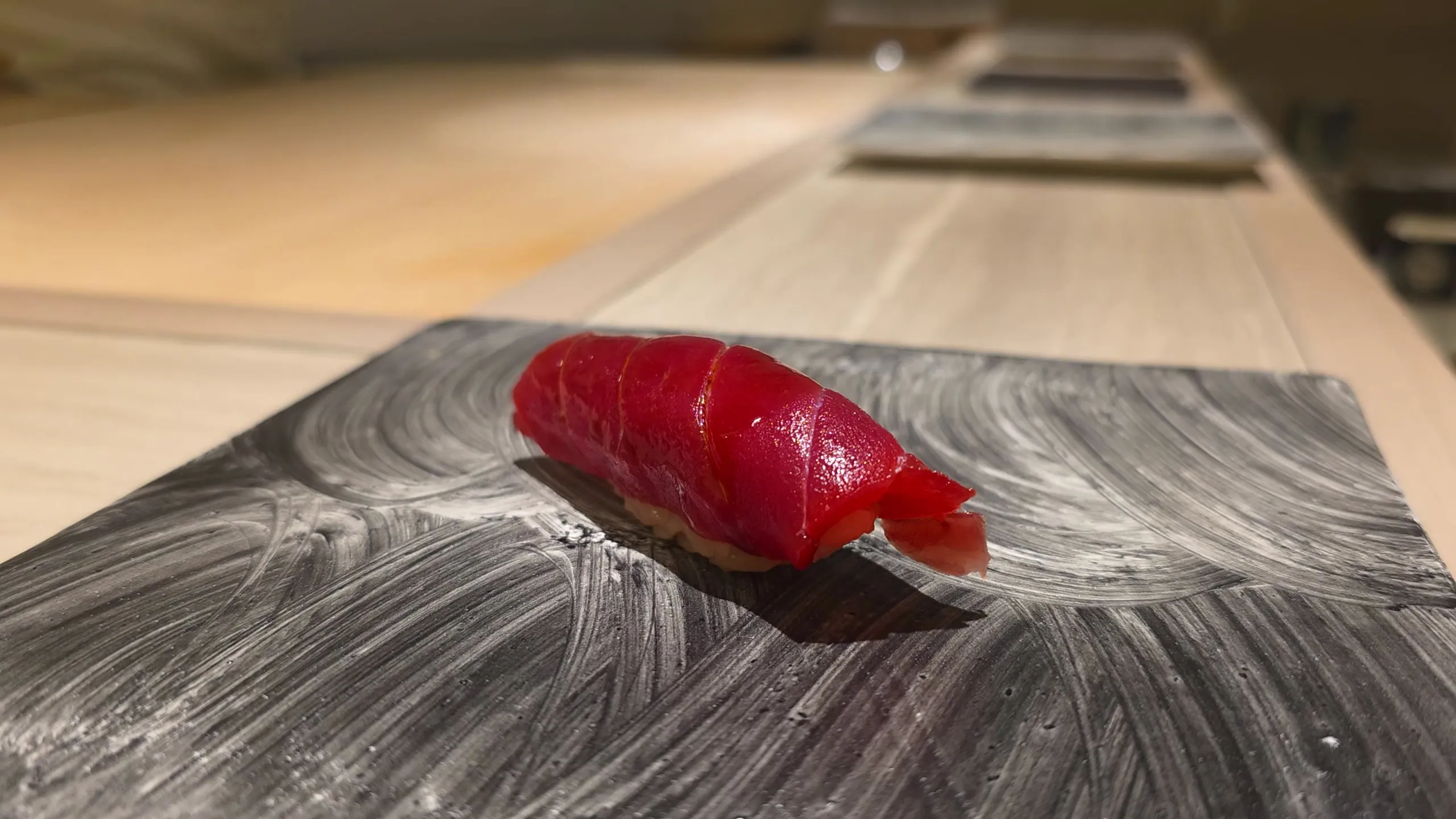 Shirokane, Tokyo
Sushi Shimazu
Prices went up. I still go back.
≈ ¥55,000 2026/10 video Marunouchi, by Tokyo Station
Sézanne
Four Seasons Marunouchi French. Clean, polished, ¥73,000 lunch for three in 2023.
¥24,500 2023/05 video