Guide
The best time of year for sushi in Japan. Season by season, and the one day I’d skip
The question I get more than any other is when to eat sushi. Which season, which month, when to skip it. I’ve been going to the same Tokyo counters every month for years, so I’ve watched the menu turn over again and again. Here’s what shows up when, the stretch I’d book a flight for, why summer gets a bad rap it doesn’t deserve, and the one day a year I’d stay away.
monster gourmetFrom 8 of my videos, 2020/07 to 2025/10
The short version
- If you want sushi, go. But late August to September is my favorite stretch: young summer fish and the first autumn fish on one menu.
- Shin (新) means new. Shinko, shin-ika and shin-sanma are the babies of kohada, cuttlefish and saury, and their seasons last weeks.
- Summer isn’t bad for sushi. Aji, kuruma-ebi, uni, shin-ika and summer tuna are all good then.
- Autumn brings modori-gatsuo, sanma and new ikura. Matsutake season pushes course prices up.
- Winter is for fat: saba, buri, shirako, ankimo.
- Tuna has seasons too, and every chef gives a different answer for when Oma is best.
- The worst day to eat sushi is the last day of a long holiday, after the markets have been shut.
- When something seasonal won’t come back for a year, order it again on the spot.
So when should you eat sushi?
People ask me this more than anything. When is sushi best? Which season? When should you skip it?
My honest first answer: if you want sushi, go eat sushi. I eat it every year on holidays when I know the fish will be worse, because I’d still rather have sushi than anything else.
But I’d fly for one stretch of the year. From late August into October, the young summer fish and the first autumn fish sit on the same menu. In 2024 I somehow booked Shimazu two weeks apart, thought I’d made a mistake, and it turned out to be the luckiest booking of my year.
Where this happenedSushi Shimazu→
What I look for, season by season
This comes from what actually landed in front of me at the counter, not from a market chart. Seasons slide a month either way. In 2020 kuruma-ebi came a few months early and uni hit its best a month or two late. Different suppliers, slightly different seasons.
Farmed fish blur it more. Kuruma-ebi is farmed in Japan, so it’s around all year. In Korea they’re all wild and show up only for a short season.
| When | What I look for | What it’s like |
|---|---|---|
| Early summer, June to July | Aji, kuruma-ebi, bafun uni, herring | Clean, light fish. Better than its reputation. |
| Late summer, August | Shinko, shin-ika, torigai, ayu, summer tuna | The young fish. Short seasons that barely overlap. |
| September | Shin-sanma, new ikura, aka uni, the first modori-gatsuo | My favorite month. Summer and autumn on one menu. |
| October to November | Modori-gatsuo, sanma, ikura, shirako, matsutake | Fat comes back. The young fish grow up. |
| Winter, December to February | Saba, buri, ankimo, shirako, tuna | Rich and oily. I used to love winter most. |
| Spring, March to May | Hatsu-gatsuo, the first bonito | The season I’ve filmed least. Bonito is all sharp acidity. |
The DiCaprio omakase
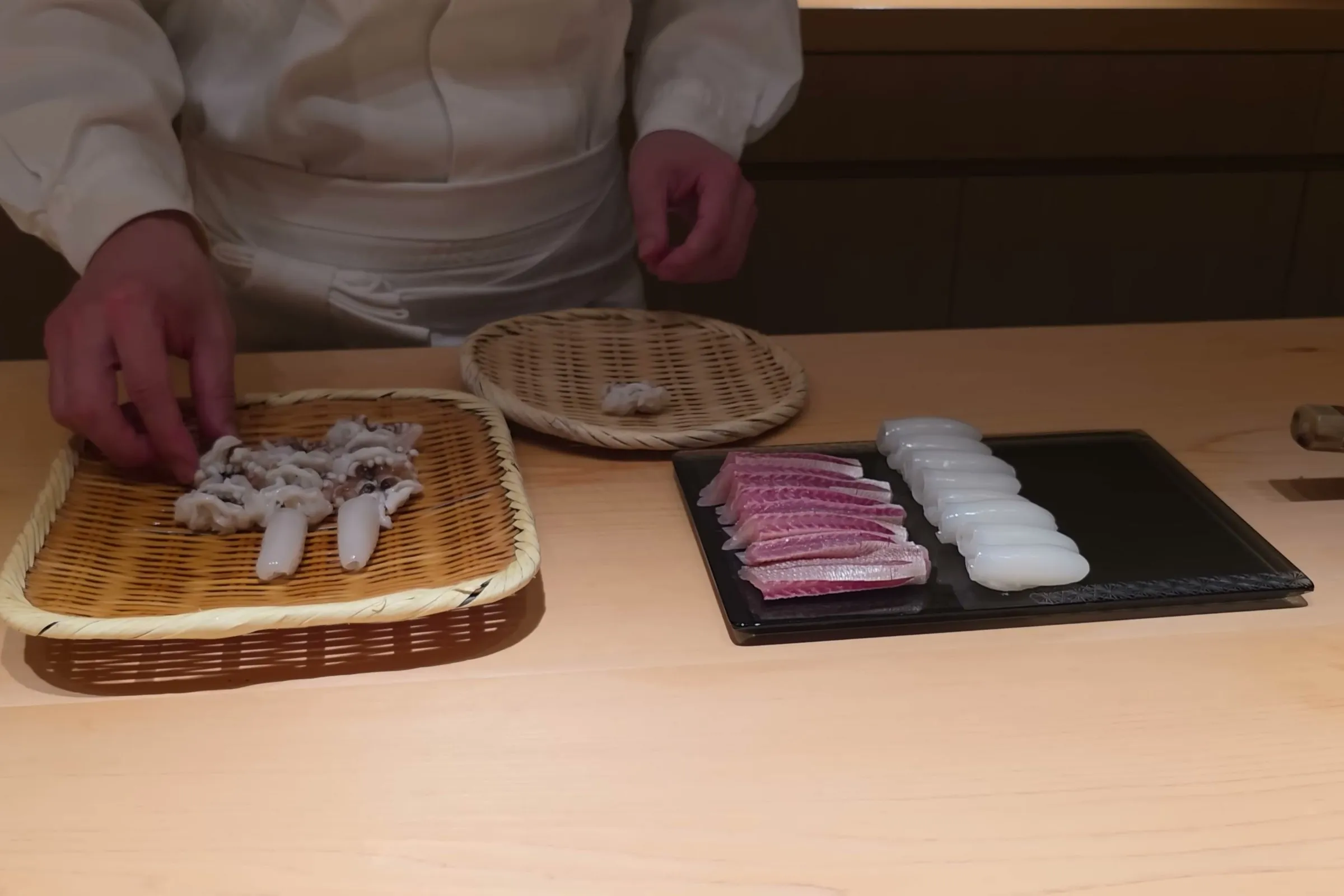
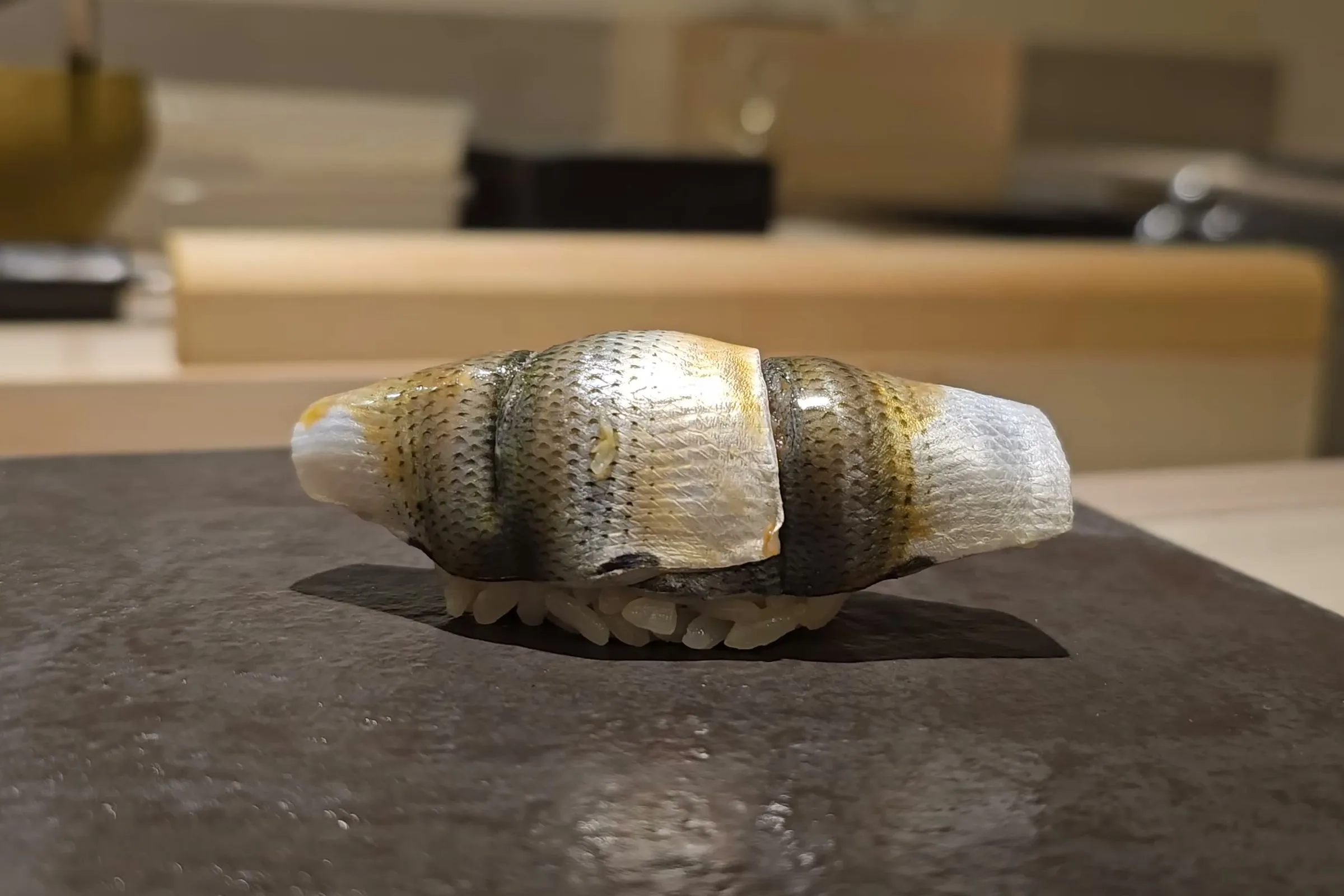
Shin (新) means new. Shinko is baby kohada, shin-ika is baby cuttlefish, shin-sanma is young Pacific saury, and the first salmon roe of the season could fairly be called shin-ikura. At Shimazu in late summer 2024, nearly all of them were on one menu.
Everything was young, so I named it the DiCaprio omakase. Eating it, I understood the man’s taste completely.
I messaged Shimazu-san right after dinner: expecting the DiCaprio omakase next time too. Two weeks later I asked if I’d made it. Giri-giri, he said, just barely. The kohada was there. The shinko was already gone.
Shin-ika, the piece I chase all summer
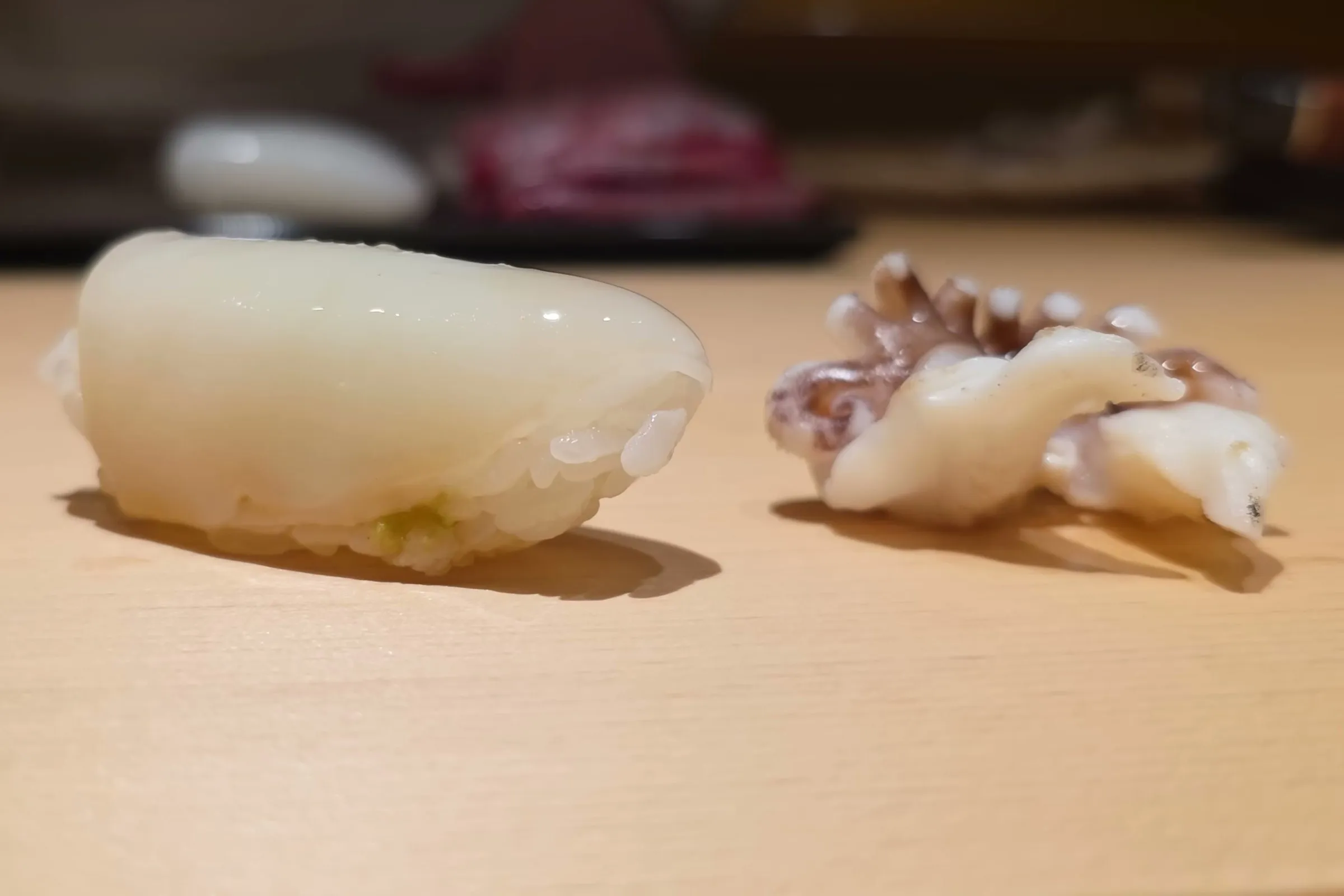
Baby cuttlefish is one of my favorite things in sushi. The outside is a membrane so thin it pops, and the inside is so soft it scatters with the rice as you chew.
From June I asked Shimazu every visit whether it was in yet. In late August it showed up first as fried legs in the tsumami, which meant the bodies were coming. The nigiri was exactly what I’d waited for.
It grows fast. Two weeks later it was already firmer. With squid, age is everything. By October it’s full-grown sumi-ika and that softness is gone. Sugita showed me the same thing: catch it early.
At Sushi Ikko in summer 2025 it was a teenager, still a little squid-like. I ordered another anyway. Outside its few weeks you don’t get it at all.
Where this happenedSushi Sugita→Sushi Shimazu→
Shinko and the three days a year
Shinko is baby kohada, gizzard shad. The fillets are so small that several go on one piece, and the season lasts a few weeks around August.
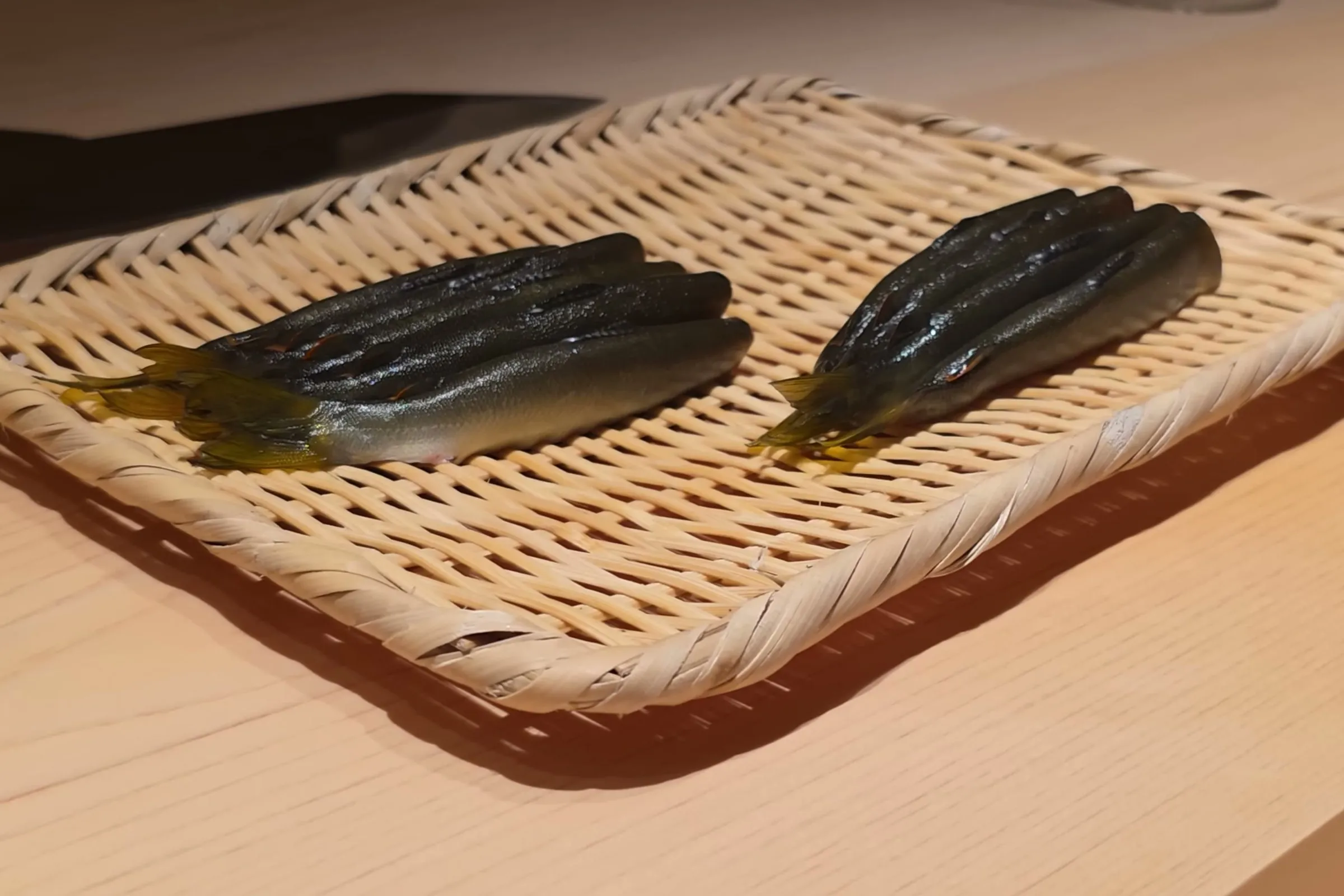
Sushi Ikko, the counter that moved from Sapporo to Tokyo in 2024, has five summer signatures: mizugai, raw abalone served cold in dashi, torigai, the big cockle, grilled ayu as nigiri, shin-ika and shinko. Usually two or three are on any night. One starts as another ends.
All five overlap on two or three days a year. The night I went in summer 2025 was the last of them. The ayu ended the next day, and the shinko had two days left.
Ayu was why I’d begged a friend with a reservation to take me in summer. Lake Biwa and the Shimanto River are the famous ayu names. This one was from Hokkaido, which they said is rare. Dinner is ¥70,000 a person (2025/10), and I don’t regret a yen.
Summer isn’t a bad time for sushi
There’s an old idea that sushi is bad in summer. I believed it. Not many seasonal fish were great then, and I hate the heat, so summer had nothing going for it.
Then in July 2020 every counter I went to was good. Aji, horse mackerel, was fat and sweet. Herring was great. Kuruma-ebi showed up months early and uni ran late, so they overlapped. Before that, early summer meant uni and not much else, plus fish sushi counters barely use, like sea bass.
So don’t put sushi off because it’s summer. These days I hate summer weather and love summer neta: shin-ika, aka uni, ayu, aji. As a kid I liked winter for fatty saba and buri. Somewhere along the way I switched sides.
Tuna has seasons too, and chefs disagree
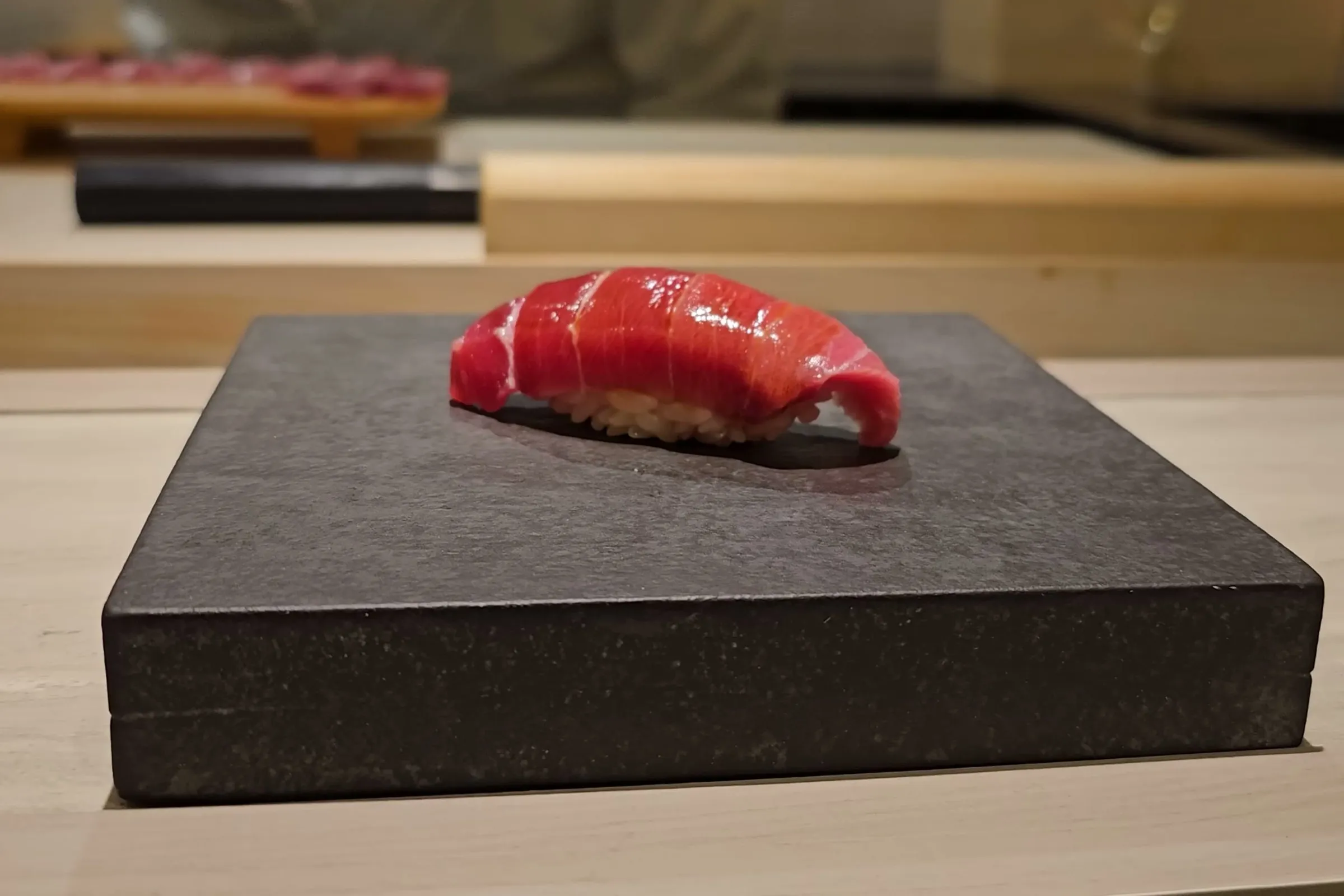
Oma, at the tip of Aomori, is the tuna name every counter brags about. When it’s at its best depends on who you ask.
At Shimazu in late summer 2024 the star was otoro from Funka Bay in Hokkaido. The akami and senaka from Oma, line-caught, beat it. Firm, but the aroma and acidity were great. Shimazu-san said that’s summer tuna: firmer flesh, better aroma, more acidity.
In November 2023 Oma was in season at Shimazu and it was the best tuna of my trip. That same week Namba and Miura skipped Oma, and Miura said its aroma isn’t great at that time of year. Every chef has a different answer.
In October 2024 Shimazu’s tuna came from Shiogama, and for me Shiogama has hit more often than Oma. My guess: Oma sells, so it gets used across a longer season, while smaller ports only get used at their short peak.
And the buyer matters more than the month. At Arai in late February, with Oma long gone, a tuna from Nagasaki still beat peak-season tuna I’ve had almost anywhere else.
Where this happenedSushi Arai→Sushi Miura→
Katsuo, the bonito that changes with the season
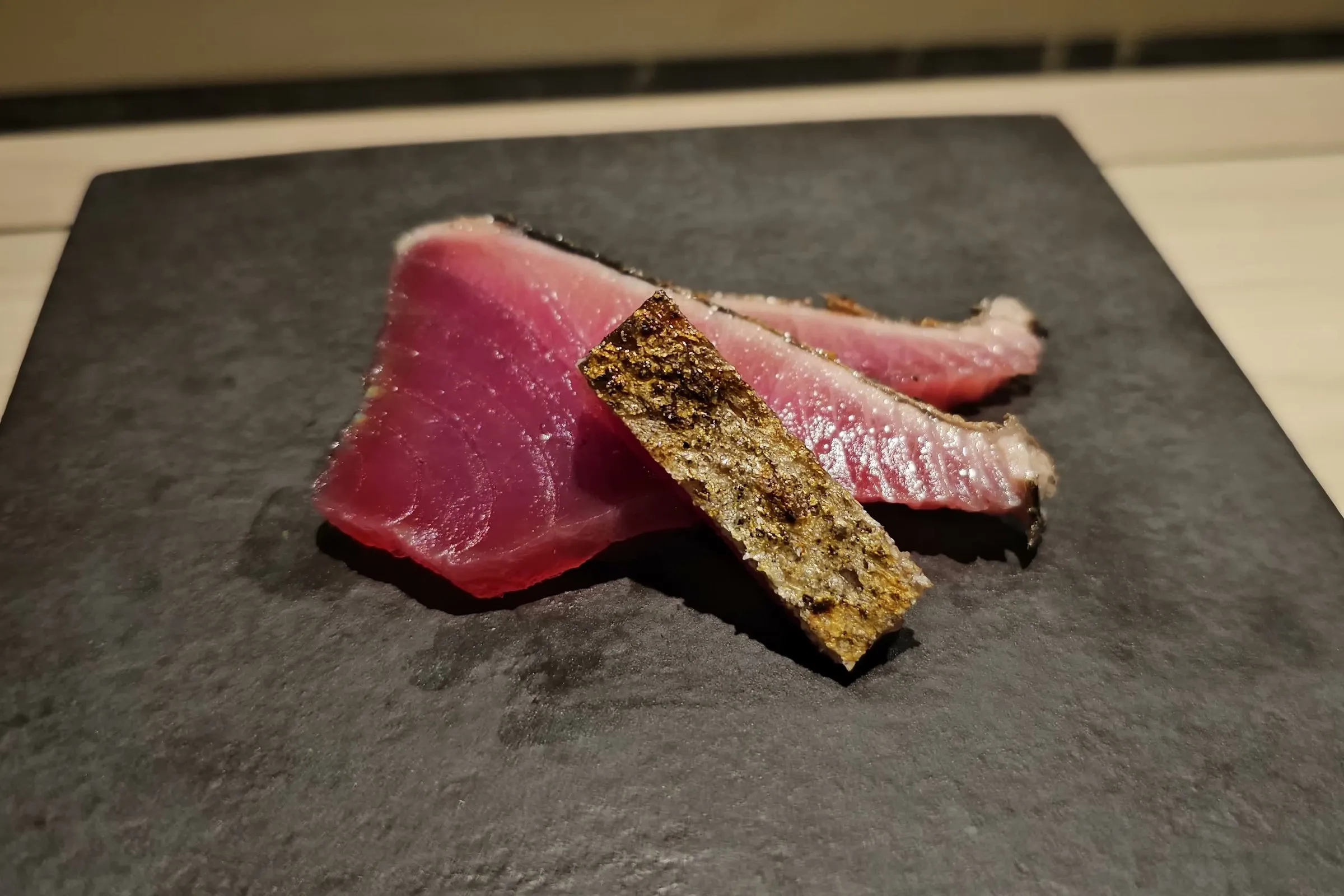
Hatsu-gatsuo is the first bonito of spring, lean and all sharp acidity. Modori-gatsuo is the returning bonito. They swim north when it’s hot and get caught on the way back down, and the colder water puts fat on them. Shimazu serves some kind of katsuo almost all year, and I get excited every time.
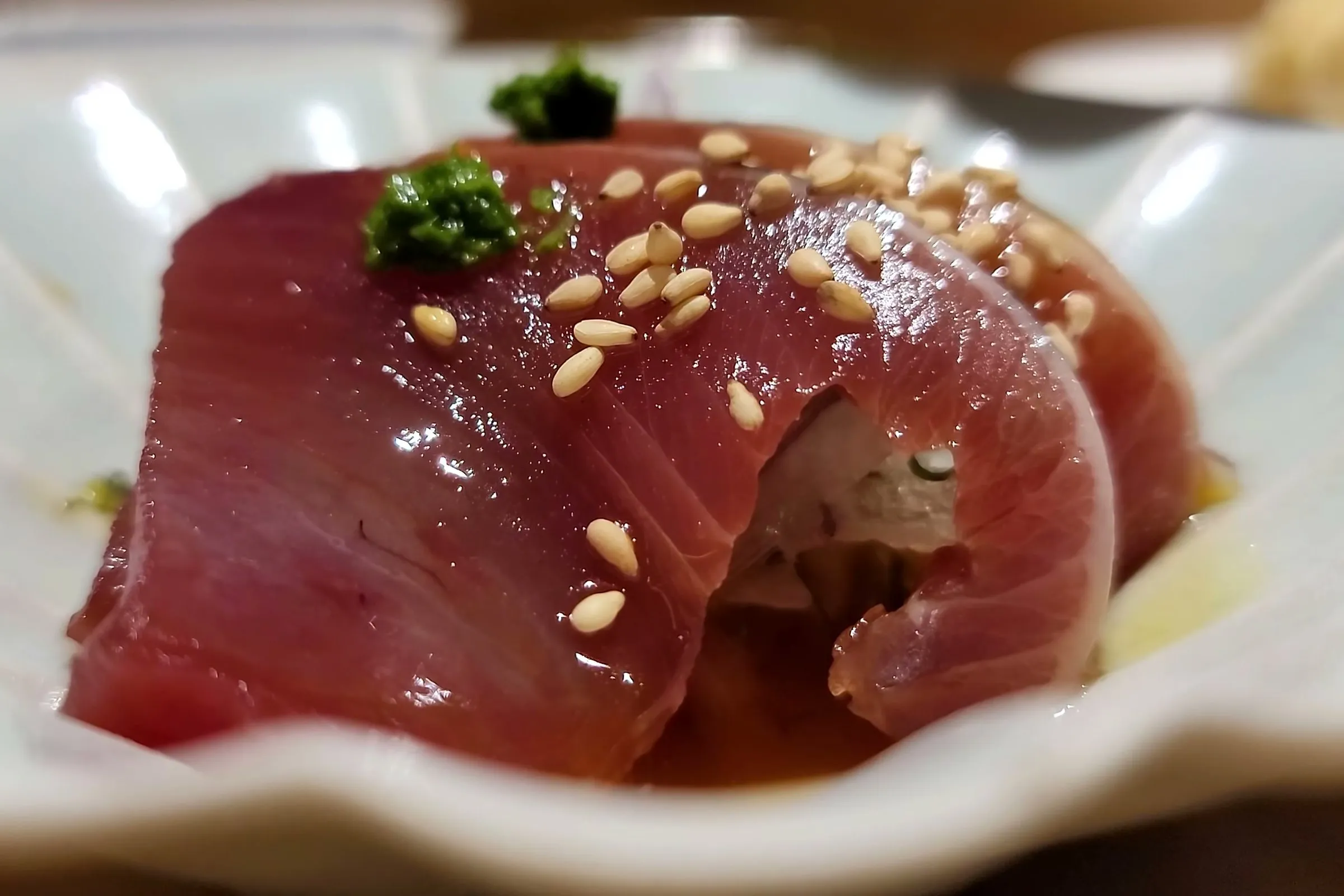
In October 2021 the chef at Sushi Ito in Seoul told me bonito was being caught in huge numbers that year, so it’d be on every counter. The color was gorgeous. As tsumami with an egg-yolk soy it lost its acidity, so I asked for one as nigiri, and that was the best bite of the night.
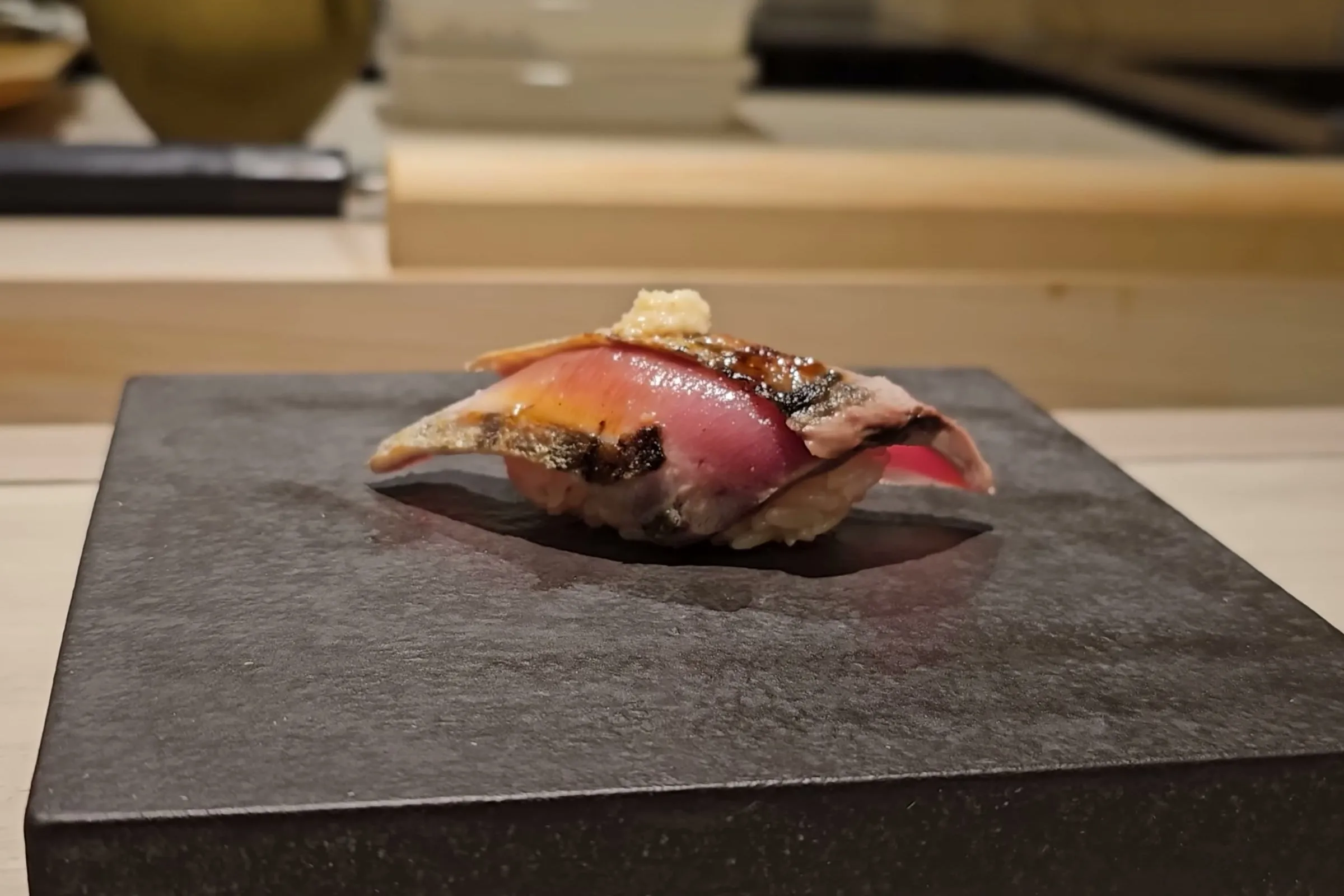
Same at Shimazu in October 2024 with katsuo from Kesennuma: belly with salt and wasabi, the rest dipped in ginger soy. My rule now: if the katsuo tsumami is good, order it as nigiri too.
Where this happenedSushi Shimazu→Sushi Namba→
Sanma, my favorite shiny fish
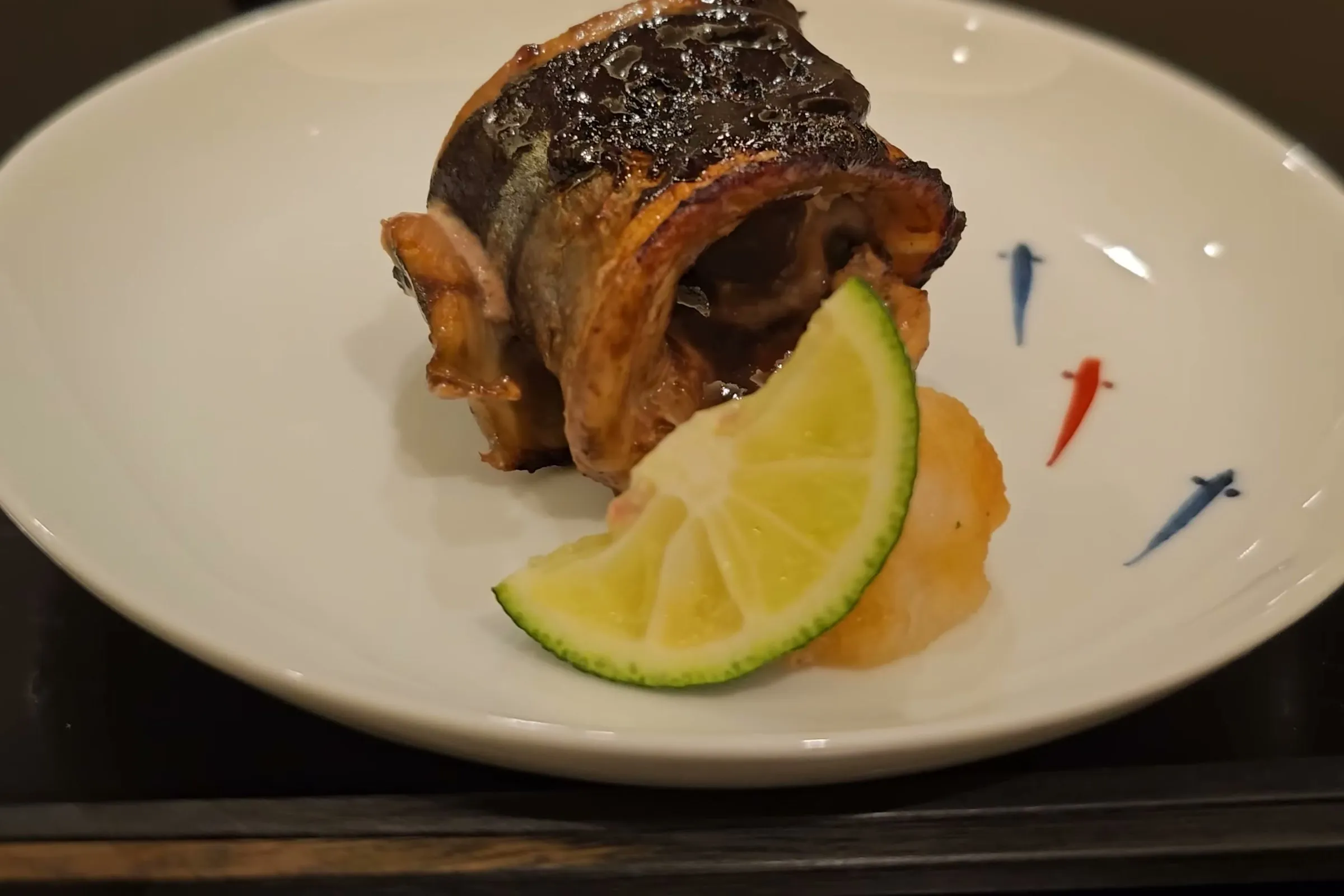
Of all the hikarimono, the silver-skinned fish, sanma is my favorite as nigiri. Pacific saury. Much richer than sardine or herring and still not fishy. The season is short even in Japan.
At Shimazu in late August 2024 it showed up young, shin-sanma, grilled crisp with its own innards spooned over as the sauce. Bitter like ayu. Just seeing sanma told me autumn was close.
Two weeks later I was hoping for a bigger, oilier one. Herring came back instead. Still too early. By November it’s on every menu. At Namba in 2023 the flesh by the blood line was deep red, the skin shone and the fat under it was thick.
Where this happenedSushi Namba→
New ikura means autumn
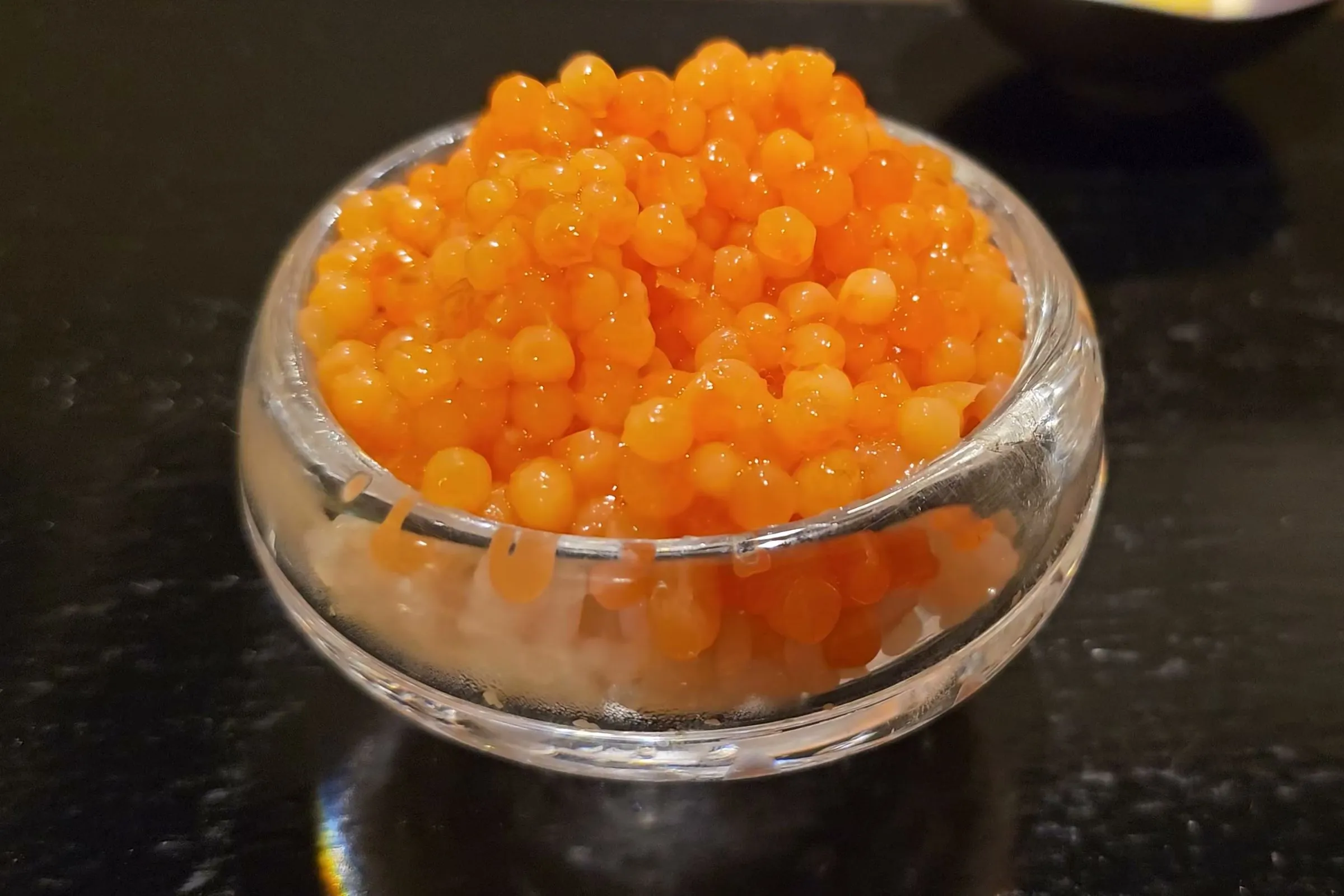
Salmon roe comes in fresh from September. The first ikura of the season is the clearest sign summer’s over.
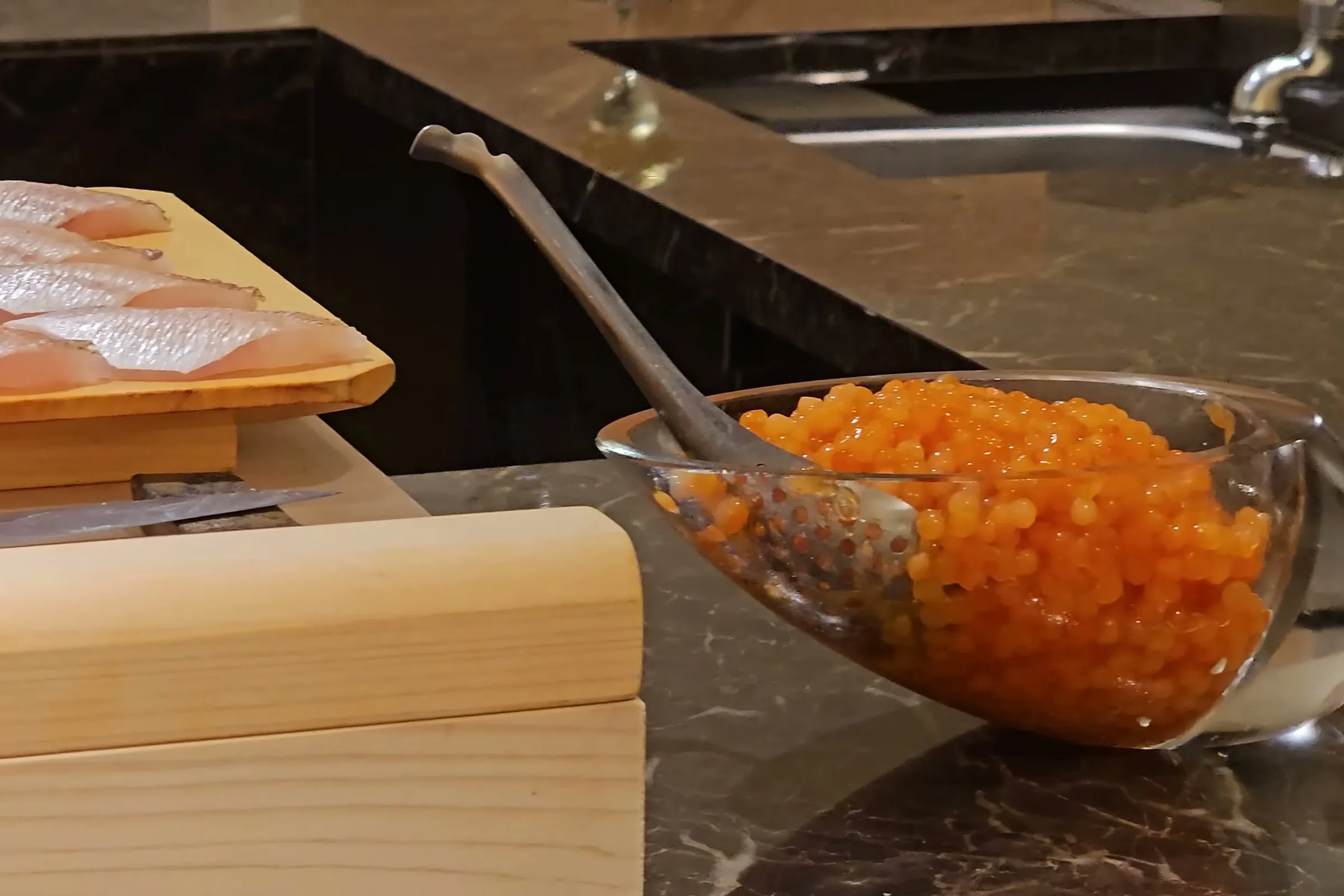
I don’t usually love ikura. Shimazu’s is the exception, and it’s the reason I keep going back in autumn. Half-cooked and sticky, close to baked brie with a little bottarga on top. Shimazu-san told me it started from a country dish in his home of Niigata.
In September 2024 I asked for it as a bowl. He offered a small ko-donburi. I asked for a big one. The bowl stayed small and the ikura piled up.
Its season runs long. In October he said it would last until about December.
Where this happenedSushi Shimazu→
Aka uni, the shortest window
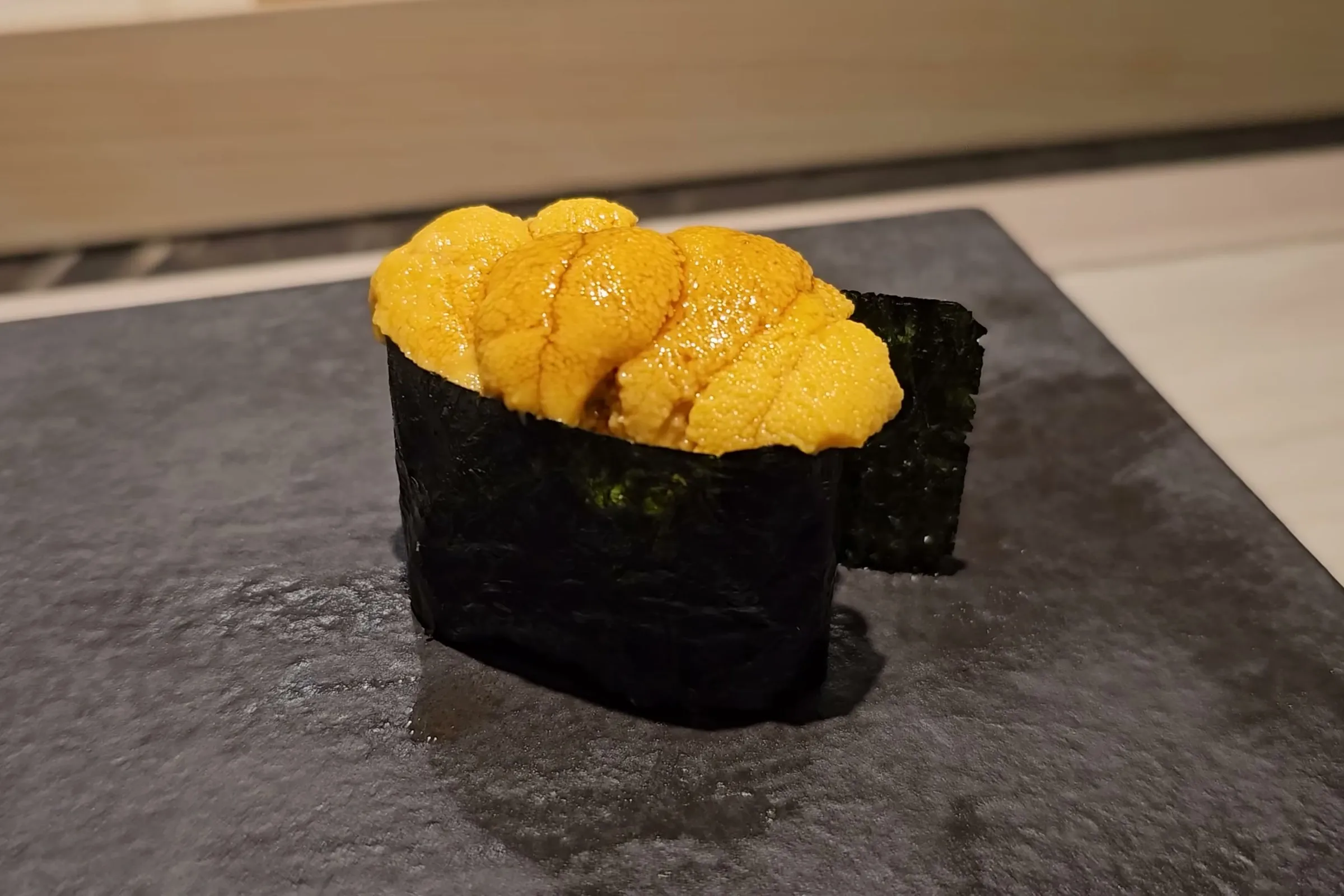
Aka uni, red sea urchin, is the one I rave about when it hits. The season is short, and a great one is rare even inside it.
From June 2024 I asked Shimazu every month. Not yet, not yet. In late August it finally came as an extra, and I held up a finger for another before I’d swallowed the first. Cleanly sweet and softer than bafun, like a banana milk mousse.
On my latest Shimazu visit I asked at the end and heard owari, all gone, though other places still had it. At Sushi Ikko in summer 2025 the aka uni beat the one at Sugita that once floored me.
Where this happenedSushi Shimazu→Sushi Sugita→
October, when the course gets older
After the peak comes what I called an aged omakase. At Shimazu in October 2024 the young fish had grown up. The shin-ika was full-size sumi-ika without the soft texture, and the aji was ordinary. Only the ikura still had me ordering seconds.
It’s also matsutake season. Sushi and kaiseki counters pile it into the course and the price jumps, and I don’t love matsutake. At Namba in November 2023 it came mixed into sushi rice, the one time I didn’t mind.
Modori-gatsuo and sanma keep October good. Go for those.
Where this happenedSushi Namba→Sushi Shimazu→
Winter is for fat
When I was younger I liked winter best. Saba and buri get oily, and shirako, cod milt, and ankimo, monkfish liver, are on every counter.
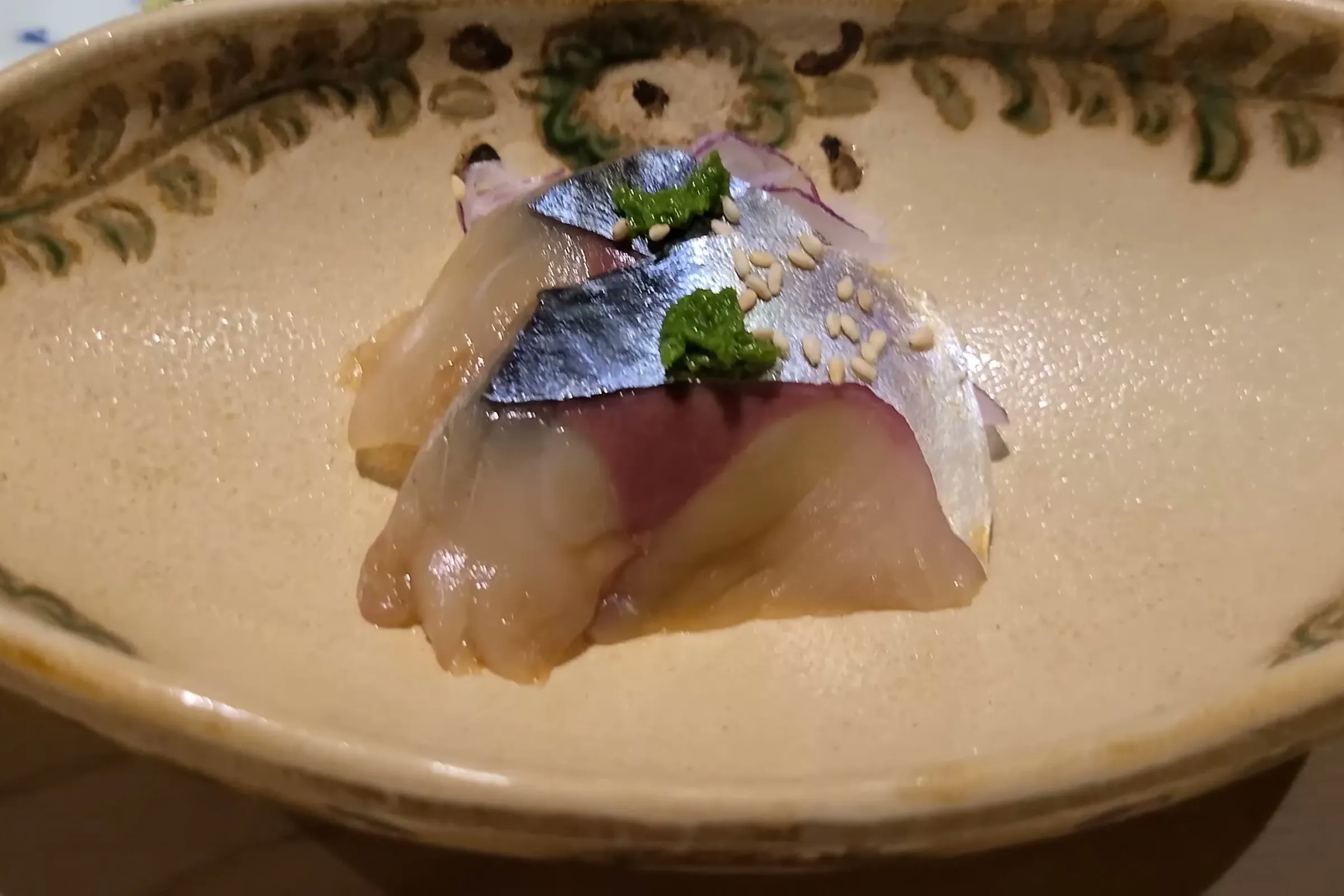
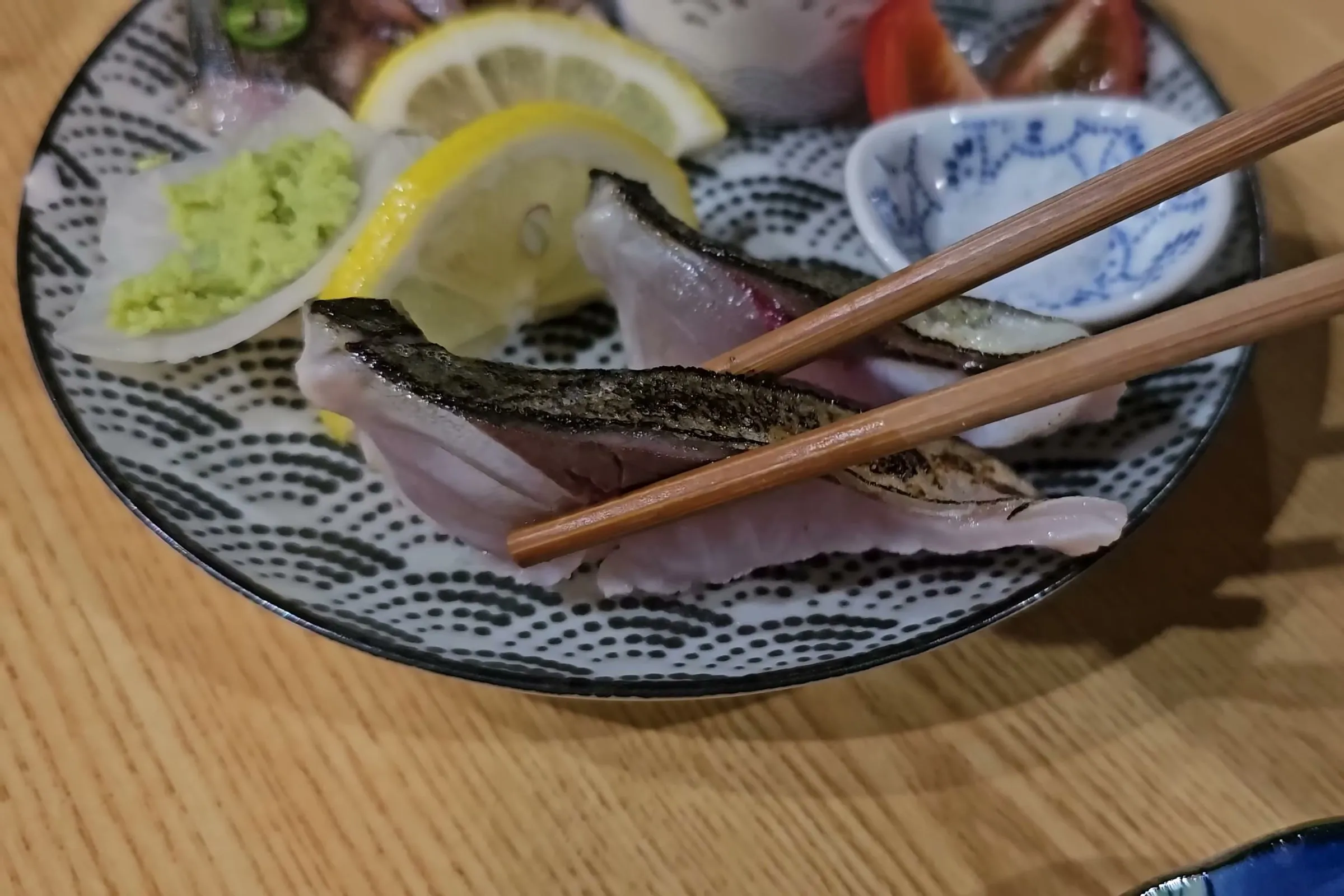
In Fukuoka in November 2023 I went looking for goma-saba, mackerel in sesame sauce, the city’s local dish. The seared saba had a rainbow sheen of fat on top, like oil on a puddle after rain.
Cured fish like saba hold up in any season. In the cold months they’re at their richest.
The worst day to eat sushi
Viewers kept asking when not to go. My answer: the last day of a long holiday.
Markets close and fishing boats rest. By the last day, what’s left at a counter has been in a tank or a fridge for days. The first day of a holiday is fine, because the fish came in the day before.
I filmed this on the last day of Chuseok in Seoul in 2020. The aji was fishy and the other shiny fish were weak. The chef wasn’t the problem. Plenty of counters simply close on days like that.
Tokyo’s Toyosu Market closes on Sundays and national holidays, and many counters take Sunday off too. I’d apply the same logic to the last days of New Year, Golden Week and Obon.
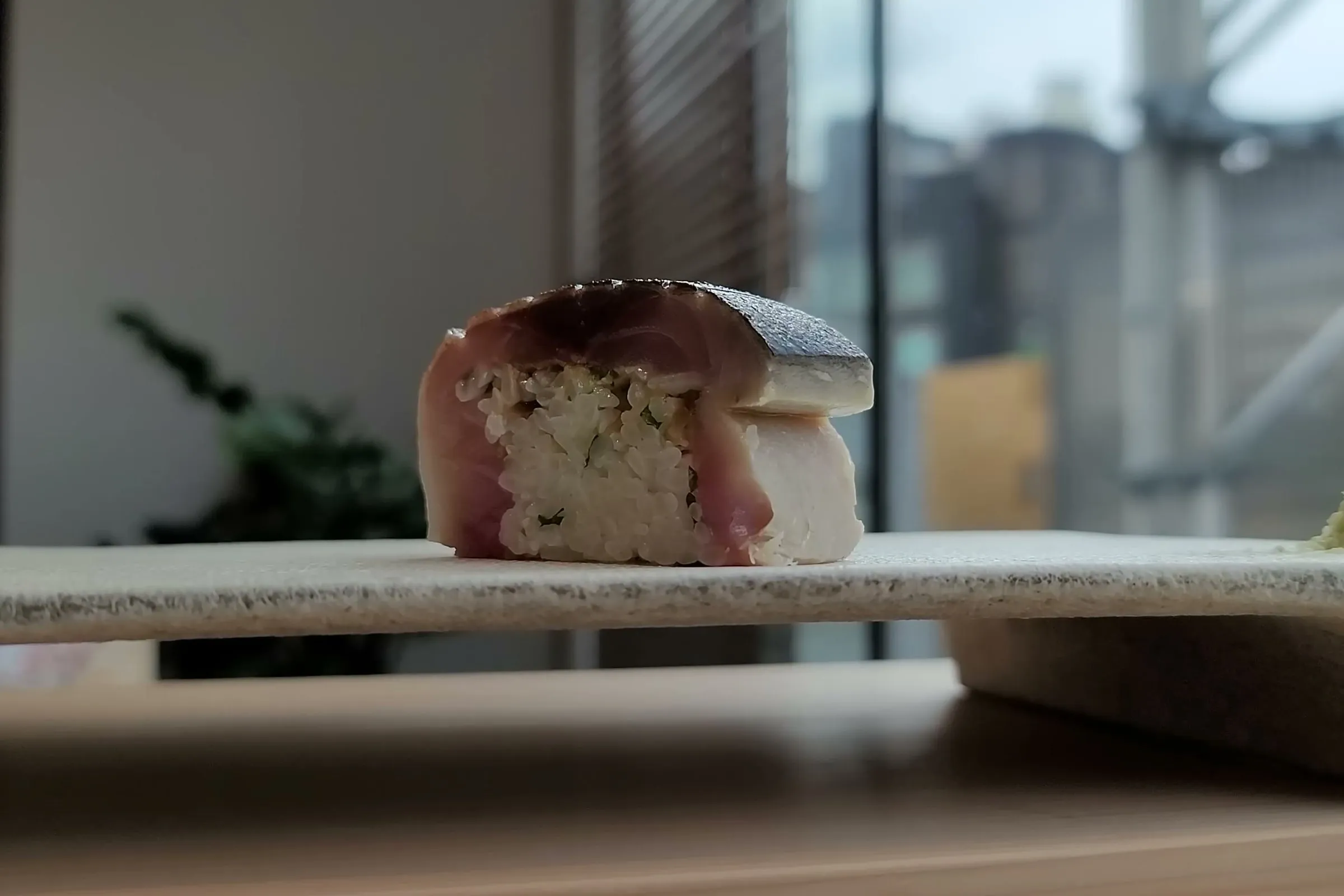
What holds up: tuna, which is aged in blocks anyway, uni, big farmed fish like buri, saba with a long cure, bo-zushi, anago under its sweet sauce, and tamago.
How I use all this when I book
Late August to September if you want summer and autumn on one menu. November if you want sanma, modori-gatsuo and the fat coming back.
Listen for the extras at the end. Shimazu raised its course to ¥38,000 in August 2024 and moved the pricier seasonal pieces to extras. With all of them I paid ¥54,000 (2024/09).
When something won’t come back for a year, shin-ika, shinko, aka uni, I order it again on the spot. And skip the last day of a holiday.
Where this happenedSushi Shimazu→
Plan the Tokyo trip
The boring bits I’d sort before flying, so the eating days stay free.
- Hotels in Tokyo*
Pick the room by where you eat, not by the sights. After a long dinner, a short ride back is the real luxury.
- Japan eSIM*
Data from the moment you land, no counter and no SIM swap. Set it up the night before.
- Keisei Skyliner from Narita*
Narita to Ueno in about 40 minutes. Buy it ahead and walk straight to the platform.
- Haneda airport limousine bus*
Landing at Haneda instead? The limousine bus drops you at the big hotels and stations with no transfers.
- Tsukiji Outer Market food tour*
A market morning with someone who knows which stalls are worth the line.
- Sushi-making class at Tsukiji*
Shape nigiri yourself once and the counter makes a lot more sense.
Links marked * are affiliate links. If you book through them I may earn a small commission, and you pay the same. How it works
The videos this guide comes from
- Now is the best season to eat sushi!14:112024/09
- A ray of light in this summer27:372025/10
- Is it OK to eat Sushi in Summer? - Sushi Myth6:212020/07
- the Best Season for Sushi13:032021/10
- When it’s peak season, go back for another round immediately!!10:092024/10
- The Gems of Autumn, Not Over Yet14:232024/11
- Thank you mackerel7:032023/11
- The worst day to eat sushi!5:592020/10
Sources
- Toyosu Market GO TOKYO
- Sushi Ikko Tokyo by Food