Sushi Namba writes down the temperature of every piece
Sushi Namba is a counter on the third floor of Tokyo Midtown Hibiya. Chef Namba moved here from Asagaya in 2018, and the menu lists the temperature of every topping and its rice. I first went that year and paid ¥28,000 for lunch (2018/05). In 2023/11 two of us paid ¥90,000, about US$300 each, in matsutake season. The octopus is like cotton candy, the kinki soup is the best thing they make, and the rice went from too sweet to too salty to just right. Worth fighting for a booking.
monster gourmetFrom my 2023/11 video
- My share
- ¥45,000
- about US$300, half of ¥90,000 for two, matsutake season, 2023/11 video
- Highlight
- Kinki in white soy broth
- Skip
- The aka uni
- Video
- 19:46
- 2023/11
- Where
- Hibiya, Tokyo
- Hibiya, connected to the building
Third floor of a shopping mall
I come to this building a lot. Suzunami, the grilled fish place I like, is in the basement, and I once had a pasta course at Salone Tokyo right next door. But the first time I came here, it was for Sushi Namba.
Back in my 2019/07 video it was third in all of Japan for sushi on Tabelog, after Sugita and Saito. In 2023/11 it was fifth in Tokyo. Still one of the hot ones.
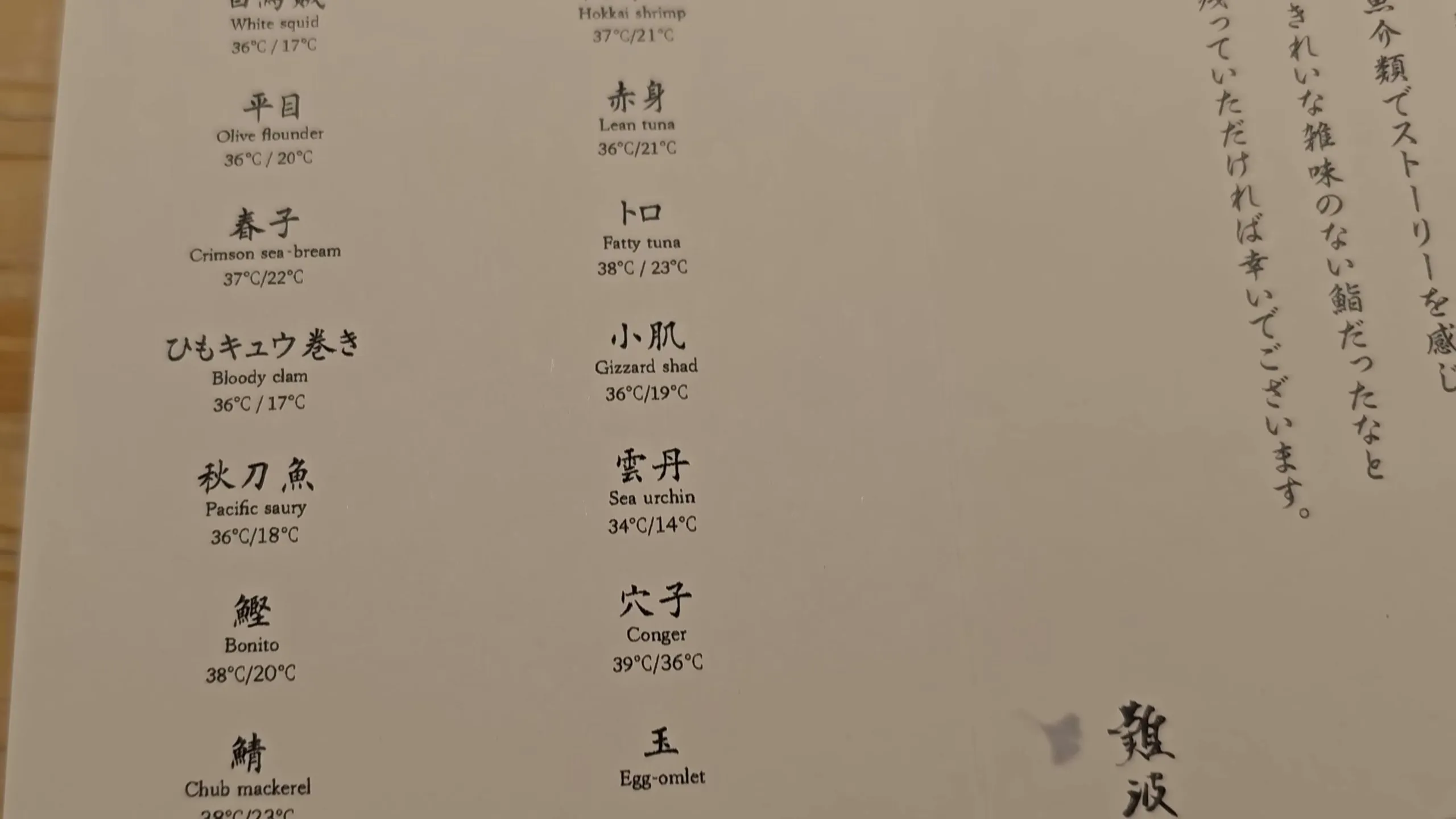
A thermometer on every piece
This is Namba’s whole identity. Every nigiri comes with a card that lists the topping and the rice, each with its own temperature. Squid at one number, its rice at another, and it changes piece by piece.
People used to doubt it, so Namba-san would come out with an infrared thermometer and show you the number was right. I heard they warm a stone slab in the kitchen and set each piece on it to hit the number.
This time the katsuo and saba were listed with warmer rice than the hirame and kasugo, and to me they tasted colder. My friend thought so too. I didn’t say anything. I’ve seen the thermometer enough times. One or two degrees, my mouth was probably wrong.
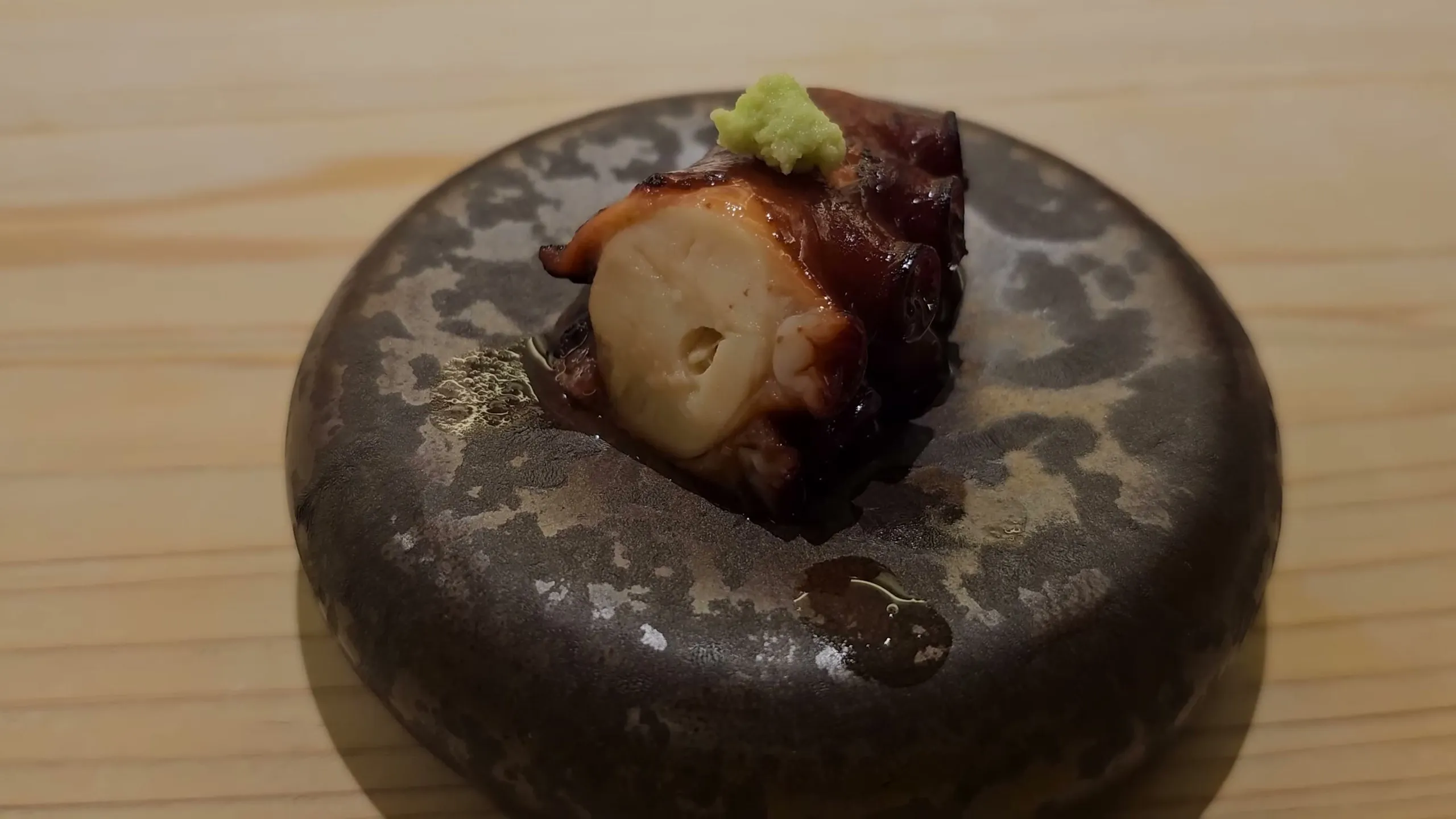
Octopus like cotton candy
Most of the popular counters these days come from the Kanesaka line, Saito included, and Korea has plenty of them. Namba is different in a lot of ways, the tsumami most of all, and this octopus is close to the signature. Look at the texture. I poked it with a chopstick to show you. Octopus should bounce back. This one lets the chopstick sink right in.
In my old video I called it cotton candy. I was exaggerating, but only a tiny bit. In 2018 it went soft and just disappeared in my mouth. A younger friend who went two days before me disliked it for having no texture at all.
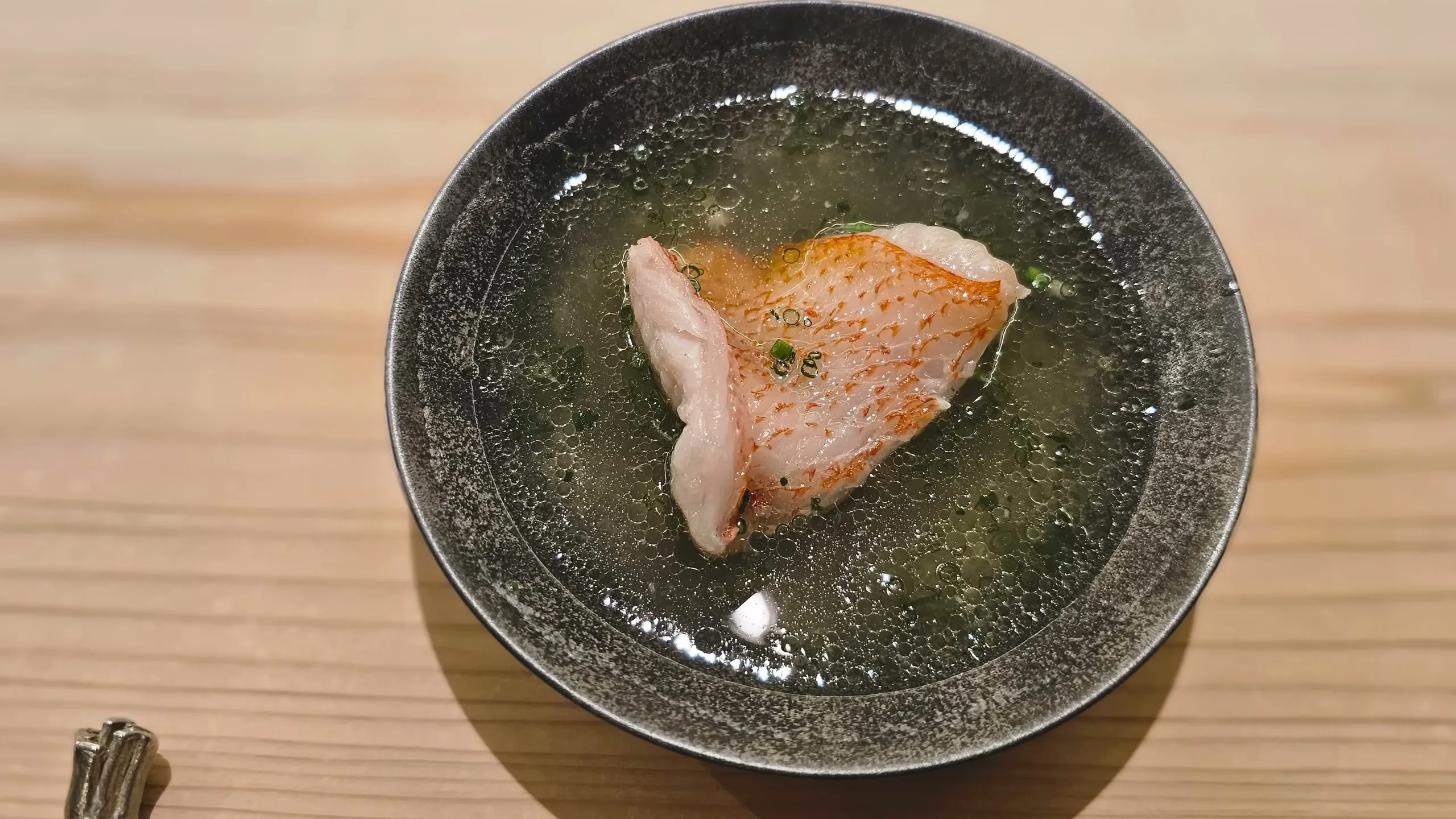
The dish I missed
I hadn’t been in a long time, and this is the dish I kept missing. Kinki, a red rockfish I almost never see in Korea. It looks like kinmedai, but it’s fattier, the skin is thicker, and the flesh is firmer, so the texture comes close to Chilean sea bass.
The fish is good. The broth is a monster. It’s seasoned with white soy, so the sweetness is clear, and there was fat floating on top. Full body, deep umami. It reminded me of Korean beef and radish soup.
Whale, then cod milt
Then whale, served raw like beef. Whale is a coin toss. I loved it at Sushi Suzuki. Here it looked great, then the smell came through strong and stayed. I barely touch gari, and after this I ate a lot of it.
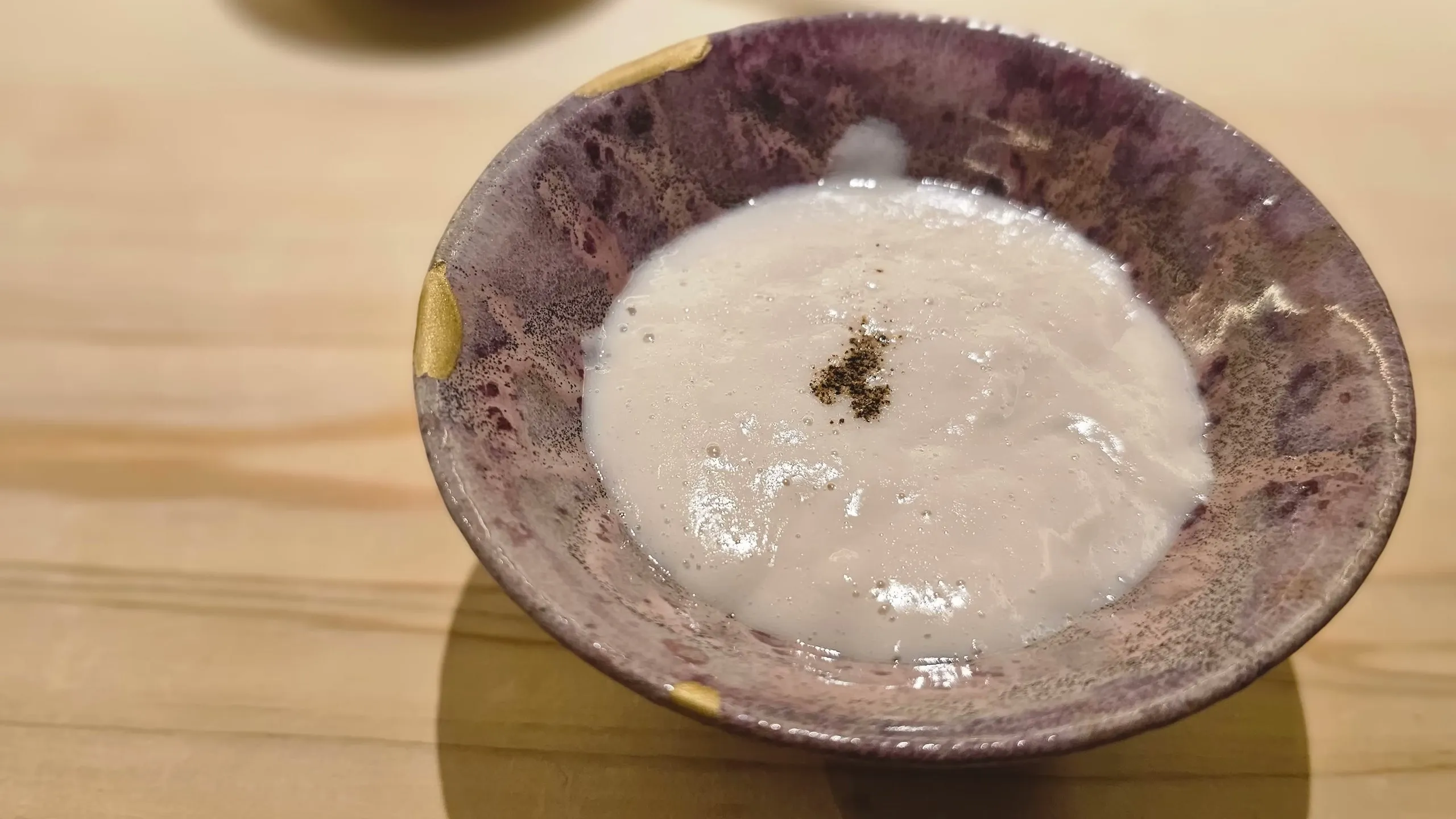
Then cod milt, done as surinagashi, blended into dashi so it’s basically a soup. The seasoning on the dashi was spot on. Namba-san is really good at strange tsumami like this.
Half the liver, gone
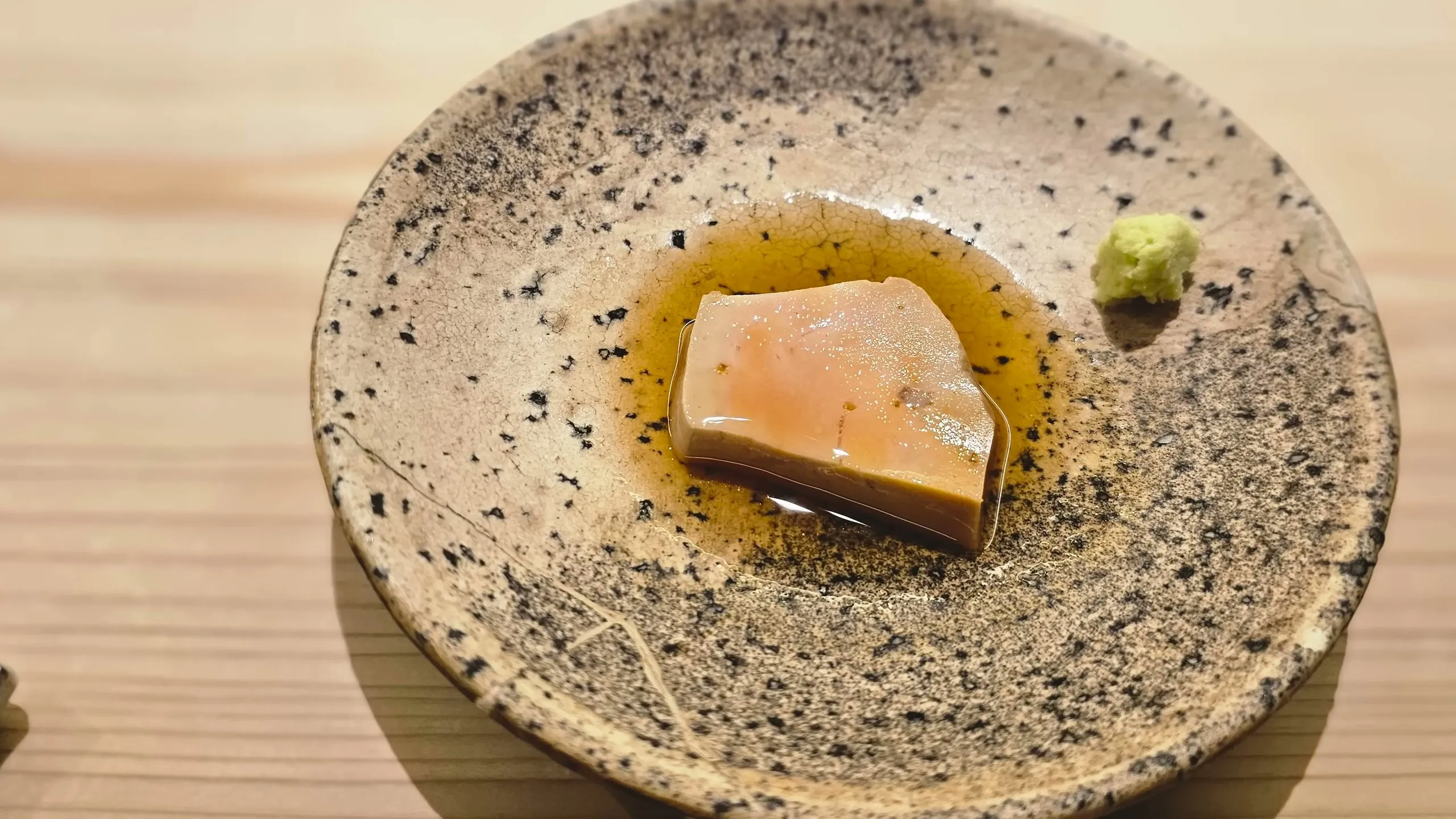
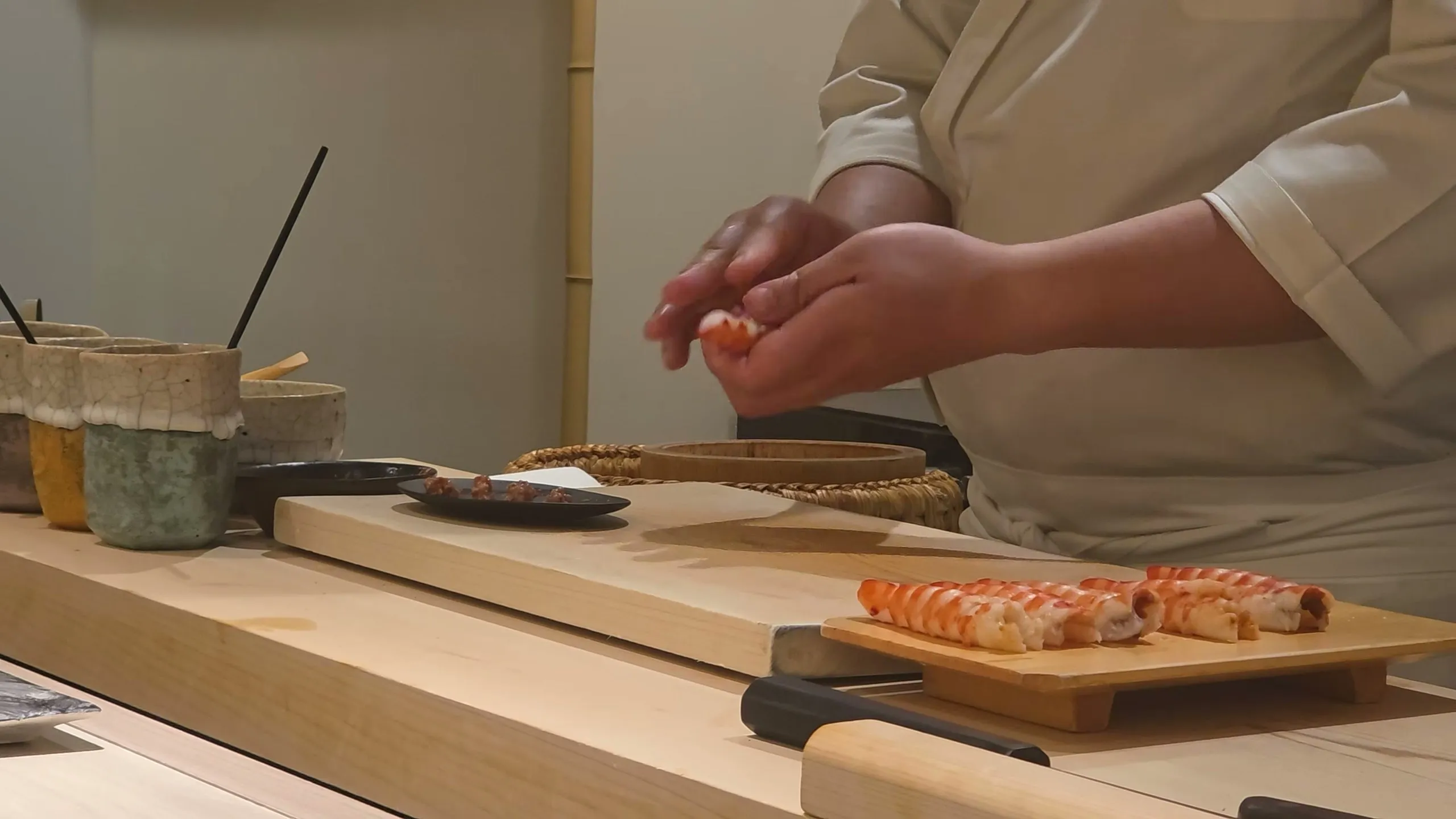
Namba-san’s hands are slow and careful. I filmed him cleaning the ankimo for a long time. He kept only the orange part. Maybe that part tastes best, maybe he wanted it pretty, I don’t know. Less than half of it was left.
At the start there were two huge lobes of monkfish liver. That was all for one small slice each for about eight people. The trimmings could only be mashed and used for something else. It’s rich and nutty, but I like ankimo sweeter, and I thought the broth would be stronger.
Chewy abalone, better ikura
The abalone wasn’t the big size you expect at a high-end counter, and it was chewy with a strong flavor, a bit like Chinese dried abalone. Not my style.
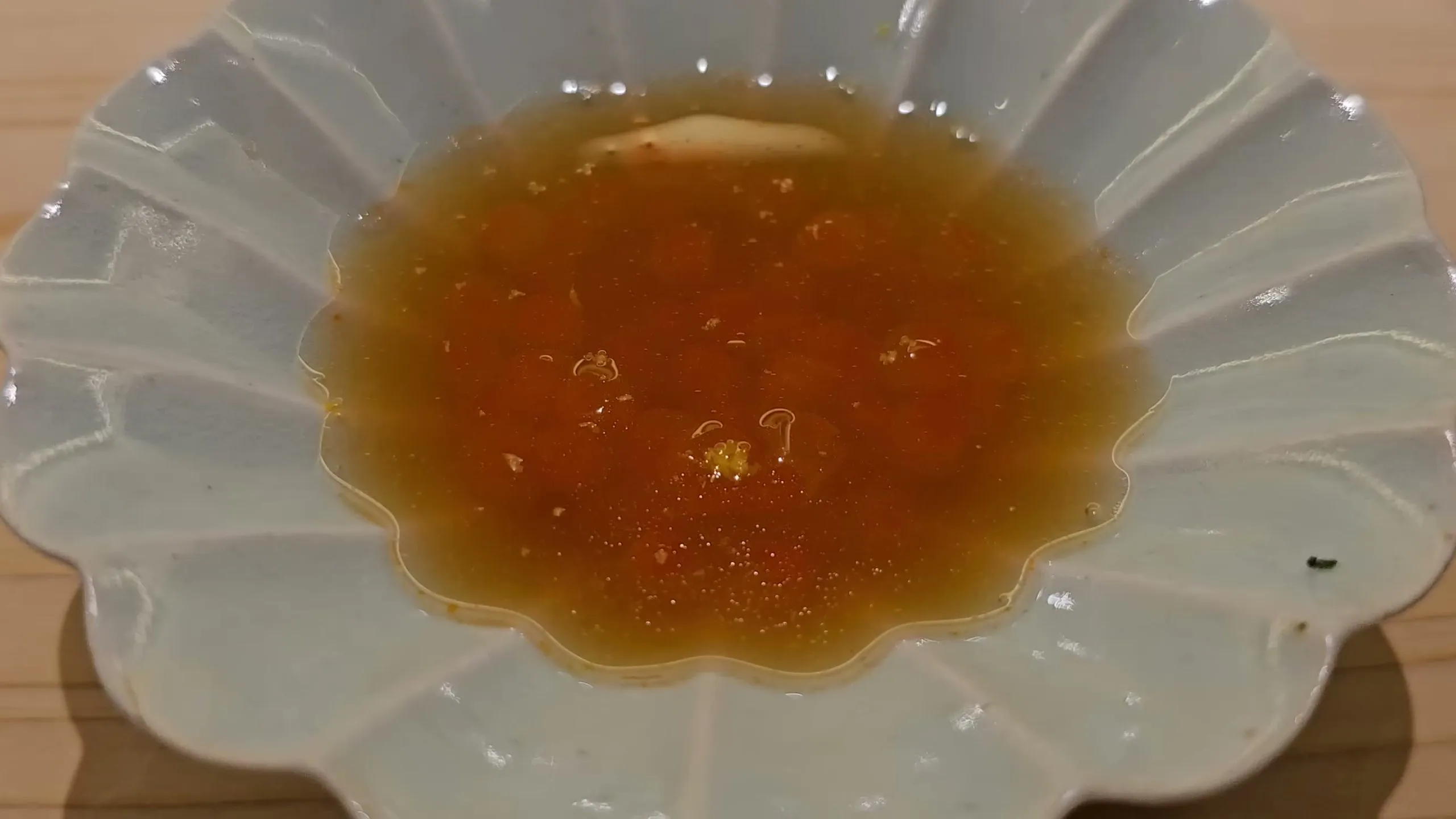
The ikura looked soaked in marinade, which I don’t like. I like soft skins and a rich, eggy inside. Then I ate it, and it was exactly that. The seasoning was light. Only the sticky, rich texture was missing.
Matsutake I actually liked
Then he took out the matsutake and I got nervous. I don’t love matsutake, and in season, sushi and kaiseki places in Japan pile it into the course and the price jumps. They also prize the wide open caps that Korea barely sells.
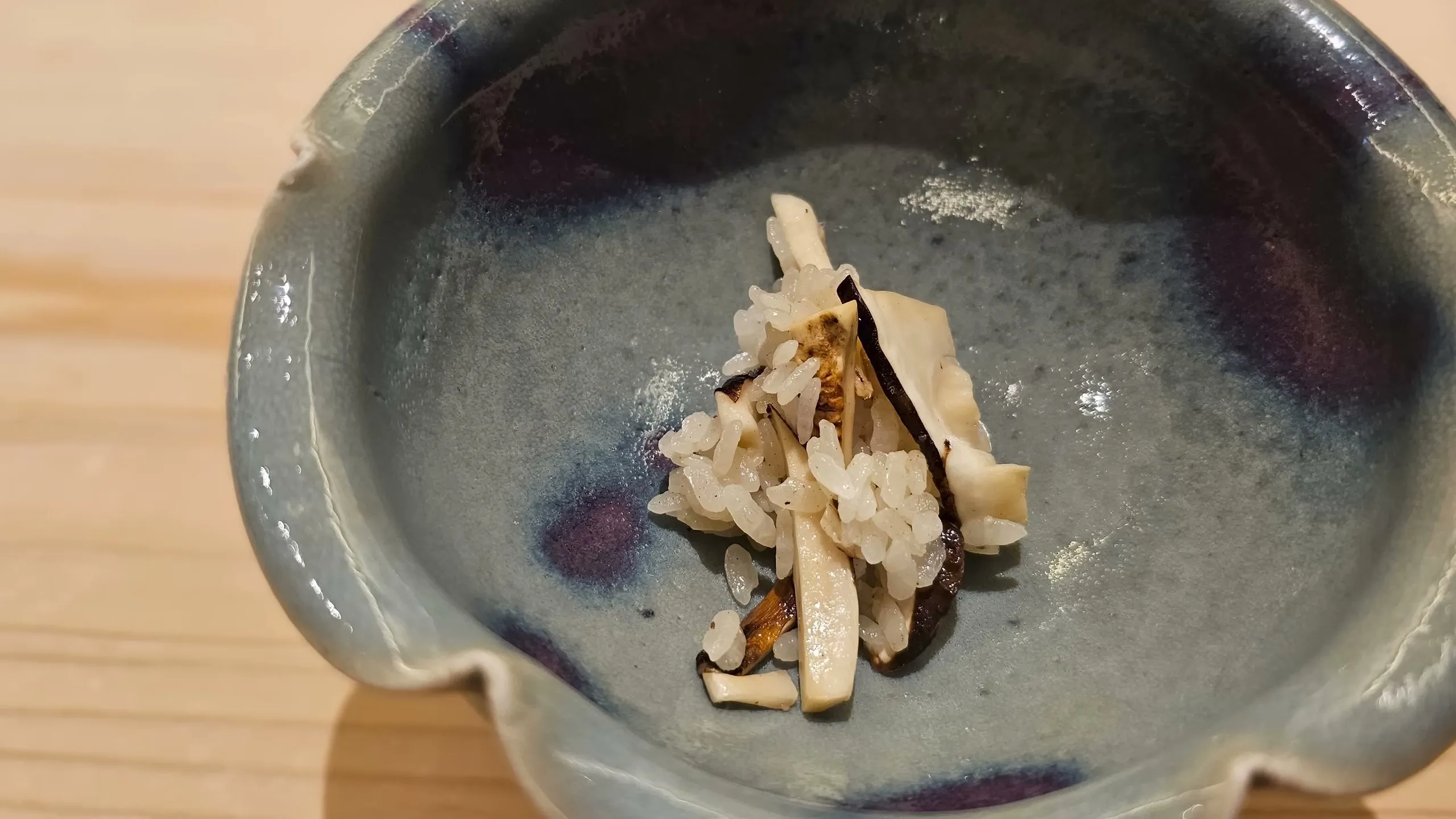
It came mixed into sushi rice, almost like tekone-zushi, and it was much better than matsutake rice cooked in a pot. The vinegar and salt kept the smell from taking over without killing it. Usually I think matsutake is too much. Not here.
Crispy anago, Kansai style
I almost forgot this one. Kim Seong-bok, my favorite sushi chef in Korea, worked at Namba for a while, and when he came back he served a few Namba dishes. This was one.
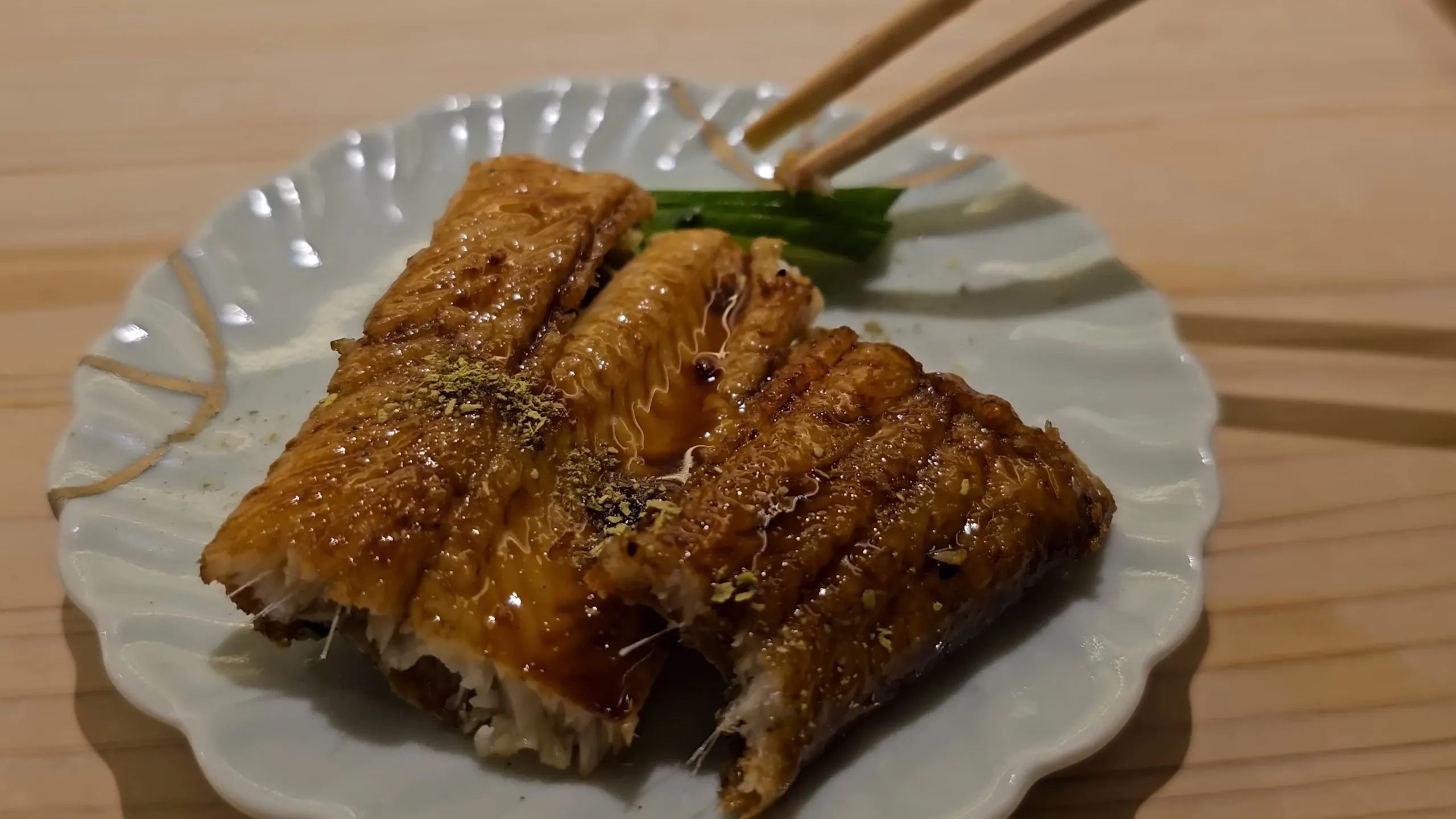
It looks like unagi, but it’s anago, grilled until the skin is crisp, with a sweet glaze on top. Basically tanghulu, way ahead of the trend. In 2018 they told me it goes on the grill raw for about an hour instead of being simmered first, which is the Kansai way. The cucumber with it is raw, and in 2018 the bitterness stood out.
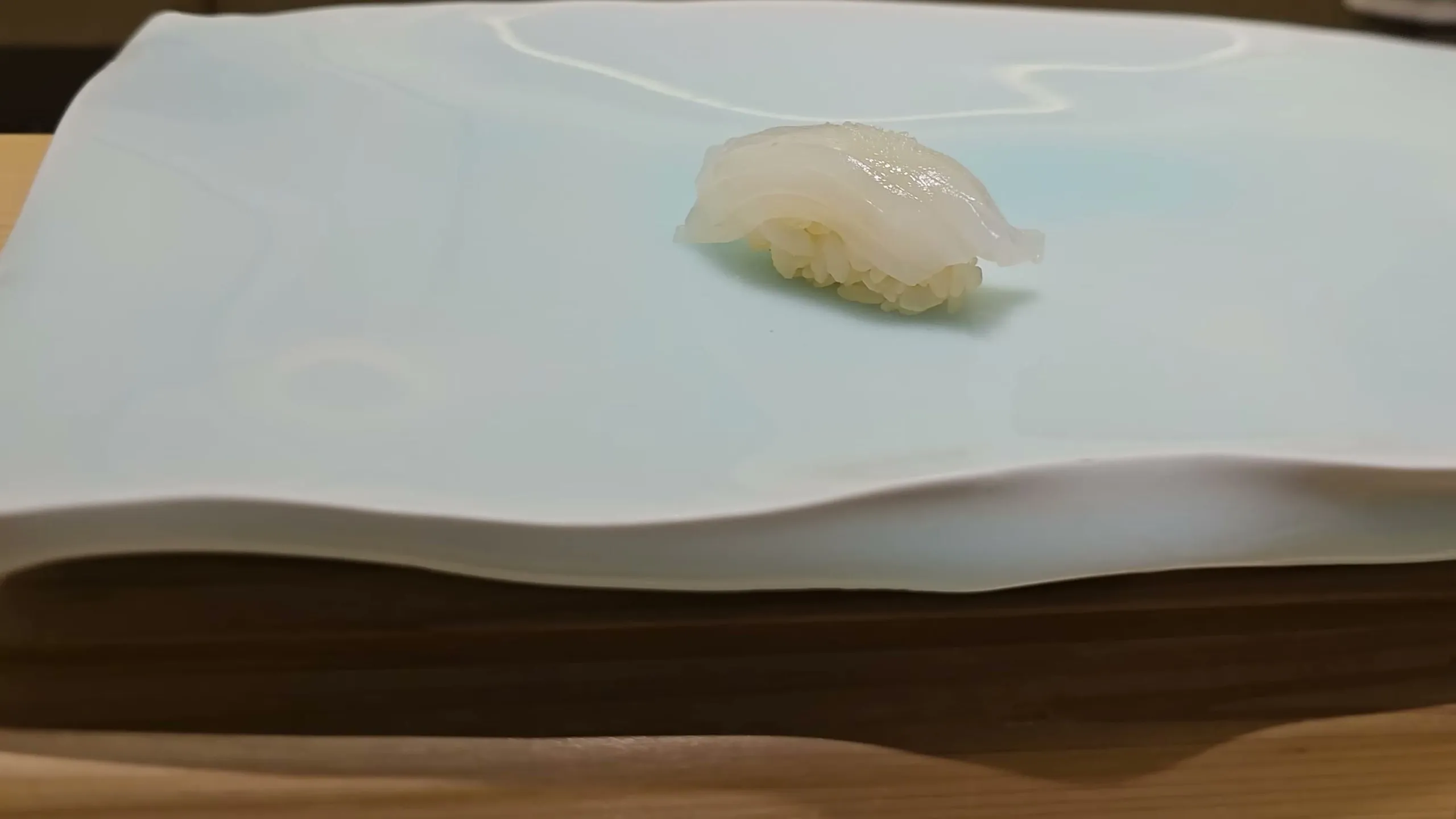
Forty minutes of squid
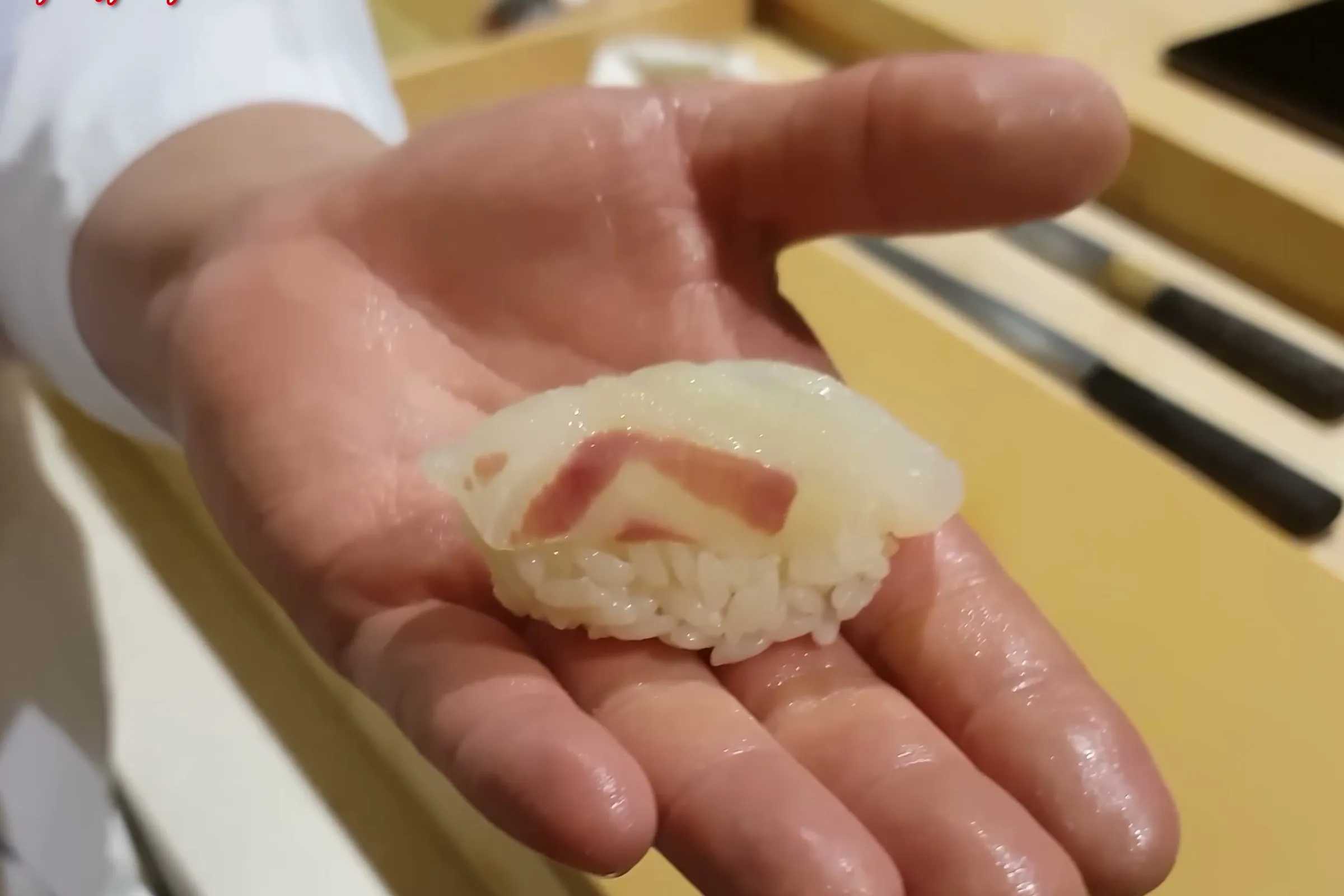
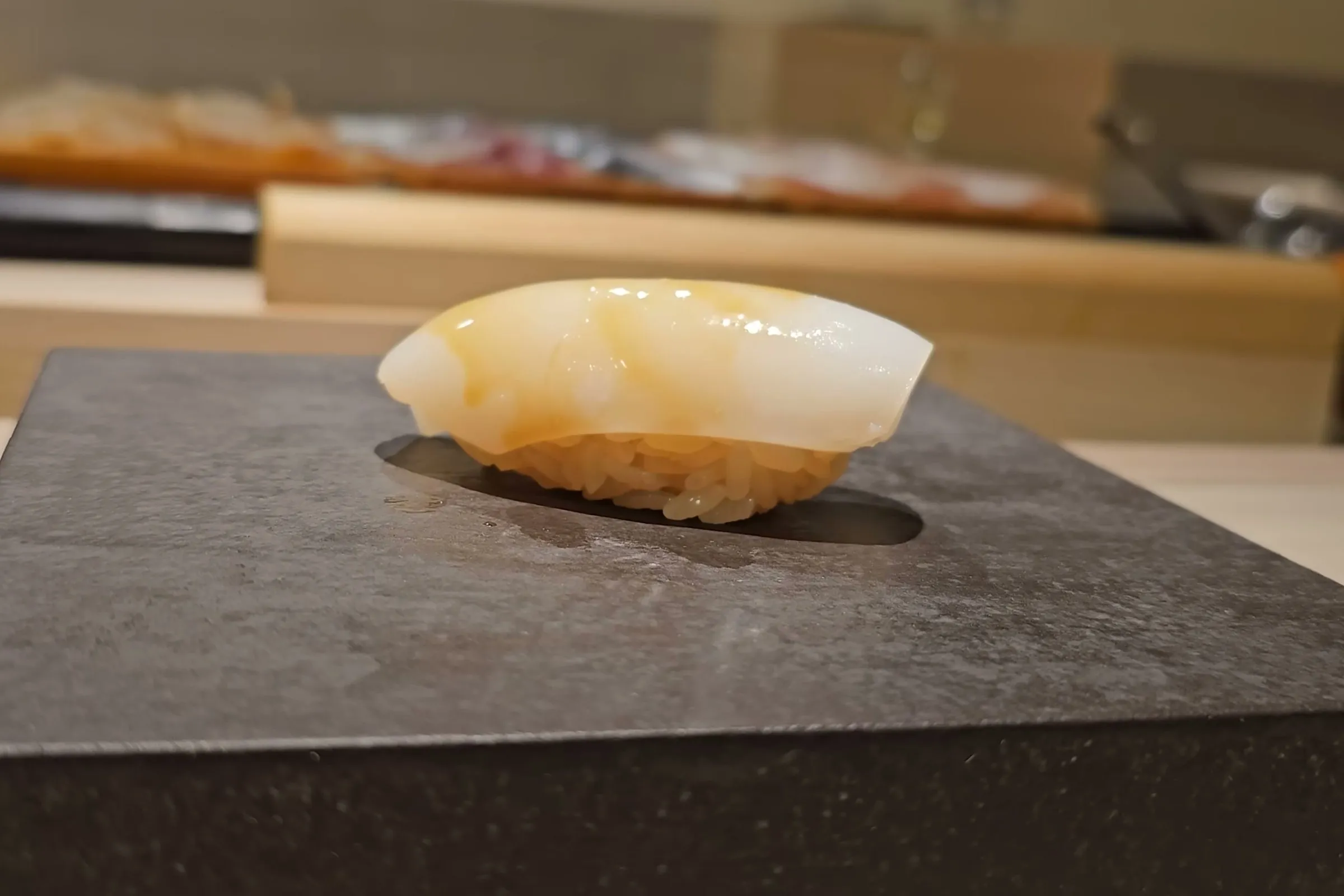
The first nigiri is always shiro-ika. The whole time I was eating tsumami, thirty or forty minutes, someone at the end of the counter was cutting this squid. Paper-thin sheets, then fine strips, stacked a few layers. It falls apart in your mouth, and the texture is lovely.
Look at the size, though. It’s about two knuckles of my pinky. The hirame after it was just as small. Later pieces got bigger. I think that’s on purpose, by texture.
People used to brag about counting the grains of rice in every piece and keeping the rice at one temperature. I don’t think sameness is the skill. Changing size and temperature to fit the topping is. Namba-san thinks so too, which is why he takes it this far.
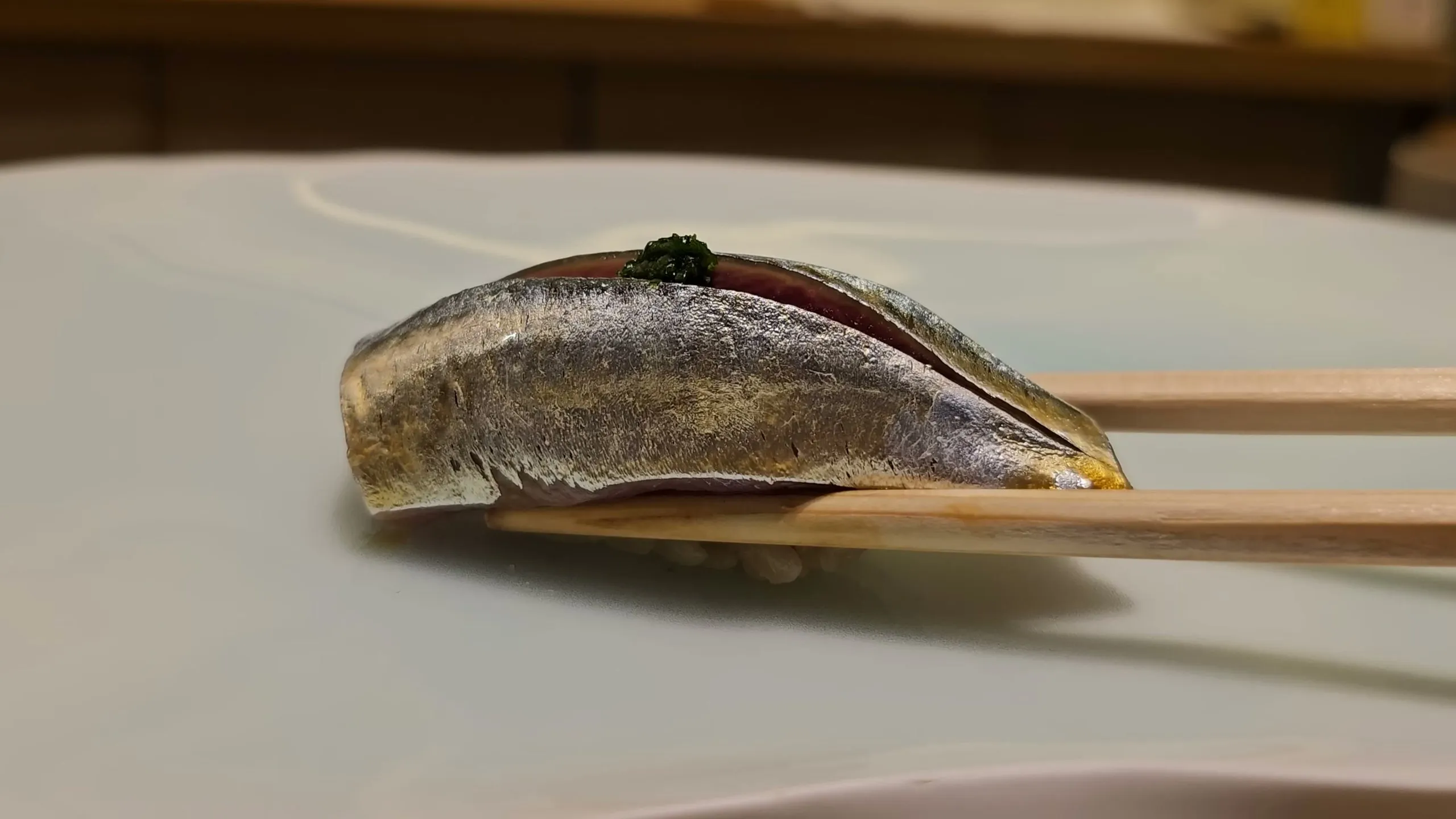
Sanma, and katsuo without wasabi
Sanma, Pacific saury, my favorite. The season is short even in Japan. It’s much richer than sardine or herring and still not fishy. The flesh by the blood line is deep red, the skin shines, and the fat under it is thick. I love visiting Japan in this season for this.
Then katsuo, which I also love. No wasabi in it. Grated onion goes in instead. Plain fish on rice with nothing in between tastes wrong, but the onion fills that spot, and it suits katsuo. In 2018 it was the first tsumami, cut very thick, with chopped onion on top.
The rice finally clicked
Right after it opened in Hibiya they used two kinds of rice. White rice first, then red rice with lots of akazu from the kohada on. The red one was so sweet it felt a bit like yakbap, Korean sweet rice. I didn’t like it.
The next time, the red rice was gone, the sugar was gone, and all I tasted was salt. I said so in the 2019/07 video. Since then the balance has been good. The grains themselves were always great.
Now I think nobody will be split on it. It’s just good rice. Even the sawara worked, and I usually hate sawara sushi because it’s smoked until it tastes like sausage.
Tuna from Yamayuki now
Today’s tuna was from Toi in Hokkaido. The card also names the broker, Yamayuki, the biggest in Japan. When Namba opened, the best tuna from Hicho, one of the oldest brokers, came here. They switched a while ago.
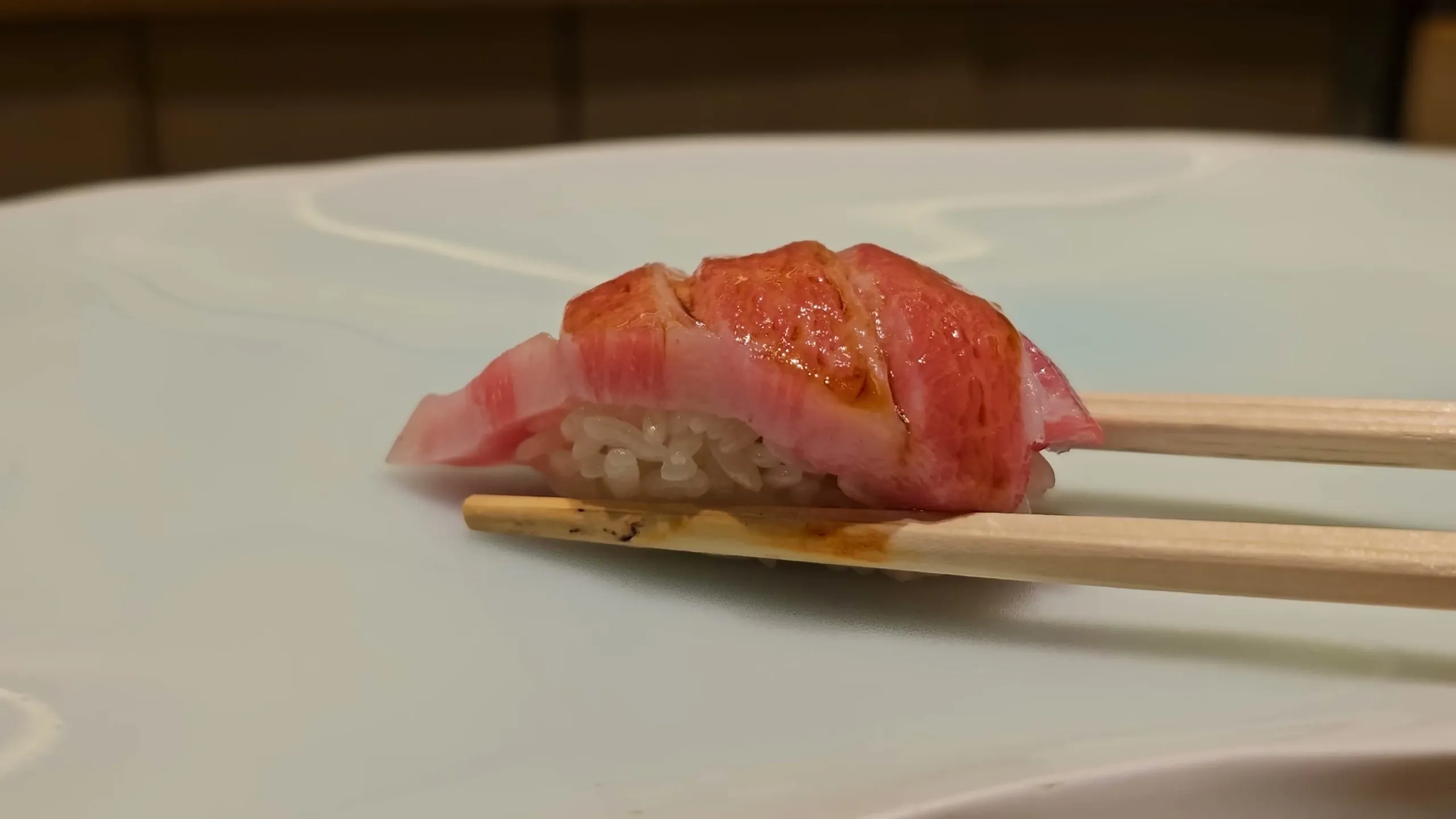
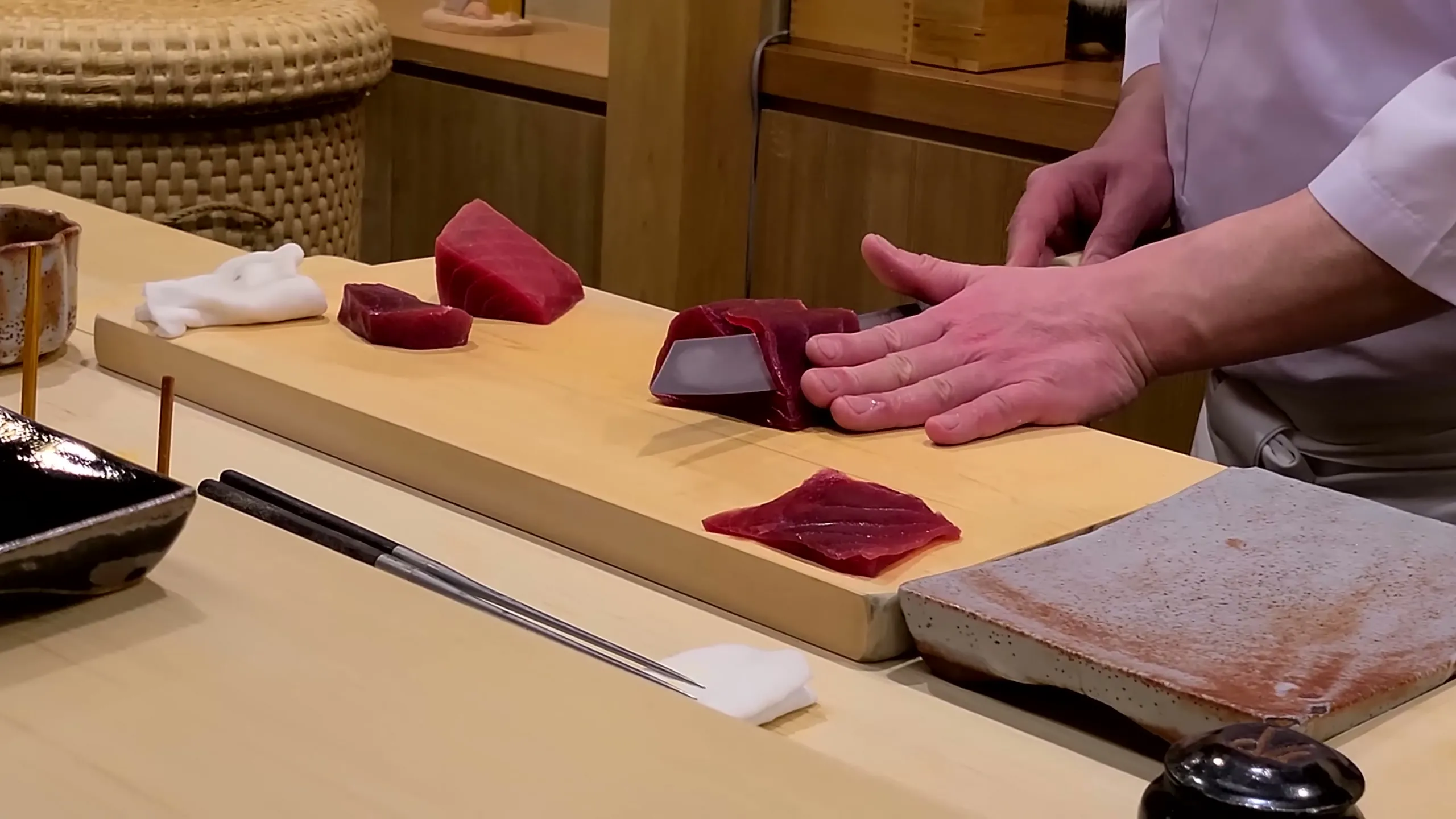
The akami came as a hand roll. The quality was better than I expected. The otoro had strong, sweet fat and no off smell. Not the sharpest acidity, but good. The tsumami didn’t show off the ingredients much. The nigiri did.
Kohada for him, uni for nobody
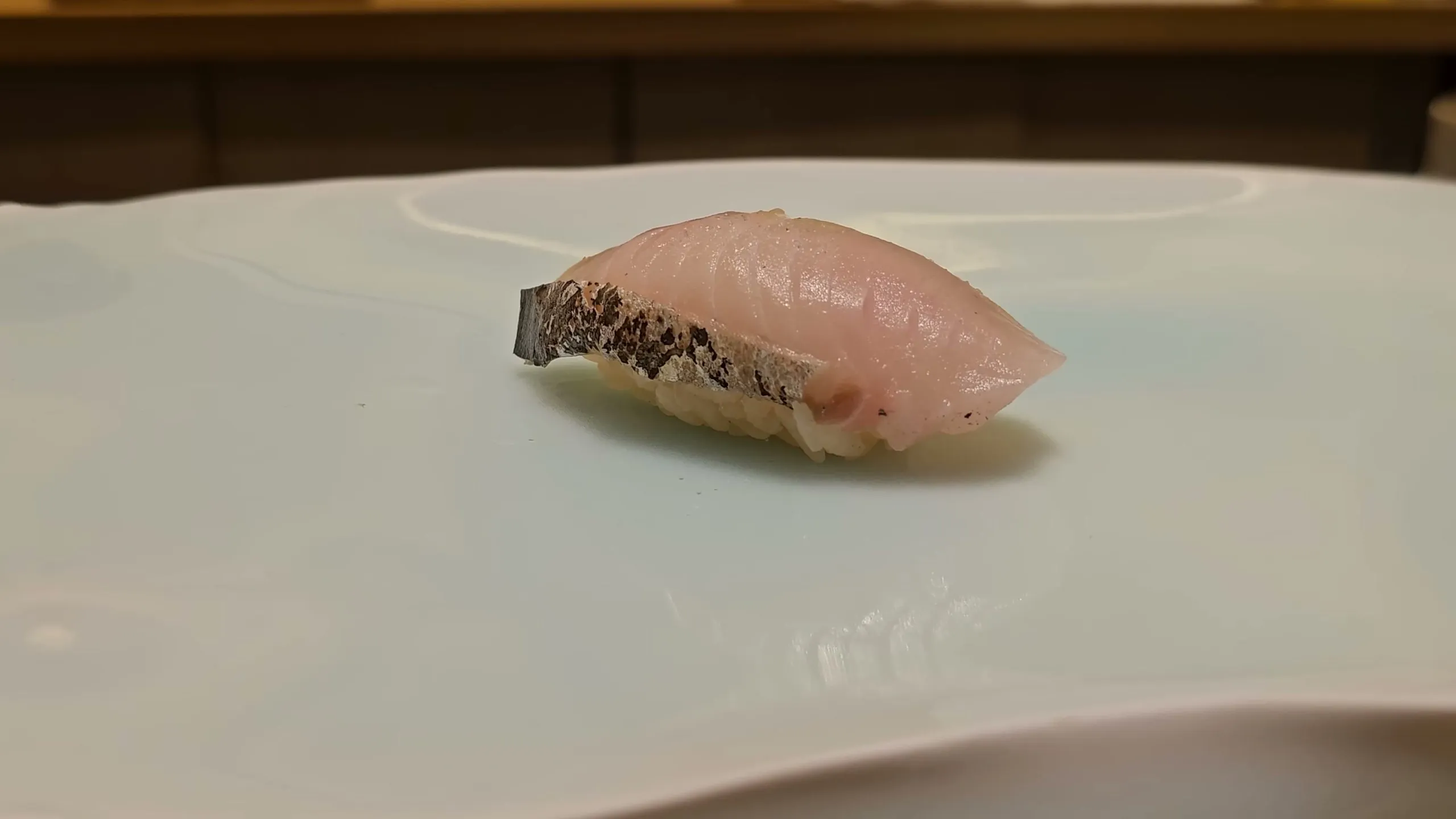
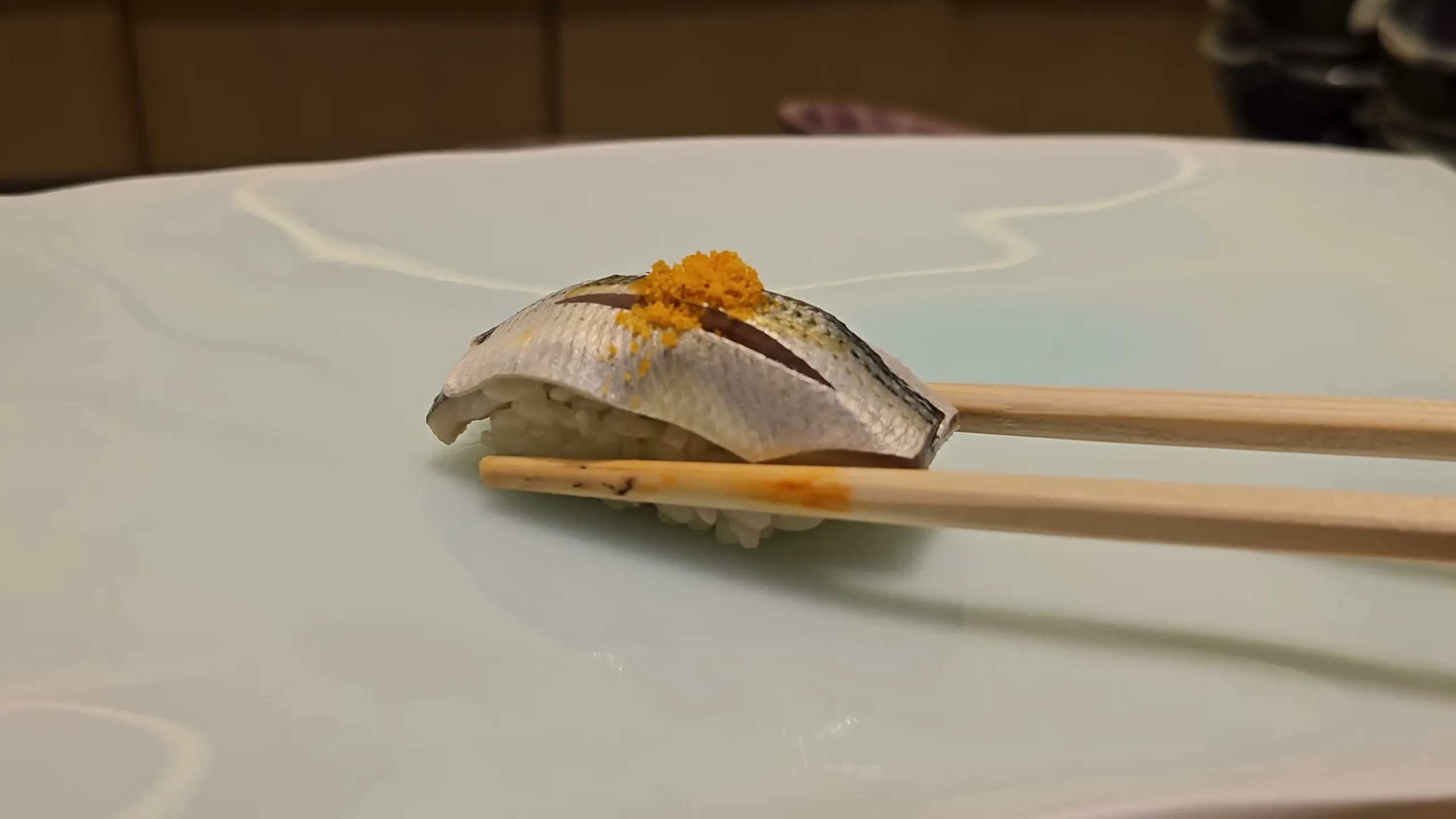
The kohada was close to my taste, but I like it a little sweeter. That’s because I’m not a big kohada fan. My friend loves kohada, and for him this was nearly perfect balance.
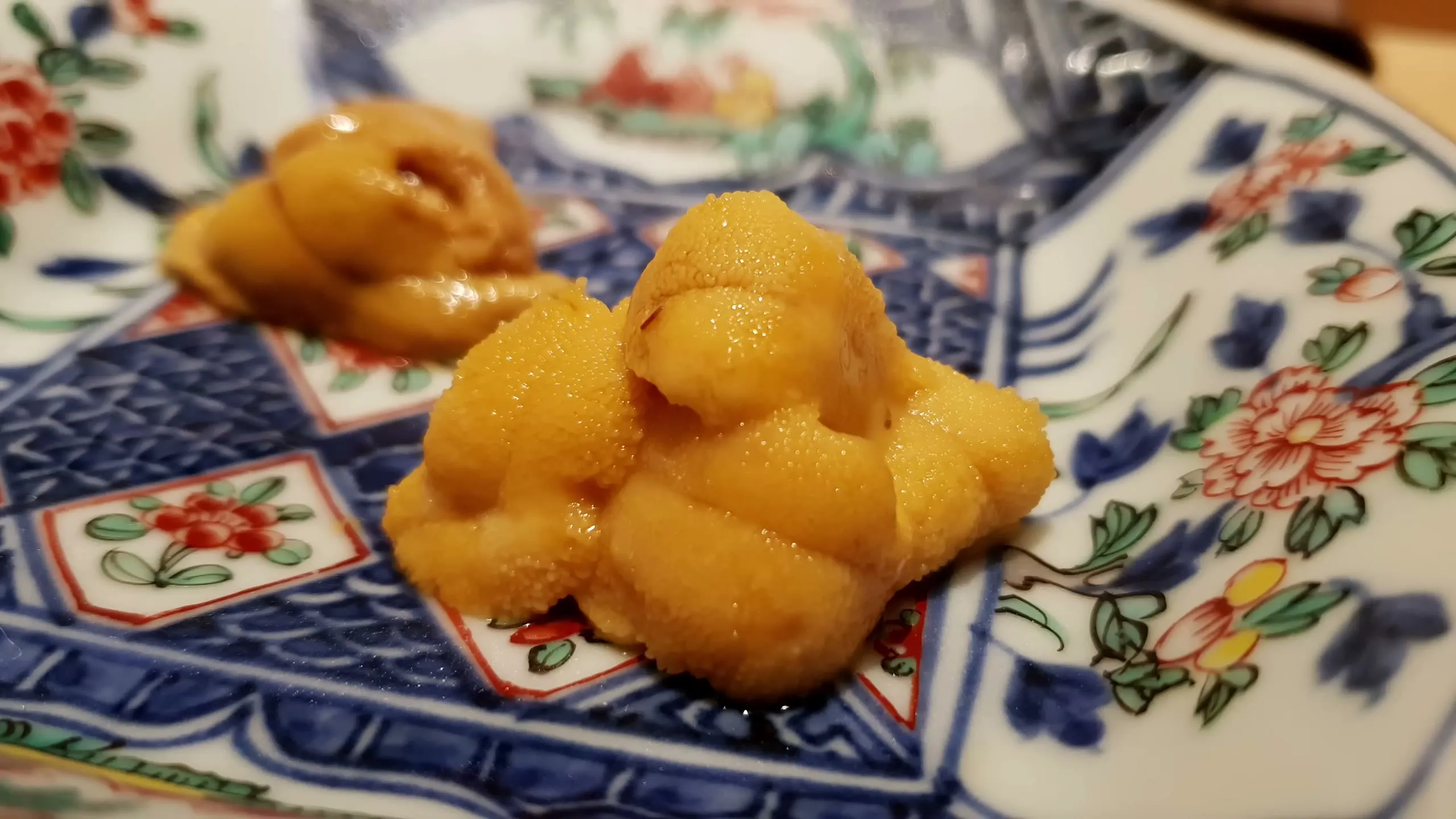
Then I saw aka uni on the board and got excited. That’s the kind I raved about at Sugita, the one that’s unreal when it hits. My friend said he’d never found uni that amazing, so I hyped it up. The flavor was deep, but the alum must have been heavy, because the bitterness covered it. Letdown.
Full, for once
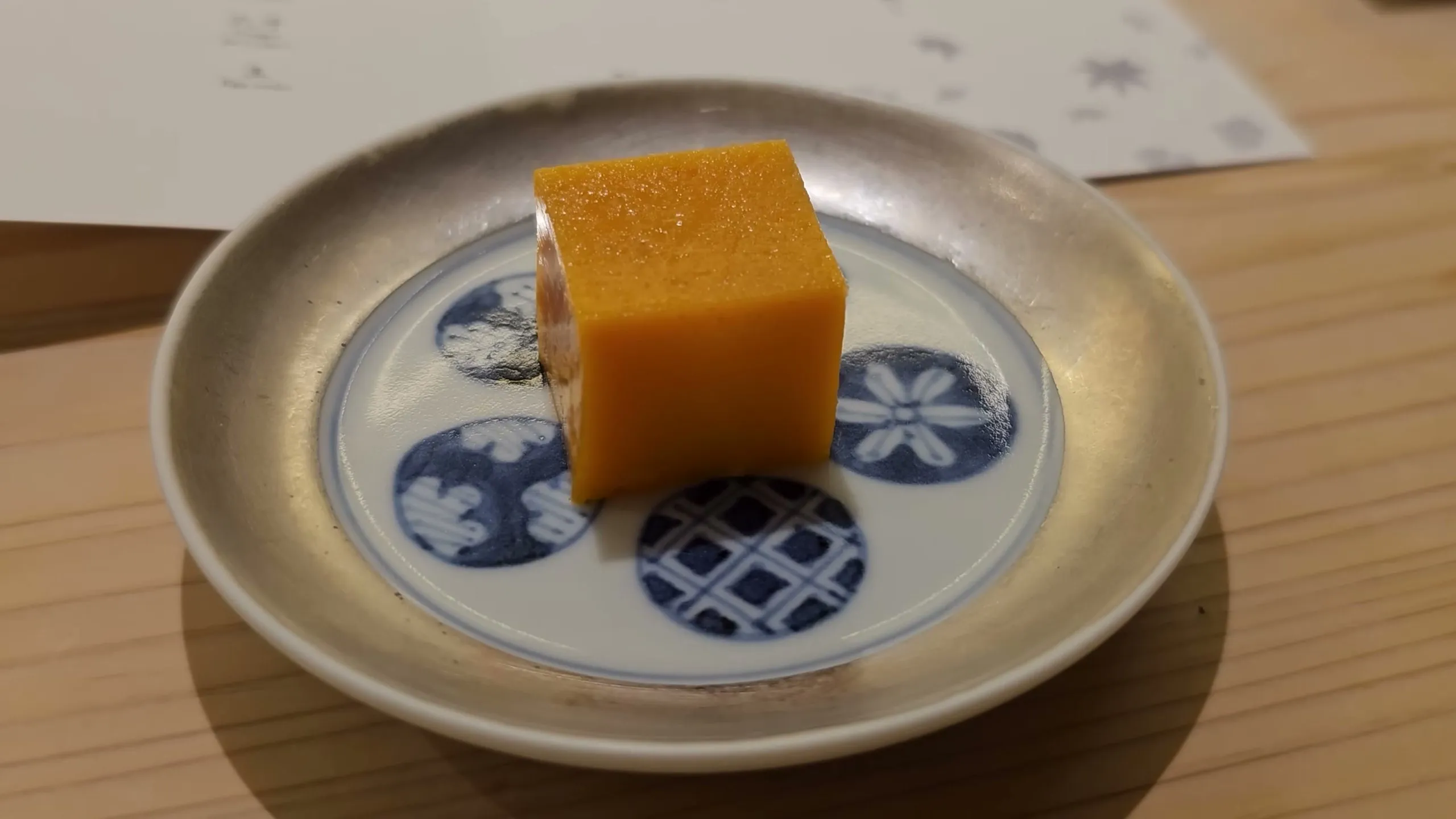
Then anago, and the tamago, which is nothing like other places. Sweet like a dessert. I liked it. The miso soup has kinki in it too. Mostly bones, nothing to eat, but the broth is thick.
Because the first pieces are so small, I’d remembered Namba as a small meal. I was wrong. By the end I was full.
The botan ebi I still think about
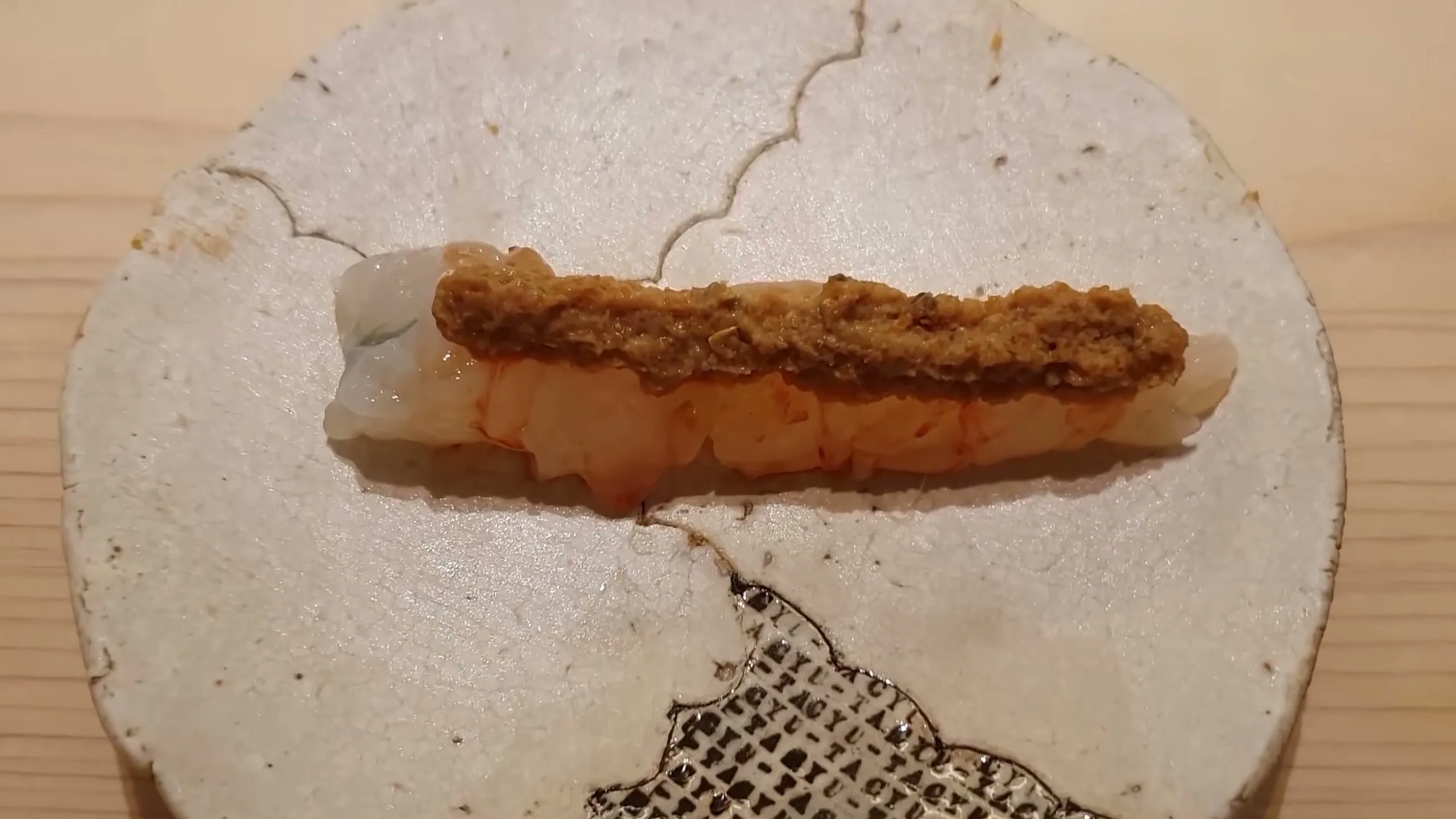
In 2018 and in my 2019/07 video, the botan ebi came with a crumble on top, the innards mixed with the soft part of the shell, grilled and ground. Savory, almost like peanut butter. The meat had been aged three days, because they said umami needs time.
In 2018 I wrote that every sushi chef in Korea should copy it. Some who worked here did. It didn’t come out this time.
¥90,000 for two in matsutake season
2023/11 video
¥90,000 for two of us (2023/11), so ¥45,000 each, about US$300. Matsutake season pushes prices up at sushi and kaiseki places in Japan, and my friend had a few beers. I was braced for over ¥50,000 each. A friend who went right before paid ¥35,000.
In 2018/05 lunch was ¥28,000 with one oolong tea. In 2019/07 it came to ¥27,500. When I checked in 2026/10, Tokyo Midtown Hibiya listed lunch and dinner from ¥38,000, and Tabelog put the budget at ¥40,000 to ¥49,999.
What Sushi Namba has cost me, visit by visit
3 visits where I said the bill on camera or wrote it on my blog. ¥28,000 in 2018/05, ¥45,000 in 2023/11. Up 61%.
Per person. If I only said the table total, it’s split evenly. My oolong tea is in, and in 2023/11 my friend’s beers are too (I don’t drink). Each month is when that video or blog post came out. Hollow dots come from my Naver blog.
Would I go back?
Yes, every now and then. Almost every dish at Namba is different from the style I usually eat, and it was still good. That’s rare. Most of the time I try somewhere new, I’m disappointed. It’s like winning the lottery.
For the amount, the taste and the price, I’d tell anyone to go. Booking isn’t closed off like Sugita, Arai or Saito, but it’s hard, like Shimazu. Still worth trying. The end.
How to book
How I booked
In 2018, right after the move to Hibiya, it had just gone up on a booking site, and I got a seat with no competition at all. Those days are over.
- OMAKASE (omakase.in)
Tokyo Midtown Hibiya’s page says bookings go through OMAKASE only, and phone bookings aren’t taken. The mall listed lunch and dinner from ¥38,000. Check OMAKASE for current prices and open dates. Seatings at 12:00 and 13:00, then 17:00, 18:00 and 19:30. Closed Sundays and Mondays.
- House rules
From Tabelog: the person who booked has to come, and changing the date or the number of people costs the same fee as cancelling at that point. No strong perfume. Photos and video are fine as long as other guests stay out of the frame. 12 seats, 8 at the main counter and 4 at a separate one.
Checked 2026/10. Booking rules change, so look at the official page before you go.
Where it is
- Address
- Tokyo Midtown Hibiya 3F, 1-1-2 Yurakucho, Chiyoda-ku, Tokyo東京都千代田区有楽町1-1-2 東京ミッドタウン日比谷 3F
- Nearest station
- Hibiya, connected to the building
Plan the Tokyo trip
The boring bits I’d sort before flying, so the eating days stay free.
- Hotels in Tokyo*
Pick the room by where you eat, not by the sights. After a long dinner, a short ride back is the real luxury. This place is in Hibiya, Tokyo.
- Japan eSIM*
Data from the moment you land, no counter and no SIM swap. Set it up the night before.
- Keisei Skyliner from Narita*
Narita to Ueno in about 40 minutes. Buy it ahead and walk straight to the platform.
- Haneda airport limousine bus*
Landing at Haneda instead? The limousine bus drops you at the big hotels and stations with no transfers.
- Tsukiji Outer Market food tour*
A market morning with someone who knows which stalls are worth the line.
- Sushi-making class at Tsukiji*
Shape nigiri yourself once and the counter makes a lot more sense.
Links marked * are affiliate links. If you book through them I may earn a small commission, and you pay the same. How it works
Guides that mention this place
The best sushi in Tokyo, ranked by someone who paid for it.
Eight counters from Sugita down, what I paid at each, and how to get a seat.
The fish gets the photos. The rice decides the meal.
What edomae means, red vinegar or white, and what I taste for in sushi rice.
Every Michelin sushi counter in Tokyo I’ve paid for, with the stars then and now.
Three stars down to one, what I paid at each, and how to get a seat today.
Every day is a sushi day. Late August is a better one.
What’s in season at Tokyo sushi counters, month by month, and the day to avoid.
Every Tokyo sushi booking route, compared by someone who paid the fees.
omakase.in, Tabelog, TableCheck, TABLEALL, Pocket Concierge, byFood and the hotel desk, side by side.
More from this restaurant on the channel
- The 3rd best sushi restaurant in whole Japan!14:422019/07
More places I have eaten at
All of Tokyo →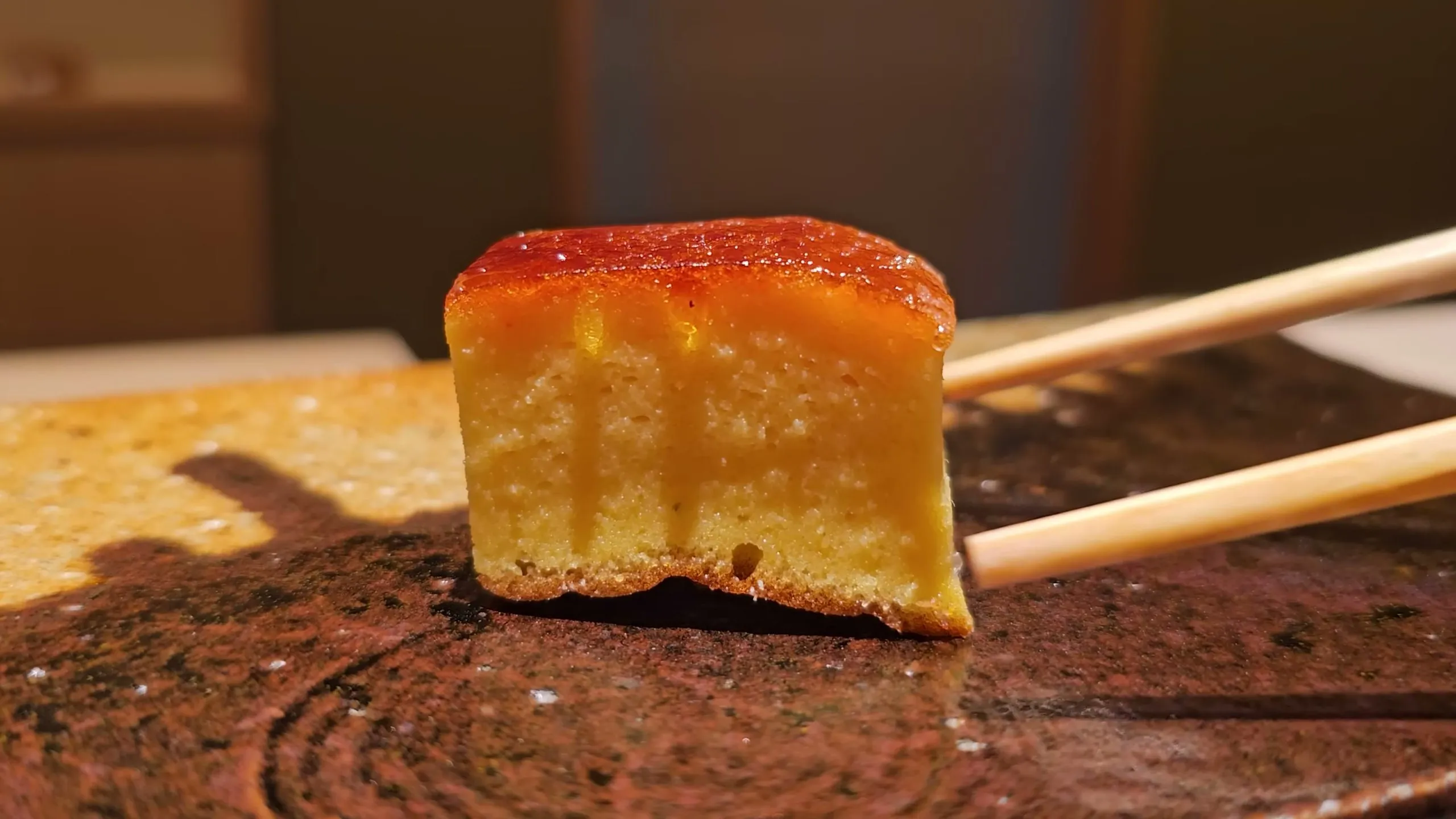 Akasaka, Tokyo
Sushi Miura
Kikunoi soup, Namba sushi, half the price. Then a star.
¥25,000 2023/12 videoRoppongi, TokyoSushi Saito
Every title in sushi, and not one piece I wanted again.
¥28,080 2020/04 video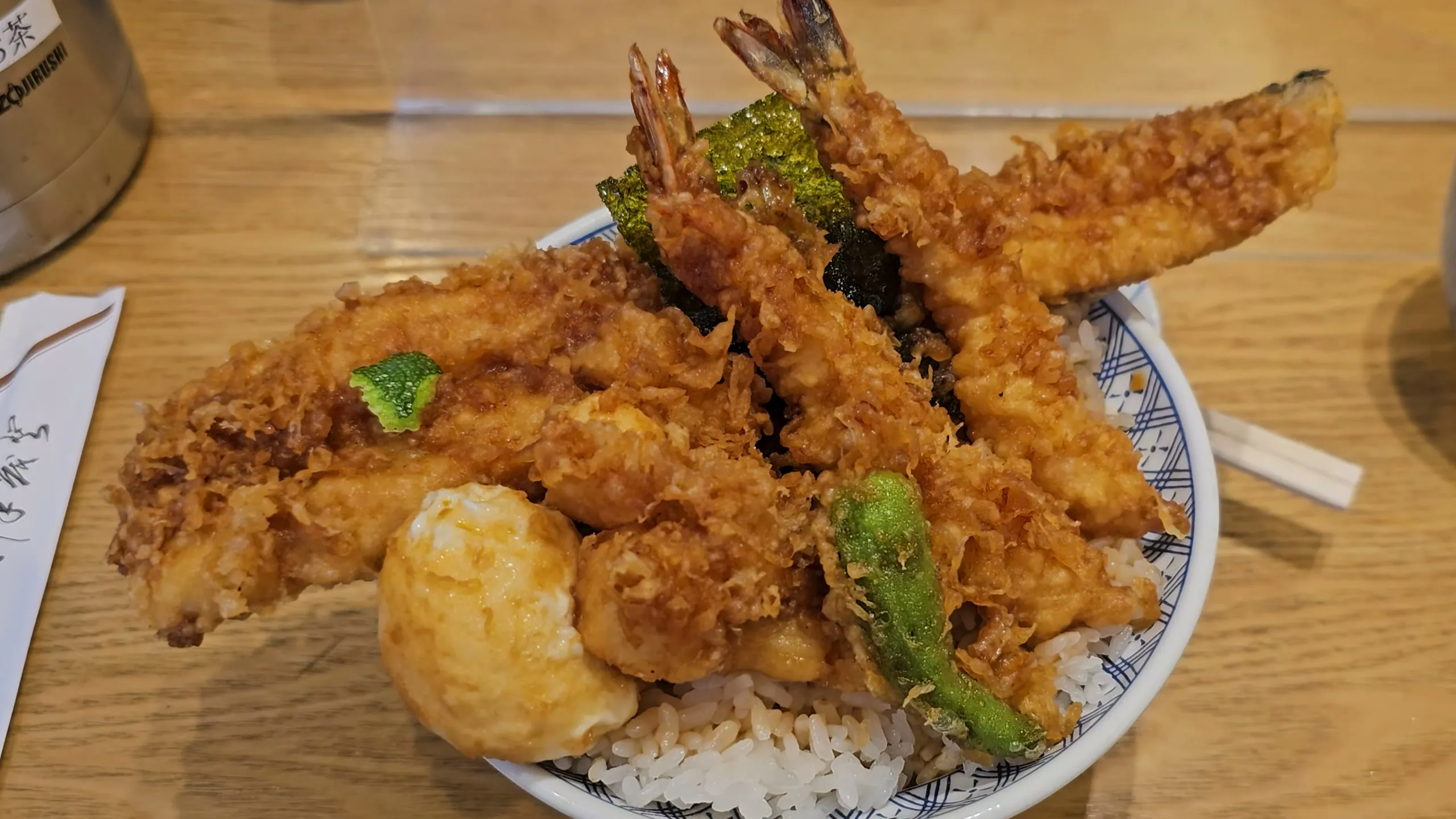 Nihonbashi, Tokyo
Kaneko Hannosuke
Sesame oil you can smell from the back of the line.
¥1,380 2024/09 videoSources
- 鮨 なんば 日比谷 Tabelog
- 鮨なんば Tokyo Midtown Hibiya
- 鮨なんば 日比谷のご予約 OMAKASE
- My 2018/05 visit (Korean) Naver Blog