I said Sushi Miura was easy to book. Then Michelin showed up.
Sushi Miura is an eight-seat counter down a back alley in Akasaka, Tokyo. Chef Kenta Miura spent 13 years at Kikunoi, the Kyoto kaiseki house, then worked at Sushi Namba. I paid ¥17,000 at his first counter in Azabu-Juban (2019/08) and ¥25,000 here (about US$180, 2023/12). The fish had gotten much better, the soup was the best thing all meal, and the nikiri was too salty. I called it easy to book. Two years later Michelin gave it a star.
monster gourmetFrom my 2023/12 video
- My share
- ¥25,000
- about US$180, dinner course, no drinks, 2023/12 video
- Highlight
- The crab shinjo soup
- Skip
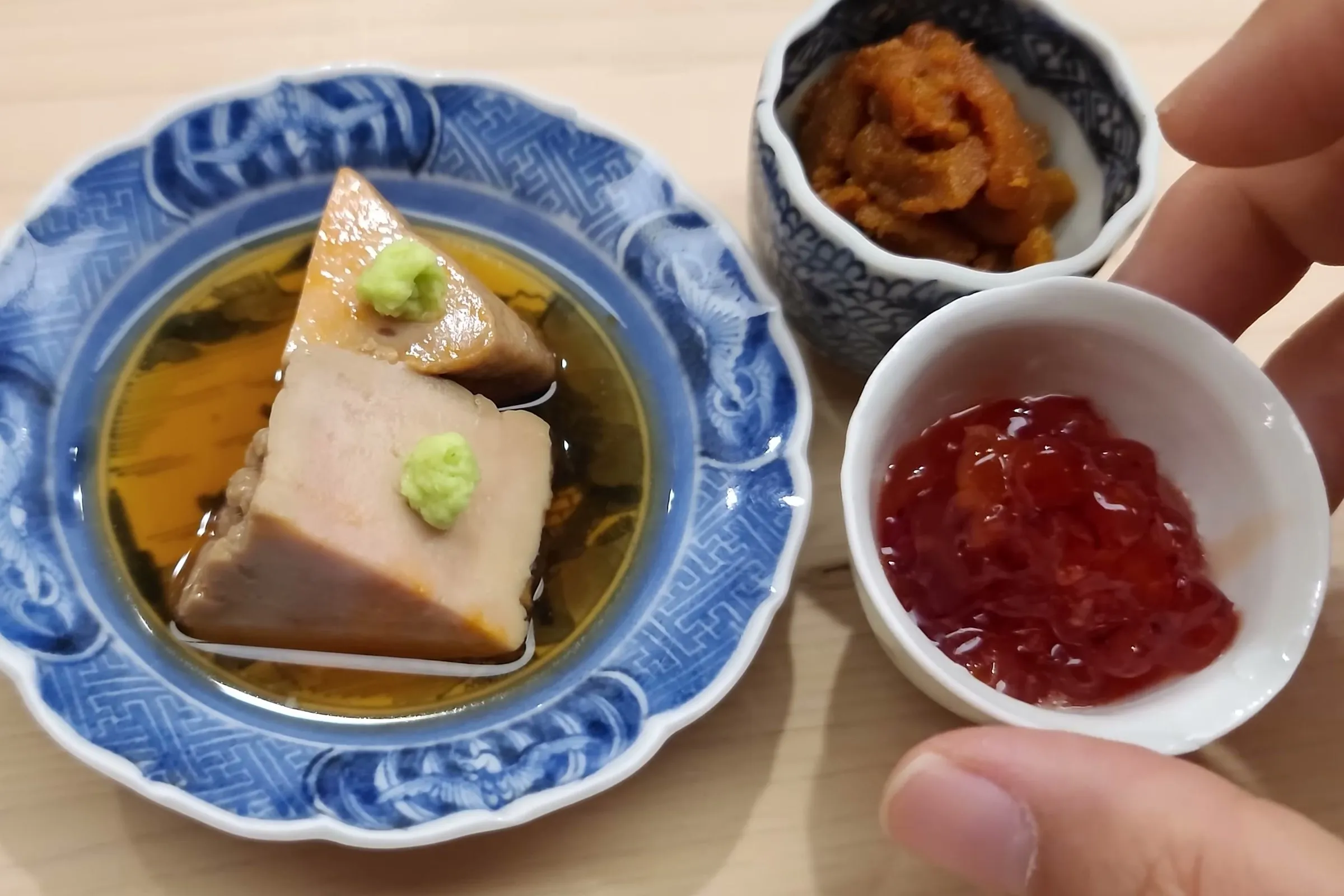
- The yuba at halftime
- Video
- 21:54
- 2023/12
- Where
- Akasaka, Tokyo
- Akasaka or Roppongi, 8 minutes’ walk
Through someone’s back door
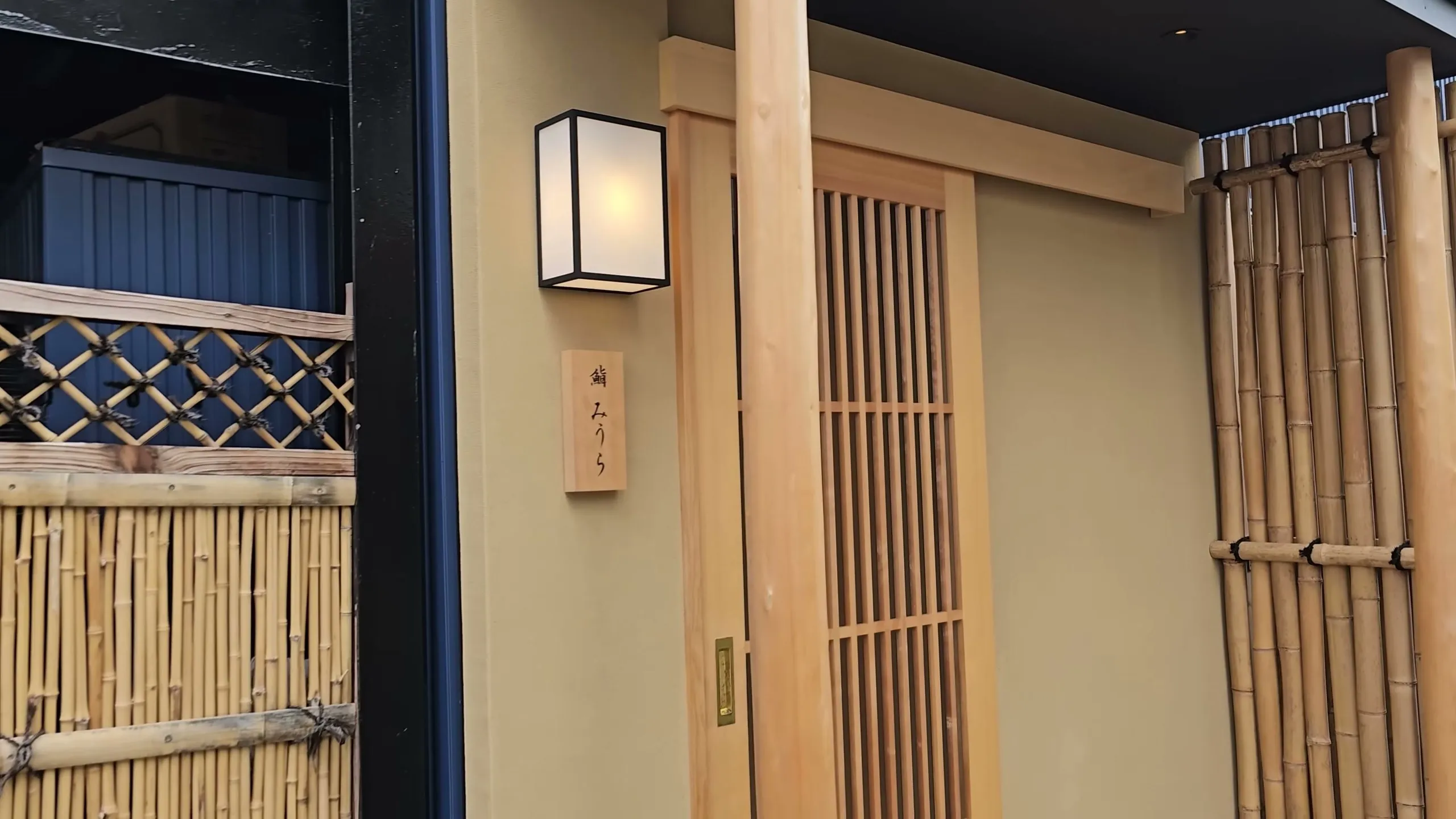
This is the new Sushi Miura in Akasaka. Some of you know the name, because I filmed the old one in Azabu-Juban back in 2019. Same handwriting on the sign.
The way in is weird. Walk from Akasaka Station with Google Maps and it takes you past somebody’s house. I opened what looked like someone’s back door, and there was Sushi Miura. When we left I found the real path, from the Roppongi side.
Kikunoi first, then Namba
Miura-san spent 13 years at Kikunoi, the famous Kyoto kaiseki house, and got close to the top at its Tokyo branch. Then he went to Sushi Namba. That’s where he met Kim Seong-bok, my favorite sushi chef in Korea, who was training there. Kim couldn’t stay in a hotel every night, so he lived at Miura’s place.
In Azabu-Juban Miura had an investor. Here he’s the owner. When I asked, he laughed and said he owes the bank a lot.
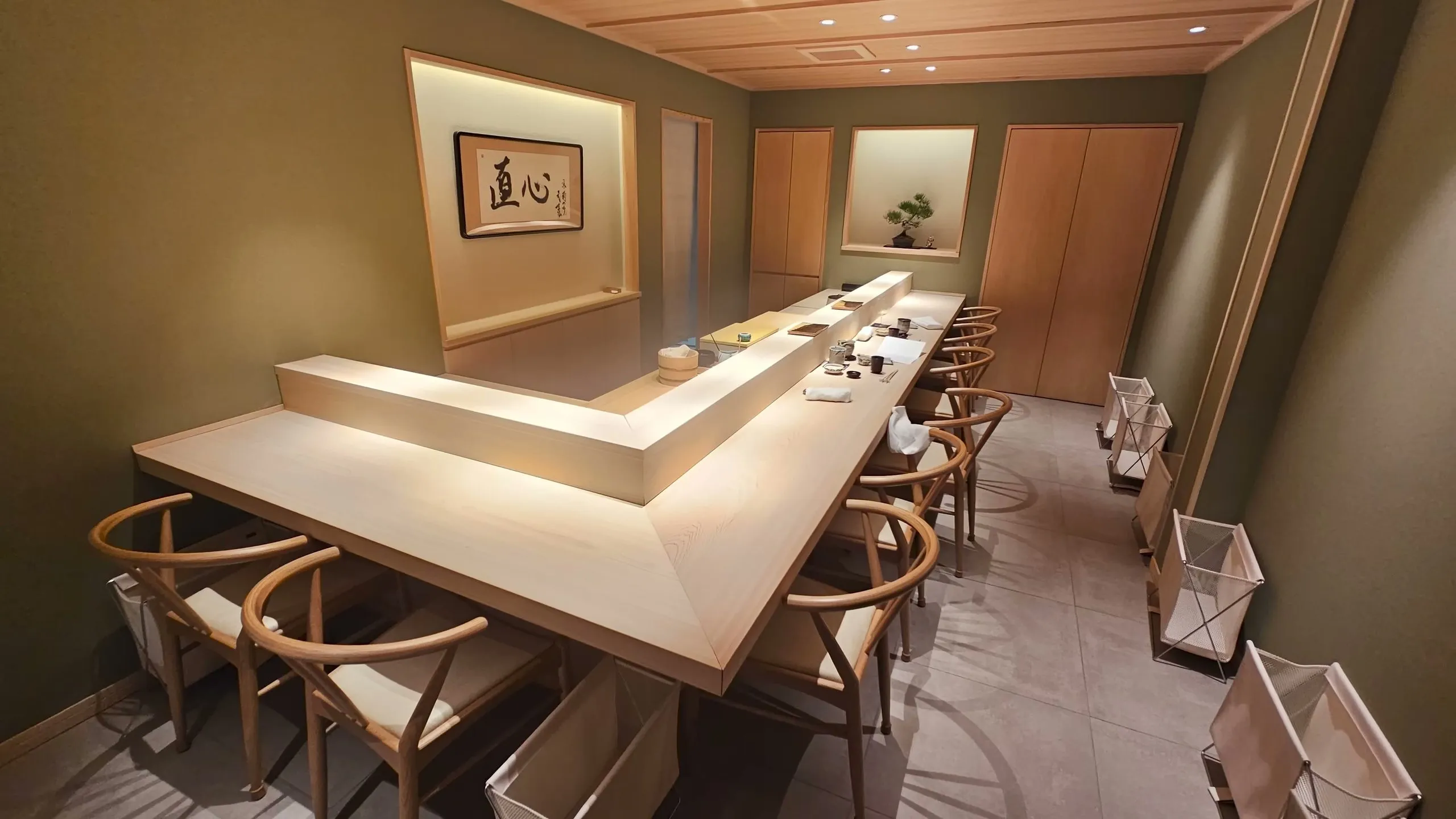
Behind the counter hangs a board from Kikunoi that reads 直心, a straight heart. He left years ago and they still look after him. He must have been good to work with.
Lunch for two, and cod milt
Only two of us at the counter. I got a little worried and asked if it was always this empty. Turns out they didn’t do lunch at all. Kim had asked for us, and Miura opened at noon just for us. I had no idea.
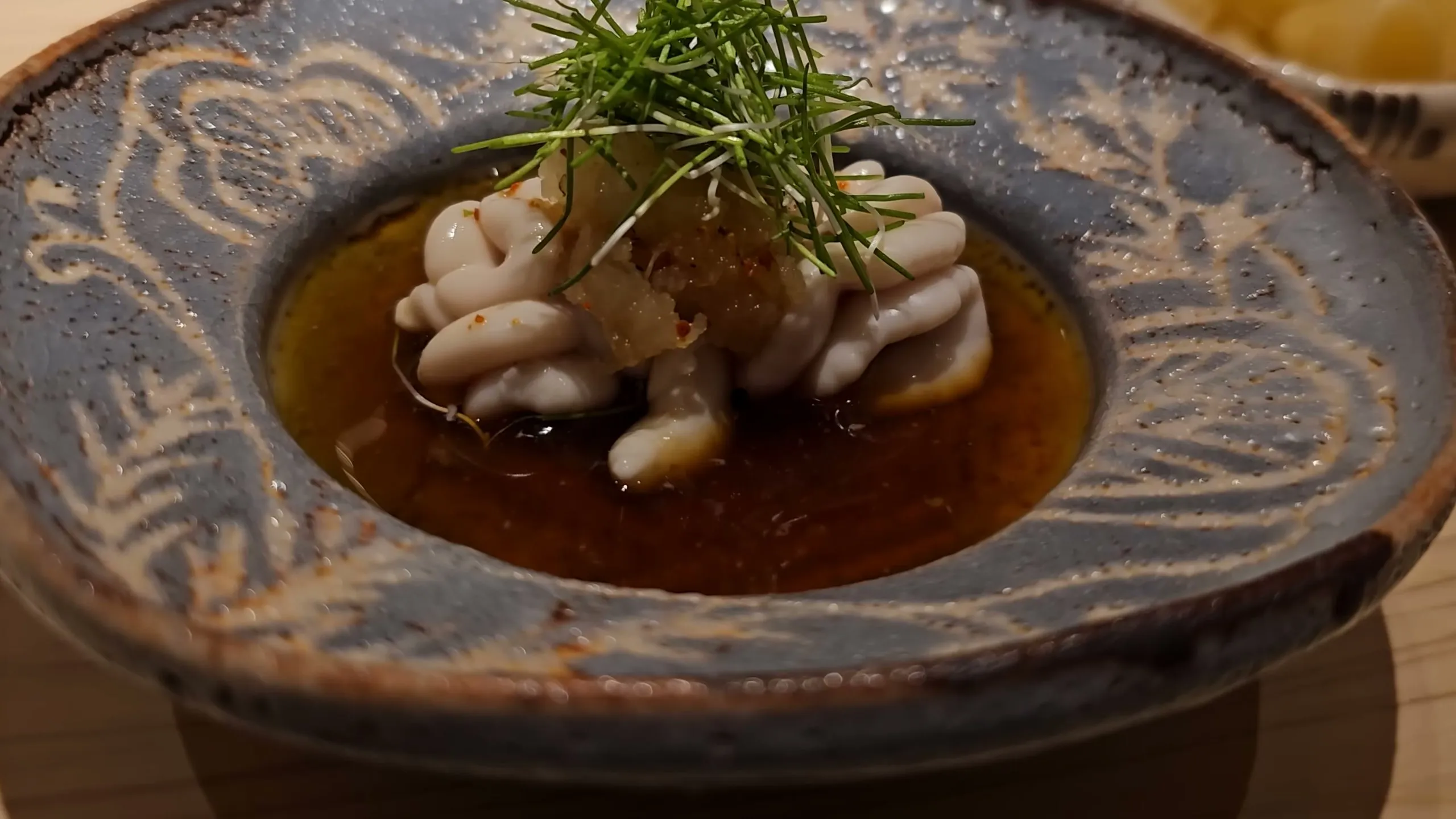
First, kumoko, cod milt, with grated daikon, menegi and ponzu. How could that be bad. The menegi wasn’t only sharp, it had a nutty smell that carried the milt’s richness a little longer.
Slow hands, better fish
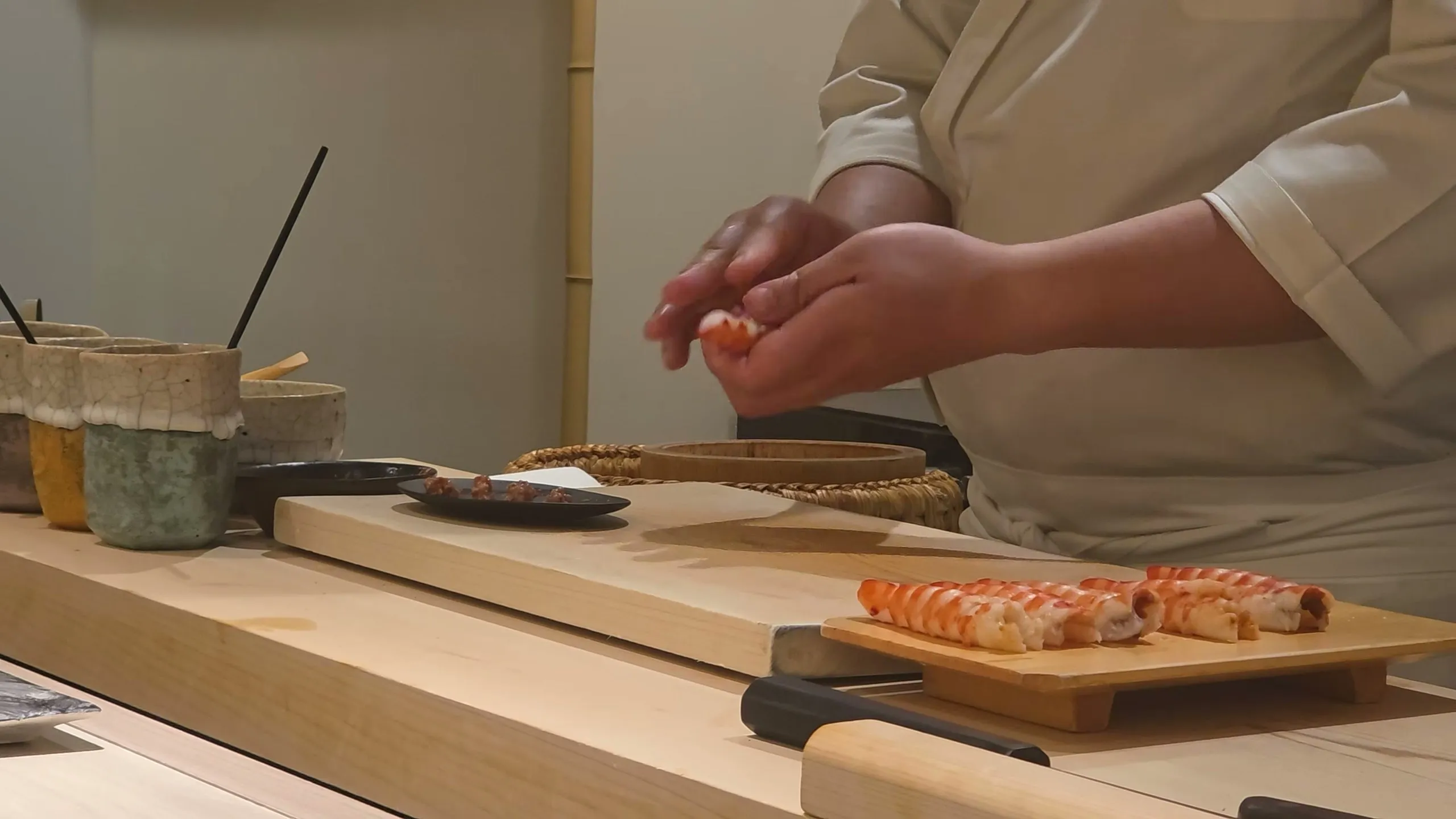
Watch him trim the ankimo, monkfish liver. Like Namba, his hands are slow and careful. He cut away bits here and there for ages before he sliced it.
Tokyo has inflation too, and almost every sushi counter has raised prices. Here the fish went up with them. I ate Namba the first night of this trip, Shimazu the second, and Miura on the third day, so the comparison was right there. Miura’s toppings didn’t lose.
In 2019 my take was good for the price. This time it was the same level as the high-end counters.
Sardine, when I wanted sanma
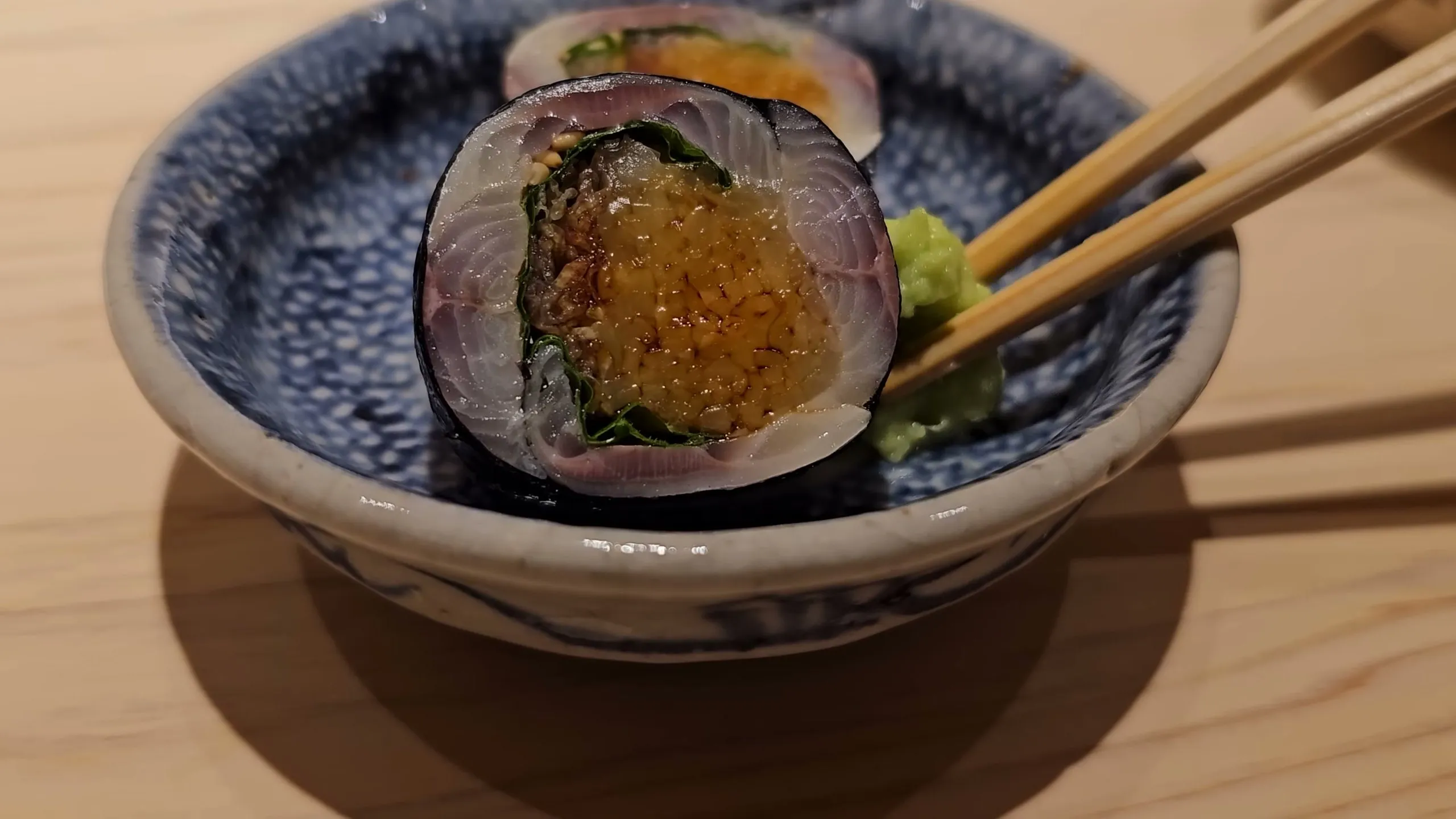
Then he took out one hikarimono, a silver fish. This was November and everywhere else was serving sanma, Pacific saury, my favorite. I got excited. Then I saw how he laid it out and knew it was iwashi, sardine, for an isobe-maki roll. A little letdown.
Herring would have been a downgrade, so sardine is fine. Herring is plenty fatty, sardine a bit more. But for flavor in the flesh it goes herring, then sardine, then sanma, which is much stronger than both.
He and Namba both care a lot about looks, and the cut face was pretty. Way more ginger than myoga, which can take over if there’s too much, and a good amount of shiso. Great ratio. It wasn’t the best isobe-maki I’ve had, though.
The soup is the Kikunoi part
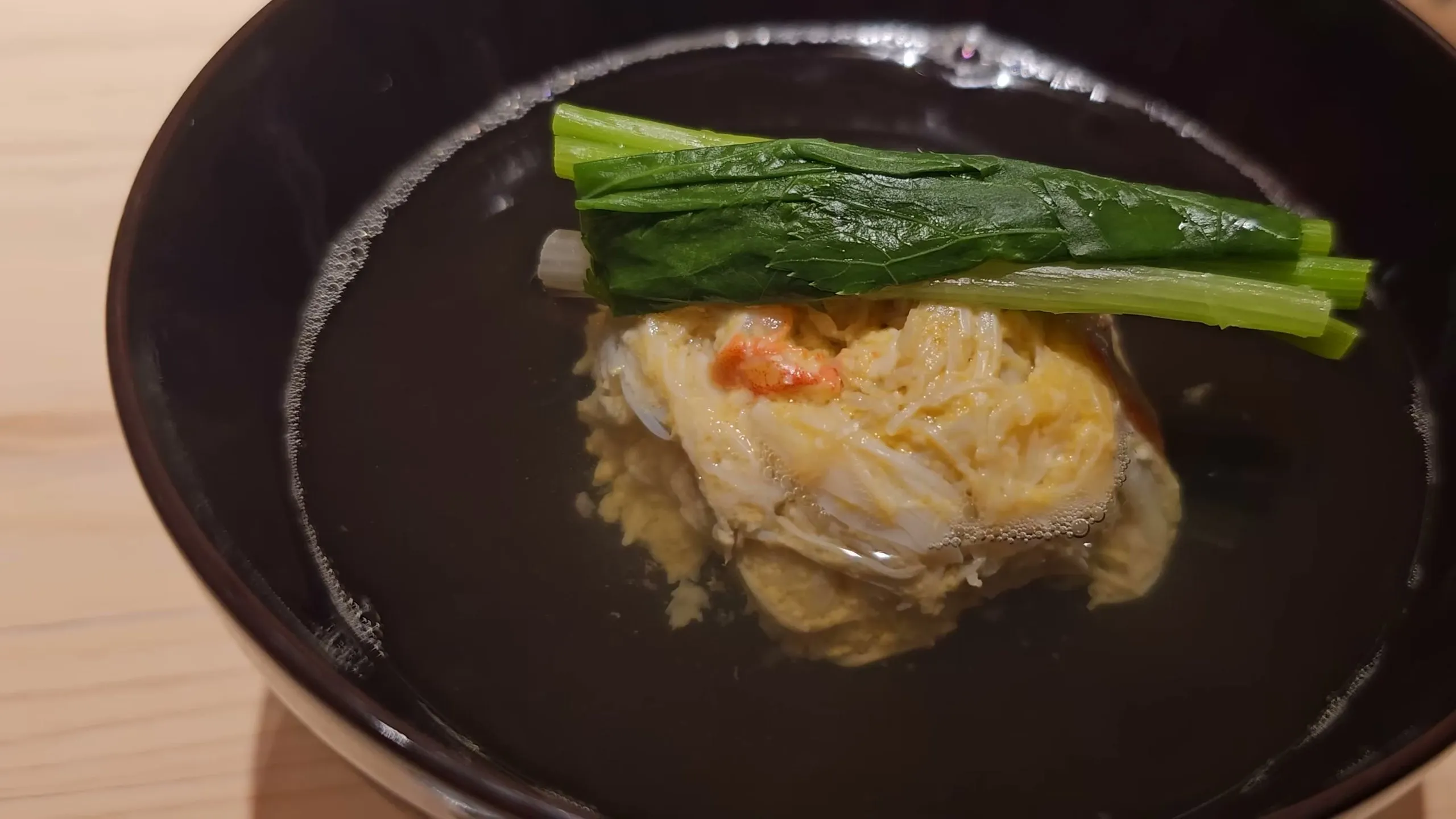
This is where he’s strongest. Kaiseki houses live and die by their broth. Hatou, which I raved about in 2023, also comes from a kaiseki background and also nails soup, but Hatou’s broth tastes strange, in a good way, unlike anything else.
Miura’s is the obvious kind of delicious. Crab shinjo in clear dashi. So good that I asked him twice if it was just ichiban dashi, the basic first stock of Japanese cooking. Deep and clean for something that simple.
Hachinohe tuna, and no Oma
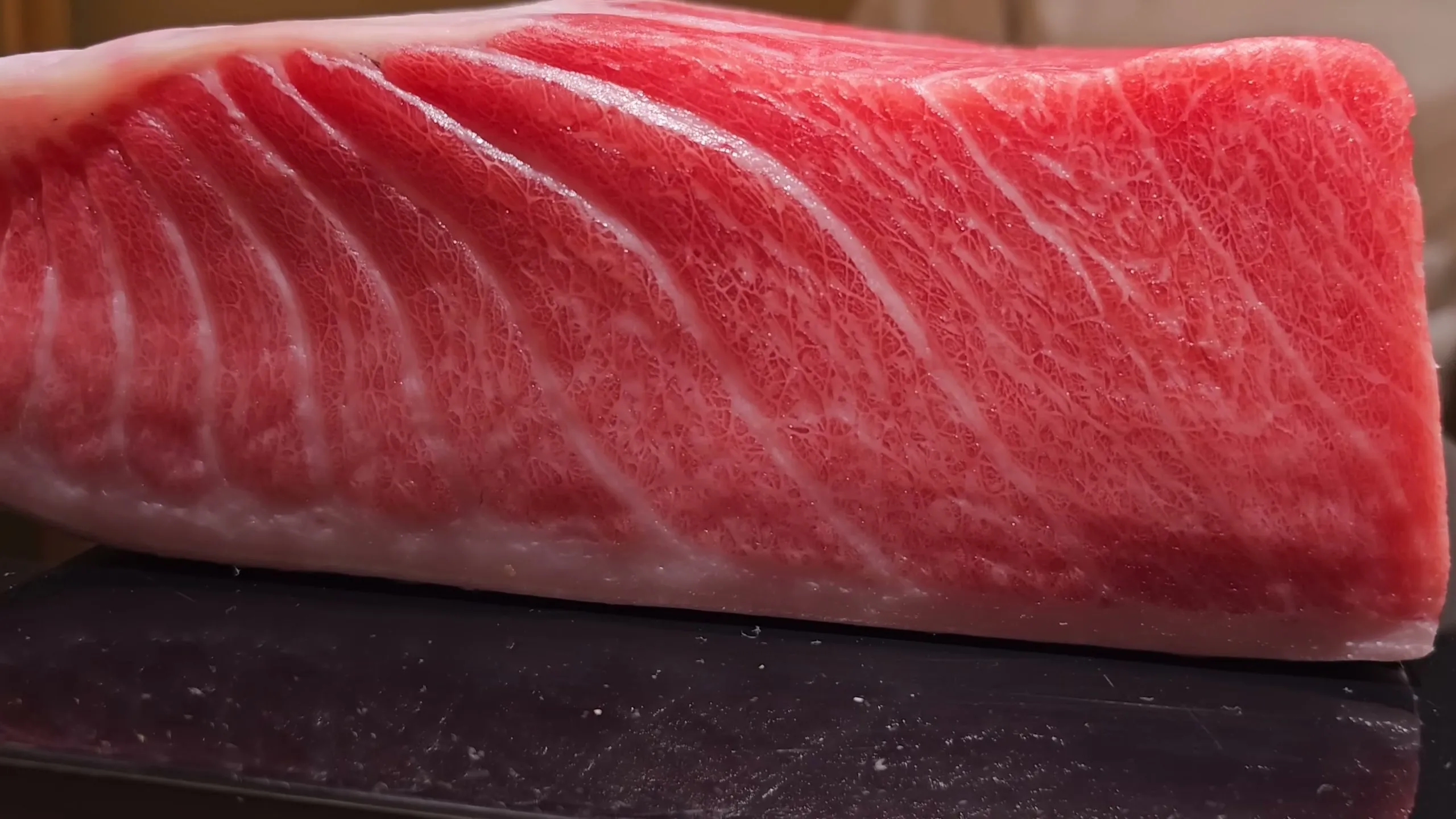
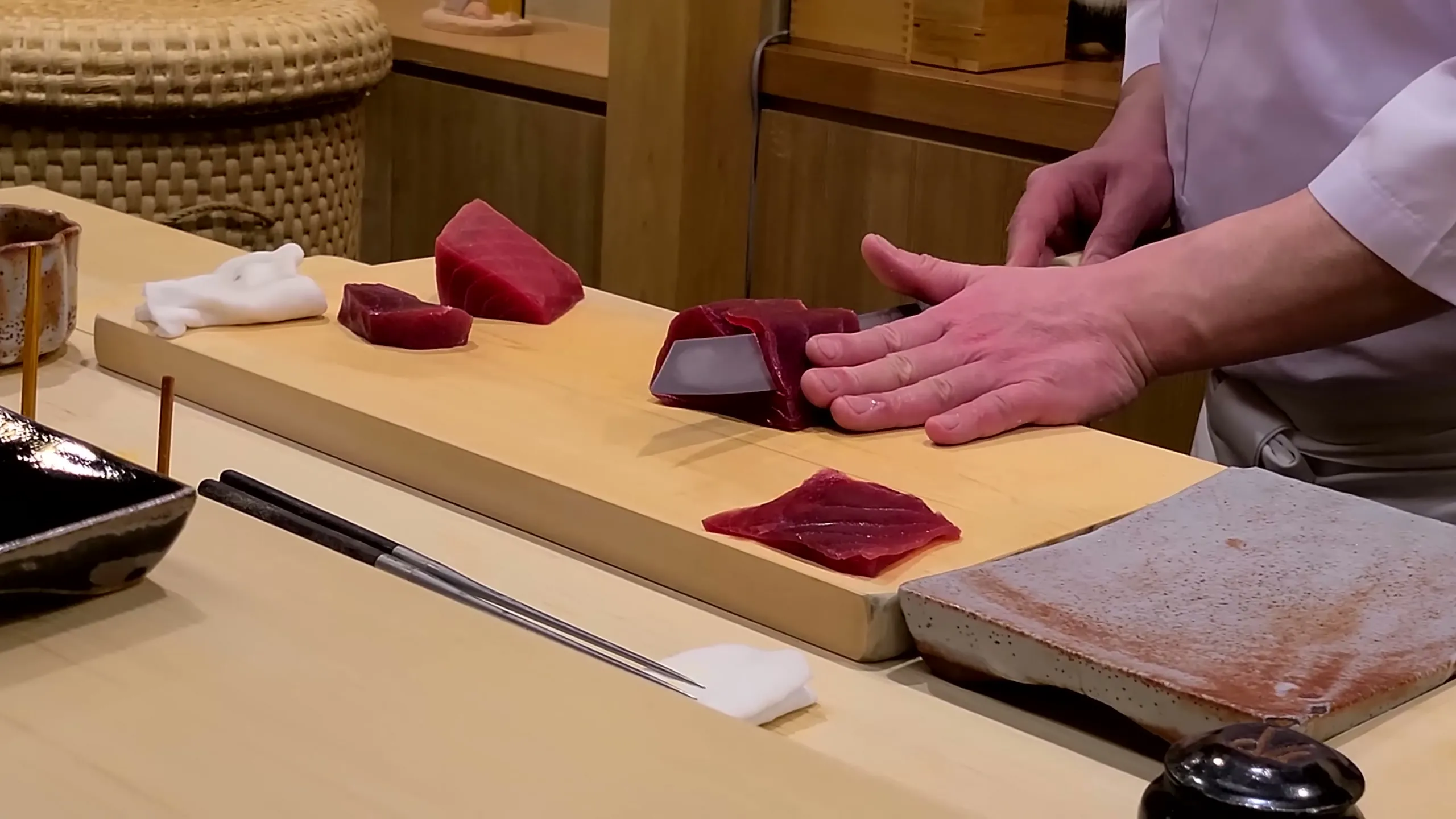
He had to show off the tuna. This one was from Hachinohe in Aomori, through Hicho. Along with Ishiji, the broker famous for supplying Kiyota, Hicho is one of the oldest tuna brokers around.
Oma tuna was in season, and Shimazu had served it the night before. Of course it was the best tuna of the trip. Namba and Miura both skip Oma at this time of year. Miura said Oma’s aroma isn’t great at this time of year. Every chef who brags about their tuna has a different answer for when Oma is best.
Pomfret, the rice-stealer
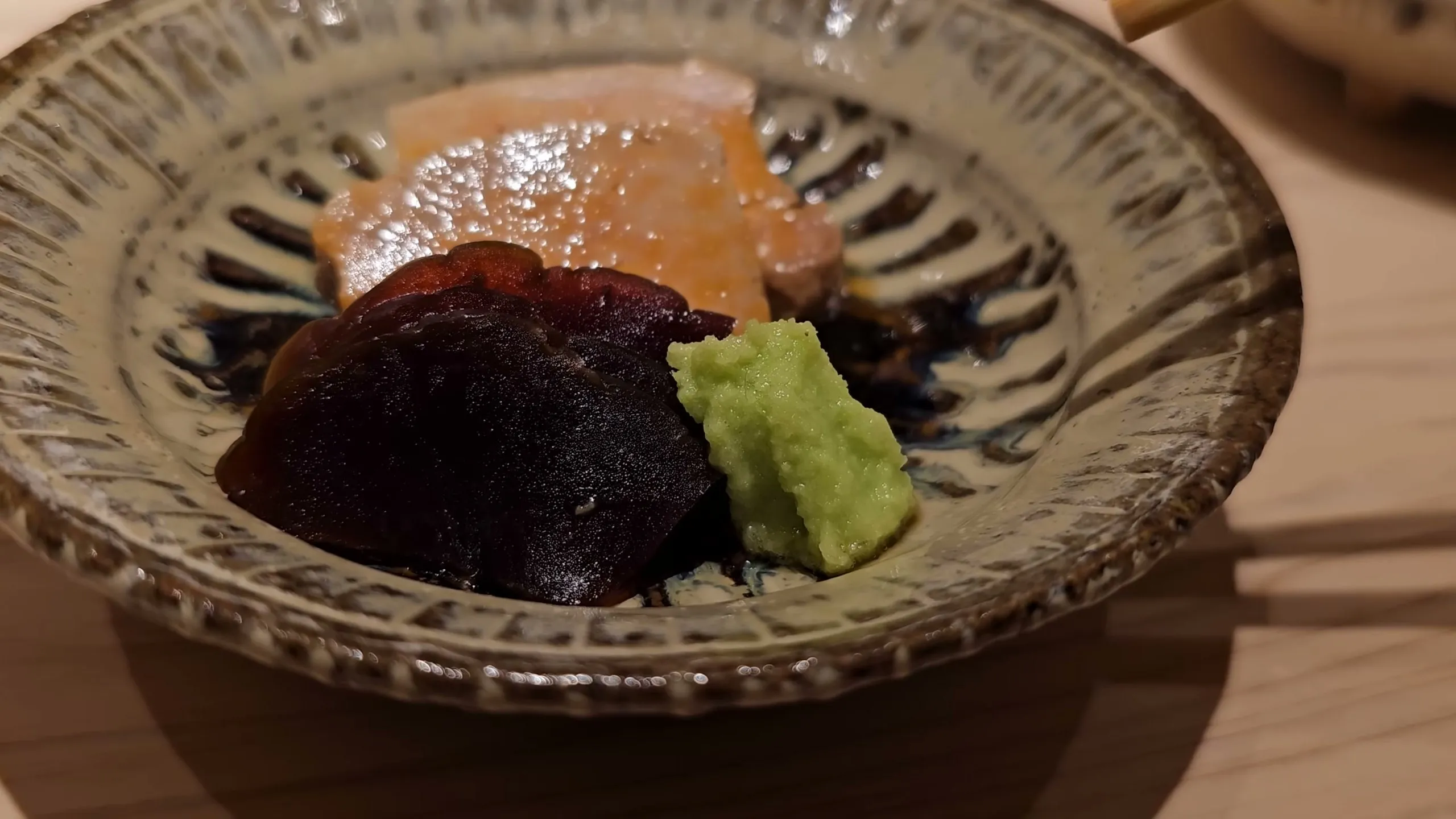
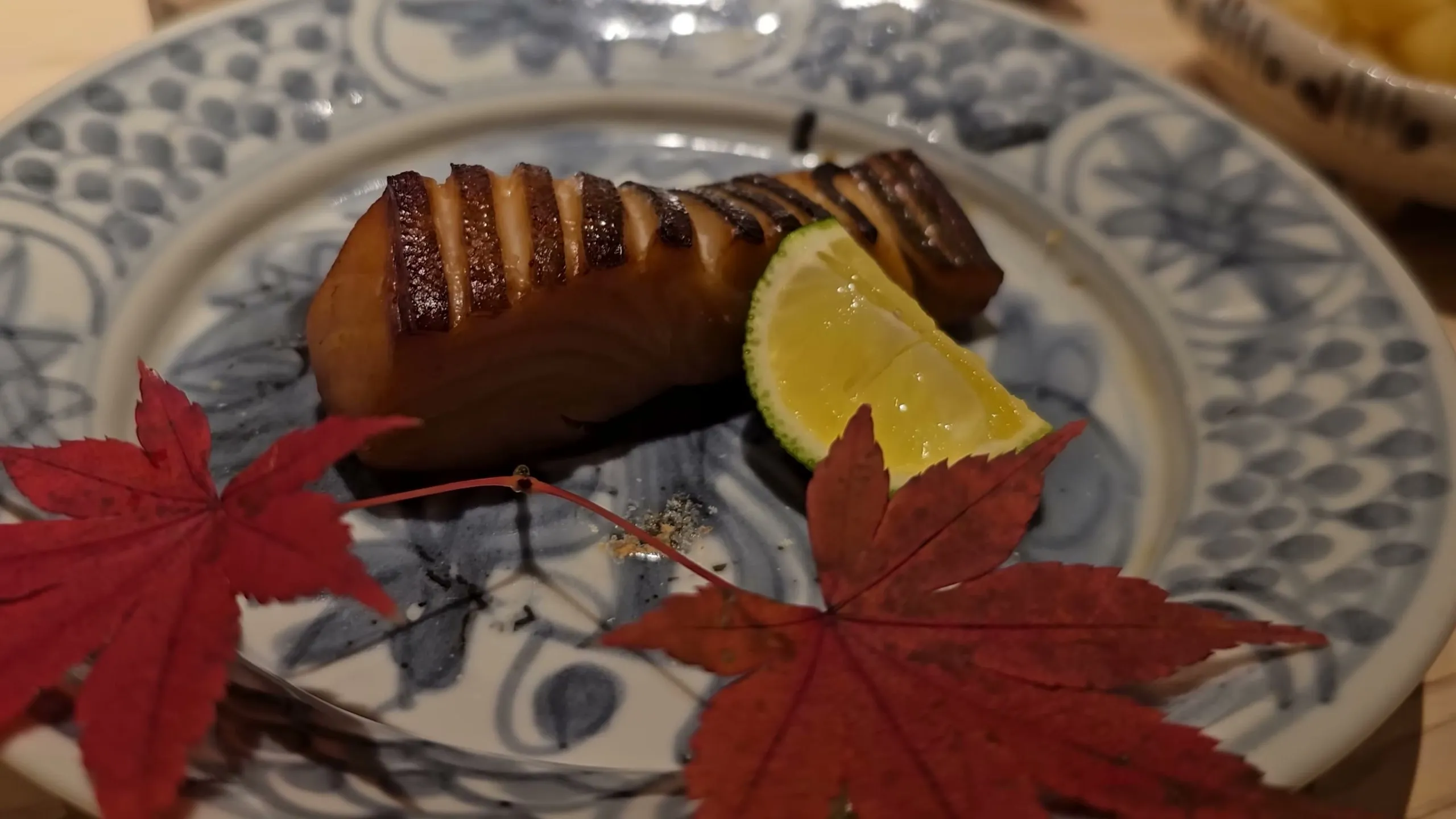
Usually the grilled course comes right before the sushi. Here it was managatsuo, silver pomfret, yuan-yaki, brushed with sweet soy again and again while it grills. If you’ve had glazed Chilean sea bass, it’s that sweet note.
It made me want a bowl of rice so badly.
The rice grew up
I was worried about the rice. In Azabu-Juban, Miura used Namba’s rice almost as it was. Early Namba went through several versions, and one was sweet, almost like yakbap, Korean sweet rice. Old Miura’s rice tasted like that, and it wasn’t my style.
This time it was seasoned just right, and the vinegar didn’t jump out. Nothing anyone would argue about. It’s moved away from Namba.
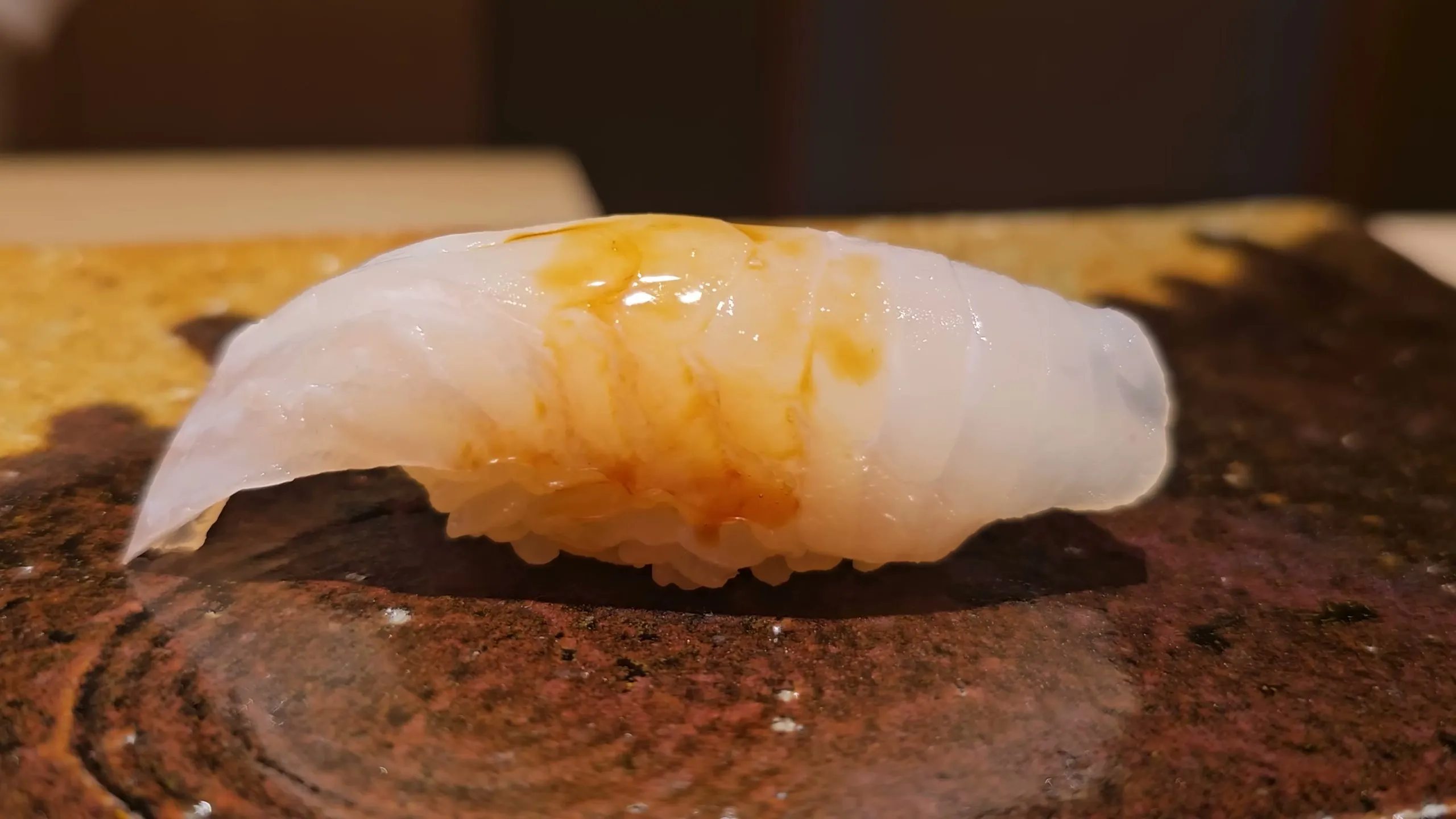
First white fish: matsukawa karei, barfin flounder, a pricey one. Years ago a chef at Kiyota told me matsukawa smells, so it can’t go on nigiri. I’ve had it at Sugita and at plenty of great counters since, and it’s always delicious. It’s expensive for a reason.
Awkward hands, great texture
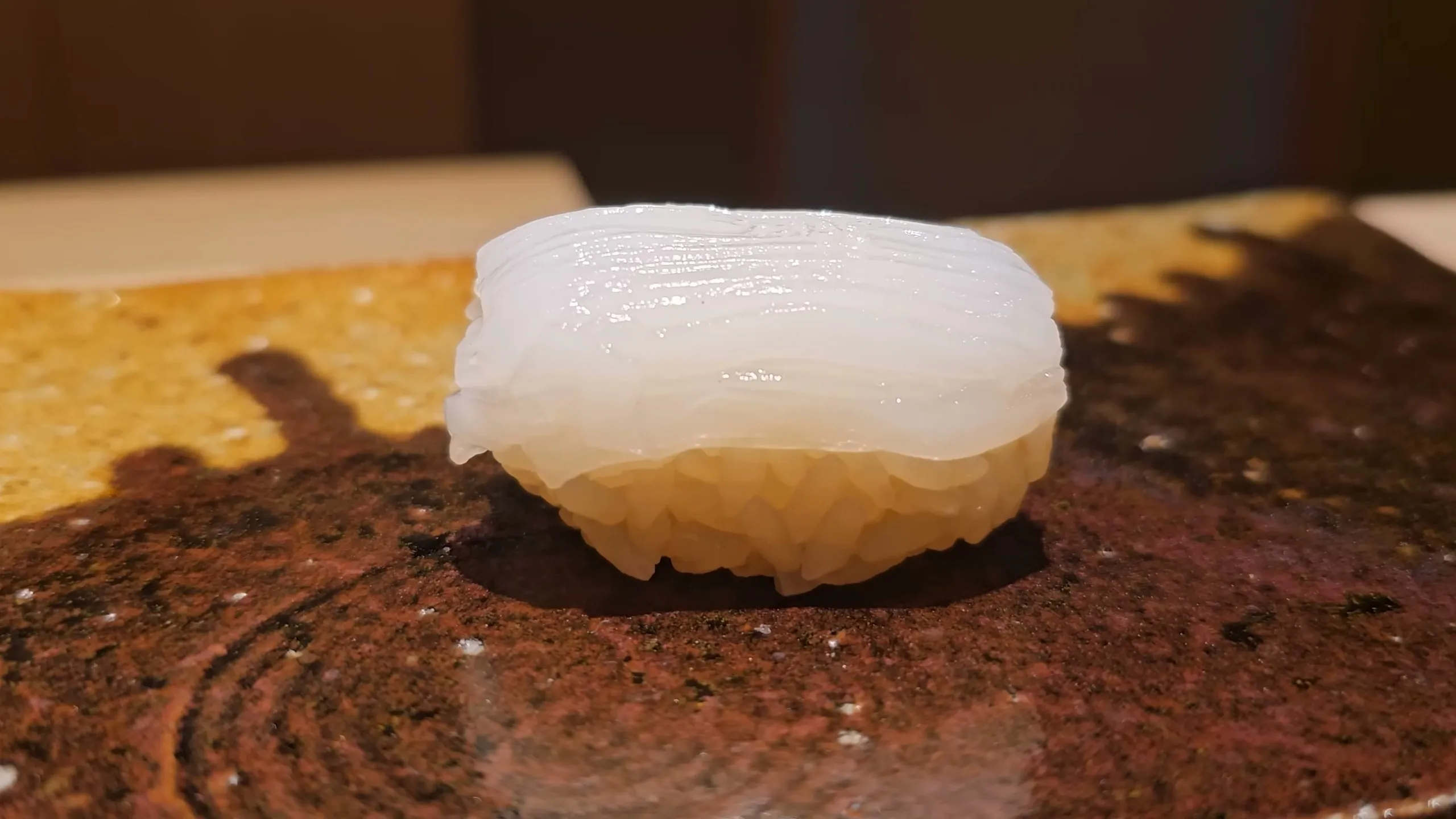
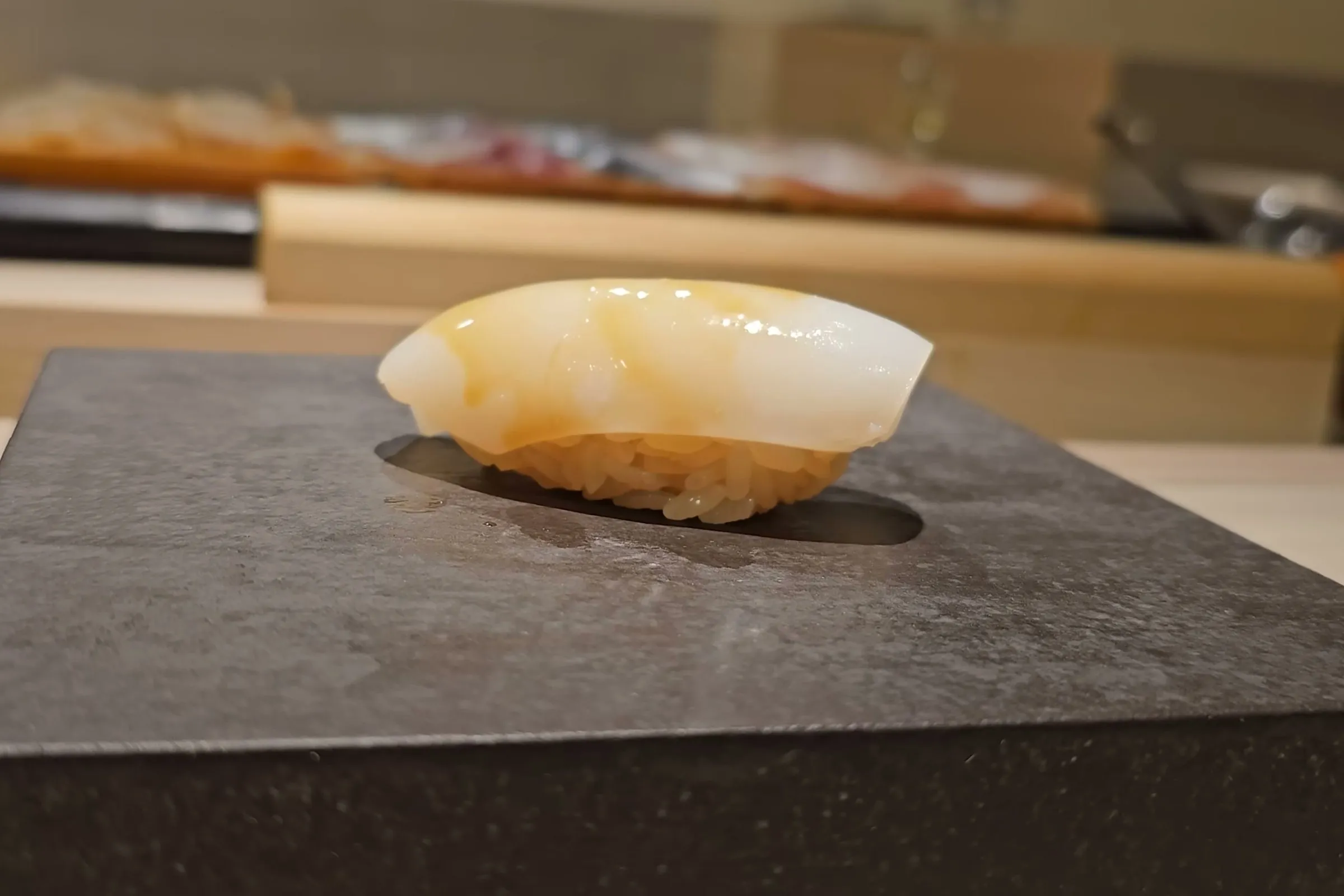
Shiro-ika, swordtip squid, cut into fine strips the Namba way so it falls apart nicely in your mouth.
Watch Miura form his nigiri. It looks shaky, almost clumsy, and slow. But the rice loosens in your mouth beautifully, so the squid’s texture stood out even more than at Namba.
The one problem
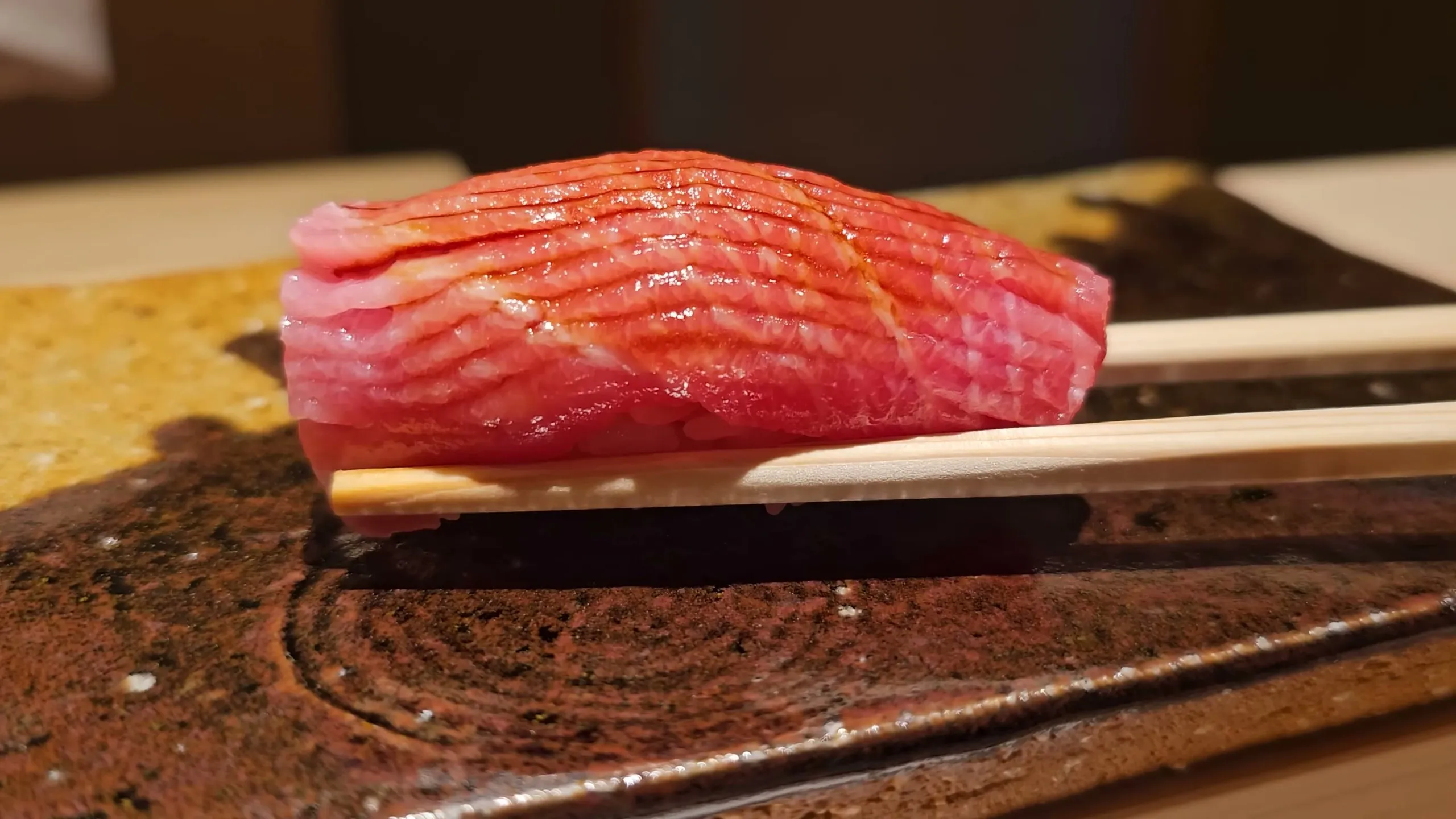
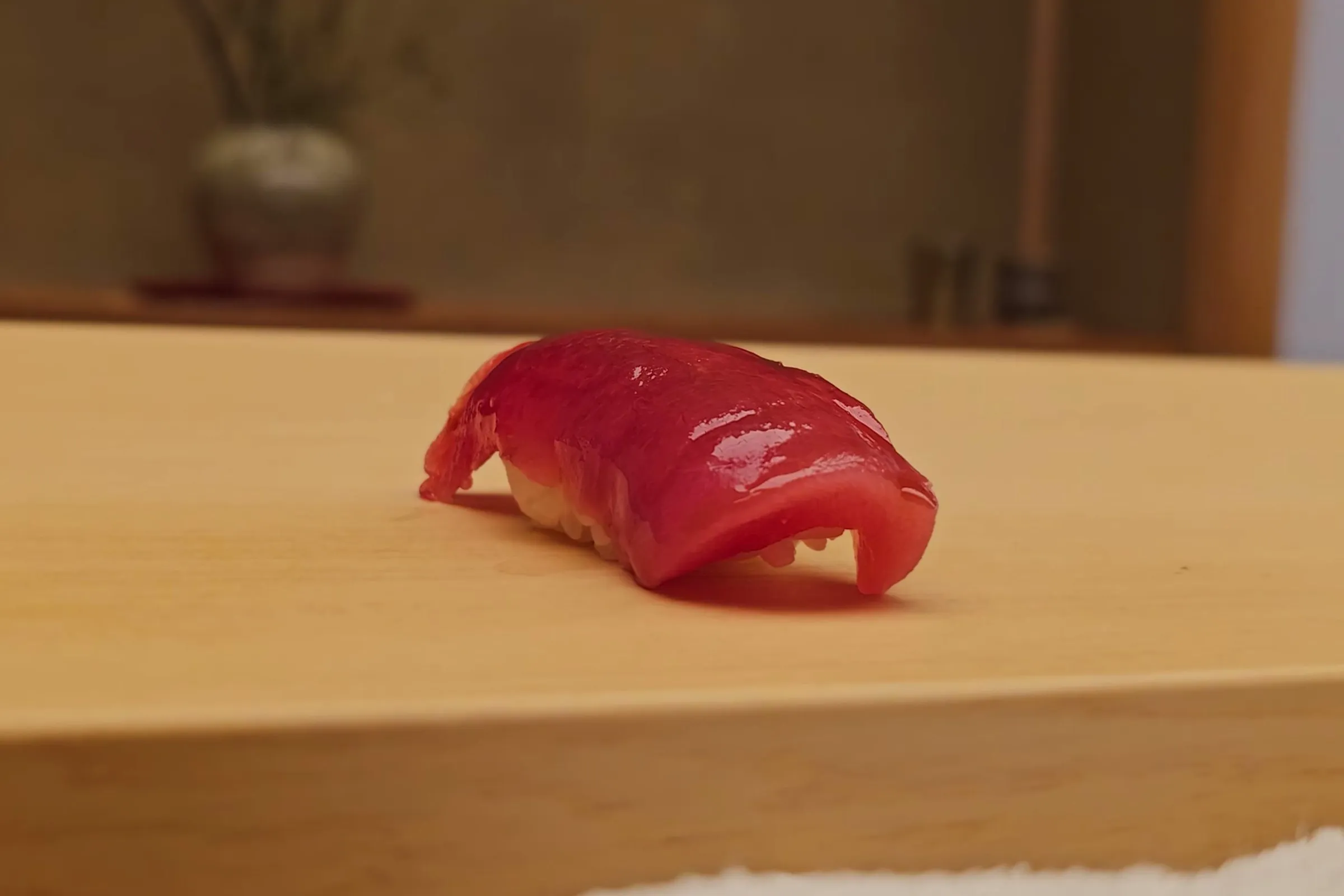
Then the zuke akami got its brush of nikiri, the soy glaze, and I felt it right away. Salty. Not the rice, the nikiri.
Good soy has saltiness, umami, a little sweetness, a nutty note. This one tasted concentrated, but only the salt got stronger. Skip it and you miss something, brush it on and it’s too salty. Change the soy or blend it. With the price and the service, that’s the only thing I can fault.
The otoro got lots of fine cuts, and they fall apart in your mouth. I didn’t expect much from the tuna at this price, and it was good. The negitoro roll got nikiri twice, once before rolling and once on the end. You can guess.
Halftime, and the second half
A glass of citrus juice, sweet more than sour, like the one at Ranmaru. It reminded me of the orange juice I love at Thipsamai in Bangkok, but not as good. Then a thin little dish of yuba and mibuna greens in the middle of the nigiri. I still don’t get it. Sushi Dokoro Yamato did the same. Maybe it’s halftime.
Hokkigai, surf clam. I’ve never had a fishy one. The kohada was so big it was almost nakazumi. It smelled like kohada for sure, and walked the line between the strong flavor I like and too much. People who love kohada really enjoyed it.
Kawahagi, filefish, with its liver in chunks instead of a paste. I keep saying it: the flesh is texture, the liver is the flavor. Good liver and lots of it means a more intense piece.
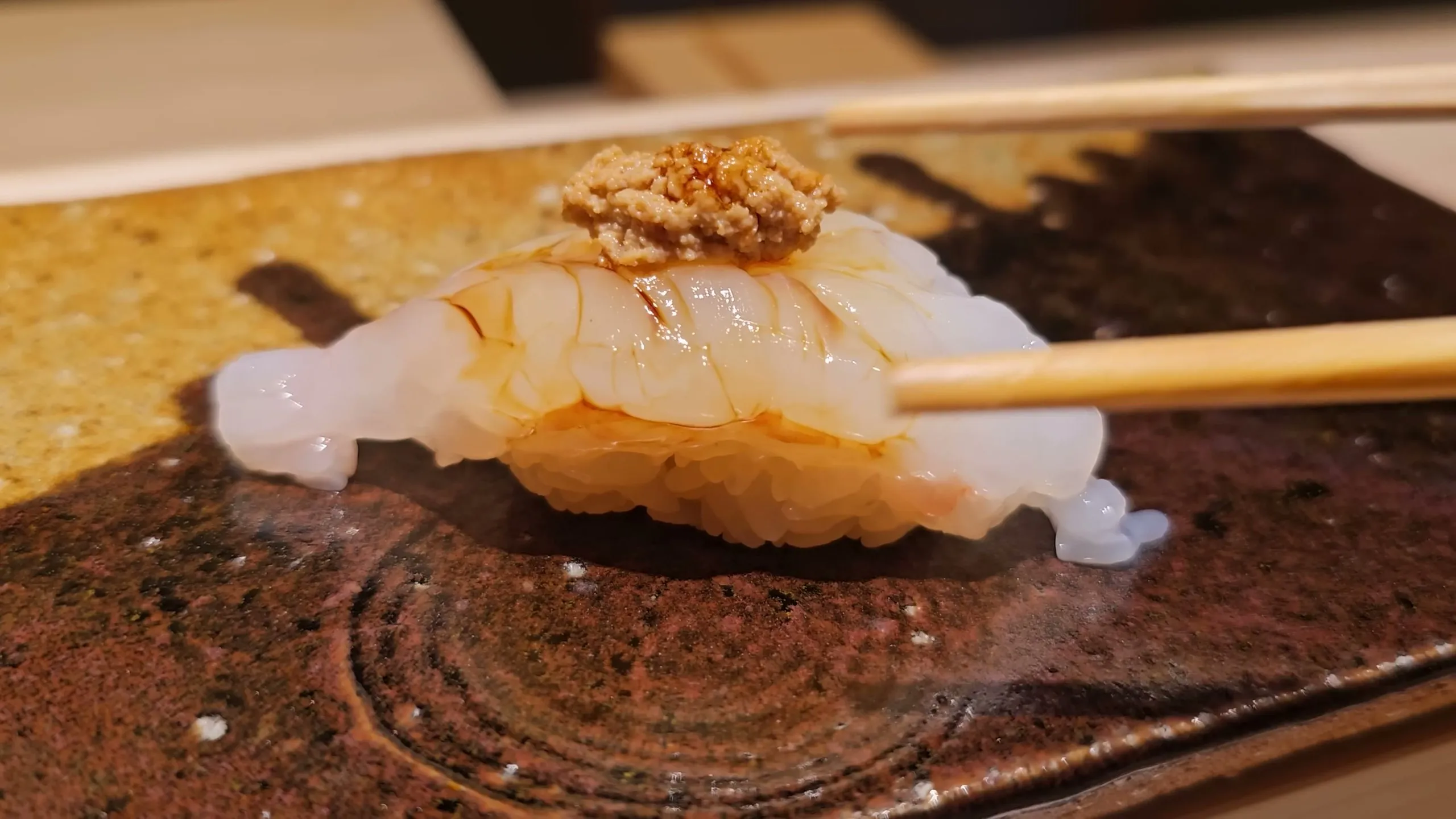
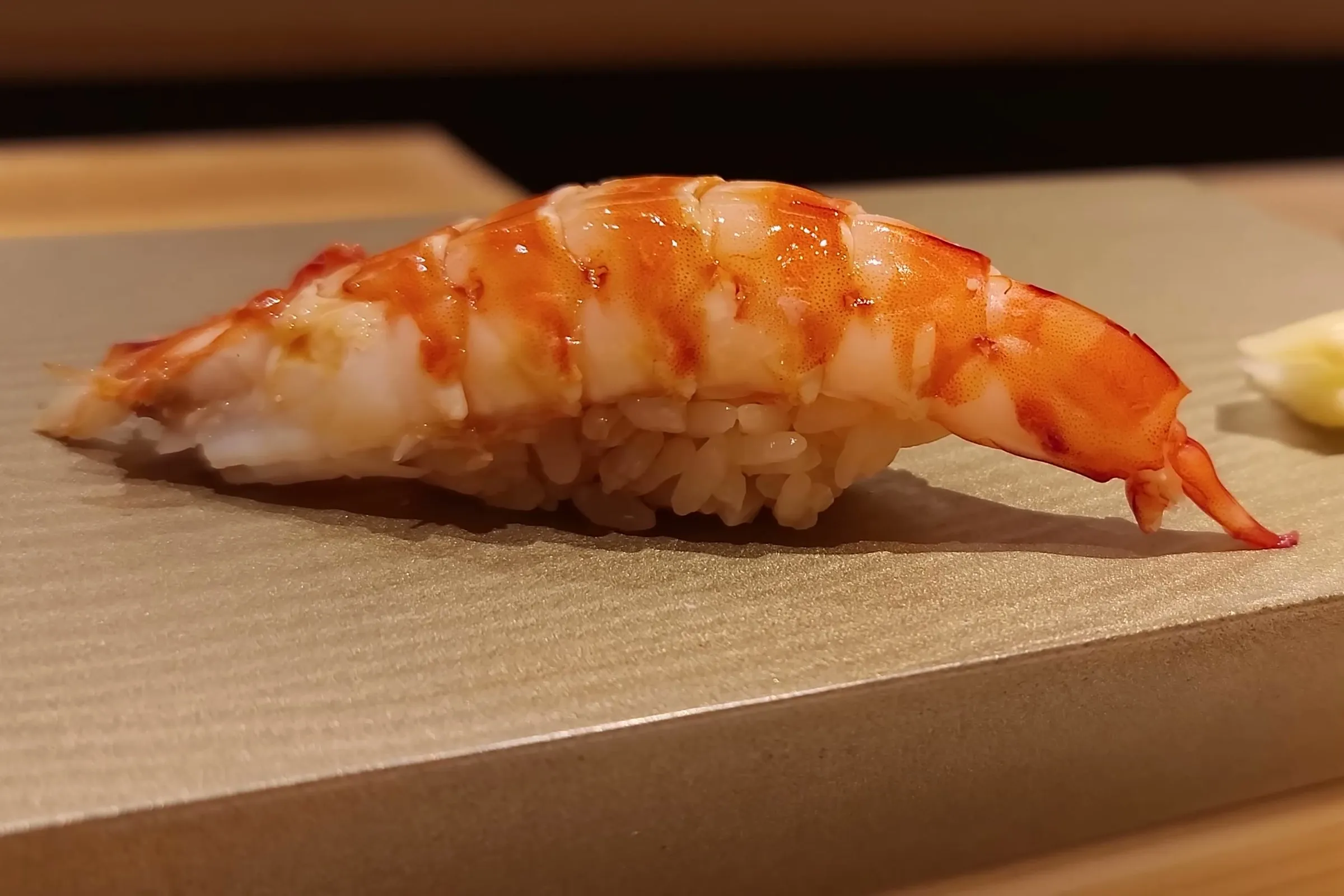
Botan ebi topped with a crumble of its own shell and innards. That’s a Namba signature, though it didn’t come out when I was at Namba this trip. Korean chefs who trained there took it home. If you like nutty shrimp more than sweet, this is the fix.
Cucumber like paper
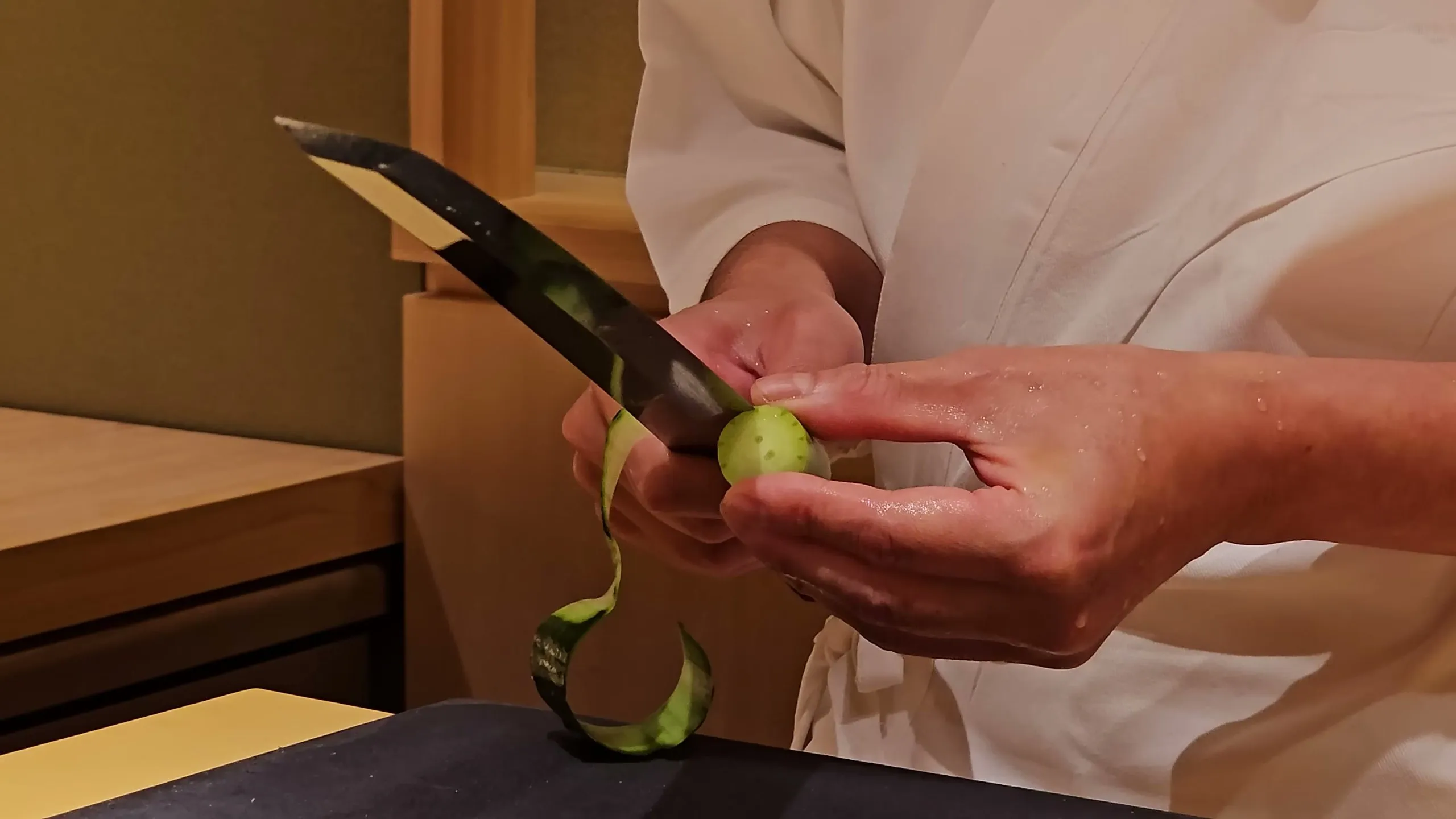
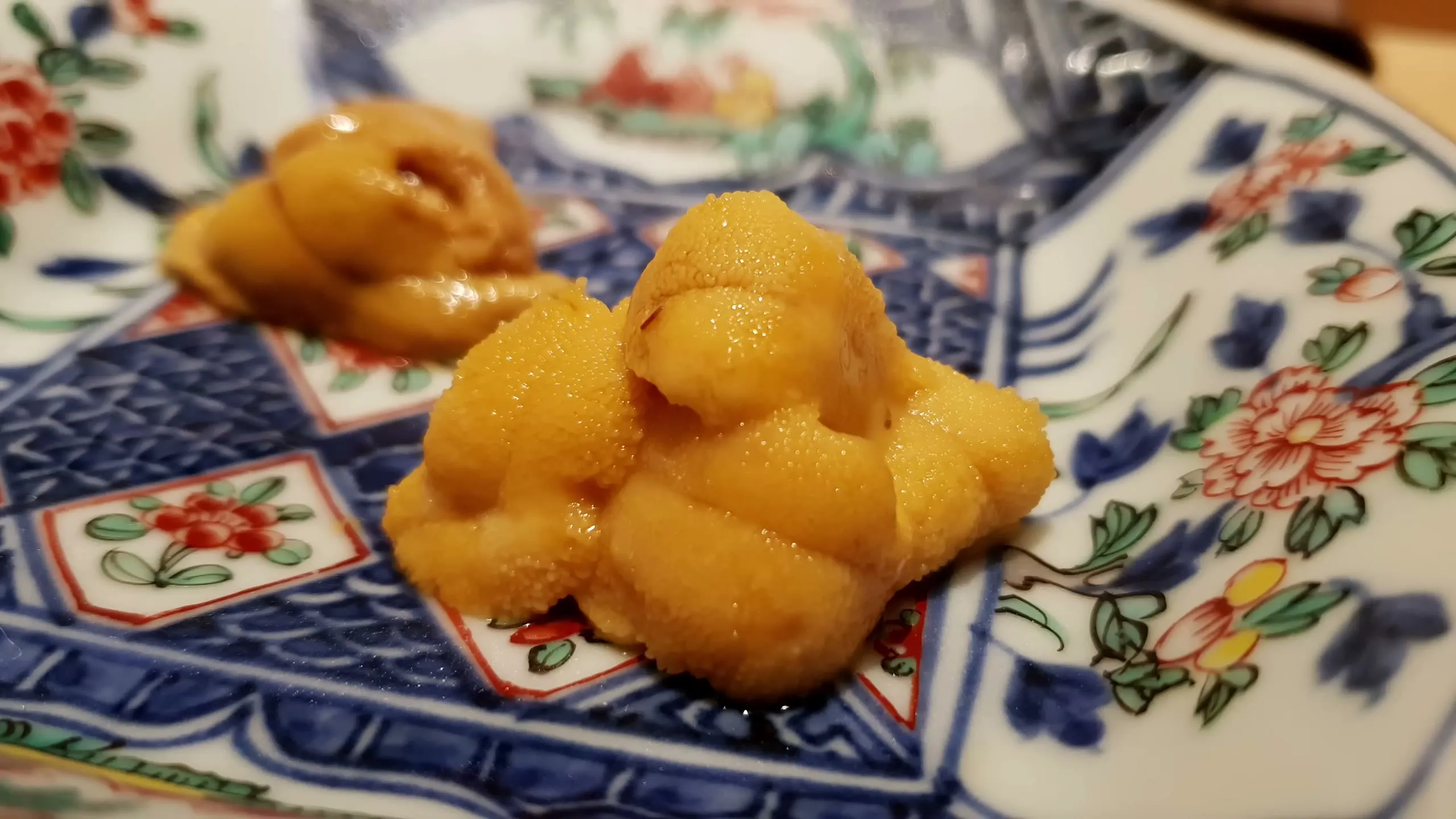
The uni was from Hokkaido, of course. Then something that shocked me. He peeled the cucumber into one sheet, so thin and so even you could almost see the board through it. Chefs in Korea peel cucumber this way too, but I’ve never seen a sheet this thin and even. That takes serious knife skill.
Is it necessary? It worked. The ratio of cucumber to anago and the bite were right on. This one gets tsume instead of nikiri, so the salt problem disappears, and he sprinkled sansho so you could see it. I love that.
Then miso soup, and again the Kikunoi thing. My friend had said Kikunoi alumni never impressed him. This guy does soup right. I added an engawa from the matsukawa karei, the fin muscle, crunchy and fatty. Tamago like crème brûlée to finish.
Back in Azabu-Juban, 2019
My first visit was the old Sushi Miura in Azabu-Juban, on the fourth floor of a small building, in my 2019/08 video. No Michelin, no Tabelog top list. Dinner was ¥17,000 (about US$160), half of Arai or Namba back then.
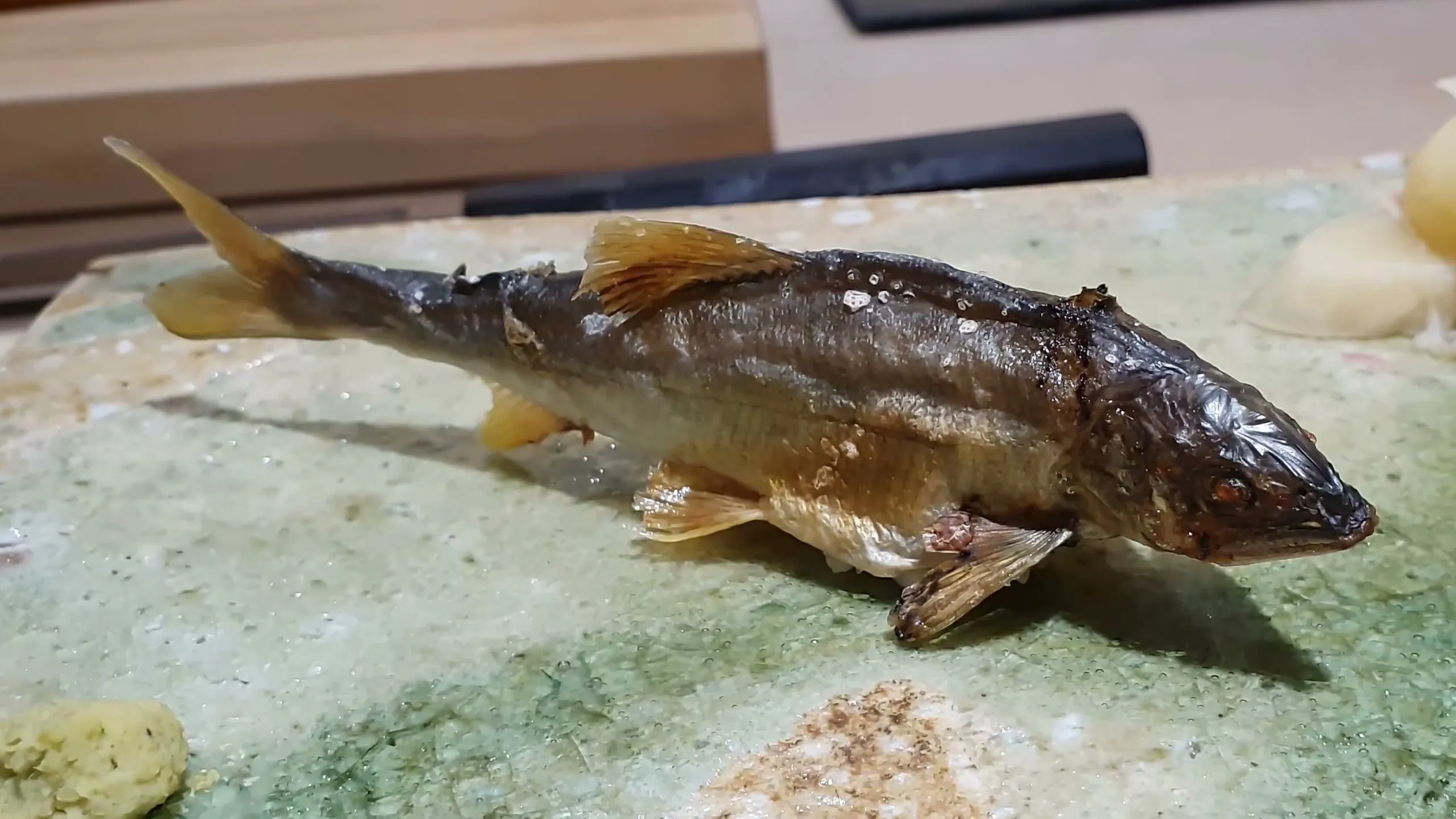
The best piece was ayu, sweetfish. They swam around in a wooden tub, he grilled one on a ridiculous little grill, split it and stuffed it with rice. My first freshwater nigiri. The bitter head and innards were my favorite part.
Tuna and uni are where cheap counters usually fall short. His were great, and he piled on way too much uni. Same brand as the uni I’d had at Takagaki no Sushi that April. The soy was too sweet that night, the opposite of the salty nikiri now. And the shari tasted too familiar. The fish made up for it.
¥25,000, and now ¥33,000
2023/12 video
¥25,000 a person (about US$180, 2023/12). One dinner omakase, no lunch menu back then. A juice and one extra piece went on top.
In 2019/08 at Azabu-Juban it was ¥17,000. When I checked in 2026/10, TableCheck listed the dinner omakase at ¥33,000 and a lunch omakase at ¥24,000, tax and service included.
What Sushi Miura has cost me, visit by visit
2 visits where I said the bill on camera. ¥17,000 in 2019/08, ¥25,000 in 2023/12. Up 47%.
Per person, the course price I said on camera. Extras and drinks aren’t in (I don’t drink). Each month is when that video came out.
Would I go back?
Yes. Fix the nikiri and I’d have nothing to complain about. The rice, the fish, the soup and the price were all good.
I said it was the counter to slot in when a trip is built around hard-to-book places and you need one more good meal. Then Michelin gave it a star for 2026, so it won’t stay easy for long. Still cheaper than the big names. The end.
How to book
How I booked
Both of my visits came through Kim Seong-bok, the Korean sushi chef who trained with Miura at Sushi Namba. In 2023 Miura opened at lunch just for the two of us. I’ve never booked it myself.
- TableCheck
The restaurant’s own site says it takes bookings online only and links here. When I checked: dinner omakase ¥33,000 and lunch omakase ¥24,000, tax and service included, paid in advance online. Lunch runs Tuesday to Sunday. If you’re 30 minutes late and they can’t reach you, the booking is cancelled. They don’t take guests who can’t eat raw fish, and boards and pots are shared, so severe allergies are a no.
- OMAKASE (omakaseje.com)
The English version of the official site sends you here instead. Prices show in dollars: about $221 for dinner, $158 for the lunch omakase, and $126 for a cheaper lunch course made mostly by the second chef. The listing says English isn’t available at the counter. Business casual, no T-shirts, shorts or sandals, and no heavy perfume. 18 and over. Closed Mondays.
Checked 2026/10. Booking rules change, so look at the official page before you go.
Where it is
- Address
- Fortune Mallet Akasaka 1F, 6-19-46 Akasaka, Minato-ku, Tokyo東京都港区赤坂6-19-46 フォーチュンマレット赤坂 1F
- Nearest station
- Akasaka or Roppongi, 8 minutes’ walk
Plan the Tokyo trip
The boring bits I’d sort before flying, so the eating days stay free.
- Hotels in Tokyo*
Pick the room by where you eat, not by the sights. After a long dinner, a short ride back is the real luxury. This place is in Akasaka, Tokyo.
- Japan eSIM*
Data from the moment you land, no counter and no SIM swap. Set it up the night before.
- Keisei Skyliner from Narita*
Narita to Ueno in about 40 minutes. Buy it ahead and walk straight to the platform.
- Haneda airport limousine bus*
Landing at Haneda instead? The limousine bus drops you at the big hotels and stations with no transfers.
- Tsukiji Outer Market food tour*
A market morning with someone who knows which stalls are worth the line.
- Sushi-making class at Tsukiji*
Shape nigiri yourself once and the counter makes a lot more sense.
Links marked * are affiliate links. If you book through them I may earn a small commission, and you pay the same. How it works
Guides that mention this place
Sushi omakase in Tokyo under ¥20,000, from the counters I actually paid at.
Seven budget sushi counters, what I paid at each, and what they charge now.
The best sushi in Tokyo, ranked by someone who paid for it.
Eight counters from Sugita down, what I paid at each, and how to get a seat.
Ankimo, shirako, zuke. The words nobody explains at the counter.
What ankimo, shirako, ikura, zuke and 12 more Japanese menu words mean, and how each one tastes.
Every Michelin sushi counter in Tokyo I’ve paid for, with the stars then and now.
Three stars down to one, what I paid at each, and how to get a seat today.
Every day is a sushi day. Late August is a better one.
What’s in season at Tokyo sushi counters, month by month, and the day to avoid.
The bill doubled. Some counters are still worth it.
Ten years of my Tokyo sushi bills on one chart, from a ¥4,000 lunch to an ¥80,000 dinner.
Every Tokyo sushi booking route, compared by someone who paid the fees.
omakase.in, Tabelog, TableCheck, TABLEALL, Pocket Concierge, byFood and the hotel desk, side by side.
More from this restaurant on the channel
More places I have eaten at
All of Tokyo →Roppongi, TokyoSushi Saito
Every title in sushi, and not one piece I wanted again.
¥28,080 2020/04 video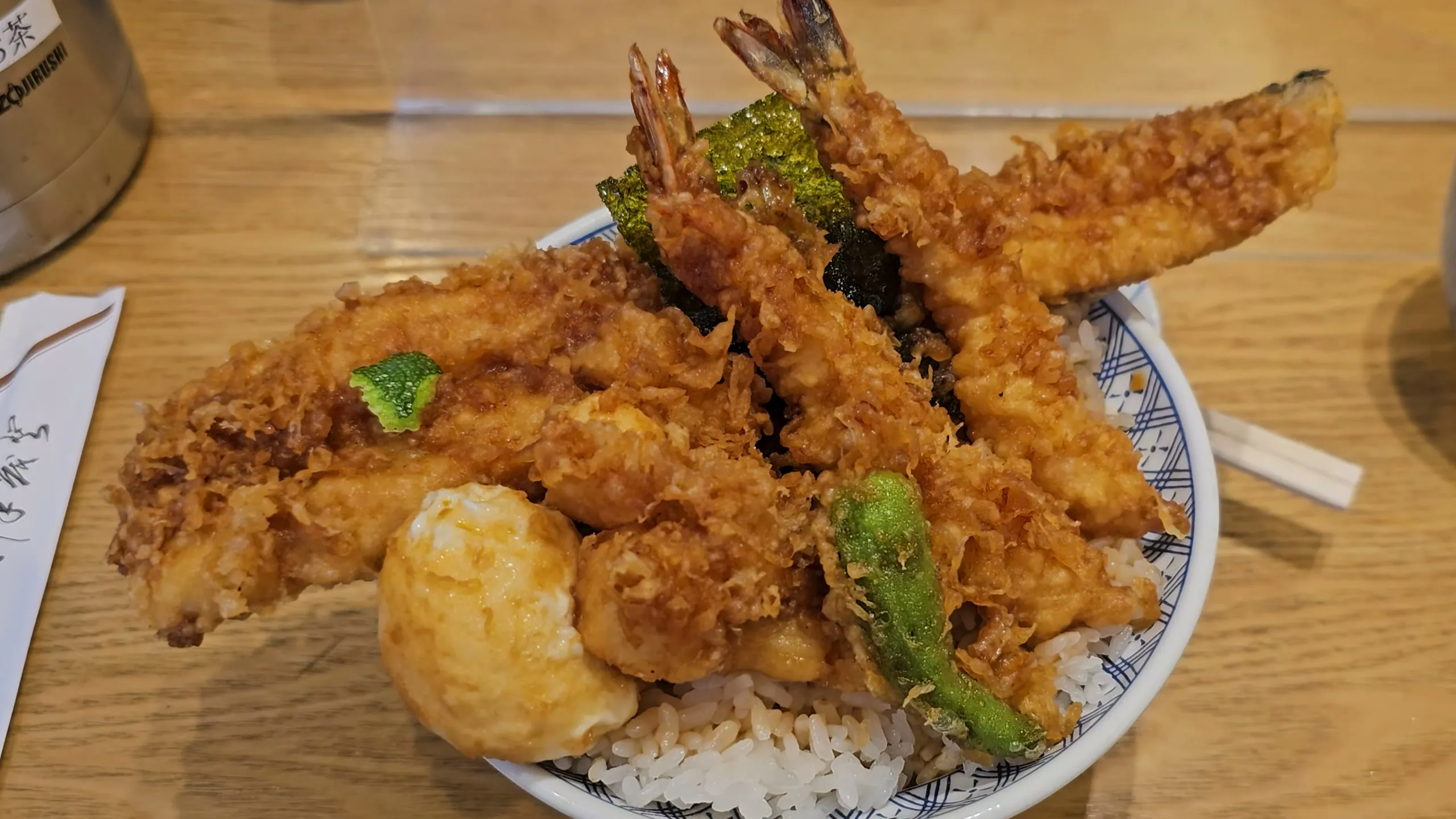 Nihonbashi, Tokyo
Kaneko Hannosuke
Sesame oil you can smell from the back of the line.
¥1,380 2024/09 video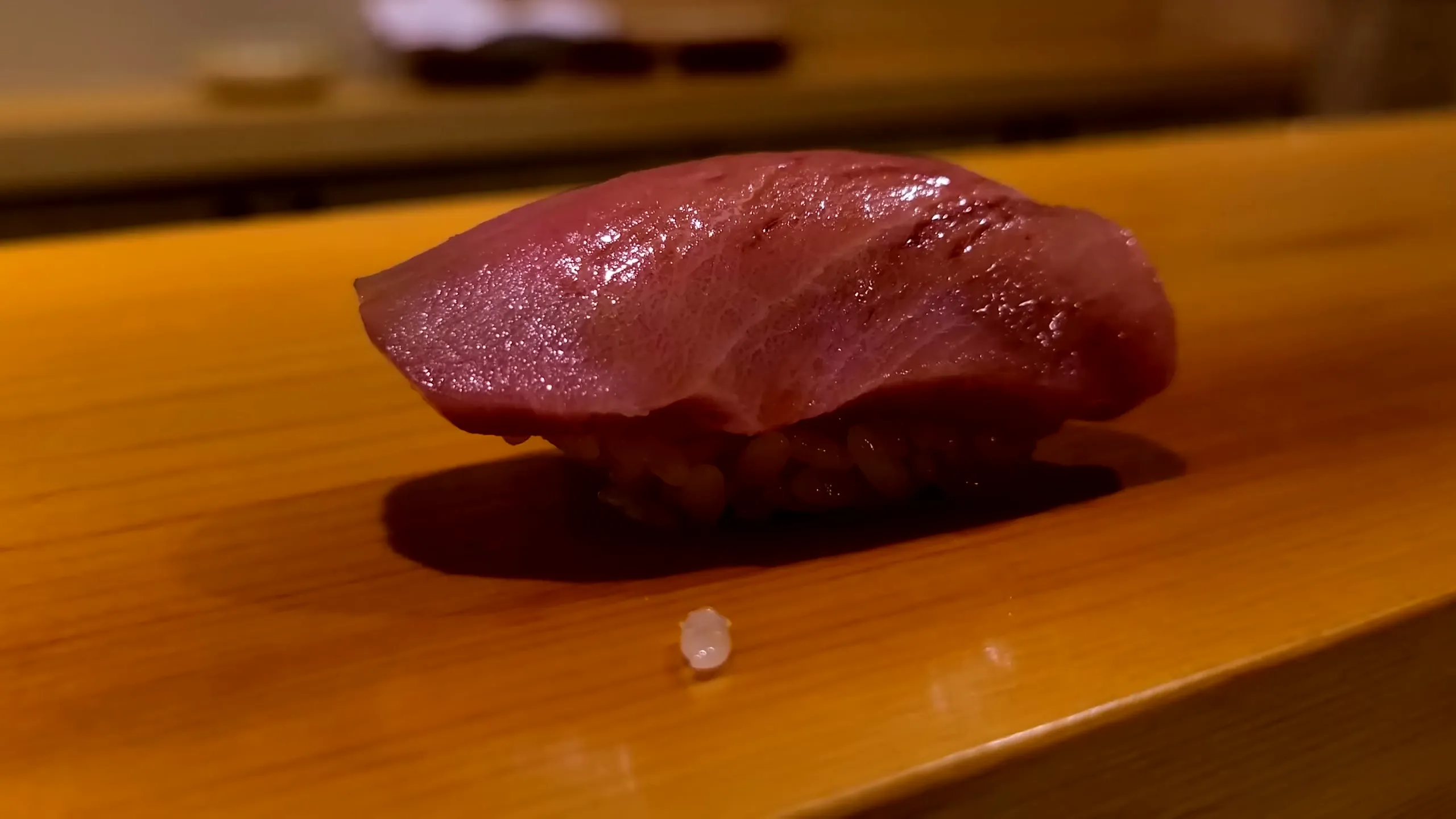 Ginza, Tokyo
Sushi Arai
Off-season tuna here beats peak-season tuna anywhere else.
¥41,800 2020/03 videoSources
- 鮨 みうら Tabelog
- sushi miura (Azabu-Juban, closed) Tabelog
- Sushi Miura MICHELIN Guide
- MICHELIN Guide Tokyo reveals newly starred restaurants and more for 2026 Time Out Tokyo
- 鮨 みうら official site Sushi Miura
- 鮨 みうら reservations TableCheck