You can smell Kaneko Hannosuke’s tendon from the line.
Kaneko Hannosuke is a tendon shop in Nihonbashi, Tokyo, with a line out front most days. A friend dragged me there, and I’m not even a tempura person. The Edomae tendon was ¥1,380 (about US$10, 2024/09). The tempura was fine. The sesame oil was the reason to go. Would I line up again? I wouldn’t, but you might.
monster gourmetFrom my 2024/09 video
- My share
- ¥1,380
- about US$10, Edomae tendon, 2024/09 video
- Highlight
- Egg tempura
- Skip
- Saving the anago for last
- Video
- 4:41
- 2024/09
- Where
- Nihonbashi, Tokyo
- Mitsukoshimae, exit A1
Not my pick, and a line
Kaneko Hannosuke is a tendon shop on a back street in Nihonbashi Muromachi, Tokyo, a minute from Mitsukoshimae station. It opened in 2010 and is named after the founder’s grandfather, an Asakusa-born cook whose recipe notebook the bowl sauce comes from. The brand has branches around Tokyo and overseas now. The sign says this one in Nihonbashi is the original.
This wasn’t a place I wanted to go. A friend wanted to try it, heard the line gets long, and offered to show up before opening and hold a spot. I don’t usually do lines, so I said fine, you line up. I came at opening time, and my friend was first in line. Thanks to that, I barely waited.
You know I’m not much of a tempura person, so I never go looking for tendon. Asanuma would change that, but much later.
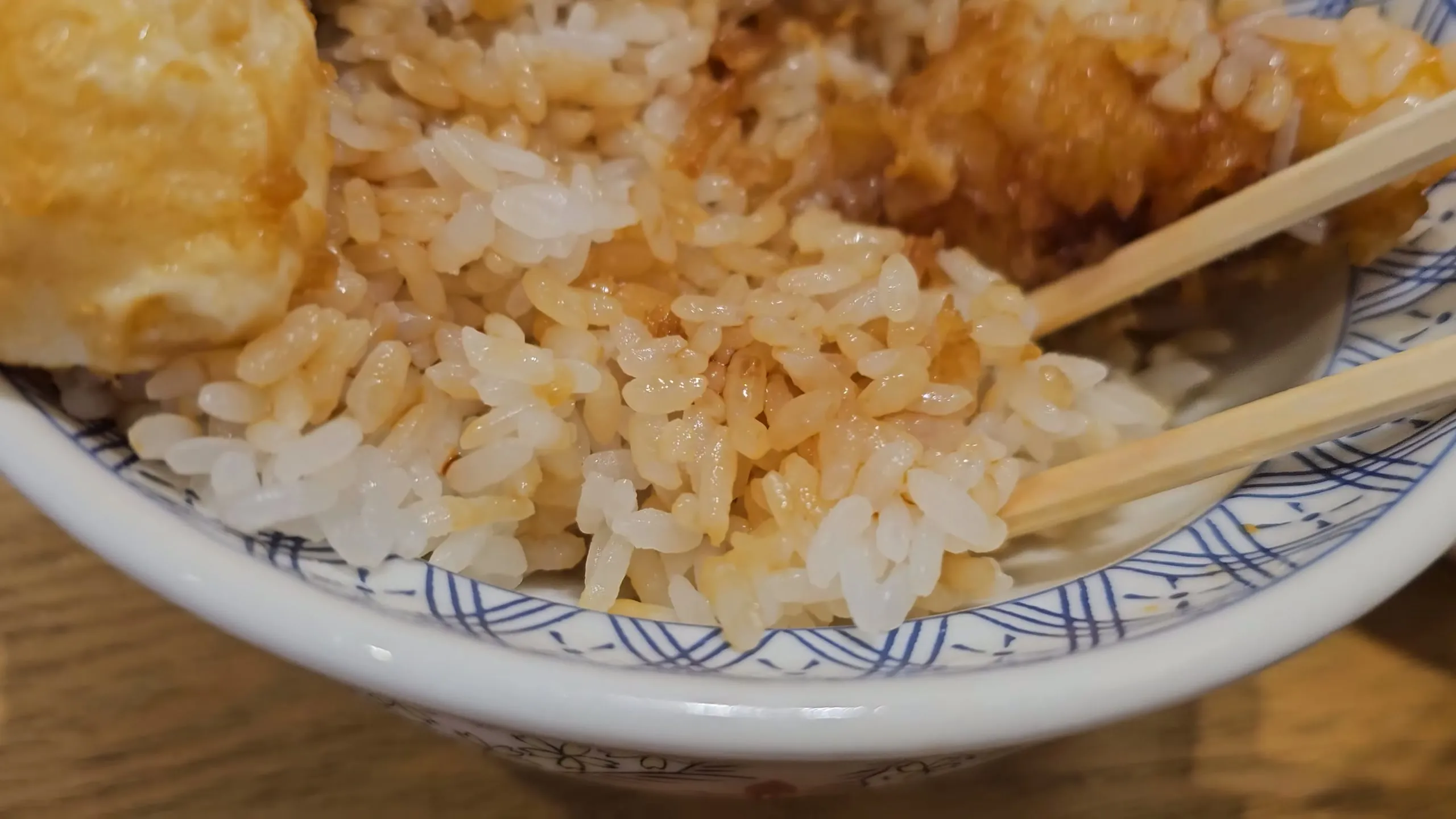
I didn’t film the entrance. When I got there the line was already huge, and I wasn’t going to point a camera at all those people. The menu board outside had the Edomae tendon at ¥1,380 (about US$10, 2024/09): anago, two prawns, a kakiage of squid and kobashira (tiny scallop adductors), shishito, nori and an egg.
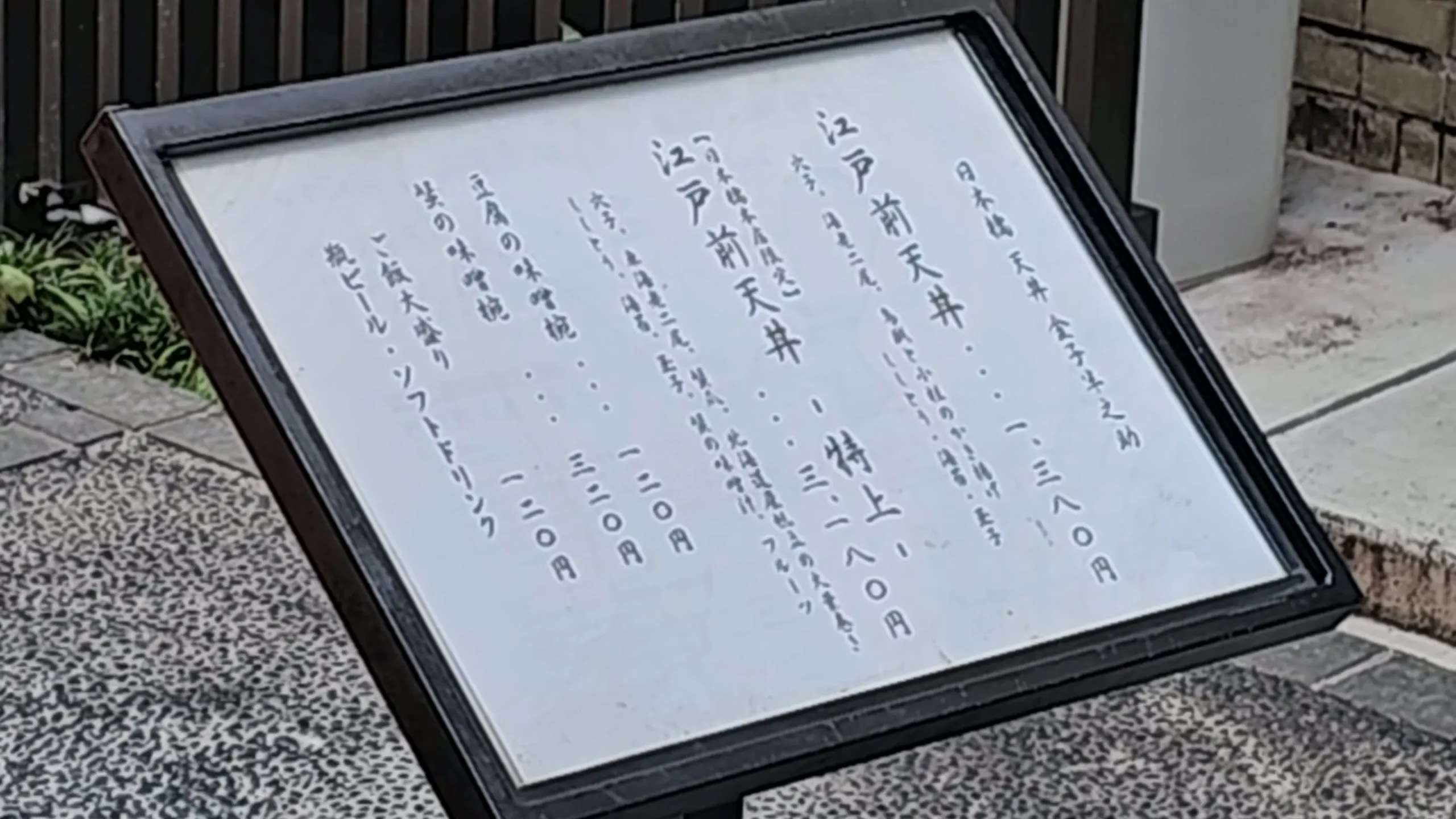
Sesame oil from the sidewalk
I stood outside for maybe ten minutes before opening, and I could smell sesame oil the whole time. You’ve probably heard that Japanese tempura gets fried with sesame oil in the pot. I’d never actually smelled it, not even at high-end tempura counters.
Here it was strong. Not sesame-mill strong, and it’s a different oil, but think of making miyeokguk or abalone porridge at home, when you toast the seaweed or abalone in perilla oil first. That smell, at that strength, just standing on the street.
Put a piece of tempura in your mouth and it’s the same thing, loud sesame oil. I loved that. The shop says it fries in sesame oil at high heat, and you can tell.
The sauce and the rice
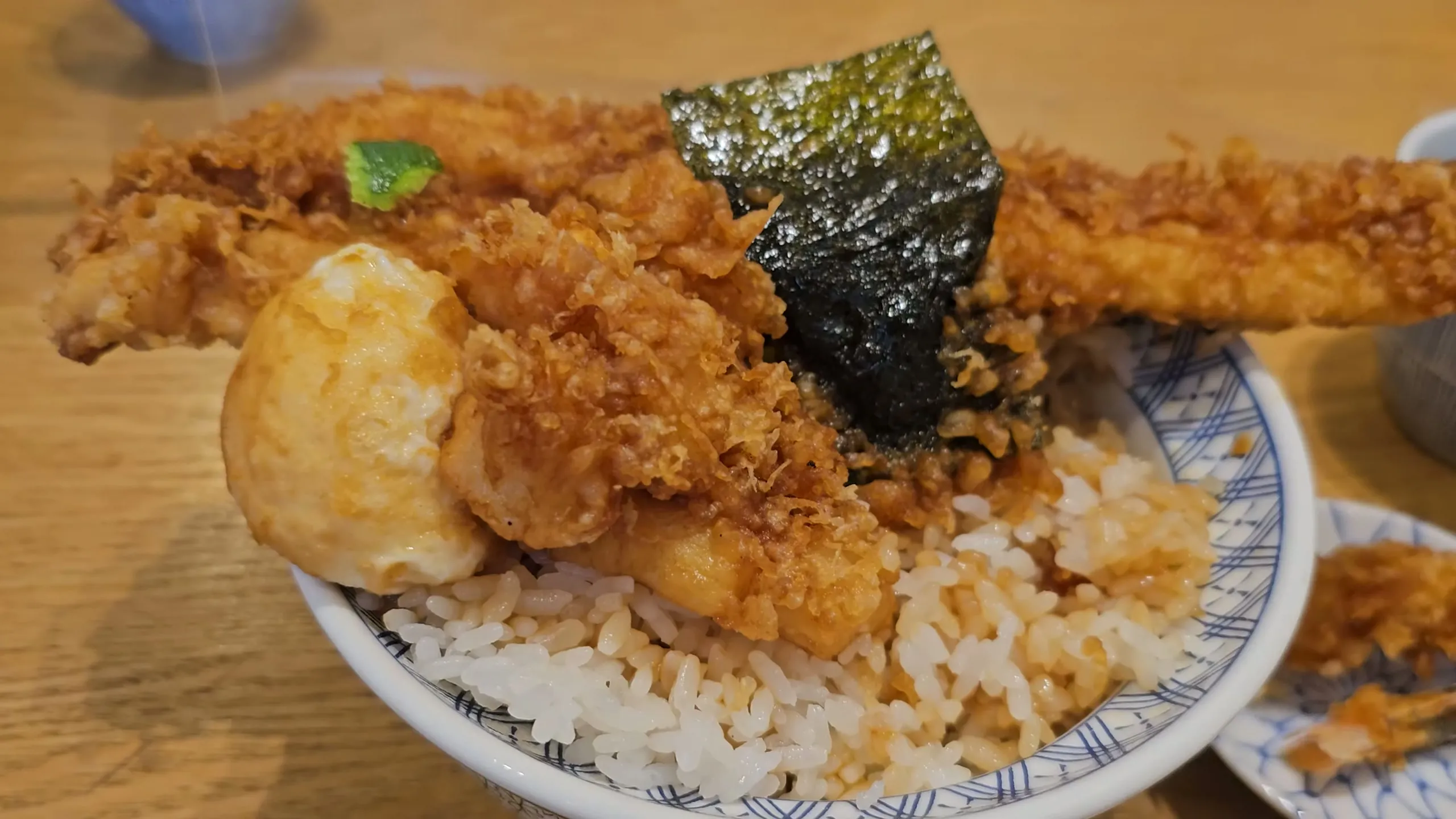
The tendon sauce was seasoned just right. Not too salty, not too sweet, and not bland either.
The rice was cooked really well. Great texture, every grain holding up under the sauce.
Tendon, tencha and tentsuyu, sorted out
Tendon is short for tempura donburi, tempura on rice. The sauce, don tsuyu, is soy, mirin and sugar cooked down until it’s thicker and sweeter than the dipping sauce at a tempura counter. The old Tokyo way is to dunk each piece straight from the oil into the simmering sauce and lay it on the rice. Most of Japan pours the sauce over at the end.
Tencha is the same tempura, usually a kakiage, in hot tea or dashi instead of on sauced rice. At a tempura course you get the choice at the end. I took tencha at Asanuma, saw everyone else’s tendon, and wished I hadn’t. At Kaneko the question never comes up. It’s a tendon shop.
Tentsuyu is the dipping sauce at a tempura counter, dashi, mirin, soy and sugar with grated daikon stirred in, lighter than tendon sauce. You won’t get it here either. The bowl arrives already sauced, and the only thing to add is the shichimi on the table.
Egg, shishito and nori win
I like tempura fried hard and crunchy like a snack, not the delicate kind. So the tempura itself was fine by me. Eaten as one big snack, the bowl works.
Ask whether frying was the tastiest way to cook each of these ingredients, though, and that’s a stretch. The seafood, the kobashira and the prawns, was overcooked. The ones cooked just right were the egg, the shishito pepper and the nori. Those three were the best things in the bowl.
Not enough egg for egg rice
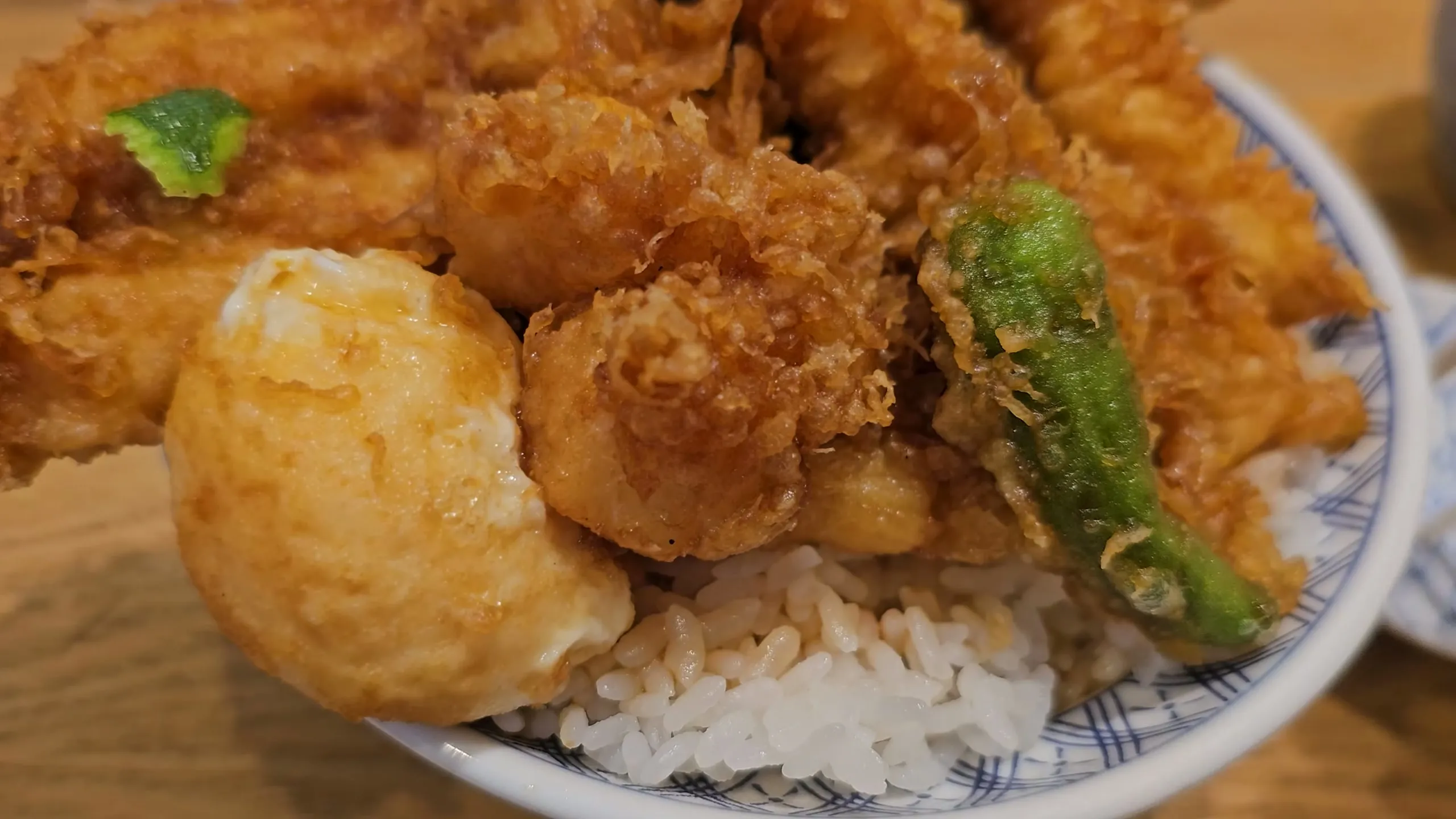
When the bowl came out I thought, why is this so much food? Then I saw the bowl sits up high on its base, so there’s less rice than it looks.
The egg came out perfectly runny, and I wanted to turn the rest into ganjang gyeran bap, Korean soy sauce egg rice. One egg doesn’t cover that much rice, though.
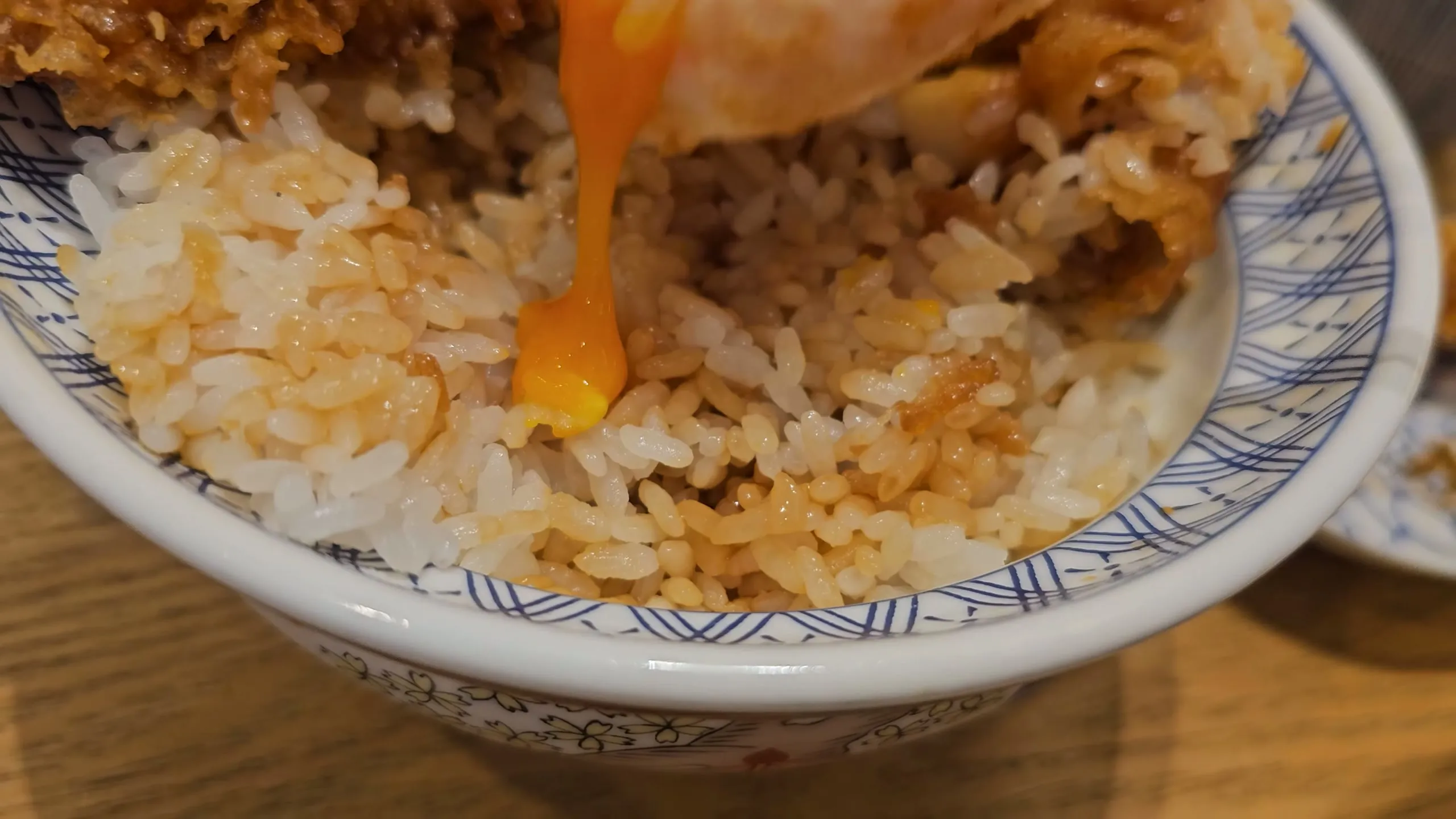
Anago last, then shichimi
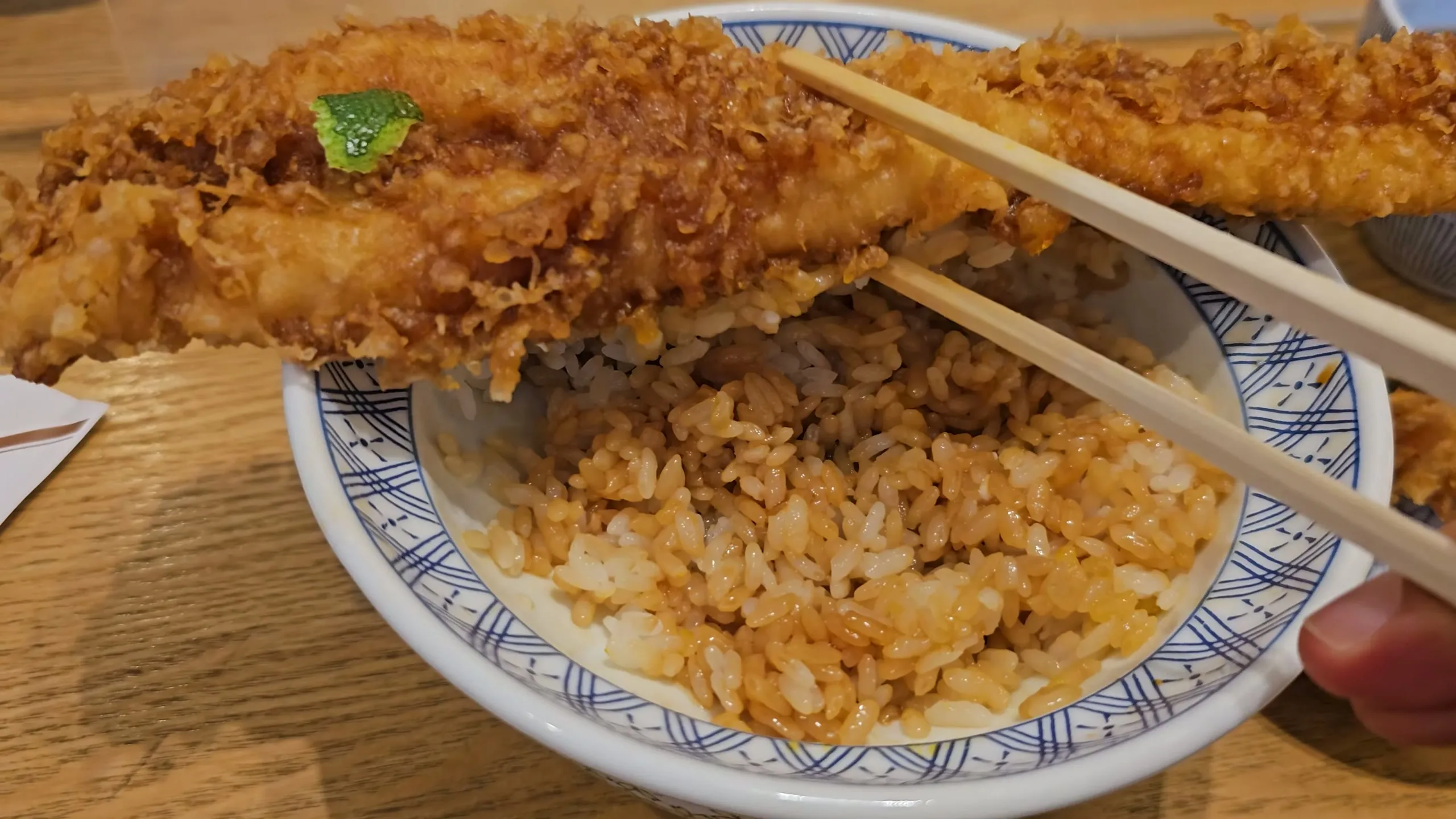
I ate it like a tempura course, working through the pieces on top in order. A tempura course ends with anago, so I saved the anago for last.
By then it was heavy. Even for someone who likes snack-style tempura with a bold sauce, that much fried food gets tiring. And the anago had a slight smell, not off, more like an earthy note.
So I shook a lot of shichimi over it. Shichimi usually has sansho in it, and sansho and eel are a classic pair. If I did it again, the anago would go first.
¥1,380 for the Edomae tendon
2024/09 video
The regular Edomae tendon was ¥1,380 (about US$10, 2024/09) on the board outside. That’s the bowl I had.
The same board had a deluxe tokujo bowl, only at this Nihonbashi shop, for ¥3,180 (about US$20, 2024/09). Extra rice and miso soup cost a little more.
Prices have gone up since. A Tabelog review from 2026/09 puts the regular bowl at ¥1,600.
Would I go back?
It was much better than I expected. Good rice, good sauce, and the aroma off the tempura, which matters most here. For that alone I’d recommend it.
Would I go stand in that line again myself? Probably not. I like places I can book. But if you don’t mind a line, especially on a nice day, it’s worth the wait. Tempura that smells this clearly of sesame oil is worth trying once.
The end.
How to book
How I booked
No booking. A friend got there before opening and was first in line. I came just before opening and waited about ten minutes.
- Line up
No reservations, so you join the line outside. Tabelog hours when I checked: weekdays 11:00 to 22:00, weekends and holidays 10:00 to 21:00. 20 seats, 6 at the counter on the first floor and 14 at tables upstairs. Tabelog lists Visa and Mastercard, Suica-type IC cards and PayPay, and the whole shop is non-smoking.
- Other shops
The same group runs a few more shops in Nihonbashi, including a tempura-and-rice counter and a takeout shop for tendon and tenmusu. The list is on the official site.
Checked 2026/10. Booking rules change, so look at the official page before you go.
Where it is
- Address
- 1F-2F, 1-11-15 Nihonbashi Muromachi, Chuo-ku, Tokyo東京都中央区日本橋室町1-11-15 1F・2F
- Nearest station
- Mitsukoshimae, exit A1
Plan the Tokyo trip
The boring bits I’d sort before flying, so the eating days stay free.
- Hotels in Tokyo*
Pick the room by where you eat, not by the sights. After a long dinner, a short ride back is the real luxury. This place is in Nihonbashi, Tokyo.
- Japan eSIM*
Data from the moment you land, no counter and no SIM swap. Set it up the night before.
- Keisei Skyliner from Narita*
Narita to Ueno in about 40 minutes. Buy it ahead and walk straight to the platform.
- Haneda airport limousine bus*
Landing at Haneda instead? The limousine bus drops you at the big hotels and stations with no transfers.
- Tsukiji Outer Market food tour*
A market morning with someone who knows which stalls are worth the line.
- Sushi-making class at Tsukiji*
Shape nigiri yourself once and the counter makes a lot more sense.
Links marked * are affiliate links. If you book through them I may earn a small commission, and you pay the same. How it works
Guides that mention this place
More places I have eaten at
All of Tokyo → Ginza, Tokyo
Sushi Arai
Off-season tuna here beats peak-season tuna anywhere else.
¥41,800 2020/03 video Nihonbashi, Tokyo
Sushi Sugita
My most-visited Tokyo counter, and what every filmed visit cost.
≈ ¥50,000 2020/04 video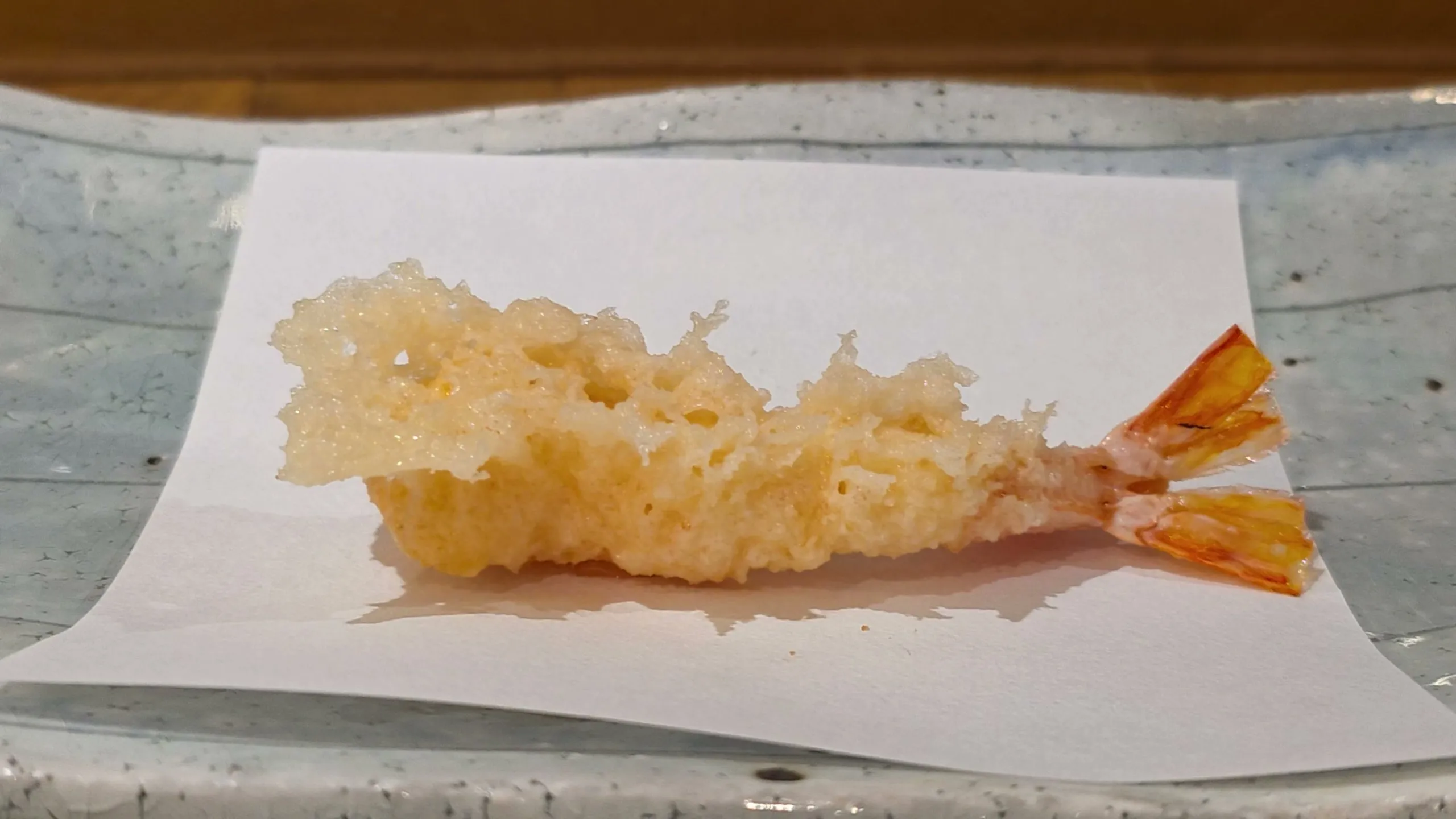 Nihonbashi, Tokyo
Tempura Asanuma
The first time tempura felt like cooking to me.
¥26,870 2026/10 videoSources
- 日本橋 天丼 金子半之助 本店 Tabelog
- 金子半之助 Kaneko Hannosuke
- 天丼 Wikipedia (Japanese)