The best tuna sushi in the world is at Sushi Arai in Ginza.
Sushi Arai is a basement counter in Ginza 8-chome and, as far as I’m concerned, the best tuna sushi in the world. It’s number two on my list, right behind Sugita. Lunch with the dinner course came to ¥41,800 a person (about US$390, 2020/03), and about ¥67,000 by 2026/10. It had a slump after the pandemic. It came back.
monster gourmetFrom my 2020/03 video
- My share
- ¥41,800
- about US$390, lunch, dinner course, one extra, 2020/03 video
- Highlight
- Tuna, every cut
- Skip
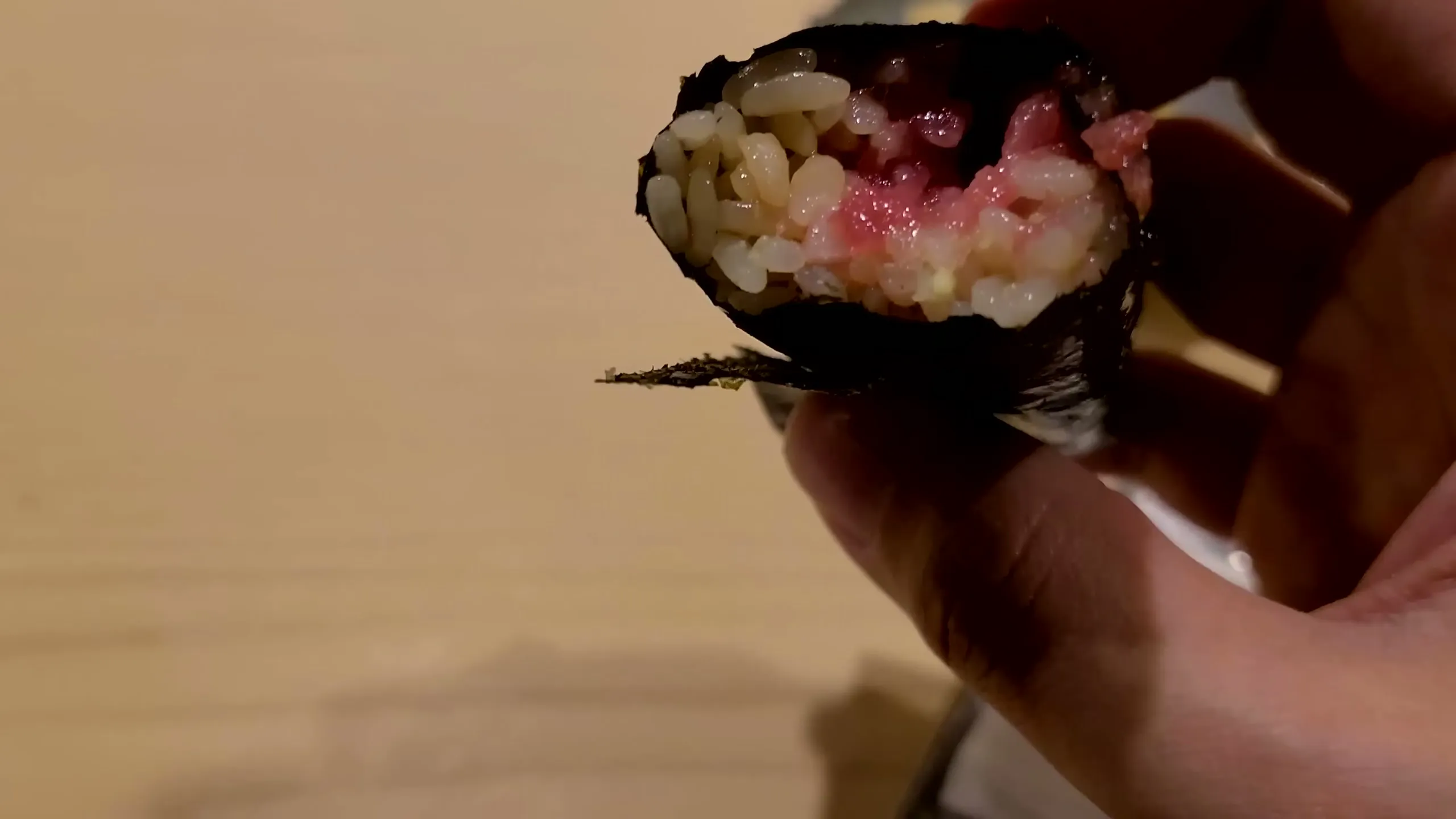
- Tuna futomaki
- Video
- 15:39
- 2020/03
- Where
- Ginza, Tokyo
- Ginza, exit A5
My king of tuna
Sushi Arai is a counter in the basement of the Ruan Building in Ginza 8-chome, Tokyo. Chef Arai Yuichi spent eight years at Ginza Kyubey and six at Sushi Sho in Yotsuya, then opened his own place in October 2015. Tabelog gave it a Gold award in 2017 and every year from 2020 to 2026.
If you want the tastiest tuna sushi in the world, this is it. I don’t really rank sushi counters, but Arai is my number two. Number one is my religion, Sugita.
This was lunch. Like always, I booked the dinner course, tsumami and all.
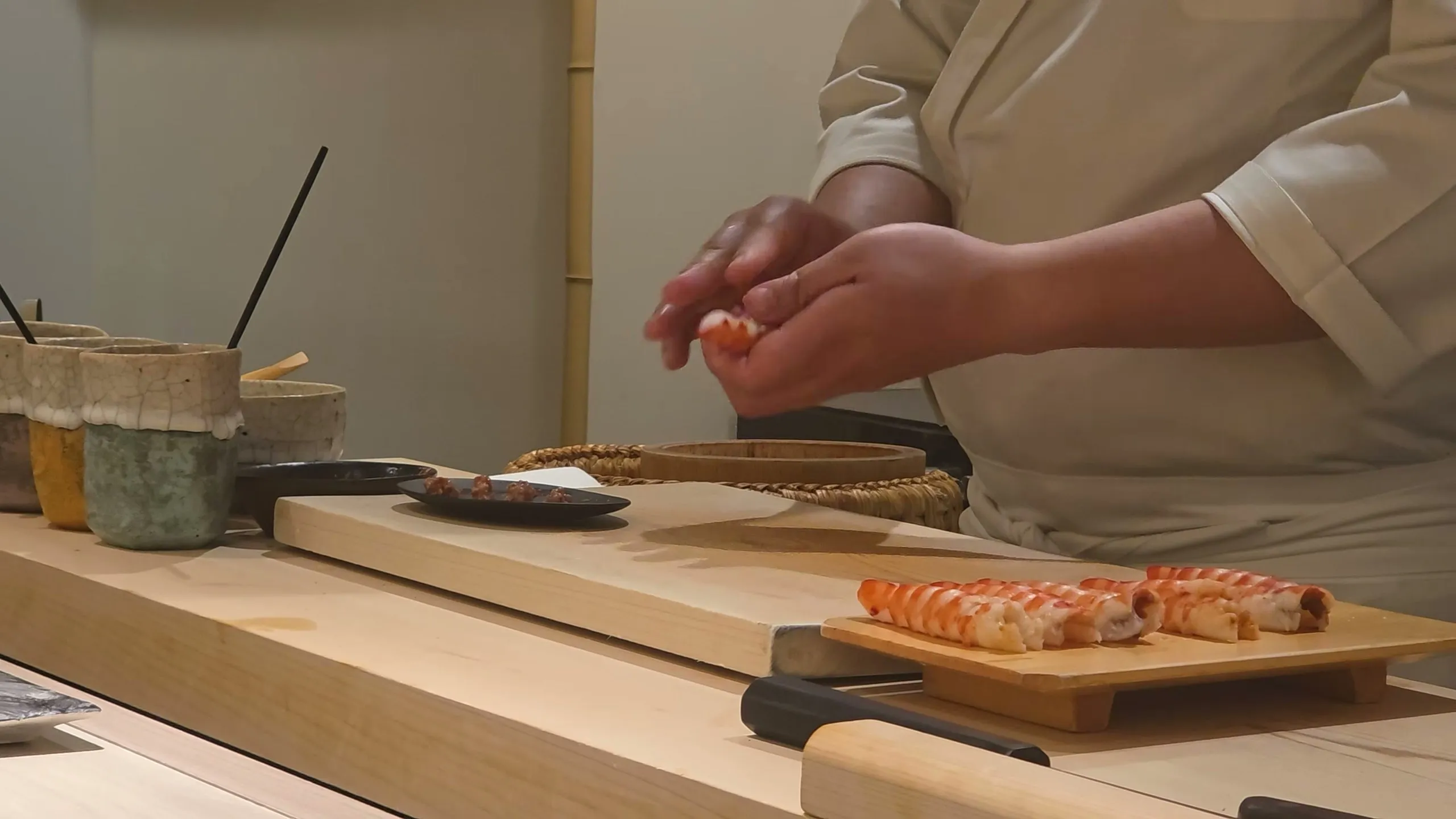
Shari-yo!
Arai is really kind. My friend couldn’t sit right up at the counter, so they set up a separate plate and carried every piece over to him.
First came seaweed and ice plant, a cool, crunchy succulent, to dip in ponzu, then firefly squid. The octopus used to be bland here. These days it’s steamed soft.
If you know anything about Arai, you’ve heard of this. When he needs more rice, Arai shouts “Shari-yo!” and the whole staff shouts back “Hai!” The other one is a big “Domo!” Sit here and you’ll hear both a lot. I left the sound in on purpose.
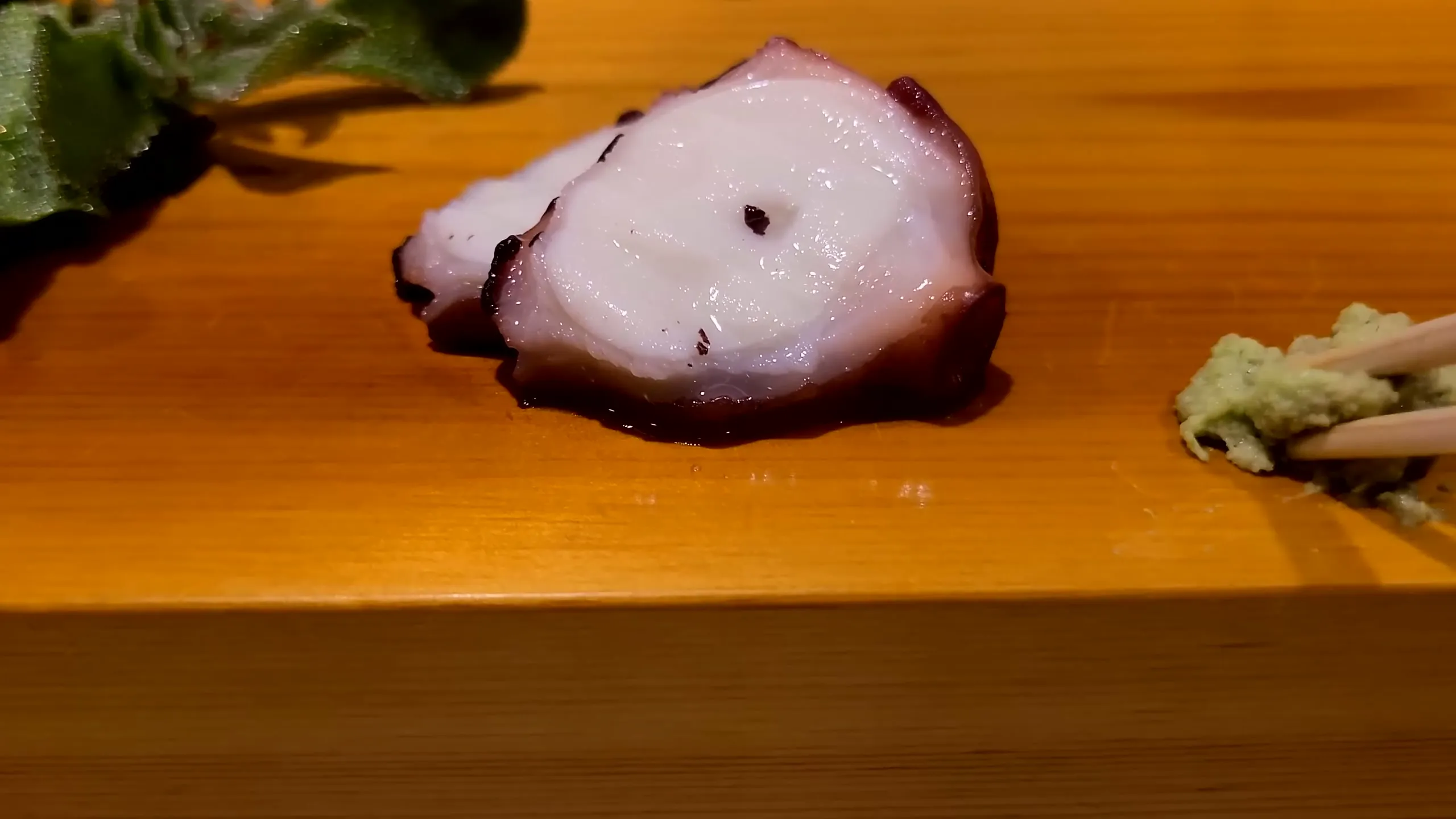
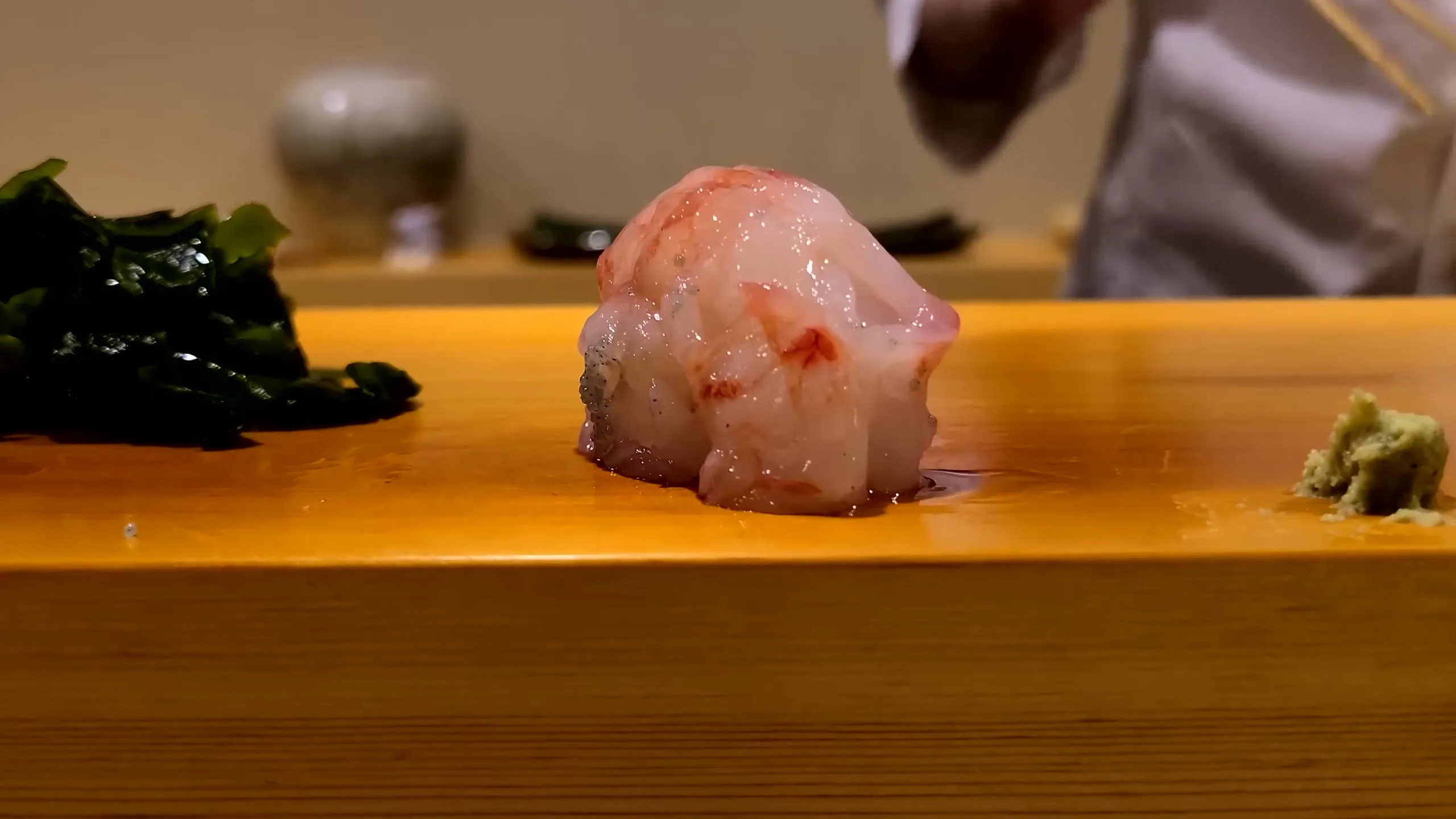
Botan ebi, the best of them all
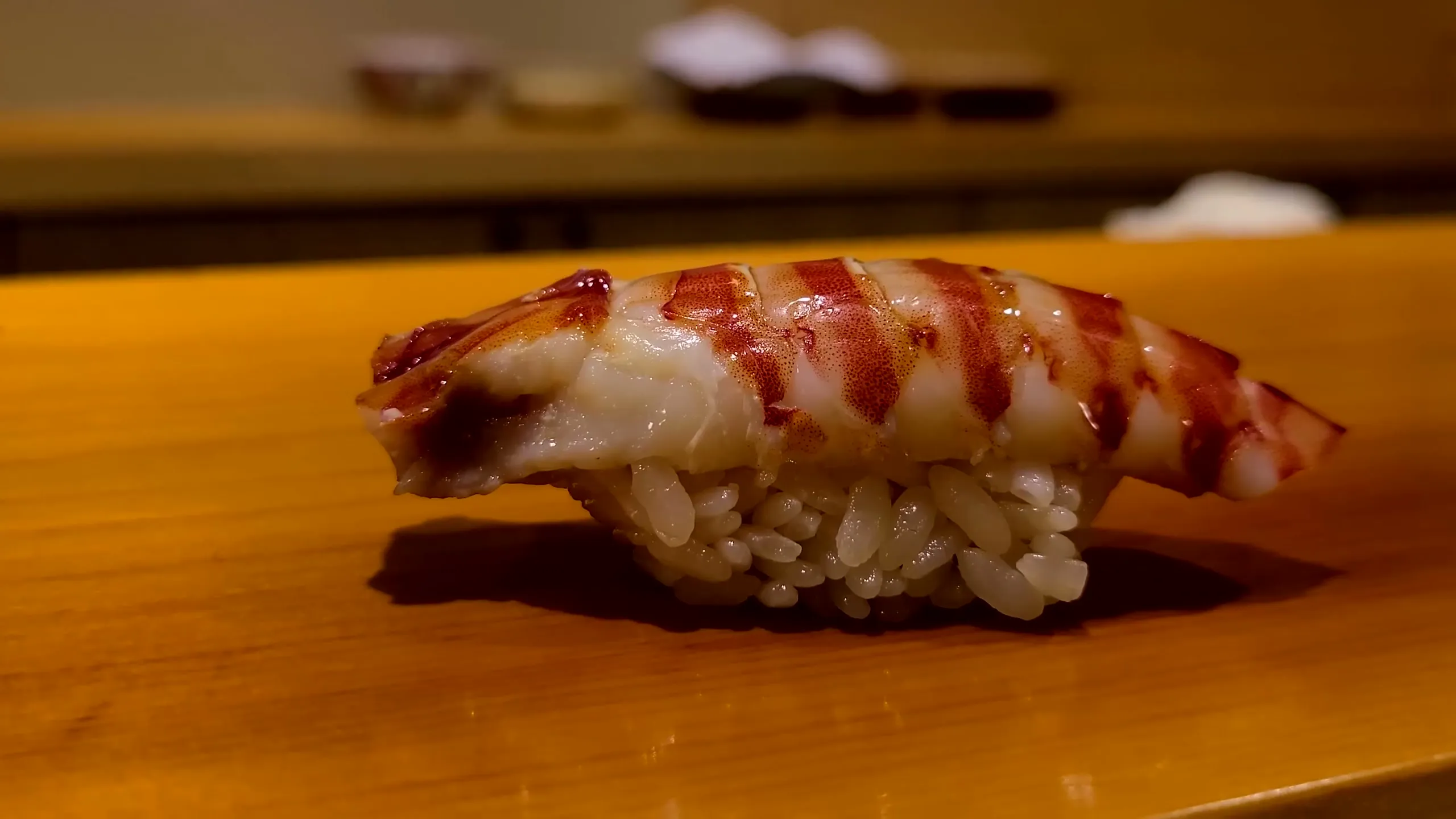
In my Sushi In video I said a place that rarely serves prawns makes them amazing when it does. Arai serves botan ebi almost every time, like a signature. A counter that keeps pushing botan ebi is confident in its botan ebi. Yes, by that logic any prawn that shows up is great.
Still. Of every botan ebi I’ve had, Arai’s is the best. I wanted that on the record.
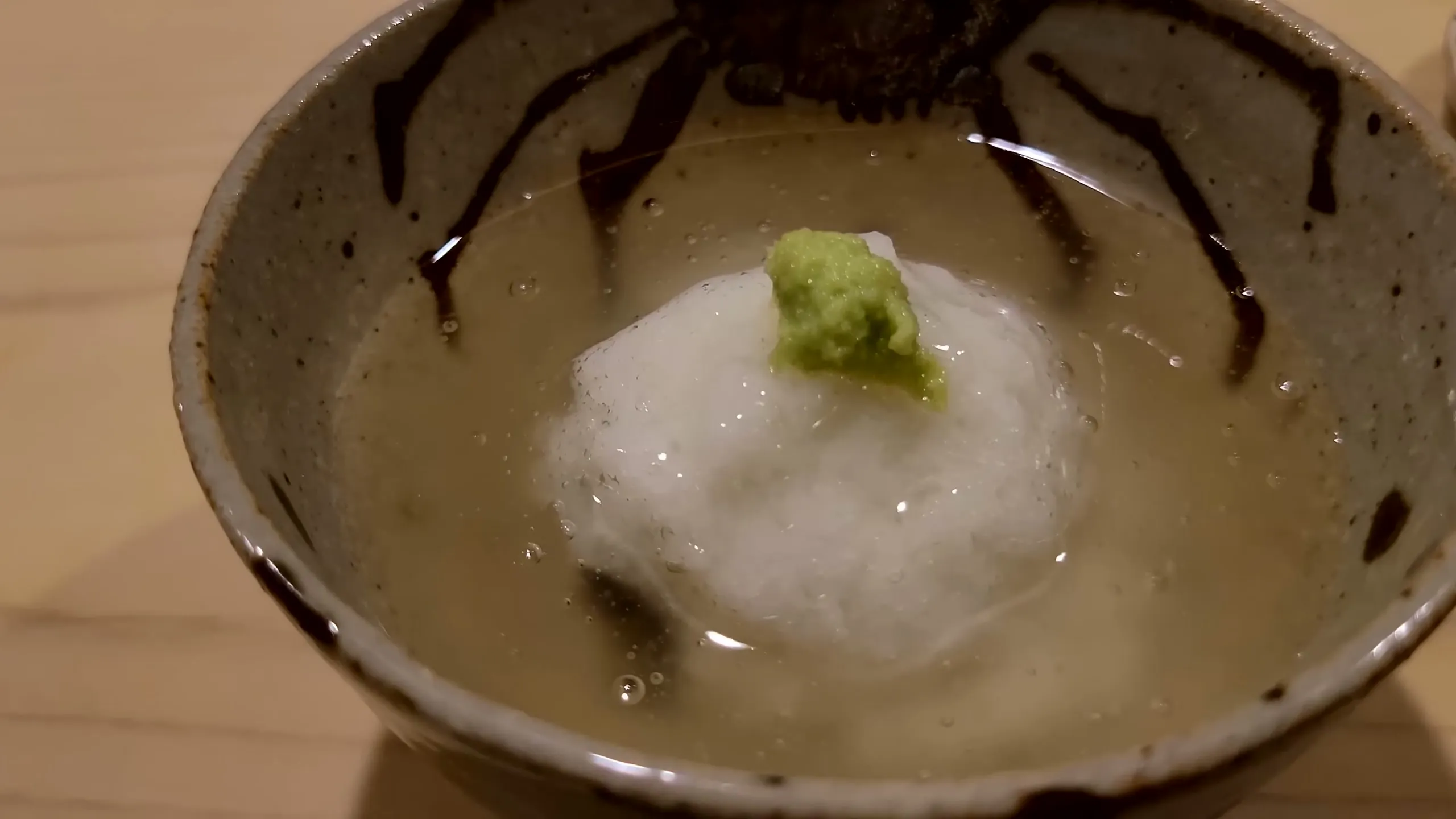
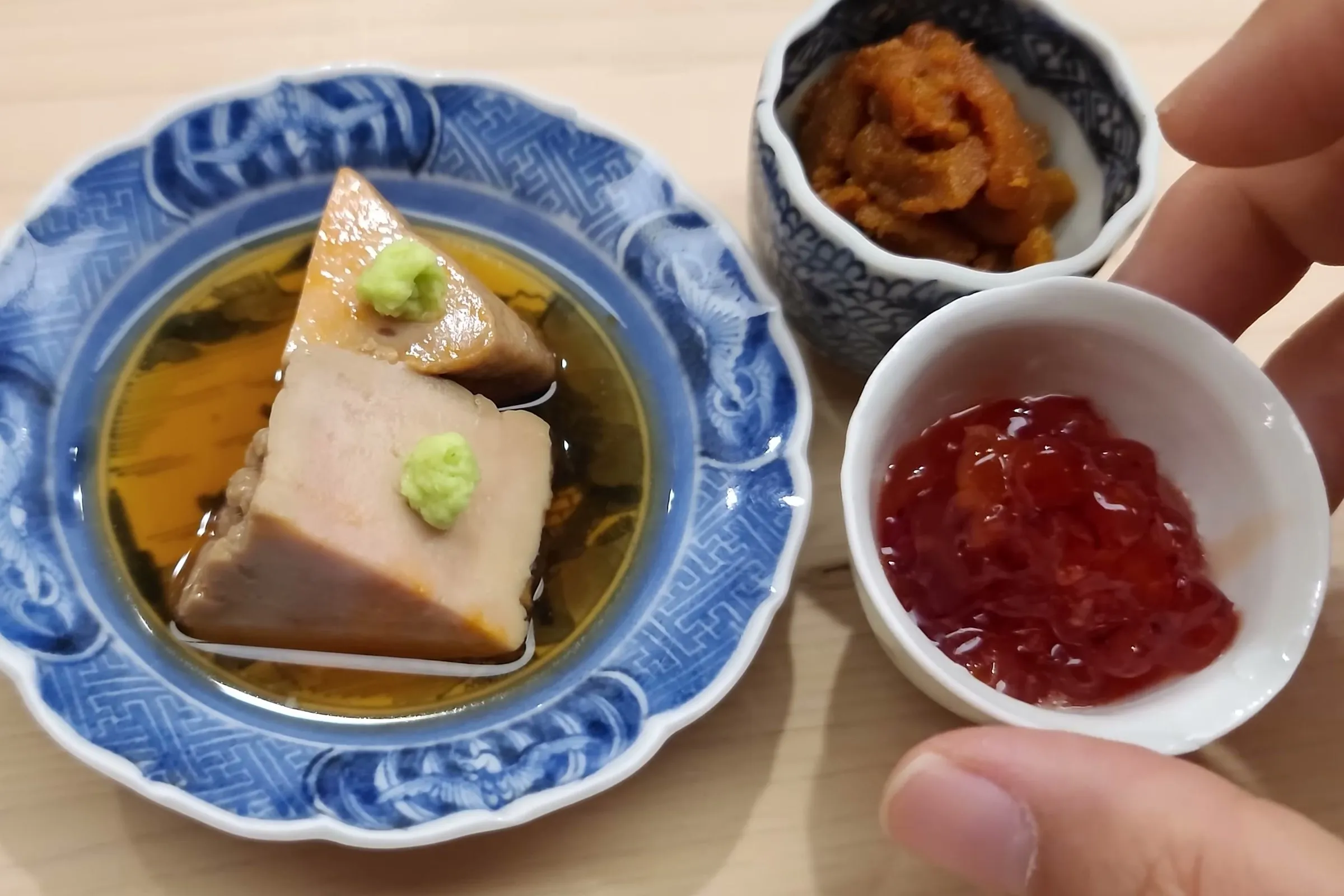
Nodoguro kaburamushi
Kabu is turnip. Grated turnip piled on nodoguro, blackthroat seaperch, and steamed.
Arai used to serve cooked tsumami like this. At some point he switched to an older style, mostly sashimi, and I missed these. The turnip is soft like meringue and slides right down. The thick ankake sauce is seasoned just right, and you barely feel the fish’s texture, only its richness.
So good I asked why they don’t make these more often. His number two said sorry.
Katsuo with horseradish
Katsuo, skipjack, lightly marinated in soy, with yama-wasabi, horseradish, grated right in front of me.
Sugaya, the counter I called the prince of tuna, came out of this kitchen. So Arai is the king and Sugaya is the prince. Sugaya served horseradish too, with kinmedai that was lightly cooked, which is a completely different thing from soy-marinated katsuo. Horseradish seems to go with any fish, the way real wasabi does.
Behind the counter, wooden tags on the wall list the day’s toppings. That’s an old-school touch. Anything up there, you can add after the course.
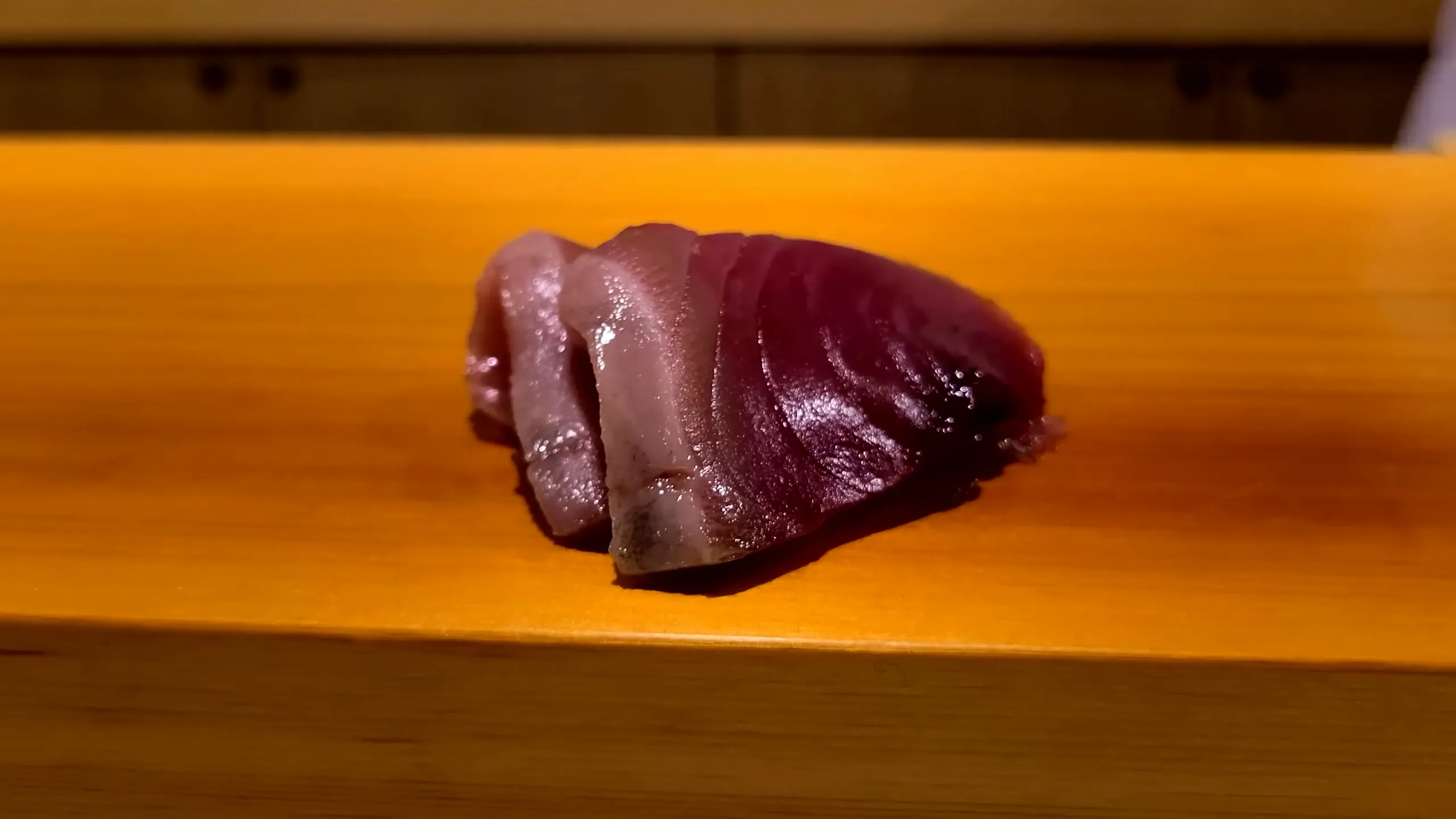
Tairagi, fugu shirako, prawn heads
Tairagi, pen shell, cut top to bottom into cubes and grilled isobe-yaki style with shichimi and nori. You know what it tastes like, so I’ll let the crunch speak.
Fugu shirako, salt-grilled, with kabosu to squeeze over. Those three slices are a fraction of one, sliced like a loaf of bread. In a big torafugu it’s honestly about as long and as thick as my forearm. Creamy and nutty, with the chewy grilled skin I love and a sweet-sour lift from the kabosu.
Then the grilled heads of the botan ebi, which plenty of Korean counters serve too. The tsumami course at Arai isn’t long and isn’t the main event, so I didn’t mind when it ended.
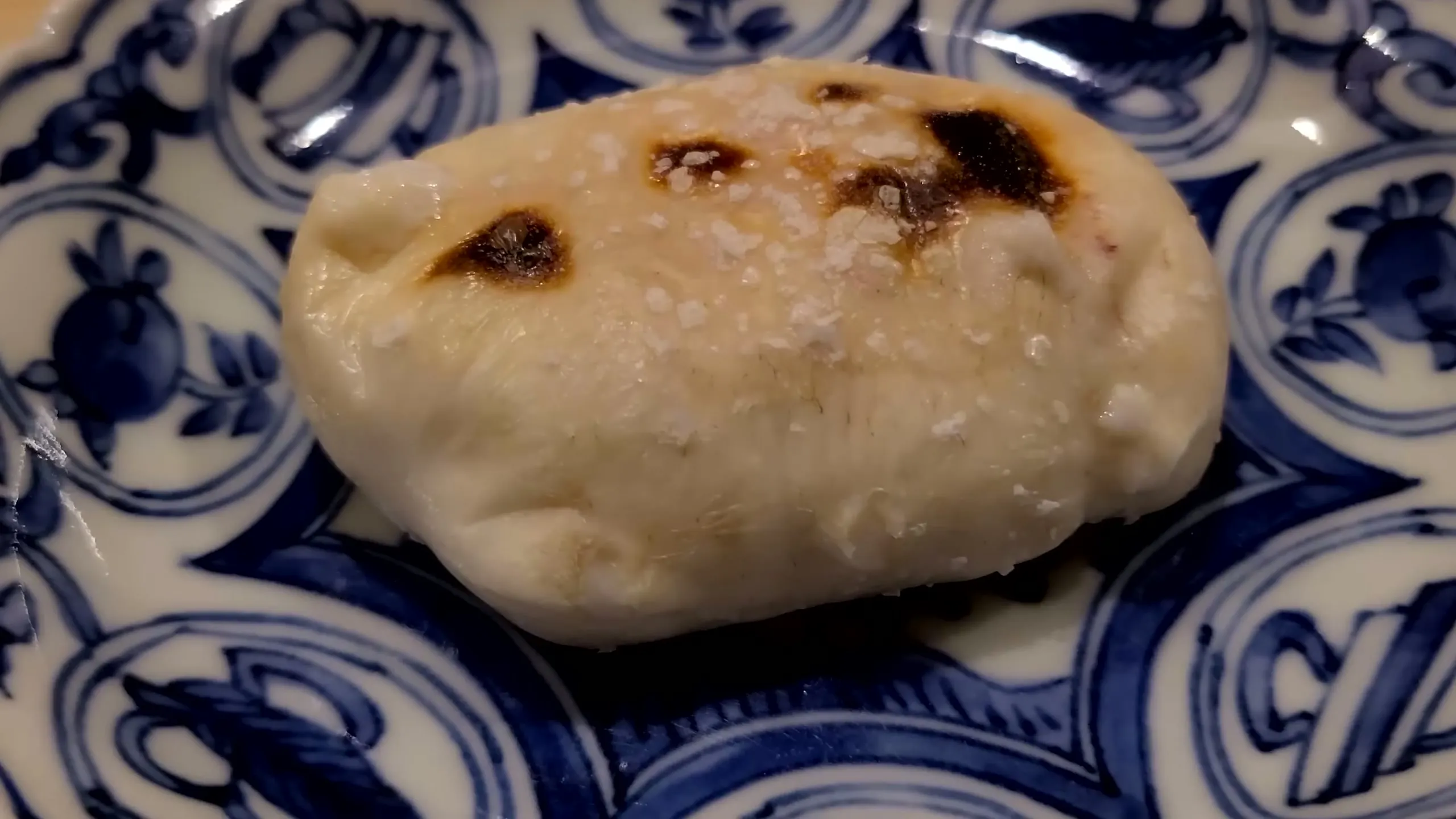
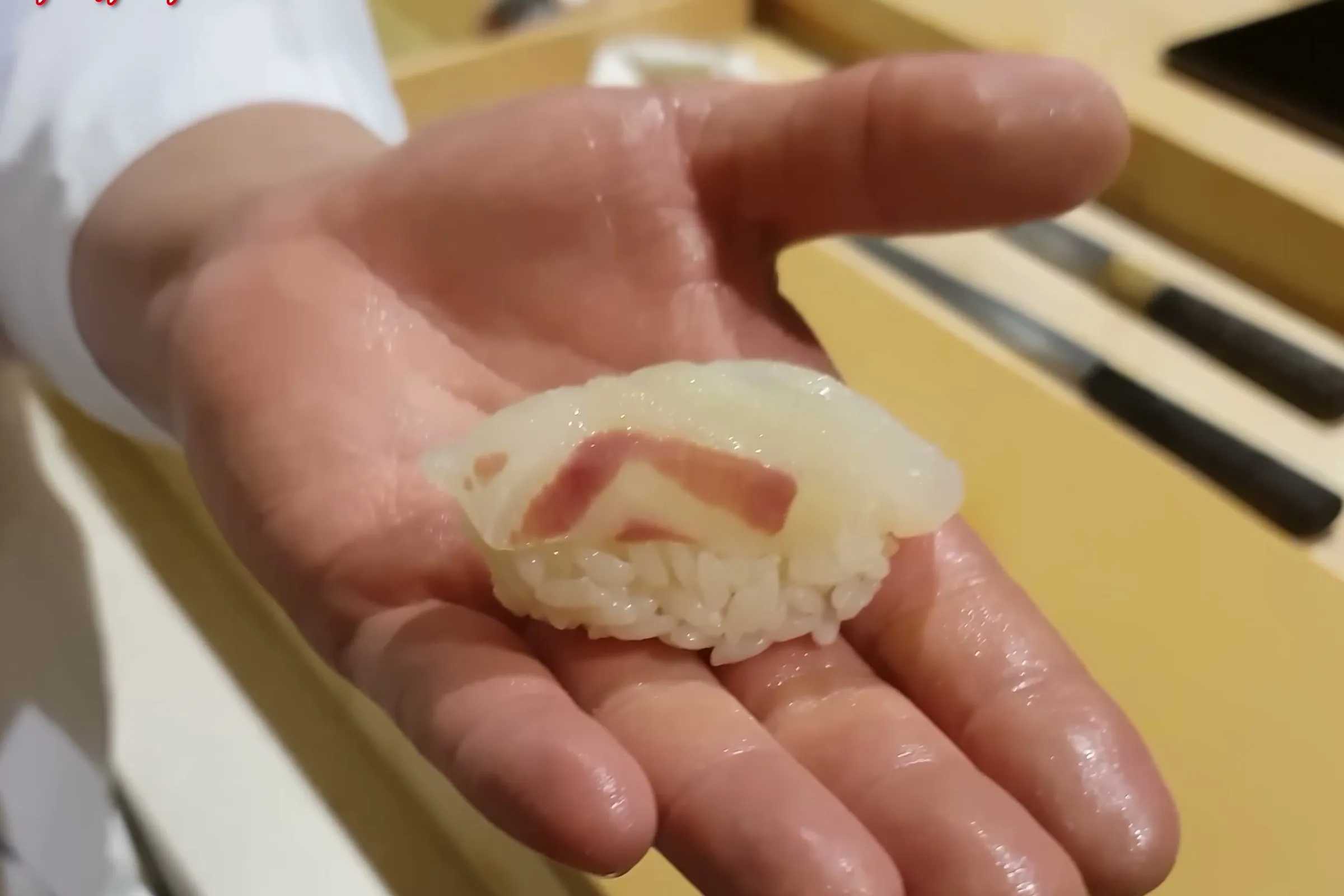
Cold rice, much better squid
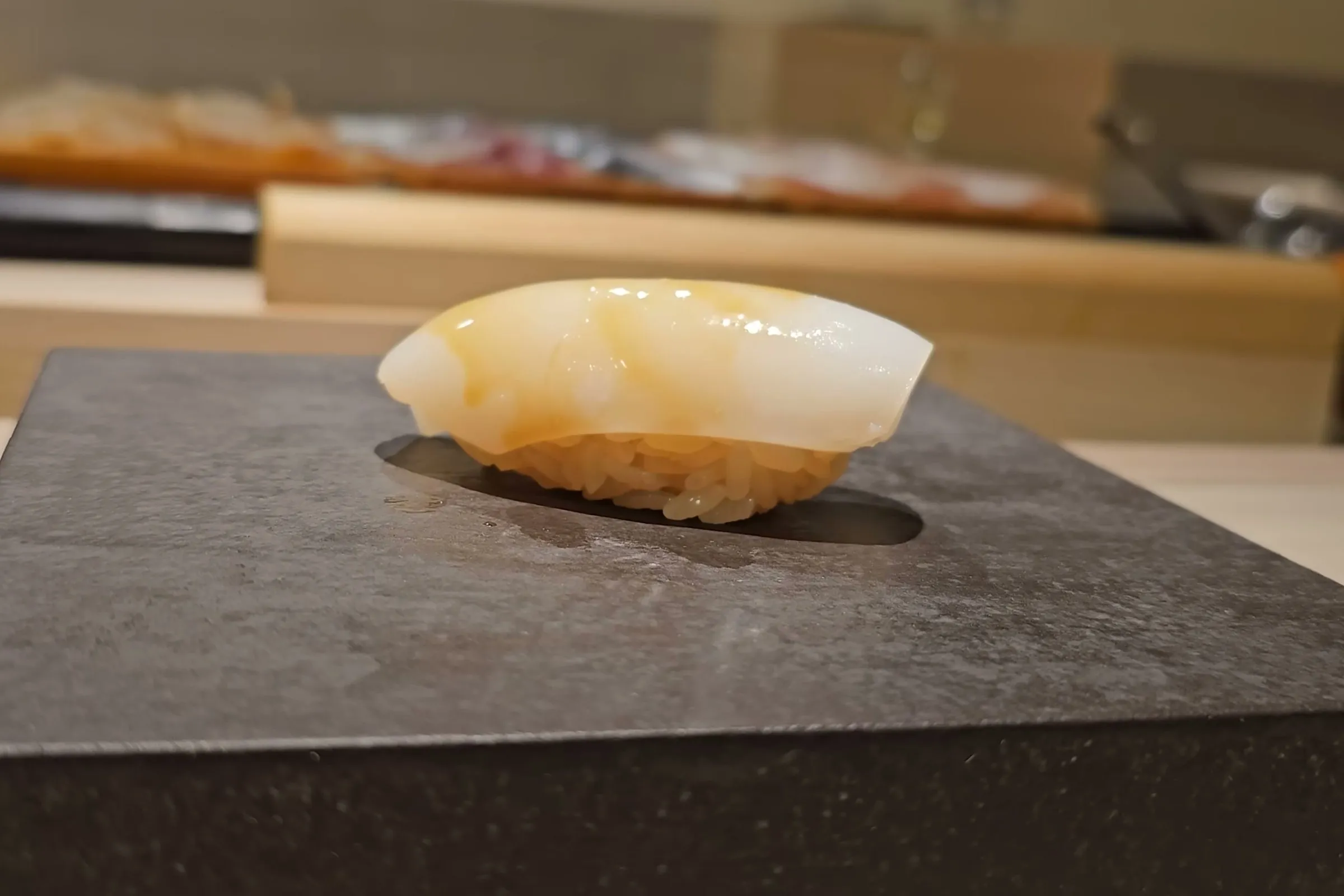
Nigiri starts with white fish, like at Sushi In. Today it was kue, the grouper people in Jeju call dageumbari, though that name officially belongs to a different species. Not my favorite fish. The bigger issue: I love Arai’s rice, and that day it was a little cold.
Next is squid. In Japan that usually means sumi-ika, cuttlefish. When I first came here, back when booking was easy, the squid was too thick and chewy for the rice. Now your teeth go right through it, and it’s sweet.
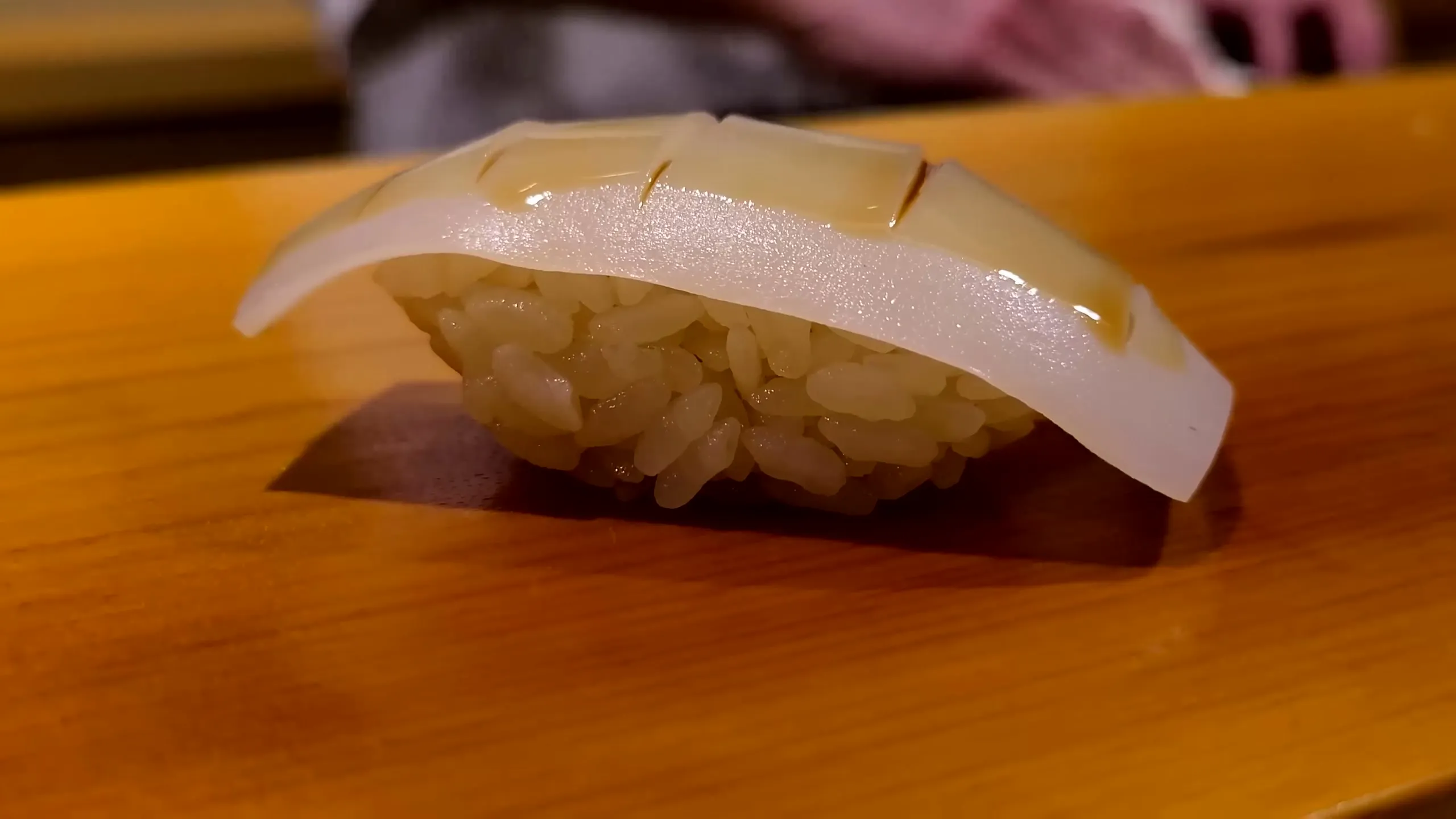
The best oyster of my life
If you’ve watched my channel, you know I hate oysters. This one was insane. The best oyster I’ve ever eaten.
It looks fully cooked and tastes almost raw. The outside is just set, so it pops. Milky and nutty inside, and on the outside a sweet-sour, fruity aroma that lifts the whole thing.
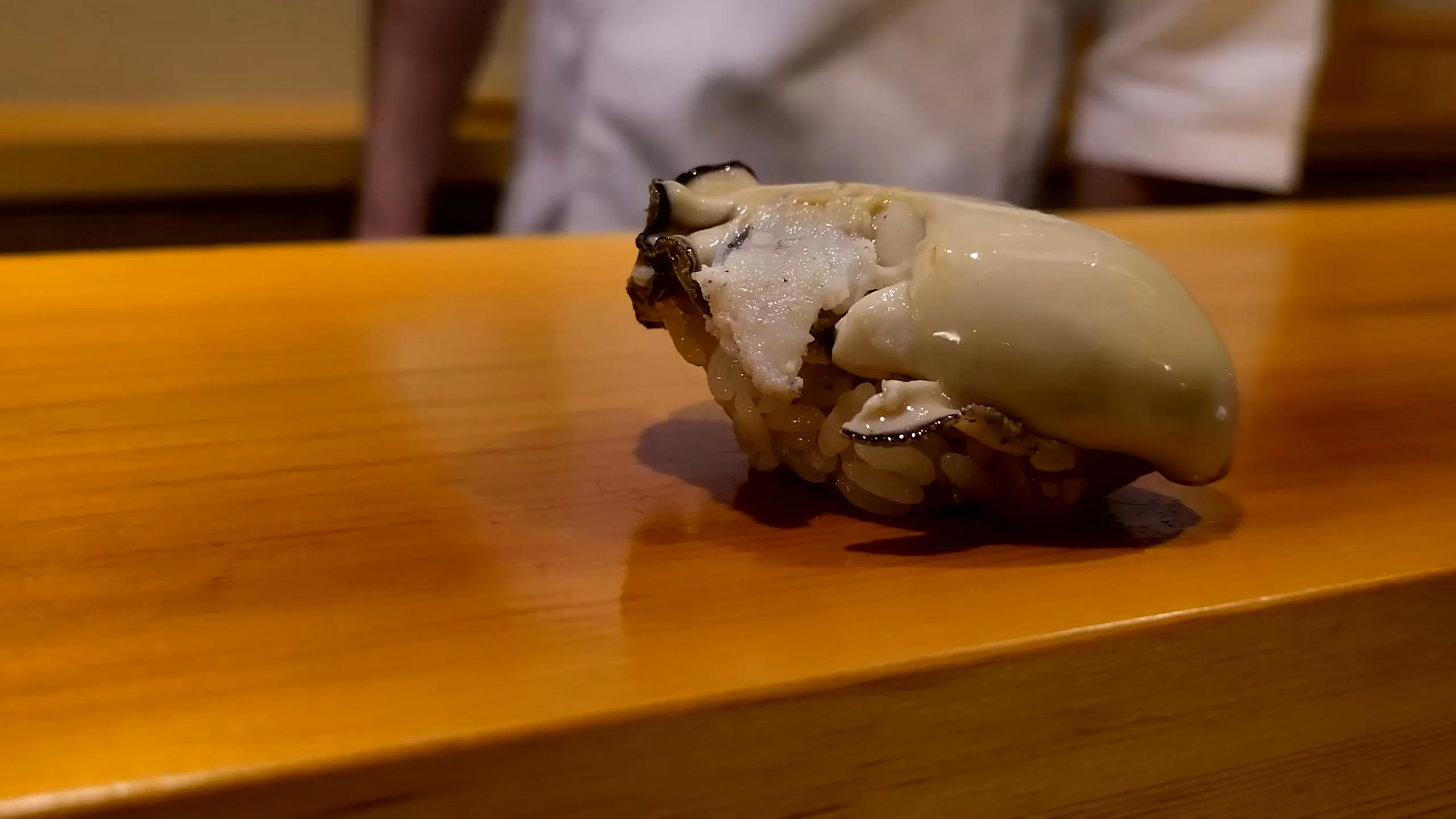
Tuna that doesn’t need zuke
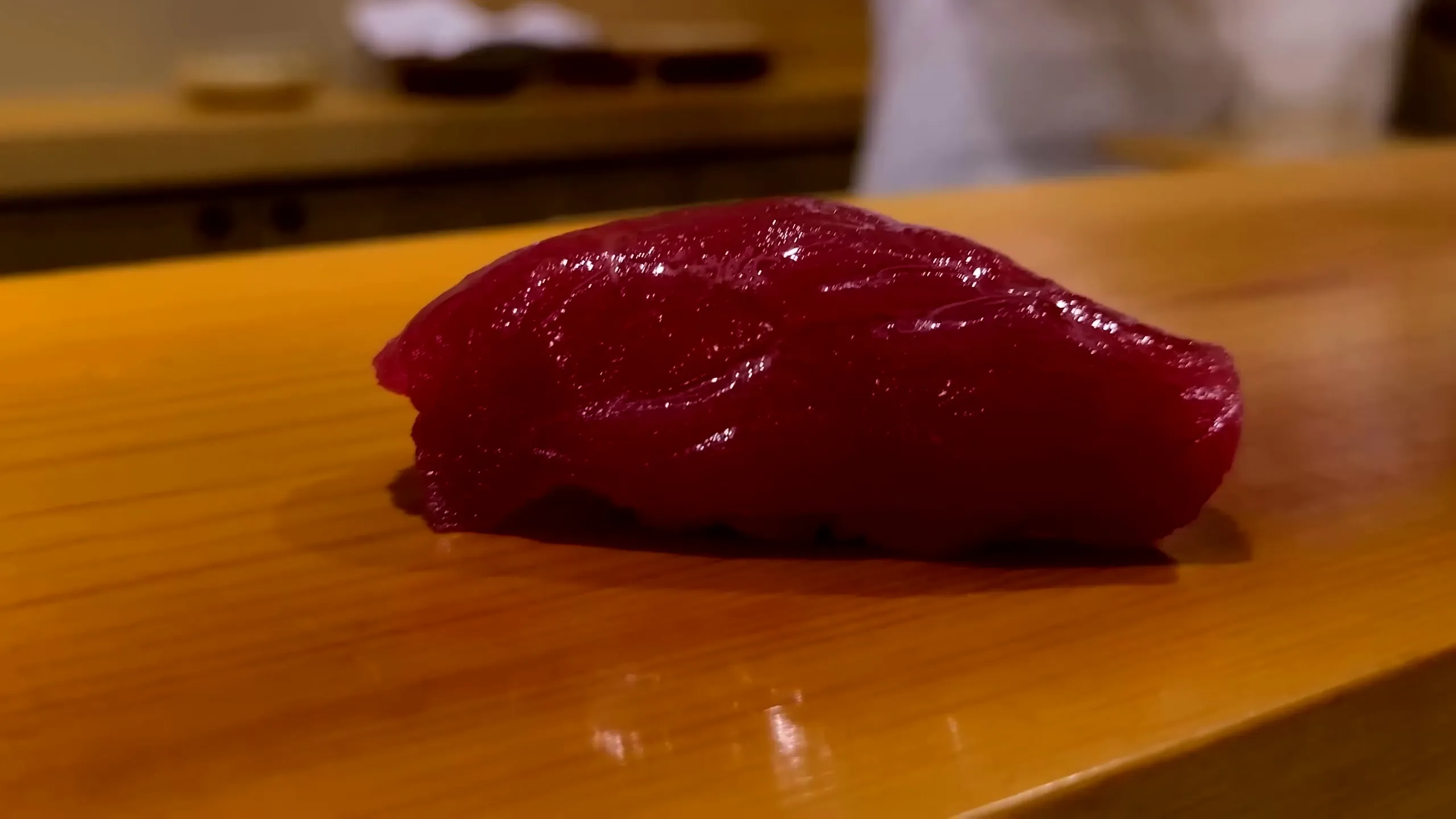
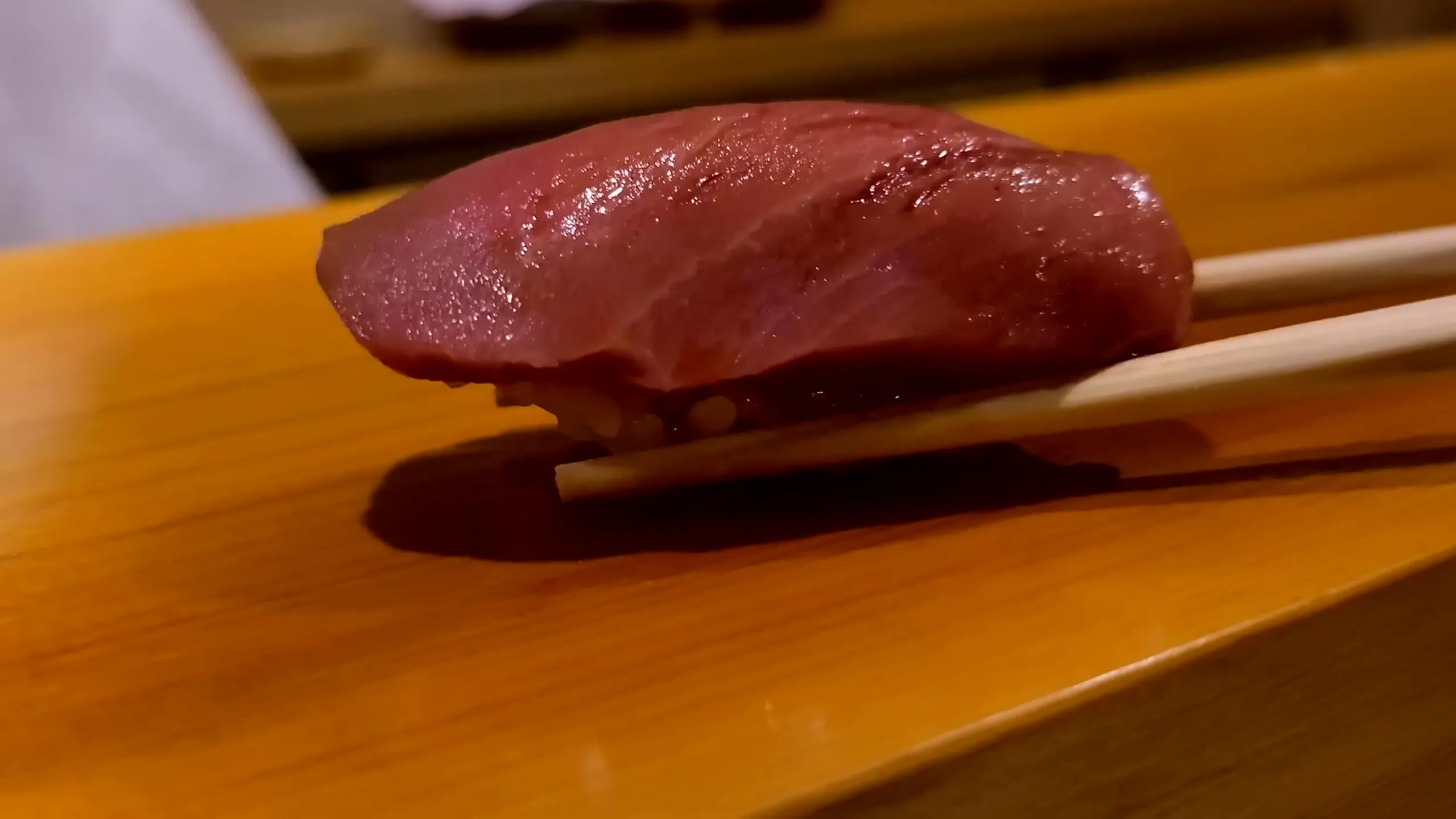
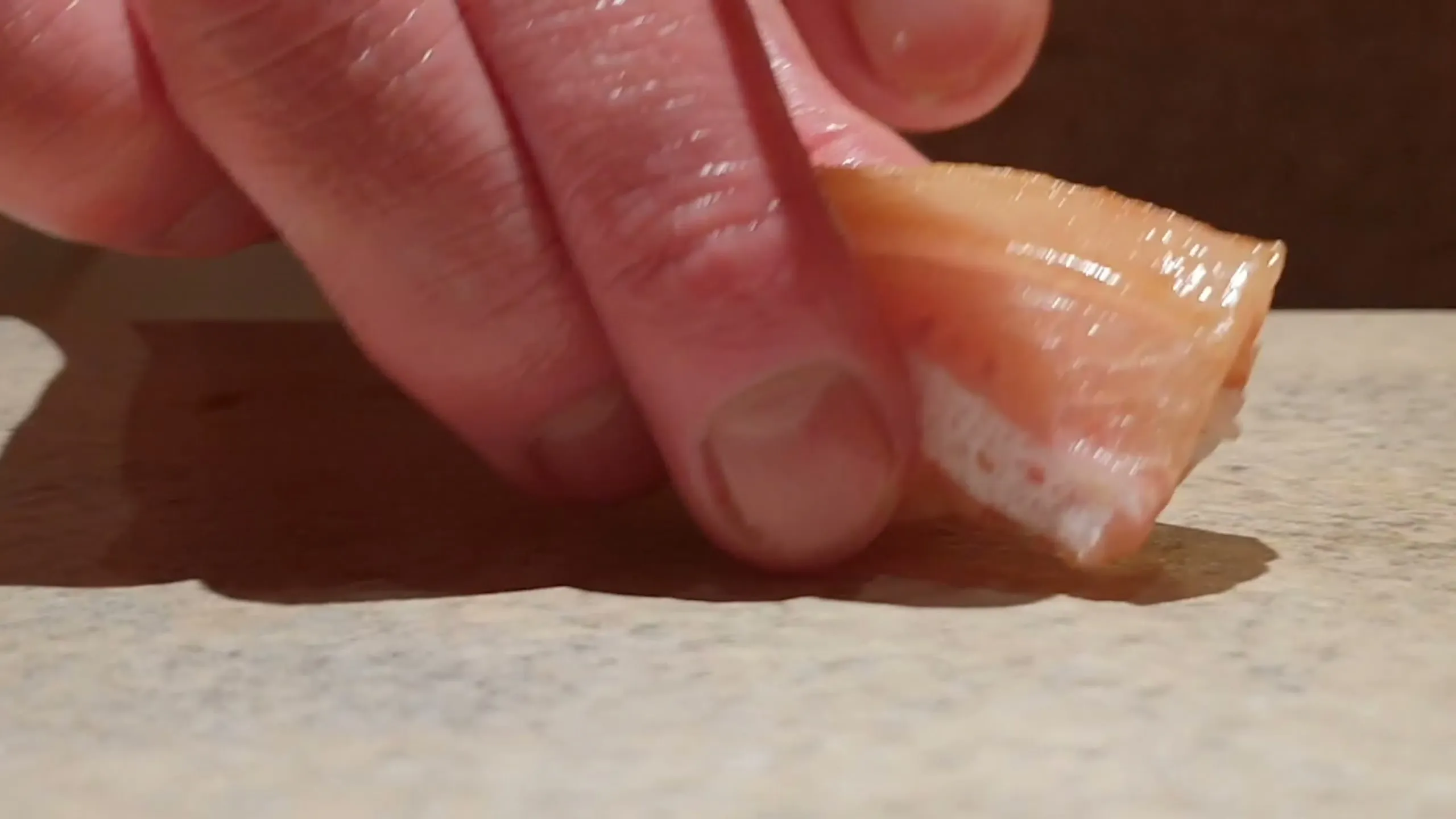
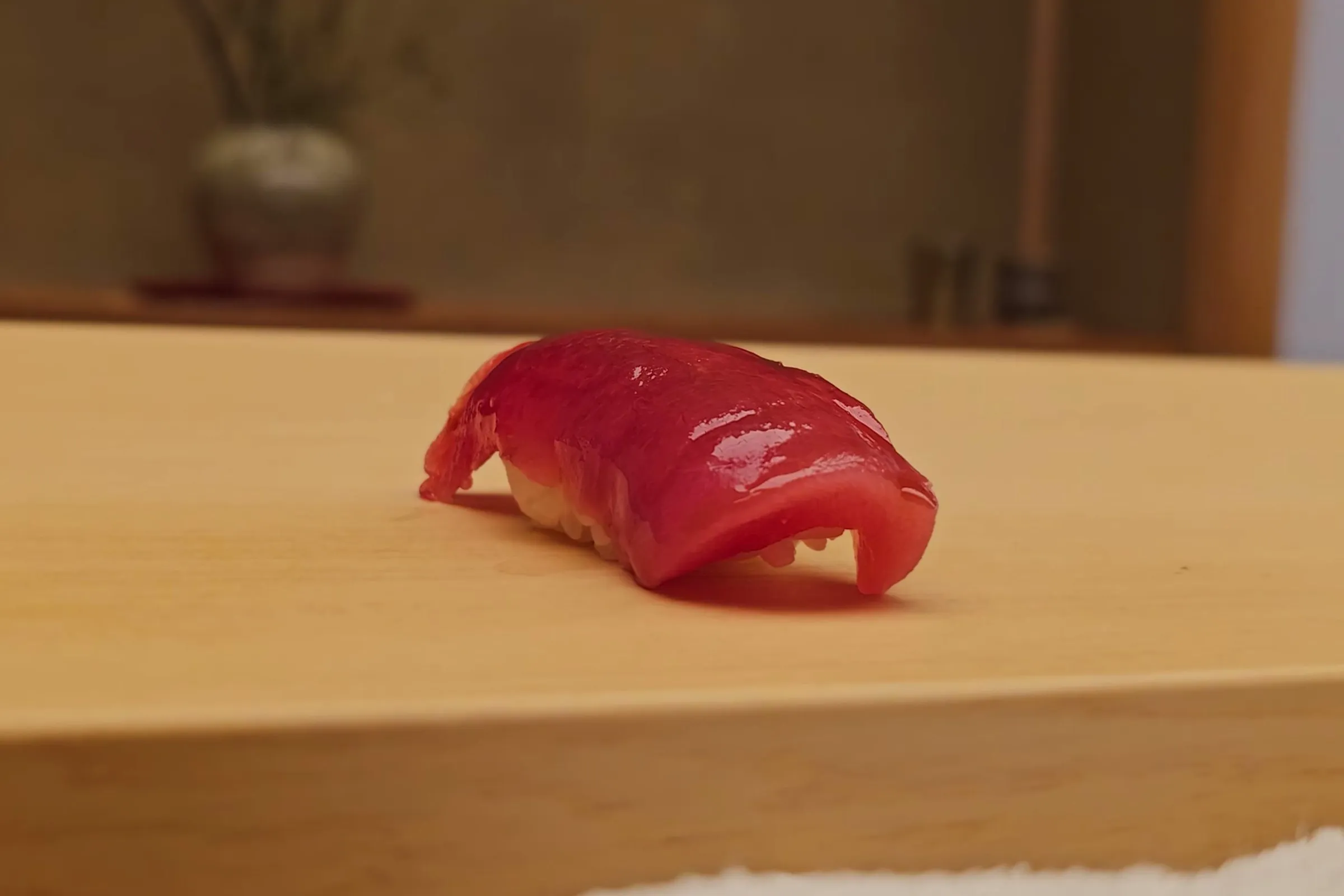
Then the reason I come. Tuna. First, akami with no zuke.
Tuna-famous chefs in Korea and Japan like to say really good tuna doesn’t need zuke. I never agreed. I’d eat the akami they handed me and the words would be right there: chef, this one needed zuke.
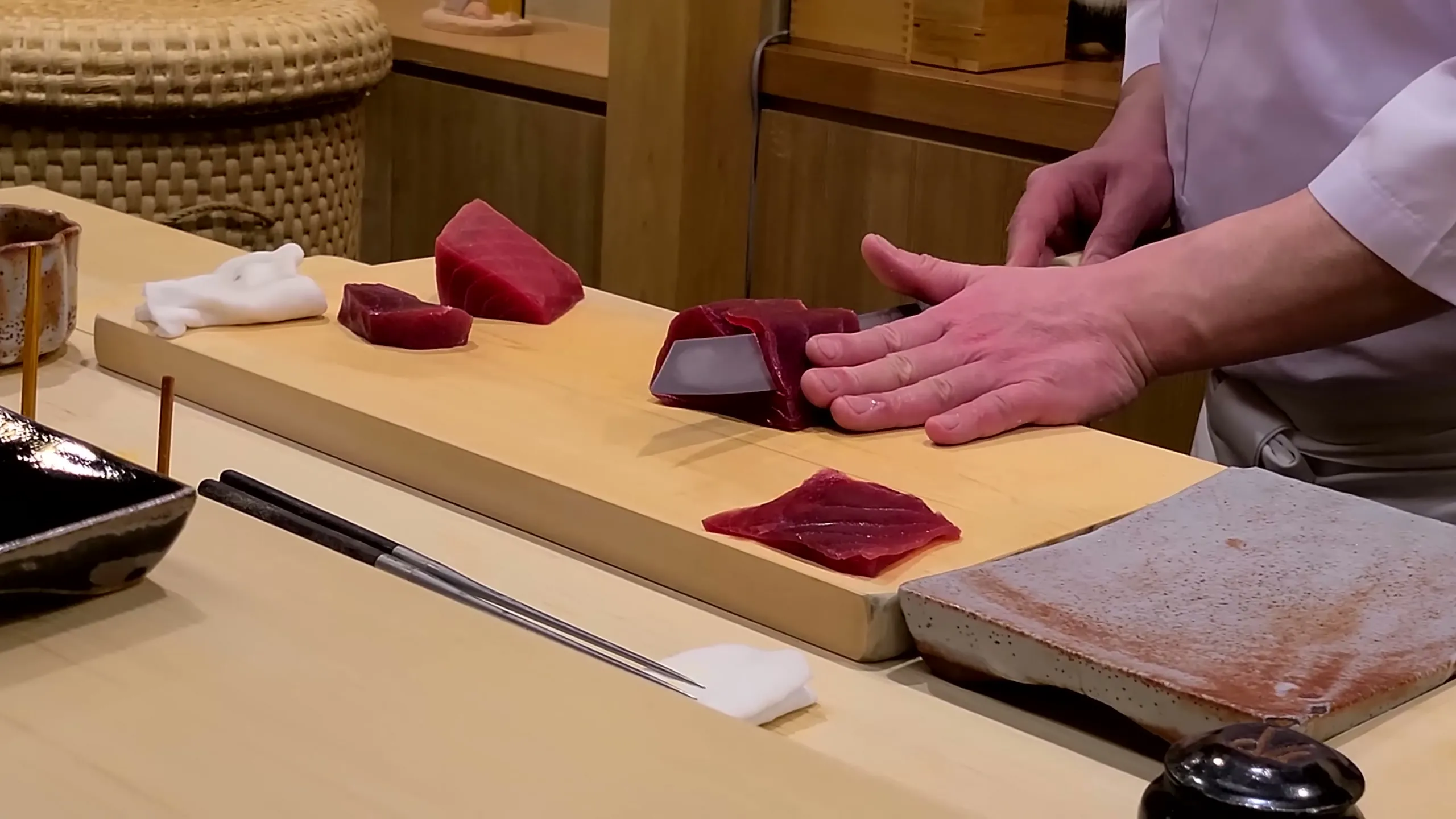
At Arai I finally get what they meant. And this wasn’t even peak season. It was late February, Oma tuna was long gone, and this one was from Nagasaki. Origin isn’t the point. He picks the fish well, and his aging and handling are on another level. Even an off-day tuna at Arai beats the best tuna I’ve had anywhere else. Go to another top counter the night before and come here the next day, and you’ll feel the gap.
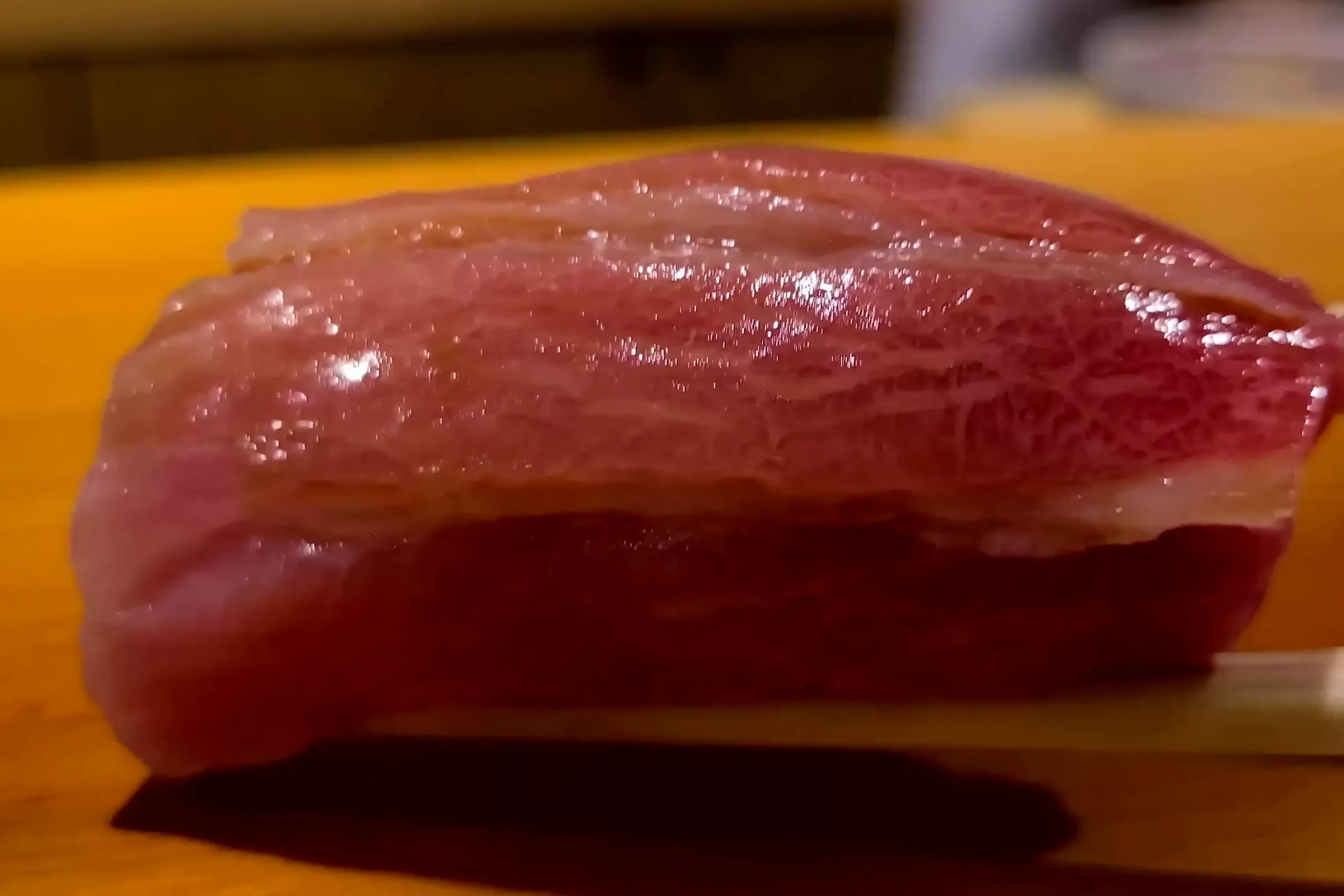
My rule is that the better the tuna, the better the fatty cuts. No off smell from the fat, obviously. Beyond the fat’s sweetness, the lean meat’s own sweetness, acidity and almost bloody flavor come through. Usually the fat covers those up. Here they punch right through it, even in a belly this fatty.
Kohada, redone
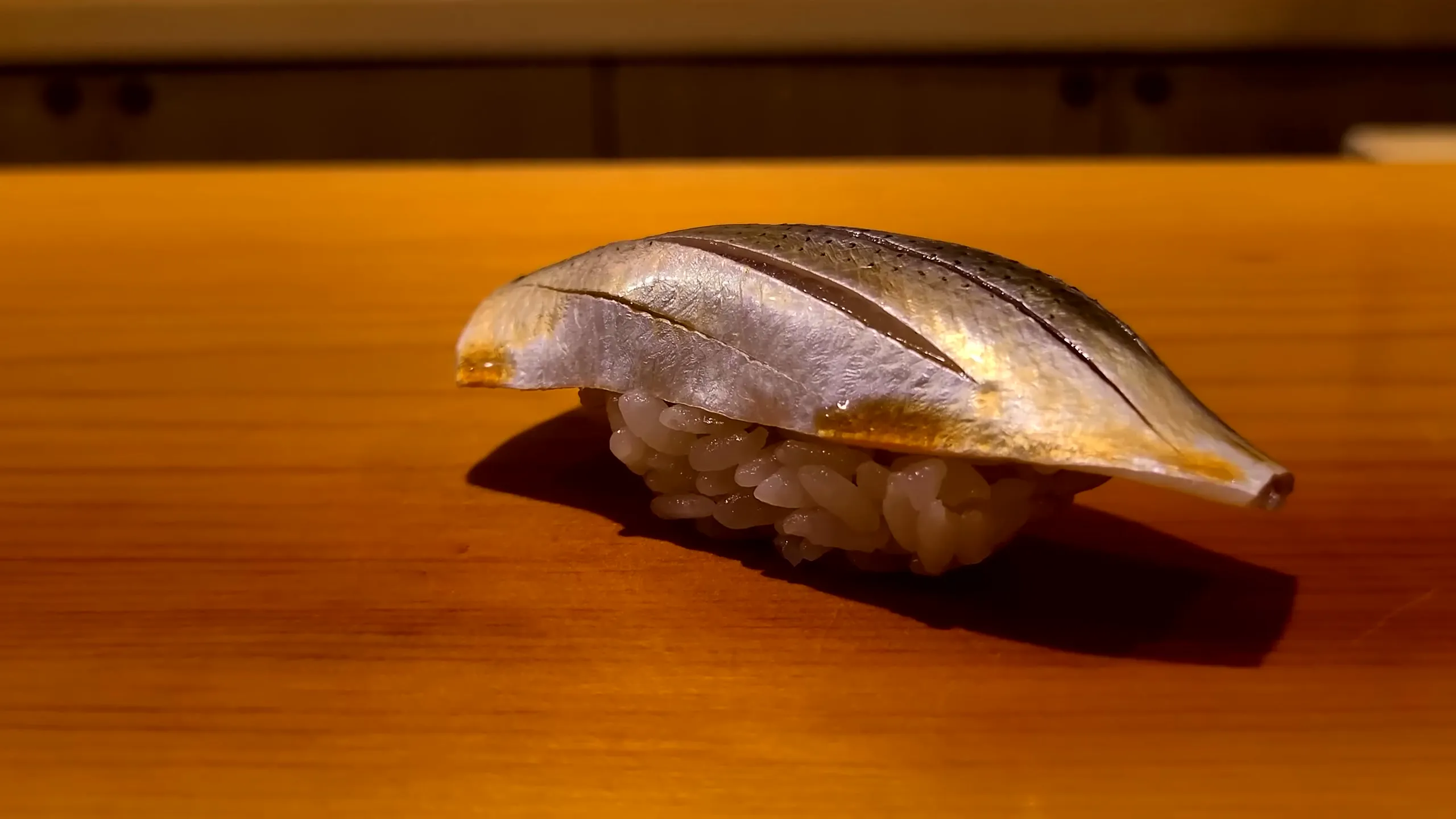
When there’s a gap between pieces, I watch the prep. His number two got scolded a lot that day, and when he came back I told him ganbatte kudasai, hang in there. He does a ton of the work. Arai didn’t like his kohada prep and redid it himself.
Arai’s kohada is very good by my standard. Juicy. The cure’s sweetness and acidity aren’t exactly my taste, but the fish itself is great: fatty and plump. With kohada, that has to be the base.
“Fifty-two, shari-yo!” There it is again.
The rice I brag about
I keep saying Arai’s rice is great without saying why. Arai built his vinegar blend from the vinegars used at the places he trained, Kyubey and Sushi Sho, and ended up with a style of his own. He once said it was one red vinegar and three rice vinegars. I don’t know if it’s changed since.
My guess is Yohei red vinegar and Mizkan’s Shiragiku rice vinegar. Arai was at Sushi Sho when they did a gala dinner at the Lotte Hotel in Seoul, and he talked about Korean versus Japanese vinegar. That’s where my guess comes from. It’s only a guess.
The first time I came, the seasoning alone floored me. The texture was mushy, which I don’t like, and I still told every chef in Korea that Arai’s shari tasted the best, even after I’d been to Sugita. Then sushi rice across Japan drifted toward the texture I like, and Arai’s changed most of all. Now it’s properly al dente, firm outside, and the grains roll around one by one in your mouth.
Hamaguri, shijimi, two kinds of uni
Soft steamed hamaguri, a clam I’m always happy to see. It’s rare in Korea, and tough when you do get it. Then shijimi clam soup, which means the end is near.
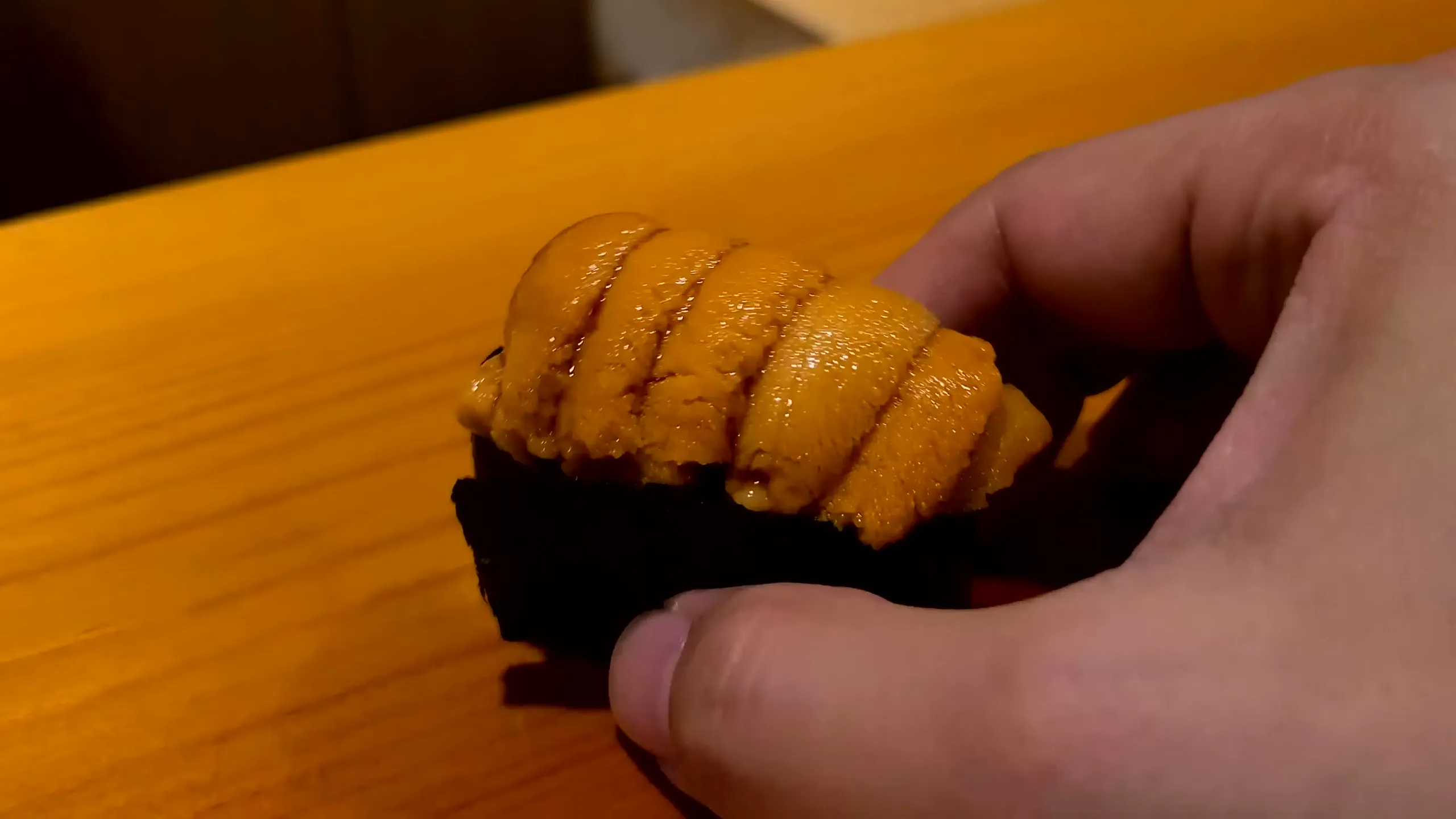
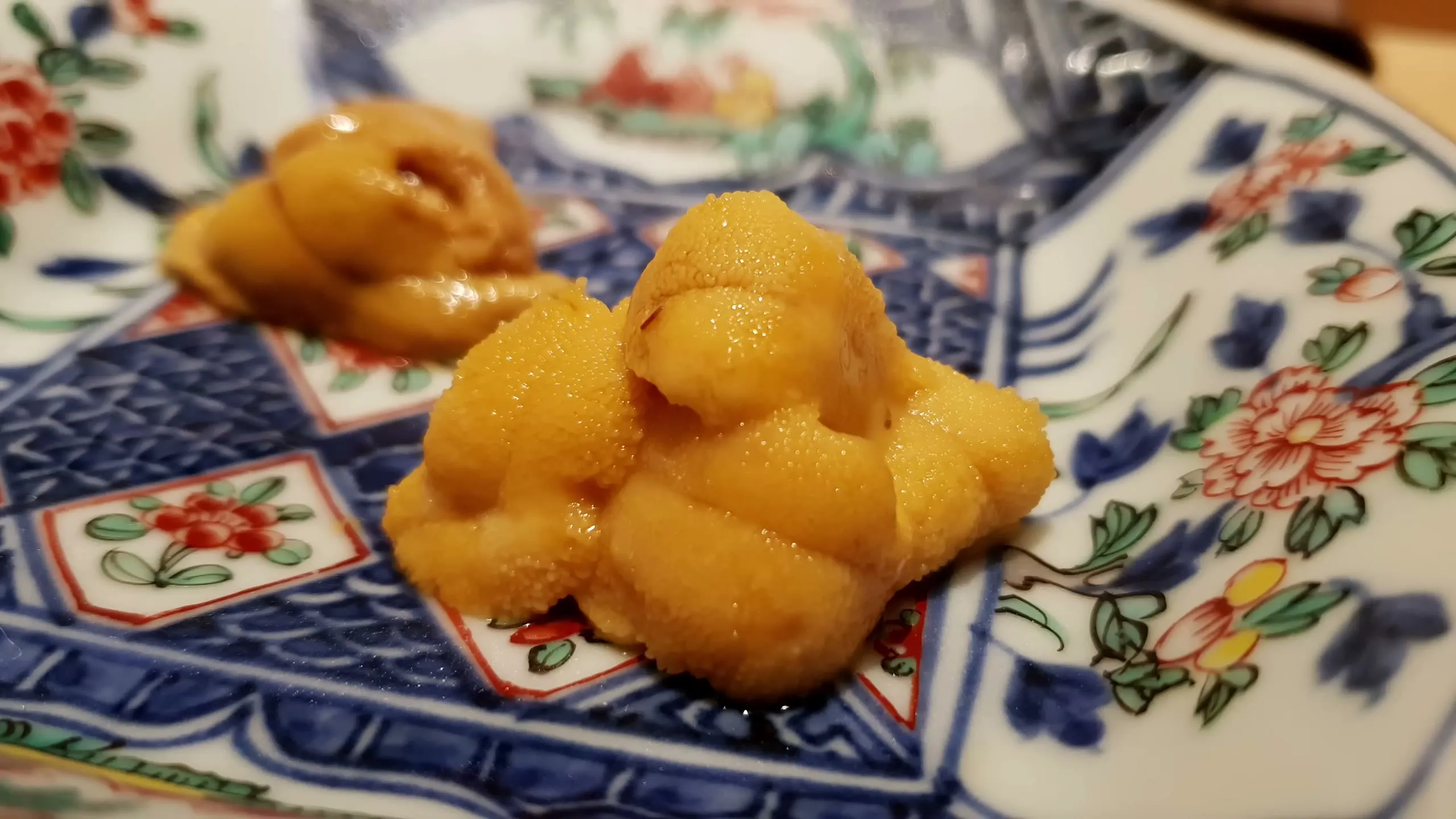
The standard uni that day was murasaki uni from Daizen, which wasn’t great. Next to it sat another box: bafun uni from Nozomi. I like bafun’s lighter, cleaner sweetness anyway, and that day it won easily.
Futomaki isn’t in the course. They sell it to take away. I thought about buying one to eat during my stream, but my friend was paying for lunch, so I just watched.
Anago, and no encore
Anago means the end. Nothing special to say about it.
Before the meal I’d planned it: if the first tuna is good, I’ll go another round of tuna. After the first piece, I knew. I told Arai I wanted another round of tuna but was too full. He said to have the negitoro roll first and decide after. I never got my encore.
Arai is young, around my age. Friendly, and his sushi isn’t a finished product yet. Still my top two.
The slump and the comeback
Right after the pandemic, Arai let me down a few visits in a row. Mushy rice, flat seasoning, tuna with no impact, tsumami that wasn’t my style. I seriously thought about not booking again. A hard booking isn’t a reason to keep going.
In 2023/09 it came back. Classic tsumami, the rice’s aroma back, and tuna from Hachinohe in Aomori good enough that I asked for another piece of the fattiest cut. These days you’re officially only allowed to film the tuna, so my later Arai videos are all tuna.
In 2024/02 a Japanese friend who’s close to Arai brought me. No extras, and it came to ¥54,400 (about US$360, 2024/02). In 2024/03 the tuna beat Shimazu’s from the night before, which shouldn’t even be a contest. Arai is supposed to win that one.
In 2025/01 I ate a lot of my friend’s tuna, added nothing, and paid ¥60,000 (about US$380, 2025/01). When I first came, lunch was ¥8,000 to ¥10,000 and the dinner course ¥16,000. That’s close to four times. I’m still holding on.
¥41,800 a person, lunch with the dinner course
2020/03 video
Two of us, no drinks, the dinner course with tsumami at lunch, and one extra uni: ¥83,600, so ¥41,800 each (about US$390, 2020/03).
The booking page now lists the nigiri omakase from ¥38,500 and tsumami plus nigiri from ¥55,000, tax included, plus a service charge. Tabelog reviewers put dinner at ¥60,000 to ¥79,999. My 2026/10 visit came to about ¥67,000 (about US$420, 2026/10).
The one extra I’d skip is the tuna futomaki. Four pieces cost me ¥20,000 (2024/03).
What Sushi Arai has cost me, visit by visit
7 visits where I said the bill on camera or wrote it on my blog. ¥11,120 in 2017/07, ¥67,000 in 2026/10. Up 503%.
Per person. If I said my own bill, that’s the number. If I only said the table total, it’s split evenly. Extras are in and drinks aren’t (I don’t drink). Each month is when that video or blog post came out. Hollow dots come from my Naver blog.
All 7 visits
| Source | Per person | US$ |
|---|---|---|
| 2026/10About, from my Shimazu episode | ¥67,000 | ≈ 420 |
| 2025/01Mine, no extras | ¥60,000 | ≈ 380 |
| 2024/02Mine, no extras | ¥54,400 | ≈ 360 |
| 2020/03Two of us, ¥83,600, lunch with the dinner course, one extra uni | ¥41,800 | ≈ 390 |
| 2018/09blogMine, the dinner course at lunch | ¥36,180 | ≈ 320 |
| 2018/04blogMine, dinner with a lot of extras. The dinner course was about ¥27,000 | ¥52,920 | ≈ 490 |
| 2017/07blogLunch, the 14-piece nigiri course, cash only | ¥11,120 | ≈ 100 |
Would I go back?
Yes. It had a slump and came back, and the tuna is still the best I know. If seats pop up on the booking sites, grab one.
The end.
How to book
How I booked
My first visits were booked online, back when it was easy. As a regular I used to message the chef within a day or two of each meal to book the next one. Lately a Japanese friend books and brings me.
- OMAKASE (omakase.in)
The booking link on the restaurant’s own site. When I checked: nigiri omakase from ¥38,500, tsumami and nigiri from ¥55,000, tax included, plus a service charge, and a ¥390 booking fee per seat. Seats open irregularly, and the next round was to be announced. One booking per quarter, and the person who books has to come. Cancellation costs 5% once booked, 30% from 7 days before, 50% from 3 days, 100% the day before. Seatings at 12:00, 18:00 and 20:30, closed Wednesdays.
- Tabelog or phone
Tabelog also takes online bookings, and the phone number is 03-6264-5855, though it often goes unanswered outside set hours. Everyone starts together, so arrive on time. Late arrivals get fewer pieces, and a change counts as a cancellation.
- House rules
No shorts, jerseys or sandals, and no strong perfume. The booking page asks you not to take photos. In my experience the chef allows photos of the tuna only.
Checked 2026/10. Booking rules change, so look at the official page before you go.
Where it is
- Address
- Ruan Building B1F, 8-10-2 Ginza, Chuo-ku, Tokyo東京都中央区銀座8-10-2 ルアンビル B1F
- Nearest station
- Ginza, exit A5
Plan the Tokyo trip
The boring bits I’d sort before flying, so the eating days stay free.
- Hotels in Tokyo*
Pick the room by where you eat, not by the sights. After a long dinner, a short ride back is the real luxury. This place is in Ginza, Tokyo.
- Japan eSIM*
Data from the moment you land, no counter and no SIM swap. Set it up the night before.
- Keisei Skyliner from Narita*
Narita to Ueno in about 40 minutes. Buy it ahead and walk straight to the platform.
- Haneda airport limousine bus*
Landing at Haneda instead? The limousine bus drops you at the big hotels and stations with no transfers.
- Tsukiji Outer Market food tour*
A market morning with someone who knows which stalls are worth the line.
- Sushi-making class at Tsukiji*
Shape nigiri yourself once and the counter makes a lot more sense.
Links marked * are affiliate links. If you book through them I may earn a small commission, and you pay the same. How it works
Guides that mention this place
The best sushi in Tokyo, ranked by someone who paid for it.
Eight counters from Sugita down, what I paid at each, and how to get a seat.
In Tokyo, getting the seat is harder than eating the sushi.
omakase.in rounds, cancellation seats, lunch side doors, and how regulars really get in.
The fish gets the photos. The rice decides the meal.
What edomae means, red vinegar or white, and what I taste for in sushi rice.
Ankimo, shirako, zuke. The words nobody explains at the counter.
What ankimo, shirako, ikura, zuke and 12 more Japanese menu words mean, and how each one tastes.
Every Michelin sushi counter in Tokyo I’ve paid for, with the stars then and now.
Three stars down to one, what I paid at each, and how to get a seat today.
Sushi counters are less scary than you think.
Hands or chopsticks, soy, cameras, the bill. What actually matters at the counter.
Every day is a sushi day. Late August is a better one.
What’s in season at Tokyo sushi counters, month by month, and the day to avoid.
The bill doubled. Some counters are still worth it.
Ten years of my Tokyo sushi bills on one chart, from a ¥4,000 lunch to an ¥80,000 dinner.
Every Tokyo sushi booking route, compared by someone who paid the fees.
omakase.in, Tabelog, TableCheck, TABLEALL, Pocket Concierge, byFood and the hotel desk, side by side.
With tuna, fat isn’t the whole story.
Akami, chutoro, otoro and the rare cuts, and where each one sits on the fish.
More from this restaurant on the channel
- Turning Point8:332025/01
- This Is How Tuna Should Be!5:502024/03
- He’s Still Got It4:222024/02
- The Tuna King Returns6:462023/09
More places I have eaten at
All of Tokyo →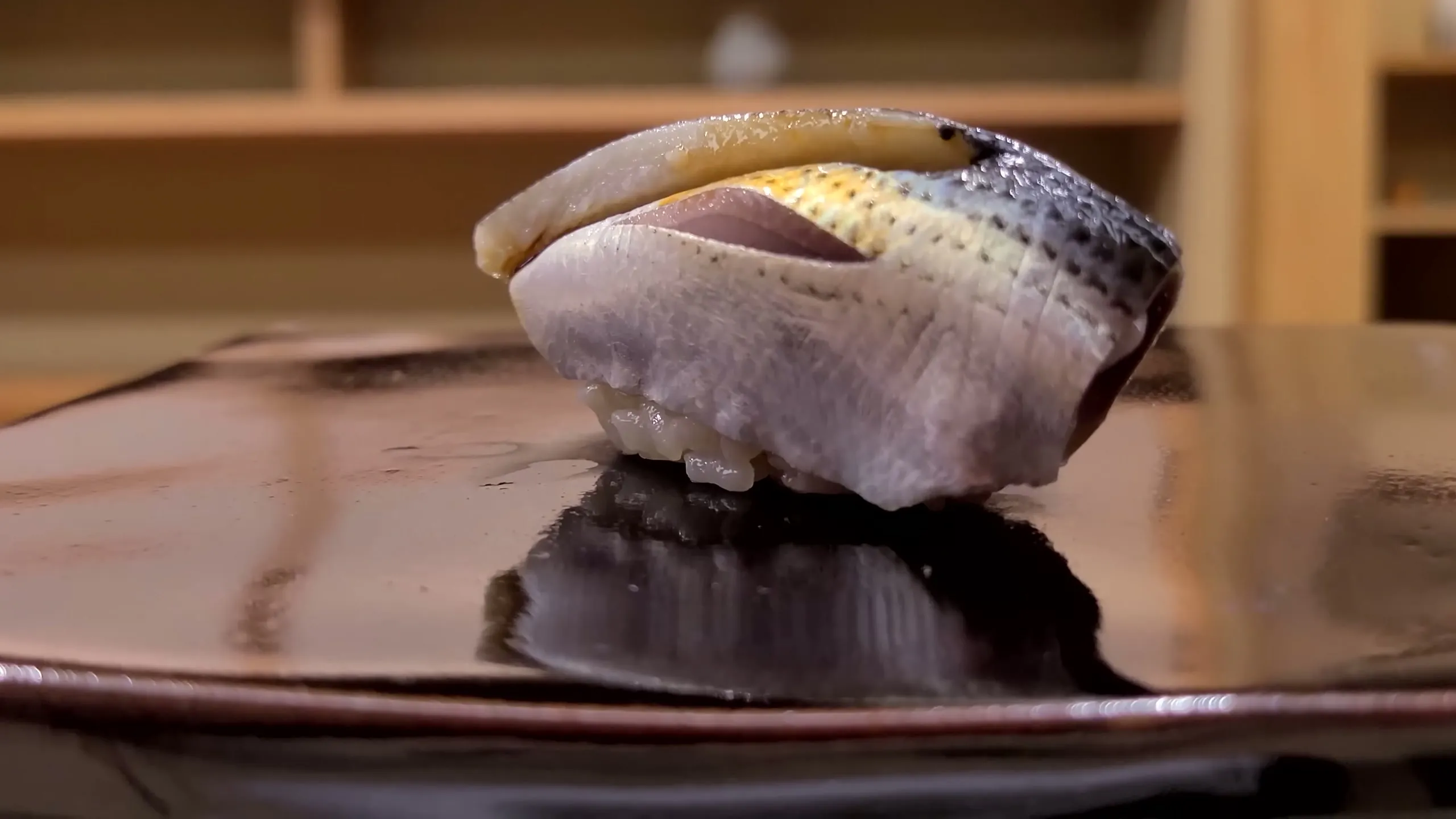 Nihonbashi, Tokyo
Sushi Sugita
My most-visited Tokyo counter, and what every filmed visit cost.
≈ ¥50,000 2020/04 video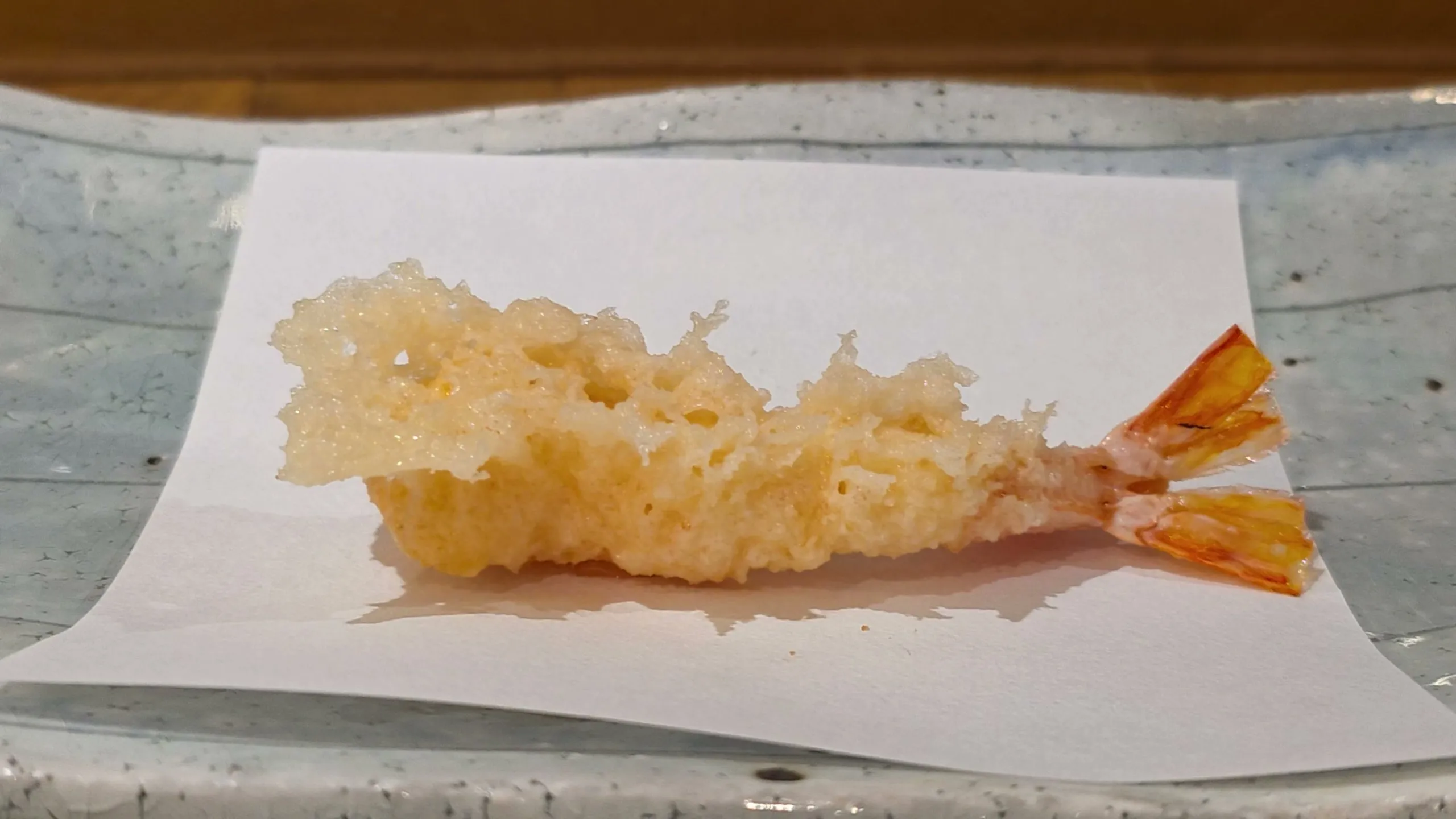 Nihonbashi, Tokyo
Tempura Asanuma
The first time tempura felt like cooking to me.
¥26,870 2026/10 video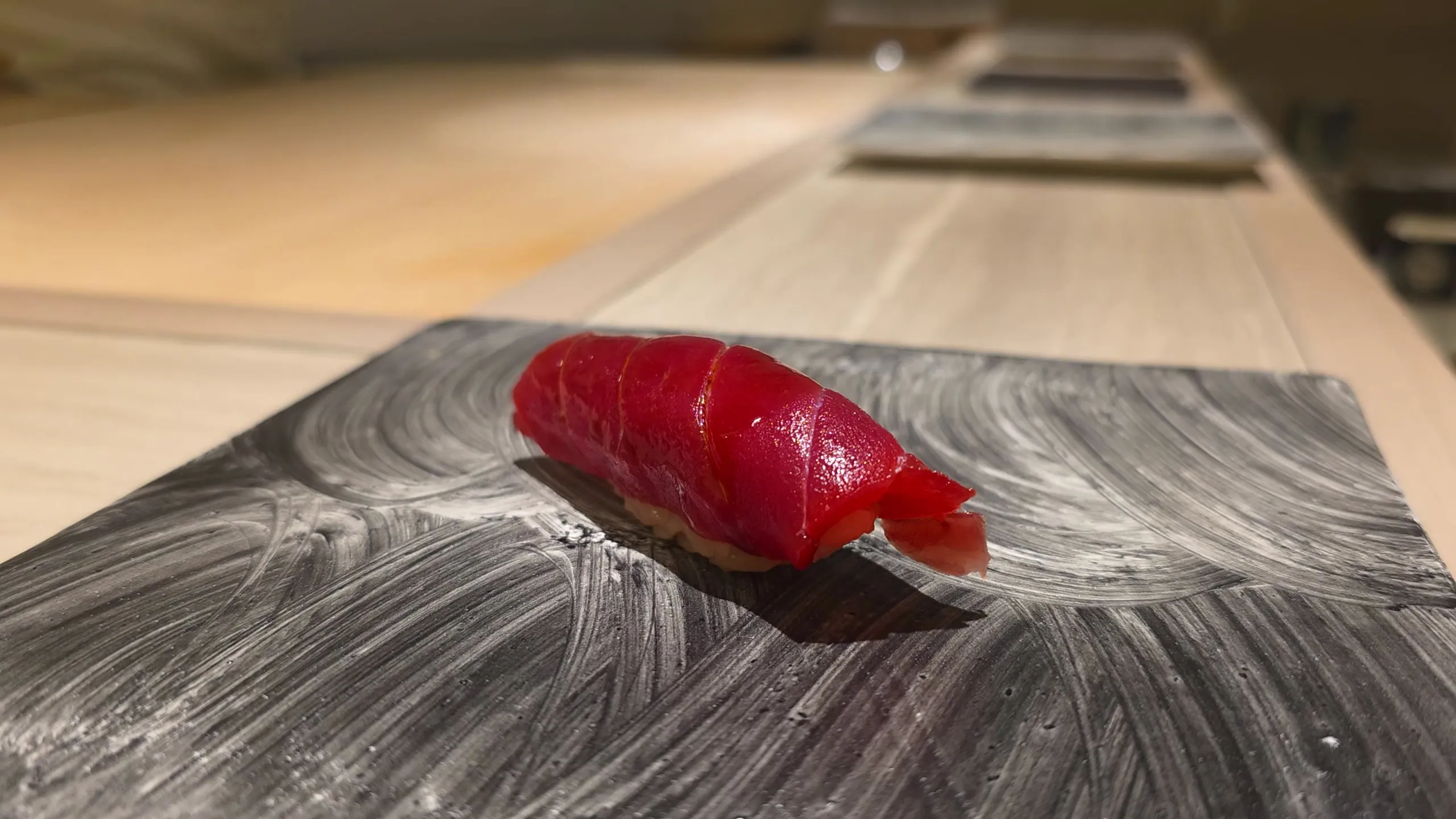 Shirokane, Tokyo
Sushi Shimazu
Prices went up. I still go back.
≈ ¥55,000 2026/10 videoSources
- Sushi Arai's Reservation OMAKASE
- 鮨 あらい Sushi Arai
- 鮨 あらい Tabelog