The most famous sushi in Tokyo, and I didn’t want seconds.
Sushi Saito sits on the ground floor of ARK Hills South Tower in Roppongi and has held every title in sushi: three Michelin stars, number one on Tabelog, Tabelog Gold. I got in once, on a friend’s spare seat. Dinner came to ¥28,080 a person (about US$260, 2020/04), cheap for a counter like this. The nigiri looks perfect. The tuna that night was flat, and I didn’t want a single extra piece.
monster gourmetFrom my 2020/04 video
- My share
- ¥28,080
- about US$260, dinner, no drinks, 2020/04 video
- Highlight
- Kuruma ebi with the head innards
- Skip
- The ginger
- Video
- 13:21
- 2020/04
- Booking
- Main counter seats rarely reach anyone but regulars. The Azabudai branch is on OMAKASE.
- Main counter in Roppongi
- Where
- Roppongi, Tokyo
- Roppongi-itchome, 1 minute’s walk
Every title in sushi
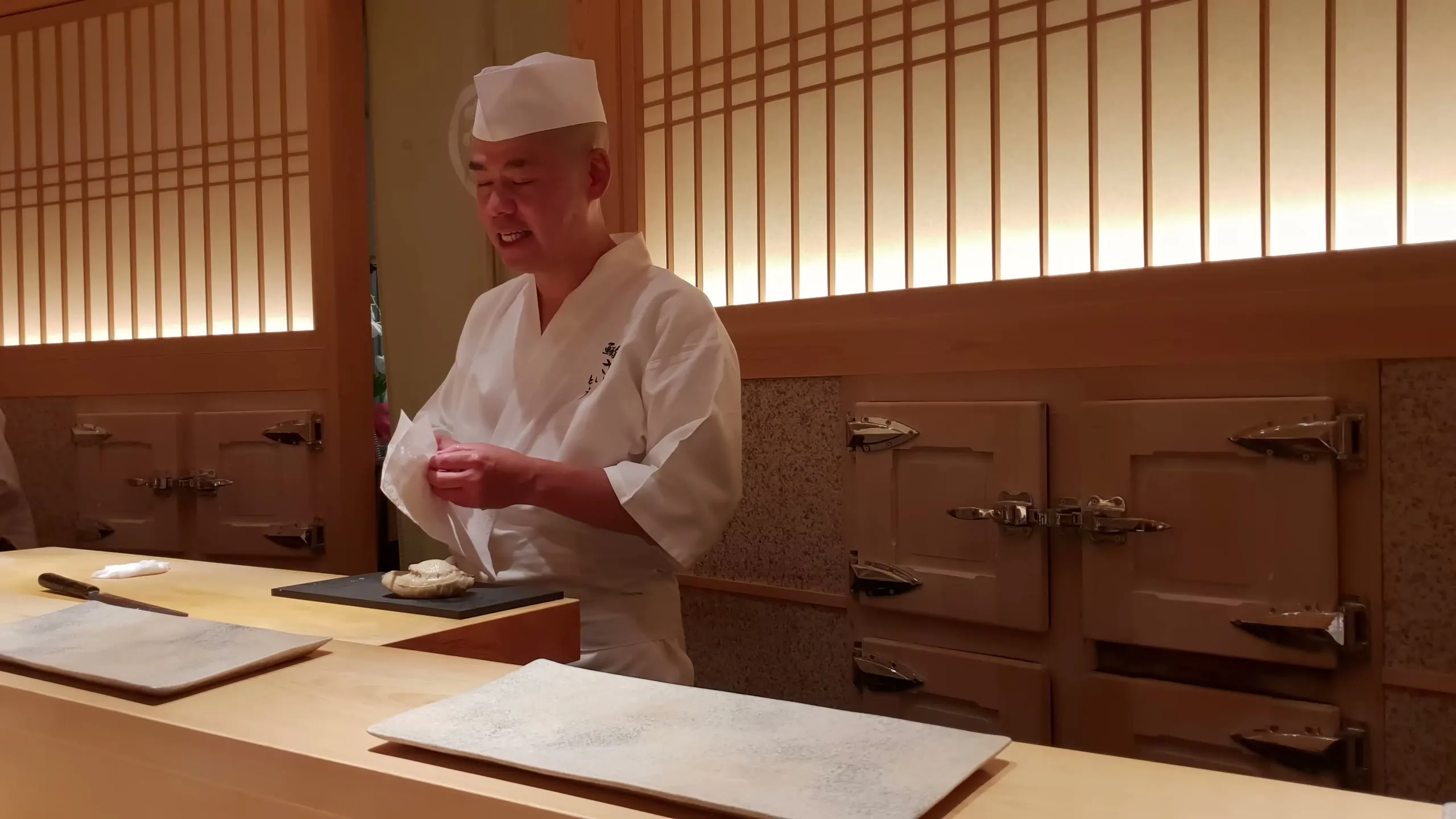
Sushi Saito is an eight-seat counter on the ground floor of ARK Hills South Tower in Roppongi, Tokyo. Chef Saito Takashi trained at Ginza Kyubey and moved here in 2014. Three Michelin stars for years, number one on Tabelog for a long stretch with Sugita right behind it, Tabelog Gold. If sushi has a title, Saito has held it.
Then it went regulars-only and stopped taking bookings from the public. Michelin only lists places anyone can book, so in 2019 Saito left the guide and the three stars went with it.
I had no booking. A friend who’s a regular had a seat open up when someone in his group dropped out, and I filled it. First time at Saito, so I was a little nervous.
Can you book Sushi Saito in 2026?
Short answer, not the main counter. Tabelog lists it as reservation only and says it doesn’t take new phone bookings. Regulars book their next visit before they leave, so a seat almost never reaches a stranger. That’s why Michelin dropped it in 2019, and why I’ve never had a booking of my own. I got in because a friend who’s a regular had someone drop out of his group.
The realistic door is the Azabudai branch. Sushi Saito Azabudai opened in 2024/03 in the basement market of Azabudai Hills and takes bookings on omakase.in. When I checked in 2026/10, lunch was ¥16,500 and dinner ¥38,500 with tax, plus a ¥390 fee per seat, 12 seats. Seats open in rounds, every one was gone, and the next round was set for 2026/11. Cancelling costs 50% from three days out and 100% the day before. I haven’t been, so I can’t tell you how close it is to the main counter.
If neither works, the counters I’d book instead are in my booking guide, linked below. Sugita, Shimazu and Arai all take bookings on omakase.in, and the guide walks through how the rounds work.
Ikura, octopus, abalone
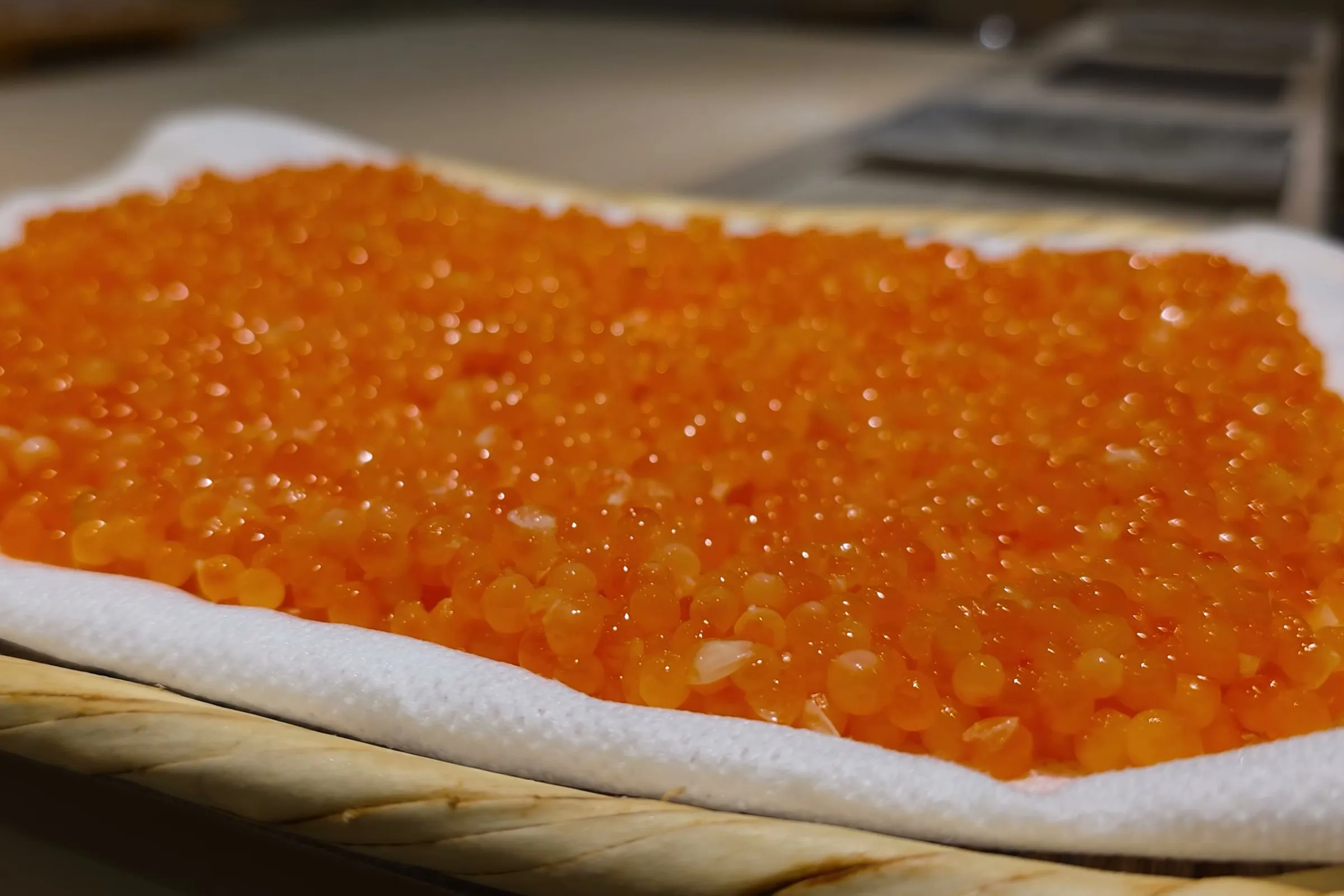
Ikura first. Salmon roe season was just starting, so it was fresh and clean. Gone in a few spoonfuls.
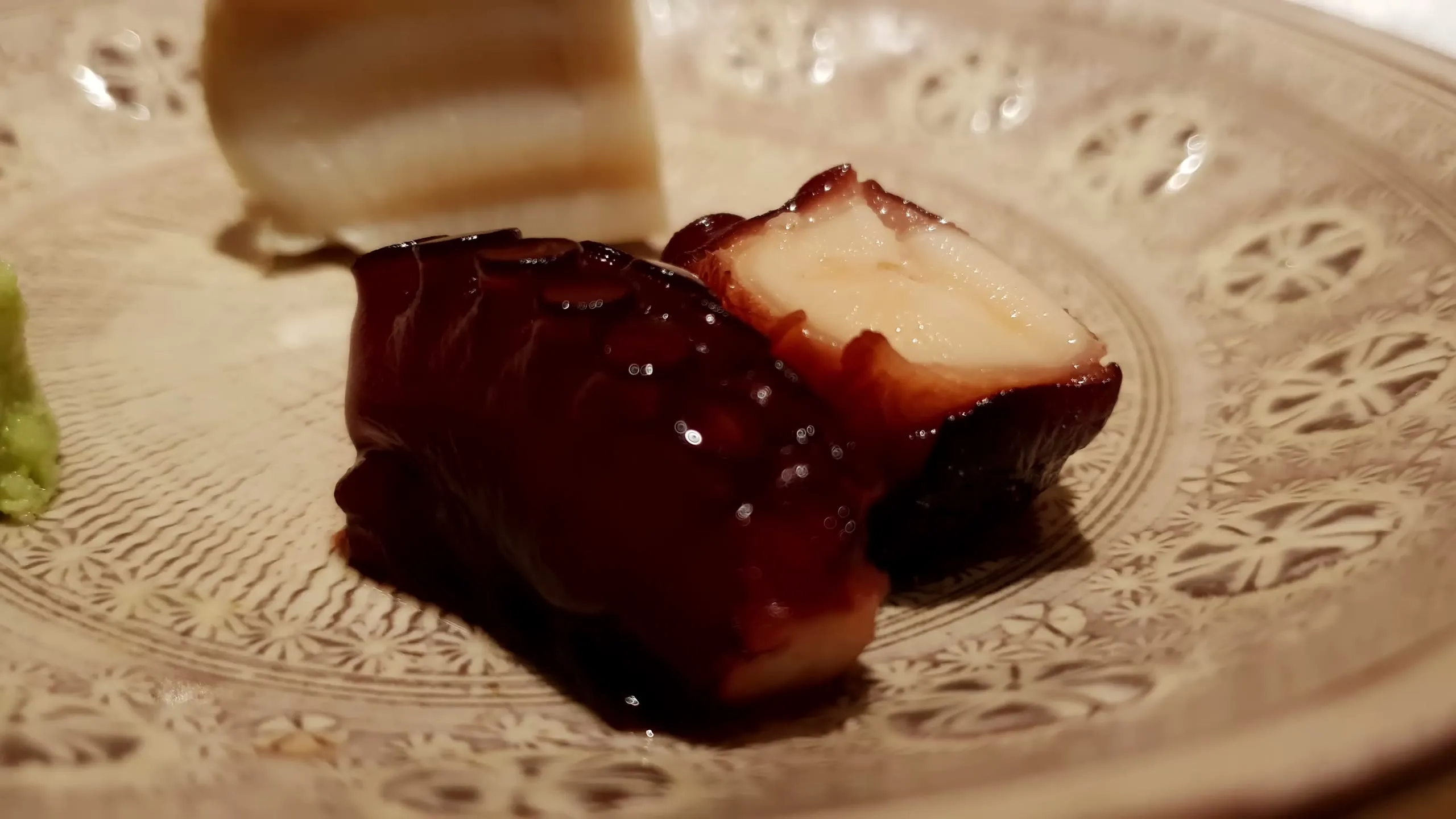
Saito was already working on the abalone and octopus before I’d even sat down. The octopus came with wasabi, sweet, with that springy bite that pushes back on your teeth. Best plate of the tsumami.
The abalone came with salt. Big, cold, full of flavor, but the surface was wet, so even a light dip picked up way too much salt. Most of the meal ran salty that night.
The famous katsuo
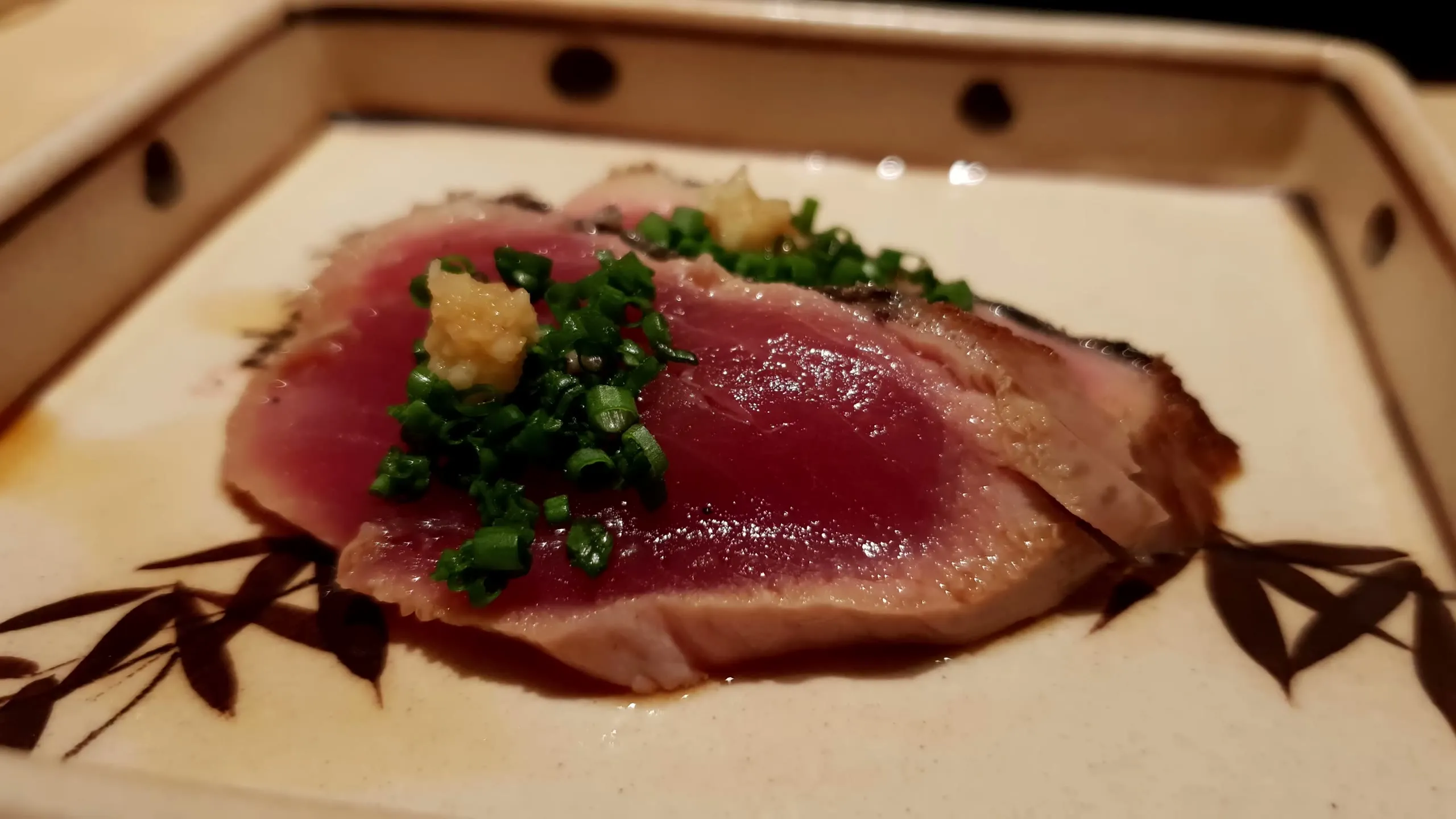
Saito dipped the katsuo, skipjack, in soy for a moment and plated it. People had told me about this katsuo so many times. Look at the fat under the skin. Gorgeous.
The skin was grilled crisp and nutty, and way too salty, like the salt went on heavy before the grill. Even for a fall katsuo the meat had almost no acidity. Not for me.
Two aka uni, one species
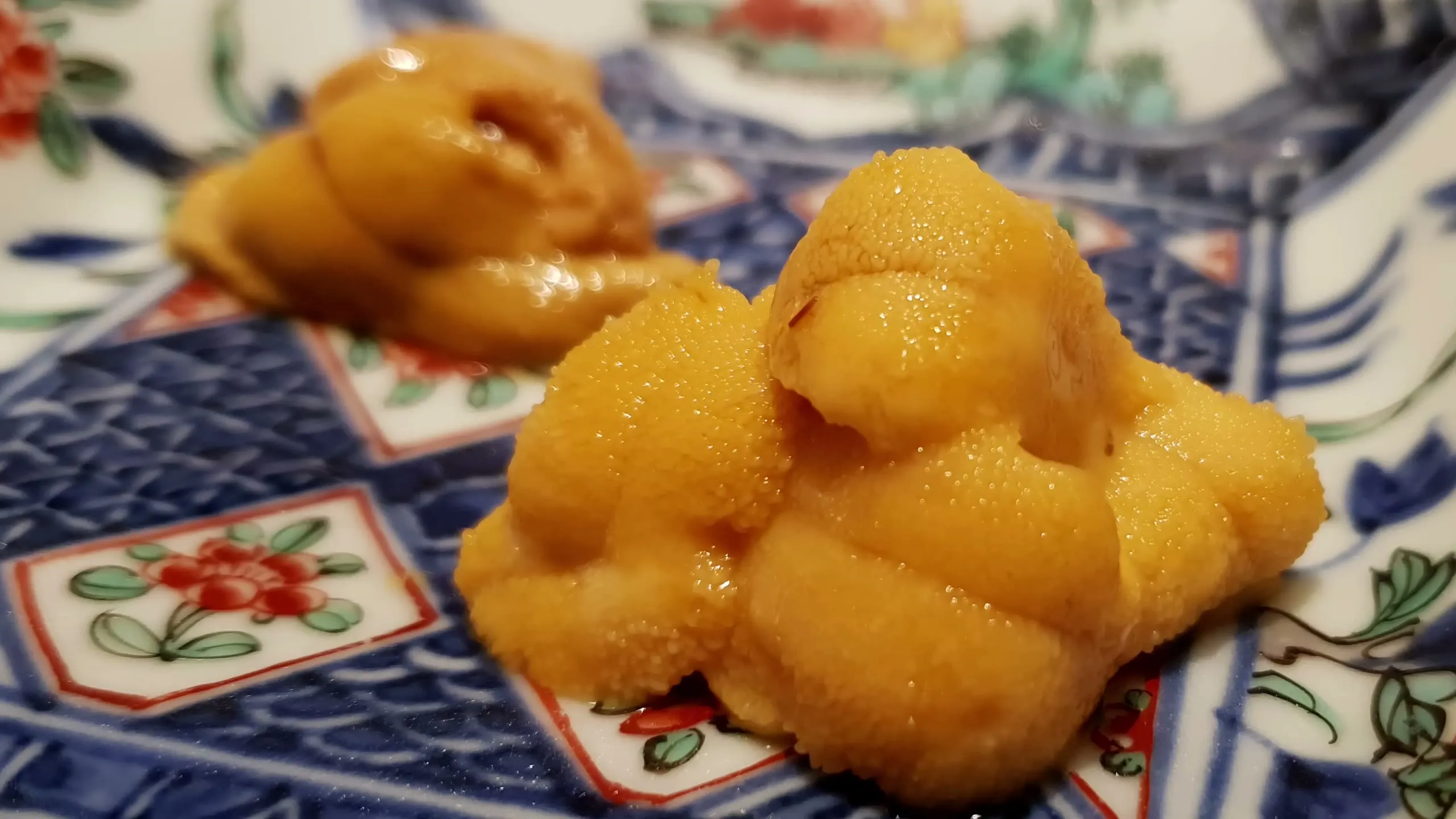
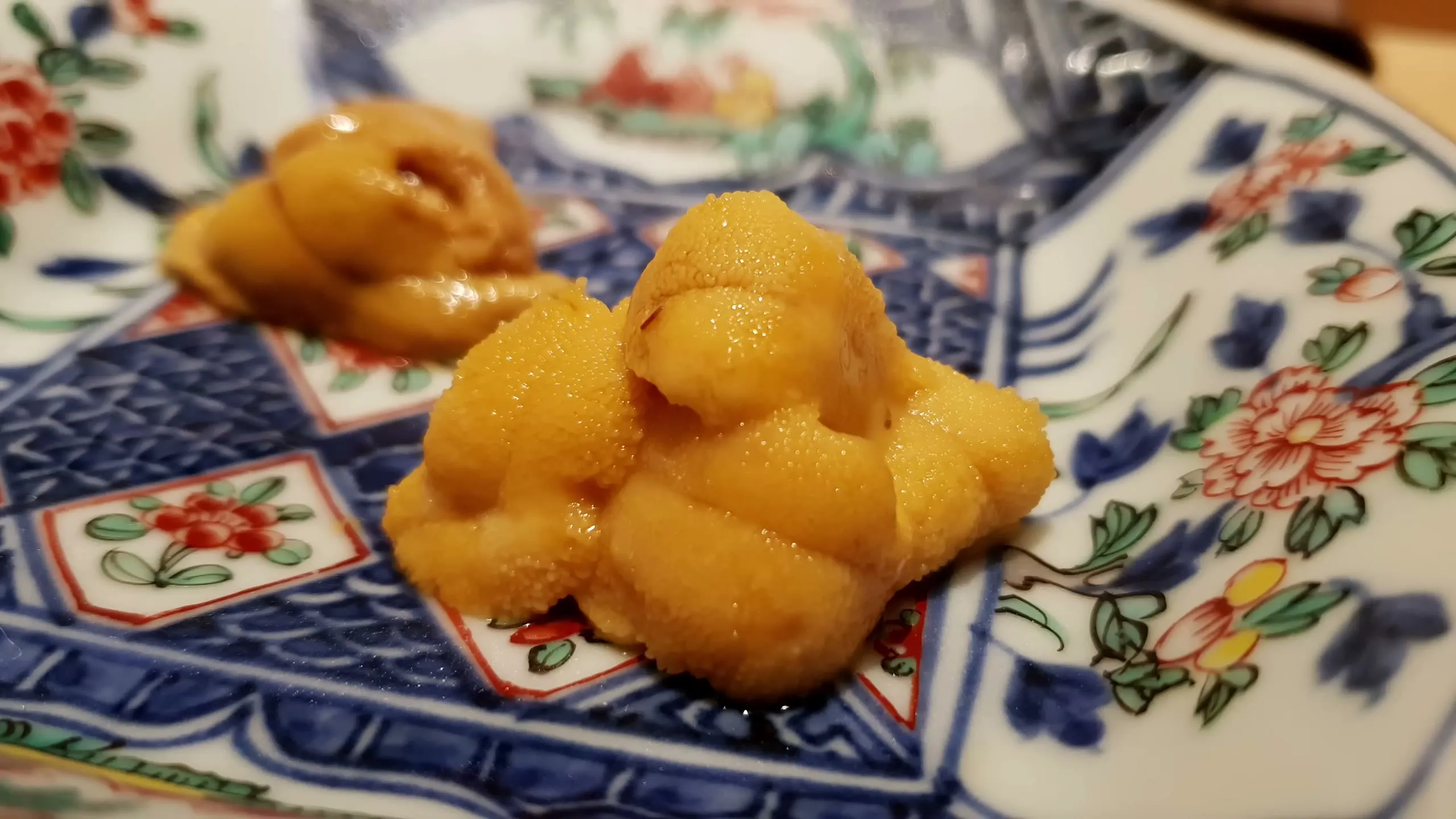
Then two kinds of uni. Saito is known for serving two or three depending on the season. That night both were aka uni, from two different places.
Quick TMI, because even people who sell uni get this wrong. Aka uni isn’t named for red flesh. Sea urchins are named for the shell’s color and shape, and real aka uni is pale or a bit dark inside.
The one from Awaji Island had shell in the first bite, then not much taste, just a gassy note at the end. The one from Karatsu, which is famous for aka uni, was thick and sticky, sweet and nutty from the first second. That’s aka uni, dense instead of lightly sweet. I usually go for bafun uni because I like a clean finish.
Crab, and my curse
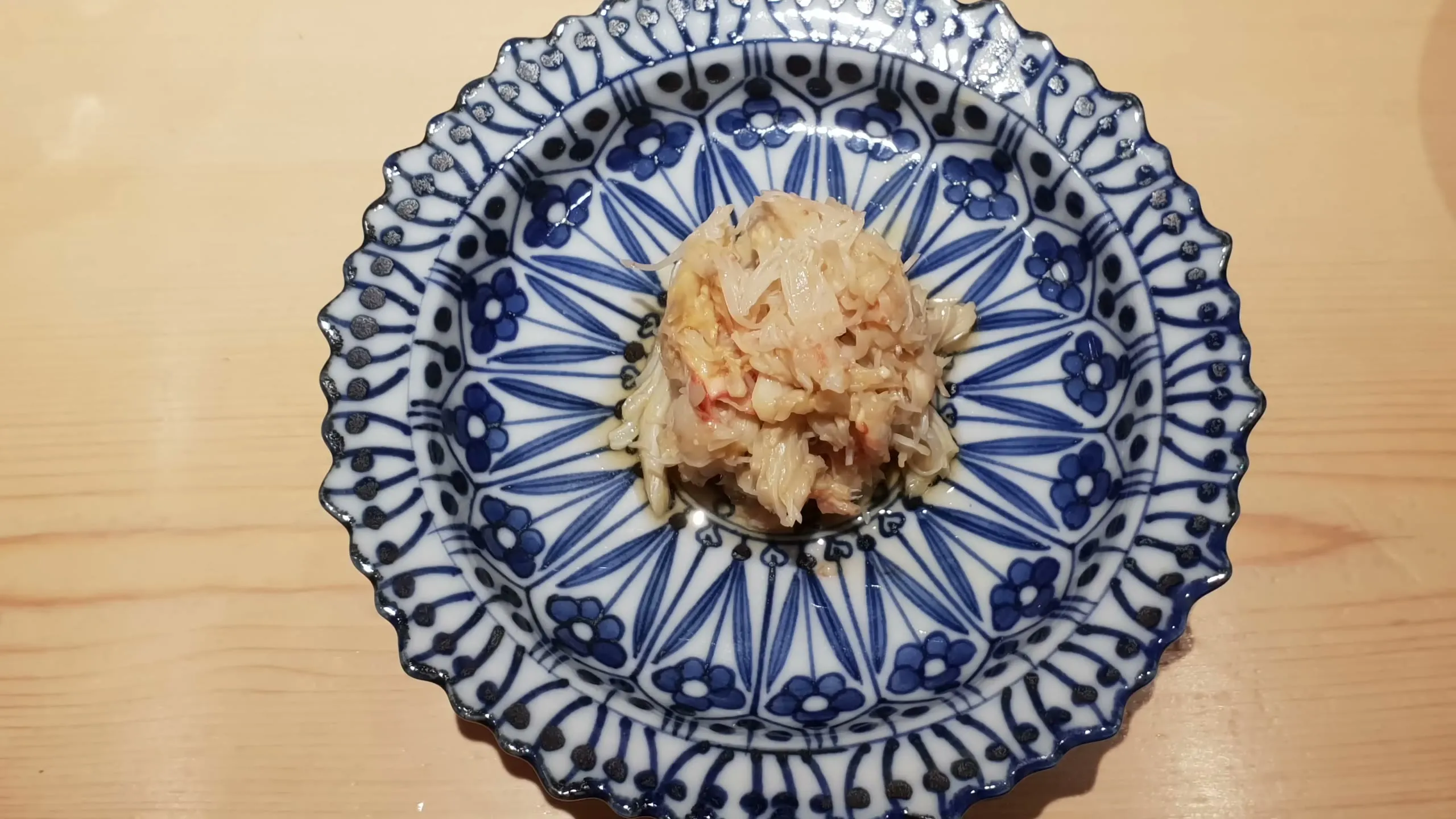
Kegani, horsehair crab, came with the kanisu, the crab vinegar, already mixed in. Lightly nutty, the vinegar quiet and a little sweet, the meat delicate. And not a single bit of shell. Loved that.
Here’s why. Wherever I eat, if something ends up in the food, it ends up on my plate. Steel wool at a stew place. An eyebrow in shaved ice. Crab shell, fish bones and plastic at sushi counters. Saito was no exception: there was a fish scale in my nodoguro. My friends joke that I’m growing scales.
TMI: Chef Lee Jin-wook of Sushi In in Seoul once came here and took a few tsumami ideas home.
Nodoguro and the yam
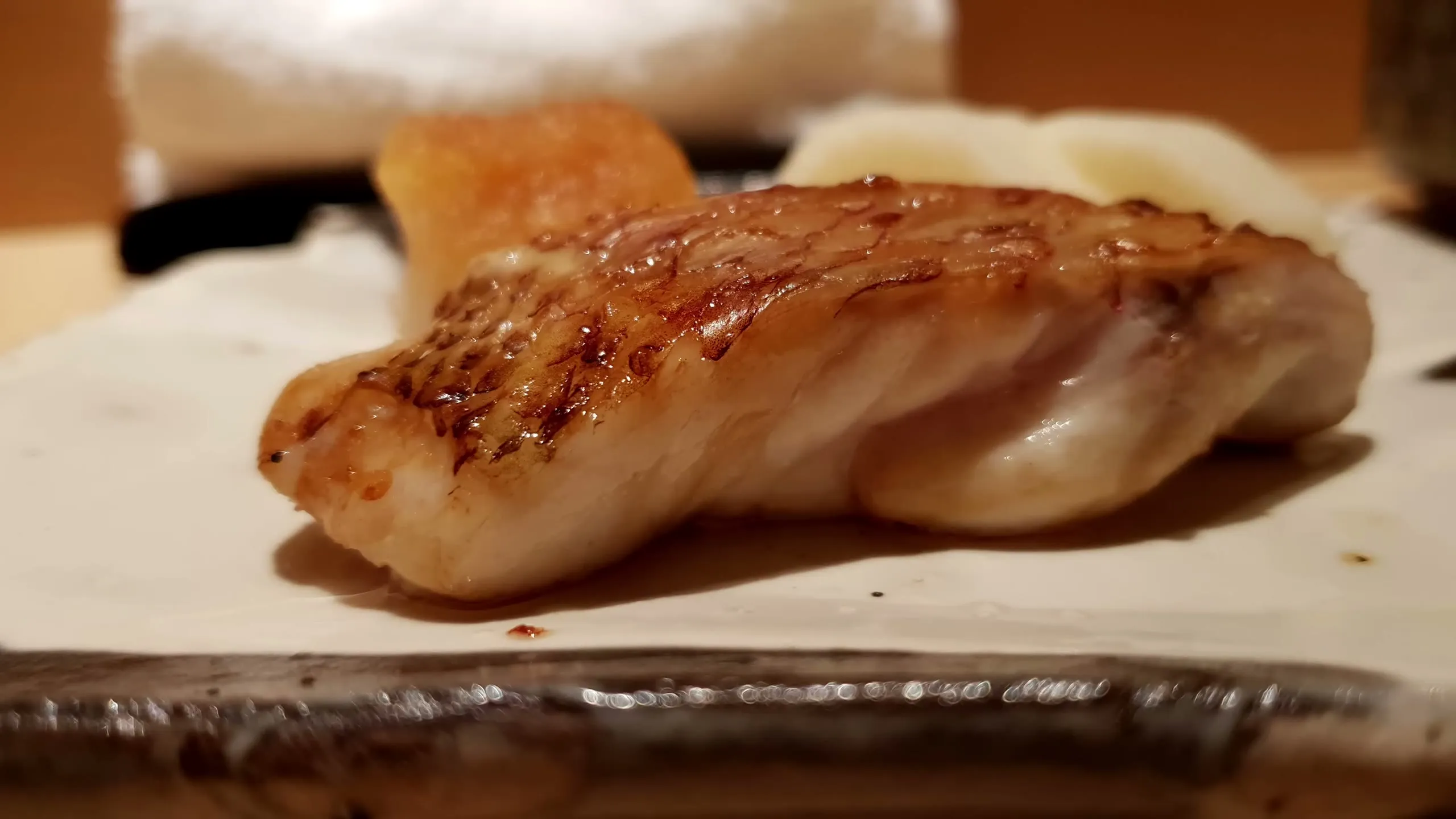
Nodoguro, blackthroat seaperch, grilled. A fat one. Moist, seasoned right, with something like saikyo miso on the skin. Grilled nodoguro is almost never bad.
Next to it sat something white. I figured it was bettarazuke, the sweet pickled radish. It was yam. Salty and a little hot, like Korean garlic and chili pickles, and crunchy. A good palate cleanser.
The rainbow
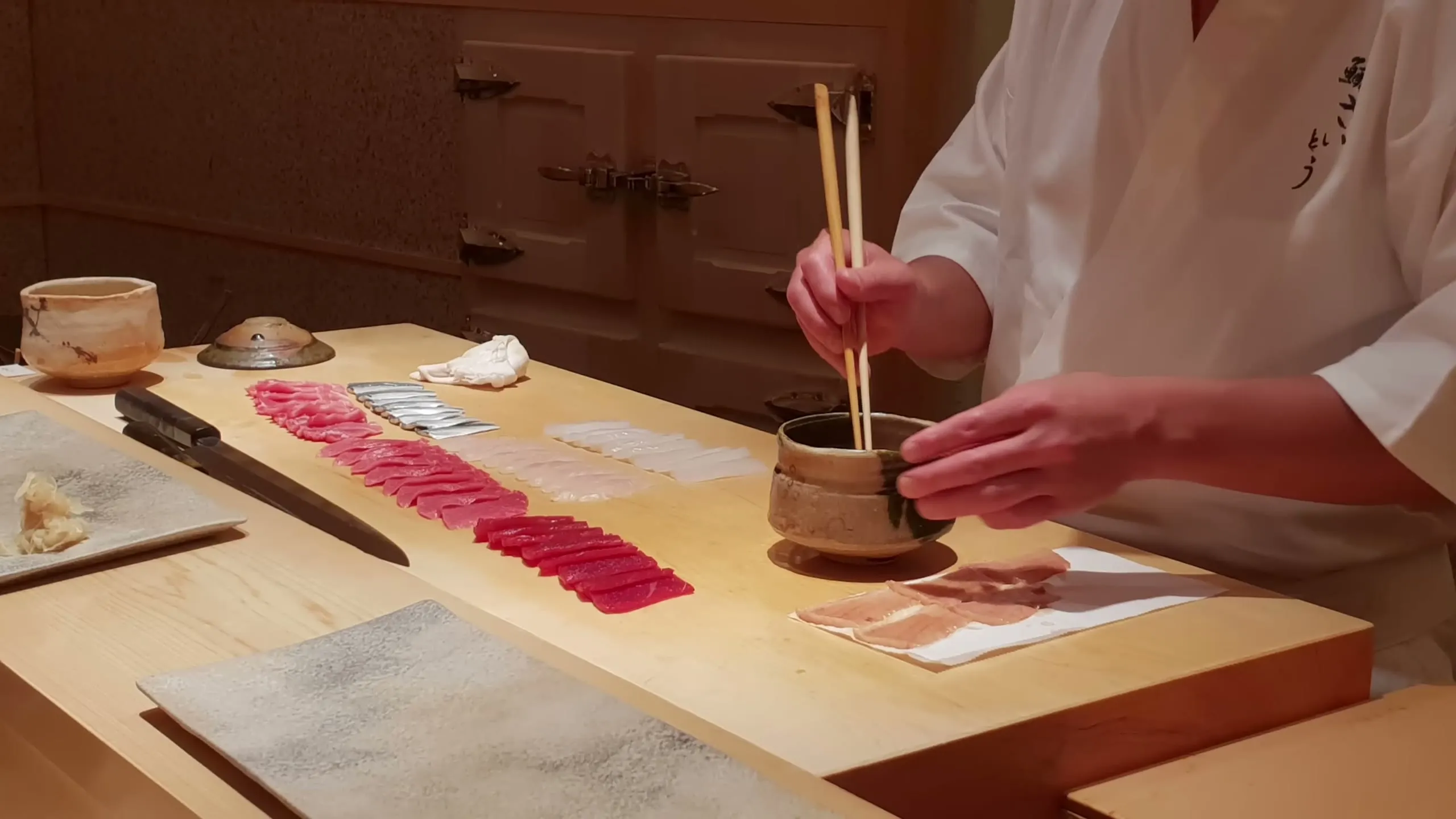
Then Saito’s signature. Before the nigiri, he slices the toppings for the next nine or ten pieces and lays them out in a row in front of him like a rainbow. The lineup barely changes here, so it’s a familiar picture. That night kinmedai was missing and buri was in, which surprised me.
Everyone warned me before I went. Saito is always angry, the room is dark and tense. Apparently he’d changed right before my visit, because he smiled all night. Two regulars in the middle seats roasted him nonstop and he loved it. My friends had been many times and couldn’t believe it, so I filmed every time he laughed.
The lights are pin spots, on Saito and on each plate, and the counter is built like a stage. It’s like watching a show. You just sit back and watch.
Bad ginger, pricey flounder
The ginger shows up right before the nigiri, like a signal. It was bad. Too sour, and the vinegar tasted like the cheap brown rice vinegar we had at home.
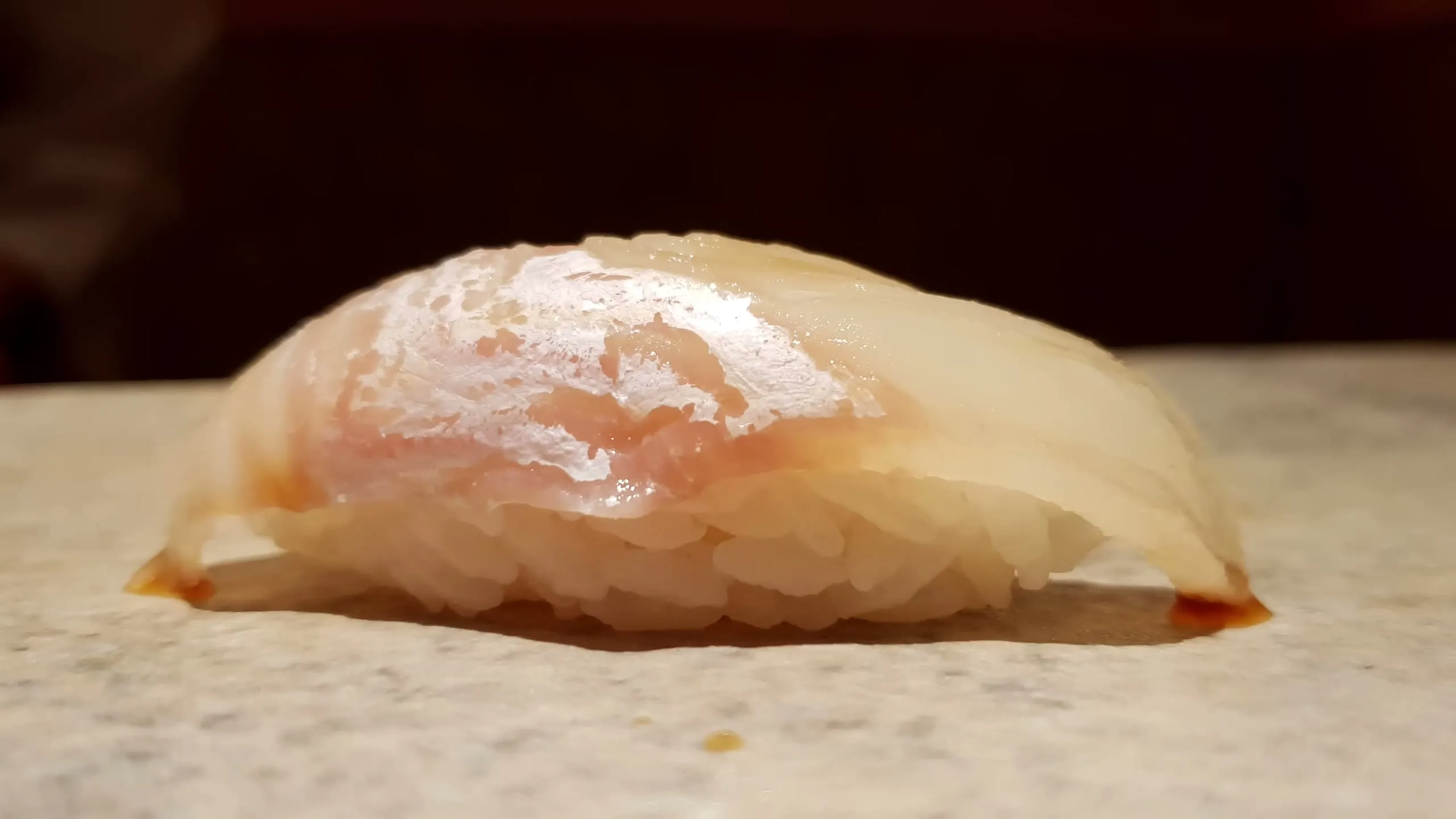
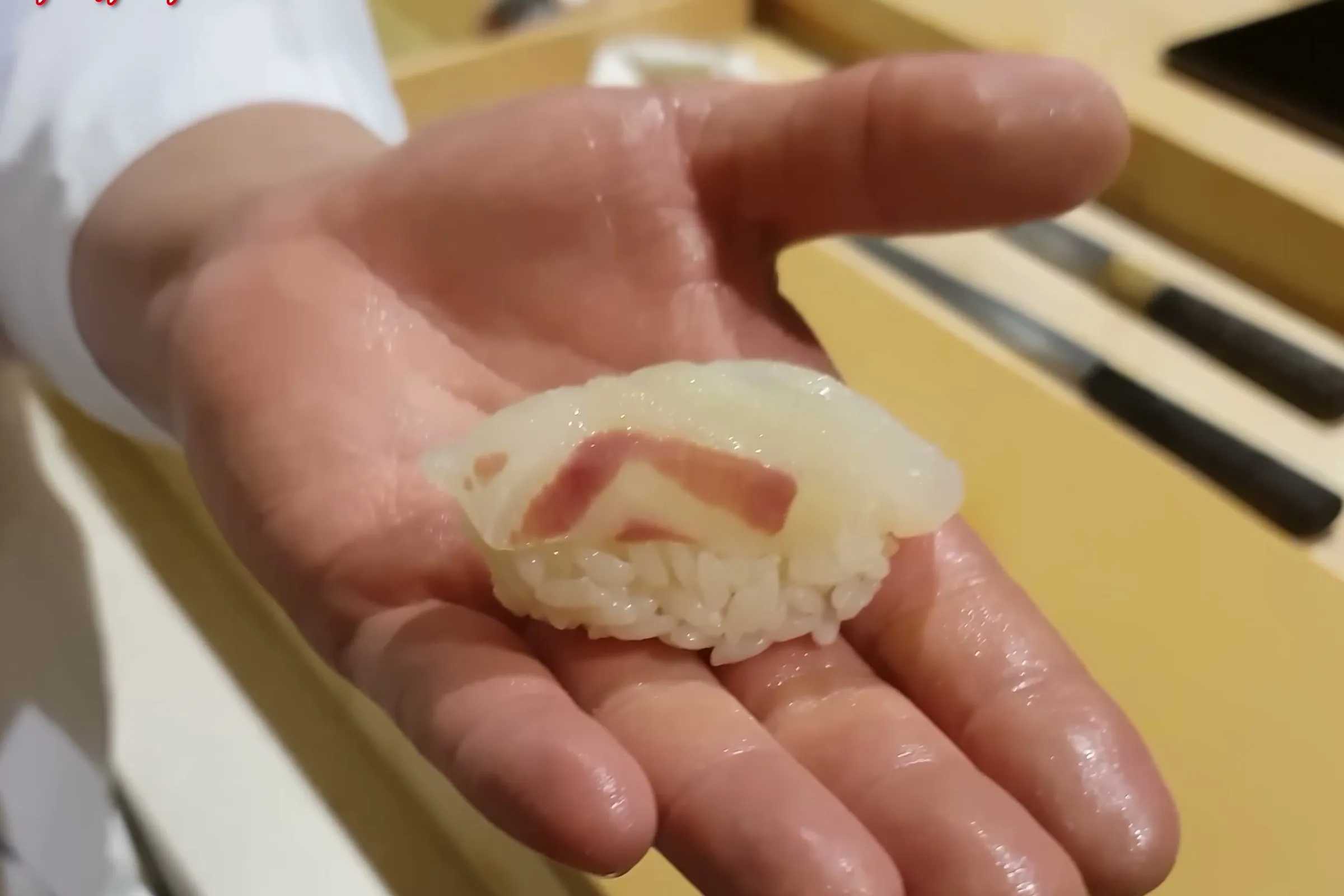
First nigiri: hoshigarei, spotted halibut. So few are caught that you rarely see it at markets or at Korean sushi counters, and per kilo it goes for about twice what other famous luxury fish do. So is it twice as good? Nope. Tough, not much sweetness, and I was still chewing long after the rice was gone, even with Saito’s big rice. I’d take sea bream over any flounder.
Saito’s nigiri motion is famous for being short and elegant. He barely touches the sushi. The manga Shota no Sushi says the less you touch it, the better. After eating this much sushi, I know that’s fake news. Sugita handles his nigiri a ton, and his sushi is way better.
The rice
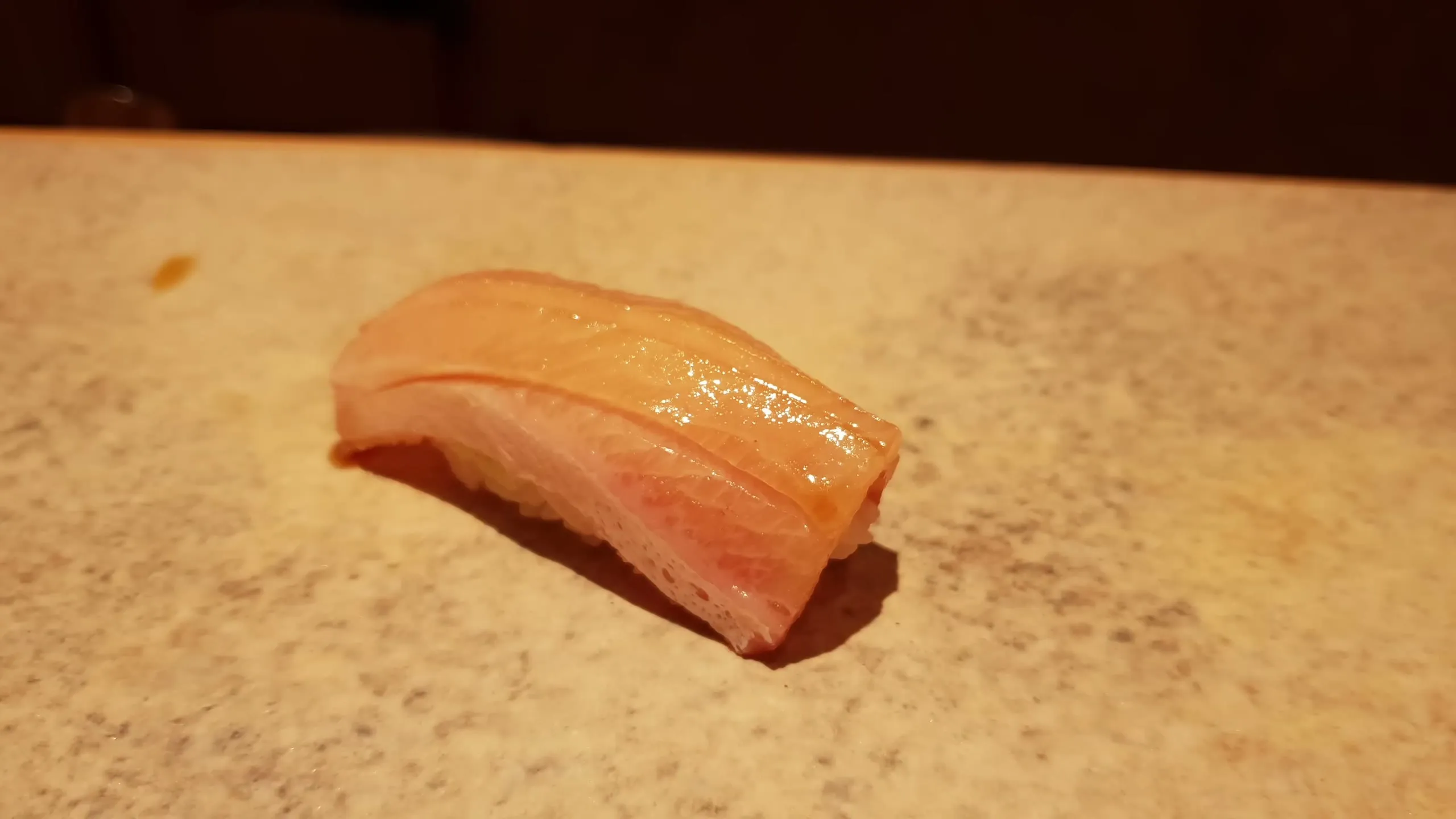
Buri zuke, soy-marinated yellowtail. No fishy smell, very fatty, and the marinade wasn’t too salty or too sweet. Without the zuke it would have been greasy.
Watch the nigiri land on the plate. At Sugita or Sushi In it settles a little. Here it doesn’t, and you feel that in your mouth. The rice doesn’t loosen much. It’s packed tight.
The vinegar felt familiar. From the color I expected rice vinegar, but the smell said red vinegar, something like Yokoi’s Kohaku at the base. Or not. Mild vinegar, mild salt, a lot like other counters from the Kanesaka family. The grains were softer than I like, ordinary texture. The temperature, though, stayed great right to the end.
Kohada
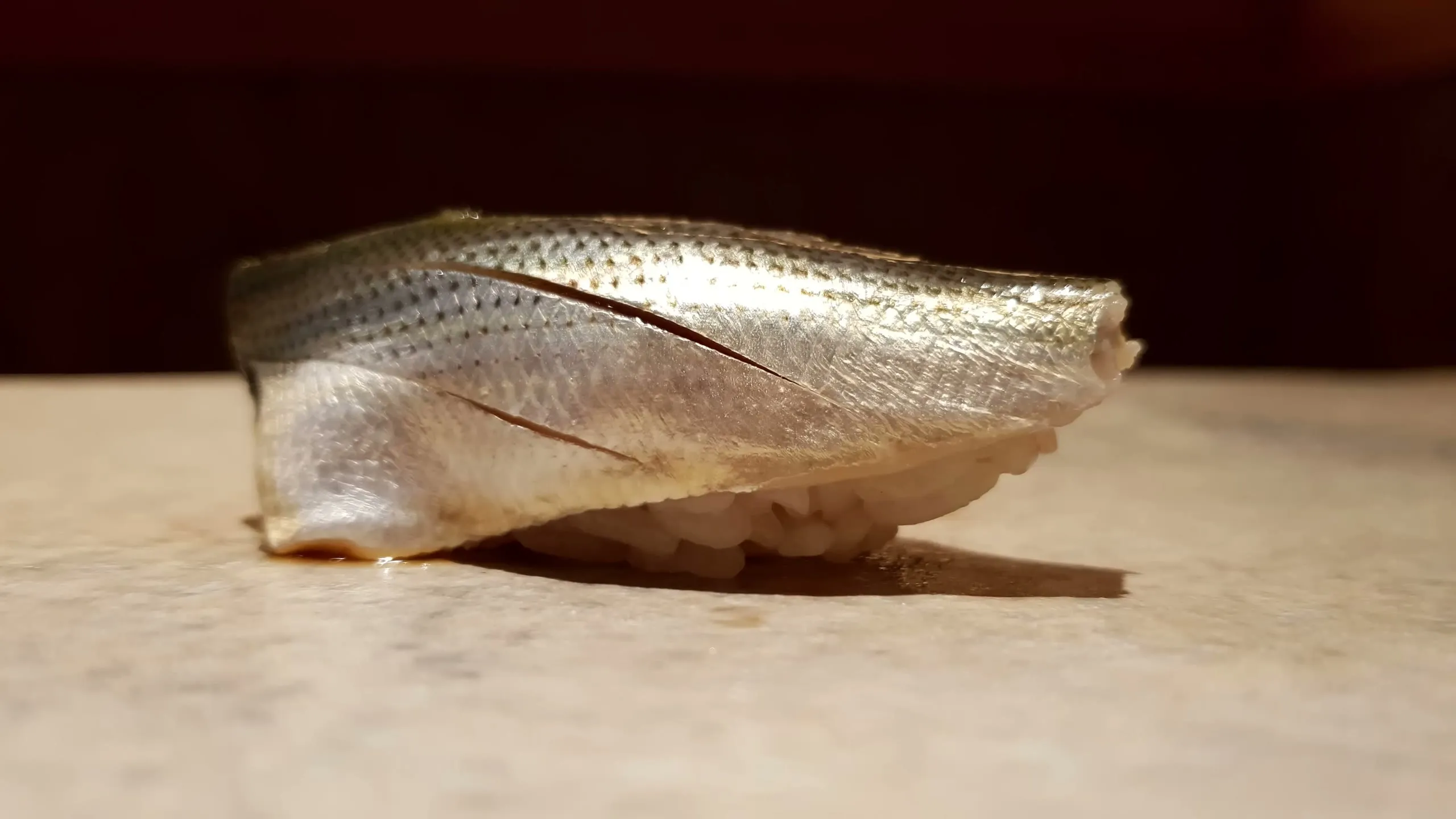
Kohada, gizzard shad. Thin for a Japanese kohada, but juicy, so the texture was my style. The curing vinegar wasn’t. It had the same brown rice vinegar note as the ginger. This kitchen’s vinegar and I just don’t get along.
Yamayuki tuna, and a letdown
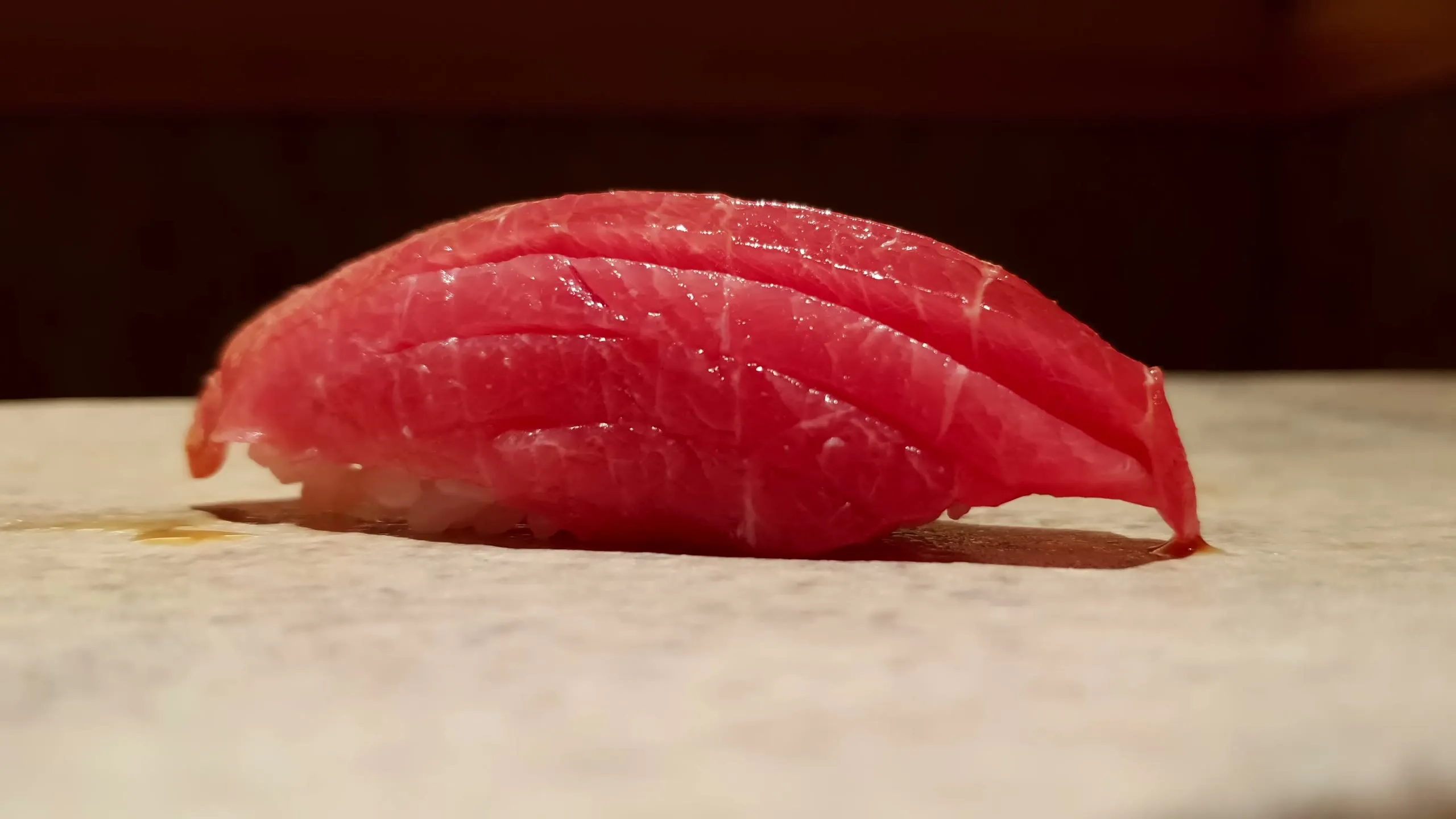
Then the part I’d been waiting for. Saito buys from Yamayuki, the top tuna wholesaler in Tokyo, and Oma tuna was in season. I know how seriously Japanese counters take their tuna. My hopes were high.
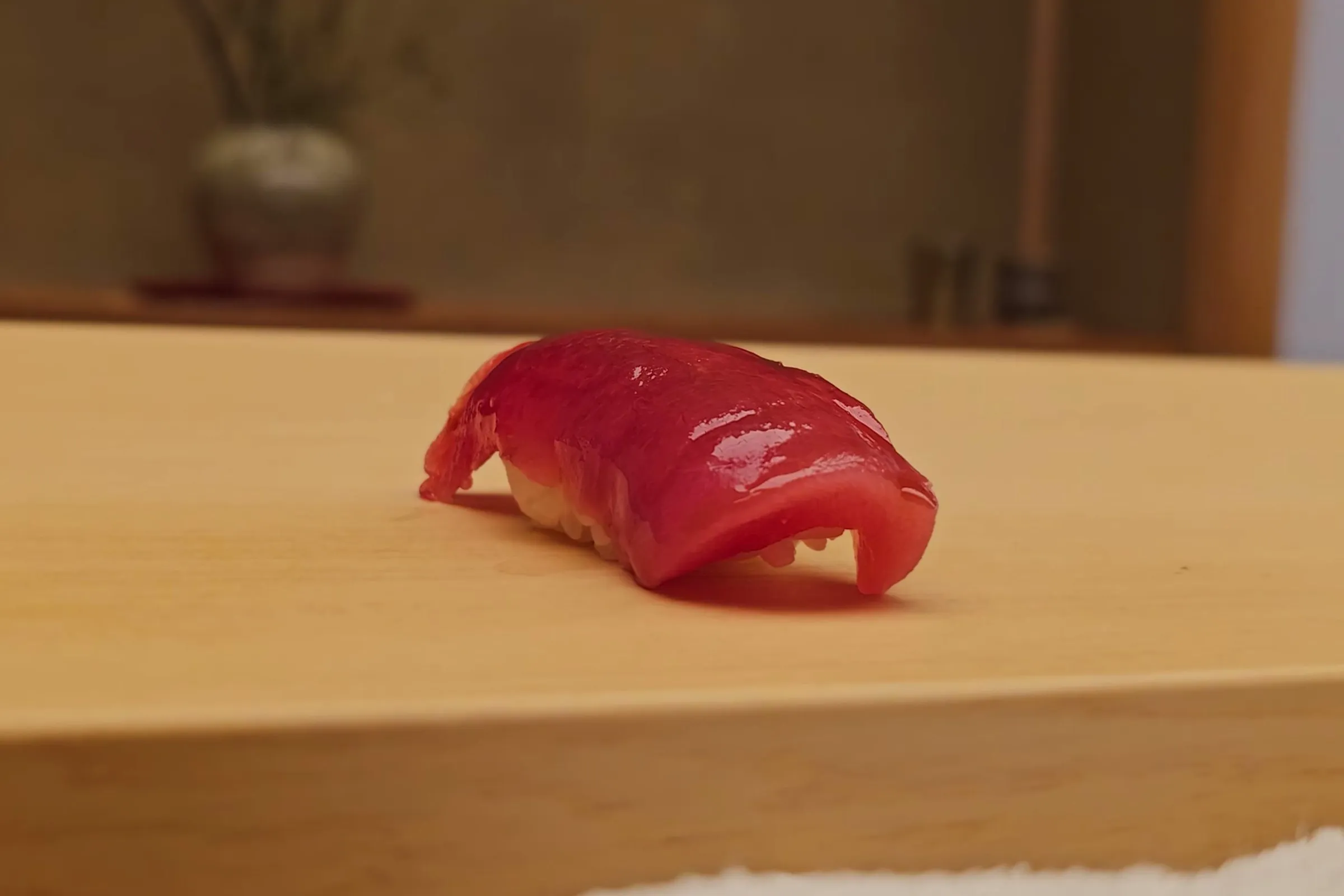
The akami zuke tasted of the sweet marinade and not much else. You could call it clean. You could also call it bland. Tuna varies fish by fish more than by where it’s caught, so maybe the market was bad that week. Still, this was nowhere near the best tuna from the best counter.
The chutoro was clean and flat. The o-toro had a beautiful shape, weak aroma, none of the sweetness fat should have, and chewy sinew. My rule: the better the tuna, the better the fattier cuts. Flip it and the worse the tuna, the worse the fattier cuts. That was this night.
I had Arai the next day, the counter Japanese foodies call the tuna king, so I’d find out soon enough.
Ginger in the squid, guts in the prawn
Sumi-ika, cuttlefish. Before he formed it, Saito added a pinch of ginger along with the wasabi. Great idea. The ginger lifted the whole piece. The texture was still too chewy, even with the cuts, so the squid stuck around after the rice was gone.
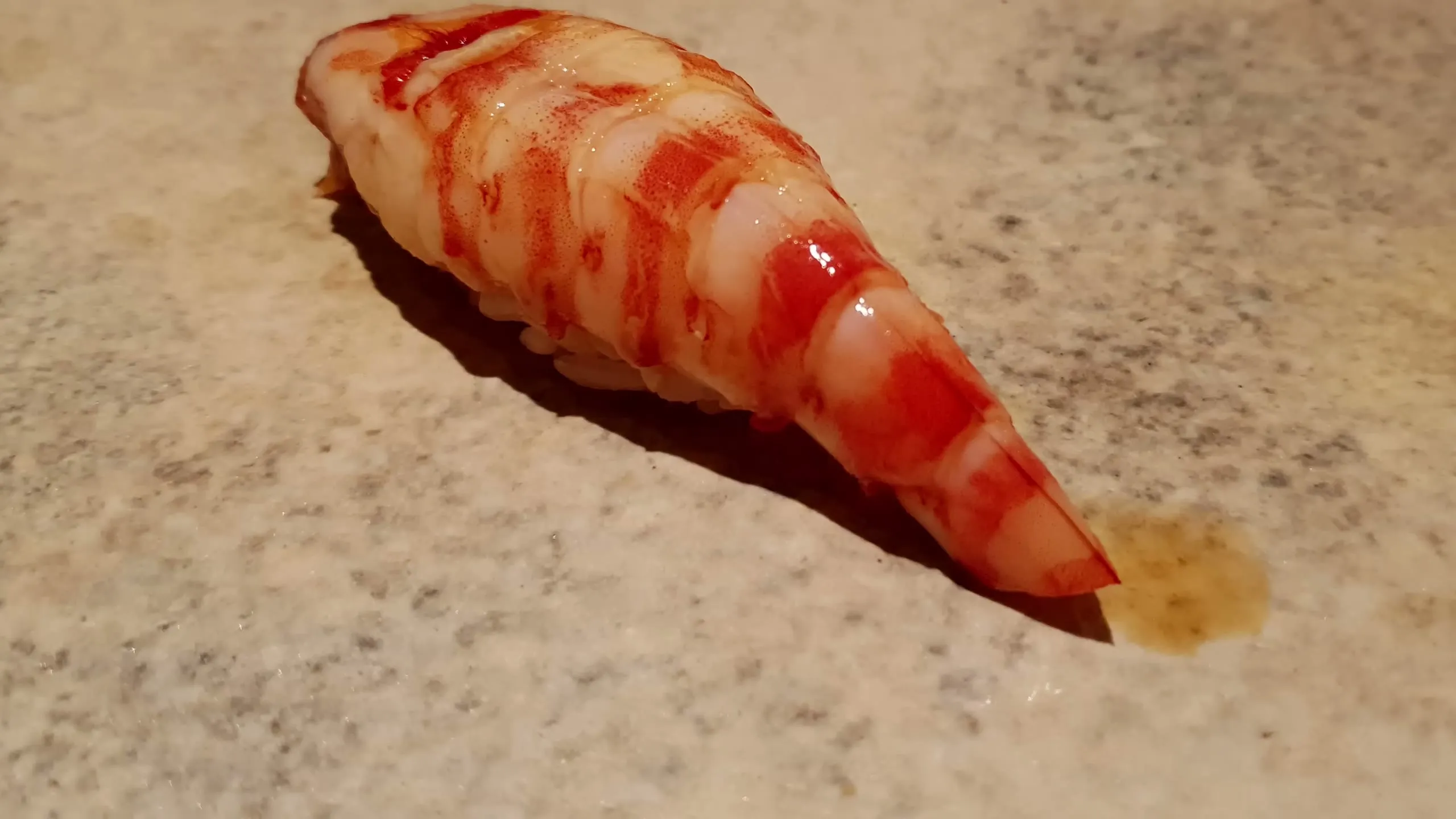
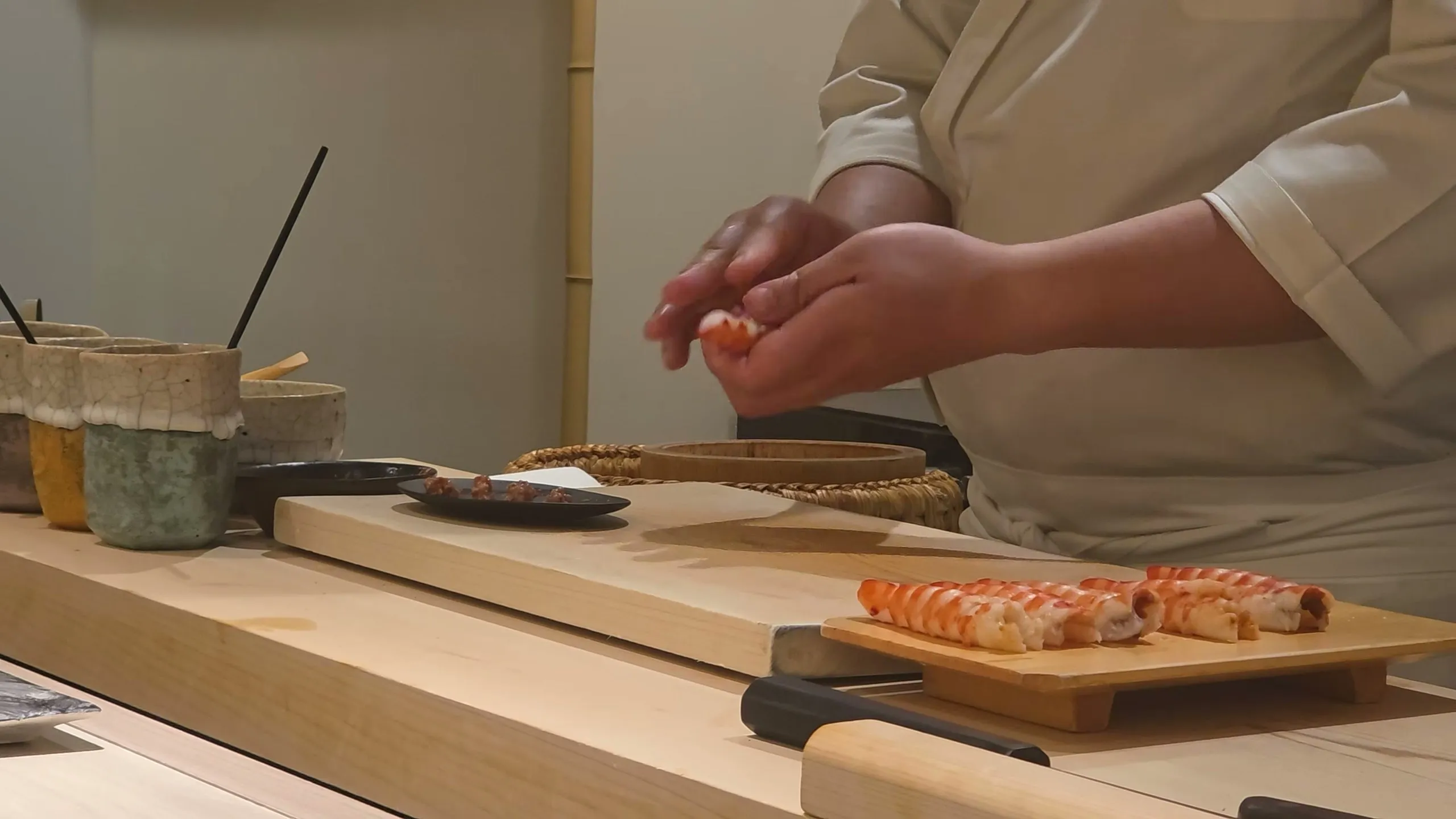
Then kuruma-ebi, one of my favorites. I’m always jealous that Japanese counters can get it any time of year. Saito’s is known as one of the best because he keeps all the head innards, so it’s rich and nutty. Plenty of places cut them out because they can cause food poisoning.
Why the board stays wet
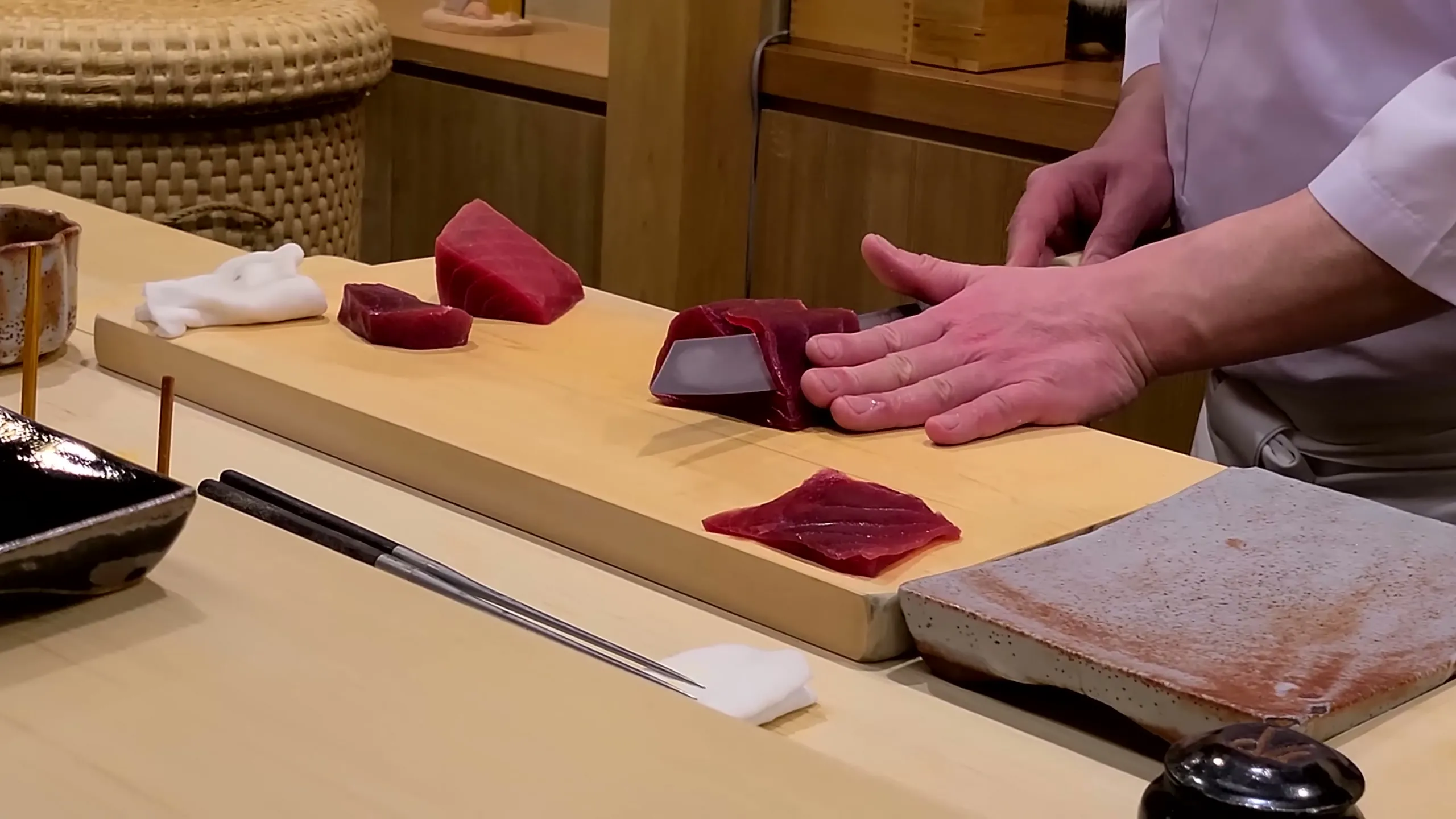
People ask me about the ice on the cutting board at Sushi In all the time. Watch Saito’s board. Before each nigiri he wipes it with a wet cloth, then puts the topping in his left hand and wipes once more with his right.
If the board dries out, fish oil sticks to it, it starts to smell, and the next slice sticks too. Sushi In keeps it wet with ice. Saito uses the cloth. I think it also works a bit like dipping your hands in tezu, the vinegar water.
Aji, horse mackerel, is good everywhere, and his was extra fatty. Before the uni he lined up rice balls, all the same size, with barely a touch and one flip each. Cool to watch.
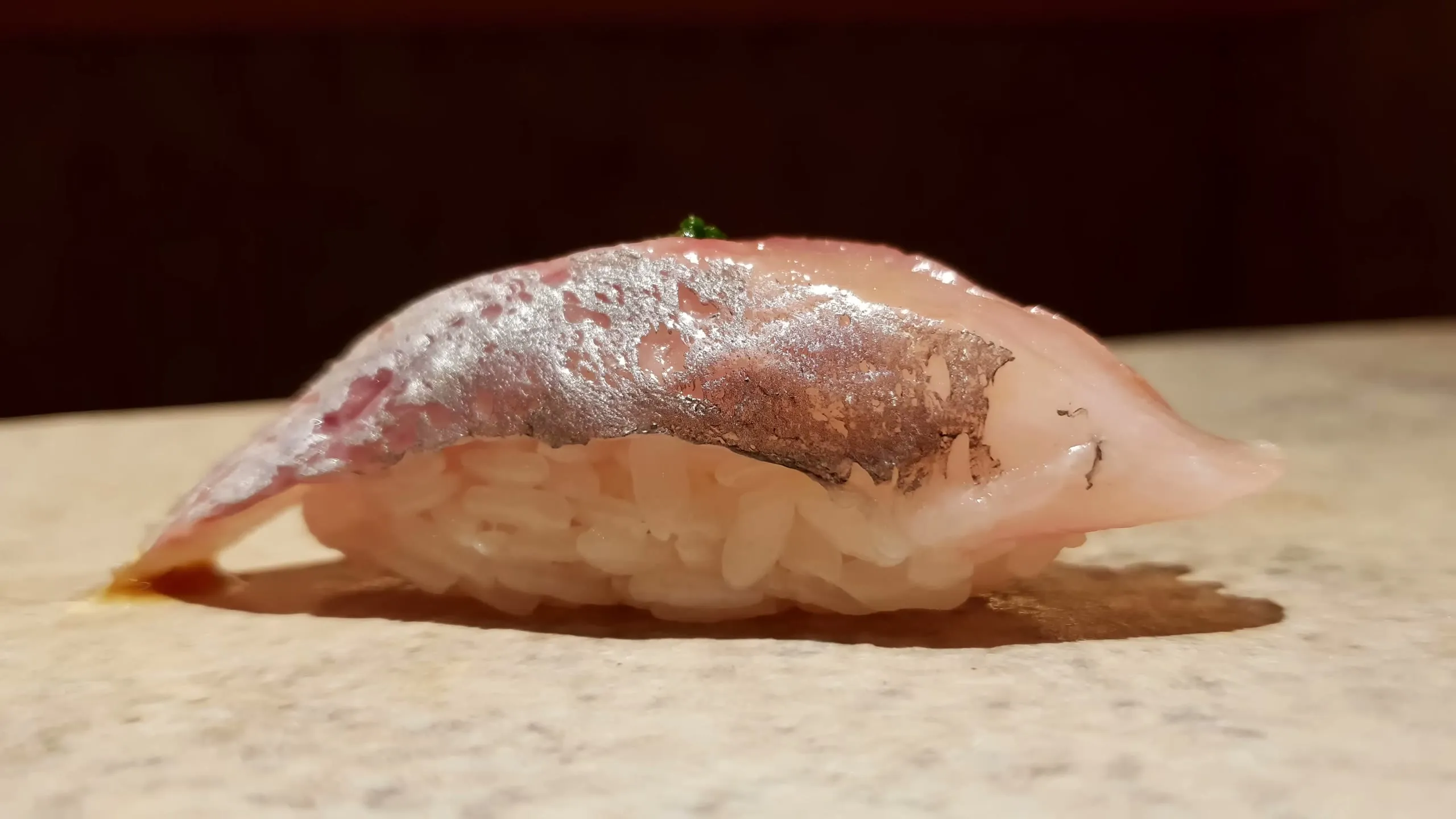
Third uni, anago, futomaki
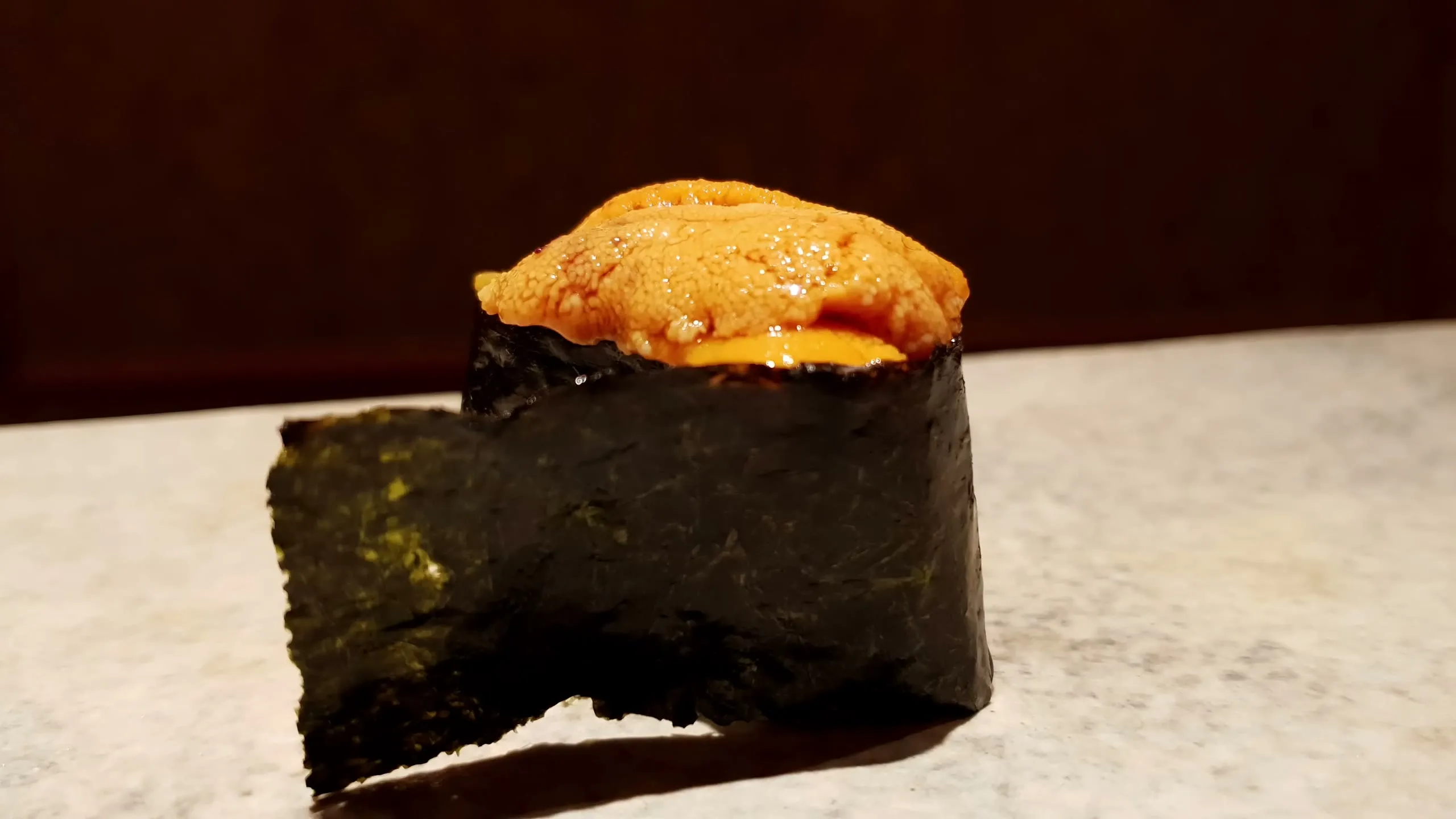
There was a third uni after all: bafun uni from Hokkaido. Obviously my favorite of the three. Much lighter and cleaner than the Karatsu aka uni, and sweet.
The anago was the soft kind, but nothing stood out. Not the flesh, not the skin, not the sauce. Mid-tier counter anago. The miso soup was full of aonori, green laver, which I can’t stand.
Futomaki in Japan has more rice than in Korea, almost gimbap proportions, so it’s big. Shiitake, kanpyo, cucumber, egg, anago and kuruma-ebi. That’s the right lineup. I hate it when a roll gets stuffed with burdock, white fish and scraps of salmon and tuna. The tamago was custardy, close to chawanmushi, and sweet like the one at Sushi Kouji.
The course looks short, but every nigiri is big, so you’re full after the futomaki. They don’t really do extras because of the fixed time slots, and Saito has usually left by the time you’d ask. I’d planned to add any piece I loved. I never asked for one.
¥28,080 for dinner, which is cheap here
2020/04 video
Dinner, no drinks for me. My friend opened a bottle of Krug, but that wasn’t on my bill. ¥28,080 (about US$260, 2020/04). For dinner at a counter like this, that’s cheap.
There’s an old line that Saito got popular because it was cheap. Back in Akasaka, before the move to Roppongi, it was about ¥10,000 a person.
When I checked in 2026/10, Tabelog put dinner at the main counter at ¥50,000 to ¥59,999. The Azabudai branch lists ¥16,500 for the lunch sushi course and ¥38,500 for the dinner course, tax included.
Would I go back?
No. Nobody forms nigiri more beautifully, and the room is a show. But the toppings weren’t top quality that night, the fish and the rice never matched, and the seasoning was faint and familiar. I didn’t want more.
Still glad I got to see it once, and to see Saito smile all night. The end.
How to book
How I booked
I’ve never had a booking of my own. A friend who’s a regular had a seat open up when someone in his group dropped out, and I filled it.
- Main counter in Roppongi
Tabelog lists it as reservation only and says it doesn’t take new phone bookings. Regulars book their next visit before they leave, so seats rarely reach anyone else. That’s why Michelin dropped it in 2019. When I checked, Tabelog put dinner at ¥50,000 to ¥59,999. No strong perfume.
- Sushi Saito Azabudai on OMAKASE (omakase.in)
The branch in the basement market of Azabudai Hills, open since 2024/03. Tabelog says the toppings and the order of the course follow the main counter, with its own take on the rice. When I checked: lunch sushi course ¥16,500, dinner course ¥38,500, tax included, plus a ¥390 booking fee per seat. 12 seats. Slots open in rounds, every one was taken, and the next round was set for 2026/11. Cancelling costs 50% from 3 days before and 100% the day before. I haven’t been.
Checked 2026/10. Booking rules change, so look at the official page before you go.
Where it is
- Address
- ARK Hills South Tower 1F, 1-4-5 Roppongi, Minato-ku, Tokyo東京都港区六本木1-4-5 アークヒルズサウスタワー 1F
- Nearest station
- Roppongi-itchome, 1 minute’s walk
Plan the Tokyo trip
The boring bits I’d sort before flying, so the eating days stay free.
- Hotels in Tokyo*
Pick the room by where you eat, not by the sights. After a long dinner, a short ride back is the real luxury. This place is in Roppongi, Tokyo.
- Japan eSIM*
Data from the moment you land, no counter and no SIM swap. Set it up the night before.
- Keisei Skyliner from Narita*
Narita to Ueno in about 40 minutes. Buy it ahead and walk straight to the platform.
- Haneda airport limousine bus*
Landing at Haneda instead? The limousine bus drops you at the big hotels and stations with no transfers.
- Tsukiji Outer Market food tour*
A market morning with someone who knows which stalls are worth the line.
- Sushi-making class at Tsukiji*
Shape nigiri yourself once and the counter makes a lot more sense.
Links marked * are affiliate links. If you book through them I may earn a small commission, and you pay the same. How it works
Guides that mention this place
The best sushi in Tokyo, ranked by someone who paid for it.
Eight counters from Sugita down, what I paid at each, and how to get a seat.
In Tokyo, getting the seat is harder than eating the sushi.
omakase.in rounds, cancellation seats, lunch side doors, and how regulars really get in.
The fish gets the photos. The rice decides the meal.
What edomae means, red vinegar or white, and what I taste for in sushi rice.
Every Michelin sushi counter in Tokyo I’ve paid for, with the stars then and now.
Three stars down to one, what I paid at each, and how to get a seat today.
The bill doubled. Some counters are still worth it.
Ten years of my Tokyo sushi bills on one chart, from a ¥4,000 lunch to an ¥80,000 dinner.
Every Tokyo sushi booking route, compared by someone who paid the fees.
omakase.in, Tabelog, TableCheck, TABLEALL, Pocket Concierge, byFood and the hotel desk, side by side.
More places I have eaten at
All of Tokyo →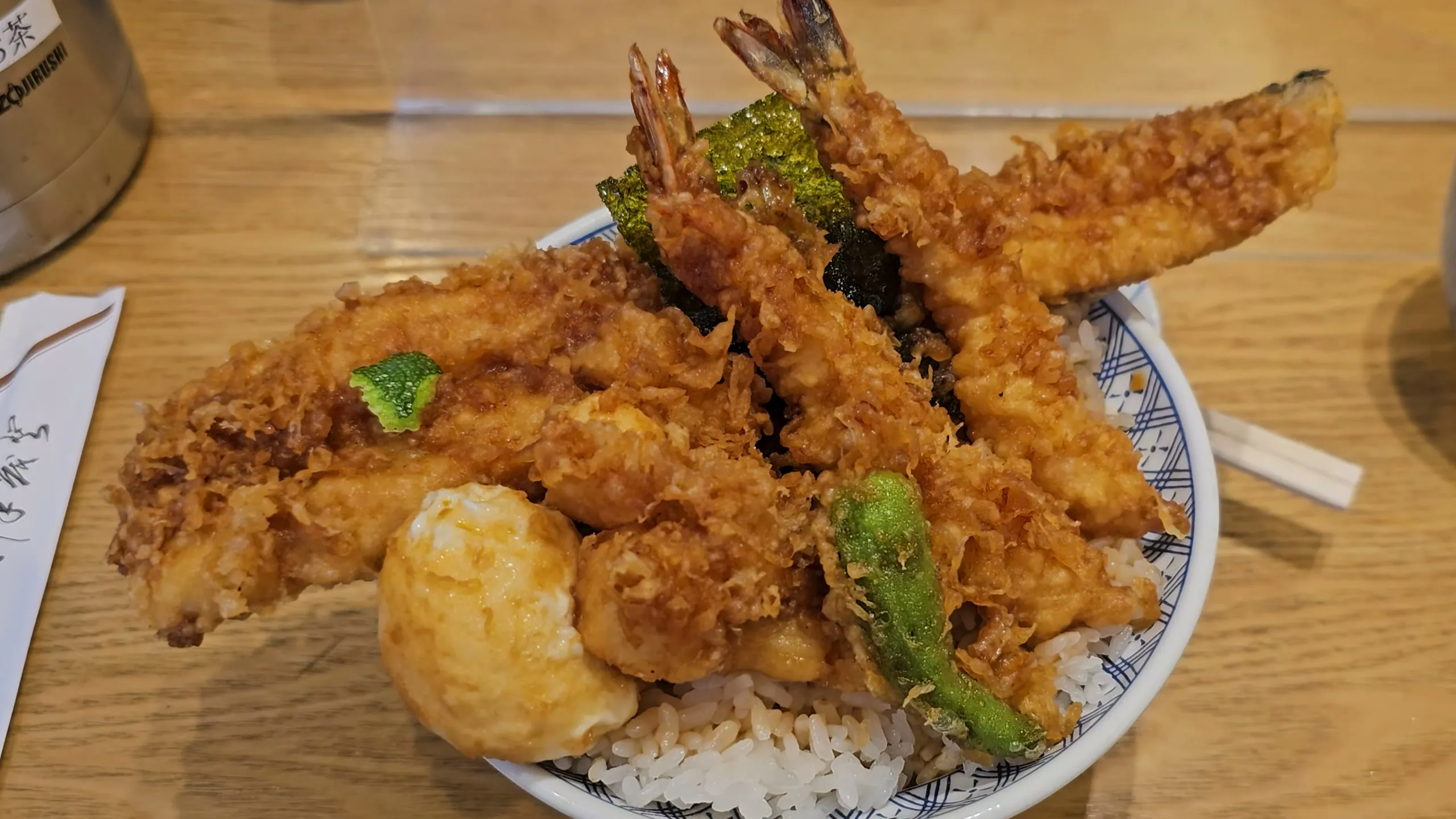 Nihonbashi, Tokyo
Kaneko Hannosuke
Sesame oil you can smell from the back of the line.
¥1,380 2024/09 video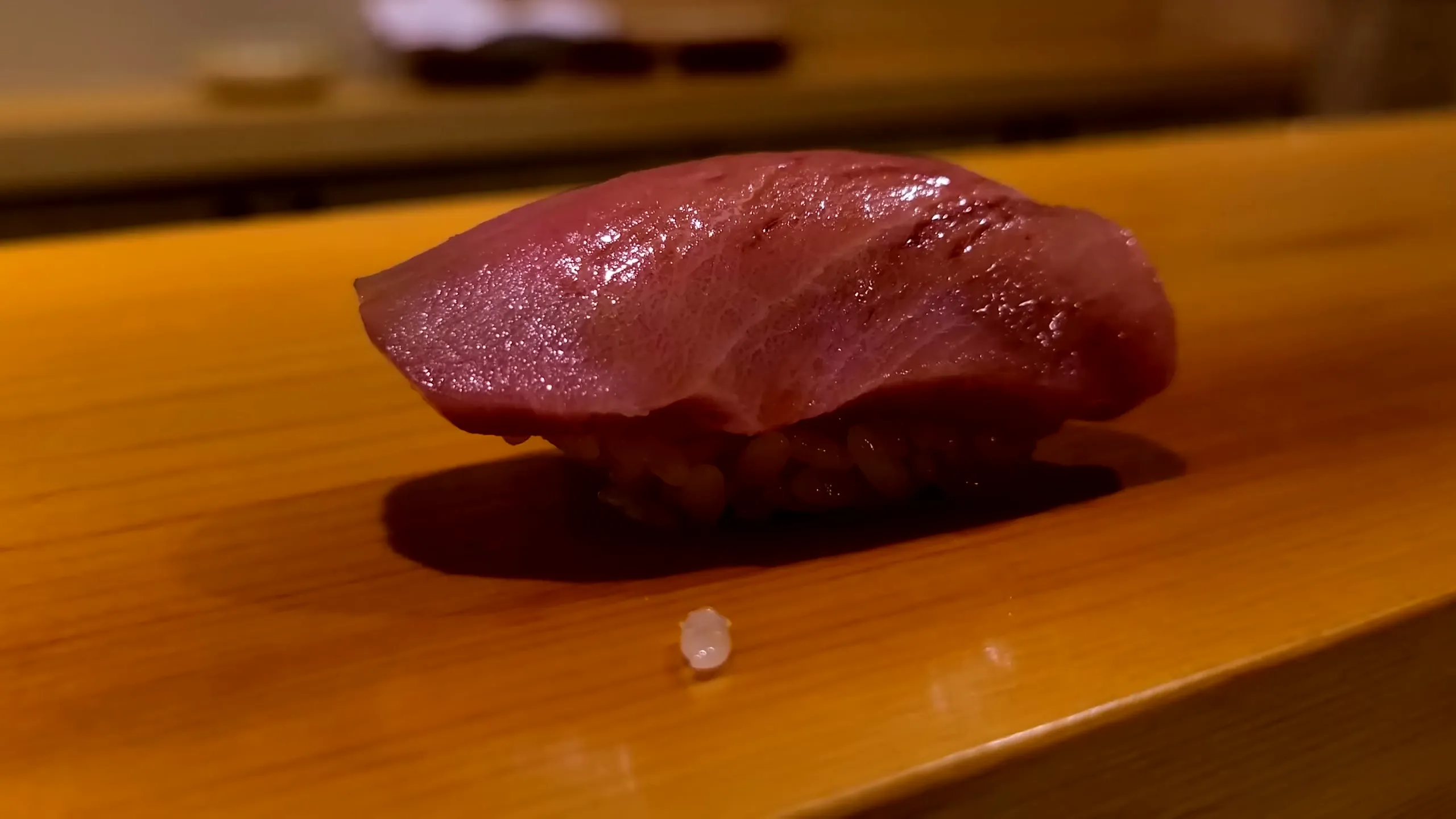 Ginza, Tokyo
Sushi Arai
Off-season tuna here beats peak-season tuna anywhere else.
¥41,800 2020/03 video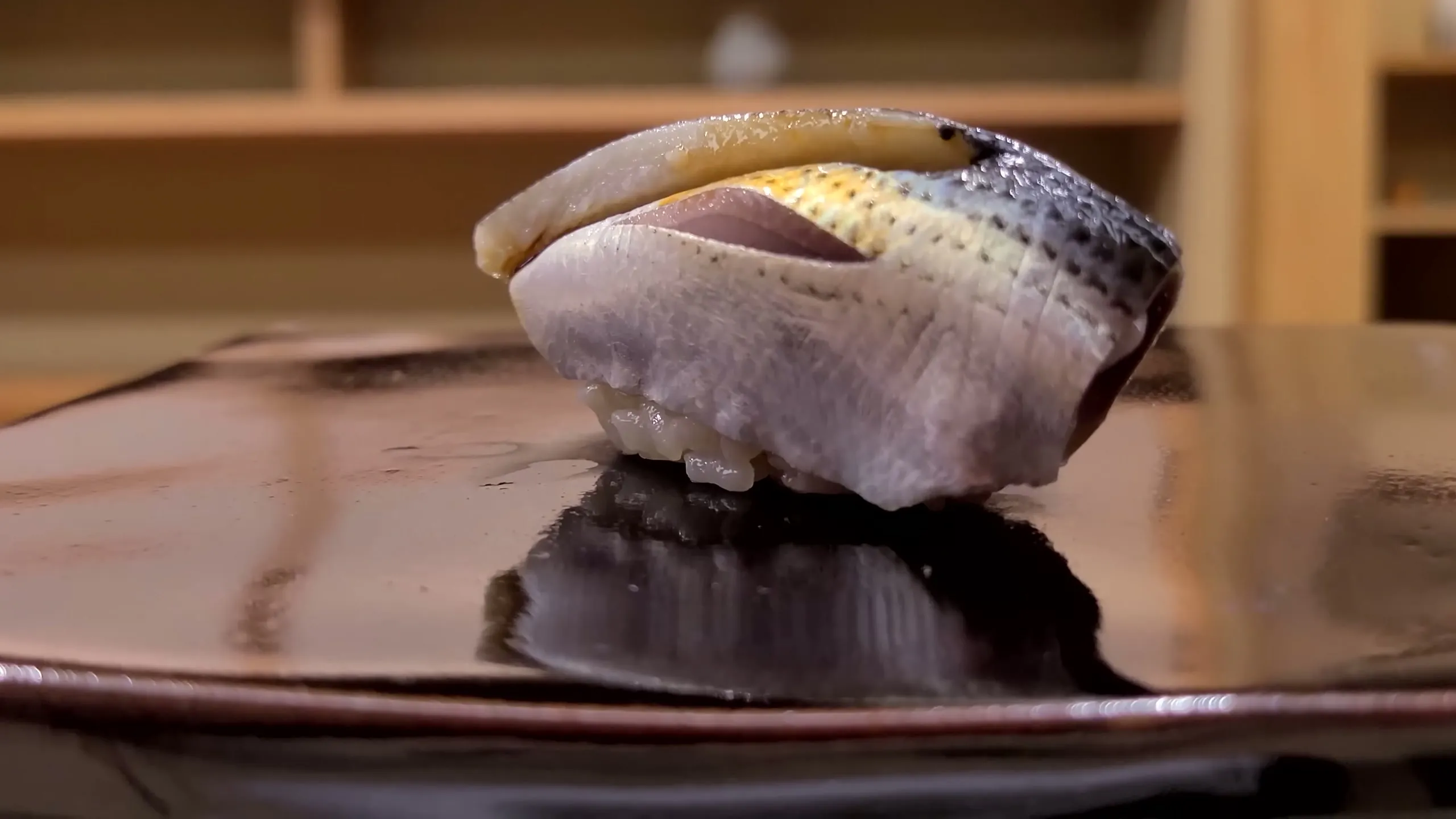 Nihonbashi, Tokyo
Sushi Sugita
My most-visited Tokyo counter, and what every filmed visit cost.
≈ ¥50,000 2020/04 videoSources
- 鮨 さいとう Tabelog
- 鮨 さいとう 麻布台 Tabelog
- Sushi Saito Azabudai's Reservation OMAKASE
- Eight things to know about the Michelin Guide Tokyo 2020 Time Out Tokyo
- Sushi Saito Wikipedia