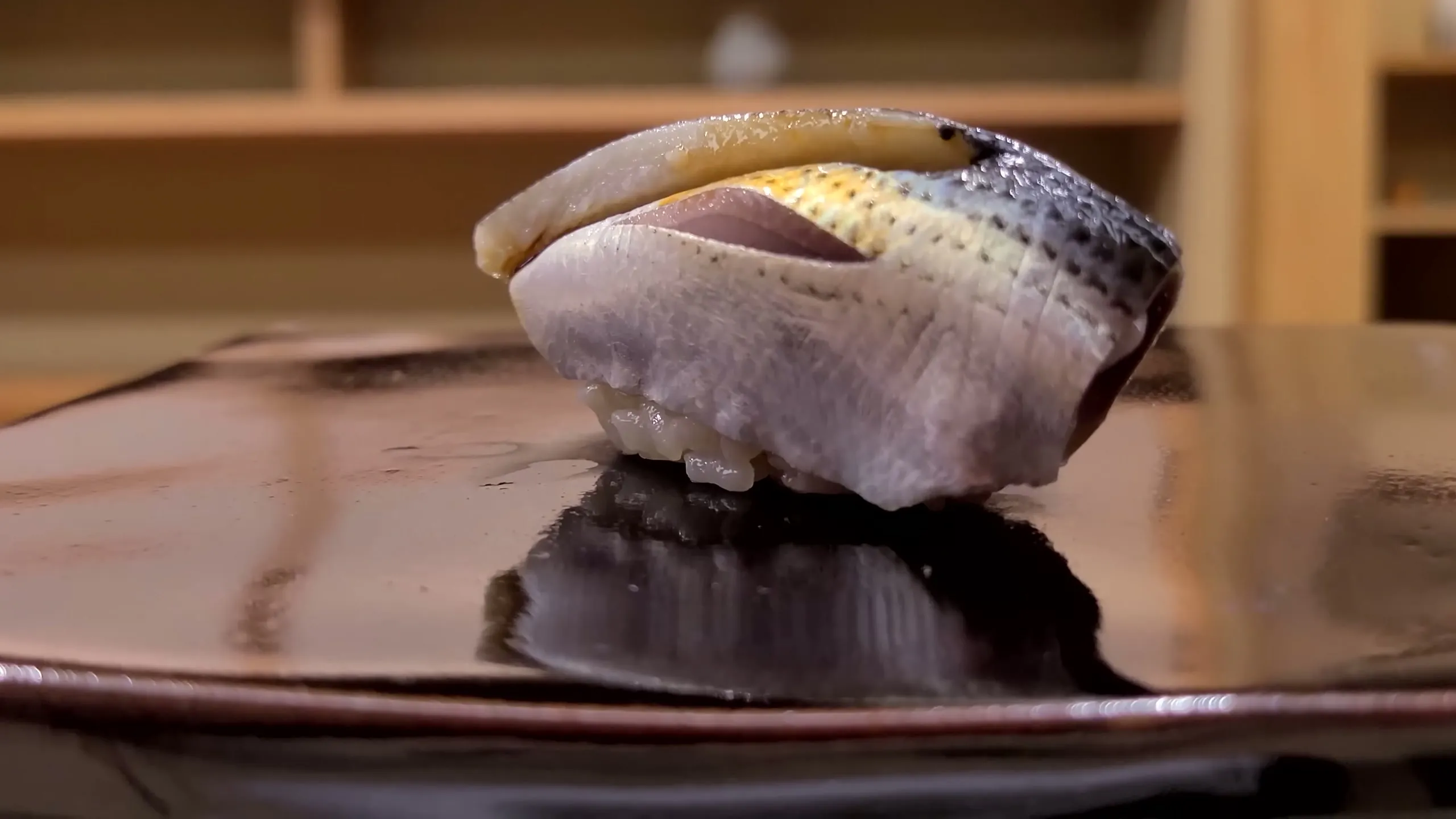
Kobujime 昆布締め
Also called kombujime, konbujime, kelp-cured fish
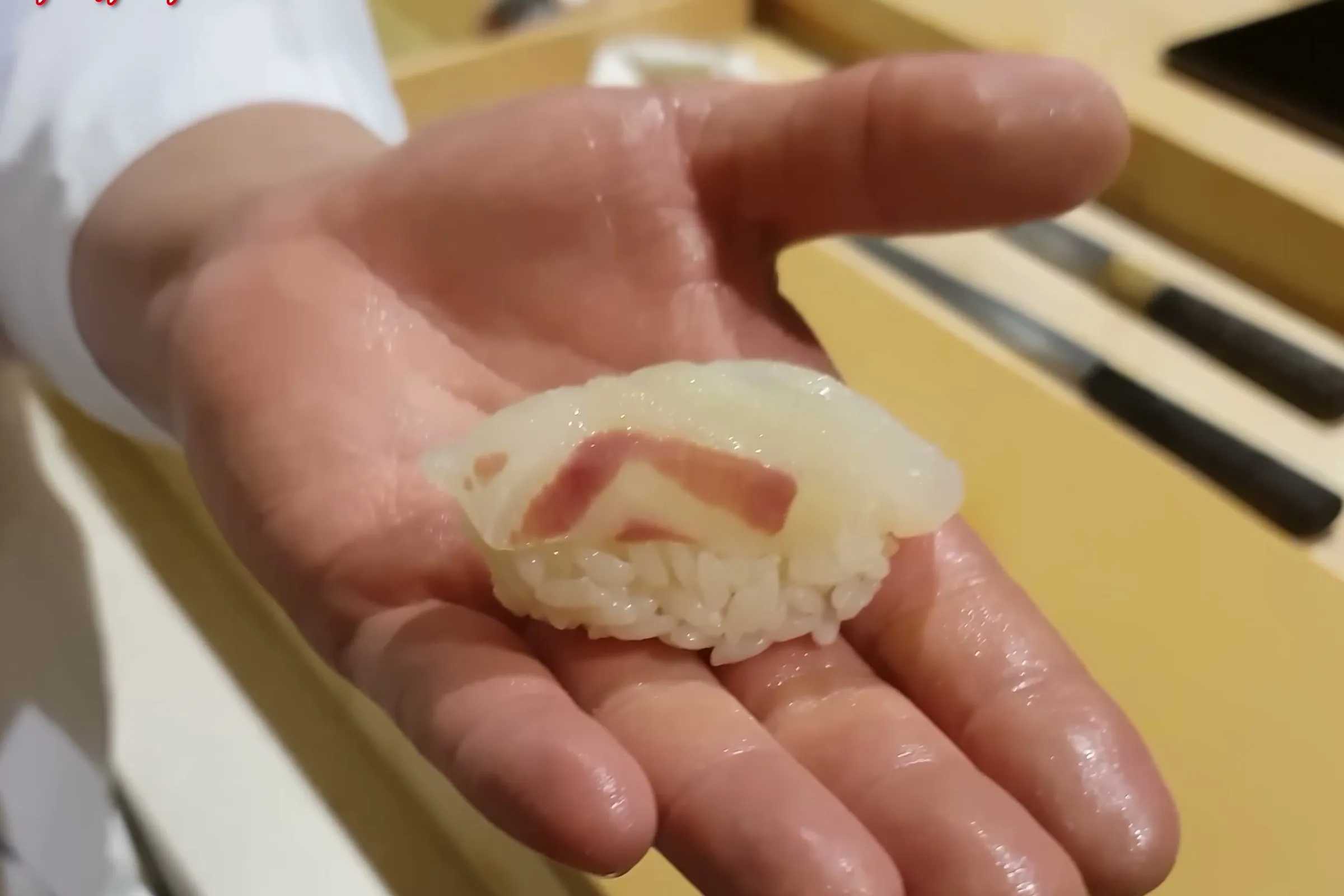
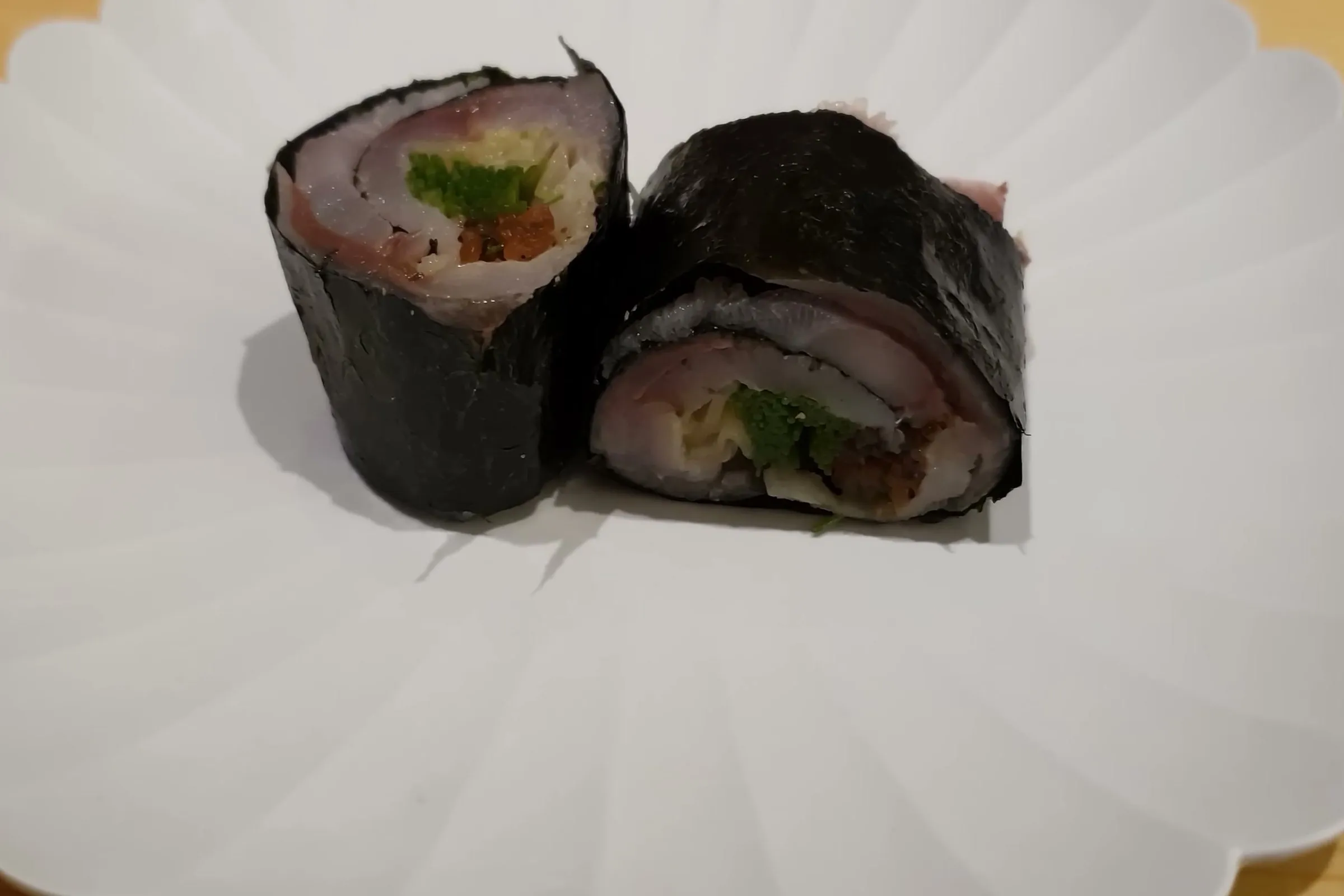
Fish pressed between sheets of kombu kelp, usually for about a night. The kelp pulls out water and gives back umami, so the flesh firms up.
Kobujime is fish, or sometimes vegetables or tofu, sandwiched between sheets of kombu and left in the fridge for about a night. The kelp draws water out of the fish, which firms it up, and glutamate travels the other way. That’s where the umami comes from.
It started as a home dish of Toyama and Ishikawa on the Sea of Japan coast. Toyama has eaten a lot of Hokkaido kelp since the Edo period, shipped down on the kitamaebune cargo boats, and pressing fish in it kept sashimi good for days before anyone had a fridge.
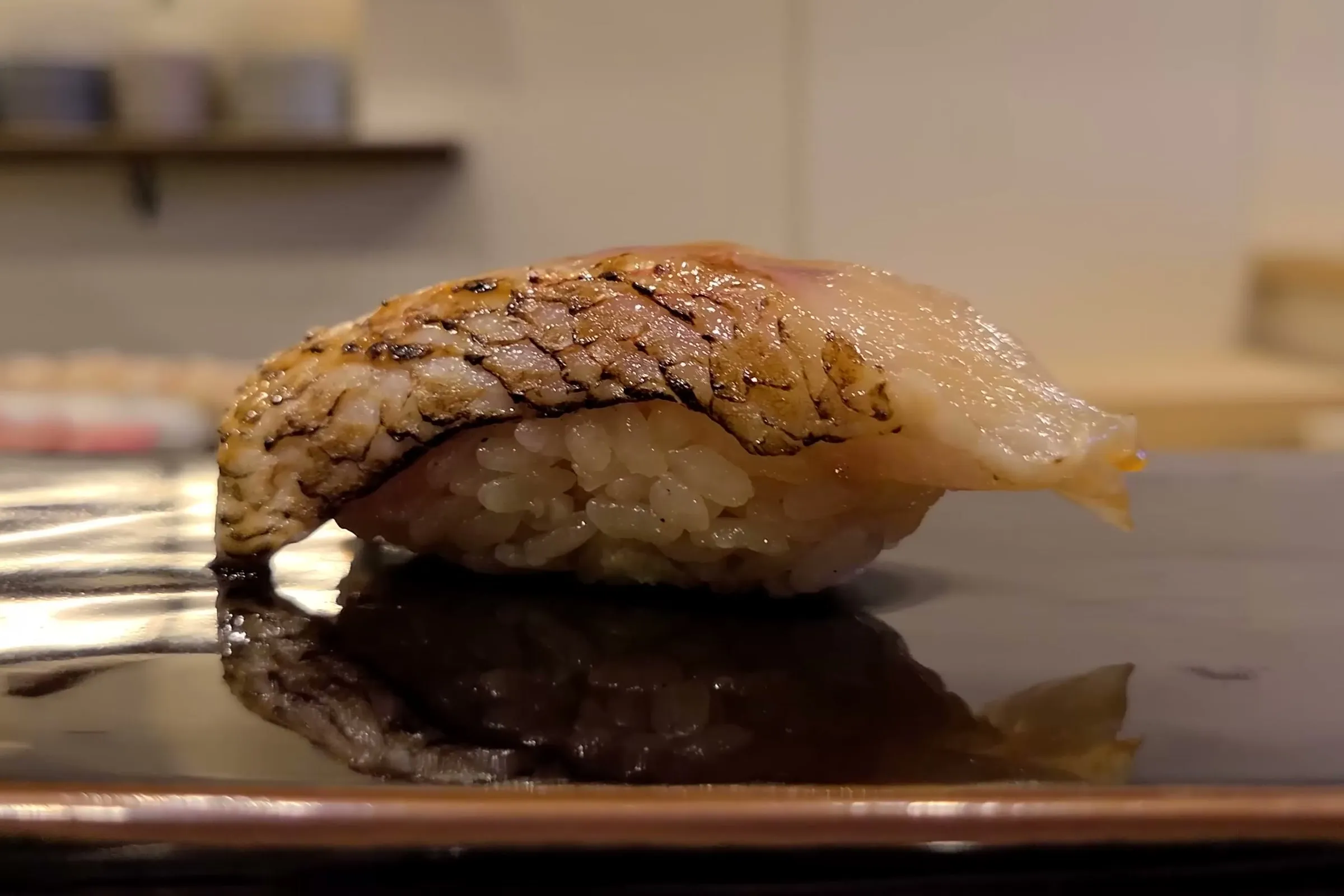
Mild white fish like sea bream and flounder are the classic choice. Fatty fish are said to take the flavor poorly.
On the name: 昆布 on its own is read kombu, so plenty of people say kombujime. The usual reading for the dish is kobujime, and that’s how Sugita says it at his counter. Push the kelp too far and I start tasting a bitterness I don’t like.
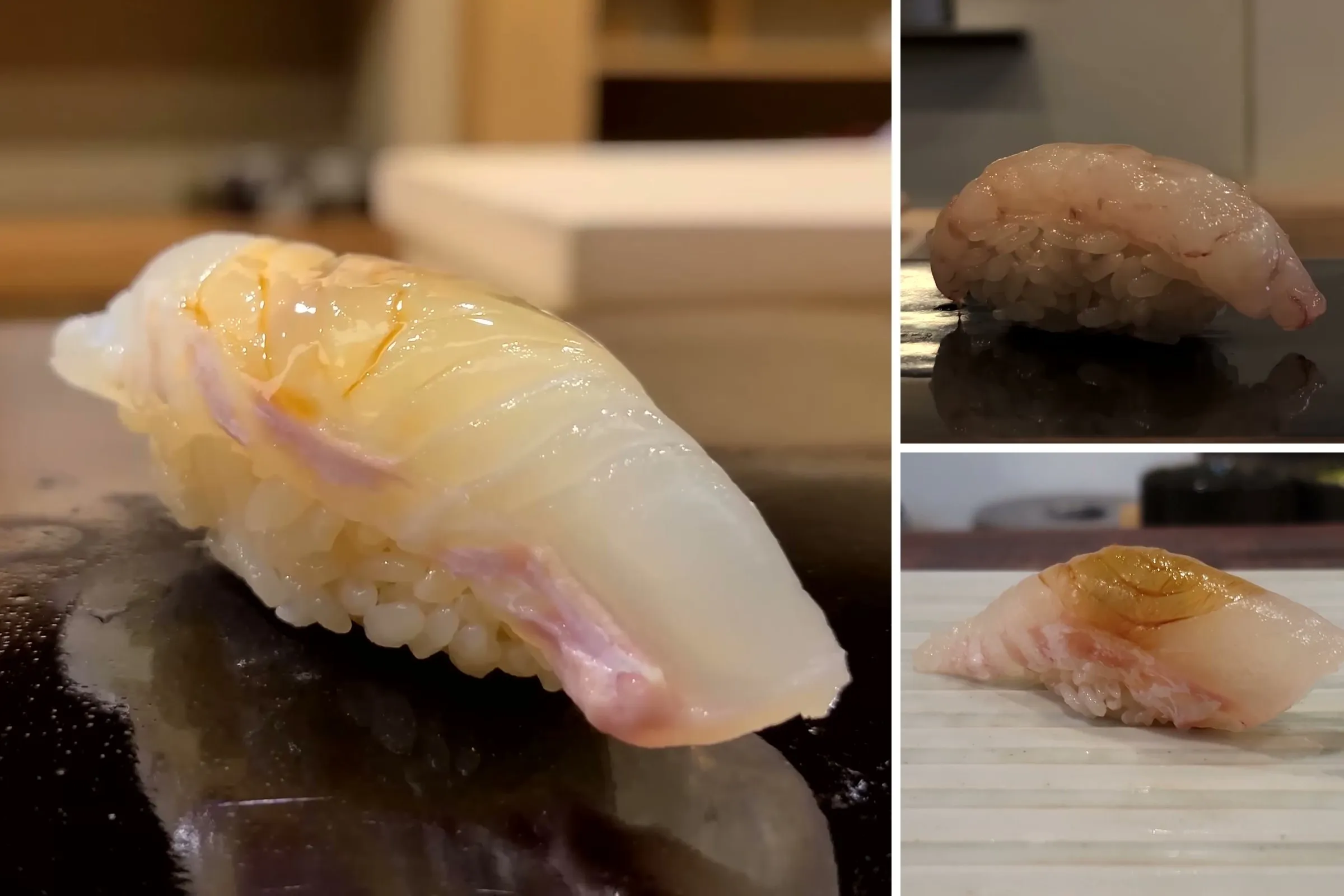 Guide16 Japanese food words you can’t guess, from ankimo to zukeKobujime, with how it tastes and where I’ve had it →
Sources
- 昆布締め Wikipedia (Japanese)