The ¥6,000 sushi lunch that held up the day after Arai and Sugita
Sushi Ranmaru (らんまる) is a nine-seat sushi counter in Shimomeguro, Meguro, Tokyo, and in 2020 it was the cheap omakase I sent everyone to. Lunch was ¥6,000 (about US$60, 2020/04), and I ate it the day after Sushi Arai and Sugita and still loved the rice. Would I go back? Yes, but it isn’t that lunch anymore. Tabelog lists lunch from ¥15,000 (about US$90) and dinner at ¥30,000 (about US$190) when I checked in 2026/11, seats go mostly by referral, and the chef I went for, Yukichika-san, now runs Shimazu.
monster gourmetFrom my 2020/04 video
- My share
- ≈ ¥8,300
- about US$80, lunch, the ¥6,000 course + oolong tea + a few extras, 2020/04 video
- Highlight
- Saba shining with fat, and the negitoro roll
- Skip
- The tamago at dinner
- Video
- 10:57
- 2020/04
- Booking
- Referral-only on paper. Tabelog’s cancellation slots are open to new guests.
- Tabelog online booking
- Where
- Meguro, Tokyo
- Fudomae, about 450 m on foot
A ¥6,000 lunch, the day after Arai and Sugita
Two nights, three days in Tokyo, five meals, every one of them sushi. Ranmaru was the last. The day before, I’d had lunch at Sushi Arai and dinner at Sugita. Arai came to ¥41,800 a person (about US$390, 2020/03) and Sugita to about ¥50,000 (about US$460, 2020/04).
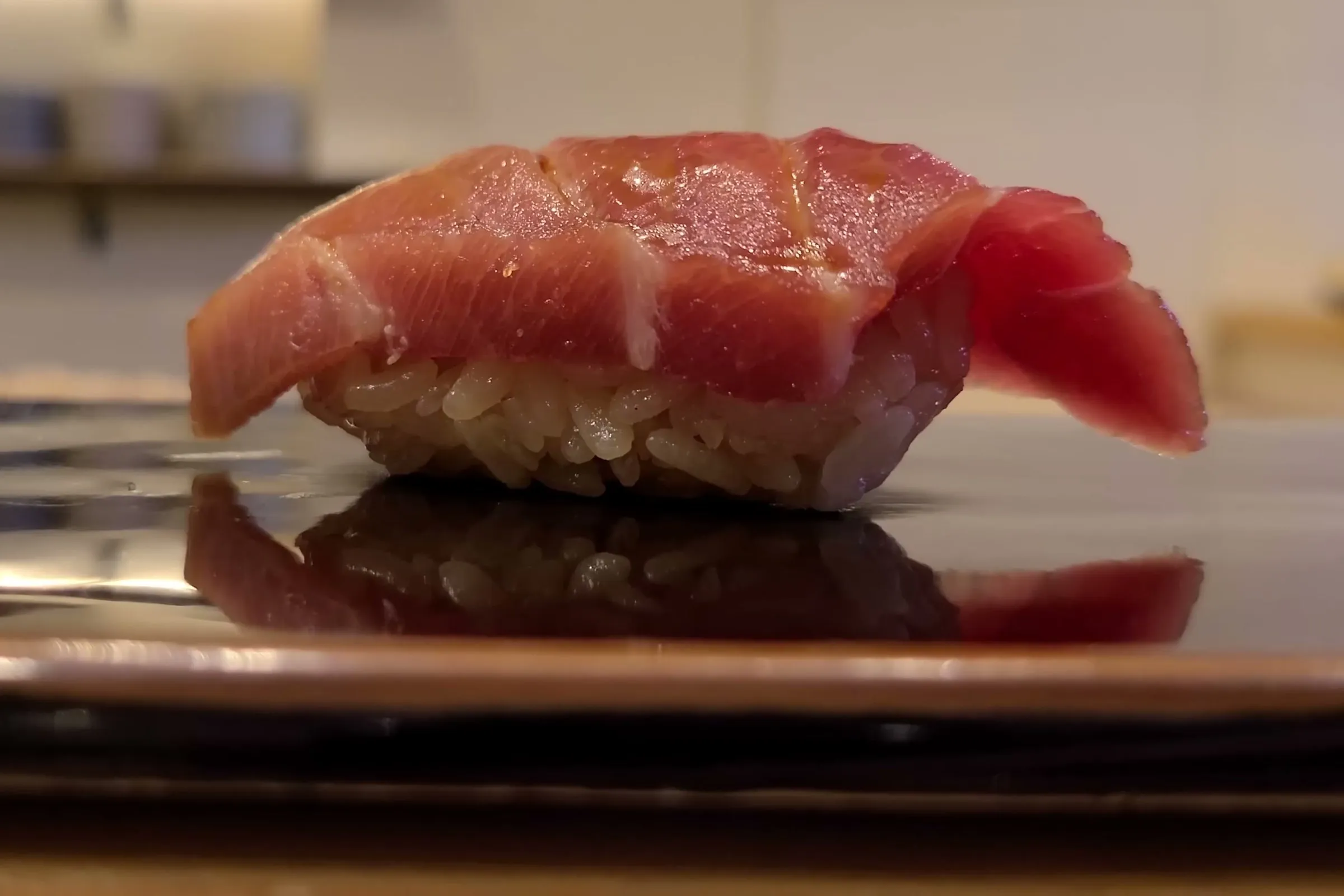
Right after those two I should have been sick of sushi, and everything should have tasted worse by comparison. It didn’t. Ranmaru’s rice was great, and they got the flavor out of every topping. The first piece was akamutsu, blackthroat seaperch, same as on my first visit.
I hadn’t checked the lunch price, and when I heard it after the meal I was shocked. ¥6,000 (about US$60, 2020/04). With an oolong tea and a few extra pieces I paid about ¥8,300 (about US$80, 2020/04). On my first visit, a dinner in 2019/10, I paid ¥22,400 (about US$210, 2019/10) and was already calling it a bargain.
The pieces here run big, too. Quantity, taste, price, all of it, and booking wasn’t hard back then. So if anyone asked me where to eat sushi in Tokyo, the answer was Ranmaru. Every time.
What it costs now, and where the chef went
That was then. When I checked Tabelog in 2026/11, Ranmaru was still at the same address in Shimomeguro, nine seats at the counter, a Bronze winner in The Tabelog Award 2026 and on Tabelog’s Sushi Tokyo top 100 list for 2025. The prices have moved.
Lunch is ¥15,000 (about US$90, 2026/11) for 18 items, 11 nigiri, 6 small dishes and a roll, made by the young chefs, and they ask you not to post reviews rating it. Lunch from the head chef is ¥18,000 (about US$110, 2026/11), dinner ¥30,000 (about US$190, 2026/11). All tax included, plus a 10% service charge.
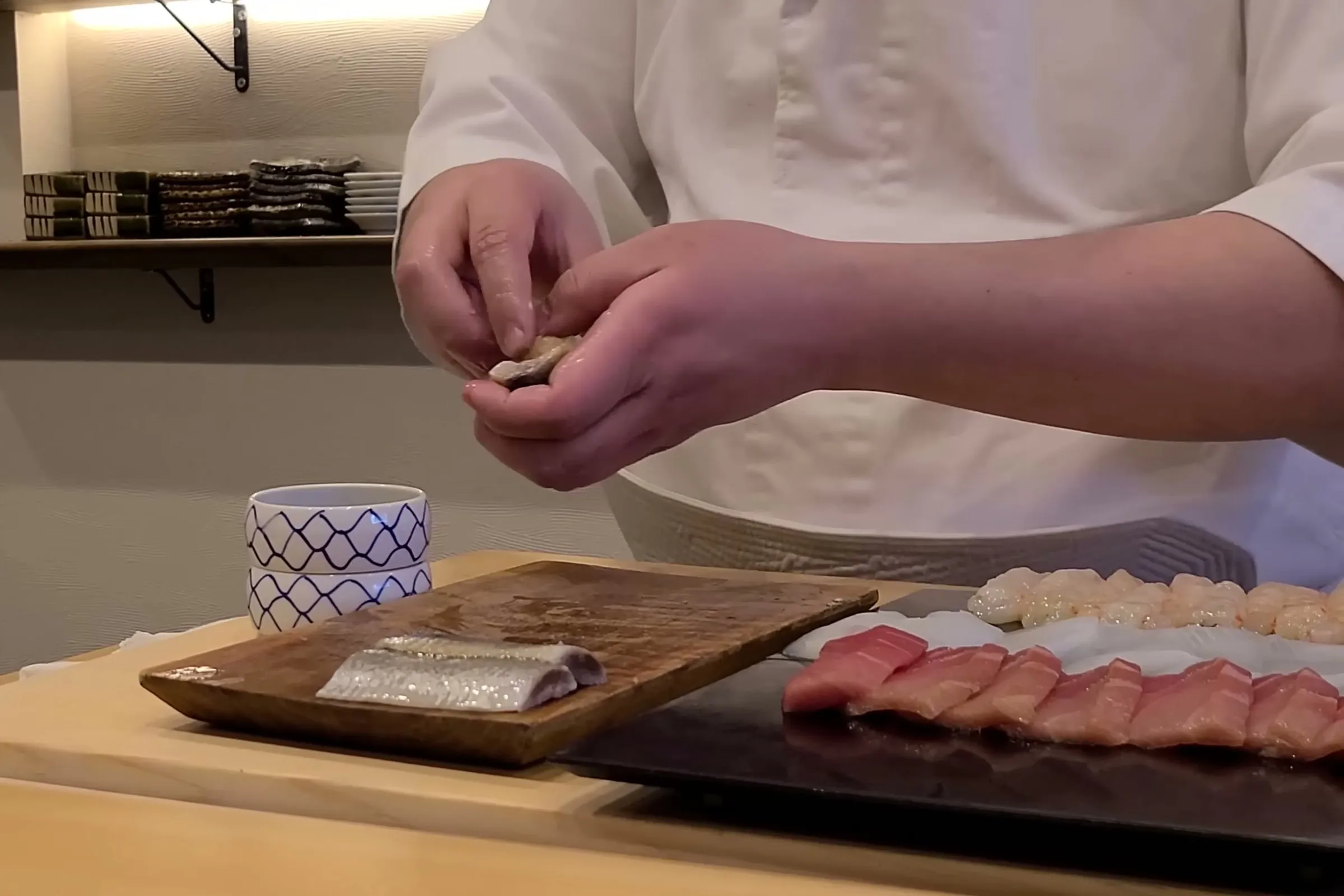
The chef moved too. The one I sat in front of, Yukichika-san, is Shimazu Yukichika. He left to open his own counter, Shimazu in Shirokane, and I’ve followed him there ever since. On my first visit he kept shouting “Shari-o!” while he made nigiri, just like Arai-san. I asked if he was copying Arai. He’d worked there for a while.
Tabelog says Tanabe-san (田邉幸輝), who had been running the shop as manager, took Ranmaru over as owner in 2023/02. And ¥15,000 is still less than a quarter of what Arai and Sugita cost me in 2026/10, about ¥67,000 (about US$420) and about ¥73,000 (about US$460).
Better rice than the place I’d been pushing
On the first night of that trip I’d had dinner at Sushiya Shota for ¥13,000 (about US$120, 2020/04), and I’d been telling everyone to go there for the way it brings out its toppings. Then I ate Ranmaru last, and Ranmaru took that spot.
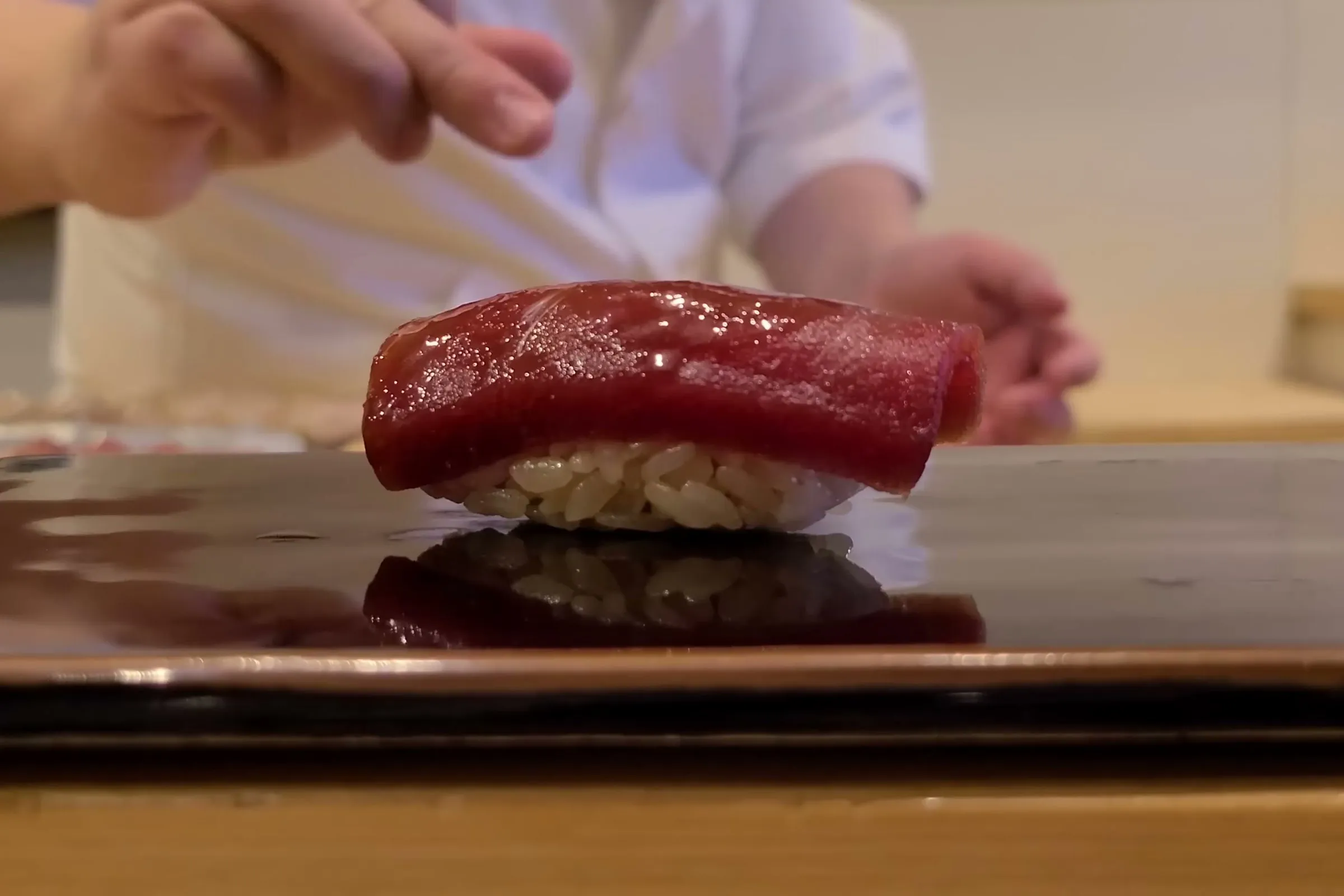
The akami zuke, lean tuna marinated in soy, had the same firm, concentrated chew I’d liked at Shota. The rice is where Ranmaru pulled ahead for me. The texture, the vinegar, the salt, all of it more my thing.
Taste, quality, value, Ranmaru came out ahead on every one for me, and its lunch course cost less than half that dinner.
The salmon question
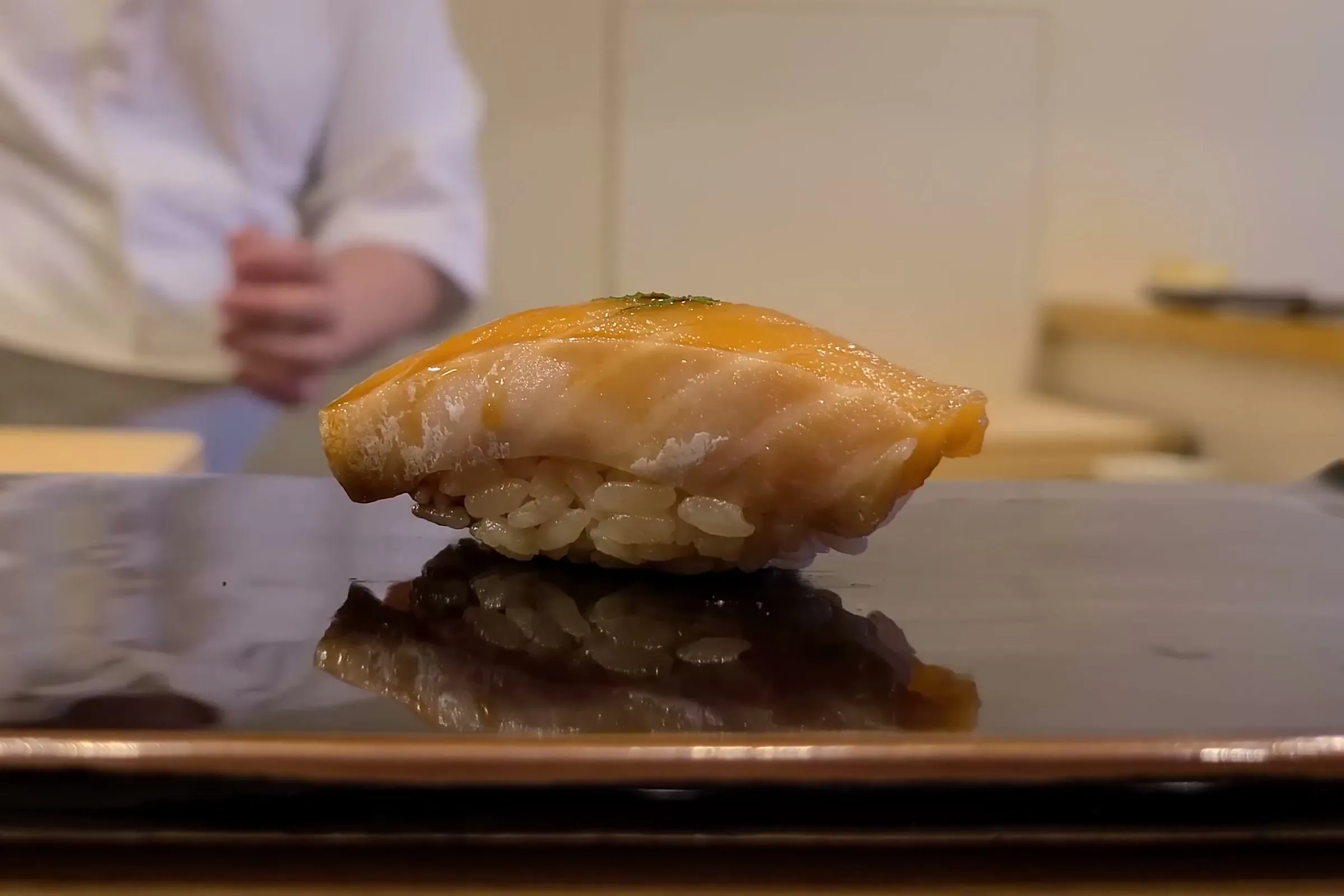
A question I get all the time in comments and on streams: why don’t omakase counters serve salmon? Mostly they don’t. But you’ll see one now and then even at Japan’s top counters. Masunosuke, king salmon. It counts as a premium topping.
It still tastes like salmon, maybe a little cleaner. That day it was lightly marinated and topped with kinome, young sansho leaves, and the smell of the kinome went with it perfectly. Salmon has a strong smell of its own. Maybe I’m biased because I love kinome. I enjoyed it anyway.
The kohada took the biggest hit from my schedule. I’d had Arai’s and Sugita’s the day before, and I couldn’t stop comparing. The akagai, ark shell, was fine. I’m rushing because the next piece comes with a story.
Kelp, car shrimp and Toyota
Ranmaru tastes good, and it’s fun. The hospitality is ridiculous. Yukichika-san said ojingeo, Korean for squid, as he served the squid. Nobody had taught him. He was studying Korean on YouTube because more and more Koreans were coming.
So many foreign guests come that he worked hard on his English too. The guests on my right were from Hong Kong. Shima-ebi, cured in kombu, he told them. Kombu is… abalone? No… Kelp! I said. Kelp? Kelp.
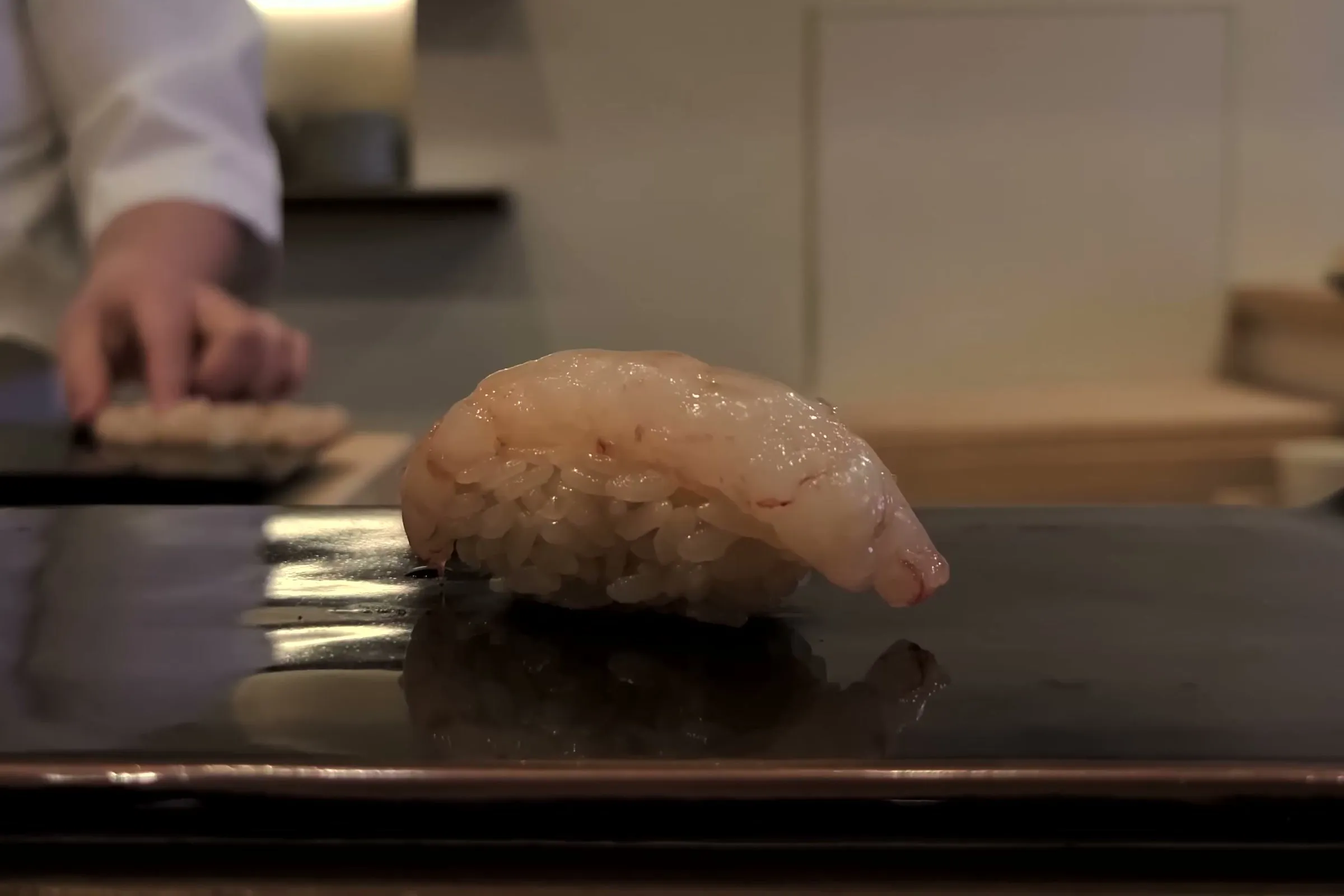
They asked if the shrimp was ama-ebi. No, shima-ebi, a much more expensive one. Expensive shrimp, said one of them. Car shrimp? Kuruma means car, so I guess that’s where it came from. Yukichika-san ran with it and handed the next guest a Hyundai shrimp. Not Toyota? I said. He loved it. At Shimazu he still serves kuruma prawns to foreign guests as Toyota Shrimp.
I’m a kuruma ebi fanatic. Unless it’s undercooked or off, I love it every time. The sweetness and the nutty richness are so clear.
Mackerel shining with fat
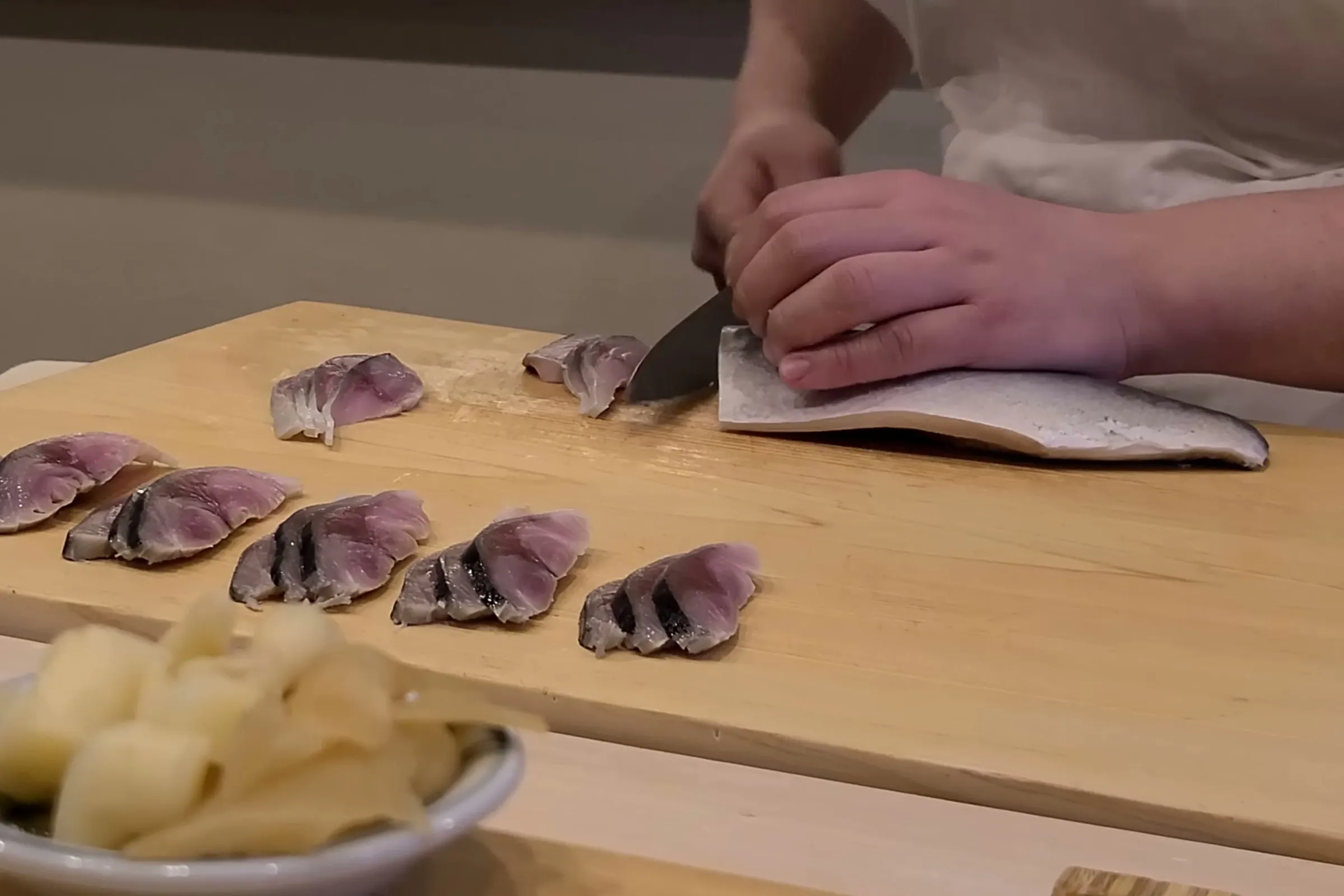
Watching them slice the saba made me starving. Blue fish always shine on the back, but this was the whole fish. Vinegar-cured flesh usually looks a little dry. This one was gleaming with fat.
Then they started on the other side from the belly, which looked even crazier. I sat there thinking, give me a belly piece. I got a belly piece.
It tasted exactly like I’d imagined. No, stronger. I expected fat and nuttiness, and there was a lot of vinegar and a lot of umami too.
Saba! Yukichika-san announced, and asked me what it’s called in Korean. Godeungeo. He said it back a few times and served the Japanese guest on my left a go-deung-eo. Languages were flying everywhere. The Hong Kong guests spoke English, some Japanese and some Chinese. One of the Japanese guests on my left taught Chinese at a school. I had Korean and English, and my Japanese is awful. Poor Yukichika-san.
A negitoro roll with everything in it
The uni at lunch is the cheaper kind. At the dinner course the base had been Nozomi uni. At the ¥6,000 lunch it’s a cheaper one, and you can add Nozomi as an extra. For what I expected, it was decent. And I love mitsuba, Japanese wild parsley, in the miso soup. I hear it’s common in Korea too. Why don’t more places use it?
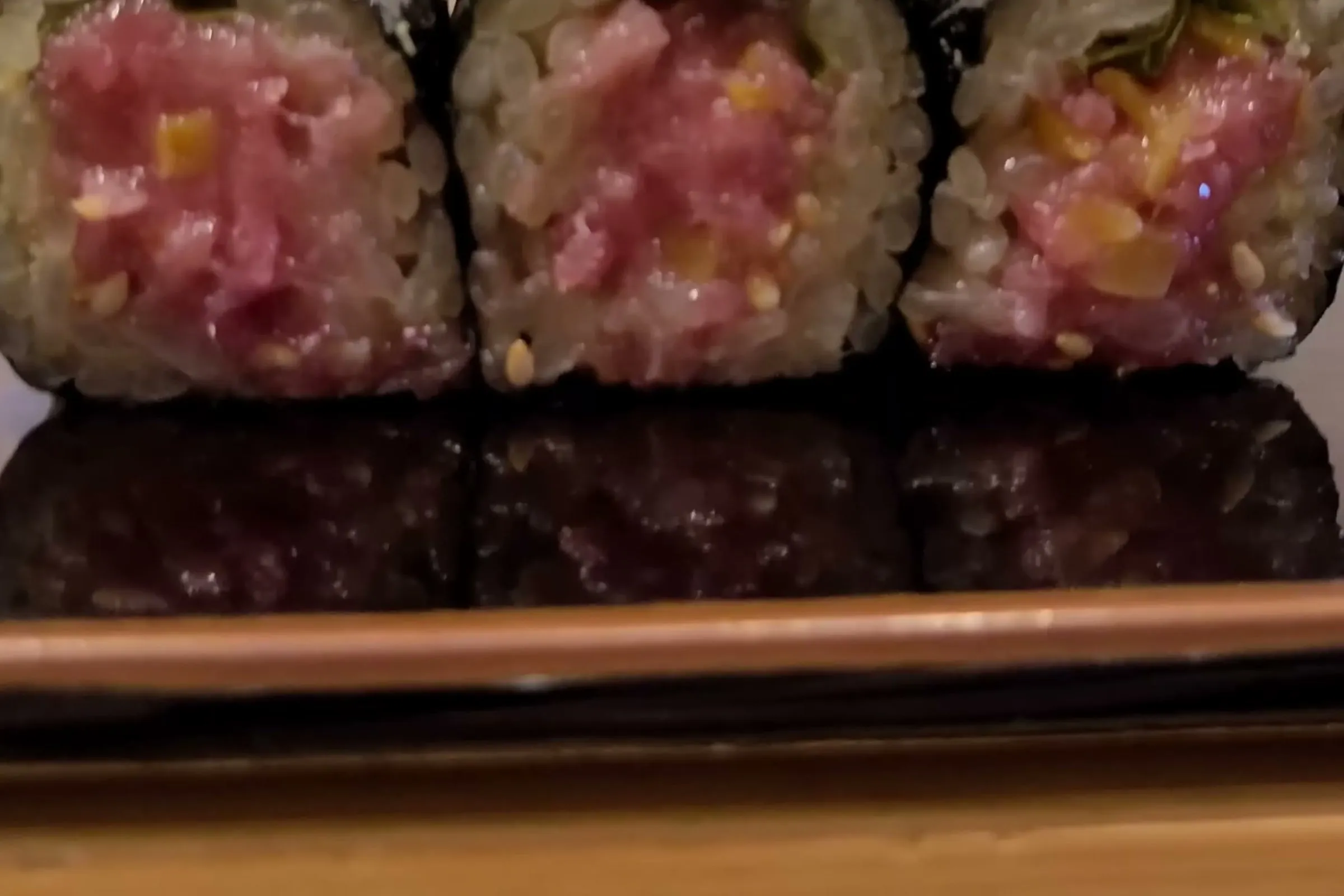
For the roll they called for nakaochi by name. That’s the meat scraped off the tuna’s rib bones after the main fillets are gone. One story says negitoro comes from negi-toru, to scrape off.
Before my first visit, all I’d seen of Ranmaru on Instagram was rolls, especially huge, loaded futomaki. I don’t like futomaki much, so I’d never order one, but in my head this was a roll shop.
This negitoro roll doesn’t push the tuna. Nakaochi mixed with chopped takuan, pickled radish. Lots of wasabi on the rice, a shiso leaf, the tuna and radish mix, then sesame seeds, like the burger jingle, minus the two all-beef patties. A lot of the flavors I love, layered, with a strong aroma. A ¥6,000 course doesn’t have a ton of nigiri, but by now I was about full.
I expected a show. I got one, and good sushi.
Before I ever came, I figured Ranmaru was all performance. Yukichika-san loves pulling funny faces for the camera and talking up his ingredients. I never asked to film any of it. They’d bring things out anyway. Our tuna comes from Yamayuki. Today’s tuna is from here. That kind of thing.
I’m wary of that, and he was so young, in his mid-twenties, that part of me thought it couldn’t possibly be good. I only went because an Instagrammer I trusted kept going back. One meal and all of that was gone. He’s skilled and he’s a good guy. Taste, hospitality, price, all three.
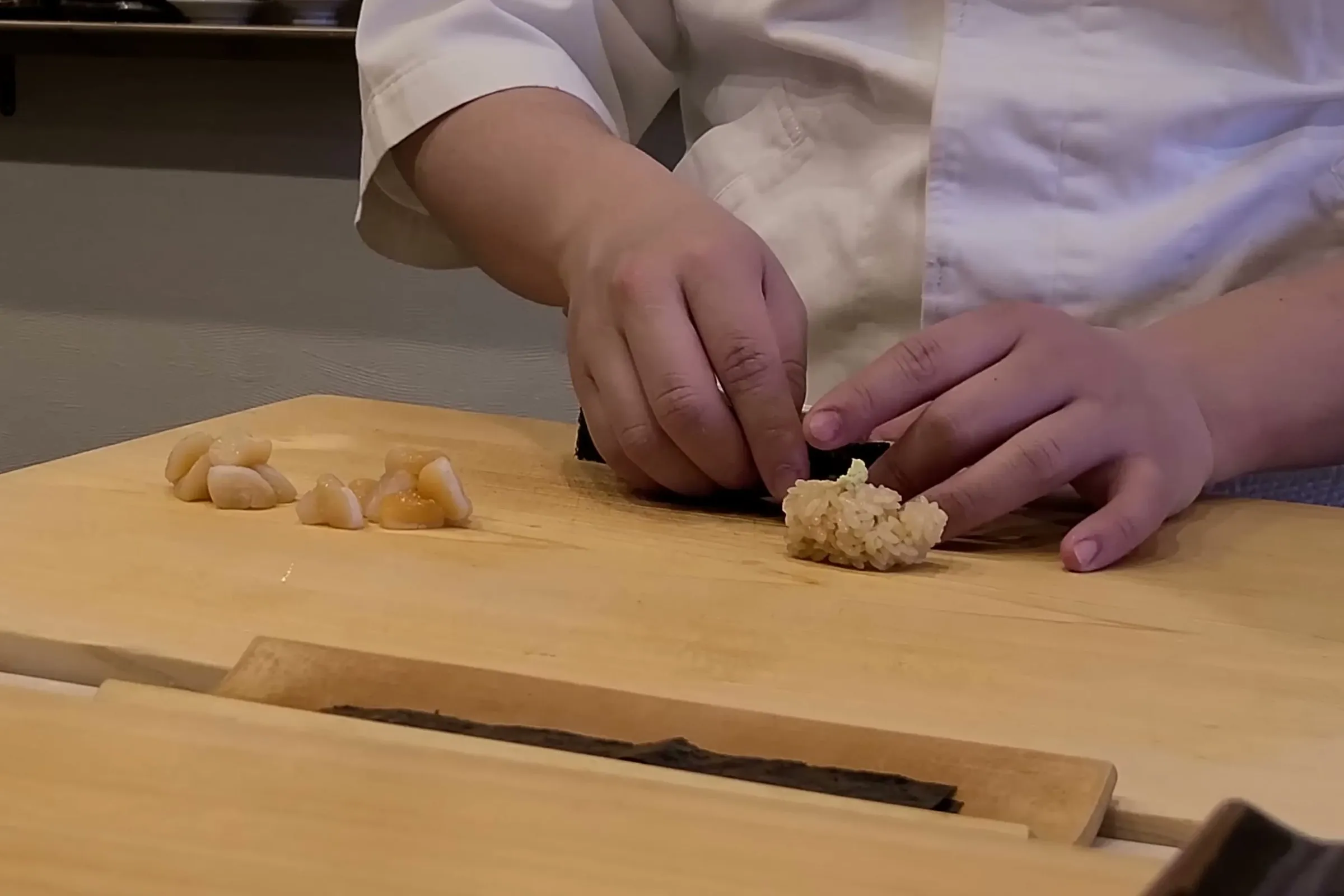
Extras. Katsuo, because if there’s katsuo I’m ordering it. Nothing special. It was early-season hatsu-gatsuo, a bit sharp, and what I love is fatty katsuo with that complex taste and aroma. Then kobashira, the small adductor muscles of a clam, as gunkan. Classic counters in Japan always have it, and in Korea I hardly ever see it. Some clams have a funky, gassy smell that’s too much for me. Kobashira has a hint of it that turns cool and clean as it lifts off. I love it, so of course I added it.
Then the real Ranmaru signature, the futomaki. Not my order, I was just leaning in to film. Yukichika-san loves posing with it, and after it’s sliced, more toppings go on top. You’ve probably seen it on Instagram. A bit much, right? I didn’t really want any. I asked the price and forgot it. Then tamago, and dessert, which I forgot to film again: juice made from different citrus fruits.
My first time, zero expectations
My first visit was a dinner in 2019/10, the day before a typhoon, with rain on and off. I found Ranmaru because the foreign Instagram accounts that go to all the famous sushi counters kept turning up here. It looked casual. If they kept going back, there had to be a reason.
The neighborhood is odd, and my first impression wasn’t great. The head chef, Yukichika-san (I got his name off his business card later), was on the right. They put us in the corner, in front of the sous chef, and he had a tub of rice too. Was he making nigiri? I’d come with no information and no expectations, and nigiri from the sous chef sounded like bad news. It was dinner, there was no tsumami, nigiri straight away, and yes, from the sous chef.
First bite, wow. He’s really good. The rice falls apart the moment it’s in your mouth, the grains have a good texture, and the seasoning is the kind nobody will dislike. Clear salt, never too strong, a vinegar that doesn’t get in the way. The tuna wasn’t great, which makes sense at the price. After a few nigiri a small dish, then nigiri again, back and forth all night.
The abalone was big and fragrant, steamed with nothing but salt, so it kept a bit of bite. The shima-aji came out looking dull, then got warayaki, its skin seared over burning straw. I’ve never had straw smoke that strong and that good. More chefs should do this with fish that isn’t perfect. Lots of straw, not much cooking. Everyone there tried hard with English. Yukichika-san told the foreign guest beside me that madai, sea bream, is scallop in English. I fixed that for him later.
Fatty katsuo, and why I’m gaining weight
Autumn is a great season for sushi, typhoons or not. Sanma, Pacific saury, a better sardine. Rich fat, very soft, deep blue-fish umami. They put the shiso and ginger inside, under the fish, with no wasabi. My piece crumbled and the rice landed in my lap, which is why the camera work goes wild. The nigiri itself was great, settling softly and falling apart in the mouth.
Buri, yellowtail, because it’s getting cold. My favorite part is the crunchy, heavily marbled bit by the gills, so I’d usually rather have buri as sashimi. They got the flavor out of it anyway. No idea how.
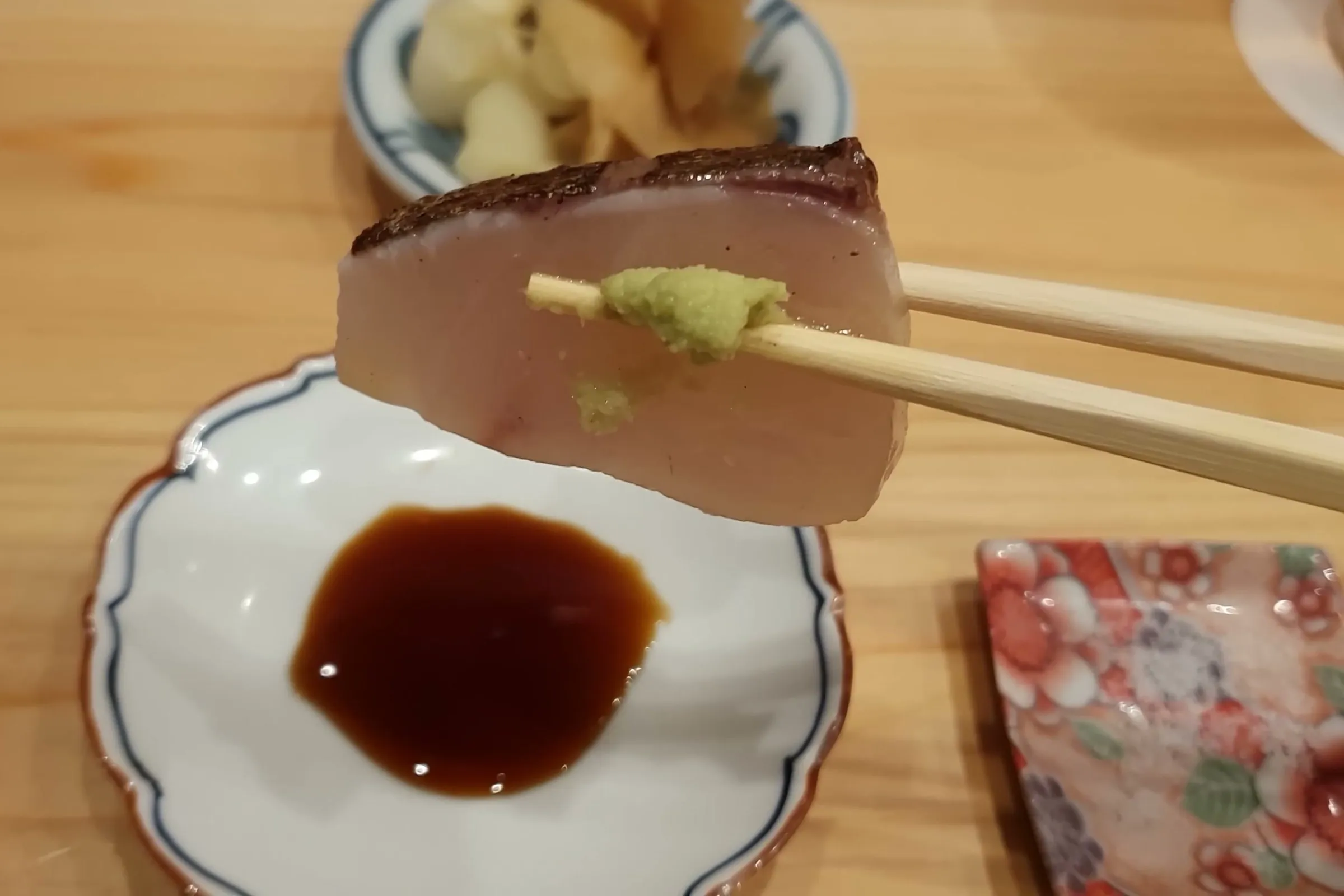
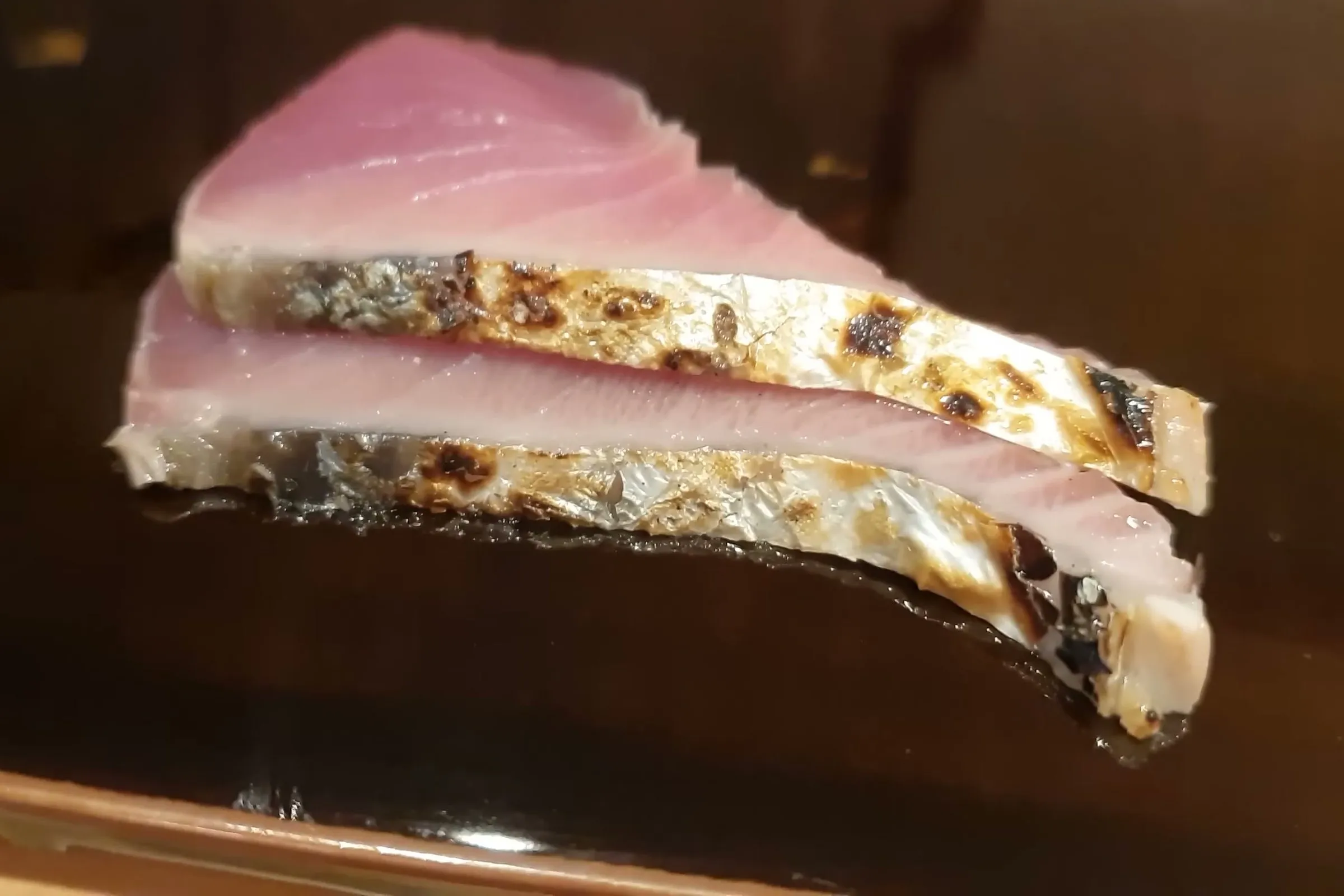
Then katsuo, and a lesson. Katsuo comes in two seasons. Hatsu-gatsuo swims north in early summer, lean and sharp. Modori-gatsuo comes back south when the north gets cold, and it’s caught with a thick layer of fat under the skin. The fish fattens up to stay warm in cold water. Same with me. I’m not eating too much, it’s just getting cold.
Modori-gatsuo still has acidity, more than bluefin tuna, and with all that fat it’s so soft. Sweetness, acidity, blue-fish umami. Unbelievably good. They kept bringing it over to show it off, which is how you know this is the cool kids’ sushi counter. Then unagi, freshwater eel, where I’d expected anago. Grilled ridiculously well. No muddy smell, crisp where it’s charred, chewy skin, and big enough to really chew on. Cucumber and kinome with it, as it should be.
The prawn that jumped
Not everything hit. The chutoro had that slightly off smell you get from some very fatty tuna. Ankimo came with something fried on the side, and I panicked, because the night before I’d eaten more matsutake than anyone should and I don’t even like matsutake. It was a fried oyster. I don’t like oysters either. Like voting, the lesser evil. The ankimo looked great, lots of orange in it, and tasted plain and smooth, almost like deli meat.
The otoro made up for the chutoro. Clean, very fatty, soft, a little acidity, and my friend said the rice was good. It was my third sushi meal that day: lunch, supermarket sushi on my first YouTube live, then this. Lunch had been somewhere good at kohada, and Ranmaru’s kohada held up.
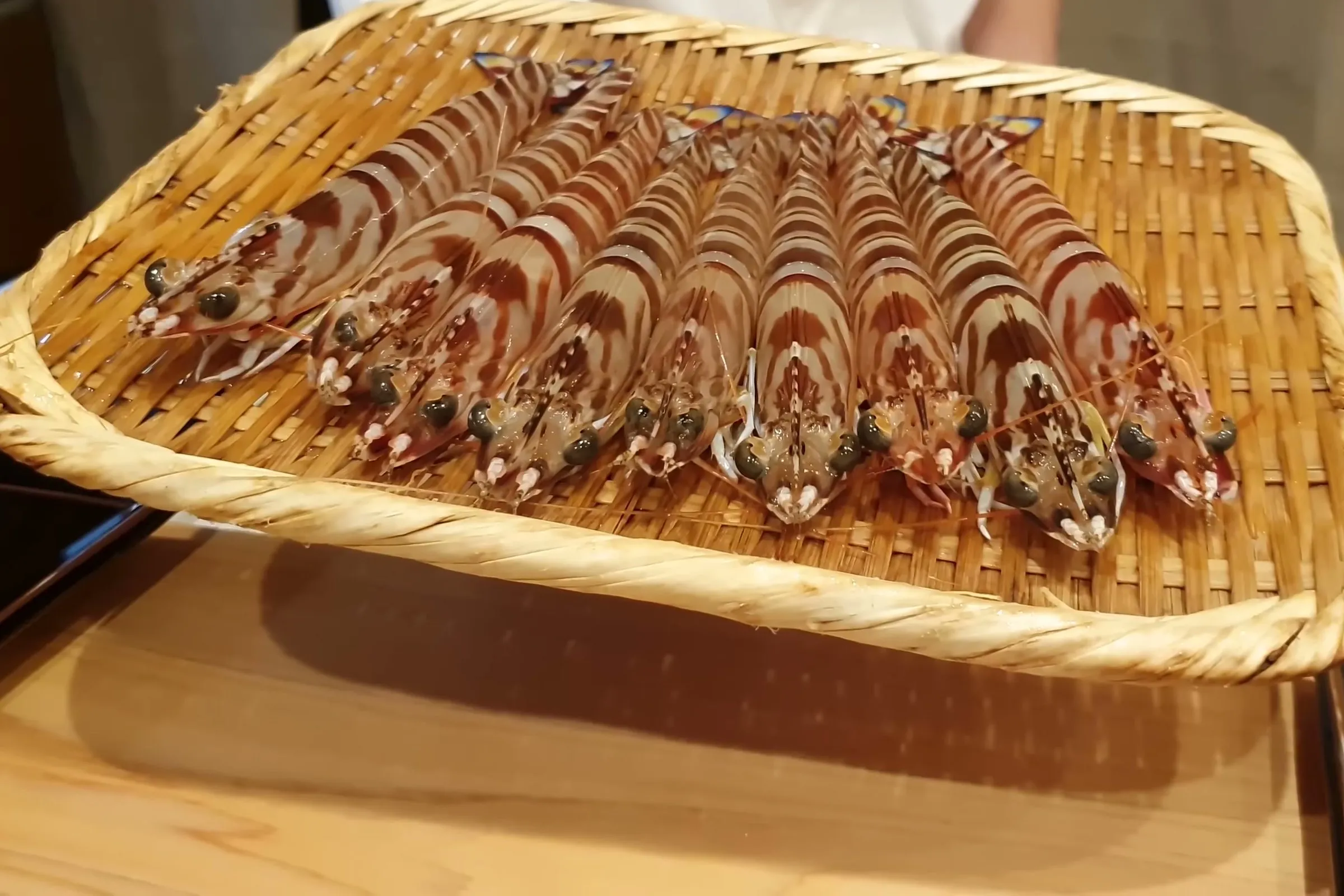
Then my beloved kuruma ebi, still alive, and one leapt off the board. The chef said sorry. Should I catch it? I asked. Everyone cracked up. It looked a bit on purpose to me, grabbing them one by one until one jumped. I loved it, and they still took a drink off my bill. I’d had a ginger ale, and the oolong tea was on the house.
Ikura kodon, a little bowl of salmon roe on rice. Light seasoning, a clear dashi taste without the smoky edge too much dashi gives it. Even the ikura was good. The steamed madai I didn’t get. I’d rather have amadai, nodoguro or cod done this way, soft and fatty fish. The uni was bafun uni from Nozomi, the brand of Yamayuki, the biggest tuna wholesaler. Clean, with deep sweetness. When uni is this good at this price, I just call it luck.
Anago last, almost rare inside like shabu-shabu, charred outside, with sudachi juice, zest and salt. Loved it. The tamago was crumbly, like pound cake with nuts in it, the worst thing I ate that night. Dessert was juice, all 100%, from a farm in the owner’s town. He also runs another counter, Sushi Rinda. The first glass, mikan, reminded me of the orange juice at Thipsamai in Bangkok. Dinner omakase, ¥22,400 (about US$210, 2019/10), and I said any empty slot on any Tokyo trip would go to Ranmaru.
Finding it, and getting a seat
Ranmaru is on the ground floor at 3-16-2 Shimomeguro, Meguro, about 450 m from Fudomae Station. Coming by taxi, Tabelog says to ask for the main gate of Meguro Fudoson, the temple.
When I checked Tabelog in 2026/11, dinner ran in two seatings, 17:30 and 20:30, Tuesday to Saturday, closed Sunday and Monday. The lunch courses list 12:00 or 12:30 to 14:30 without saying which days. Cards only, no e-money, no QR codes. You can bring your own drinks.
Tabelog calls Ranmaru referral-only these days because it’s so popular, but says the cancellation slots it lists are open to new guests. The phone line is closed and the page asks you to book online. When I went, getting a seat wasn’t hard. That’s the part that changed most.
About ¥8,300 for lunch, ¥22,400 for dinner
2020/04 video
Lunch, just me: the ¥6,000 course (about US$60, 2020/04) plus an oolong tea and a few extra pieces came to about ¥8,300 (about US$80, 2020/04). That’s about a fifth of what Arai cost me the day before.
Dinner on my first visit, the omakase: ¥22,400 (about US$210, 2019/10). I’d had a ginger ale, and the oolong tea was on the house after the prawn incident.
On Tabelog in 2026/11: lunch ¥15,000 (about US$90) or ¥18,000 (about US$110), dinner ¥30,000 (about US$190), tax included, plus a 10% service charge.
What Sushi Ranmaru has cost me, visit by visit
2 visits where I said the bill on camera. ¥22,400 in 2019/10, ¥8,300 in 2020/04. Down 63%.
One person, the bill I said on camera. 2019/10 was a dinner, the omakase. 2020/04 was a lunch, the ¥6,000 course plus oolong tea and a few extra pieces, about ¥8,300. Dinner and lunch, so the drop is the meal, not a price cut. Each month is when that video came out.
Would I go back
In 2020 my line was, don’t ask me where to eat sushi in Tokyo, just go here. Rice, toppings, hospitality and price, all at once, and it held up the day after Arai and Sugita at a fraction of their price. That almost never happens.
That exact Ranmaru is gone. The ¥6,000 lunch is ¥15,000 now, and the chef I went for runs Shimazu, which is where I go. If you catch a cancellation slot on Tabelog, it’s still far cheaper than the big names. And if you want what I had in 2020, do what I did. Find a young chef with good rice and fair prices before everyone else does.
How to book
How I booked
Getting in was easy for me. In 2020/04 I said booking Ranmaru wasn’t especially hard, which is part of why I sent everyone here. That’s the part that changed.
- Tabelog online booking
The route on Ranmaru’s own Tabelog page when I checked in 2026/11. The page calls it referral-only because it’s so popular, but says the cancellation slots Tabelog lists are open to new guests. The phone line is closed, and the page asks you to book online. Courses: lunch omakase ¥15,000 (18 items, made by the young chefs, and they ask you not to post rating reviews), lunch omakase with the head chef ¥18,000, dinner omakase ¥30,000, all tax included, plus a 10% service charge. Dinner seatings 17:30 and 20:30, Tuesday to Saturday, closed Sunday and Monday. The lunch courses list 12:00 or 12:30 to 14:30 but not which days. Nine counter seats, cards only.
Checked 2026/11. Booking rules change, so look at the official page before you go.
Where it is
- Address
- 1F, 3-16-2 Shimomeguro, Meguro-ku, Tokyo東京都目黒区下目黒3-16-2 1F
- Nearest station
- Fudomae, about 450 m on foot
Plan the Tokyo trip
The boring bits I’d sort before flying, so the eating days stay free.
- Hotels in Tokyo*
Pick the room by where you eat, not by the sights. After a long dinner, a short ride back is the real luxury. This place is in Meguro, Tokyo.
- Japan eSIM*
Data from the moment you land, no counter and no SIM swap. Set it up the night before.
- Keisei Skyliner from Narita*
Narita to Ueno in about 40 minutes. Buy it ahead and walk straight to the platform.
- Haneda airport limousine bus*
Landing at Haneda instead? The limousine bus drops you at the big hotels and stations with no transfers.
- Tsukiji Outer Market food tour*
A market morning with someone who knows which stalls are worth the line.
- Sushi-making class at Tsukiji*
Shape nigiri yourself once and the counter makes a lot more sense.
Links marked * are affiliate links. If you book through them I may earn a small commission, and you pay the same. How it works
Guides that mention this place
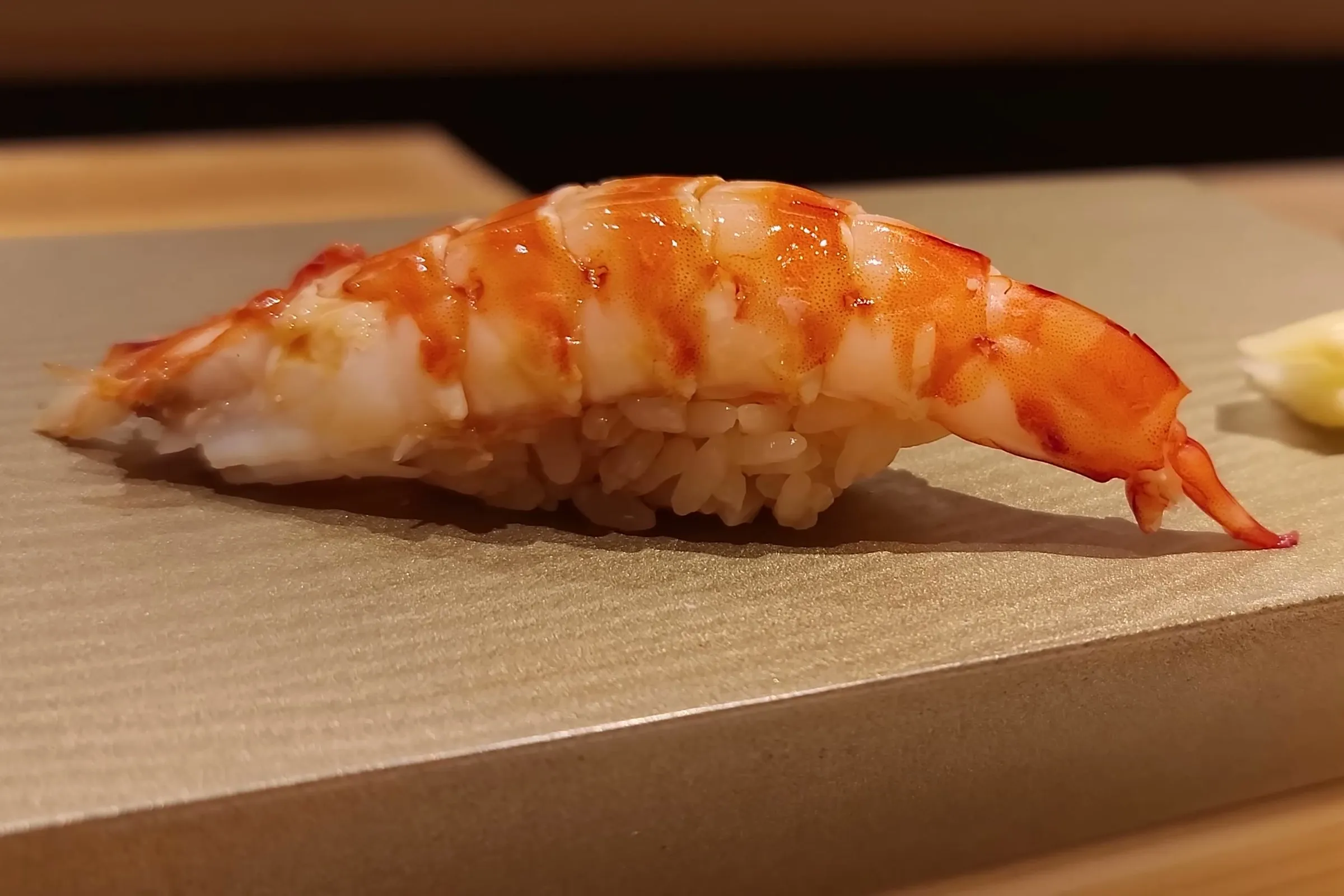
More from this restaurant on the channel
More places I have eaten at
All of Tokyo →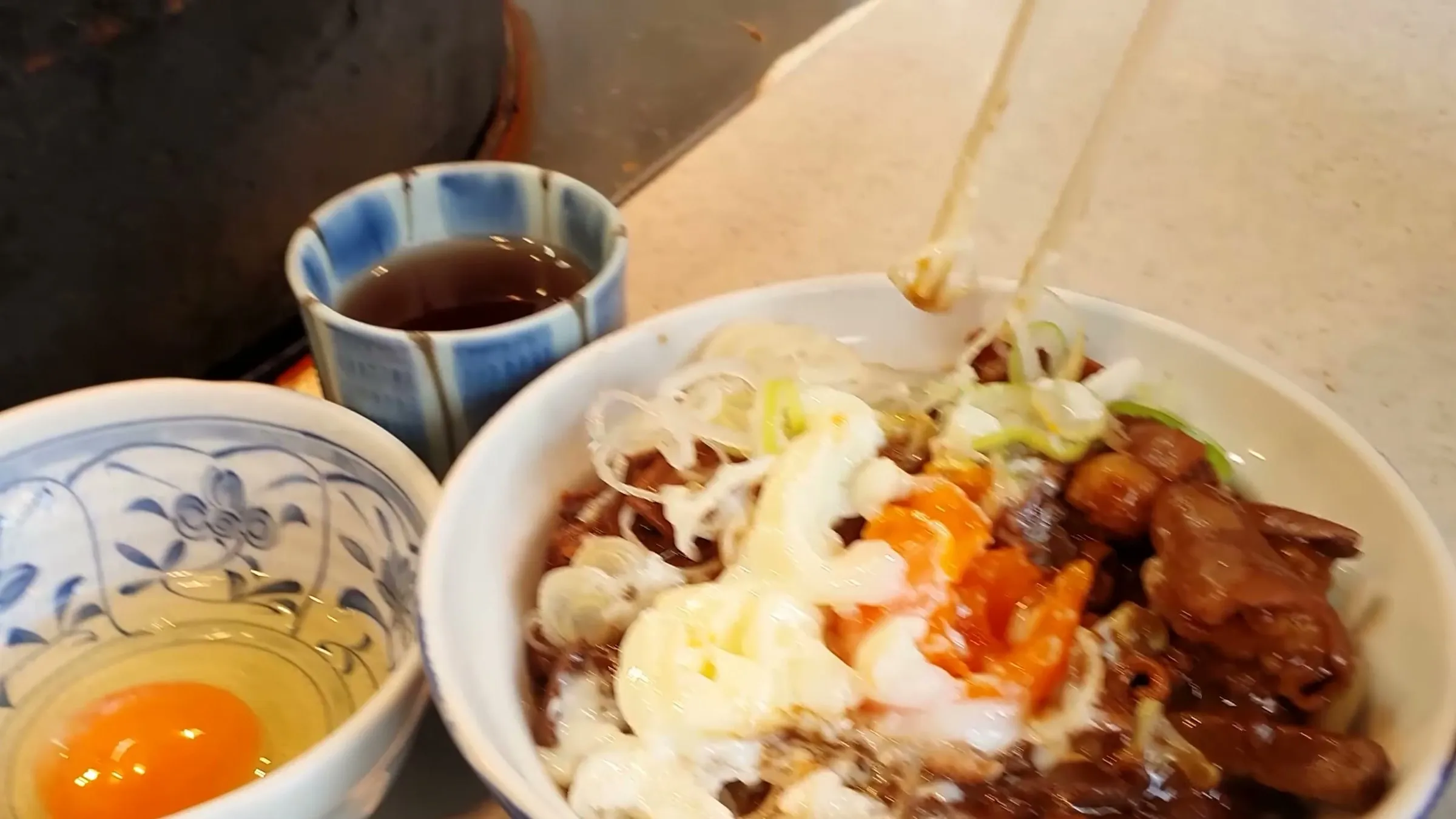 Tsukiji Outer Market, Tokyo
Kitsuneya
Tsukiji’s TV-famous offal bowl, softer and milder than it looks.
¥1,650 2019/07 video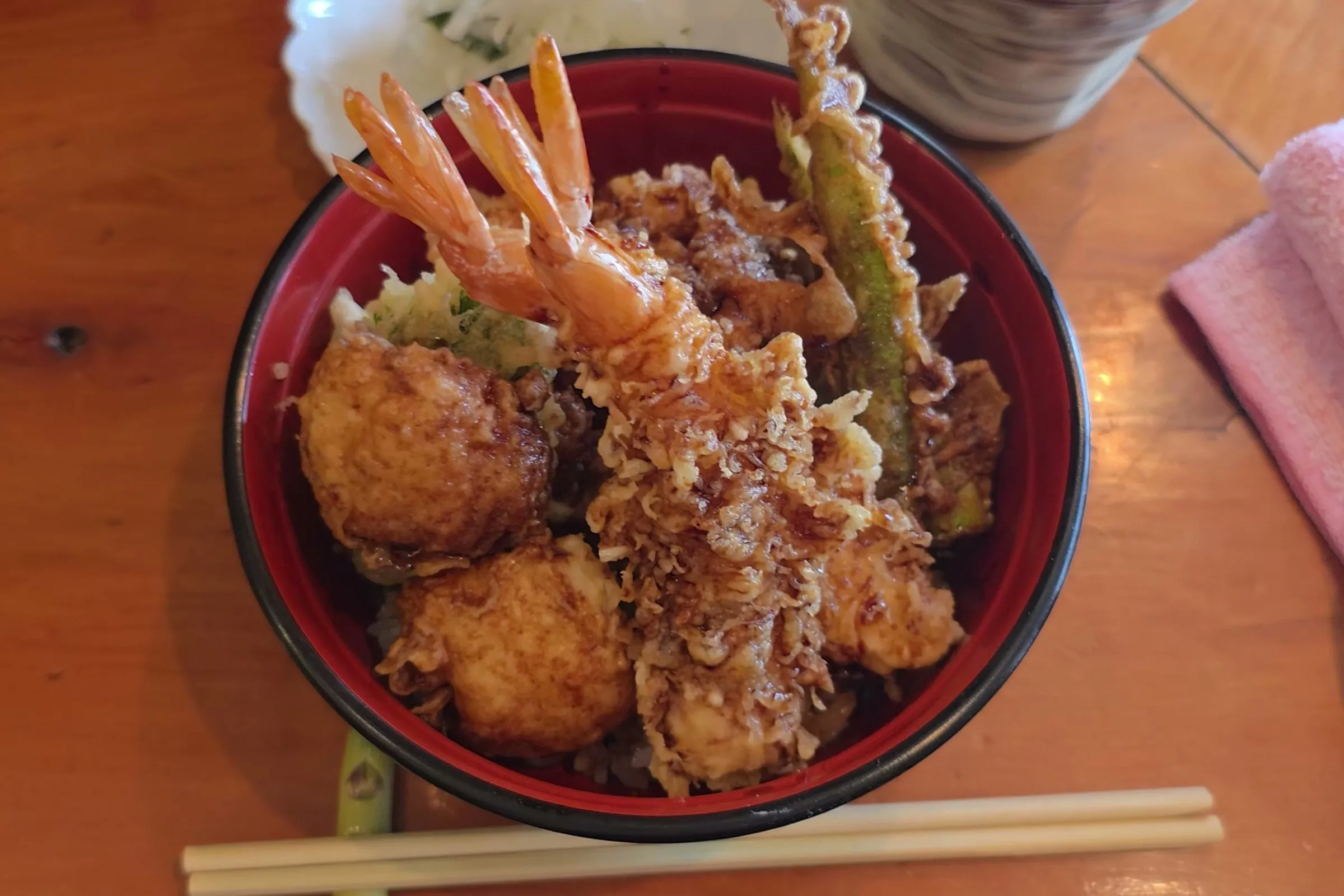 Asakusa, Tokyo
Tempura Ichikawa
A walk-in tendon lunch near Kappabashi. Great rice, cash only.
¥2,880 2025/11 video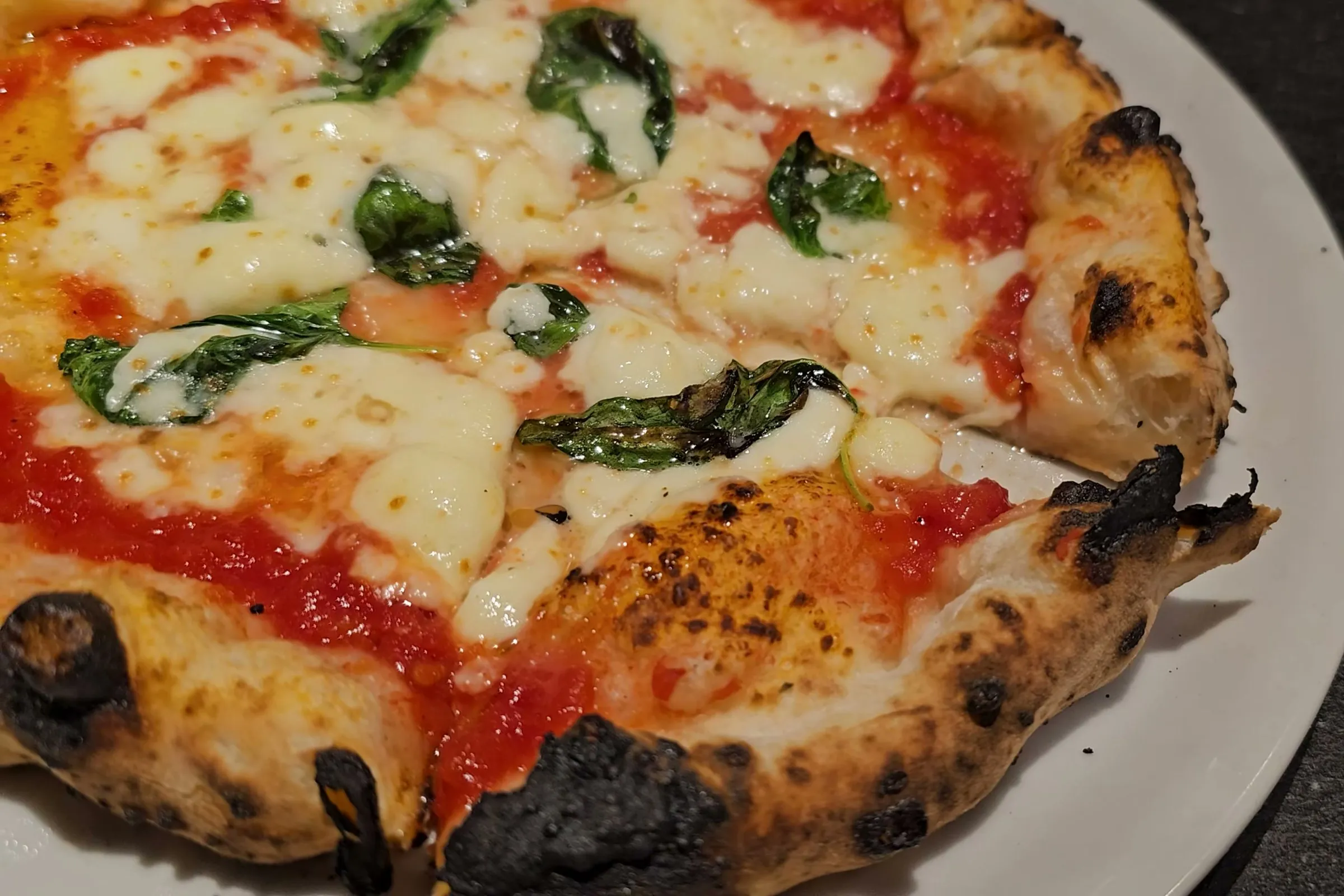 Azabu-Juban, Tokyo
Savoy Azabu-Juban
A wood-fired margherita for ¥1,650 (2024/05), a tuna pizza I’d skip, and no booking war.
¥1,650 2024/05 videoSources
- らんまる Tabelog
- Ranmaru Tabelog
- 昼おまかせ(お昼口コミ投稿NG) Tabelog
- 昼おまかせ(大将) Tabelog
- 夜おまかせ(大将) Tabelog