Takagaki got a Michelin star. I’m still not going back.
Takagaki no Sushi is a six-seat counter in an old house near Suitengumae Station in Nihonbashi, Tokyo, in the same neighborhood as Sugita. Lunch cost me ¥9,000 a person (about US$80, 2019/08), and after it won a Michelin star, ¥11,000 (about US$100, 2020/01). Great fish for the money both times, rice I couldn’t get along with, and I’m not going back. The star was from the 2020 guide, and Takagaki is no longer in the Michelin guide (2026/11). Lunch on Tabelog was ¥15,000 when I checked (2026/10).
monster gourmetFrom my 2019/08 video
- My share
- ¥9,000
- about US$80, lunch, uni extra included, 2019/08 video
- Highlight
- Hamaguri with that dark tsume
- Skip
- The uni extra
- Video
- 14:01
- 2019/08
- Where
- Nihonbashi, Tokyo
- Suitengumae, 2 minutes’ walk; Ningyocho, 4 minutes
Six seats, two men, and only us
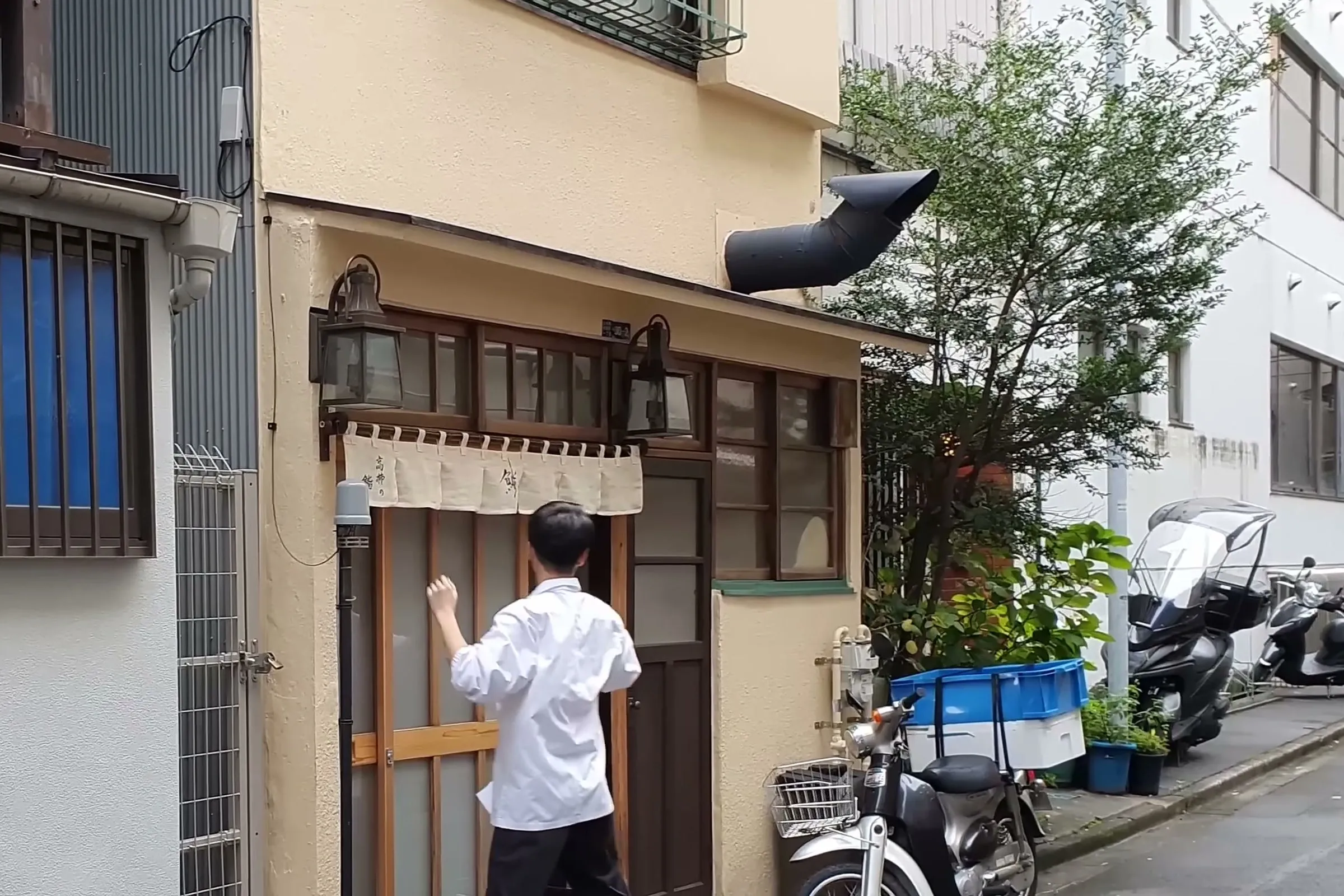
Takagaki no Sushi just means Takagaki’s sushi. The chef, Nobuhide Takagaki, worked at Shimbashi Shimizu. TABLEALL’s profile says five years there, after Sushi Takemoto in Kitakyushu and Sushi Mizutani in Ginza, and he opened this place in 2018. He’s young, too.
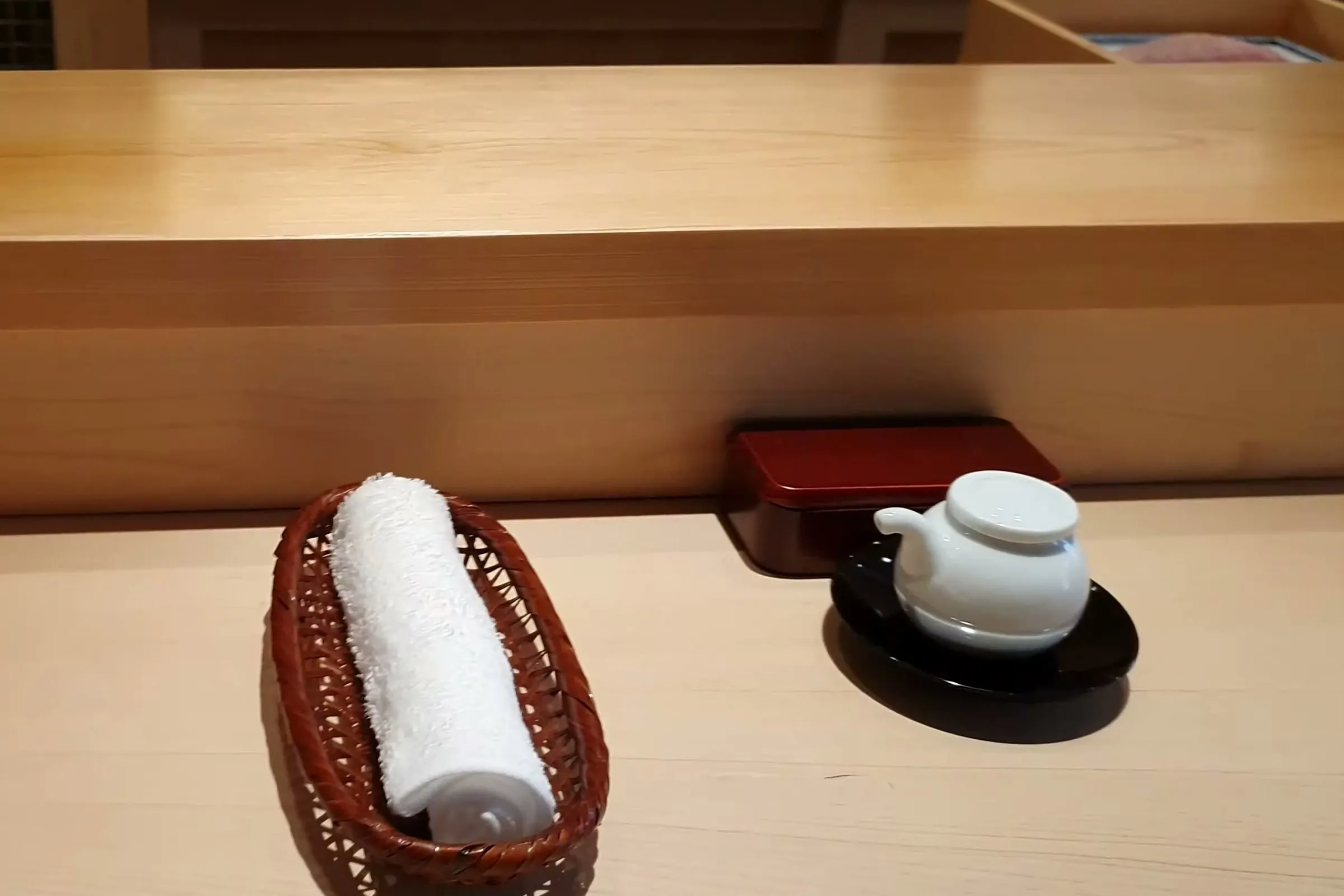
The shop is tiny from the outside and tight inside. The counter you see is the whole thing. Takagaki-san and one helper, that’s the staff.
We were the only guests that lunch, and I felt a little sorry. When it’s only me or my group at a counter, I always feel bad.
How I found it. There’s an older guy on Instagram, grandpa age, who’s a Sugita regular, and the places he eats overlap with my taste. When this one came up, I had a feeling, so I told a younger friend to try it. He took his time, then came back and said it felt like Sushi Arai in the old days. I went right away.
Nigiri you have to push in
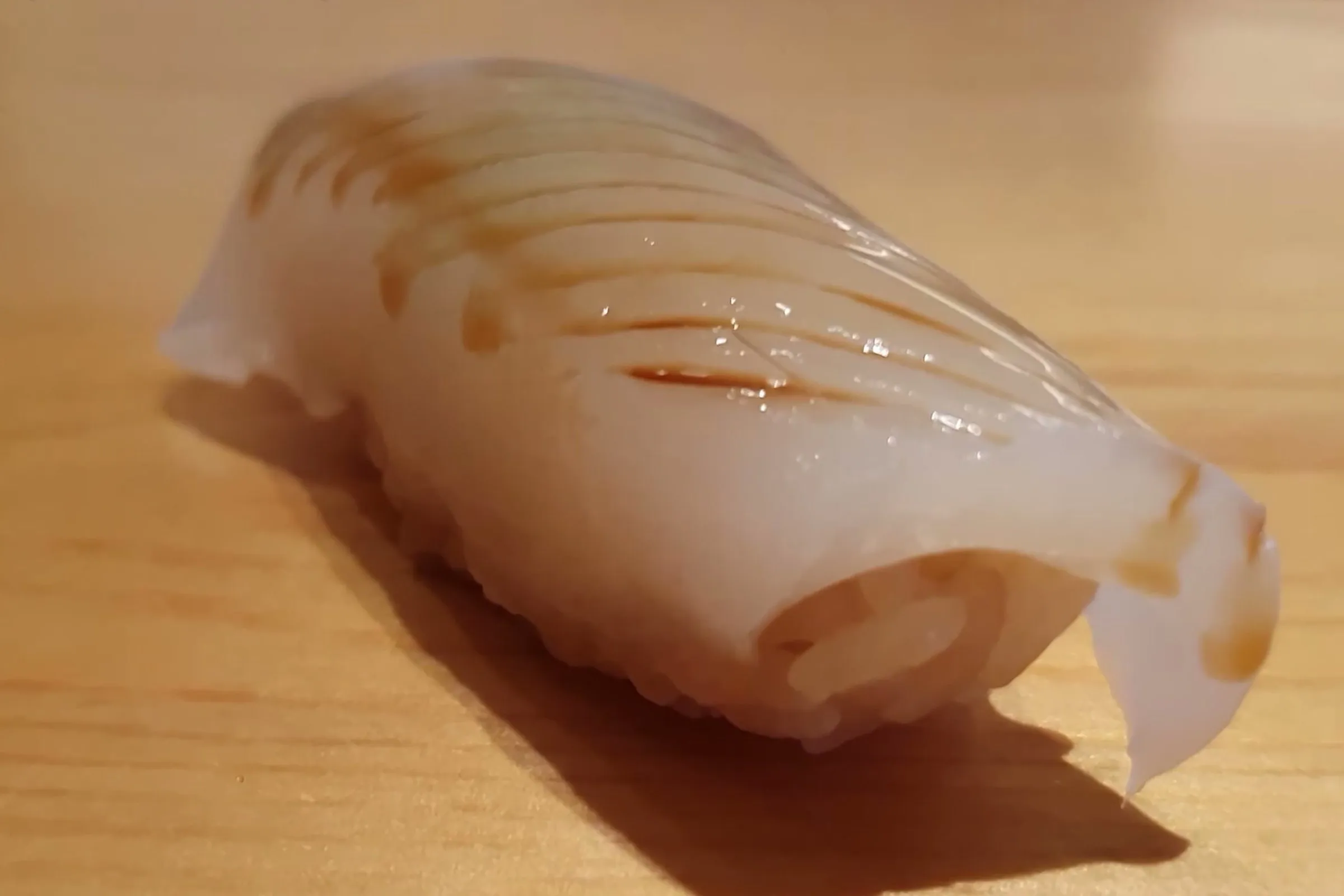
Lunch, so it went straight to nigiri. First up was sumi-ika, cuttlefish. Second was hirame, flounder, and that one didn’t stick with me.
What I do remember is the size. These are big. You can’t just pop one in. Like slurping noodles, you get it into your mouth and then push. That’s the only way it goes in one bite.
Then the rice. You can see the vinegar in its color, and it has a heavy, funky aroma, like Yohei, Yokoi’s red vinegar. That part I didn’t mind. The surface was the letdown. A lot of the grains were split. The core kept a thin al dente ring, but the outside felt waterlogged.
Blogs say this rice goes with every topping. The vinegar and aroma aren’t bad, but with some pieces the aroma got in the way. Still pretty good rice. Just not good with everything.
Sold to me as the old Arai
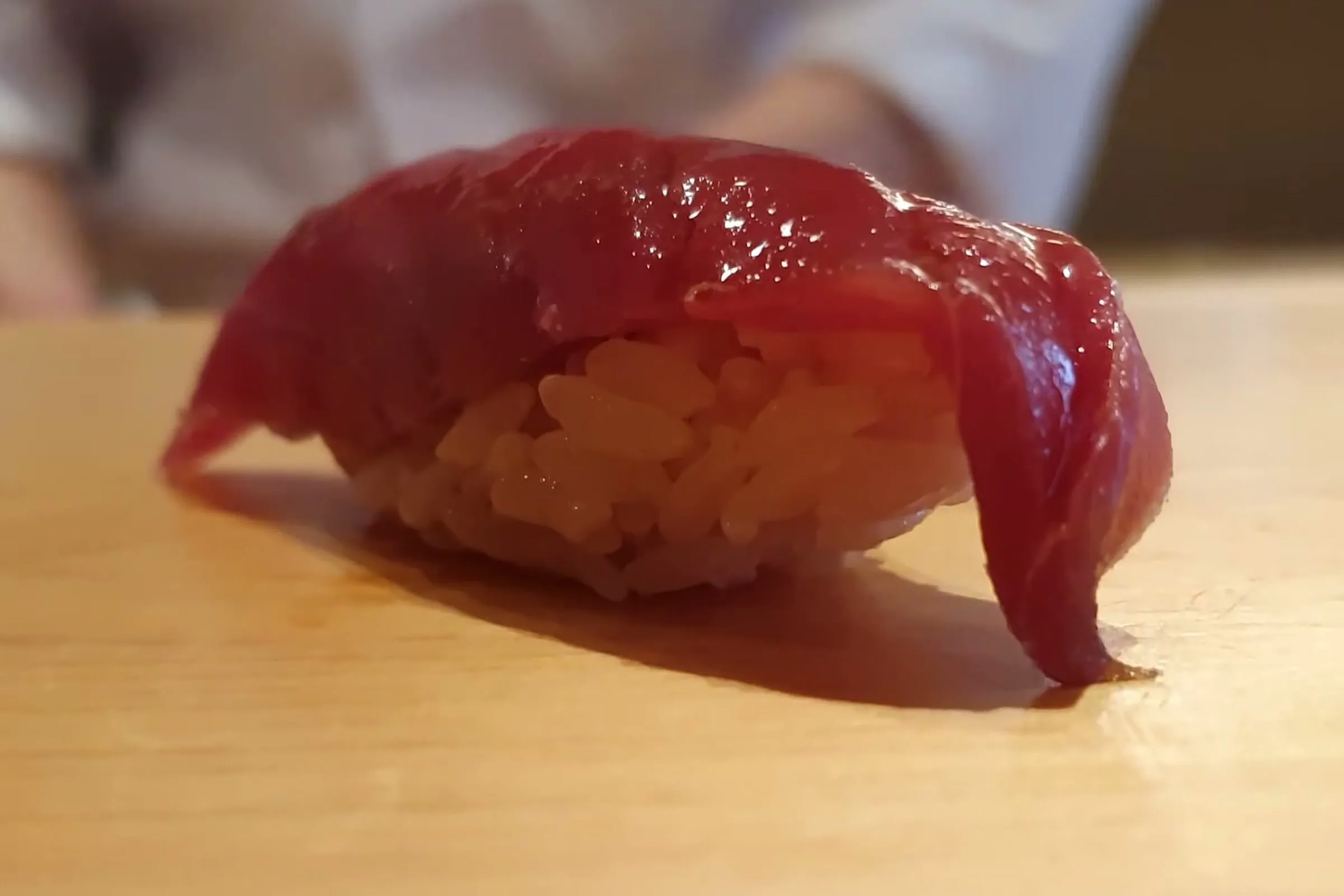
Next came akami zuke, lean tuna marinated in soy, and then chutoro. I don’t remember them in detail. Tuna follows the price more than almost anything, so it isn’t fair to hold it up against Arai. I do remember it wasn’t bad.
But that’s why I’d come. I fell for the line that this felt like Sushi Arai. The first time I went to Arai, what got me wasn’t even the tuna. It was the rice. I picked it as the tastiest shari on earth the moment I ate it, on the vinegar, the salt and the aroma alone. It took over my tongue and my nose.
Takagaki’s rice doesn’t get there. Putting the two side by side is a bit much.
Akagai with the wings tucked in
Akagai, ark shell, something I hadn’t seen in a while. Usually the himo, the frilly edge people call the wings, gets set aside and rolled up with cucumber at the end. At Takagaki he keeps the wings and tucks them under the clam, the adductor and all, in one nigiri. Unusual. Put nicely, the akagai aroma was loud and clear. Put badly, it was fishy.
On the second visit he made it the same way. The rice is big already, and with the clam and the wings packed in, my mouth was full. Great chew. The fishiness filled my mouth too.
Kobashira came as a gunkan. Those are the little adductor muscles of the aoyagi clam, and you rarely get them in Korea, so I’m always glad to see them. He spread them out wide on top, which looked cute. They have a slight tingle, a fresh, clean taste and smell, and I like them more than the aoyagi itself.
A few pieces that day ran a little fishy. The shima-aji, striped jack, was a bit short on fat with a hint of it. The aji, horse mackerel, was a fat one, cut from one side instead of split down the middle, and so oily it melted. It still left a fishy finish.
The clam I liked both times
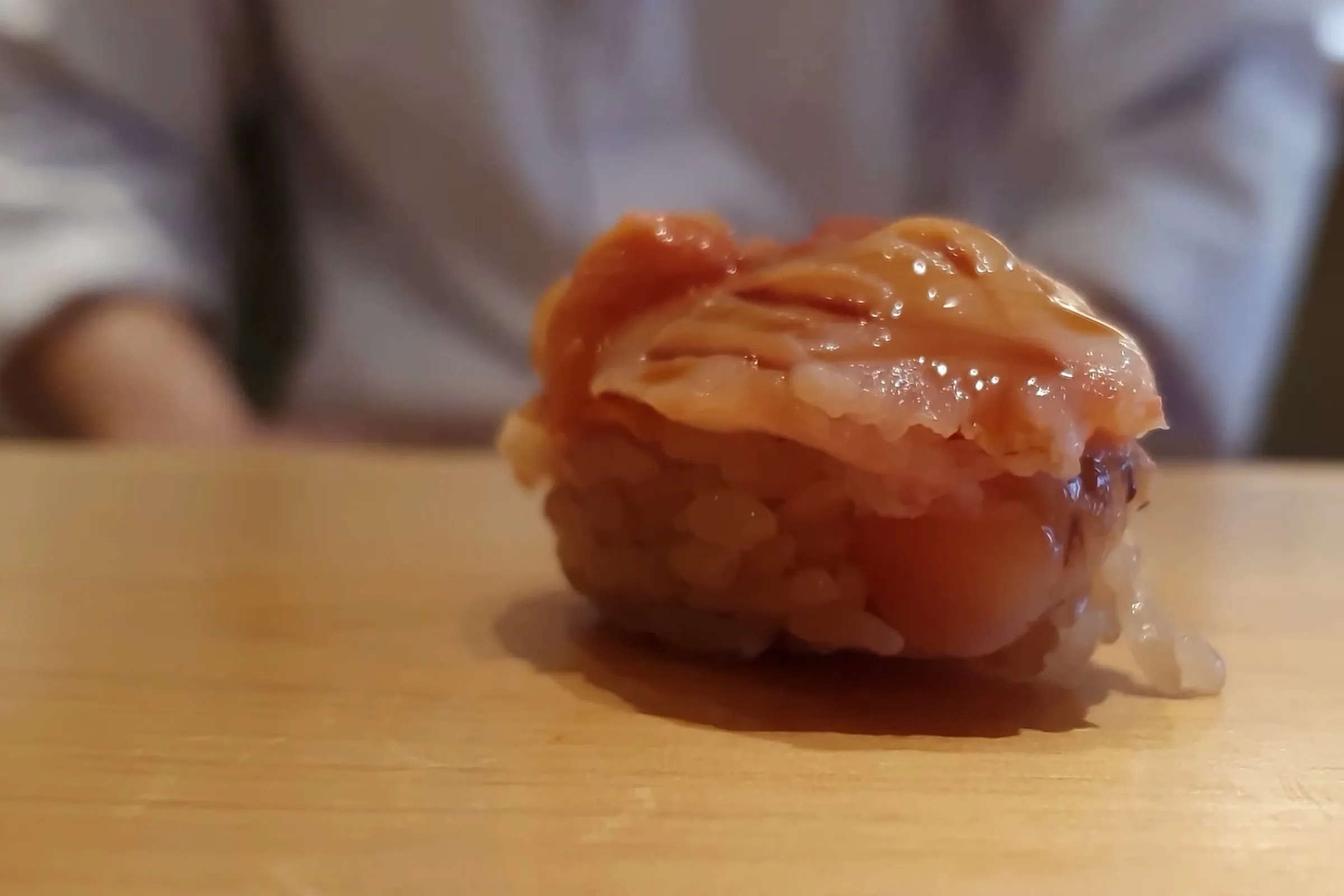
Another one I’m always happy to see. Hamaguri, clam, simmered. It should never be tough, but it should keep a little chew. This one was the right size and a lovely color, and with the tsume, the sweet sauce, brushed on top, it looked great.
I shot it really well, if I say so myself. Sweet, nicely chewy, really good. Thumbnail material.
On the second visit I still liked it. The tsume at Takagaki is very dark and thick. Sweet to the point of almost bitter, which makes no sense, I know, with something like a sansho aroma.
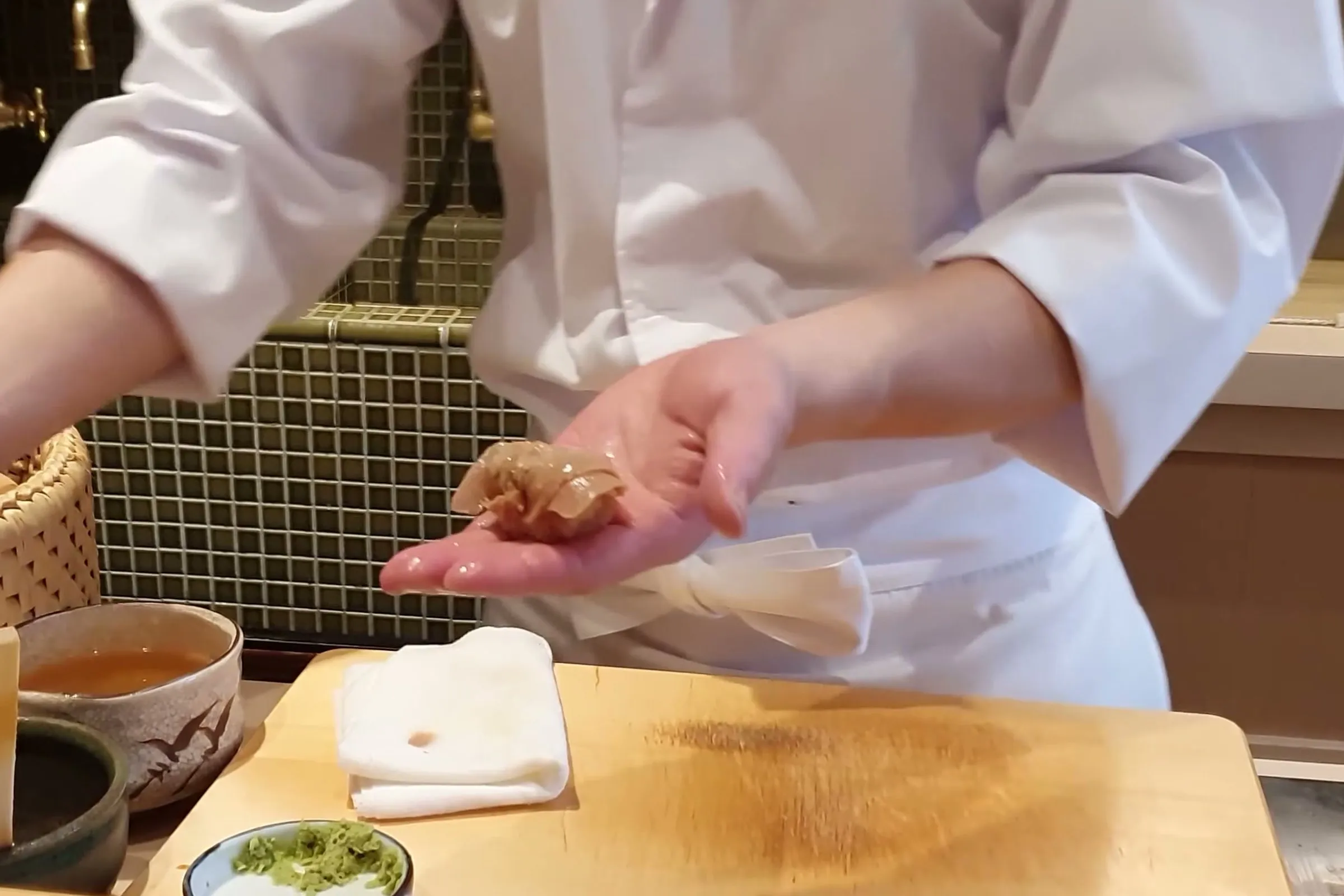
Everything cooked in front of you
The shop is so small and so short on hands that you get to watch all the cooking. Usually the cooked things are done in a kitchen out back and just show up. Here Takagaki-san does it all in front of you. It feels like walking into a Japanese kitchen, and watching him work was like watching a drama.
He made the soup at the counter too, and cut mitsuba into it, a herb a lot like Korean chamnamul.
Then kuruma ebi. What I always envy about Japan is kuruma ebi all year round. That year, though, I’d eaten so many I wasn’t jealous.
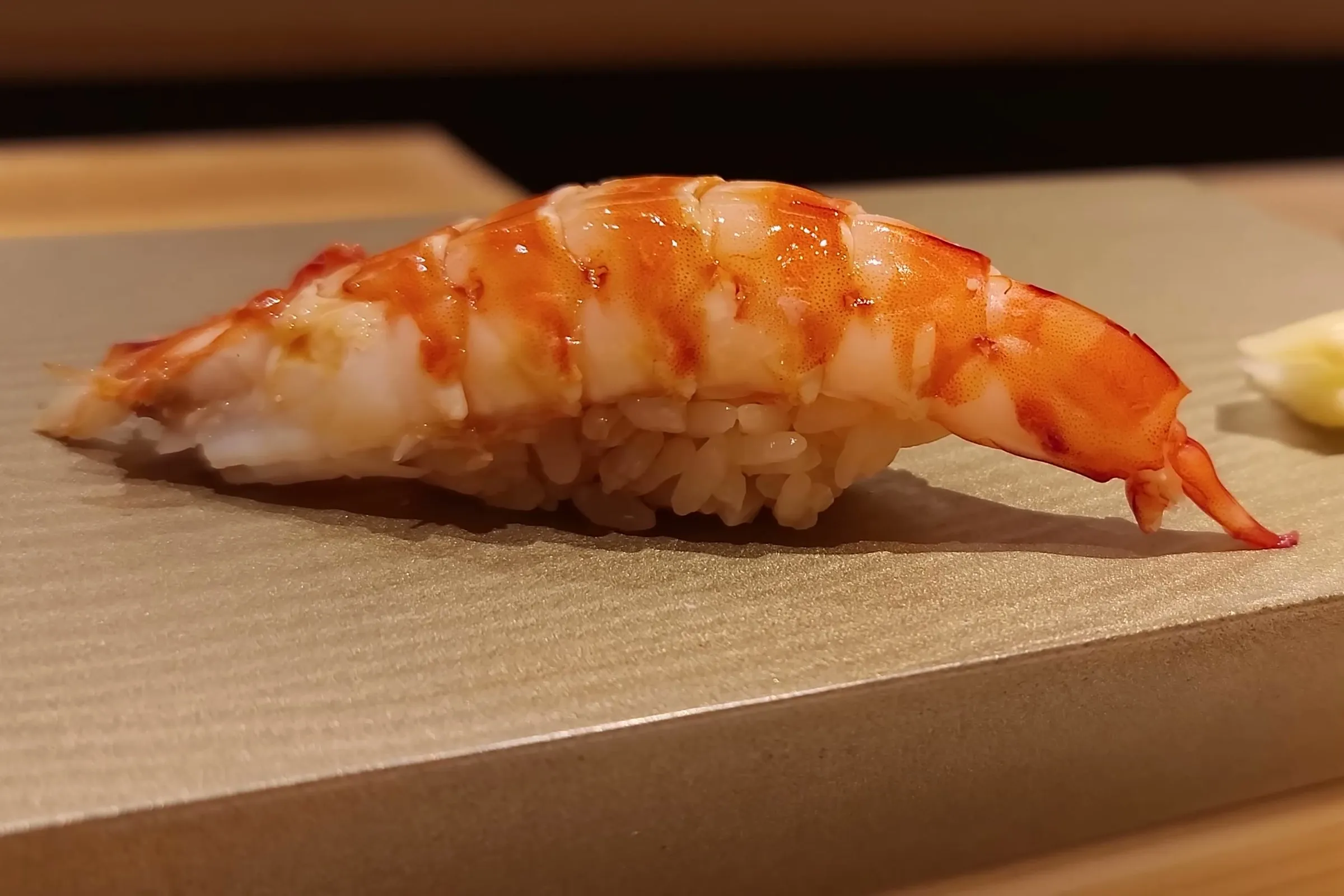
He leaves the tail on. Most of the places I like cut it off, and leaving it makes the prawn look even bigger. It’s big anyway. Put the whole thing in at once and it fills your mouth, which I love. It tasted exactly as good as it looks.
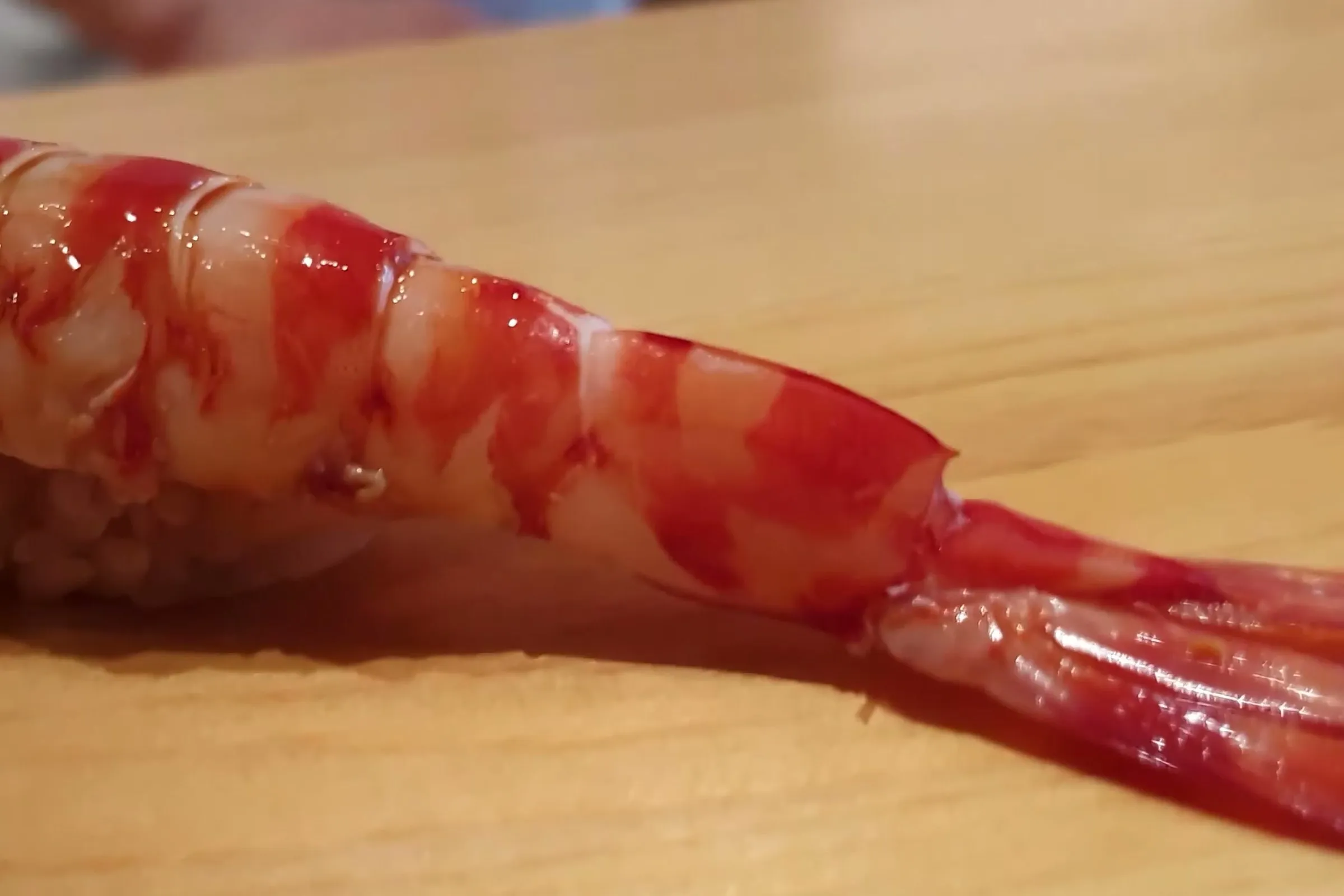
The uni extra I threw away
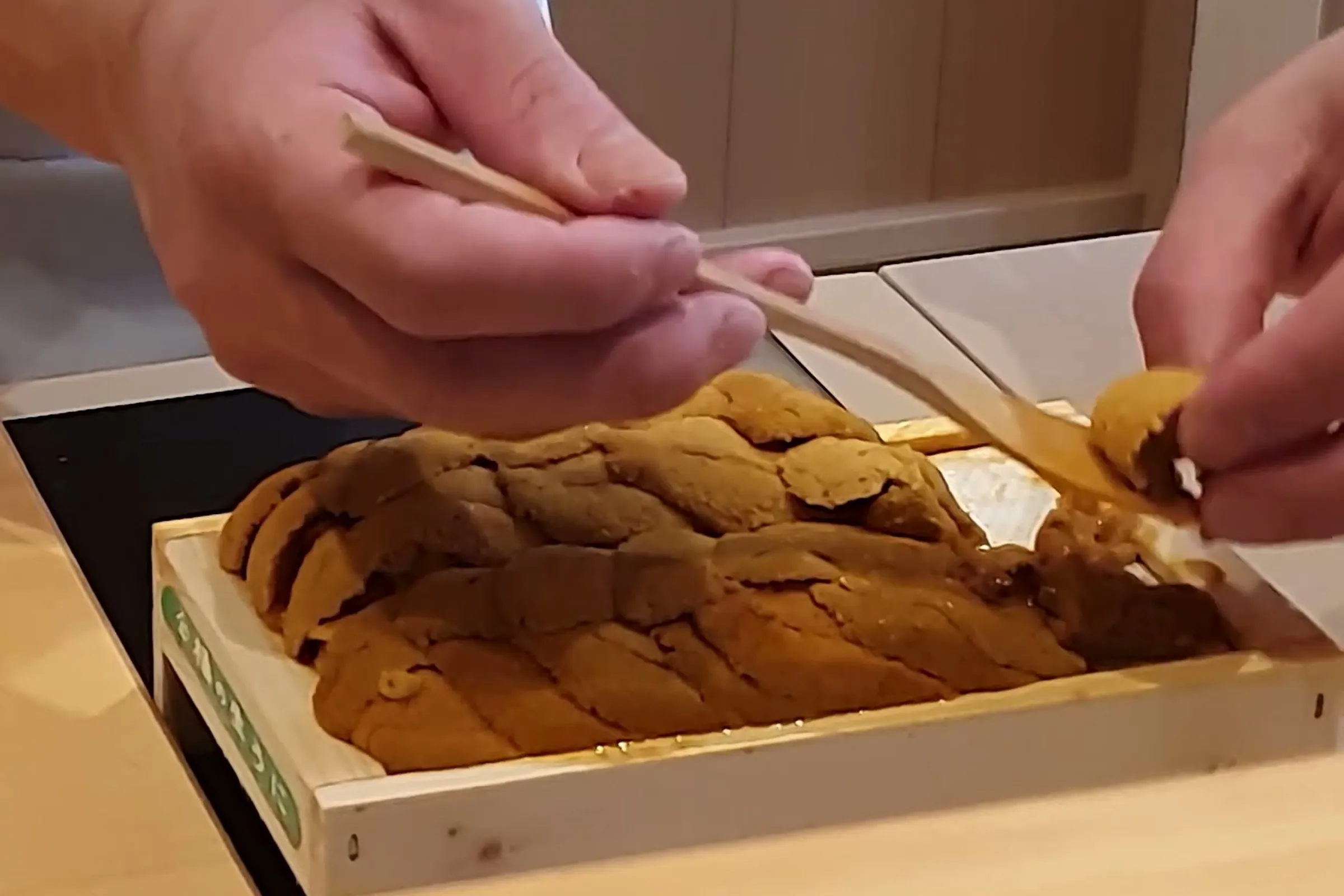
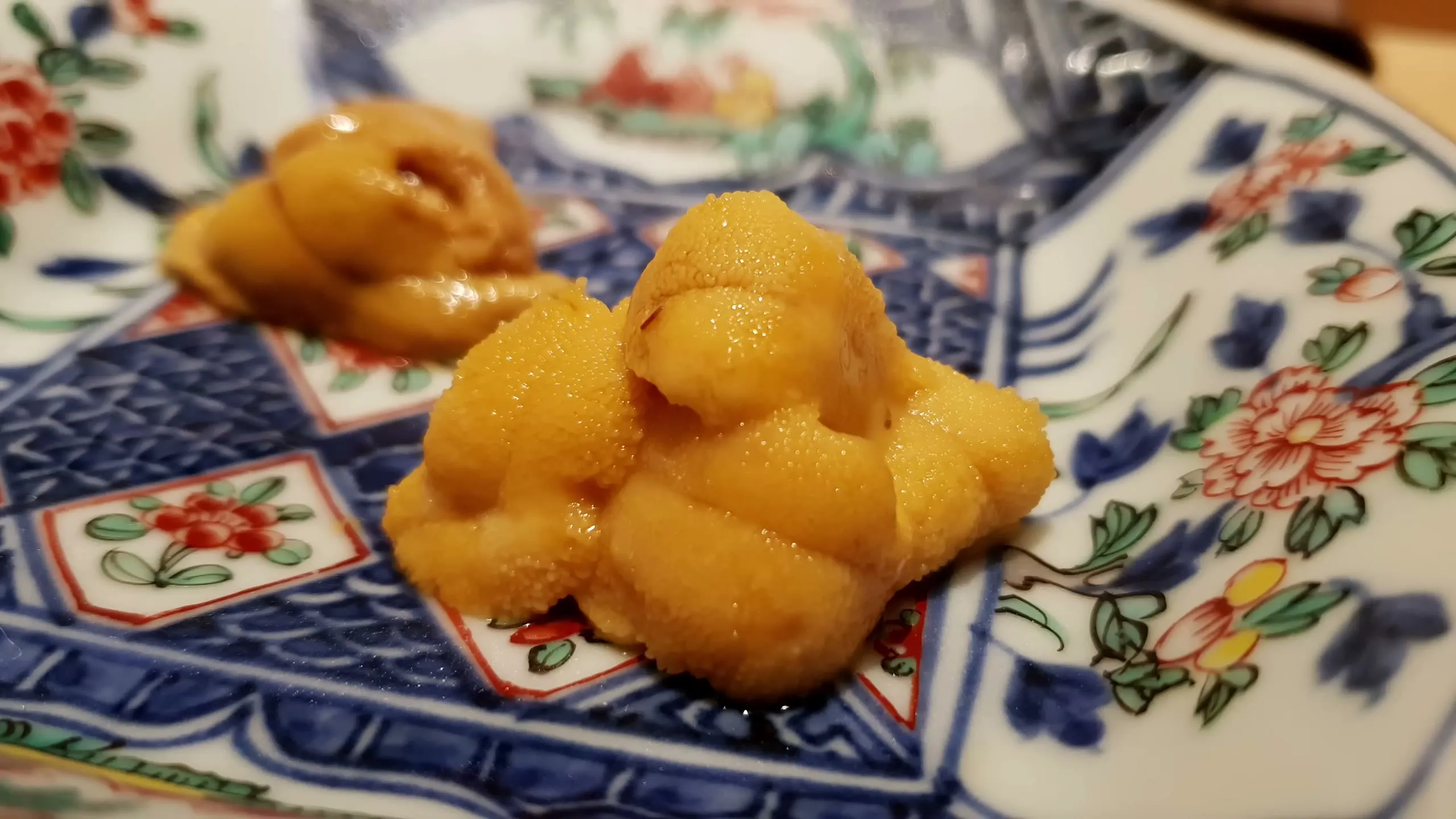
Uni isn’t in the course. Add ¥1,000 (2019/08) and you get it, so I added it. Murasaki uni, purple sea urchin. Look at that tray. Beautiful, like one of the numbered trays from Hadate or Higashizawa Suisan, and big pieces.
It tasted bad. Really bad. Uni is one ingredient that follows the price, and that money just went in the bin.
I remembered. On the second visit I didn’t add a thing.
Pretty hands, tight rice
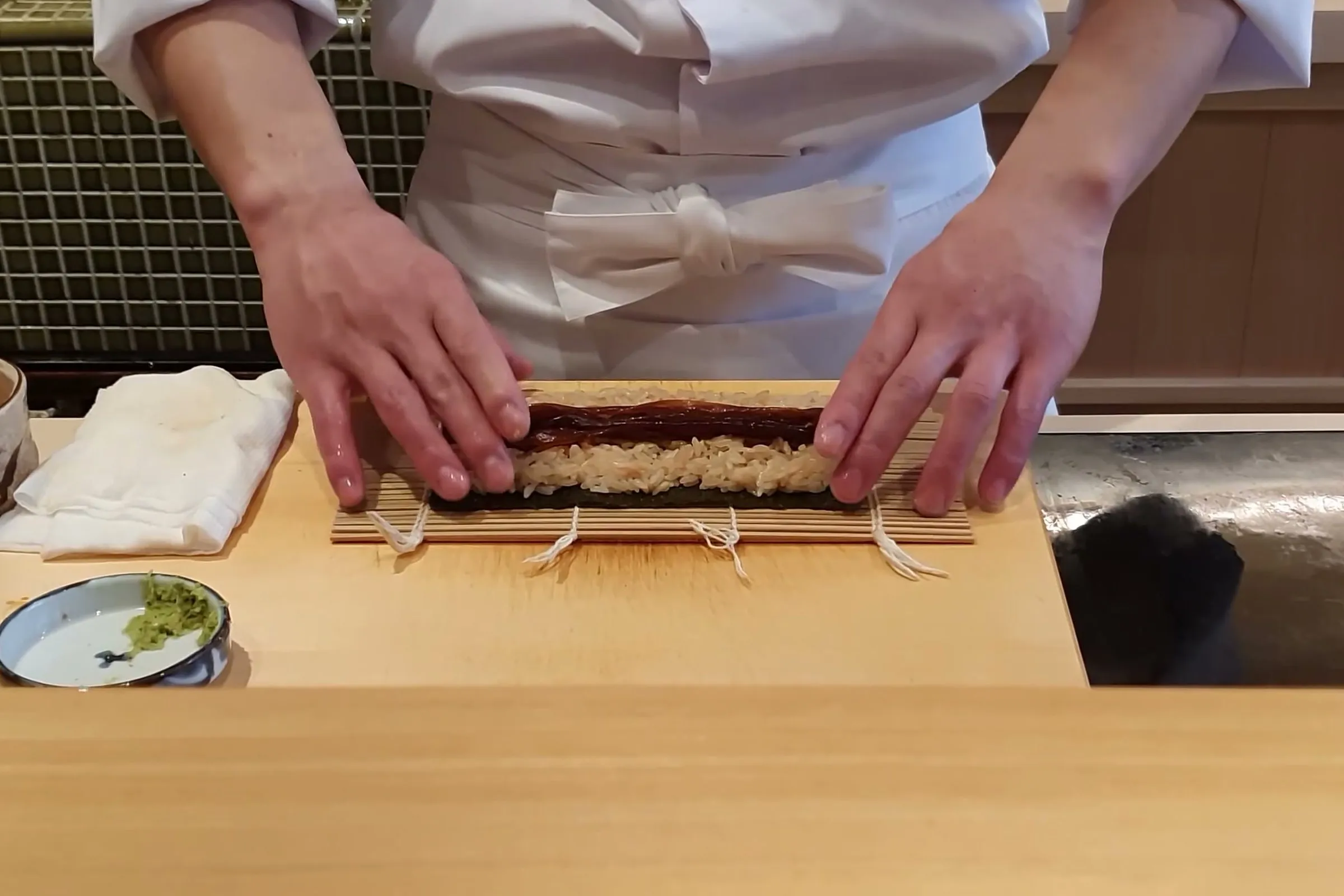
Last came kanpyo maki. The kanpyo, dried gourd, was soft and sweet and seasoned just right. Cut open, the core of each grain was al dente, but like I said, the surface was soggy.
And his nigiri. Watch his hands. The movements are big and kind of soft. In my mouth, though, the rice didn’t loosen. It was packed tight.
I don’t care how pretty or fast the nigiri is made, hon-tegaeshi or any other move. All that counts is how it falls apart once it’s in your mouth. On that, Takagaki-san’s nigiri isn’t my kind of sushi.
I still ate well that day. It was cheap and very easy to book, so you could go without any pressure. Back then I gave it a big thumbs-up for anyone in Japan who wanted proper sushi but couldn’t get into the famous counters.
Back after the Michelin star
Honestly, I didn’t like it much the first time, and I didn’t think I’d be back. Then a younger friend I was in Japan with asked if we could go. I had nothing better to fill the slot, and it’s famous with Koreans, so sure.
It had also just won a star in the 2020 Michelin Guide. I don’t care about the Michelin Guide at all, so that changed nothing for me.
Last time the problems were the surface of the rice, all swollen and soggy, and nigiri packed so tight the rice wouldn’t come apart in my mouth.
Spoiler. After this second visit, I’m never going back, whoever asks.
Rice mixed to glue
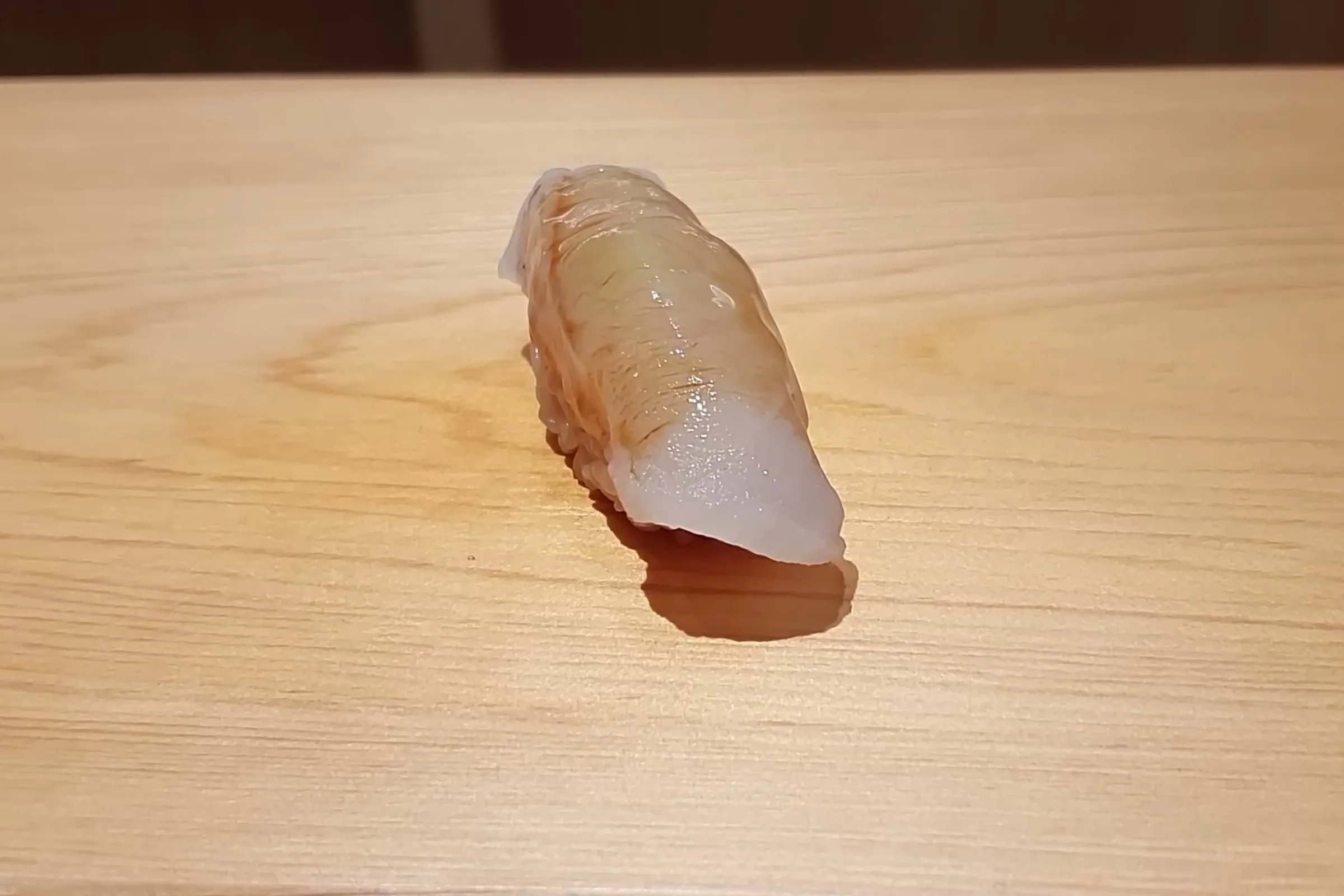
First piece, hirame. In Korea we call flounder the national fish. So for them it’s, what, a foreign fish? No idea.
This time the surface of the rice was fine, and the rice itself was cooked well. The problem was the kiri, mixing the rice with the vinegar. It went wrong. Really wrong. Work it too hard and the starch comes out of the grains and everything turns sticky. The texture was bad.
While you mix, someone fans it. That’s to blow the vinegar off the surface, so the flavor soaks inside and the rice tastes right. That didn’t happen. Not much inside, and a sharp vinegar smell on the outside. And the red vinegar they use is loud to begin with.
So the first four pieces, everything before the otoro, I could barely eat.
The fish was never the problem
For the price, though, the tuna was really good. Lunch came to ¥11,000 (2020/01), which is cheap for this, and the otoro was clean, no off smell, the fat just right, a little acidity. Delicious.
Kohada too. Everyone in this neighborhood is good at kohada, and this one was good and went well with the vinegar here.
Shima-aji, very good fish. At this price every piece of fish they serve is good. The buri was fine. As long as yellowtail doesn’t smell muddy, I’ll eat it happily, fatty and soft. Kuruma ebi, I’ll take anywhere. Not huge, but it matched the rice, which is rare. Usually the prawn is bigger than the rice ball.
The clam soup was made really strong, and it was good. Last time it had mitsuba in it. This time, negi.
The best piece came last
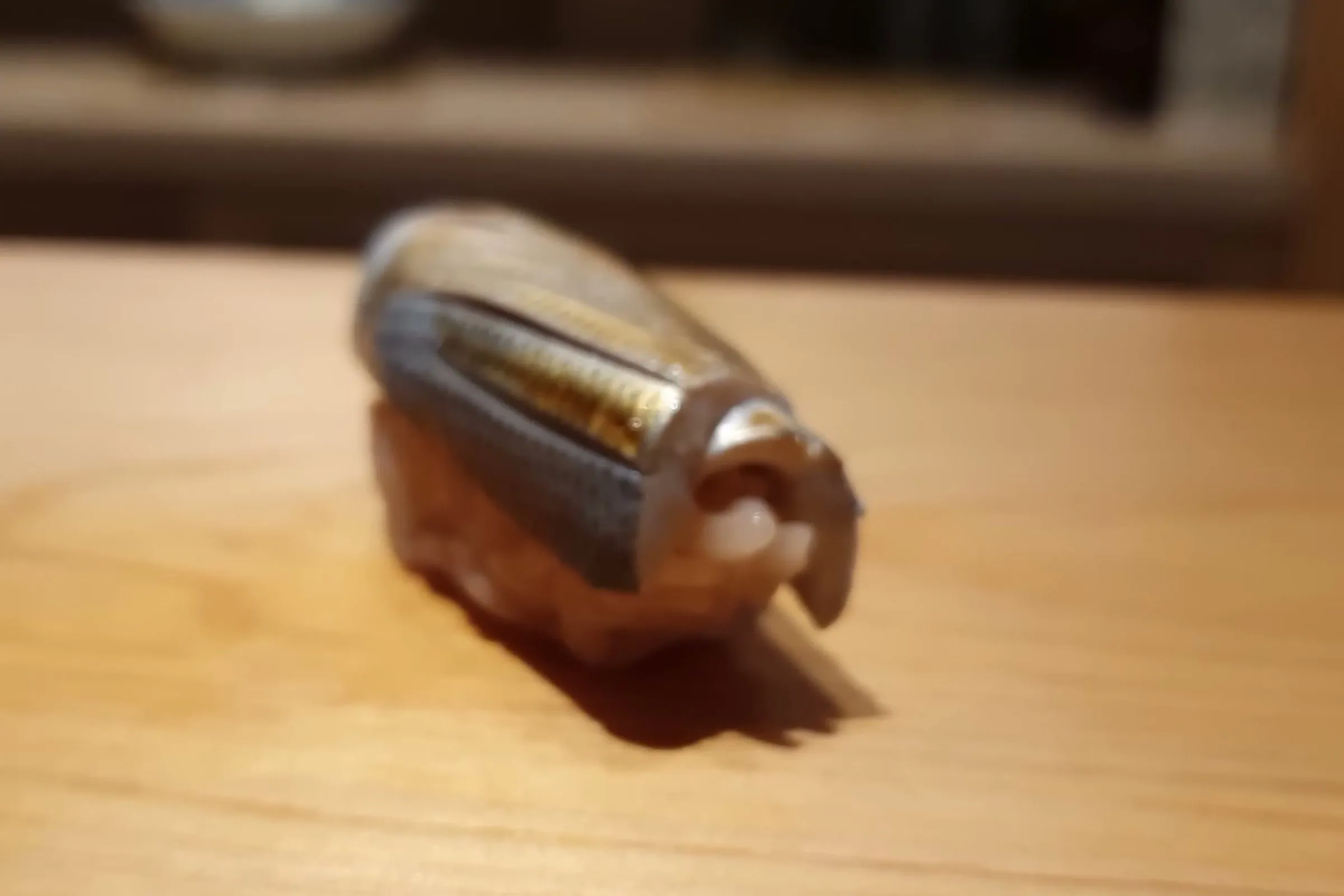
He shaped rice for a gunkan, and it was for ikura. The ikura itself was great. Savory first, without the heavy marinade taste I always complain about, almost like fresh roe.
Next to rice this loud, though, it was too mild. It didn’t go with this rice at all. Loud rice isn’t the problem. Some loud rice is delicious. This one I just don’t like. Texture off on both visits, for different reasons, and the aroma bugs me. This place isn’t for me.
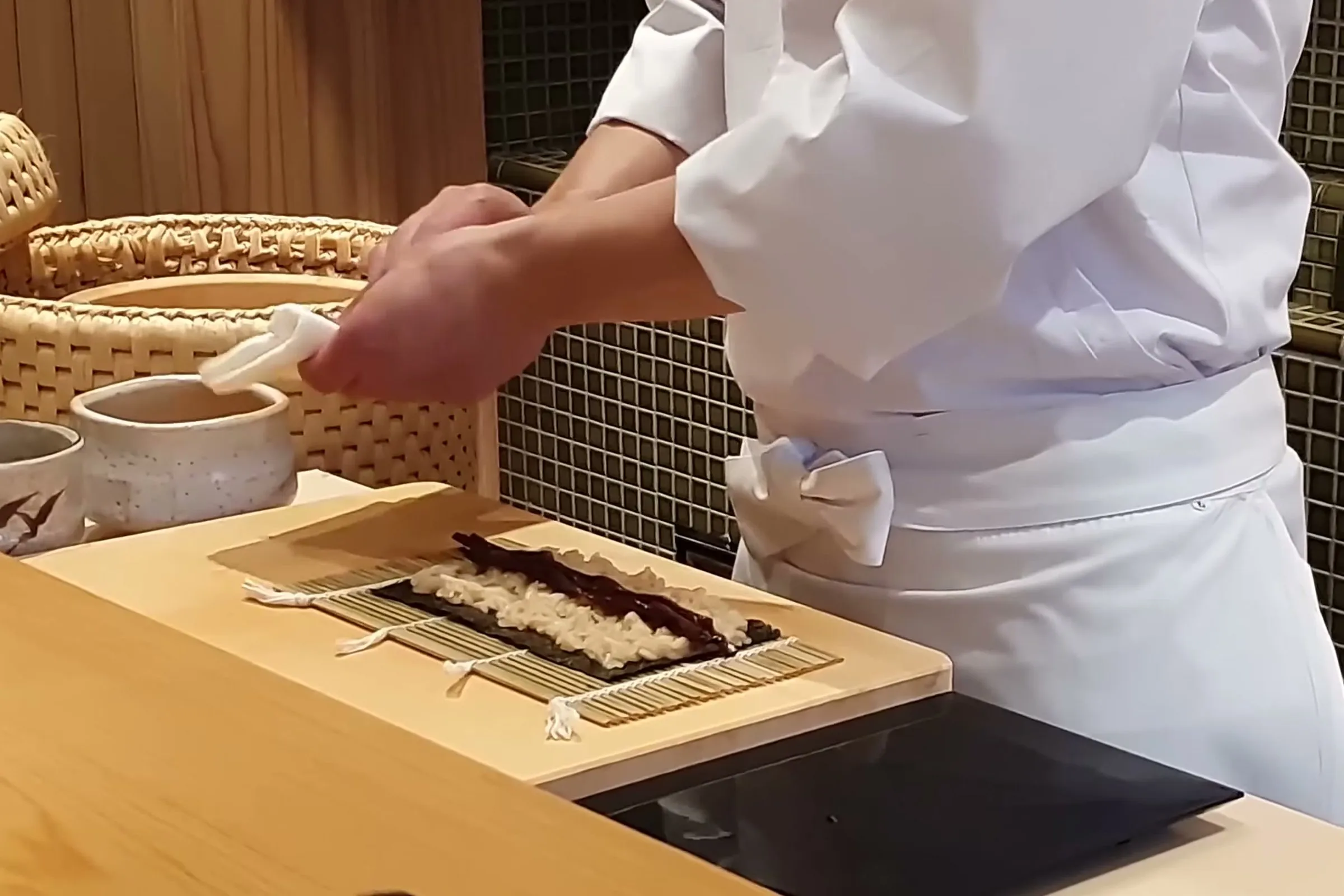
Then the last roll, kanpyo maki. Right before it, he put rice in a huge bowl to cool it, and I wondered if it was a different batch. That kanpyo maki was the best sushi of the day. The cut face alone looked delicious. A little al dente, no stickiness, and the vinegar smell gone. I liked that one most.
¥9,000, then ¥11,000
2019/08 video
In 2019/08 lunch was ¥9,000 a person with the uni extra, about US$80. The piece count can look low, but the nigiri are big, so you leave full. The lineup had everything you’d want from a classic counter. Shellfish, squid, white fish, tuna, kuruma ebi, hamaguri.
In 2020/01 the price seemed to have gone up once. Lunch was ¥11,000, about US$100, no extras. For fish this good, still cheap.
When I checked Tabelog in 2026/10, the lunch nigiri course was ¥15,000, and dinner ¥25,000 or ¥33,000, tax included.
What Takagaki no Sushi has cost me, visit by visit
2 visits where I said the bill on camera. ¥9,000 in 2019/08, ¥11,000 in 2020/01. Up 22%.
Per person, the lunch I said on camera. No drinks (I don’t drink). The 2019/08 figure includes the ¥1,000 uni extra; in 2020/01 I added nothing. Each month is when that video came out.
Who should go
The fish is good for the price, and the lineup is classic, everything that should show up does. If you haven’t had much sushi in Japan, or you want that “yep, this is the real old-school stuff” feeling, the price makes it an easy try. For you, sure.
If you’ve watched a lot of my videos or read my blog, been around, and your taste is close to mine, trust me and skip it. The end.
How to book
How I booked
In 2019/08 booking was very easy, and we had the counter to ourselves at lunch. The 2020/01 visit happened because a younger friend on the trip asked to go.
- Tabelog online booking
Tabelog asks for online bookings. When I checked: lunch nigiri course ¥15,000, nigiri only ¥25,000, tsumami and nigiri ¥33,000, tax included. Lunch Tuesday, Wednesday, Friday and Saturday, starting at 12:00 or 12:30. Dinner 18:00 to 22:30, Monday to Saturday. Closed Sundays. Six seats. Cards accepted, no e-money or QR payments. Phone 03-6231-0923.
- OMAKASE (omakase.in)
The English version lists one dinner omakase at ¥38,500, tax and service included, and says the price moves with the market. 20 and over. Dinner 18:00 to 22:30, closed Sundays.
- TABLEALL
A booking service for visitors to Japan. When I checked it listed lunch nigiri at ¥24,000, dinner nigiri only at ¥34,000 and the dinner omakase at ¥42,500, each with an ¥8,000 booking fee folded in. 20 and over.
- byFood
A request form, not an instant booking. A ¥2,000 service fee per guest, charged only if the booking goes through, with an answer within seven business days. Cancel at least two weeks ahead for a refund minus a 3.2% transaction fee. No course prices on the page.
Checked 2026/10. Booking rules change, so look at the official page before you go.
Where it is
- Address
- 1-30-2 Nihonbashi Kakigaracho, Chuo-ku, Tokyo東京都中央区日本橋蛎殻町1-30-2
- Nearest station
- Suitengumae, 2 minutes’ walk; Ningyocho, 4 minutes
Plan the Tokyo trip
The boring bits I’d sort before flying, so the eating days stay free.
- Hotels in Tokyo*
Pick the room by where you eat, not by the sights. After a long dinner, a short ride back is the real luxury. This place is in Nihonbashi, Tokyo.
- Japan eSIM*
Data from the moment you land, no counter and no SIM swap. Set it up the night before.
- Keisei Skyliner from Narita*
Narita to Ueno in about 40 minutes. Buy it ahead and walk straight to the platform.
- Haneda airport limousine bus*
Landing at Haneda instead? The limousine bus drops you at the big hotels and stations with no transfers.
- Tsukiji Outer Market food tour*
A market morning with someone who knows which stalls are worth the line.
- Sushi-making class at Tsukiji*
Shape nigiri yourself once and the counter makes a lot more sense.
Links marked * are affiliate links. If you book through them I may earn a small commission, and you pay the same. How it works
Guides that mention this place
Sushi omakase in Tokyo under ¥20,000, from the counters I actually paid at.
Seven budget sushi counters, what I paid at each, and what they charge now.
Every Michelin sushi counter in Tokyo I’ve paid for, with the stars then and now.
Three stars down to one, what I paid at each, and how to get a seat today.
More from this restaurant on the channel
More places I have eaten at
All of Tokyo →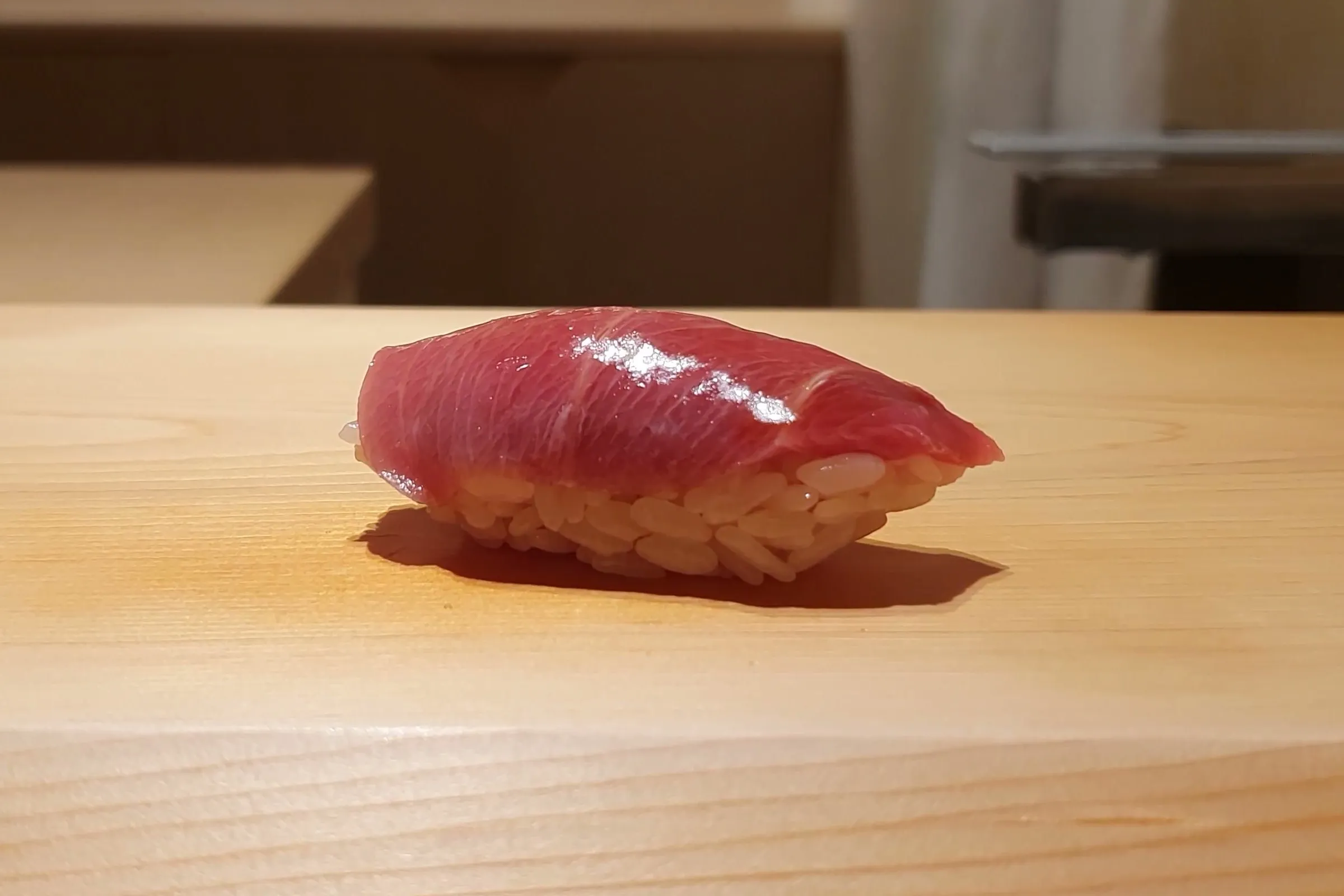 Higashi-Azabu, Tokyo
Sushi Sugaya
Arai’s old sous-chef, Yamayuki tuna, sharp rice and a giant tuna roll.
≈ ₩400,000 2019/10 video Hongo, Tokyo
Yakiniku Jumbo Hanare
Thick harami, a tenderloin rice pot, and a naengmyeon to avoid.
≈ ¥10,000 2019/10 video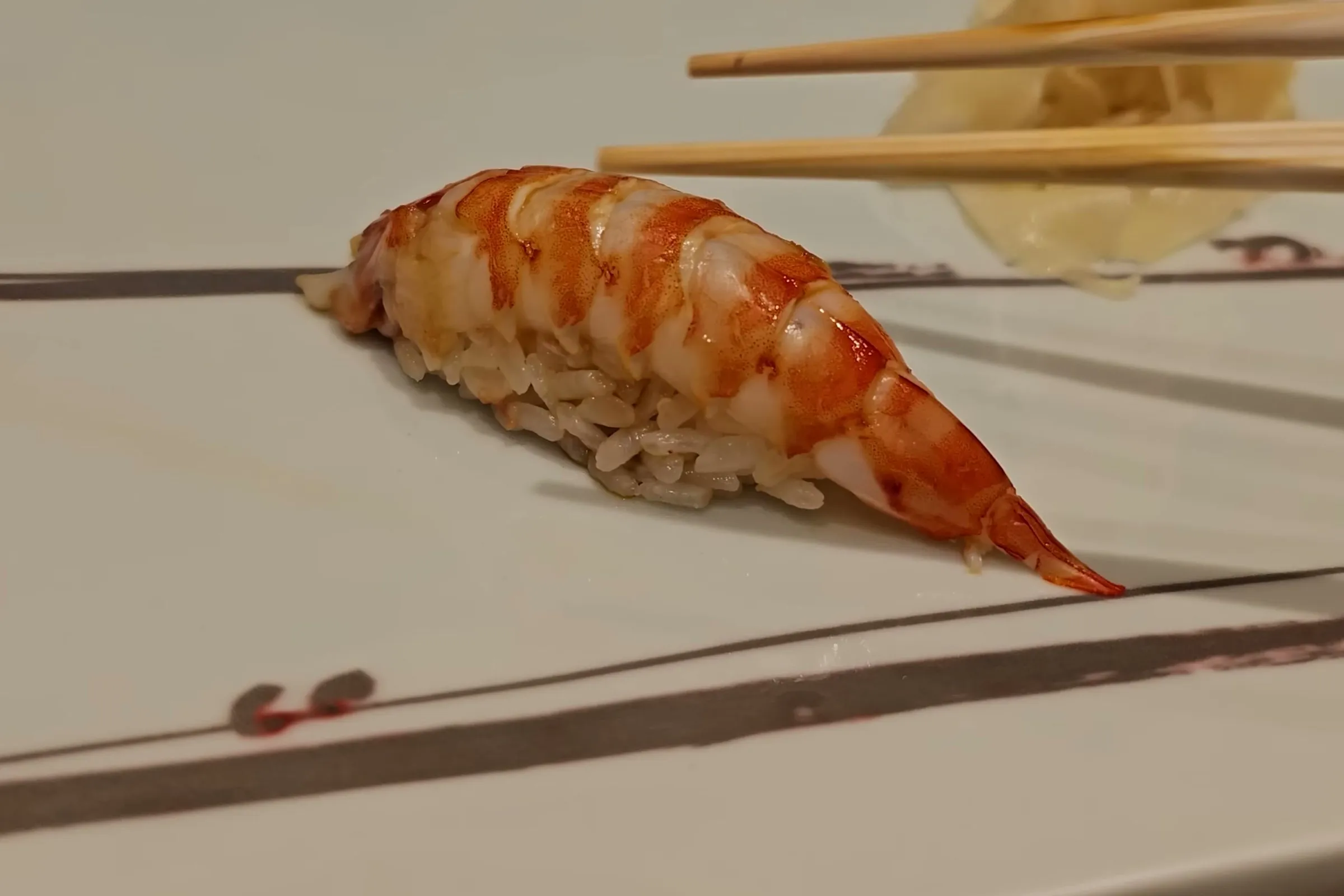 Ginza, Tokyo
Ginza Kyubey
No booking, cold tuna, great shellfish, and the home of gunkan maki.
¥8,800 2023/10 videoSources
- 高柿の鮨 Tabelog
- One MICHELIN Star restaurants in Tokyo MICHELIN Guide
- Takagaki no Sushi TABLEALL