Jumbo Hanare, the yakiniku I keep going back to in Tokyo
Yakiniku Jumbo Hanare is the smaller, nicer sister of Yakiniku Jumbo, right next to it in Hongo, Tokyo. Hanare means a separate room, an annex. It’s the closest thing I have to a regular beef place, and I stop by almost every trip to Japan. The trick is to skip most of the menu book and pre-order a few dishes when you book. Three of us paid about ¥10,000 each (2019/10).
monster gourmetFrom my 2019/10 video
- My share
- ≈ ¥10,000
- about US$93, a third of the bill for three, pre-ordered dishes, 2019/10 video
- Highlight
- Thick harami and the tenderloin rice pot
- Skip
- The naengmyeon
- Video
- 15:53
- 2019/10
- Where
- Hongo, Tokyo
- Hongo-sanchome, about 3 minutes on foot
My one regular beef place
A lot of you have asked me for a Hanwoo omakase video. I’ve never been to one. The closest thing I have to a regular beef place is in Tokyo, Jumbo Hanare. Jumbo as in the English word, and hanare means a separate room, an annex. Right next door there’s a more casual place, Yakiniku Jumbo.
Yakiniku is nothing fancy, it just means a grilled meat restaurant. In Japan it carries a bit of a Korean restaurant image. Like how lamb skewer places in Korea also do sweet and sour pork and corn noodles, a yakiniku menu in Japan has kimchi and naengmyeon on it.
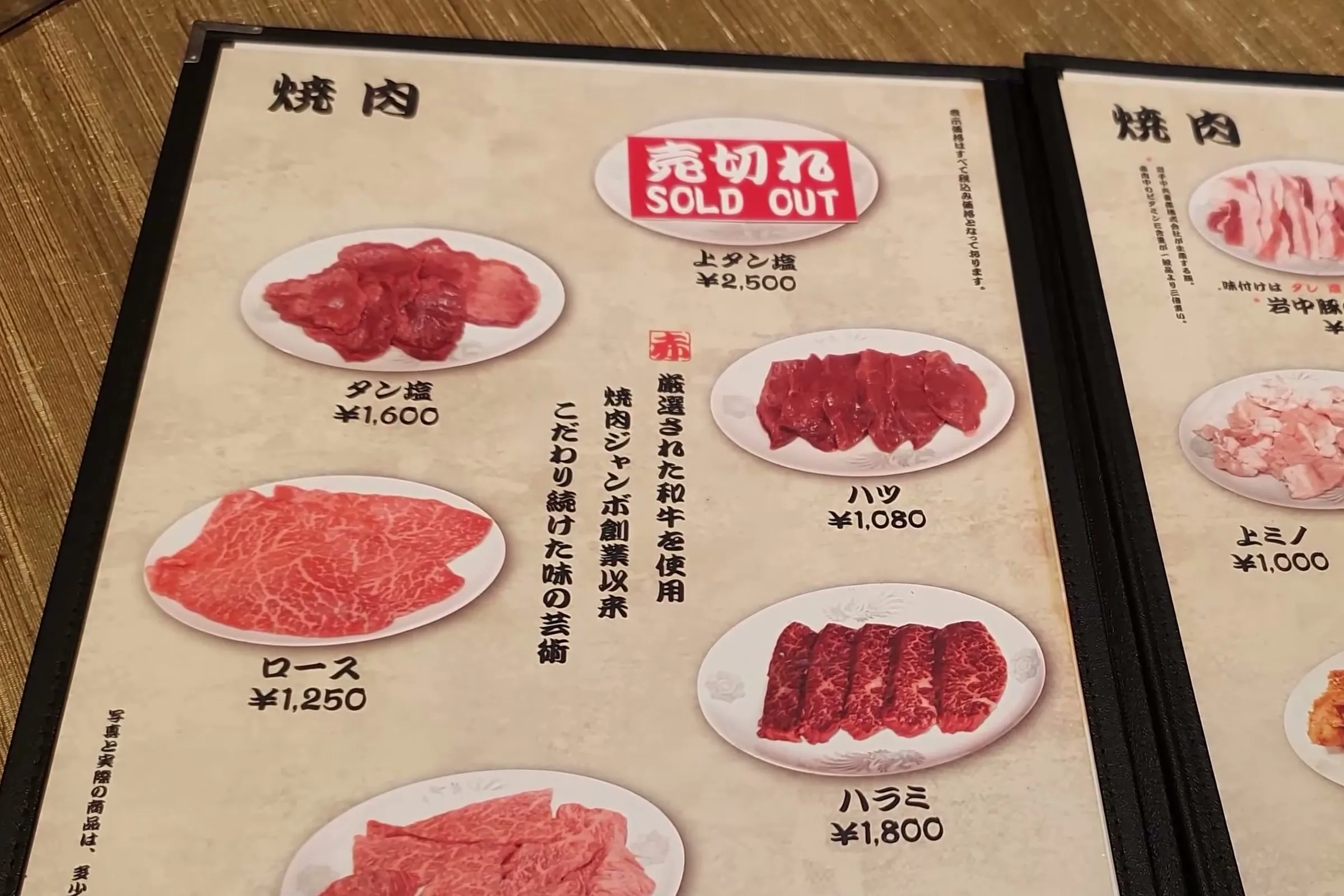
Order off the list, not the book
When we sat down, the server checked what I’d ordered ahead: thick harami, chateaubriand and nohara-yaki. I also asked for the top-grade tongue, but they didn’t have it that day.
You want to order more of these than from the menu book. That’s where the best dishes are. The first time I came I didn’t know any better, ordered all over the menu, and none of it was good. Since then I only order the pre-order dishes and eat those.
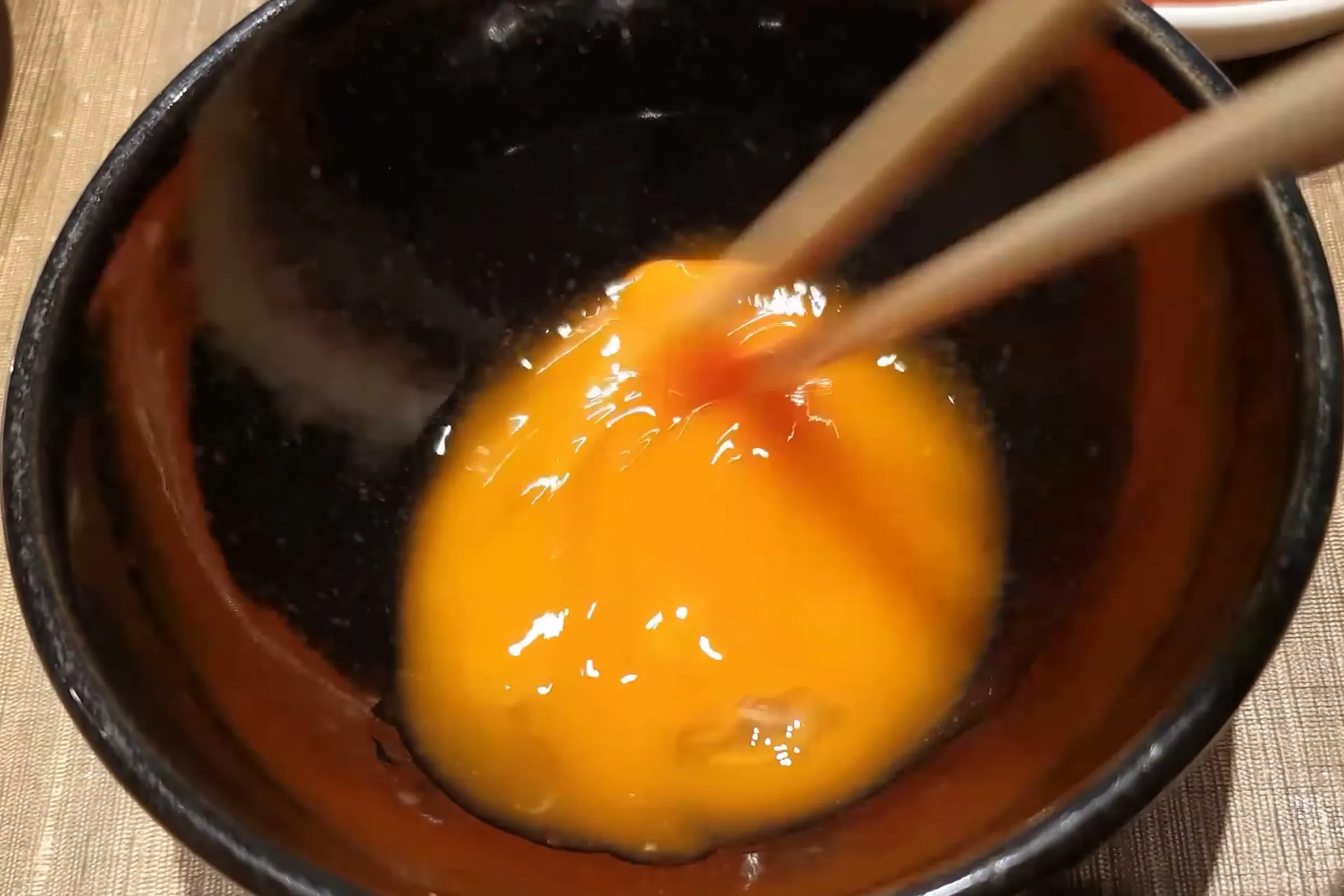
Crack the egg first
Before any meat, they bring an egg to beat. One of the dishes I pre-ordered is grilled and dipped in egg like sukiyaki, so you get it ready first.
About Hanwoo omakase. It’s not that I rarely go, I have never been. First, I don’t eat much Hanwoo at all. It’s tasty but too expensive. And when I buy pricey beef and grill it myself, to me it tastes about the same as at a restaurant. The restaurant saves you the cleanup, sure, but that’s an expensive cleanup for a salaryman like me.
On top of that, cuts of beef don’t taste dramatically different the way fish do at a sushi counter, and it’s fatty, so you get tired of it fast. The extra dishes some Hanwoo omakase places add to get around that often feel random to me, trendy luxury ingredients that raise the price. So when someone offers to treat me to Hanwoo omakase, I tell them they don’t have to, let’s just go for sushi.
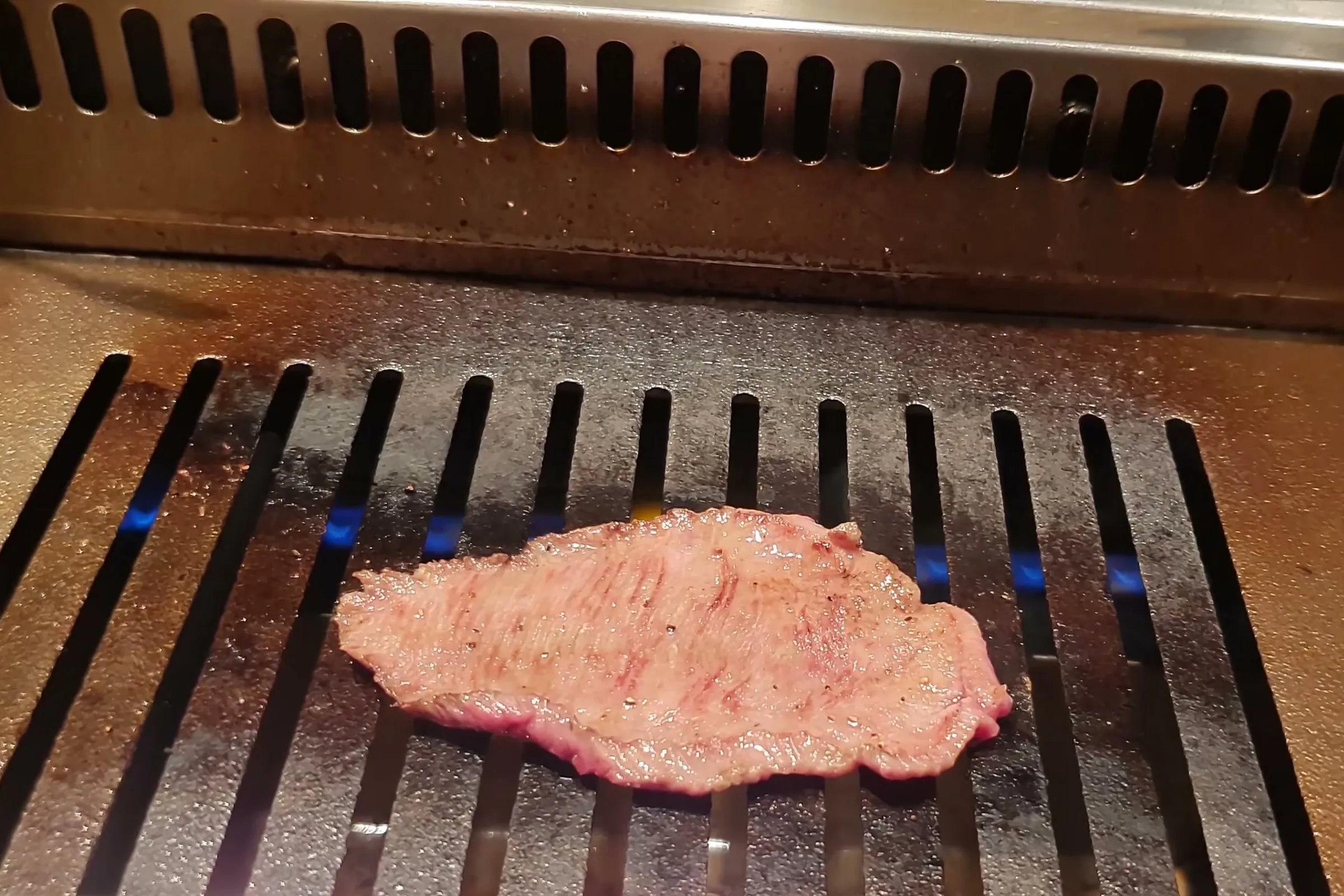
Twenty seconds a side
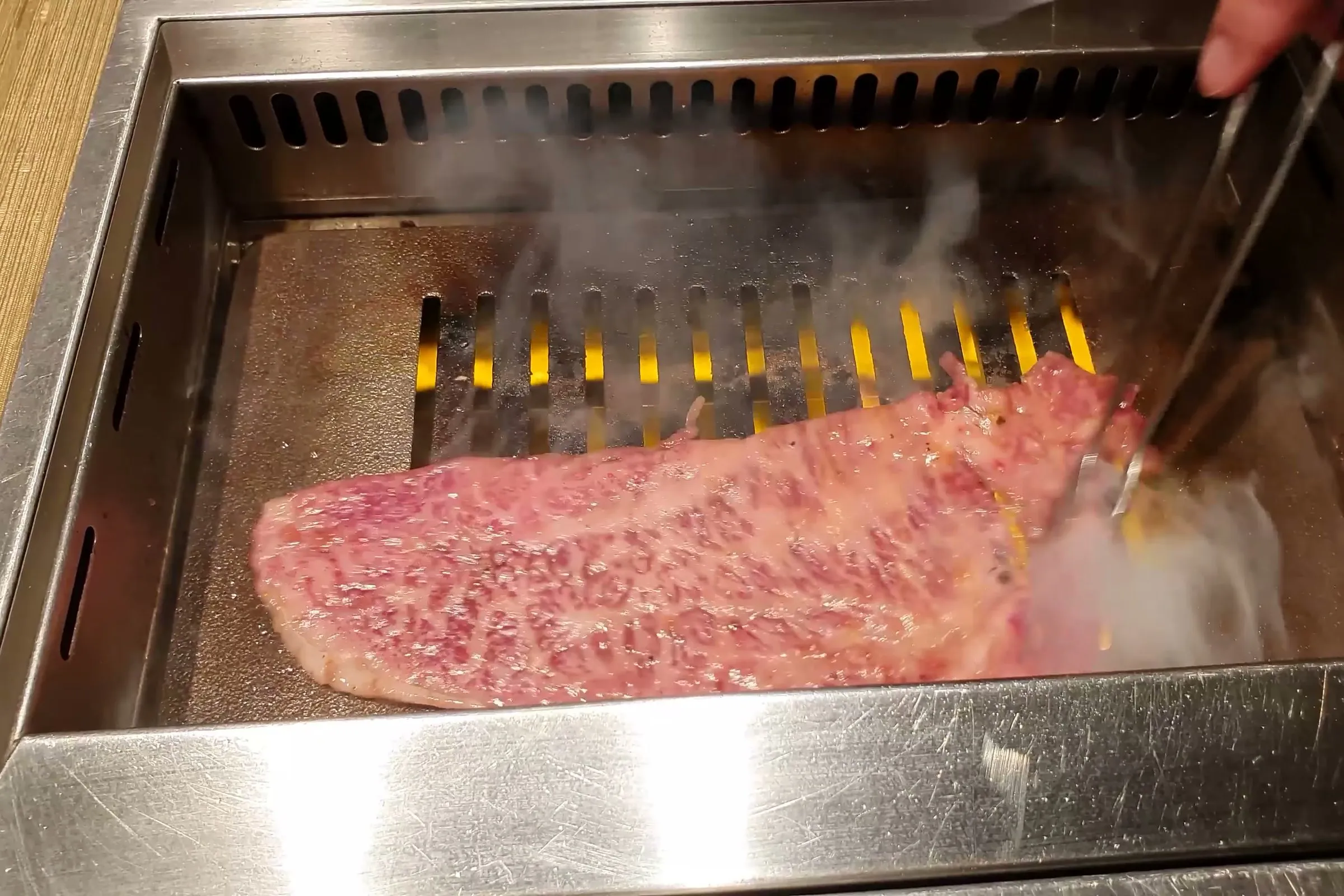
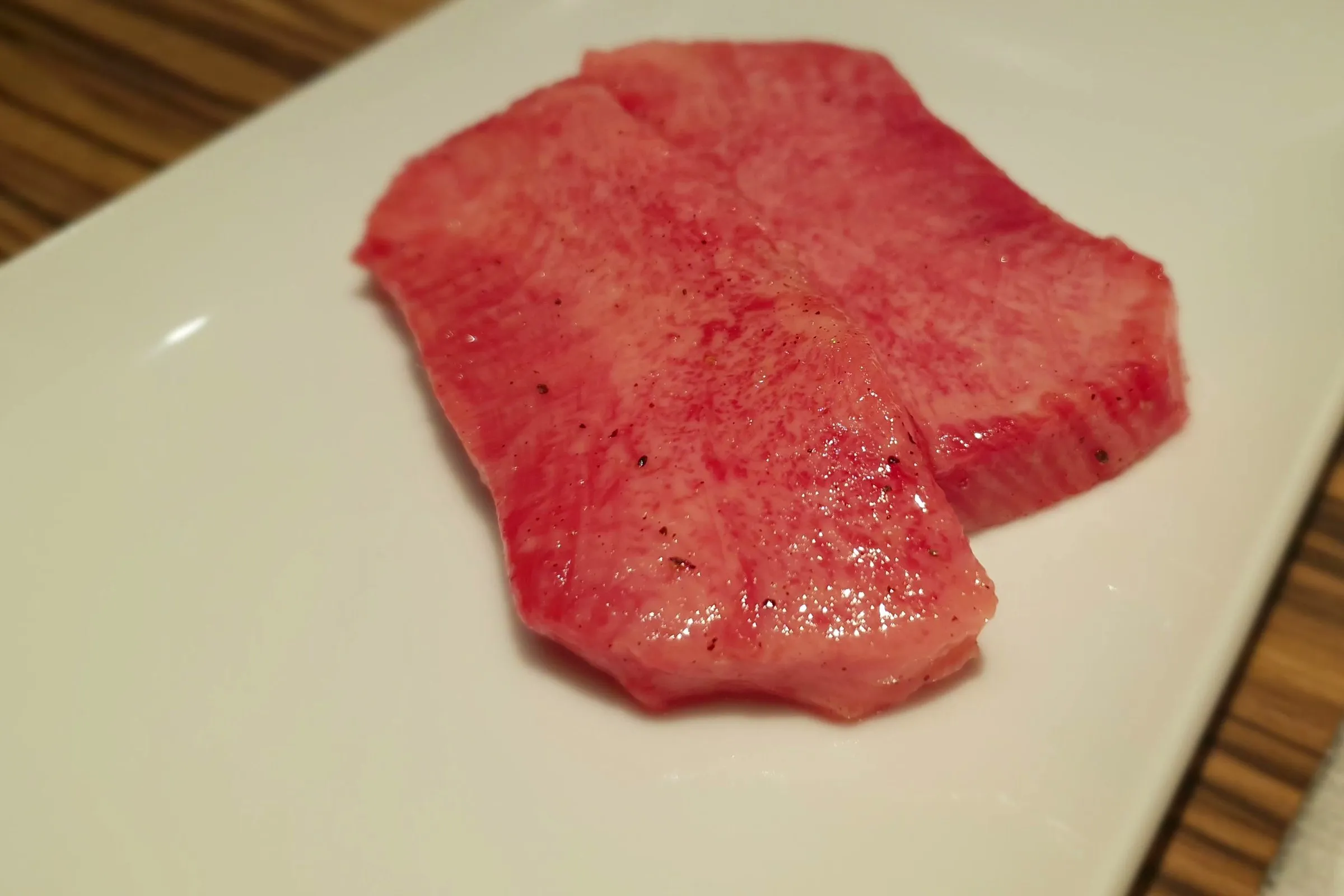
This is tongue. There’s a thick, really good tongue you can pre-order, but they were out, so I got the regular one.
The server said to grill it 20 seconds a side. The person I came with actually kept to it. With no clock in sight, my friend watched the time on the phone I was filming with and gave it exactly 20 seconds. Earlier my friend had watched me grill, got frustrated, told me to stop wrecking the meat and took over the tongs. I think pride in grilling meat is the most useful kind of pride in the world. Go out with people like that. Pretend you’re bad at it and they’ll grill everything for you.
That was 20 seconds a side. I like it a little less cooked than that. Shorter, so it stays chewy. And like every yakiniku place, the seasoning is on the salty side.
Nohara-yaki, one bite is plenty
Next, the sukiyaki-like one I mentioned, nohara-yaki. Look at the kanji, nohara is a field, so field grill. The cut is plain sirloin. A thin sheet of it is marinated, cooked very briefly, and then brought over to you one piece at a time, into the egg you beat earlier.
Really sweet, really salty, really nutty from the egg, and the beef is really fatty. But that one bite hits hard. It would be good dipped in other dishes too.
The impact is no joke, so do order it. Just one or two pieces, because more than two gets too salty, sweet and rich.
The thick cuts take forever
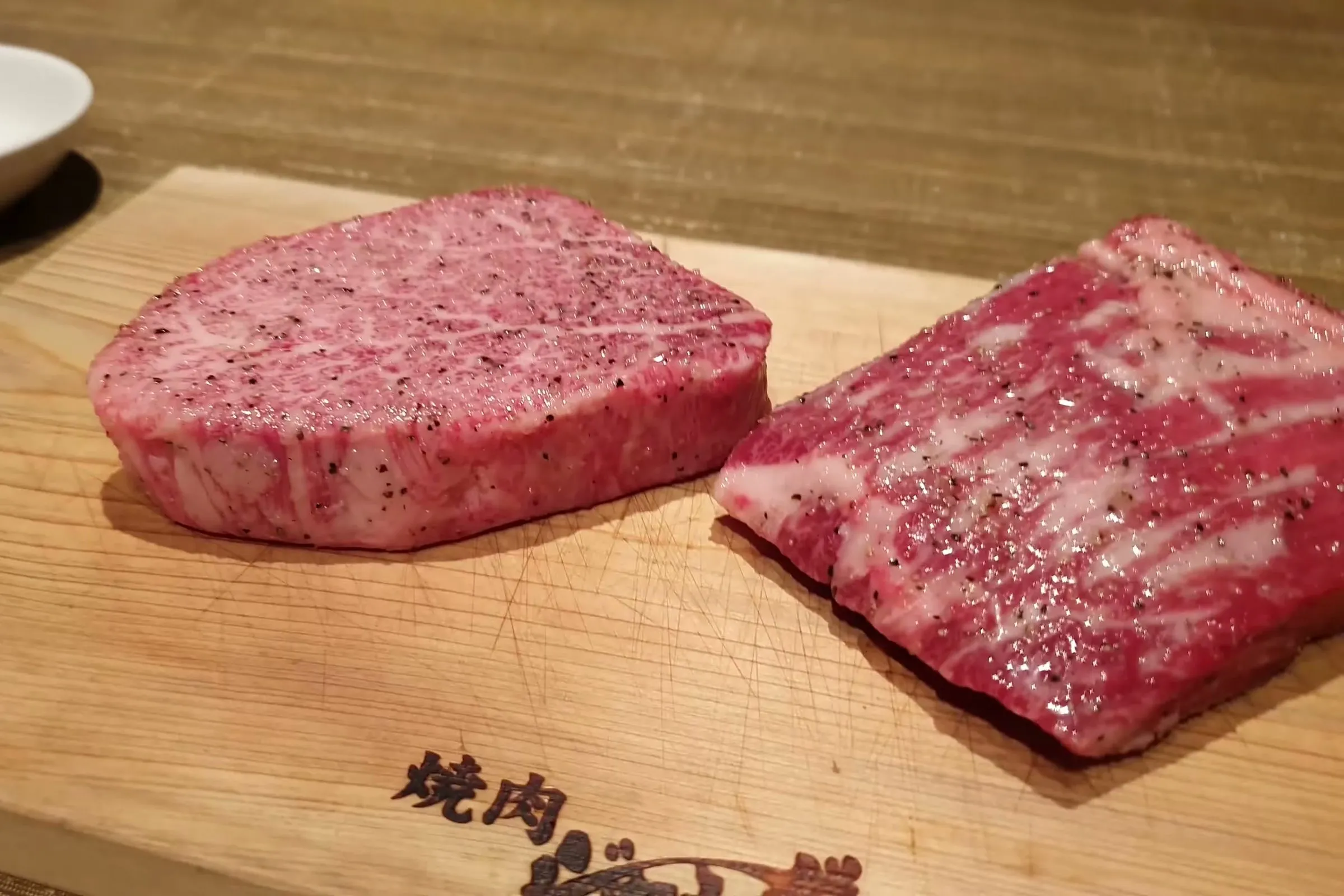
These are the pre-order cuts. On the left, chateaubriand, the tenderloin. On the right, harami, outside skirt. If you look at the staff T-shirts, there’s a drawing of someone cutting meat with a toothpick, dragging it like a knife. That’s kind of the mascot here, and the point is that the tenderloin is that tender. Ask them to show you and they really will cut it with a toothpick.
These are thick, so they flip them and trap them under a lid, again and again. It takes a long time, and the waiting is brutal. I’d already eaten about 30 kushiage skewers before coming, so I wasn’t even hungry, and it was still painful to watch and listen to the sizzle.
And it doesn’t end at the grill. When it’s done they take it away to rest, then cut it, and that takes time too. So don’t come starving and order only these. Grill some thin meat first to fill up a bit, then do this.
The tenderloin rice pot
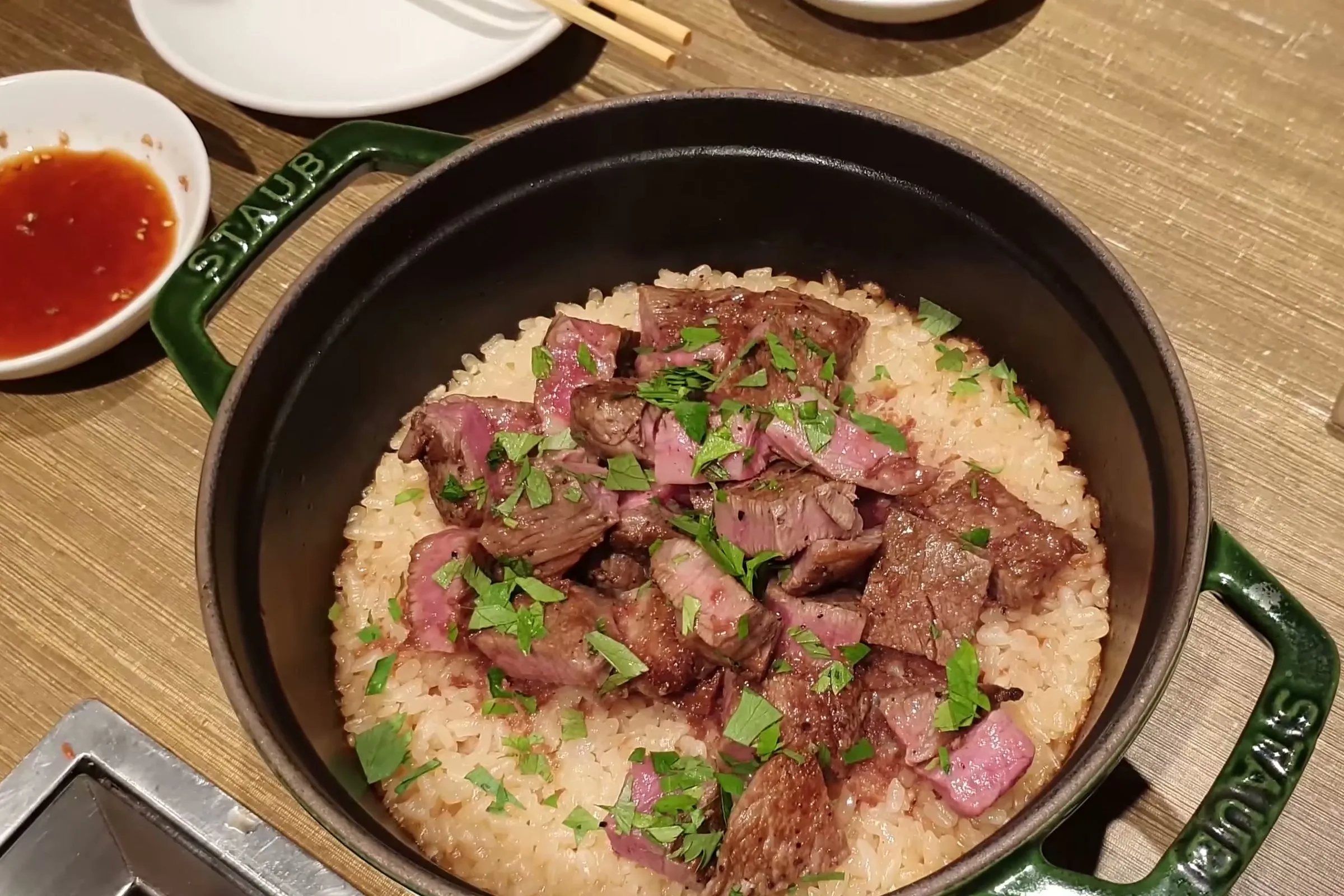
This one is pre-order only, all the way. Back then you had to tell them more than a week ahead. It’s a rice pot with tenderloin in it, and the smell when they open the lid alone will drive you crazy. They pour in a punchy sauce too.
They scoop it into small bowls and top it with something like garlic chips. This place is close to the original. Lots of yakiniku places in Korea and Japan do pot rice now, and you can think of this as where it started. When I asked before, they said the sauce is wine, butter, pepper and so on.
The butter smell hits the moment it opens, the soft tenderloin is cooked perfectly, and the rice is well seasoned. Really delicious. If you go, order it.
Thick harami is the best
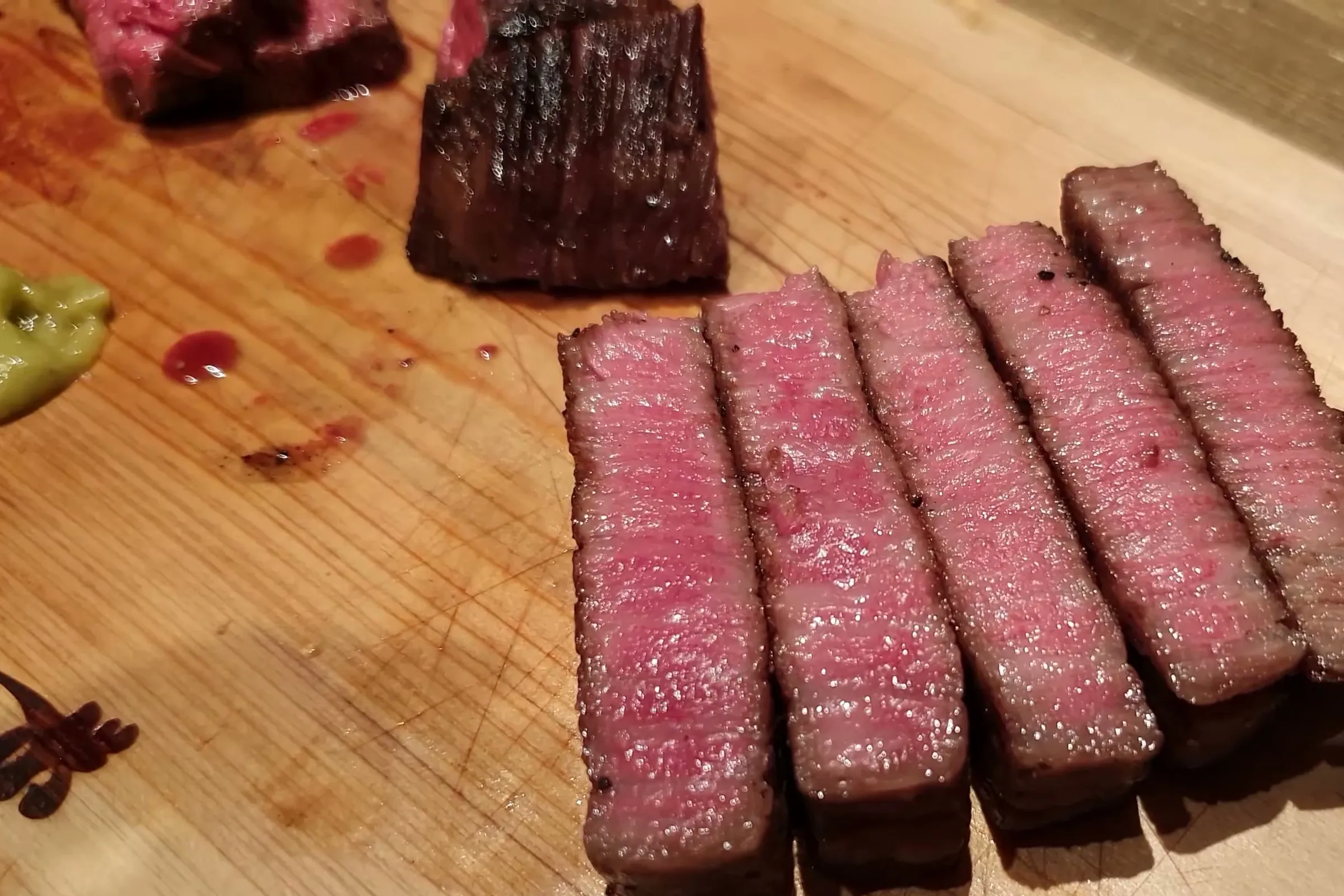
The rested meat came back. The two rows on the left are harami, the right is chateaubriand.
Wagyu in Japan is generally fattier than Hanwoo, so a cut like harami is welcome. Even if you don’t know the menu name, show them this when you order. It wasn’t on the menu either, so tell them when you book that you want the harami cut thick.
For me this was the best. It’s a bit like chutoro. Ootoro is usually too fatty, and akami is hit or miss, sometimes it has no flavor. This has a fair amount of fat, plus that iron taste you get from akami, like sucking on a coin. Thick harami was the best of the night.
Soft enough for chopsticks
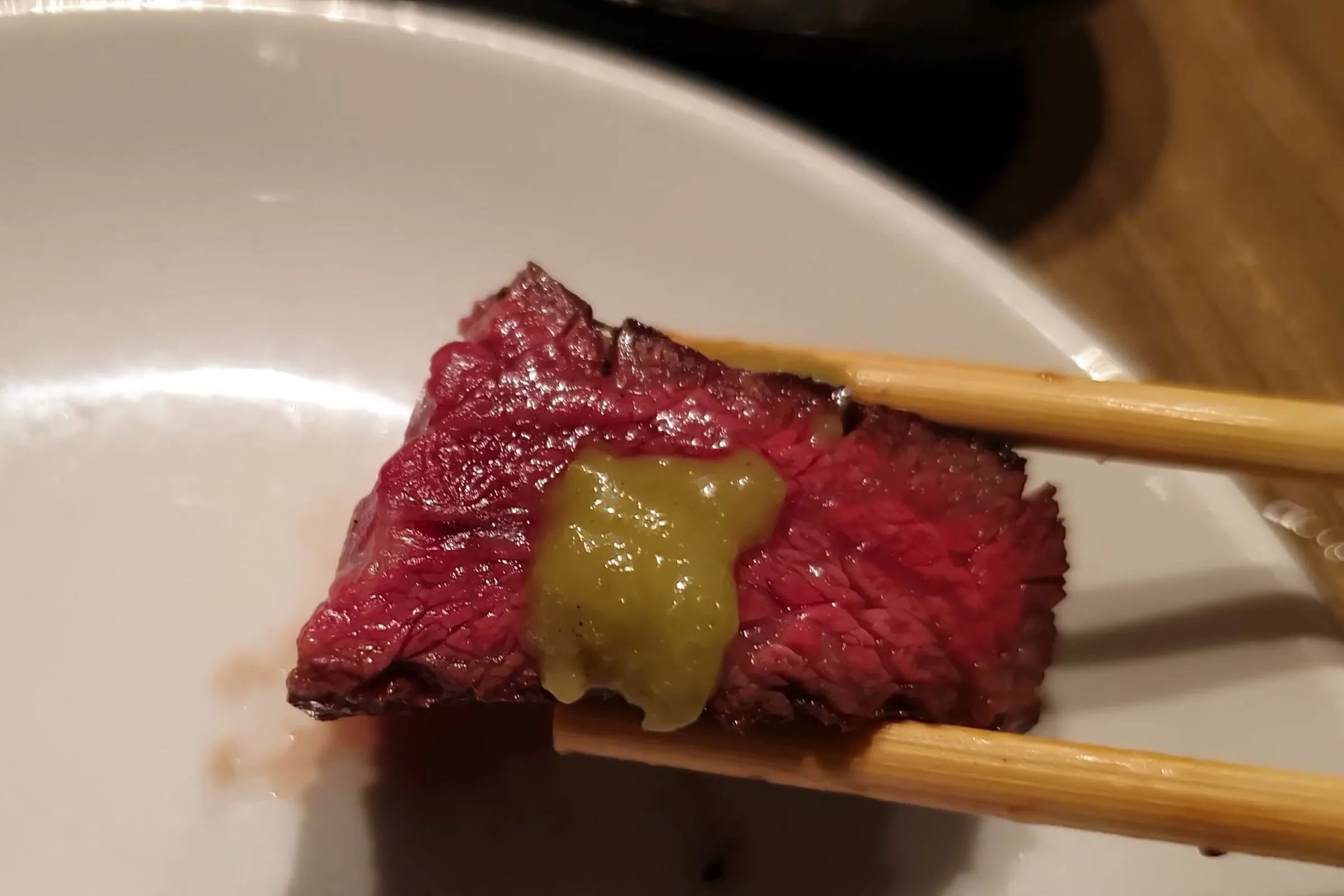
This time, instead of a toothpick, I tried to show it cutting with chopsticks. The chopsticks were too blunt, so it wasn’t easy. Still, it comes apart like this. Super tender.
Why everything goes in the egg
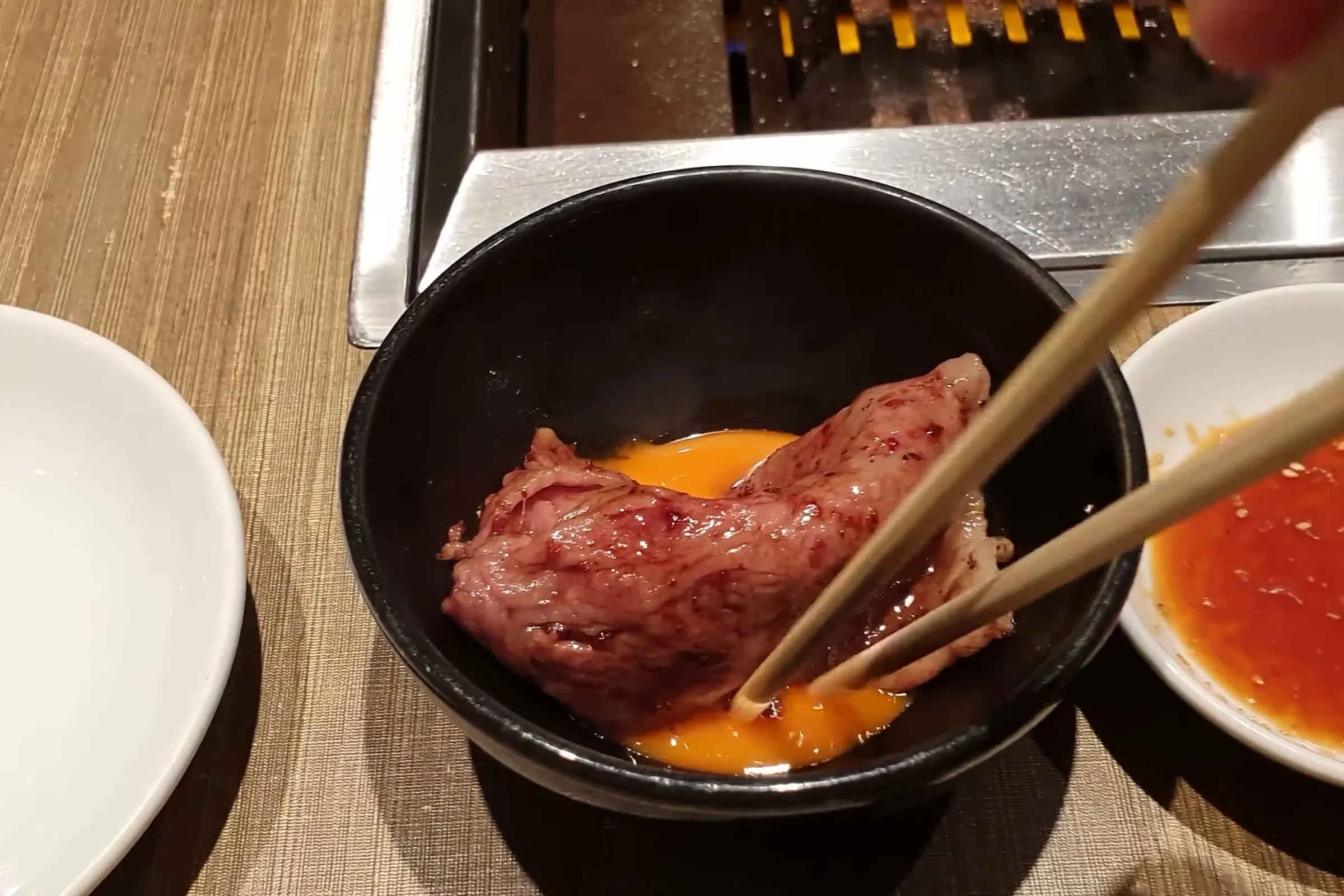
I dip all the meat in the egg left over from the nohara-yaki, whatever the cut. Every dish comes lightly marinated, and the marinades are all a bit sweet and salty. The egg tones that down.
Wagyu being too fatty is part of why I can’t eat a lot of it. But the bigger reason is that in Japan almost everything is seasoned, yakiniku and yakitori both, and Japanese seasoning is salty and sweet. Different cut, different meat, similar taste, so my palate gets tired and I can’t eat much. The egg helps with that.
Never order the naengmyeon
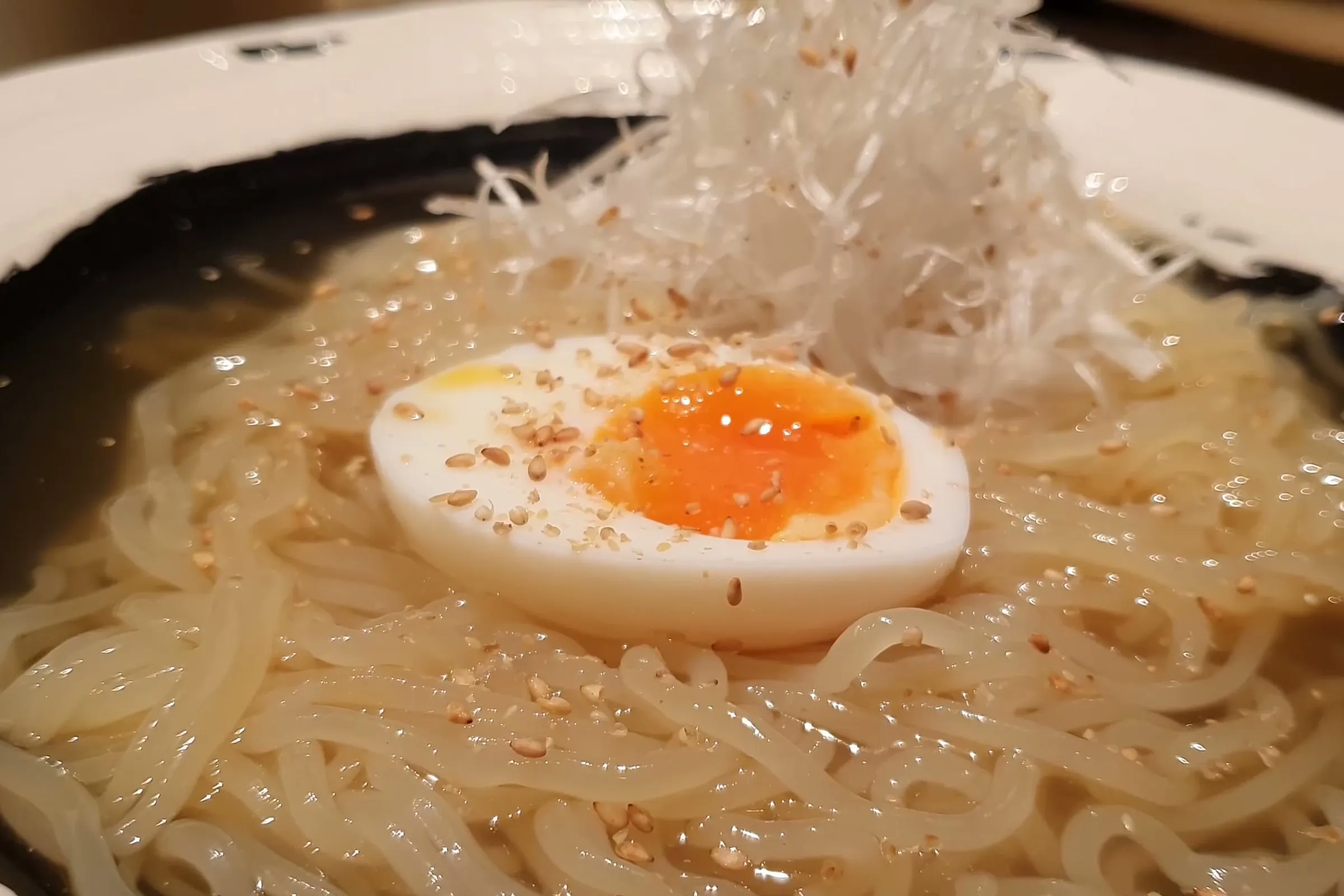
I ordered the naengmyeon too. On an earlier visit I’d had the omelet rice and the curry here, and both were really good as dishes. They don’t go well with the meat, though. Both are very strong, and so is the meat.
So I thought, how about naengmyeon? Never order it. The noodles are neither naengmyeon nor milmyeon, more like the corn noodles at a lamb skewer place. The broth is chicken and only salty. It should at least be sweet and sour.
It was so bad I tried to fix it. I asked for vinegar and mustard, and they had no mustard. In Korea you’d add vinegar or mustard to a bad mul-naengmyeon too. I threw in ice to water it down and make it colder. Still hopeless, but a lot better than how it came. Outside the meat, order the rice pot or kimchi.
Order the kimchi instead
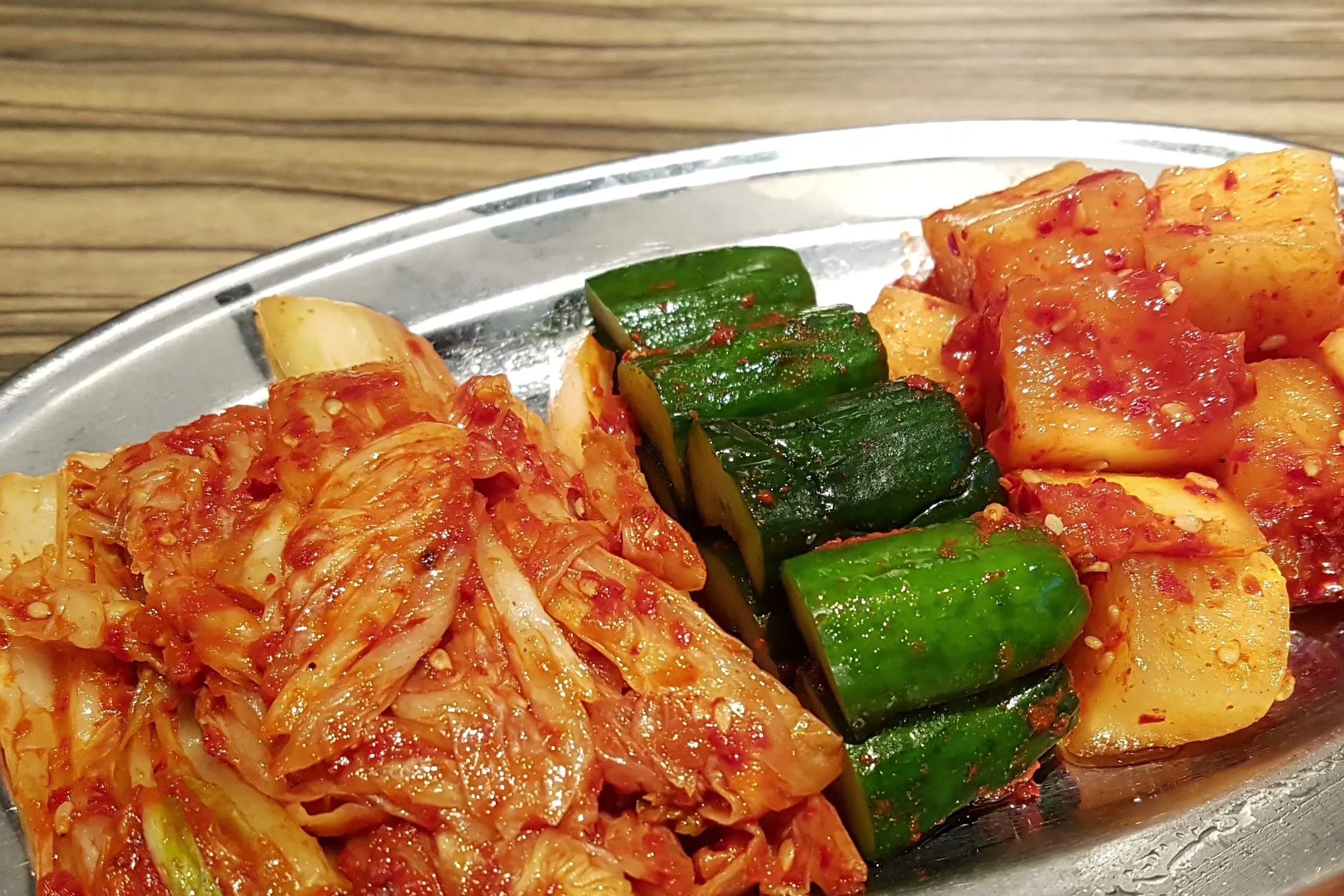
The kimchi plate was about ¥1,200, around ₩14,000 to ₩15,000 in Korean money (2019/10), so you feel some resistance. In Korea it comes free as a side dish, and here you have to pay for it, so I rarely order it.
You’d think, how good can kimchi in Japan be? Better than you’d expect. A little like the kimchi that comes with kalguksu in Myeongdong.
There’s an omakase too
There’s actually a separate omakase menu. It’s a lot of food, so I pick only what I want and order it when I book. It usually came to over ¥20,000 (2019/10), so it’s a bit expensive, and it leaves you stuffed, a bit like Hanwoo omakase. I think Hanwoo omakase places borrowed a lot from the courses that are trending at yakiniku places in Japan.
What makes Jumbo Hanare better than other yakiniku places is how good the beef is. I didn’t know this, but I heard that most yakiniku owners can’t really tell the beef apart at the wholesale stage. Wagyu is hard to grade, probably because it’s all marbling. The owner here, Nanbara-san, can. I heard it from someone else, not from him, but they said he’s almost the only one among yakiniku owners. So this place takes the best, and well-known yakiniku places get what comes next.
About ¥10,000 each
2019/10 video
Split three ways, it was about ¥10,000 a person, around ₩120,000 (2019/10). I wasn’t that hungry that day, and it was a comfortable full.
When I checked TableCheck in 2026/10, the Tokusen course was ¥15,000 and the Chateaubriand course ¥22,000, tax included. The beef rice pot was ¥12,000 for 2 to 4 people and ¥24,000 for 5 to 8.
Why I keep going
Booking isn’t as hard as the famous sushi places in Japan, the beef is good, and the price isn’t that high. So I stop by almost every time I go to Japan.
Pre-order the thick harami, the chateaubriand and the rice pot, have one piece of nohara-yaki, dip everything in the egg, and get kimchi instead of naengmyeon. The end.
How to book
How I booked
In 2019/10 I booked ahead and pre-ordered the thick harami, the chateaubriand, the nohara-yaki and the beef rice pot. Back then the rice pot needed more than a week’s notice.
- TableCheck
Online bookings open until the end of next month. Two hours per party, and 20 minutes late counts as a cancellation. Parties of 7 or more can’t book online. The beef rice pot (¥12,000 for 2 to 4, ¥24,000 for 5 to 8) and the chateaubriand course have to be booked by the day before. Cancel a seat-only booking on the day and it’s ¥10,000 a person. Card details are needed to hold the table, but you pay at the shop.
- Phone
03-5689-8705, open 17:00 to 23:00. The official page says phone bookings from abroad aren’t taken, so from overseas use TableCheck.
- Tip
Ask for the harami thick-cut when you book. It’s the cut people come here for.
Checked 2026/10. Booking rules change, so look at the official page before you go.
Where it is
- Address
- 1F Anritsu Bldg, 3-27-9 Hongo, Bunkyo-ku, Tokyo東京都文京区本郷3-27-9 アンリツビル1F
- Nearest station
- Hongo-sanchome, about 3 minutes on foot
Plan the Tokyo trip
The boring bits I’d sort before flying, so the eating days stay free.
- Hotels in Tokyo*
Pick the room by where you eat, not by the sights. After a long dinner, a short ride back is the real luxury. This place is in Hongo, Tokyo.
- Japan eSIM*
Data from the moment you land, no counter and no SIM swap. Set it up the night before.
- Keisei Skyliner from Narita*
Narita to Ueno in about 40 minutes. Buy it ahead and walk straight to the platform.
- Haneda airport limousine bus*
Landing at Haneda instead? The limousine bus drops you at the big hotels and stations with no transfers.
- Tsukiji Outer Market food tour*
A market morning with someone who knows which stalls are worth the line.
- Sushi-making class at Tsukiji*
Shape nigiri yourself once and the counter makes a lot more sense.
Links marked * are affiliate links. If you book through them I may earn a small commission, and you pay the same. How it works
Guides that mention this place
More places I have eaten at
All of Tokyo → Ginza, Tokyo
Ginza Kyubey
No booking, cold tuna, great shellfish, and the home of gunkan maki.
¥8,800 2023/10 video Shibuya, Tokyo
Hikiniku to Come
Three charcoal hamburgs, free rice, a drawer full of spices.
 Hanzomon, Tokyo
Sushi Mizukami
Sour rice, great shellfish, smoked tuna that tasted like spam.
¥22,000 2020/03 videoSources
- 焼肉ジャンボ はなれ Yakiniku Jumbo
- 焼肉ジャンボ はなれ TableCheck
- 焼肉 ジャンボ はなれ Tabelog