At Sushi Mizukami, only the shellfish stood out
Sushi Mizukami is an eight-seat counter on a quiet street near Hanzomon. Michinobu Mizukami spent a year at Sukiyabashi Jiro’s main shop and fifteen at the Roppongi one, then opened here in 2018. I went for lunch in 2020/03 and paid ¥22,000, about US$200, for the tsumami course. The rice was sharp and sour the Jiro way, every shellfish was good, and the rest of the fish had no punch. Kind people, a handsome chef, and a meal that felt like a decent sushi lunch in Seoul at Tokyo prices.
monster gourmetFrom my 2020/03 video
- My share
- ¥22,000
- about US$200, lunch, tsumami course, 2020/03 video
- Highlight
- Every shellfish, even the oyster
- Skip
- The smoked meji maguro
- Video
- 12:36
- 2020/03
- Where
- Hanzomon, Tokyo
- Hanzomon, about 310 m
Why I finally went to a Jiro place
In Korea and in Japan I mostly go back to places I already like. The more sushi I eat, the more often a new place lets me down, and I hate getting hurt like that. When I do try somewhere new, it’s usually because it’s very hot right now or a booking fell into my lap. Mizukami was neither.
Mizukami-san is an apprentice of Jiro Ono. I’m not a fan of the Jiro style, and back then the Tabelog score here was low, so normally I’d never have come. But the comment I get most on my channel is “go to Sukiyabashi Jiro.” Jiro doesn’t allow filming, so even if I went I couldn’t show you, and I haven’t been.
Of the famous Jiro-line counters, Sushi Mizutani closed when the chef retired, and Harutaka I’d tried years before and wasn’t in a hurry to go back to. That left Mizukami. What tipped it was the owner of Sushi Ito in Seoul. I ran into him a few times while eating at his counter, and once he told me Mizukami was his favorite place in Japan.
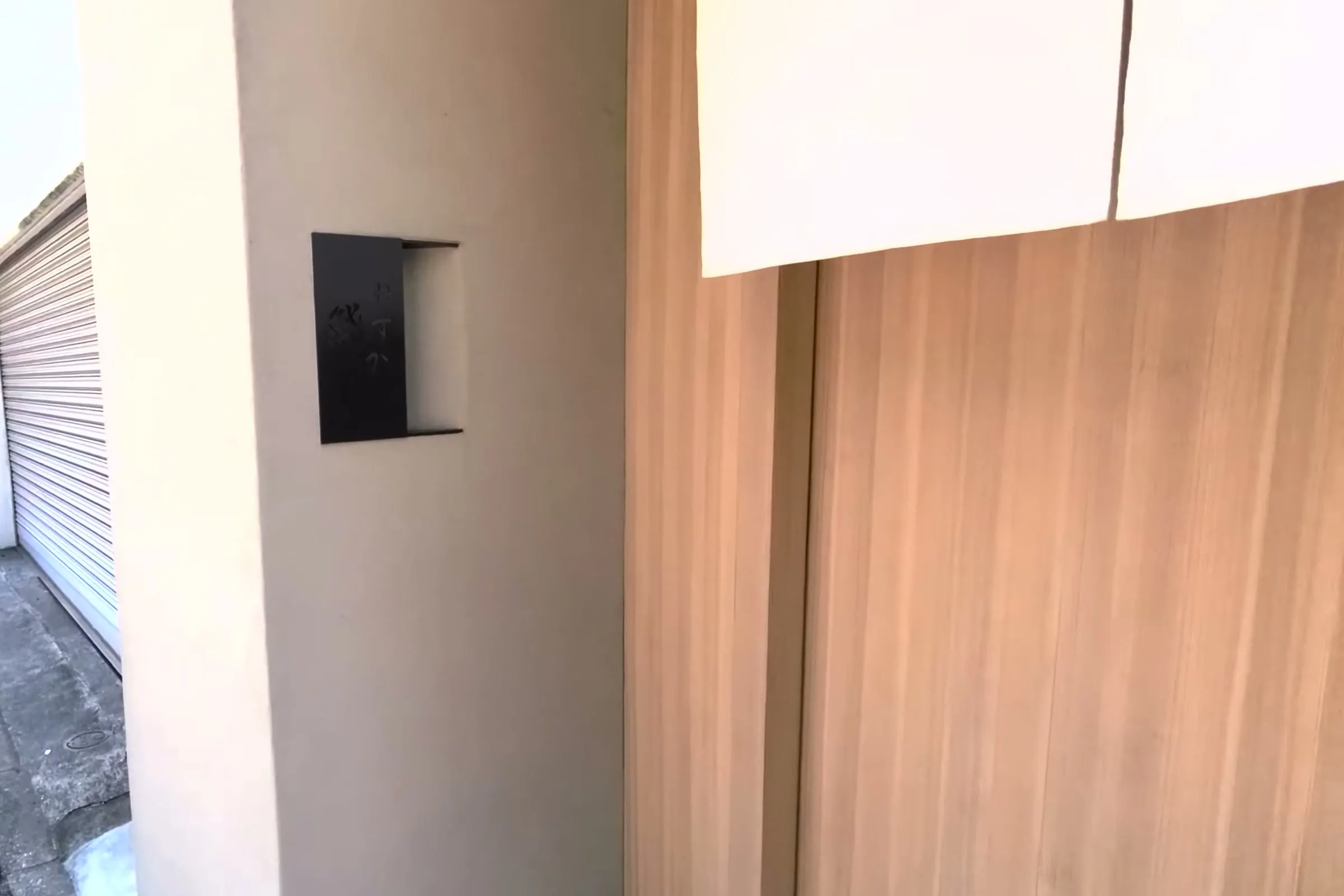
Kazunoko, then a question
Before you order anything they put down kazunoko, herring roe, as an otoshi. When it’s gone they ask: nigiri only, or a course with tsumami. I remembered the tsumami at Harutaka being great because the ingredients were so good, so I ordered tsumami without even knowing the price.
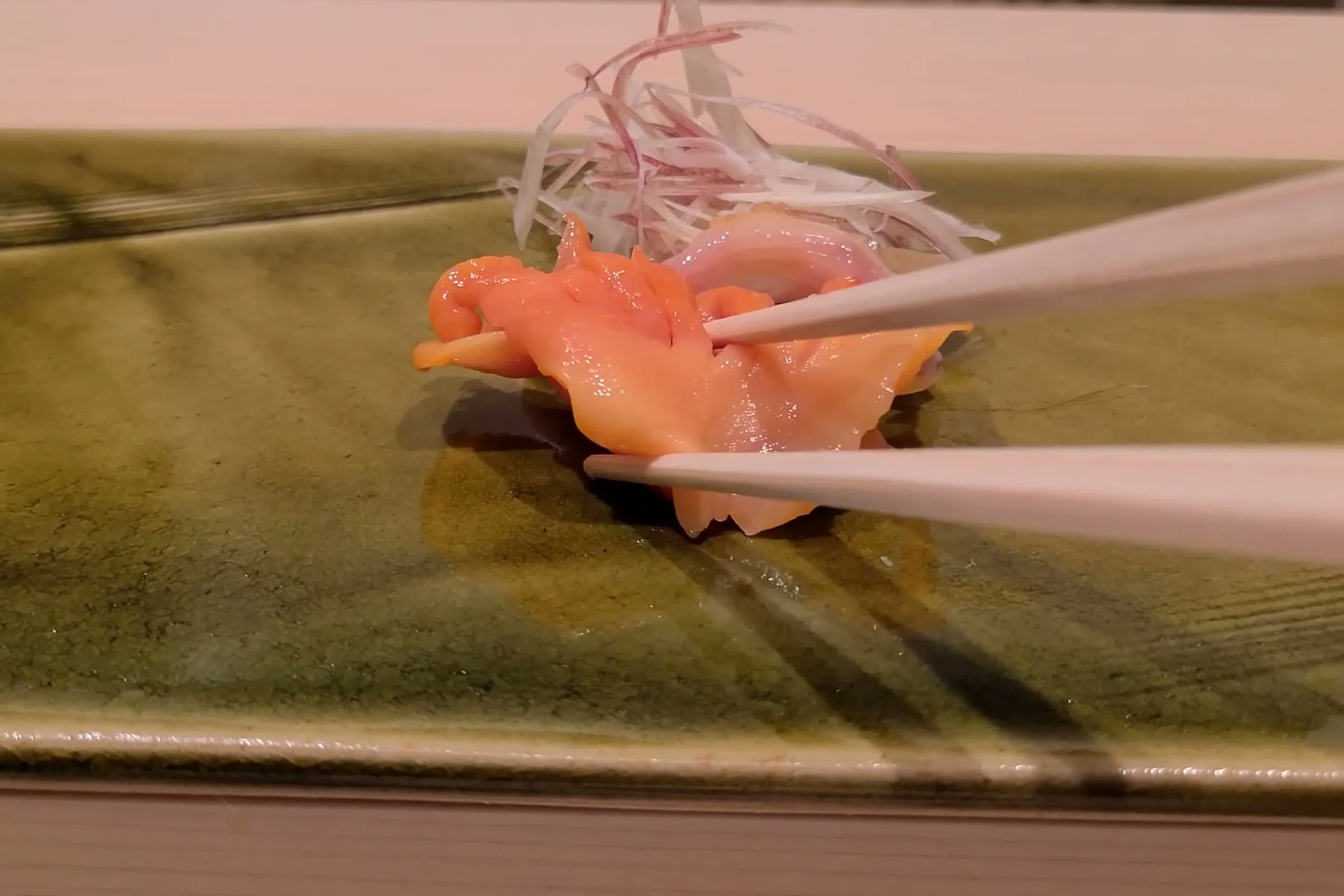
First came tai sashimi. Not nearly enough fat for me, so not much sweetness or richness, and the texture sat somewhere in between, a little dry. The akagai looked too thin to be any good, then surprised me. Clean, with the blood aroma right up front. The himo, the frill, had a deeper blood note without turning my stomach.
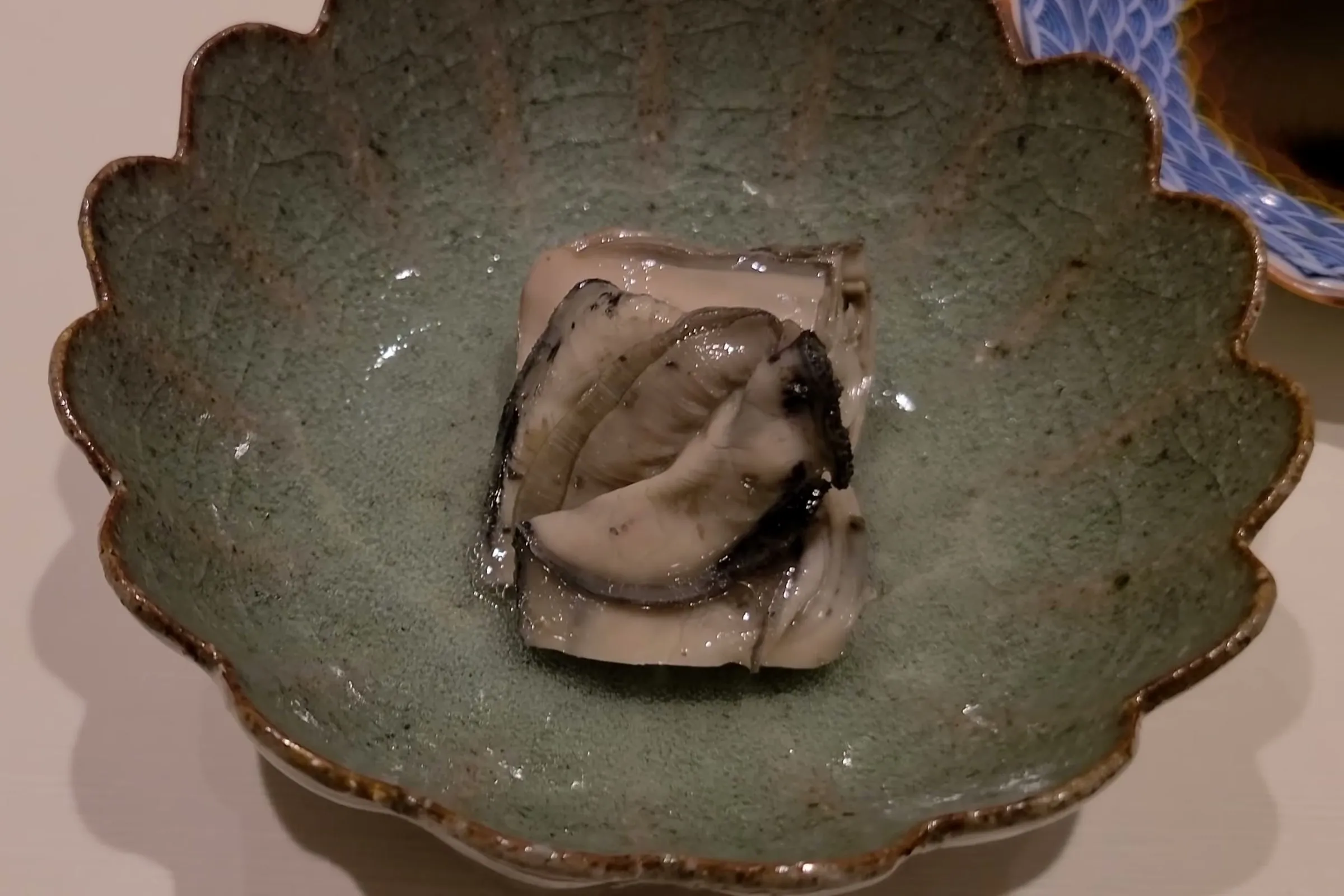
An oyster I liked, against my will
I’ve said many times that I don’t like oysters. Raw, grilled, steamed, any kind. I finish them when they come because I don’t leave food, but I don’t like them.
This one tasted like canned oysters, which is ridiculous, and that actually made it better for me. It was the best thing I ate that day.
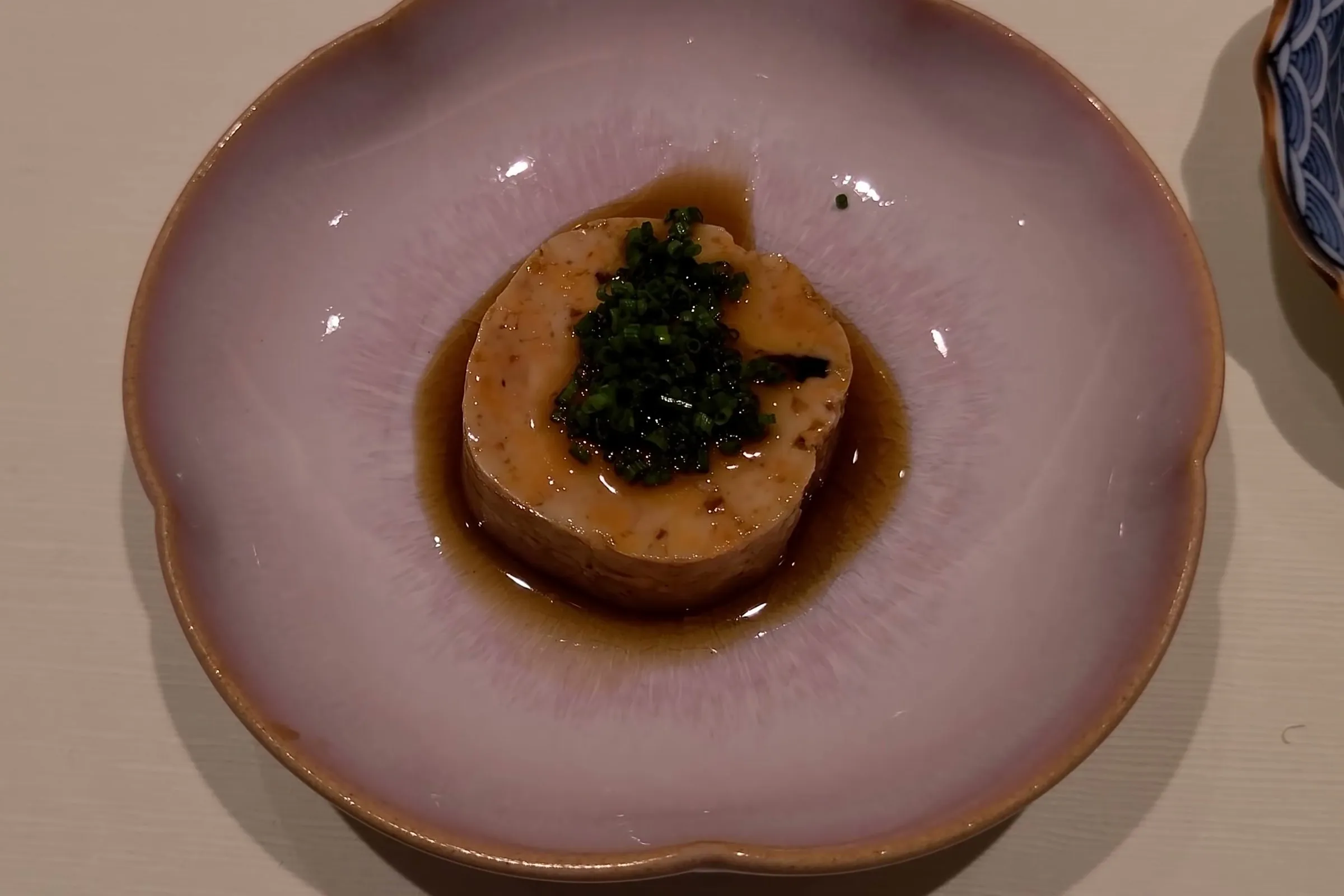
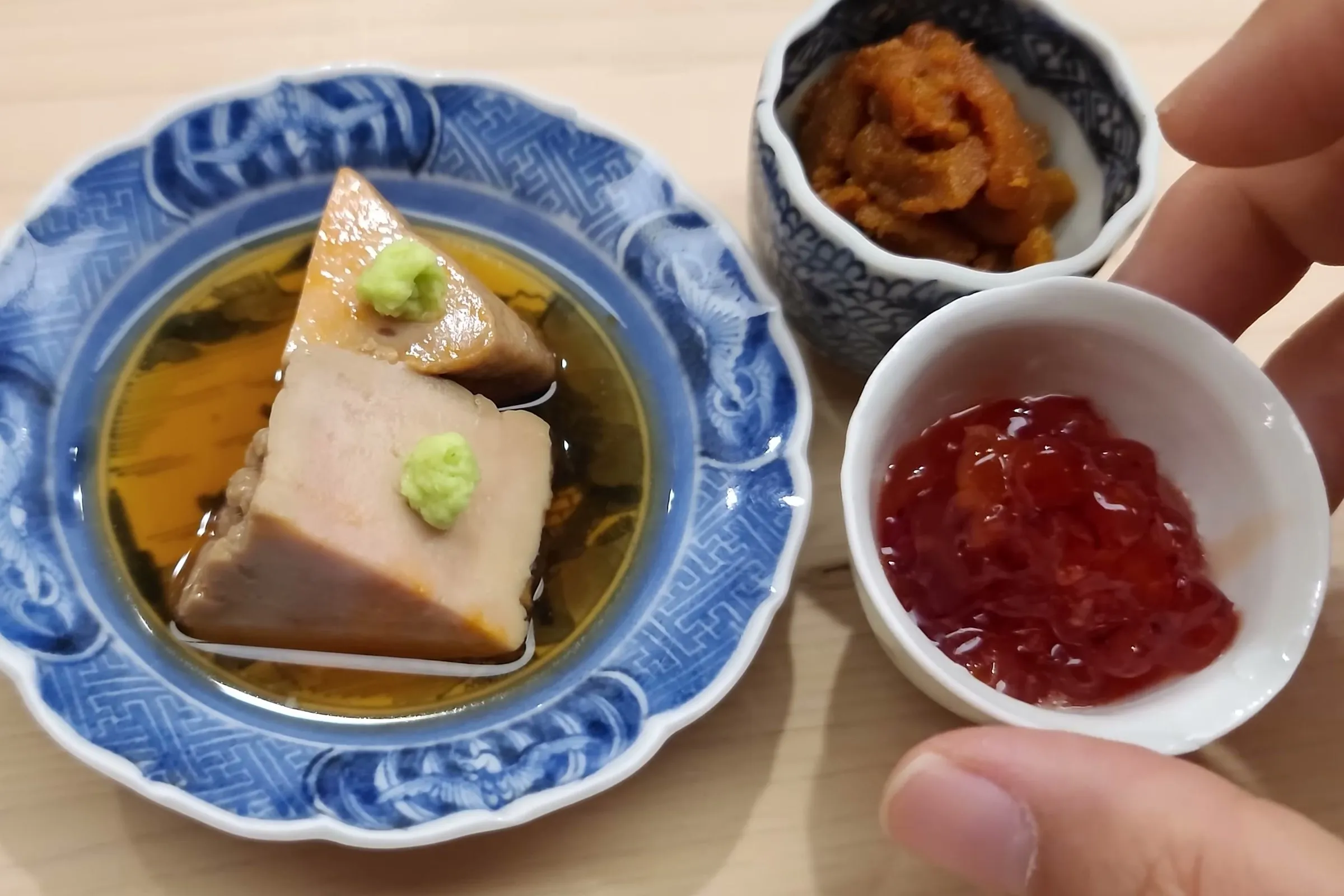
Ankimo like a braised fish head
The orange you see in monkfish liver is its fat, so I expected this to be good. The liver itself was fine, rich and fatty. The sauce was the problem.
Old Korean sushi chains used to serve braised sea bream head in a sticky soy glaze. This was that. Sweet, sticky, somehow a little spicy, almost like Korean stir-fried anchovies with shishito peppers. Great with a bowl of rice. I like ankimo with something brighter and sweeter, so it wasn’t for me.
Komochi ika, a name that fits twice
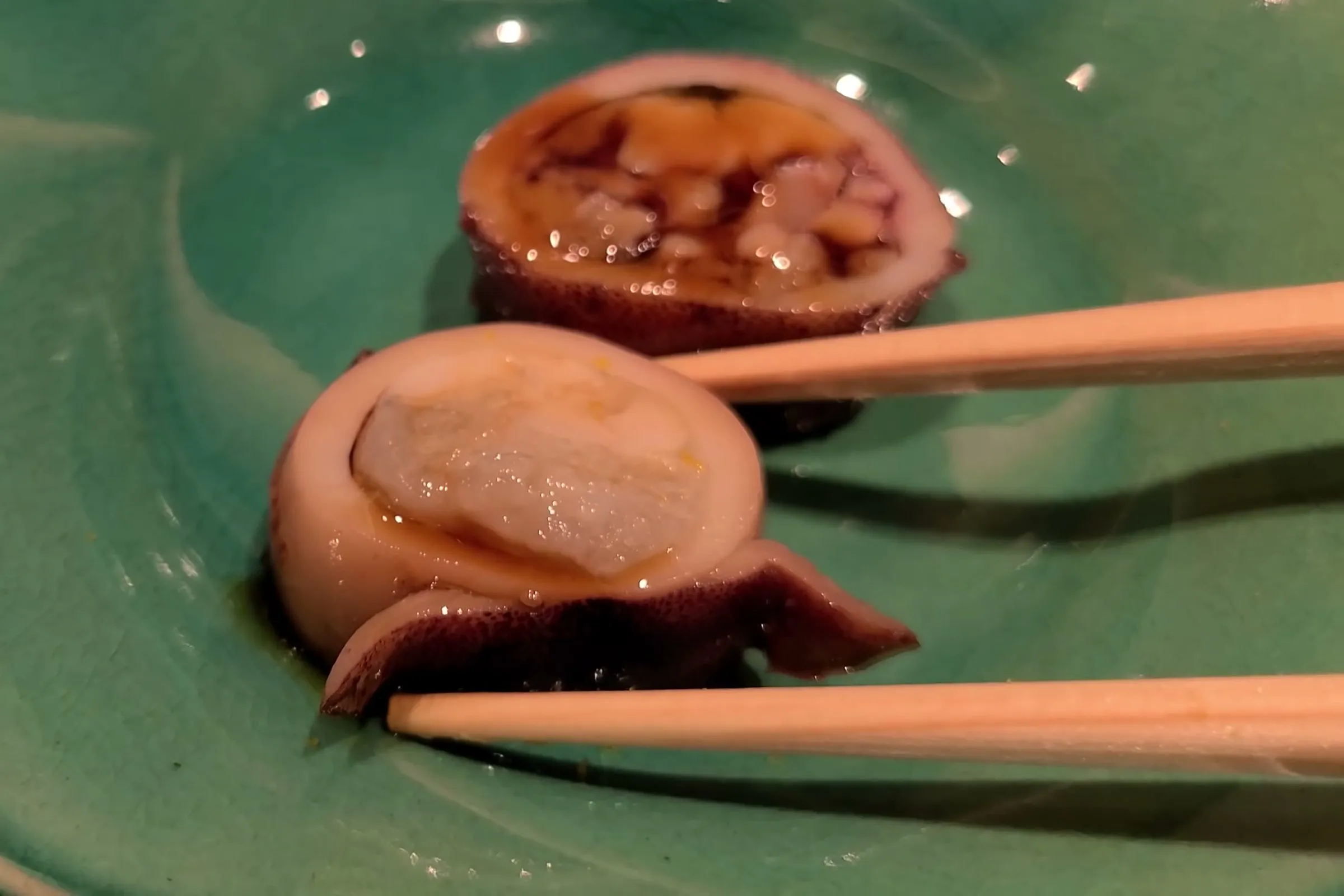
Spear squid full of roe, komochi yari-ika. The thing inside that looks like porridge is the roe. Ko is the roe and mochi means holding.
Cook that translucent roe and it turns chewy like mochi, the rice cake, with a nutty, sweet bean paste kind of flavor. Mochi both ways. The name fits.
Overall the tsumami left me unsatisfied. Maybe because it was lunch, the course was short.
Not Mizukami-san’s hands
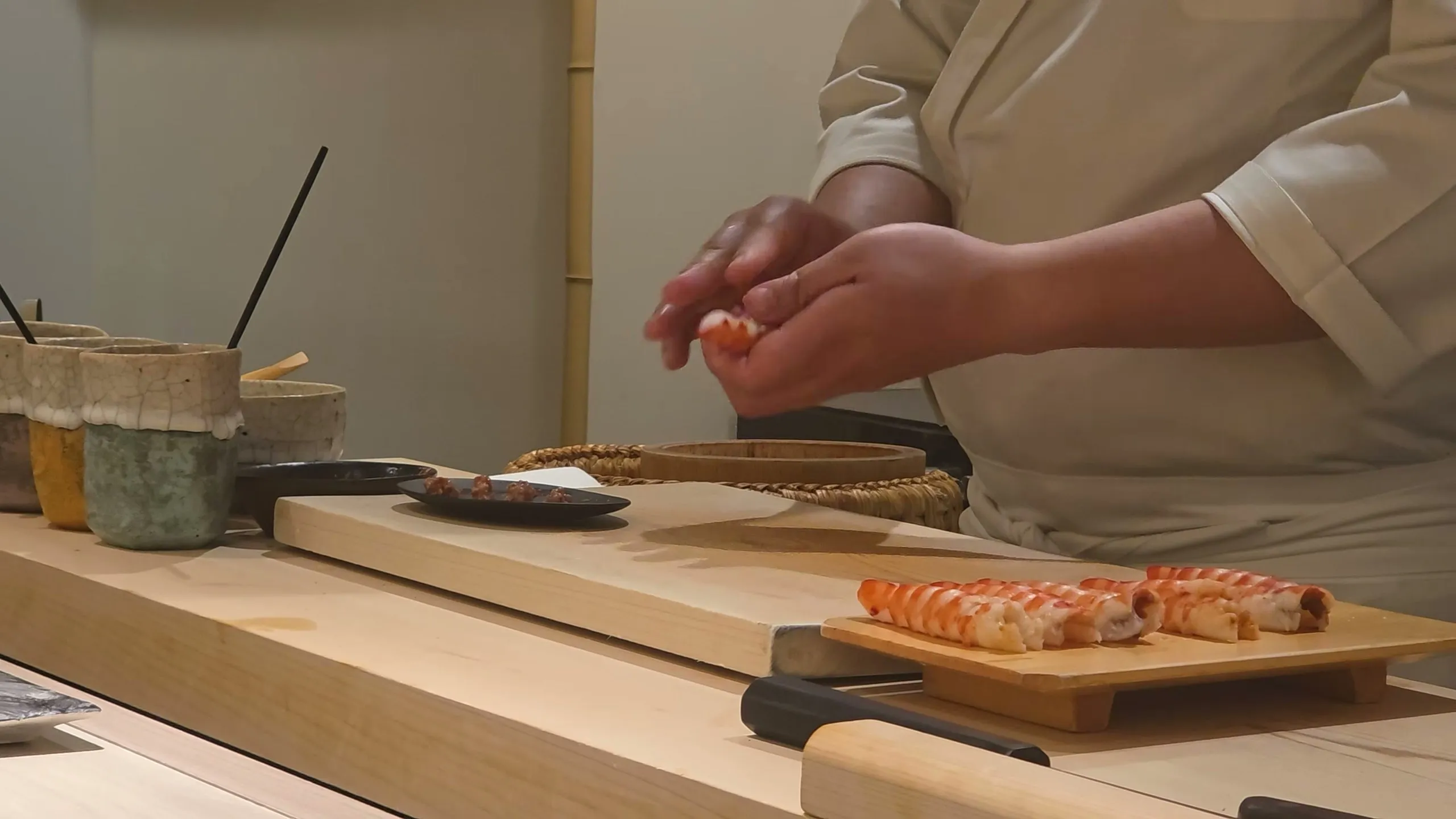
When they cleared the myoga and wasabi off the sushi plate and put down gari, it was nigiri time. One thing first. The chef making my nigiri wasn’t Mizukami-san.
There were only five guests. Mizukami-san took two, the other chef took three, and I was one of the three. The place is tiny, so I assumed he’d make everyone’s and didn’t ask for him. My own fault, nothing to complain about, but every nigiri shot I filmed is someone else’s.
The toppings were fine. Not as good as Harutaka’s, but the price gap is big too.
Sour rice, good grains
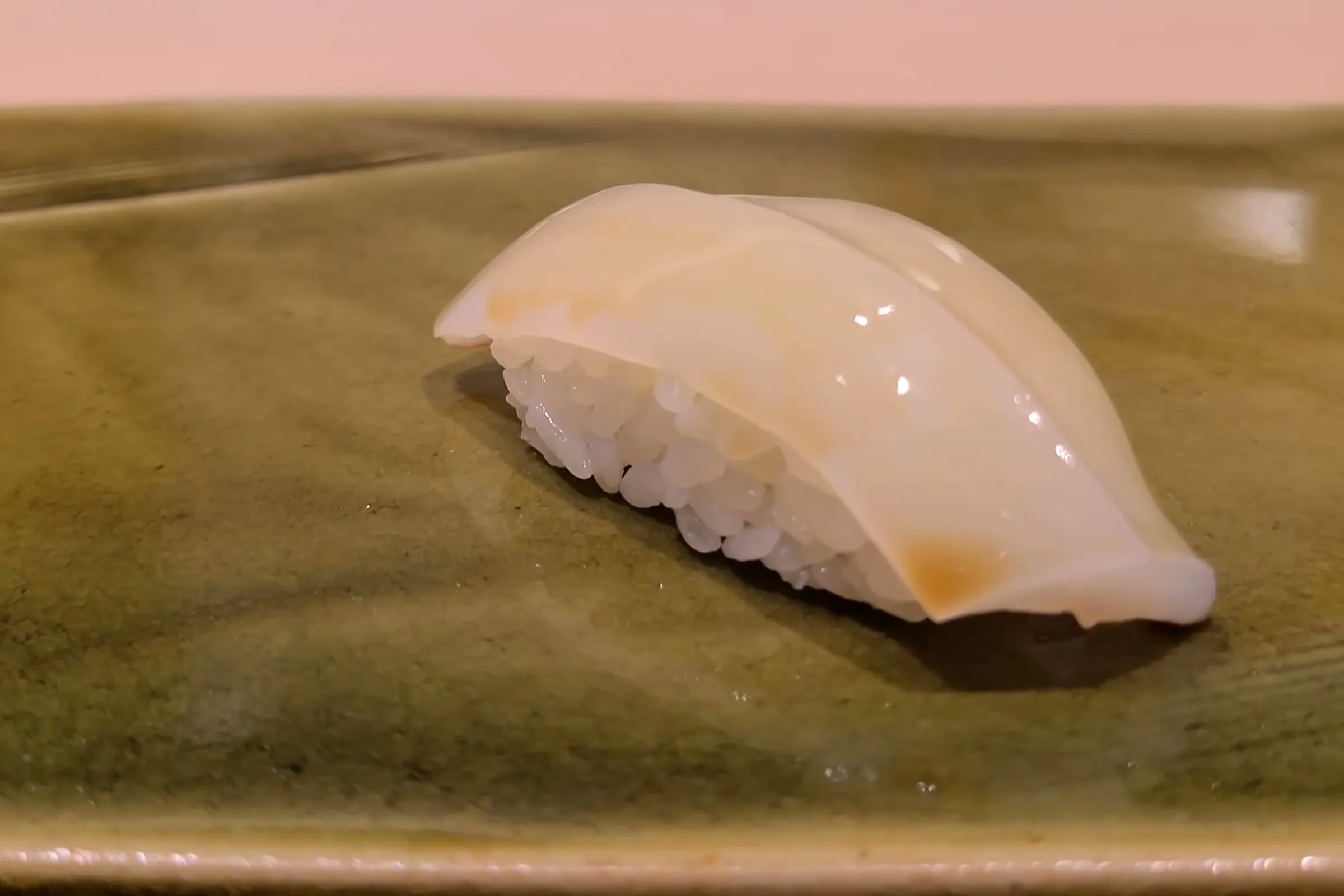
I can’t skip the rice. I haven’t been to that many Jiro-line places, but they’re famous for being suppai, sour. Very sour. This place is high on acidity too, about where Sushi Ito in Seoul sits, and the grains had a good texture.
The shaping was the weak part. This chef’s hands are busy, quick moves, squeezing again and again. In the torigai shot you can see every grain. The rice itself was very good. The nigiri could have been better.
Jiro-line places are also known for big rice. Here it wasn’t small, but it looked small next to the toppings, so I asked for more. The chef looked surprised. I guess everyone asks for less these days. With more rice, the balance in the mouth was better.
Kohada that stayed for hours
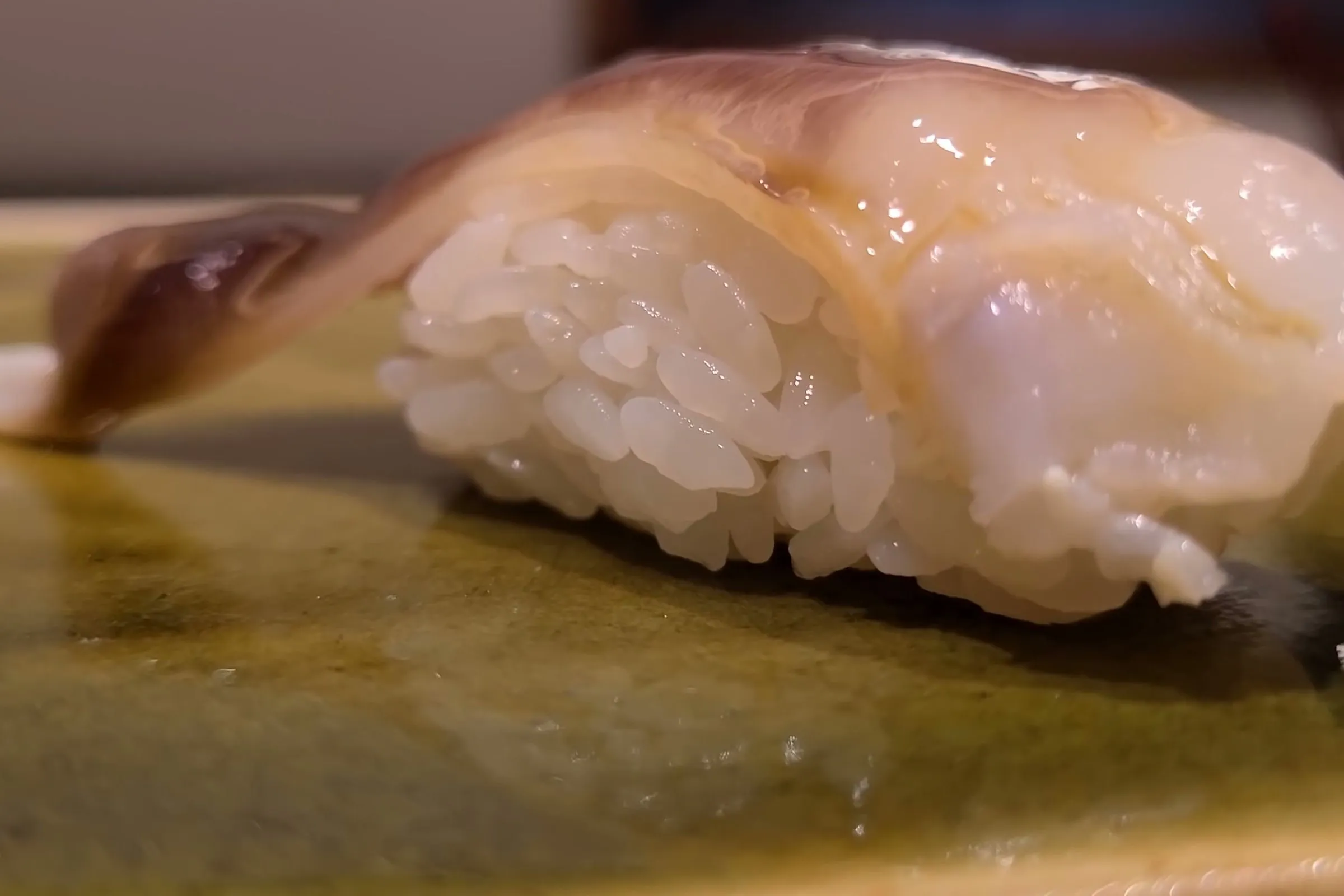
This kohada had a strong anchovy smell, the style I don’t like. And it lingered. It felt like it stayed in my mouth for hours.
The shellfish carried it
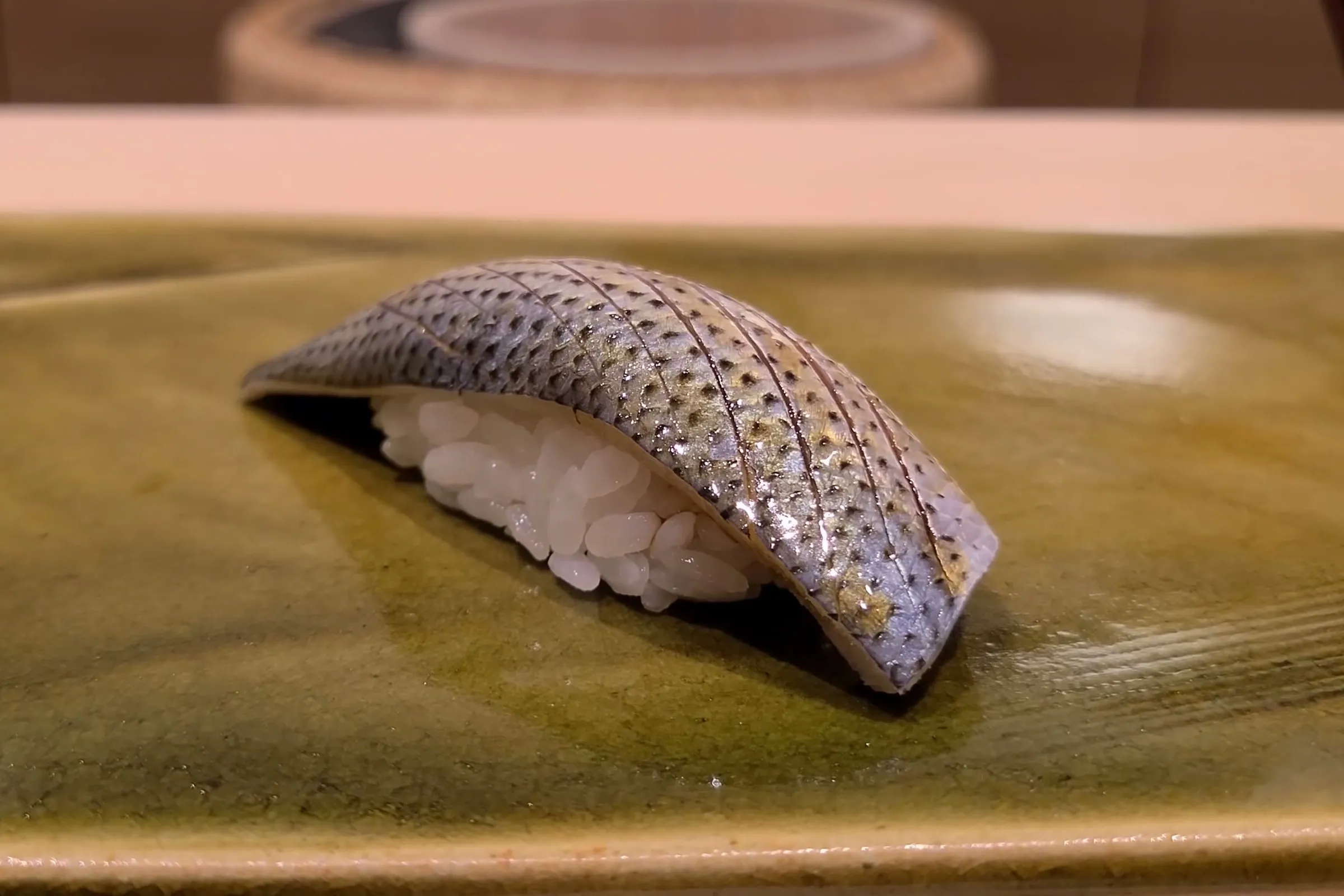
All the raw ingredients were decent that day, and the shellfish were the ones that tasted good. The hokkigai looked grilled pretty hard, but the sweetness was right, and with hokkigai a bit of char reads as smoky in a good way.
Yellowtail and the other plain fish, the ones that aren’t cured, had almost no flavor. It was like the fish had been left sitting out. It wasn’t the aging, because the texture was fine. There was just no impact, and that went for most of the fish here.
At Harutaka, every topping was superb. The tsumami there wasn’t really cooked, just served, and it was still delicious. Here the toppings weren’t good enough to carry themselves, and the kitchen didn’t bring out the flavor either.
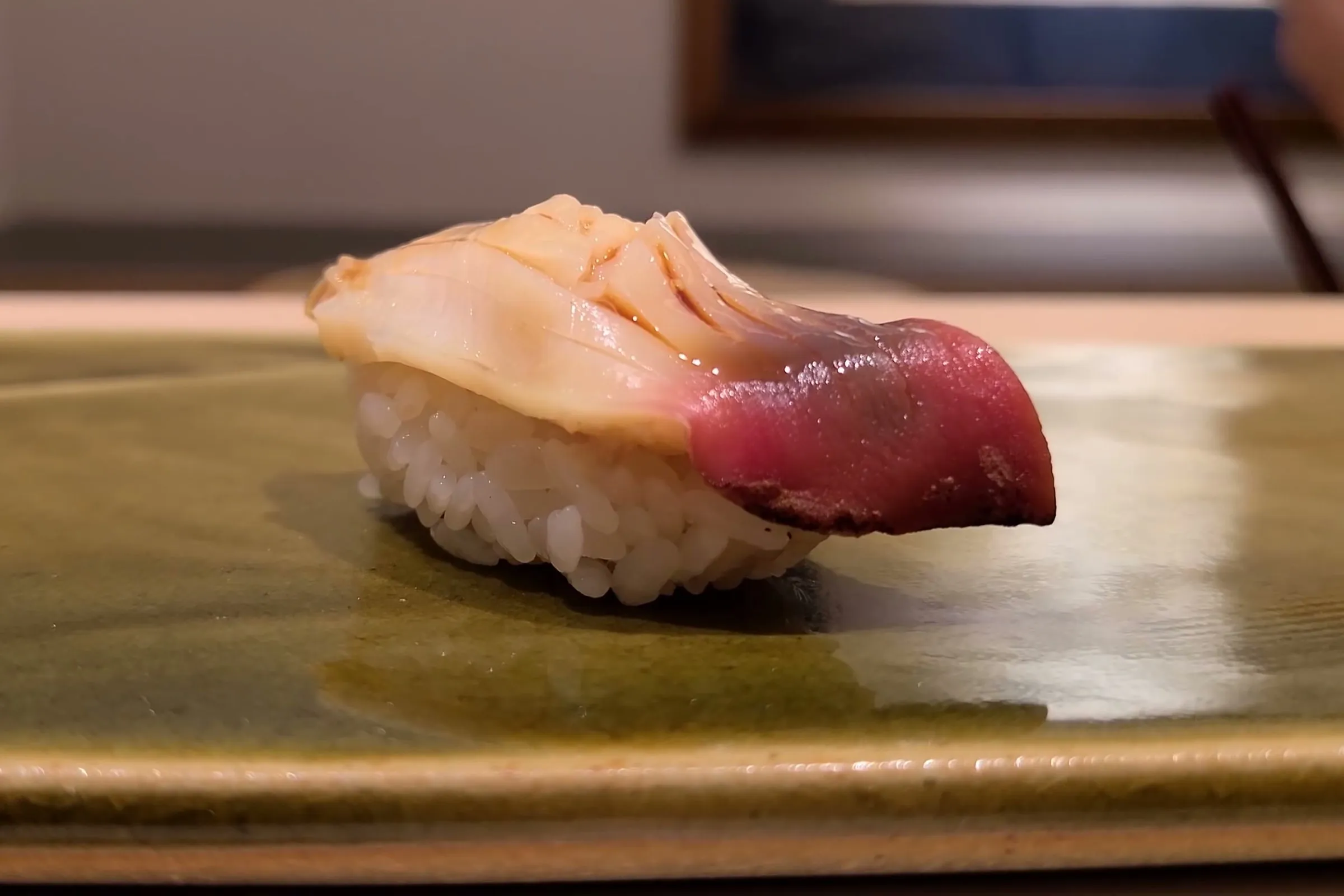
Kuruma ebi, cut in half
Another Jiro-line signature is a big kuruma ebi cut in half. Usually the tail stays on. Here there was no tail, which surprised me. They kindly told me to eat the tail half first, then the head half.
I love the red stripes on kuruma ebi. Such a pretty color. The head half has the innards in it, and it was really good. Two bites work better than one here. The tail half is all sweetness, and the head half adds that deep innards flavor on top.
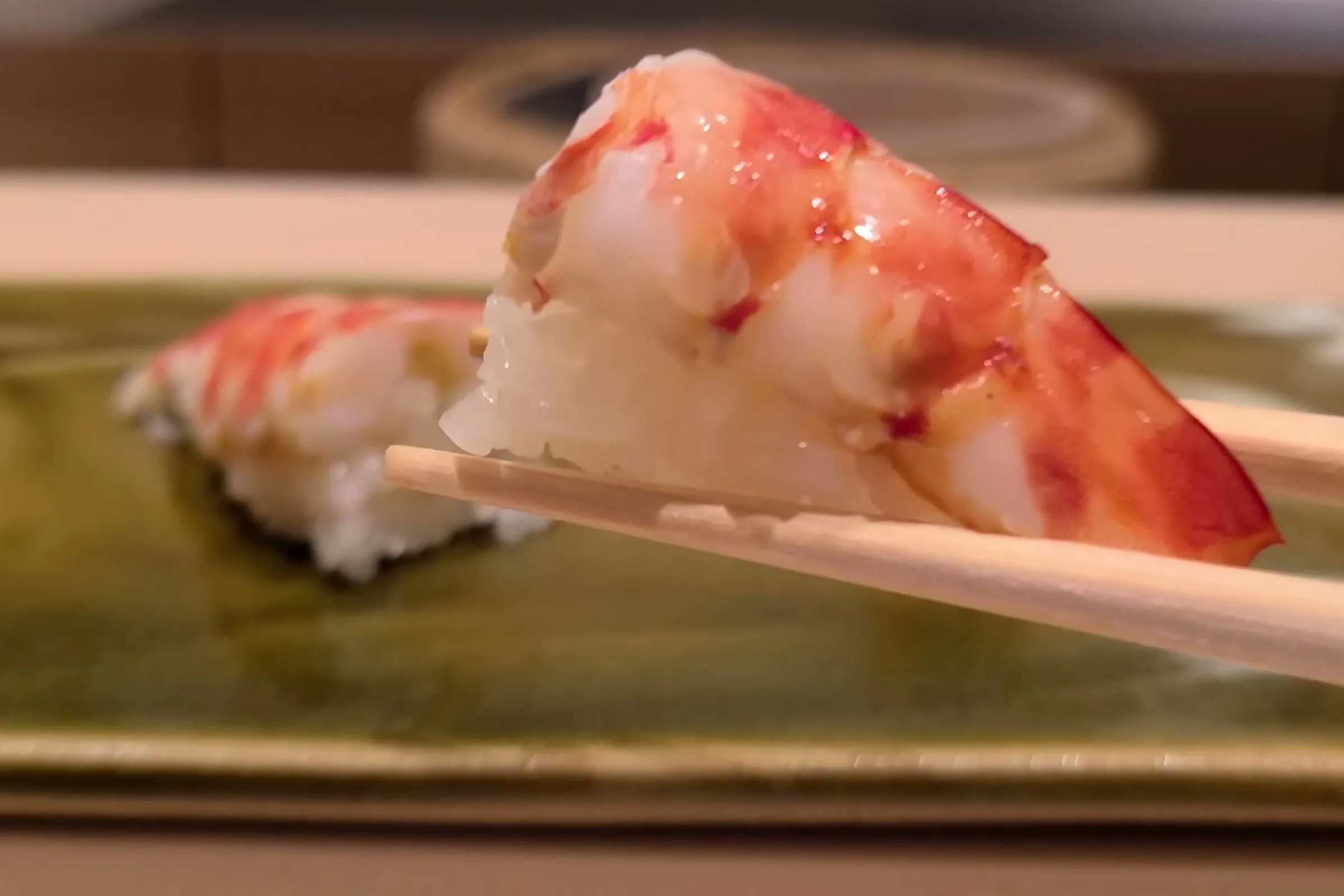
Aji, tako, saba
Old Korean sushi blogs used to say aji, horse mackerel, is where Japan and Korea differ most, because Japanese aji is so good. This aji had far too little fat. Not good at all.
Boiled octopus only shows up at really classic counters, in Korea too. A lot of places put nitsume on it instead of salt. It was surprisingly sweet. People who hate octopus would hate it, but I didn’t mind.
The saba had decent fat and the cure was just right. Tasty enough.
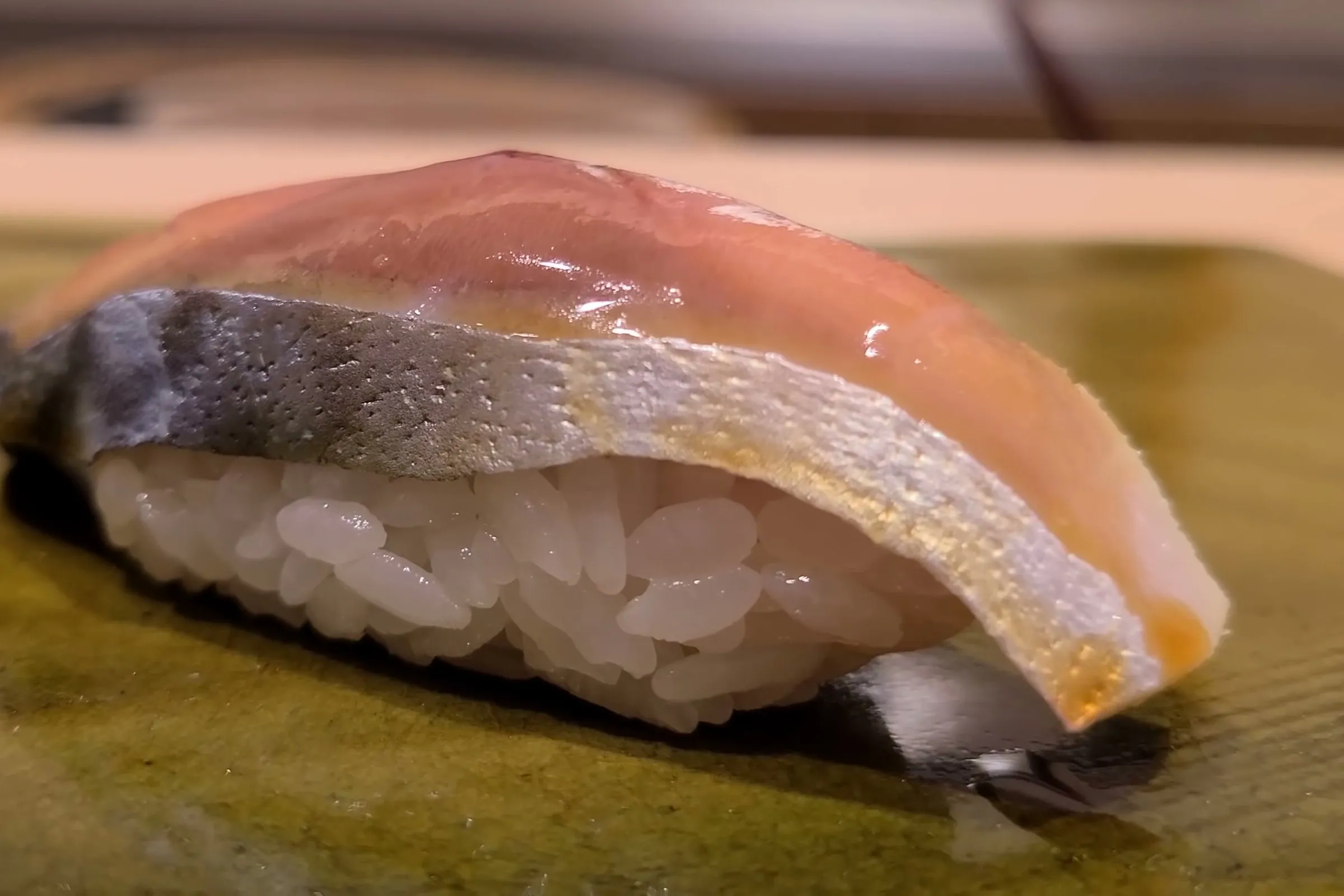
Ogawa uni, gunkan style
It wasn’t murasaki uni season yet, so it was bafun uni. Nothing fancy, a common brand, Ogawa, the one you see everywhere in Korea too. No nigiri either. A ball of rice, nori around it like gunkan, a little uni on top. The most common style, and it tastes the way you’d imagine.
Ogawa can be bitter some days. This one had almost no bitterness, sweet and clean. I like the clean sweetness of bafun uni.
Meji maguro, smoked into spam
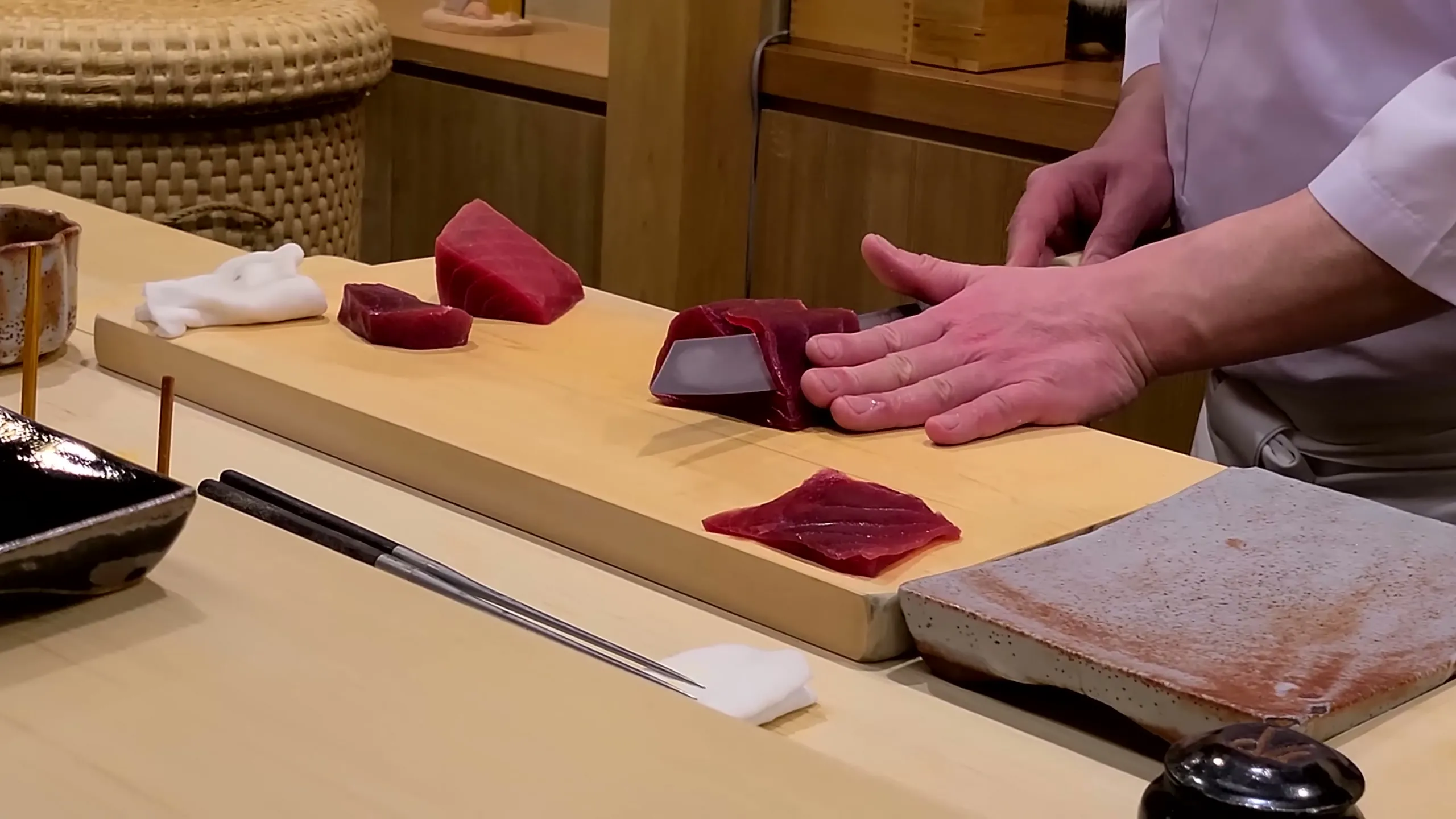
The big block he was slicing was meji maguro, young bluefin. It seemed to be the pride of the day. He showed it off: this is the baby of hon-maguro!
It looked amazing. The smoke was far too strong. I already don’t like smoked sawara when it tastes like sausage, and this was a level above that. If I want that, I’ll eat sausage with rice. Rice with spam is good, right? The meji itself seemed high quality. Smoking it that hard to add flavor ruined it.
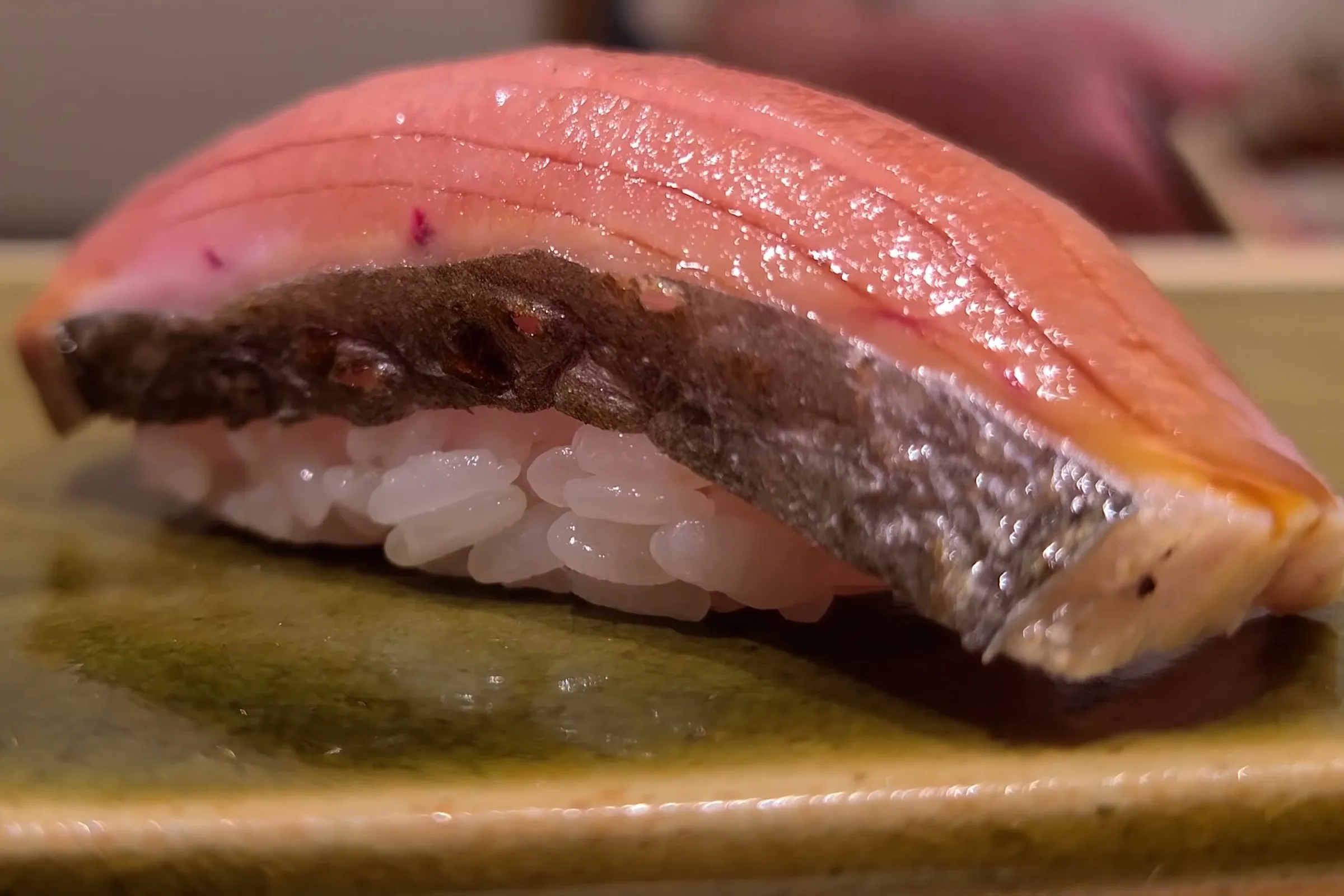
Soft anago, clam broth
The anago was the very soft style. Pretty common now.
The suimono was a shellfish broth too, made with hokkigai. Most places use shijimi. The broth was fine. At this place, things taste better when there’s a clam in them.
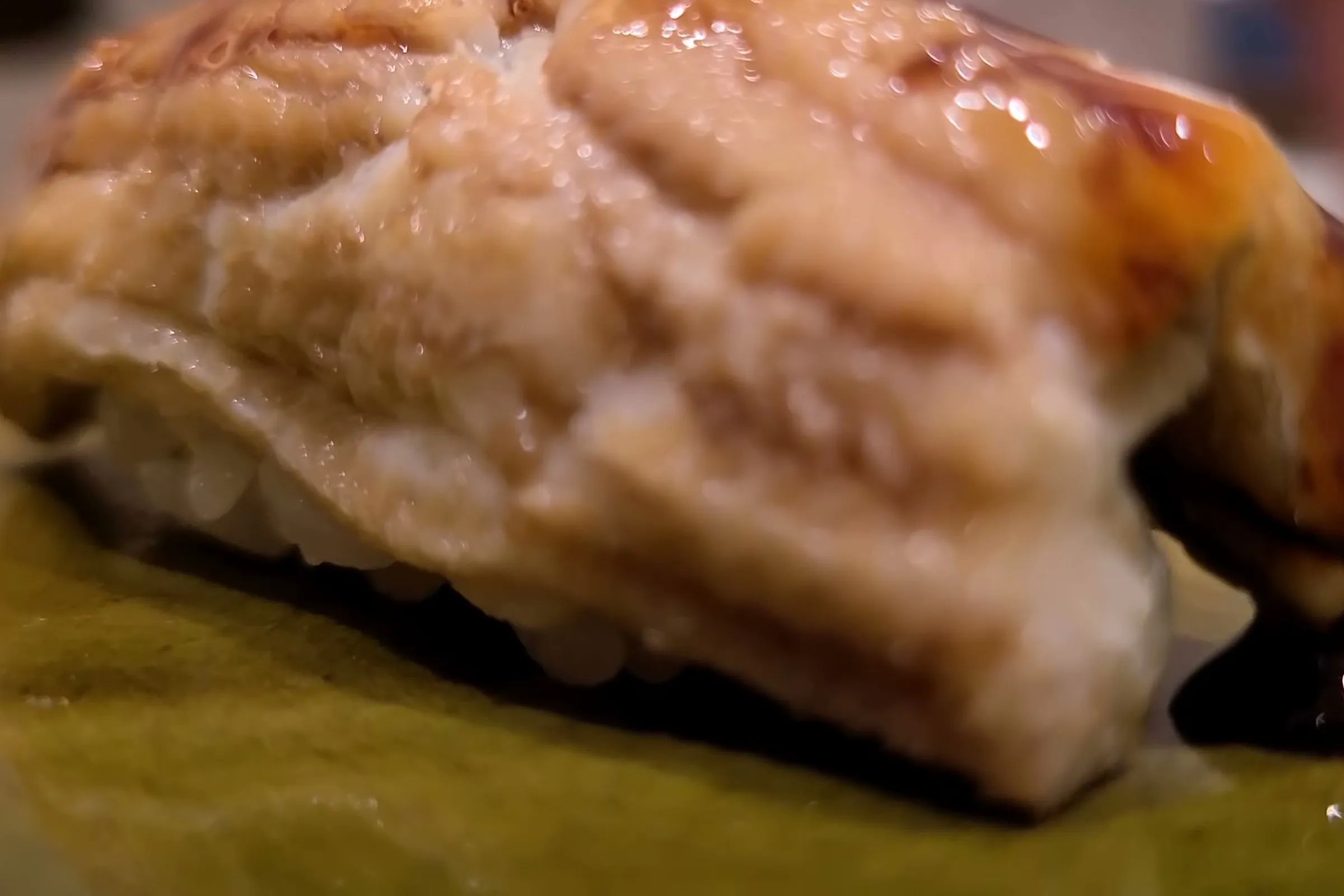
Pound cake tamago, scalding oshibori
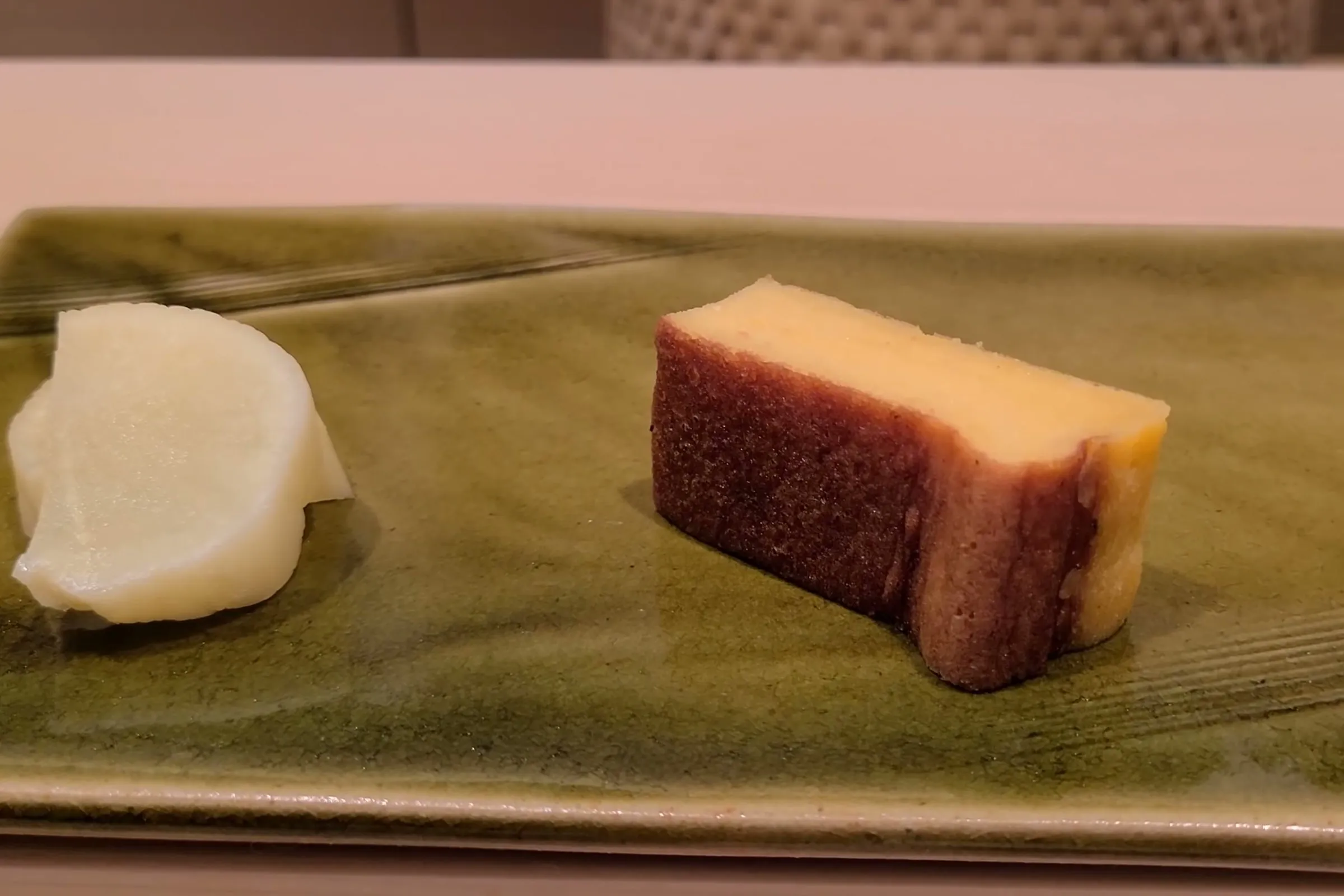
Near the end they asked if I wanted oshinko and gave me two slices of bettarazuke, sweet pickled daikon, to clean my mouth. Then the tamago, the pound cake style Japan loves. Not bad.
The oshibori, the hot towel, was scalding, at the start and again at the end. They warn you it’s hot, and you still jump when you grab it. I nearly knocked over my water. It wasn’t a little steam. It looked like smoke at a fire.
The friendliest of the Jiro line
Booking was very easy back then. I can’t say how much of Jiro’s style lives on here, because I haven’t been to Jiro. One thing I can say: of the Jiro line, this is the friendliest. Very, very kind. And Mizukami-san is seriously handsome.
Back then the Tabelog score was low. When I checked in 2026/10 it was 4.27, with a Bronze award every year from 2023 to 2026 and a spot on the sushi Hyakumeiten list in 2021, 2022 and 2025. My visit was six years ago, and a lot can change in six years.
¥22,000 for the lunch tsumami course
2020/03 video
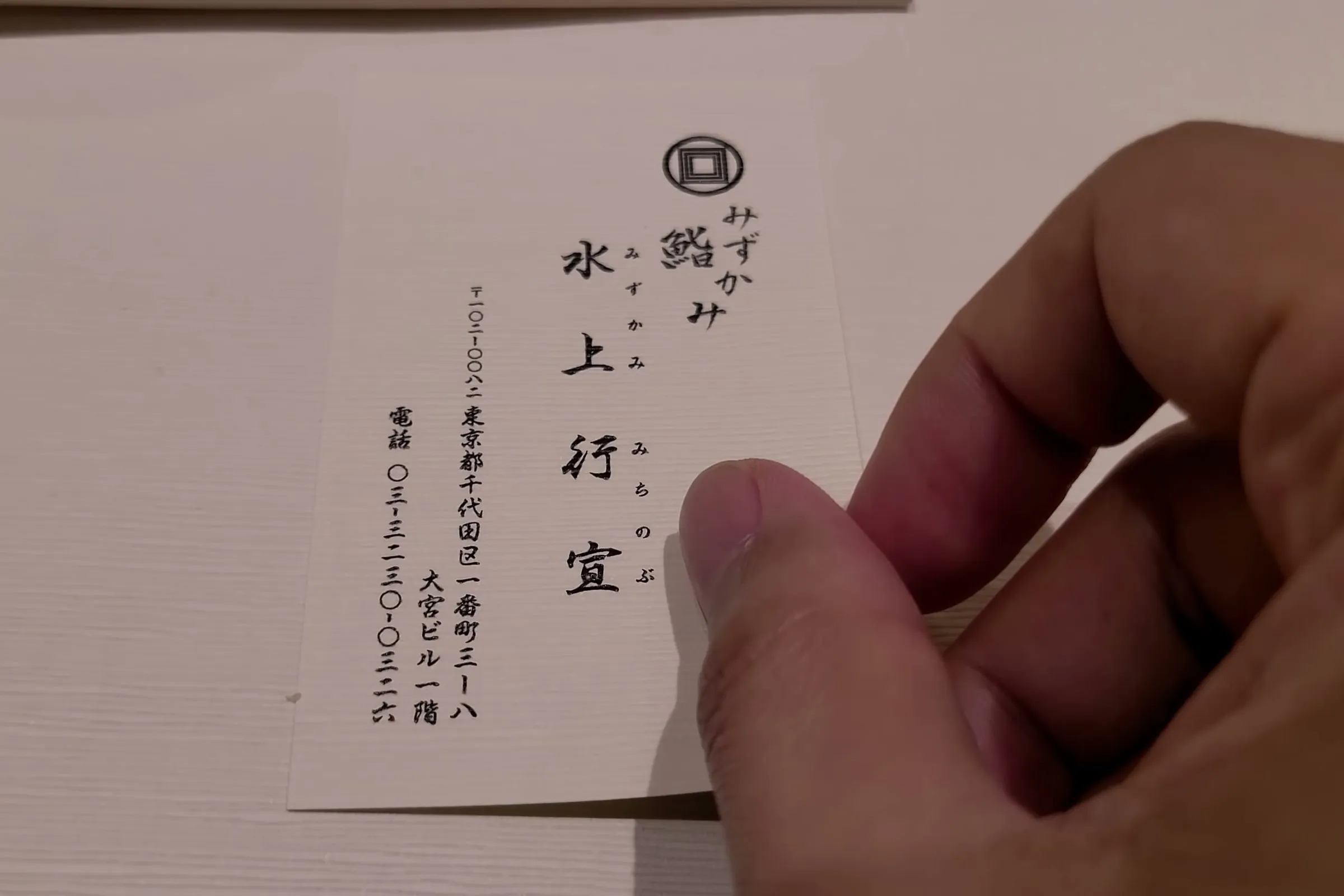
The lunch tsumami course was ¥22,000 (2020/03), about US$200, close to ₩250,000 at the time. That’s where the trouble starts.
When I checked in 2026/10, Tabelog listed lunch nigiri only at ¥22,000, nigiri only for lunch or dinner at ¥29,000, and lunch tsumami and nigiri at ¥30,000, with a dinner budget of ¥40,000 to ¥49,999. On TABLEALL the courses ran from ¥31,000 to ¥48,500, its ¥8,000 booking fee included.
Worth it?
On taste alone, it was a decent sushi meal by Seoul standards. If I’d eaten it in Seoul without thinking about the price, I’d have walked out happy enough. But I flew to Japan for this, and it cost nearly ₩250,000. A big letdown, and it was the first sushi of that trip.
The rice wasn’t bad and the ingredients weren’t bad. It just wasn’t good enough to squeeze into a short trip, or to make that money feel well spent. The end.
How to book
How I booked
In 2020/03 booking was very easy. I didn’t ask for Mizukami-san by name, and even with five guests he split the counter with another chef, so my nigiri came from the other chef.
- Tabelog online booking
Tabelog sends you to its own online booking. When I checked: lunch nigiri only ¥22,000, nigiri only for lunch or dinner ¥29,000, lunch tsumami and nigiri ¥30,000, and a fourth course I couldn’t see. Lunch from 12:00, dinner at 17:30 and 19:30, closed Tuesdays and Wednesdays. 8 seats. Phone 03-3230-0326. Visa, JCB, Amex and Diners, no e-money or QR payments. Smart casual. No perfume. If they turn you away for it, it counts as a same-day cancellation.
- TABLEALL
A booking service for visitors to Japan. When I checked it listed four courses from ¥31,000 to ¥48,500, each with an ¥8,000 booking fee folded in, and said each of the two chefs looks after four of the eight seats.
Checked 2026/10. Booking rules change, so look at the official page before you go.
Where it is
- Address
- Omiya Building 1F, 3-8 Ichibancho, Chiyoda-ku, Tokyo東京都千代田区一番町3-8 大宮ビル 1F
- Nearest station
- Hanzomon, about 310 m
Plan the Tokyo trip
The boring bits I’d sort before flying, so the eating days stay free.
- Hotels in Tokyo*
Pick the room by where you eat, not by the sights. After a long dinner, a short ride back is the real luxury. This place is in Hanzomon, Tokyo.
- Japan eSIM*
Data from the moment you land, no counter and no SIM swap. Set it up the night before.
- Keisei Skyliner from Narita*
Narita to Ueno in about 40 minutes. Buy it ahead and walk straight to the platform.
- Haneda airport limousine bus*
Landing at Haneda instead? The limousine bus drops you at the big hotels and stations with no transfers.
- Tsukiji Outer Market food tour*
A market morning with someone who knows which stalls are worth the line.
- Sushi-making class at Tsukiji*
Shape nigiri yourself once and the counter makes a lot more sense.
Links marked * are affiliate links. If you book through them I may earn a small commission, and you pay the same. How it works
Guides that mention this place
The best sushi in Tokyo, ranked by someone who paid for it.
Eight counters from Sugita down, what I paid at each, and how to get a seat.
Ankimo, shirako, zuke. The words nobody explains at the counter.
What ankimo, shirako, ikura, zuke and 12 more Japanese menu words mean, and how each one tastes.
Every Tokyo sushi booking route, compared by someone who paid the fees.
omakase.in, Tabelog, TableCheck, TABLEALL, Pocket Concierge, byFood and the hotel desk, side by side.
More places I have eaten at
All of Tokyo →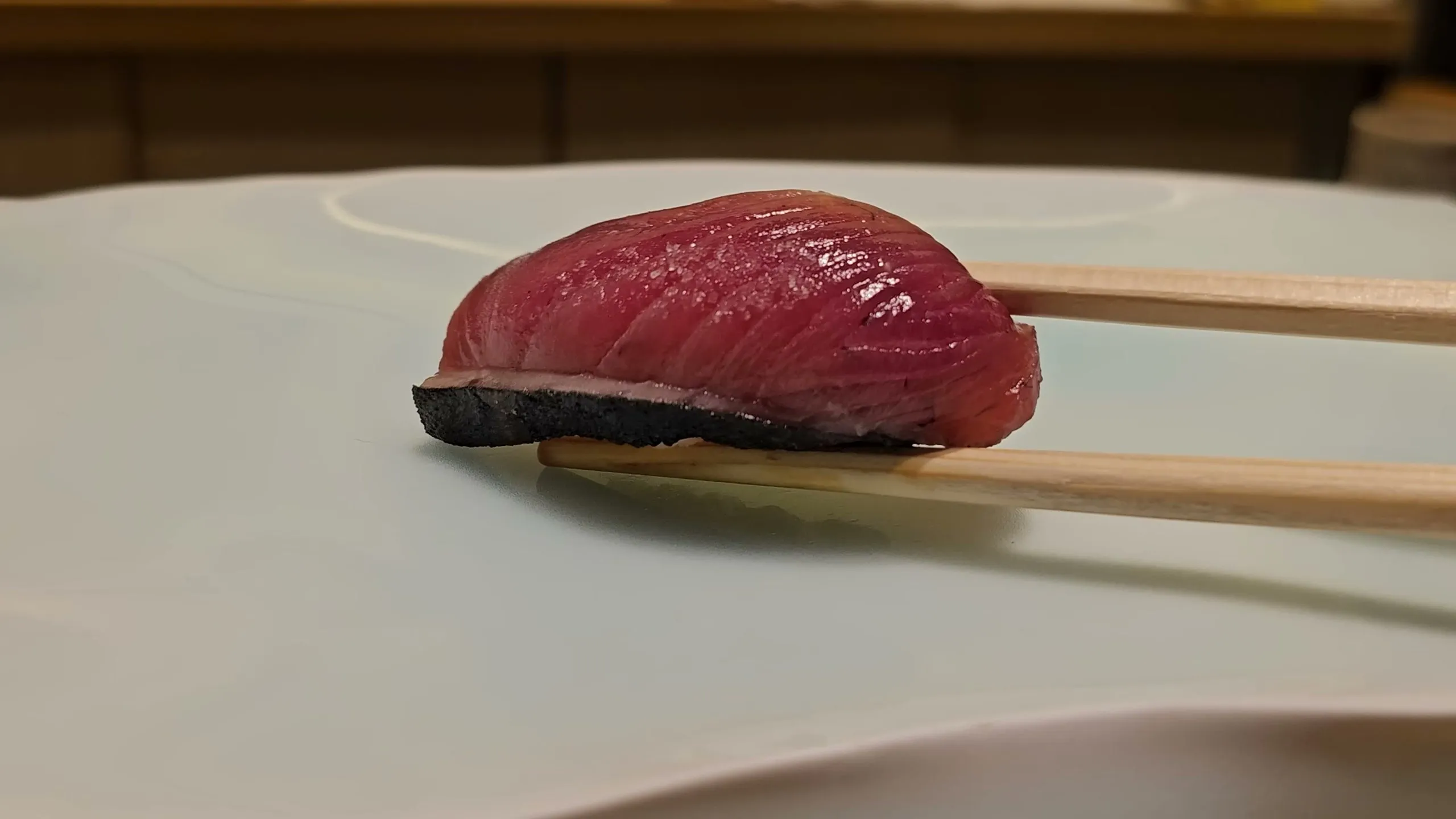 Hibiya, Tokyo
Sushi Namba
Cotton-candy octopus, tiny nigiri, a menu with temperatures.
¥45,000 2023/11 video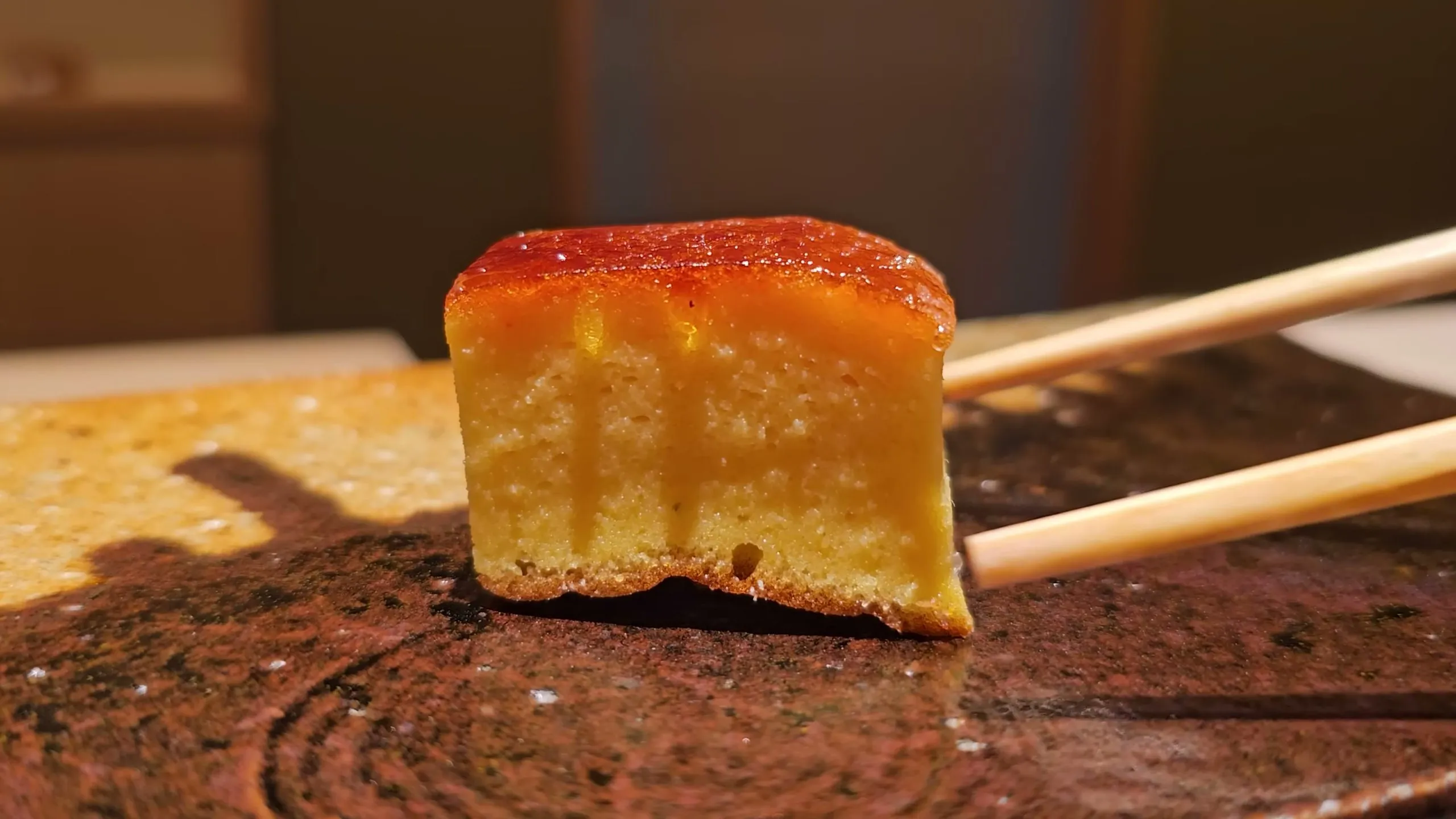 Akasaka, Tokyo
Sushi Miura
Kikunoi soup, Namba sushi, half the price. Then a star.
¥25,000 2023/12 video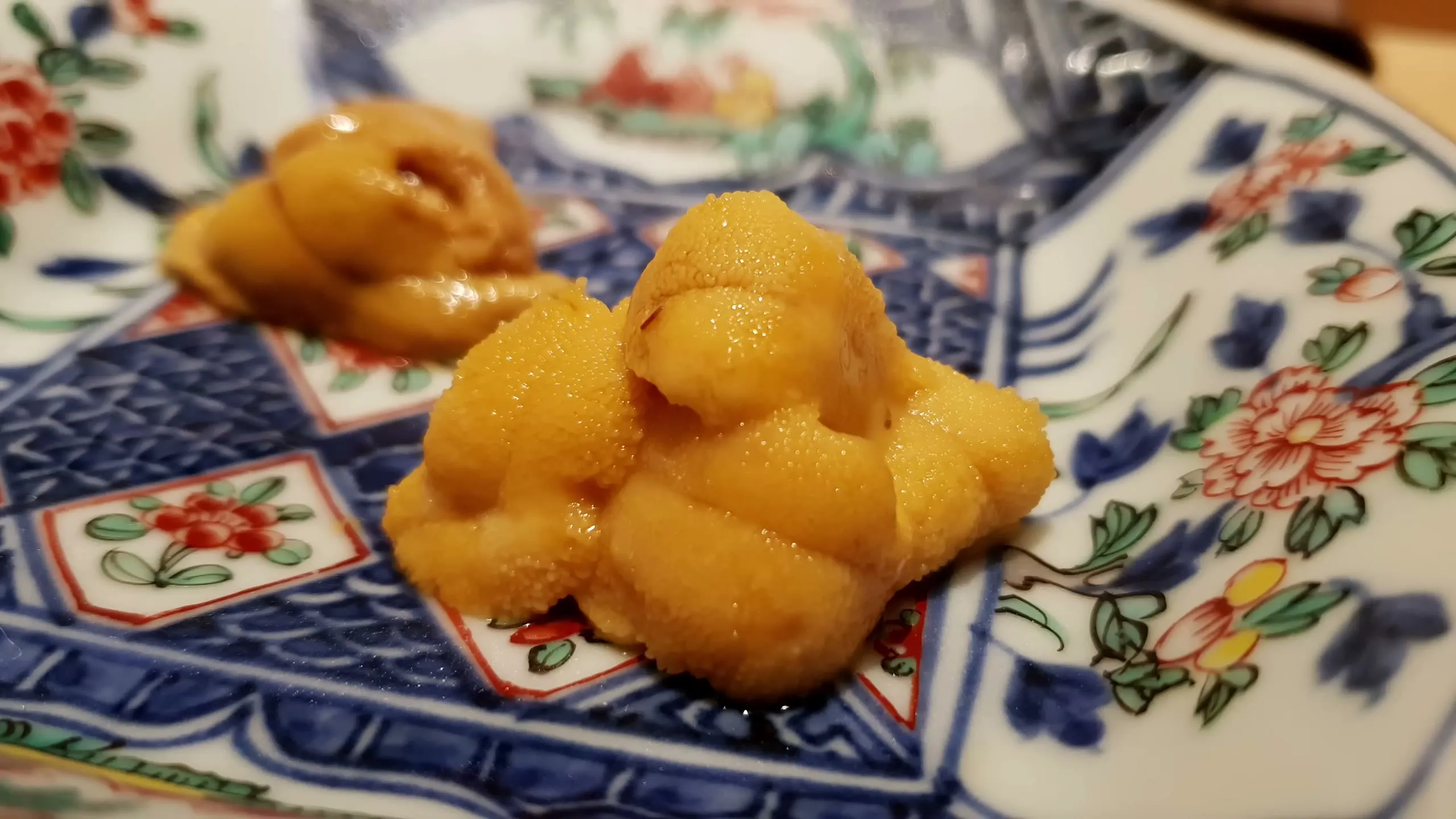 Roppongi, Tokyo
Sushi Saito
Every title in sushi, and not one piece I wanted again.
¥28,080 2020/04 videoSources
- 鮨 みずかみ Tabelog
- Sushi Mizukami TABLEALL
- Sushi Mizutani Wikipedia