I walked into Ginza Kyubey with no booking
Ginza Kyubey is the tall, narrow building near Shimbashi where every floor is the same sushi shop. It opened in 1935, it came up with gunkan maki, and in Korea, where I’m from, it’s the name in the story of how real sushi counters got started. Tourists know it too, and the upside is you can get lunch without a reservation. I flew in that morning, put my name on the list and had the cheapest nigiri lunch. The tuna was cold, the rice was cold, and the shellfish was far better than the price.
monster gourmetFrom my 2023/10 video
- My share
- ¥8,800
- about US$59, cheapest lunch nigiri + a drink, tax in, 2023/10 video
- Highlight
- Hotate and kuruma ebi
- Skip
- Hoping for great tuna
- Video
- 12:09
- 2023/10
- Where
- Ginza, Tokyo
- Shimbashi, 5 minutes from the JR Ginza exit or Ginza Line exit 3
My name on a list at 11:00
This place is so famous it’s basically a tourist restaurant. Ginza Kyubey. What sets it apart is that you can eat here without a booking. I took a morning flight to Tokyo and went straight from the airport.
The lunch prices on the board out front are pretty reasonable and no booking is needed, so I went to grab a meal. Around 11:00 a staff member came out and wrote names down on a waiting list. I was told to come back around 12:30.
Booked guests go in first, and you only get a seat when people leave, so the timing jumps around. I came back at 12:30 and sat down close to 13:00.
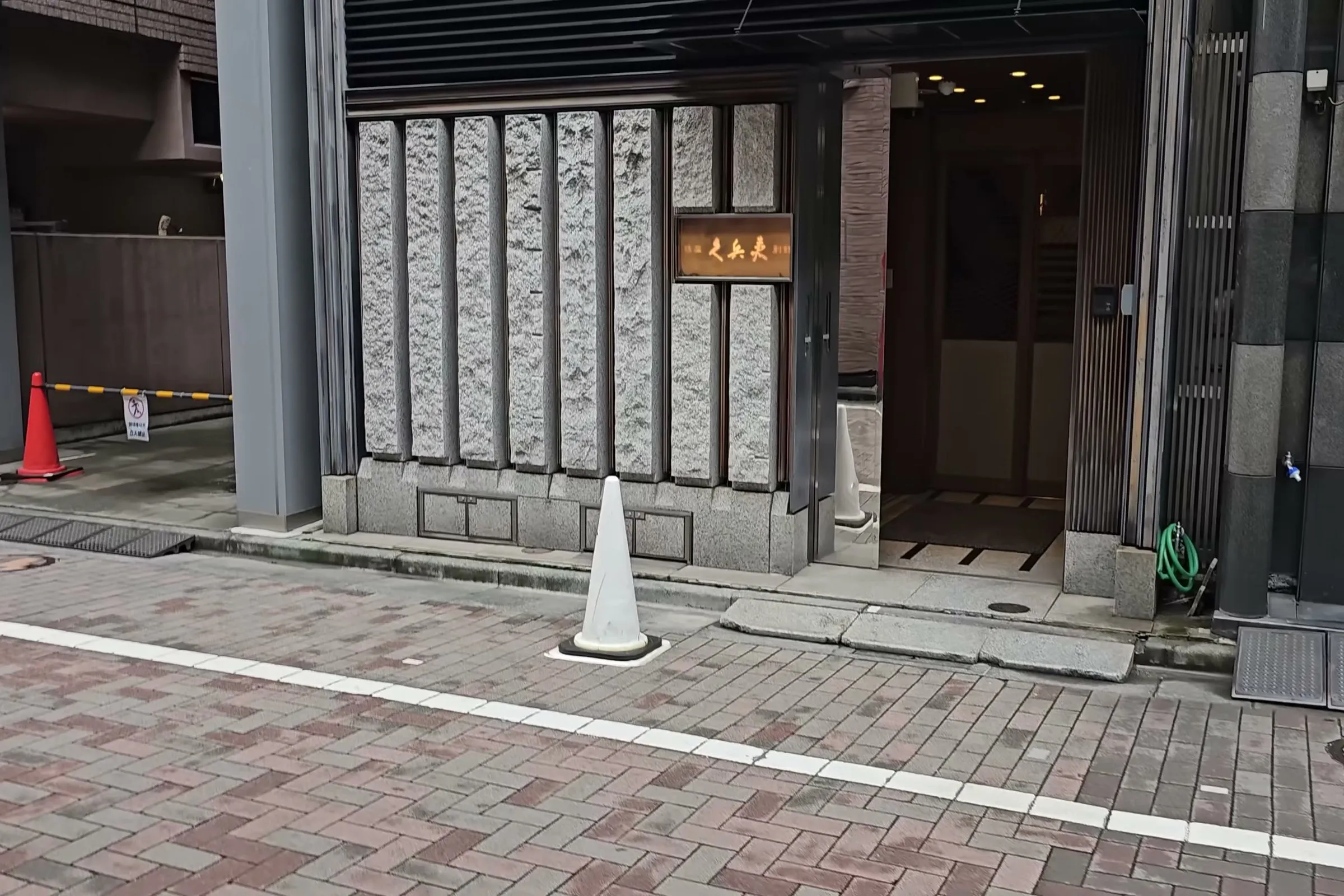
Every floor is Kyubey
The building is narrow and really tall, and the whole thing is the sushi shop. Walk a little further and there’s an annex right behind it. It’s practically a big company.
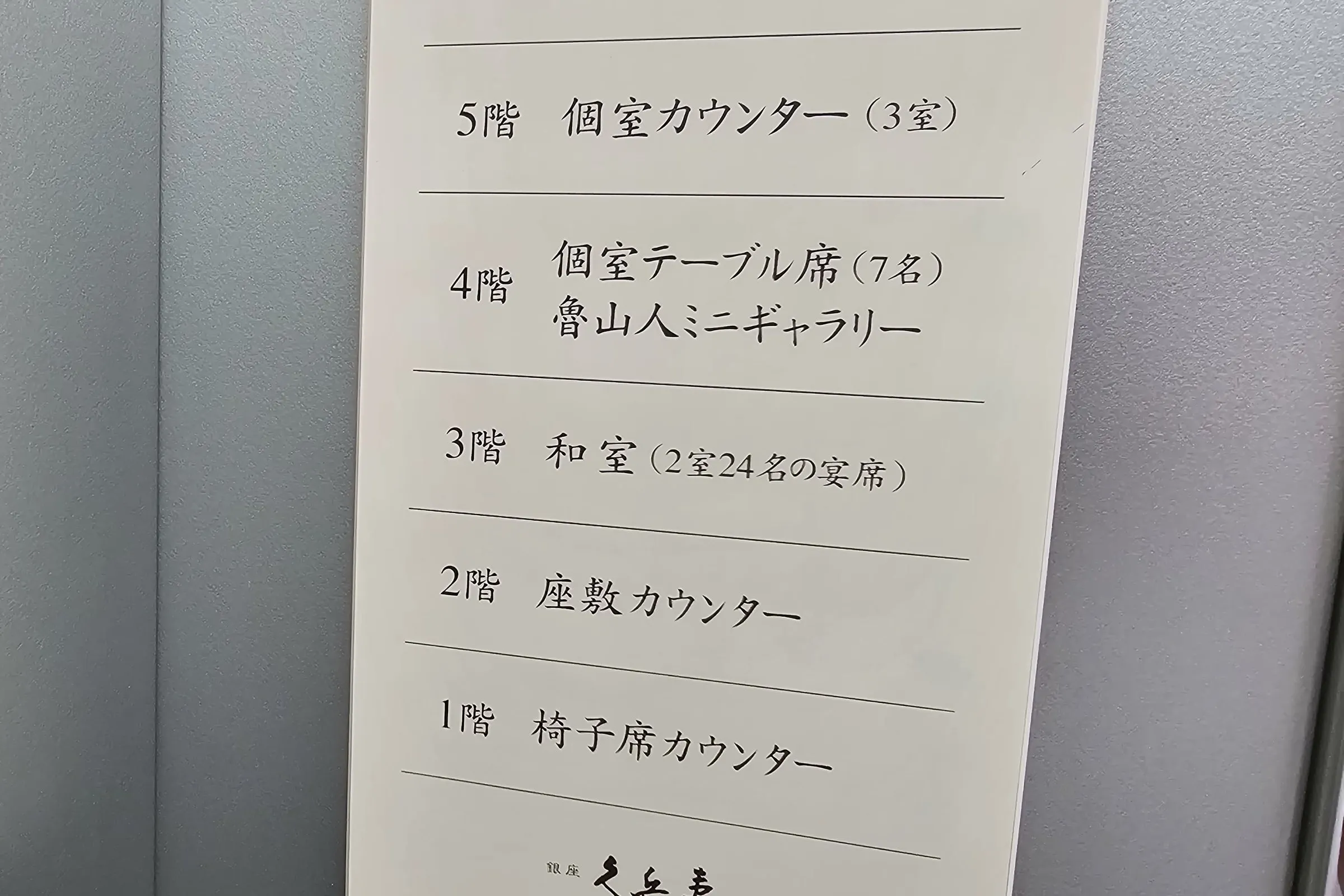
The sign by the door lists the floors. Counter seats with chairs on 1F, a zashiki counter where you sit on the floor on 2F, Japanese rooms for banquets on 3F, a private table room and a mini gallery of Rosanjin pottery on 4F, and private counters on 5F. Mine was on the 5th.
And Ginza isn’t the only one. Kyubey has branches in hotels around Tokyo, even one in Osaka. Serious money behind it.
The cheapest lunch on the board
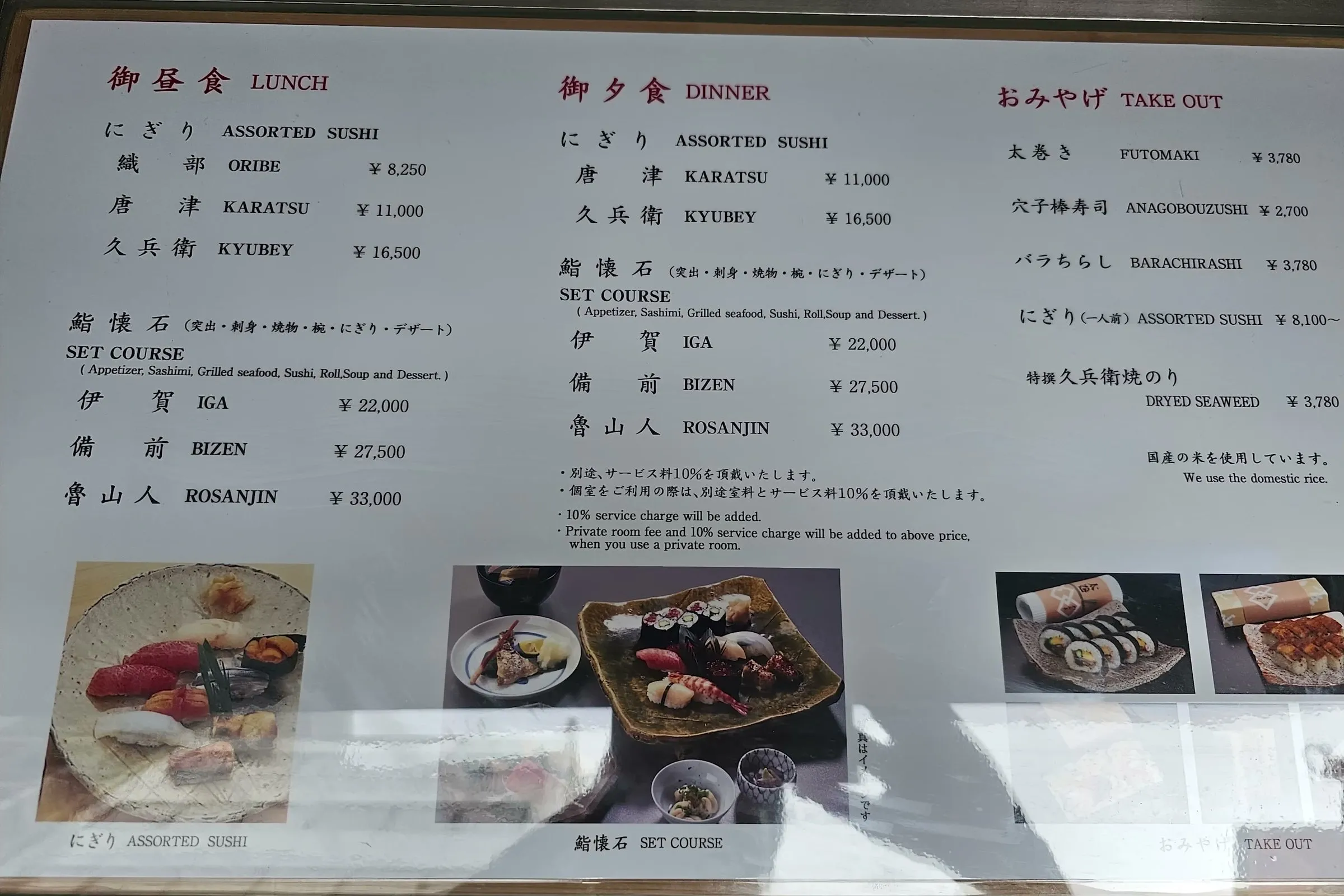
On the board out front, the cheapest nigiri lunch, Oribe, was ¥8,250, and the Kyubey nigiri lunch was ¥16,500 (2023/10). I only wanted a meal, so I went with the shortest one.
It’s a nigiri course, so no separate small dishes come out, only a wakame salad to start. Kyubey goes back to 1935, so it’s close to a hundred years old, and the chef who made mine looked like he’d been at it a long time too.
When I checked the official site in 2026/10, Oribe was still ¥8,250, for 10 nigiri, a roll and soup.
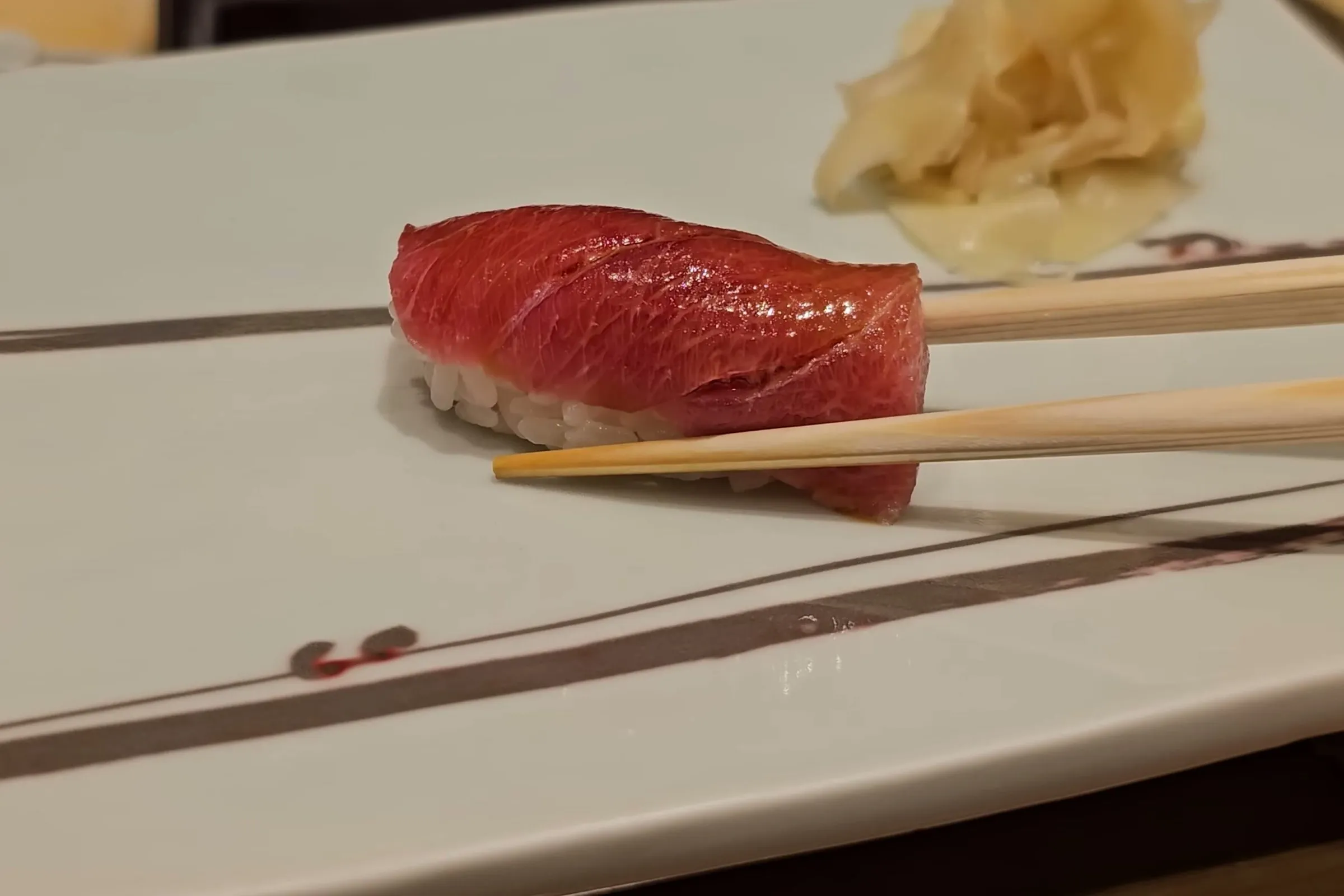
Cold tuna from the first piece
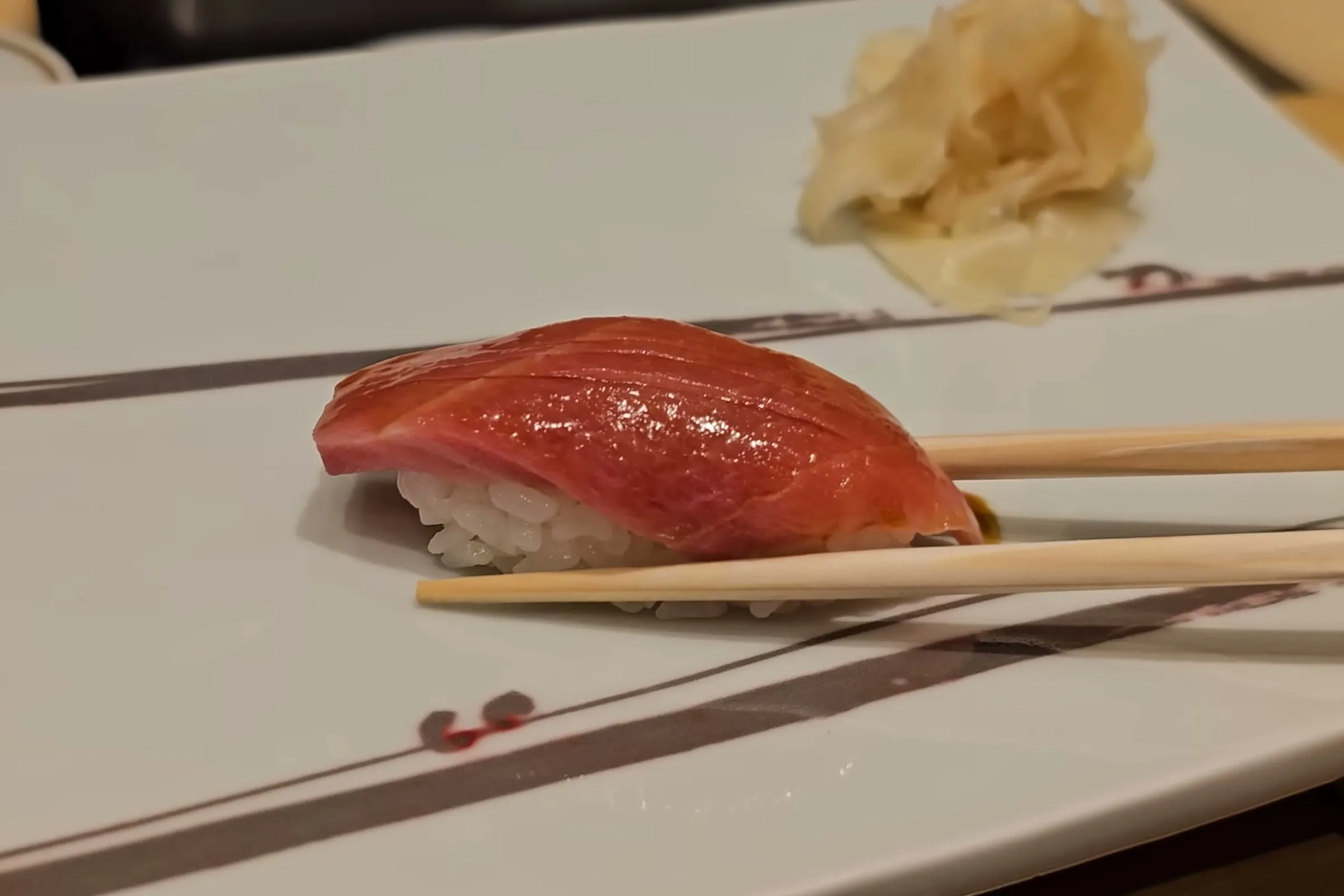
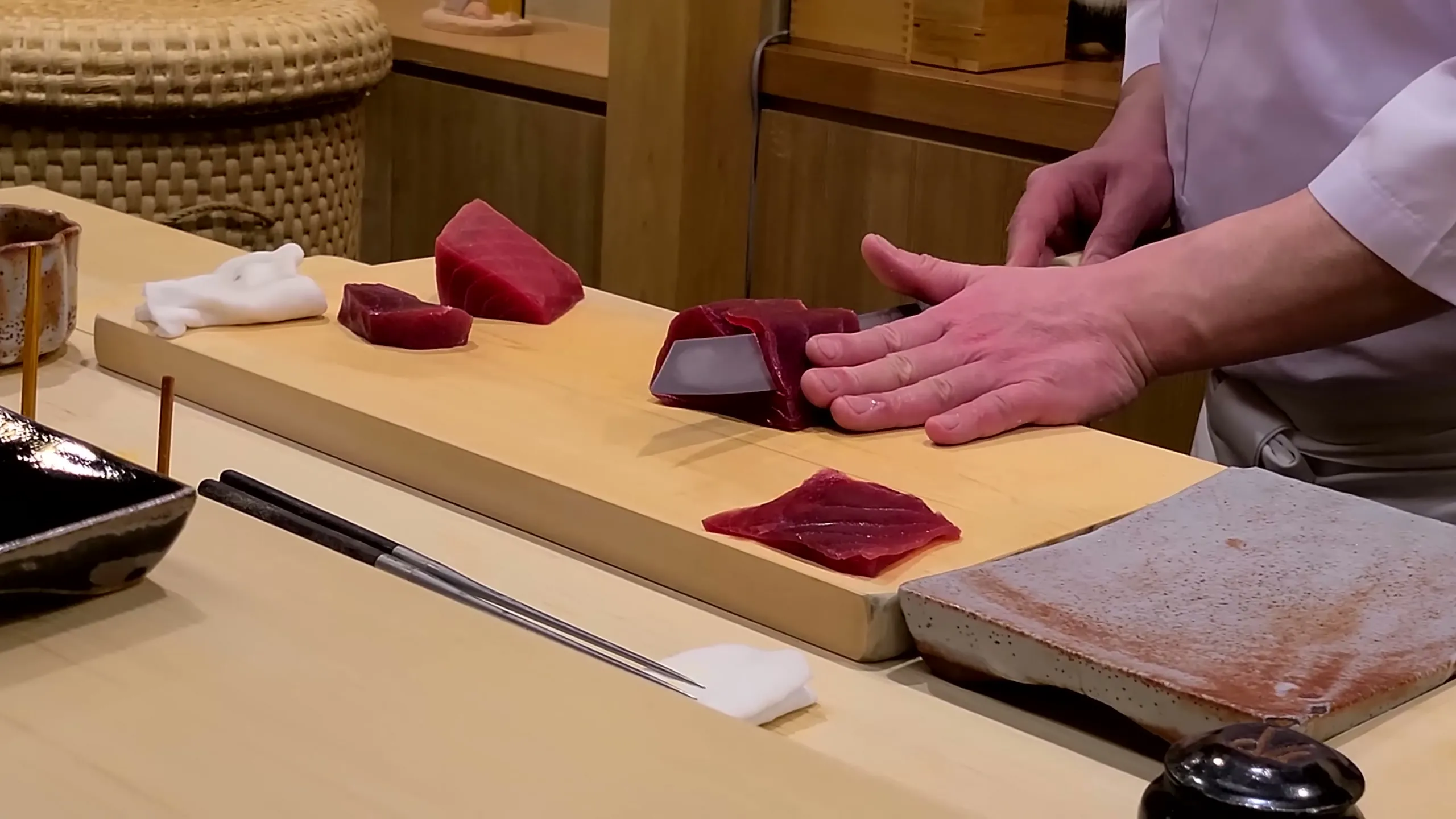
He started the nigiri right away, and the first piece was chutoro, medium-fatty tuna. I’ll admit I had hopes. Even at the low end, this is a huge operation with money behind it, so I figured they’d bring in good tuna.
It all fell apart from the first piece. Sure, expecting tuna at this price is on me. The aroma was fine and so was the acidity. It was the cold. Back in the day, at old-school Japanese restaurants in Korea, the tuna was often not fully thawed, and you’d bite into something crunchy like thin ice. It was almost that cold.
Then again, the price is low and the place is old. Sushi in Korea used to be like that a long time ago too, so I put it down to age.
The scallop is something else
The hotate, the scallop, on the other hand, was really high quality. You don’t get shellfish this good at this price, at least not in Korea.
That held for the whole meal. Shellfish and crustaceans beat the fish here, and for the price they’re way better than they need to be.
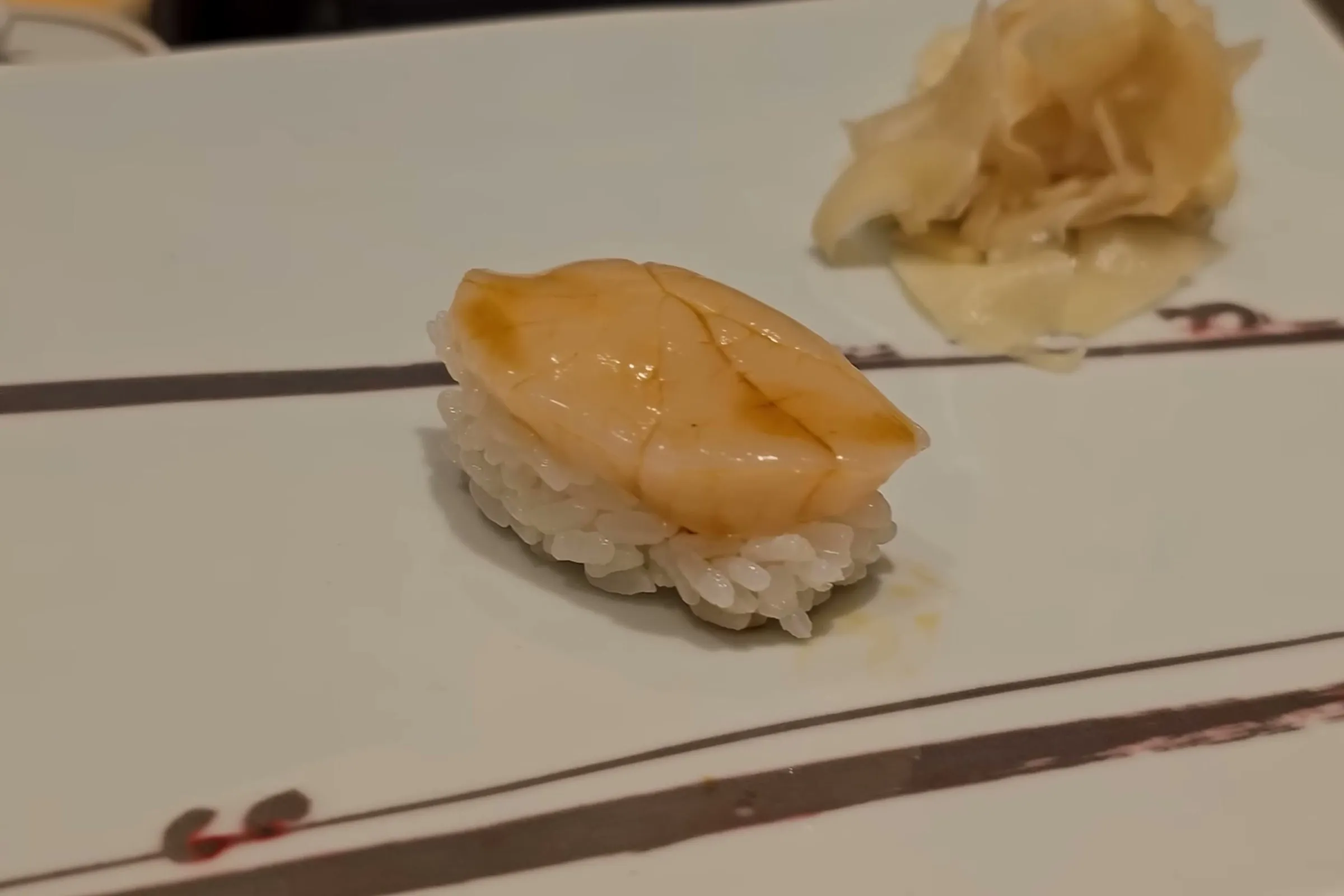
Why Kyubey was a big name in Korea
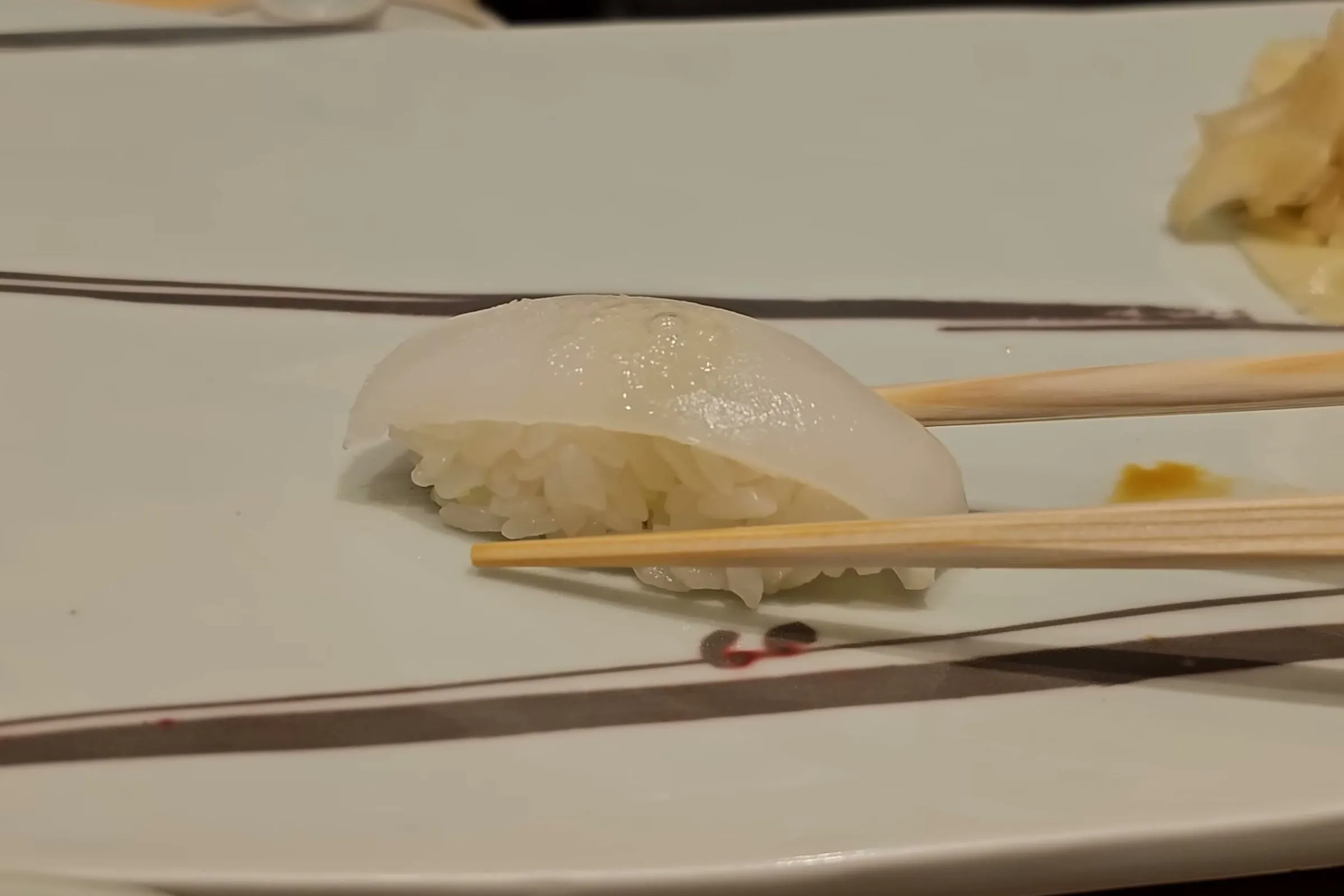
When he started cutting the aori ika, bigfin reef squid, I got to thinking about the rice. To explain why I’d hoped for something even at this price, I have to explain why Kyubey used to be so famous in Korea.
Whenever people tell how real omakase-style sushi got started in Korea, it comes down to two Seoul hotels, the Shilla and the Westin Chosun. The Shilla’s Ariake partnered with Kiyota in Ginza. The Chosun came a bit later. Its Sushi Cho used to be in the basement, and when it was remodeled and moved up to the top floor, it signed a technical partnership with Ginza Kyubey, which had one Michelin star then. It has none now. That’s when Sushi Cho took off.
Before that, and for a long time after at every hotel but those two, a sushi place in Korea served the old susa-jip lineup. Vegetable sticks with ssamjang, flounder sashimi with gold leaf on top, al-bap with fish roe, grilled fish heads. Sushi Cho and Ariake were the two that started serving sushi fully the Japanese way.
Back then I was a Sushi Cho fan. More exactly, a fan of chef Lee Jin-wook. I’ve loved his sushi ever since, and that’s why I still go to his place, Sushi In, as much as I do.
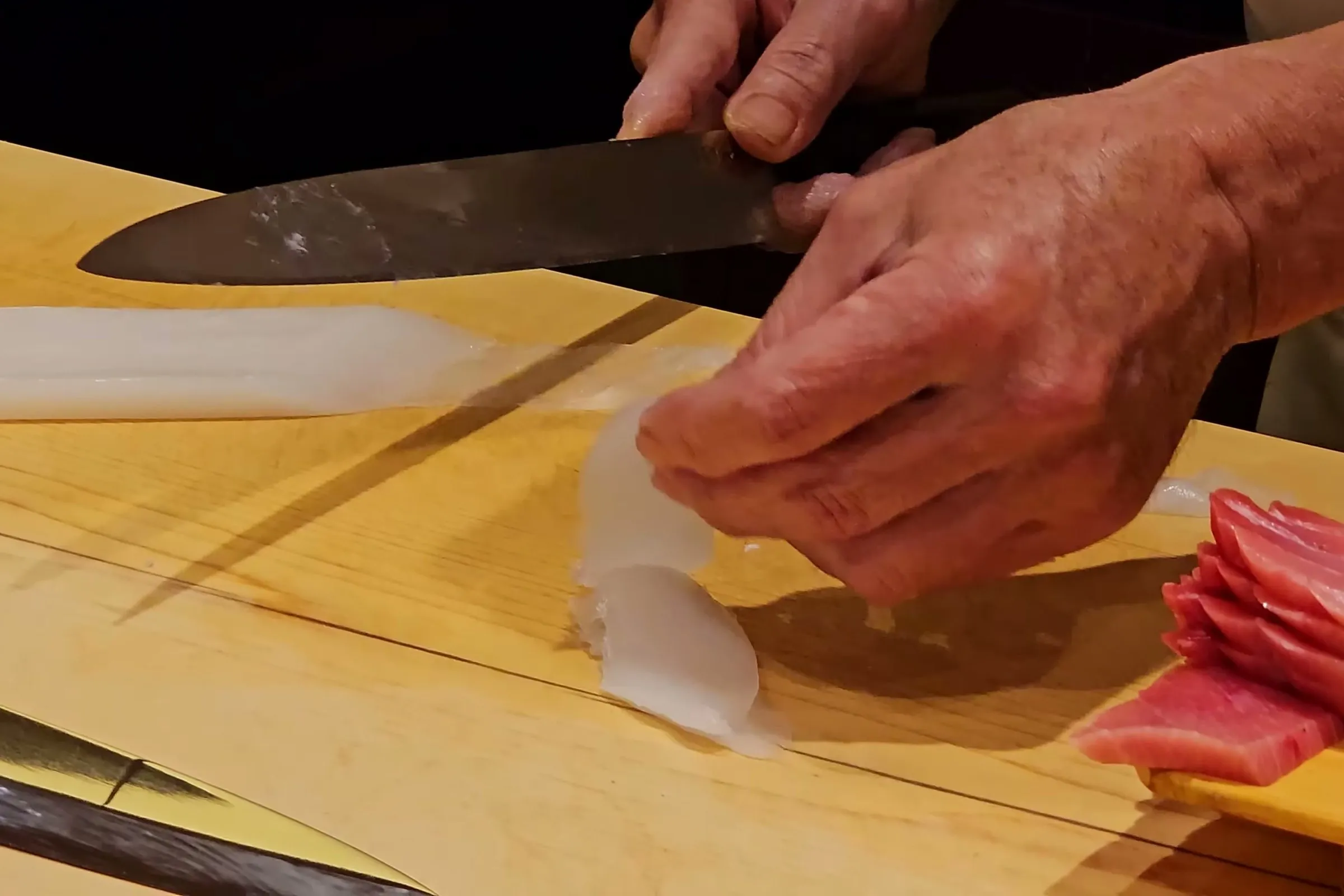
The vinegar that went to Seoul
Sushi Cho has since ended the tie with Kyubey and partnered with Sushi Yoshitake instead. Chef Lee had already gone independent by then.
What I loved about the old Sushi Cho was the shari, the rice. During the partnership, the vinegar for Sushi Cho’s rice came from Kyubey, and the export to Korea was controlled so only Sushi Cho could get it. A sushi shop this big can apparently pull that off. But Imada-san, Kyubey’s owner, looks after chef Lee almost like a son, so Sushi In got to use it too.
Add better rice, and the shari at Sushi In actually got better. Outside Sushi In, you can’t taste it anywhere in Korea. When I rank Sushi In near the top even counting Japan, the rice is most of the reason. So at Kyubey, low price or not, I was hoping for shari like that. That DNA started here.
Uni with no nori? At Kyubey?
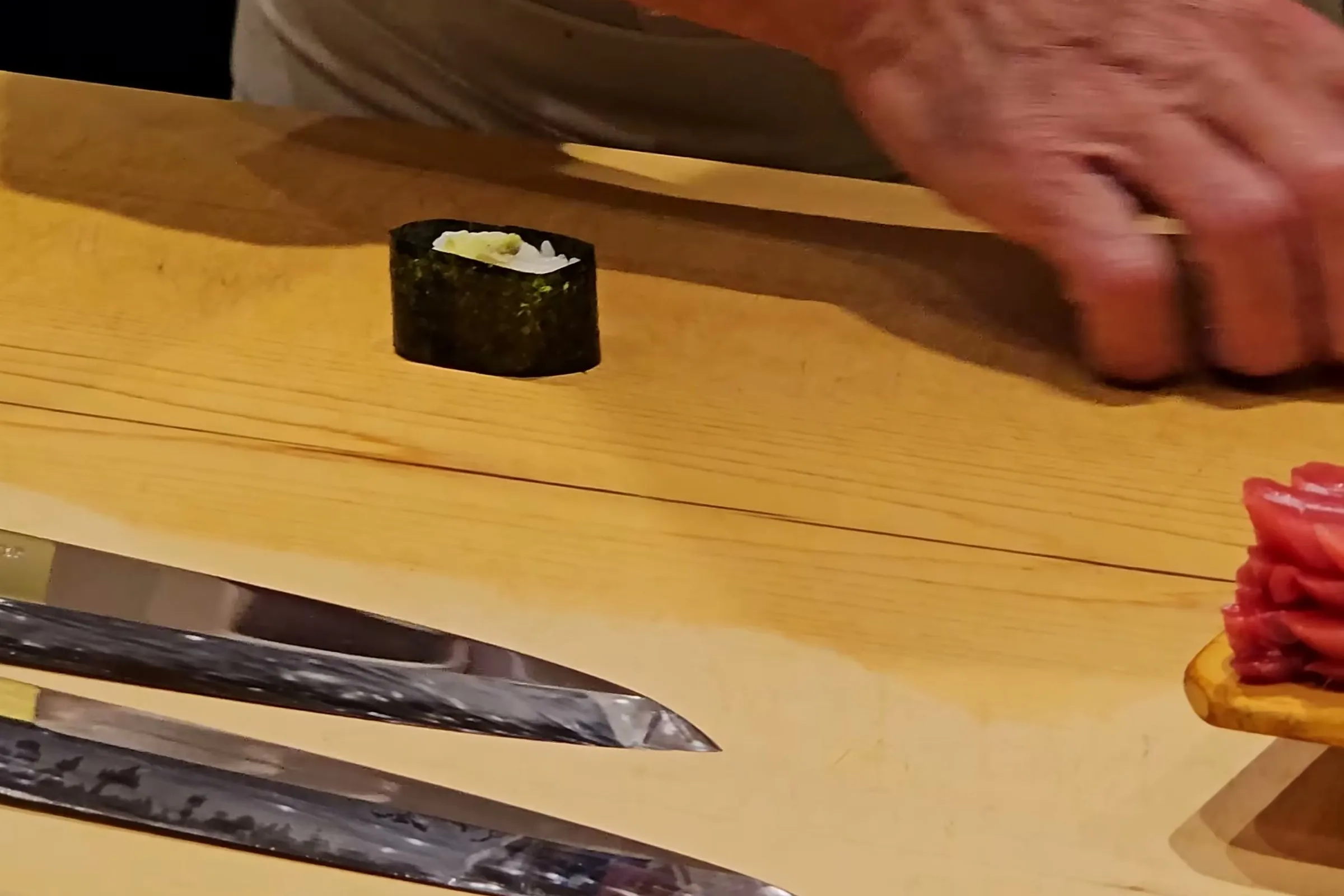
This ties back to Kyubey too. He started on my uni, sea urchin, and I thought, wait, no nori? Anywhere else, fine. Not at Kyubey.
Turns out he’d just forgotten, and he made it as a gunkan, the way you’d expect. The man who started the shop, the father of Imada-san, the owner now, is the one who came up with gunkan maki in the first place. A band of nori around the rice so loose toppings like uni and ikura stay on. The shape isn’t even that old.
So for a second I was shocked. Kyubey, not making a gunkan? That’s not allowed.
Cold rice, soft rice
Back to the rice. It was cold. Most of the old sushi shops in Japan are like this. The shari is really cold, and the texture is a little soft too.
So no, it isn’t Sushi In’s rice, and you shouldn’t come expecting that.
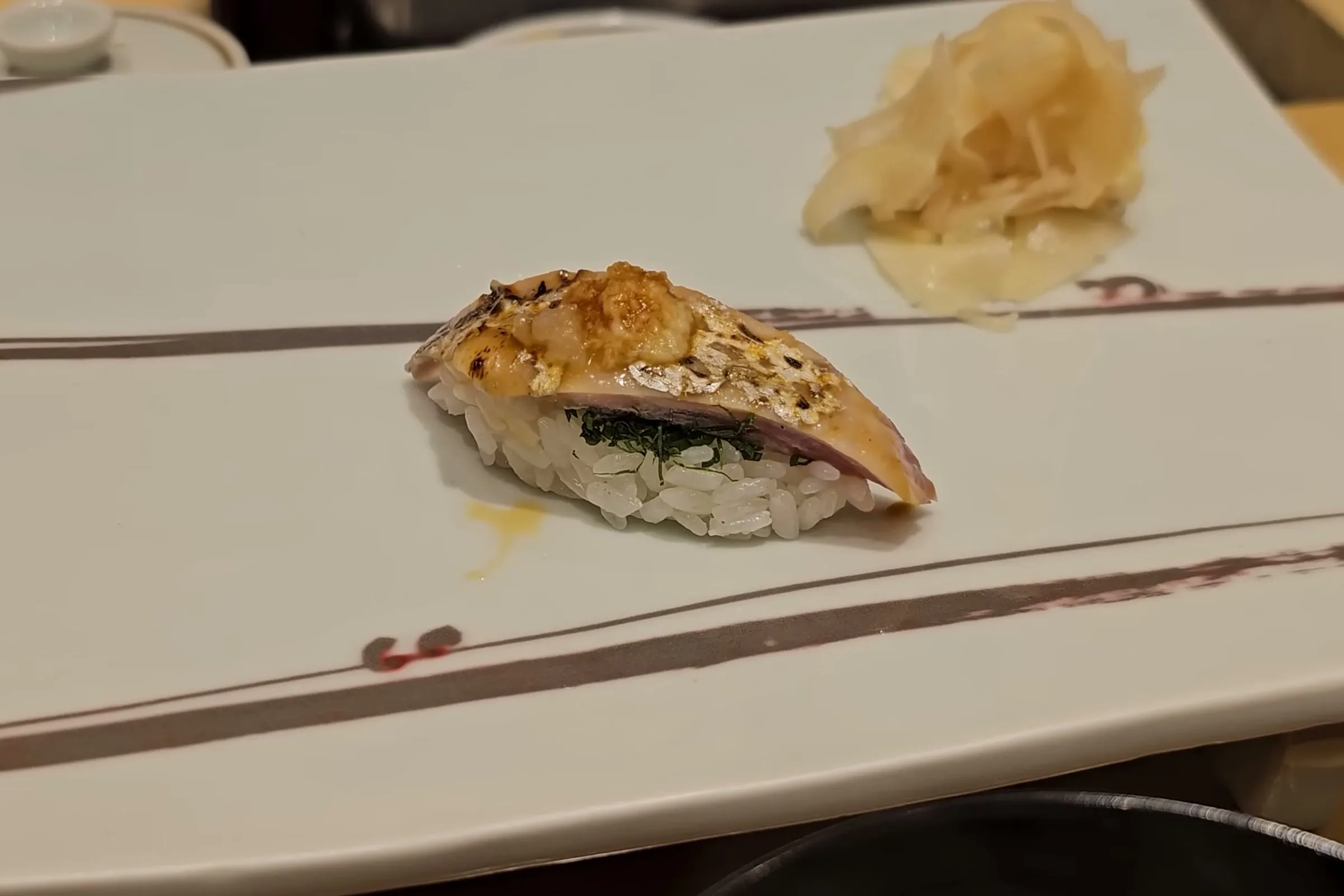
Is garlic okay?
This one might look like iwashi, sardine, so let me explain. It’s katsuo, skipjack, from near the end of the belly. He spread garlic on top, and before he did, he asked if garlic was okay.
For Koreans garlic is a given. Apparently some Japanese people don’t like it.
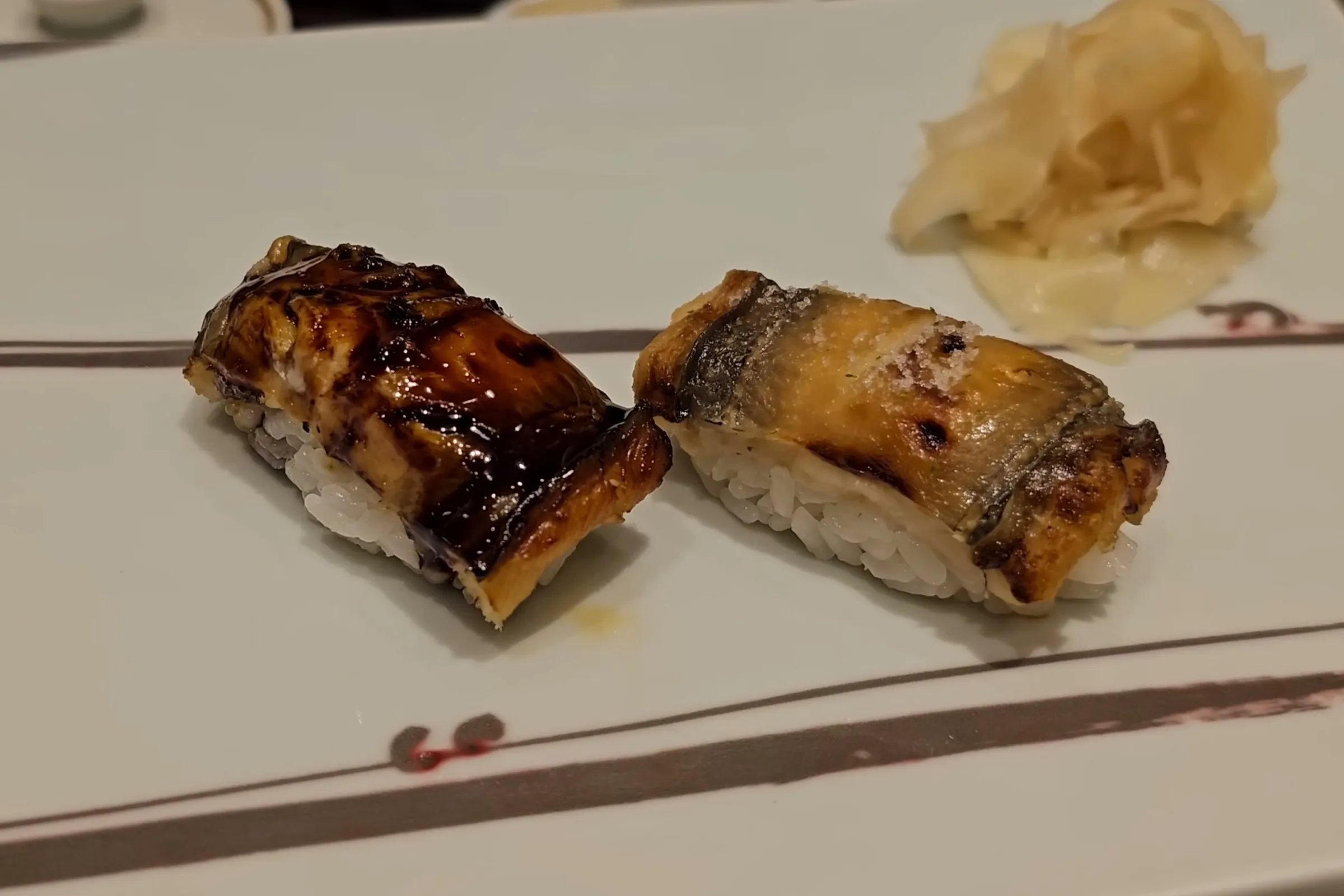
Anago both ways
The anago, sea eel, he didn’t ask about. He just gave me both, one with salt and one with tsume, the sweet sauce.
At this point you might think, that’s it? I thought so too. I’d ordered the cheapest course on purpose because the place scared me a little, and I was starting to think I’d eat light. Lucky me, plenty more came after.
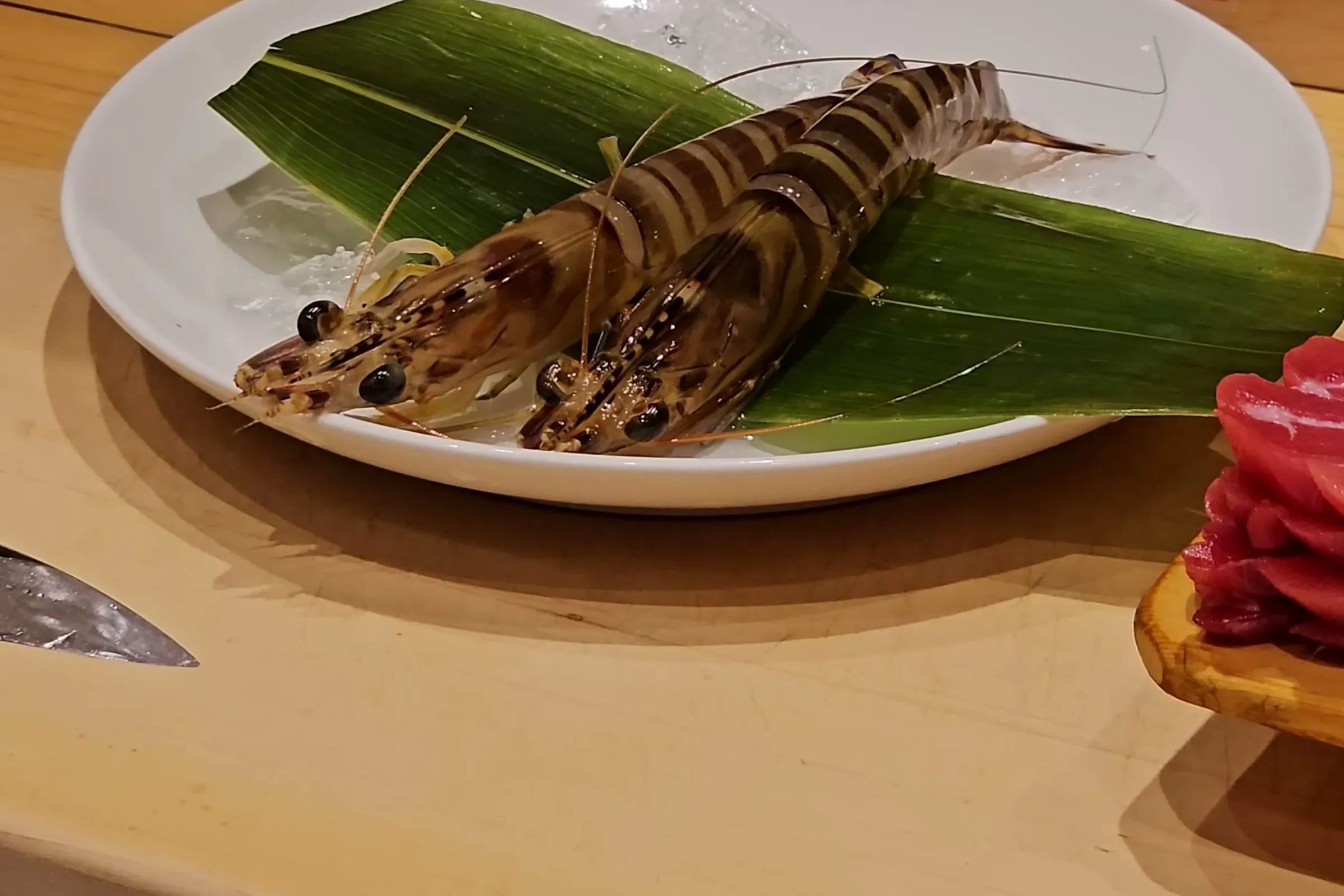
The prawn escape show
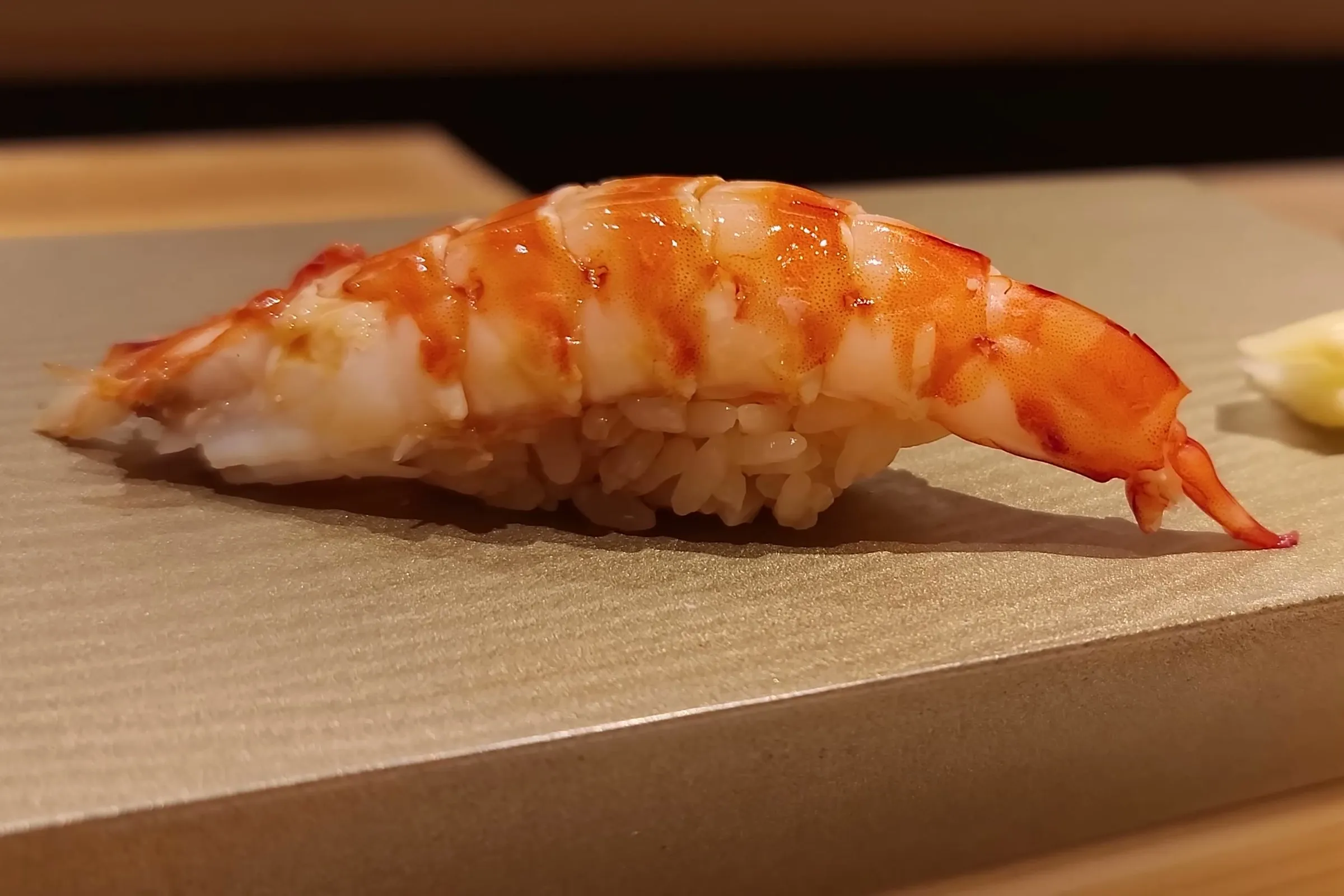
Portions are generous. He showed me the kuruma ebi alive first, and they put on a little escape show. Then he asked, raw or cooked? I like them cooked, so cooked it was, and it was good.
Same as the scallop. At Kyubey, shellfish and crustaceans are way better than the price.
One roll, three fillings
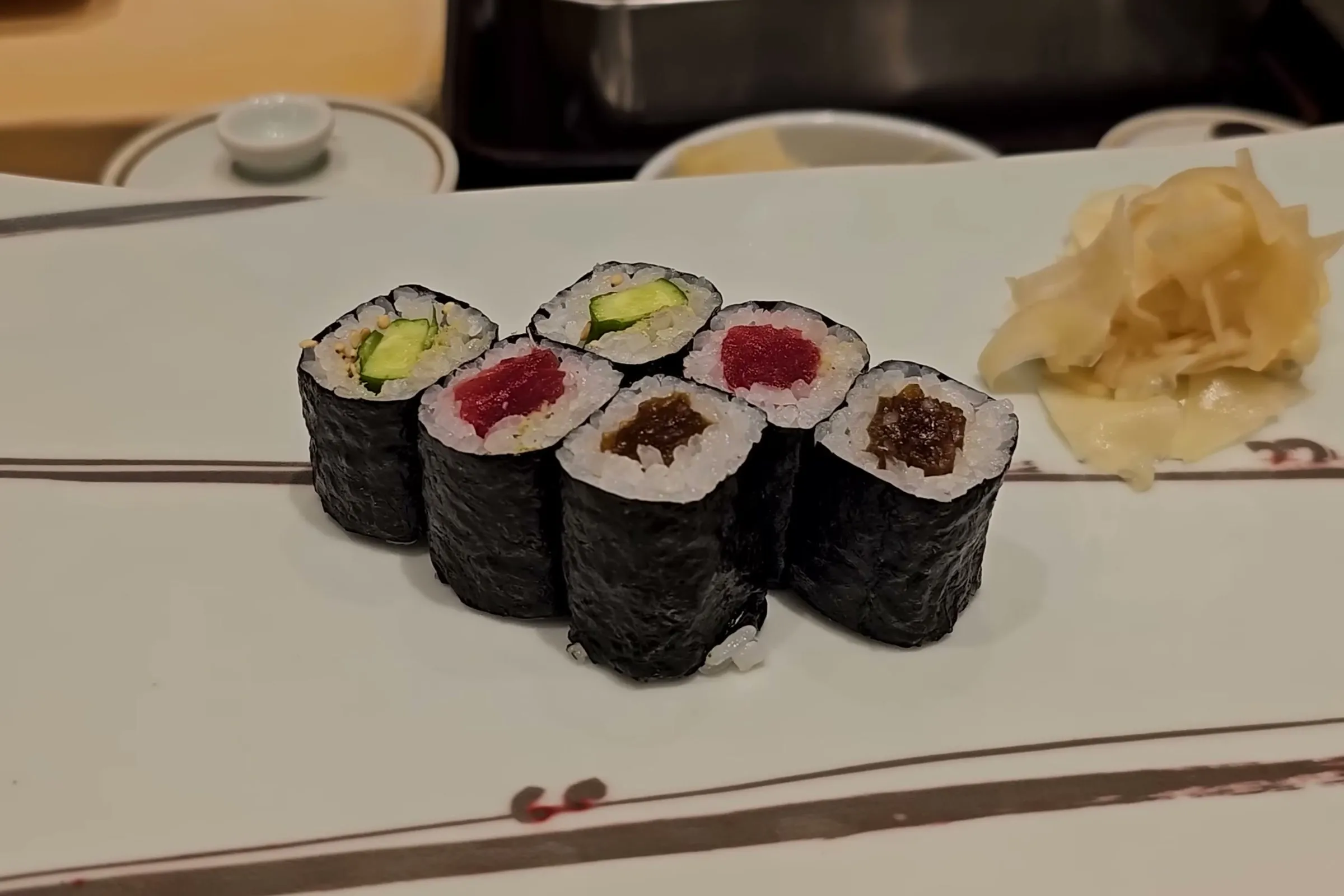
Near the end comes hosomaki, the thin roll that always shows up at a classic place. It’s how they fill you up at the end. I filmed the rolling for a while.
Everyone gets one roll, and the filling is classic too. A third tuna, a third cucumber, a third kanpyo, dried gourd. At a sushiya, if you order tekka, kappa or kanpyo maki, each is a full roll cut into six, all for you. So some places put all three in one roll instead and cut that into six.
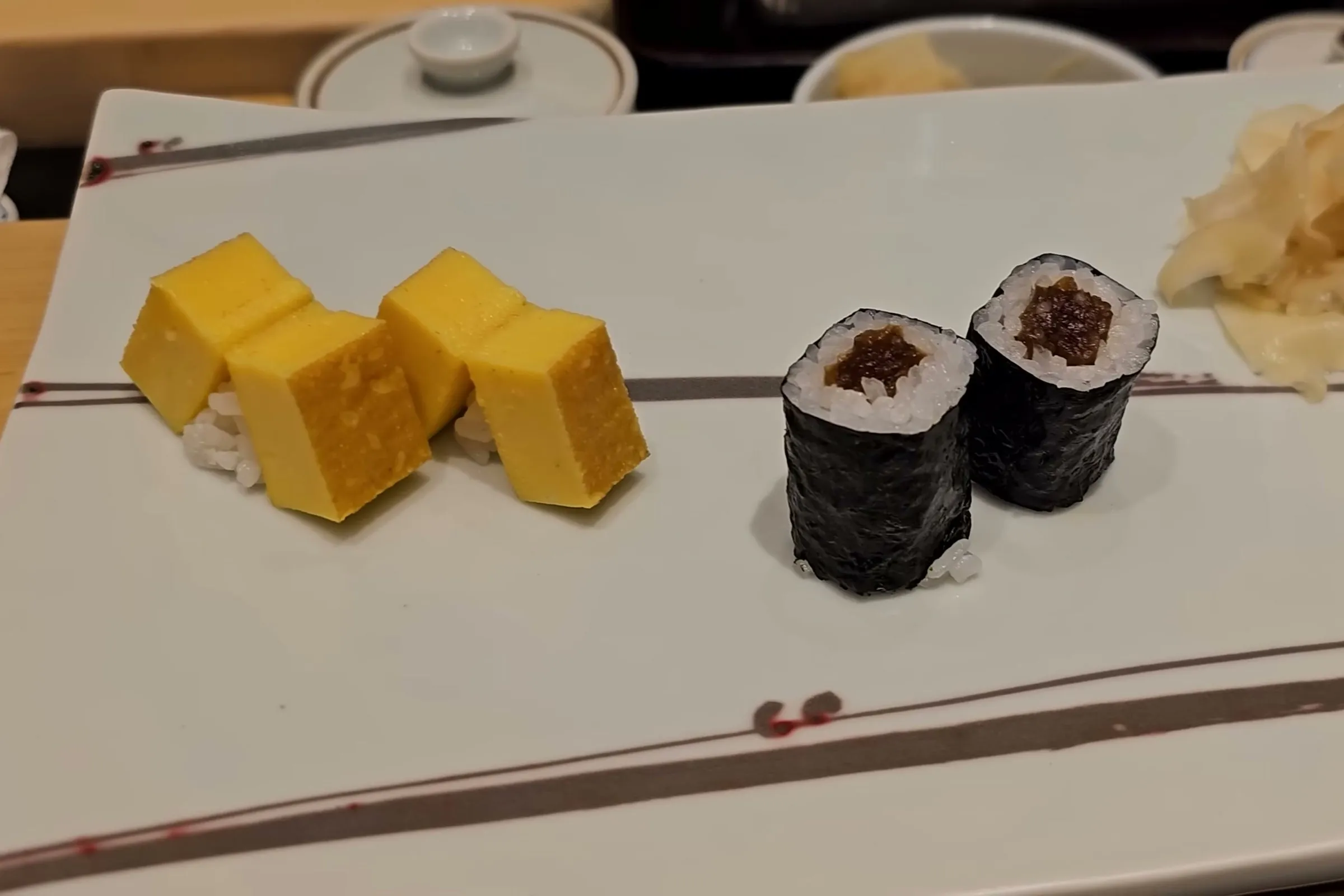
What annoyed me was the kanpyo. I eat it with lots of wasabi. In Japan they usually ask, wasabi or no wasabi? Here nobody asked, and only the kanpyo had none.
Taste-wise, these aren’t ingredients that blow you away. I always call Sushi In’s kanpyo maki the best in the universe, so I hoped a little. It wasn’t that.
Are you full?
While I was on the maki, he asked about the tamago, the egg. On its own, or with rice? I asked which one he’d go with, and he asked if I was very full. I said I was fine, so it came with rice.
Under ₩80,000
2023/10 video
Look at the price. Did I have a ginger ale? Drink included, it was ¥8,000, and ¥8,800 with tax, about US$59 (2023/10). That was under ₩80,000. These days that’s what almost any decent meal costs, sushi or not.
When I checked the official site in 2026/10, Oribe was still ¥8,250 and the Kyubey nigiri lunch ¥16,500. Dinner adds a 10% service charge.
Who should go
The upside is clear. No booking needed. Booking sushi in Japan drives me up the wall, months ahead and still nothing. And it has roots. The image is a tourist sushiya, sure. You see Westerners filming it on YouTube, and old Korean food blogs went to the same few big names because they couldn’t get into the hot places of the day. That isn’t the whole story, though. It’s a sushiya with real history.
The food is closer to casual sushi, and I can forgive that because the price is casual too. The tuna won’t beat the price, but the shellfish will.
So who’s it for? People who can’t get the hard bookings, and people on a tighter budget. You’re in Japan, you want sushi, the famous places are booked out and expensive, and a cheap sushi chain feels like something you could eat back home. Kyubey fits right in that gap. Family trips, couples, friends, it’s an easy sell to the group. And if they aren’t sushi otaku like us, tell them these stories while you eat, and they’ll feel like they’re being treated at a grand old Ginza sushiya. That’s what it’s good for. The end.
How to book
How I booked
I didn’t book. In 2023/10 I went straight from the airport, and around 11:00 a staff member came out and wrote my name on a waiting list. I was told to come back at 12:30 and sat down close to 13:00, on the 5th floor.
- Phone
+81-3-3571-6523 (03-3571-6523 inside Japan). The Japanese page says bookings are taken from 10:00. Lunch bookings are only for 11:30, and after that seats go by what’s free, so call and ask. Cancel on the day and it’s ¥5,000 a person at lunch, ¥10,000 at dinner.
- My Concierge Japan
The online booking link on Kyubey’s own English page, which also suggests booking through your hotel concierge.
- IKYU
The other online link on the official page, in Japanese.
- No booking
What I did in 2023/10. The official page doesn’t mention walk-ins, so treat it as luck, not a promise. Lunch 11:30 to 14:00, dinner 17:00 to 22:00. Closed Sundays and Mondays (Monday holidays too), Obon and New Year.
Checked 2026/10. Booking rules change, so look at the official page before you go.
Where it is
- Address
- 8-7-6 Ginza, Chuo-ku, Tokyo東京都中央区銀座8-7-6
- Nearest station
- Shimbashi, 5 minutes from the JR Ginza exit or Ginza Line exit 3
Plan the Tokyo trip
The boring bits I’d sort before flying, so the eating days stay free.
- Hotels in Tokyo*
Pick the room by where you eat, not by the sights. After a long dinner, a short ride back is the real luxury. This place is in Ginza, Tokyo.
- Japan eSIM*
Data from the moment you land, no counter and no SIM swap. Set it up the night before.
- Keisei Skyliner from Narita*
Narita to Ueno in about 40 minutes. Buy it ahead and walk straight to the platform.
- Haneda airport limousine bus*
Landing at Haneda instead? The limousine bus drops you at the big hotels and stations with no transfers.
- Tsukiji Outer Market food tour*
A market morning with someone who knows which stalls are worth the line.
- Sushi-making class at Tsukiji*
Shape nigiri yourself once and the counter makes a lot more sense.
Links marked * are affiliate links. If you book through them I may earn a small commission, and you pay the same. How it works
Guides that mention this place
Sushi omakase in Tokyo under ¥20,000, from the counters I actually paid at.
Seven budget sushi counters, what I paid at each, and what they charge now.
The best sushi in Tokyo, ranked by someone who paid for it.
Eight counters from Sugita down, what I paid at each, and how to get a seat.
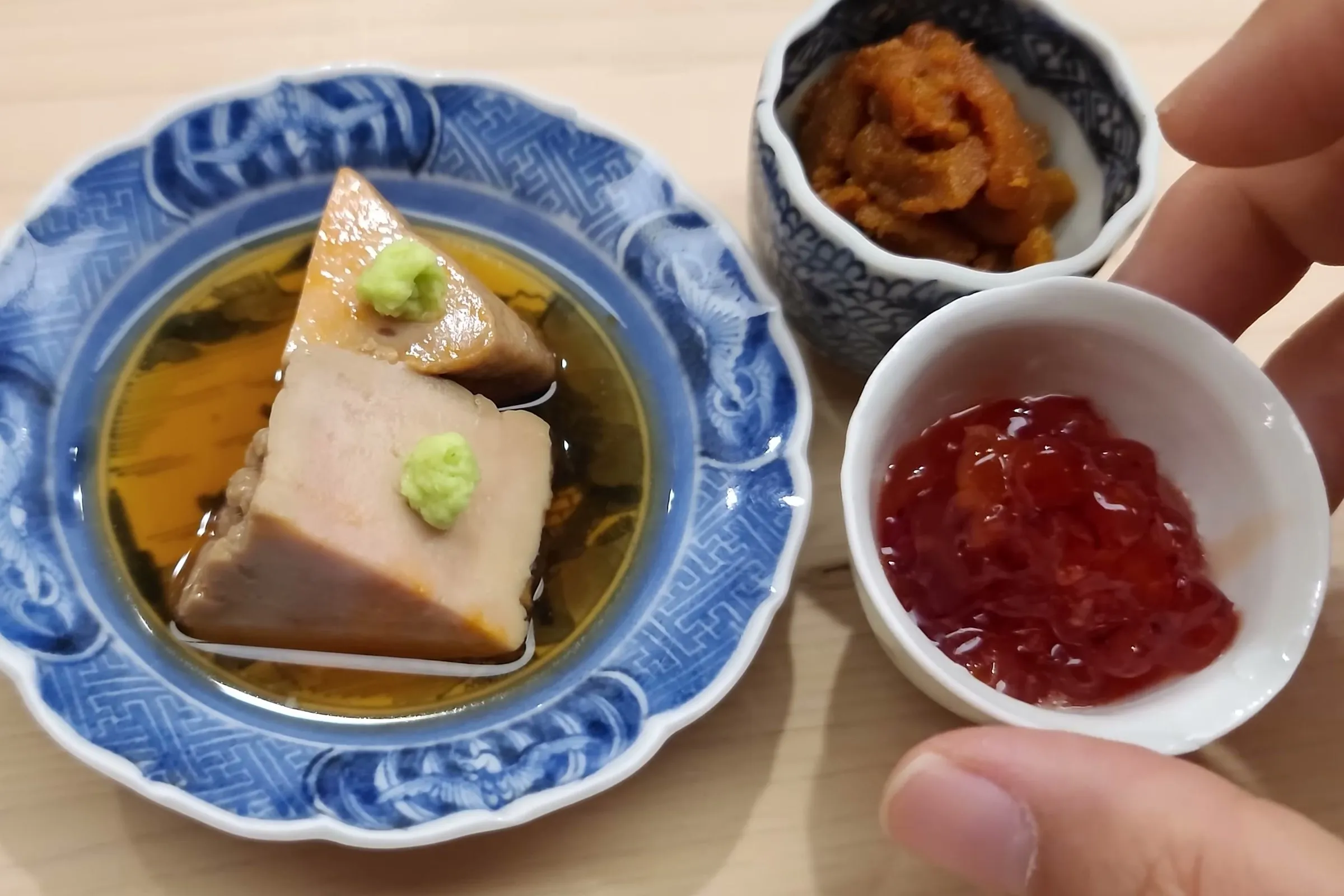
Ankimo, shirako, zuke. The words nobody explains at the counter.
What ankimo, shirako, ikura, zuke and 12 more Japanese menu words mean, and how each one tastes.
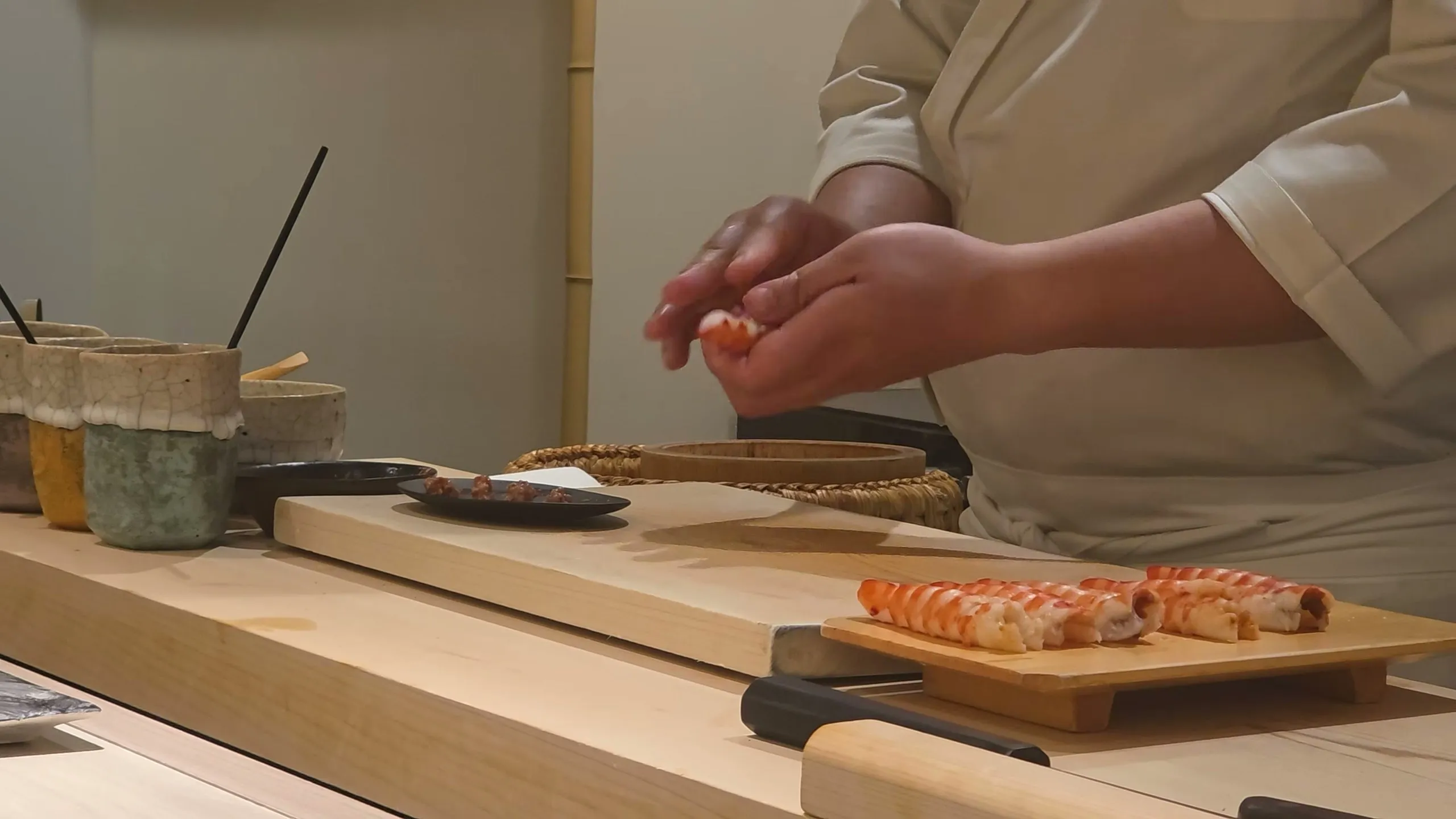
Every Tokyo sushi booking route, compared by someone who paid the fees.
omakase.in, Tabelog, TableCheck, TABLEALL, Pocket Concierge, byFood and the hotel desk, side by side.
More places I have eaten at
All of Tokyo →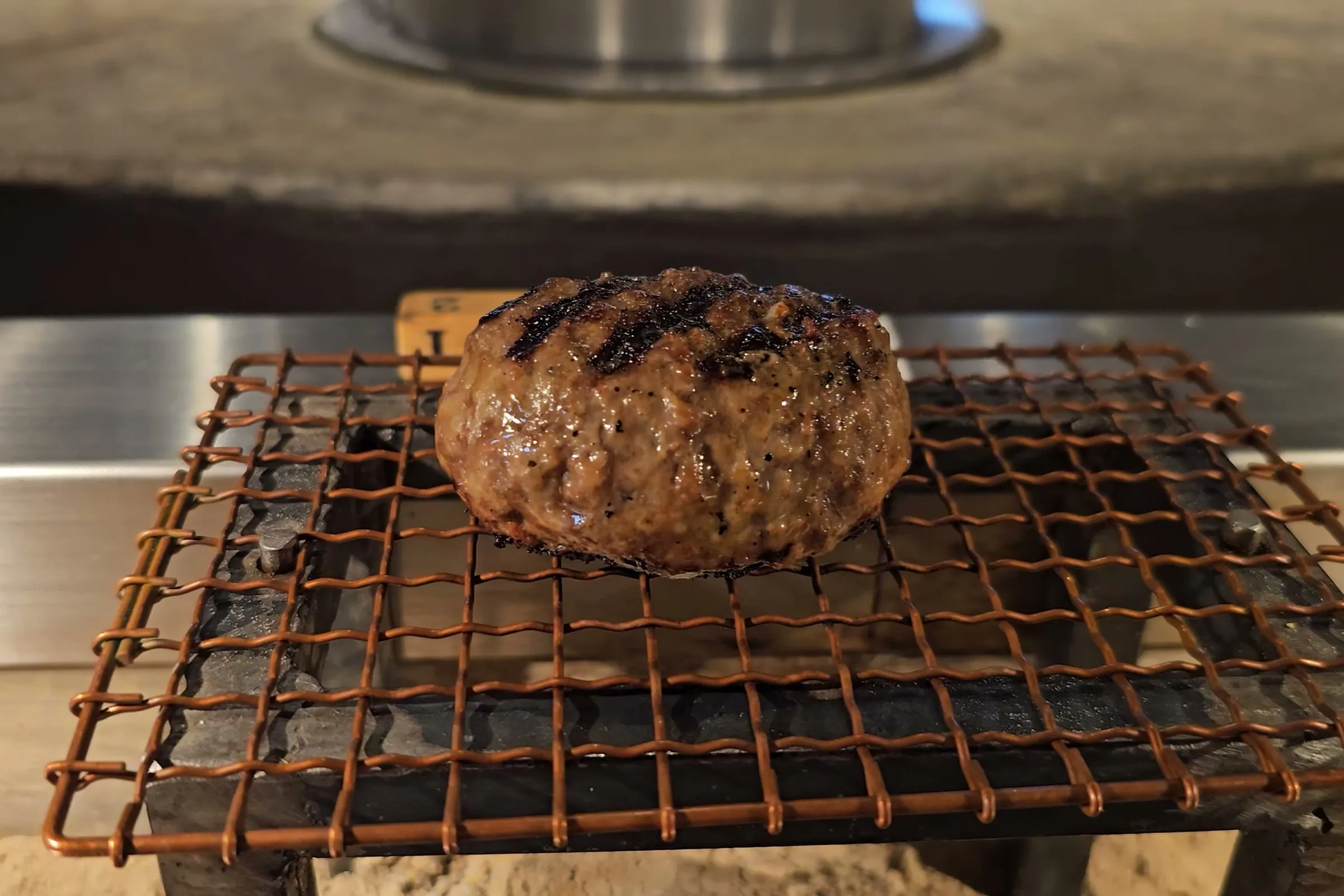 Shibuya, Tokyo
Hikiniku to Come
Three charcoal hamburgs, free rice, a drawer full of spices.
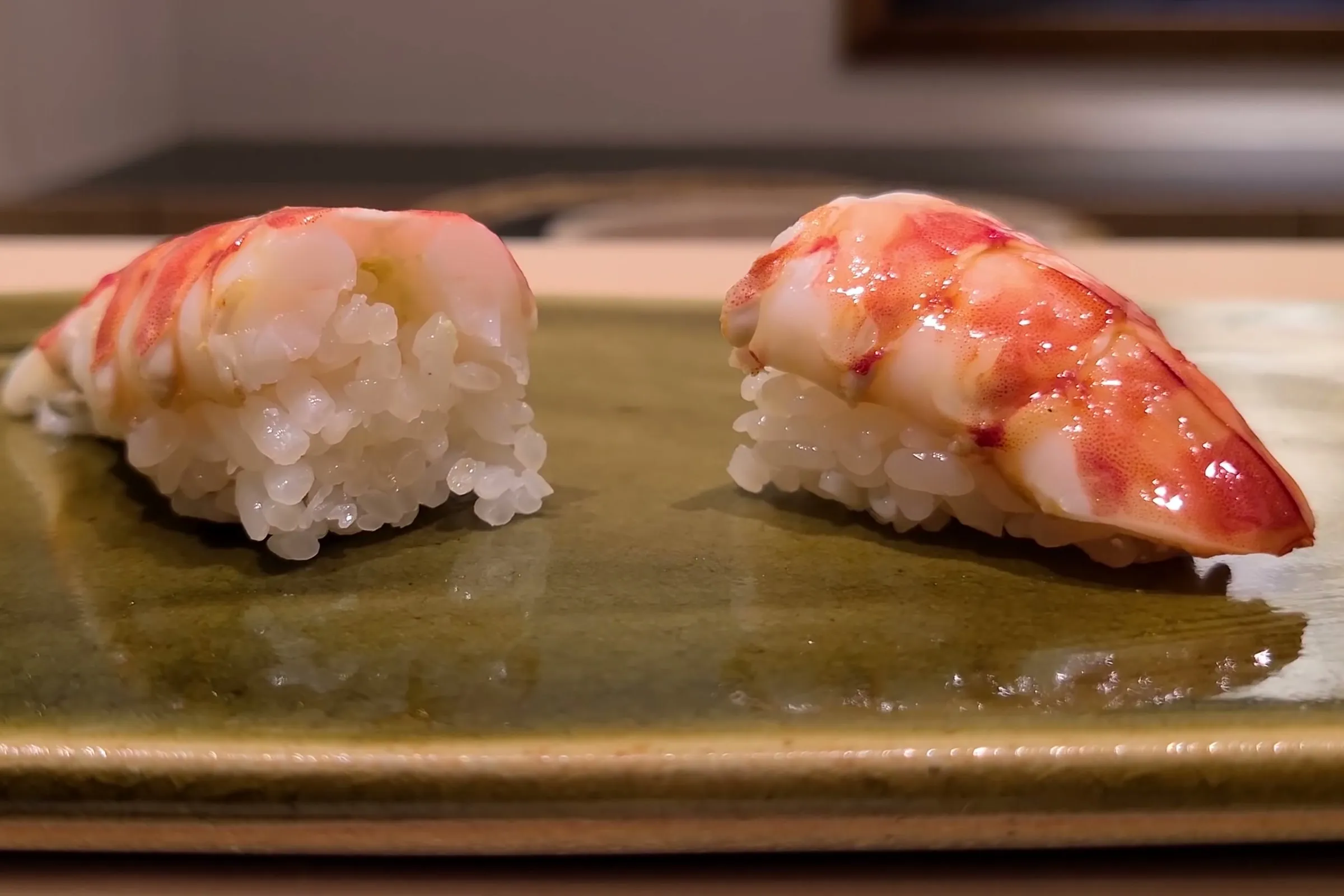 Hanzomon, Tokyo
Sushi Mizukami
Sour rice, great shellfish, smoked tuna that tasted like spam.
¥22,000 2020/03 video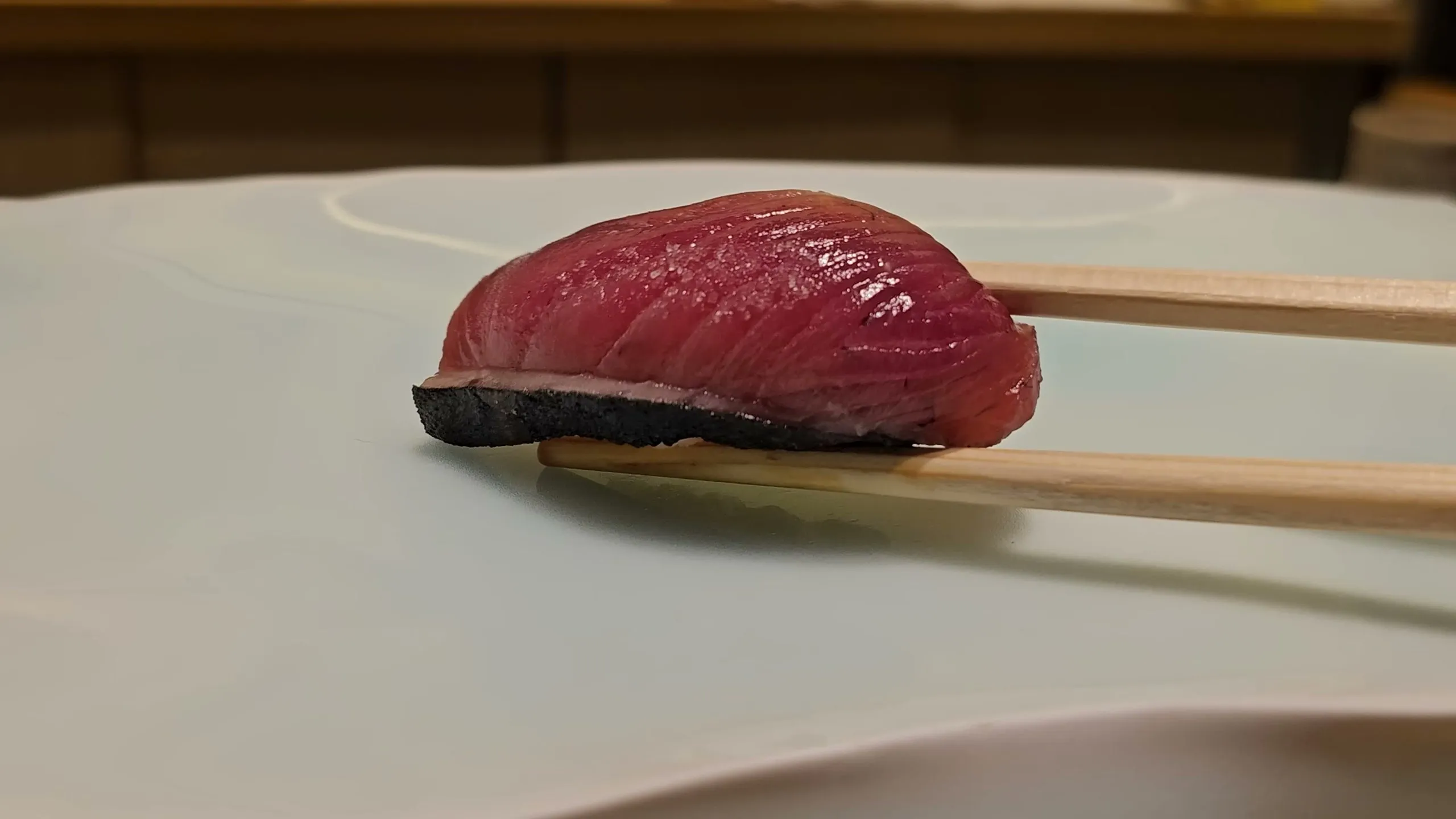 Hibiya, Tokyo
Sushi Namba
Cotton-candy octopus, tiny nigiri, a menu with temperatures.
¥45,000 2023/11 videoSources
- Ginza Honten Ginza Kyubey
- 銀座本店 銀座 久兵衛
- 銀座 久兵衛 銀座本店 Tabelog
- 銀座 久兵衛 Precious.jp