Hikiniku to Come is juicy. It just isn’t my kind of hamburg.
Hikiniku to Come is the hamburg steak counter up a narrow staircase in Dogenzaka, Shibuya. Three patties come off the charcoal one at a time, the rice comes out of iron pots all day, and refills are free. A friend who keeps showing up wherever I eat followed me to Tokyo and wanted this, so I went. The juice is the real deal. The texture isn’t my style, it gets salty and greasy, and the condiments in the drawer do a lot of the work. When I checked TableCheck in 2026/10, the set was ¥1,980, about US$13. There’s a Seoul shop now too, near Apgujeong Rodeo, and when I went it wasn’t much different from Tokyo.
monster gourmetFrom my 2024/09 video
- Highlight
- Mala powder and fresh huajiao
- Skip
- The whole egg in your rice
- Set, checked 2026/10
- ¥1,980
- Video
- 10:11
- 2024/09
- Where
- Shibuya, Tokyo
- Shibuya, 3 minutes from the Hachiko exit
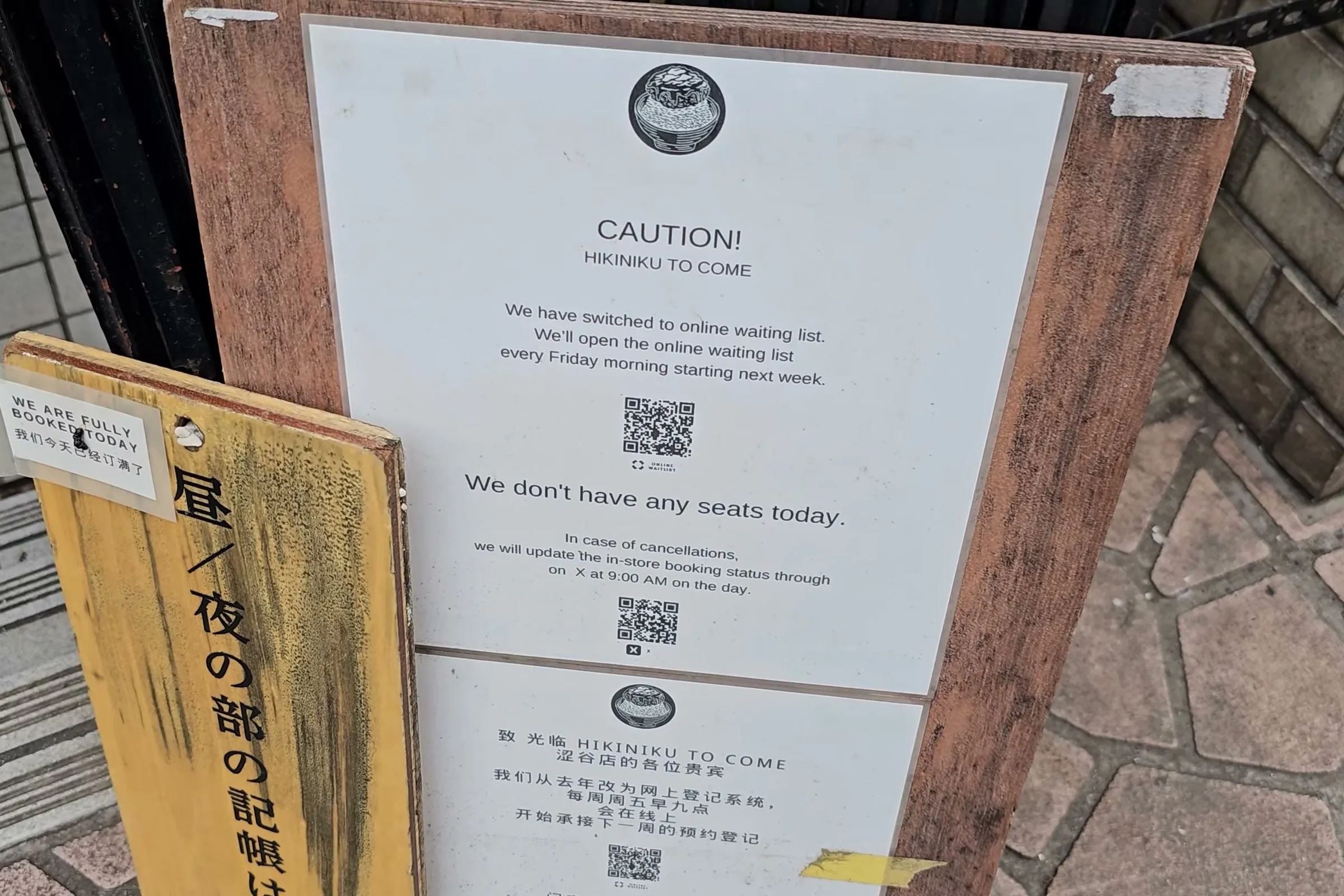
No seats left today
This wasn’t a place I was dying to try. There’s a friend who keeps ambushing me when I eat in Busan and Changwon, and they followed me all the way to Tokyo. This was the one place they wanted, and they’d already put our names down. So I went.
In 2024/09 the sign at the bottom of the stairs said they had switched to an online waiting list and had no seats left that day. We waited, went in, and ordered at a kiosk.
It’s more organized now. When I checked in 2026/10, Shibuya only took bookings online, through TableCheck. How that works is in the booking box below.
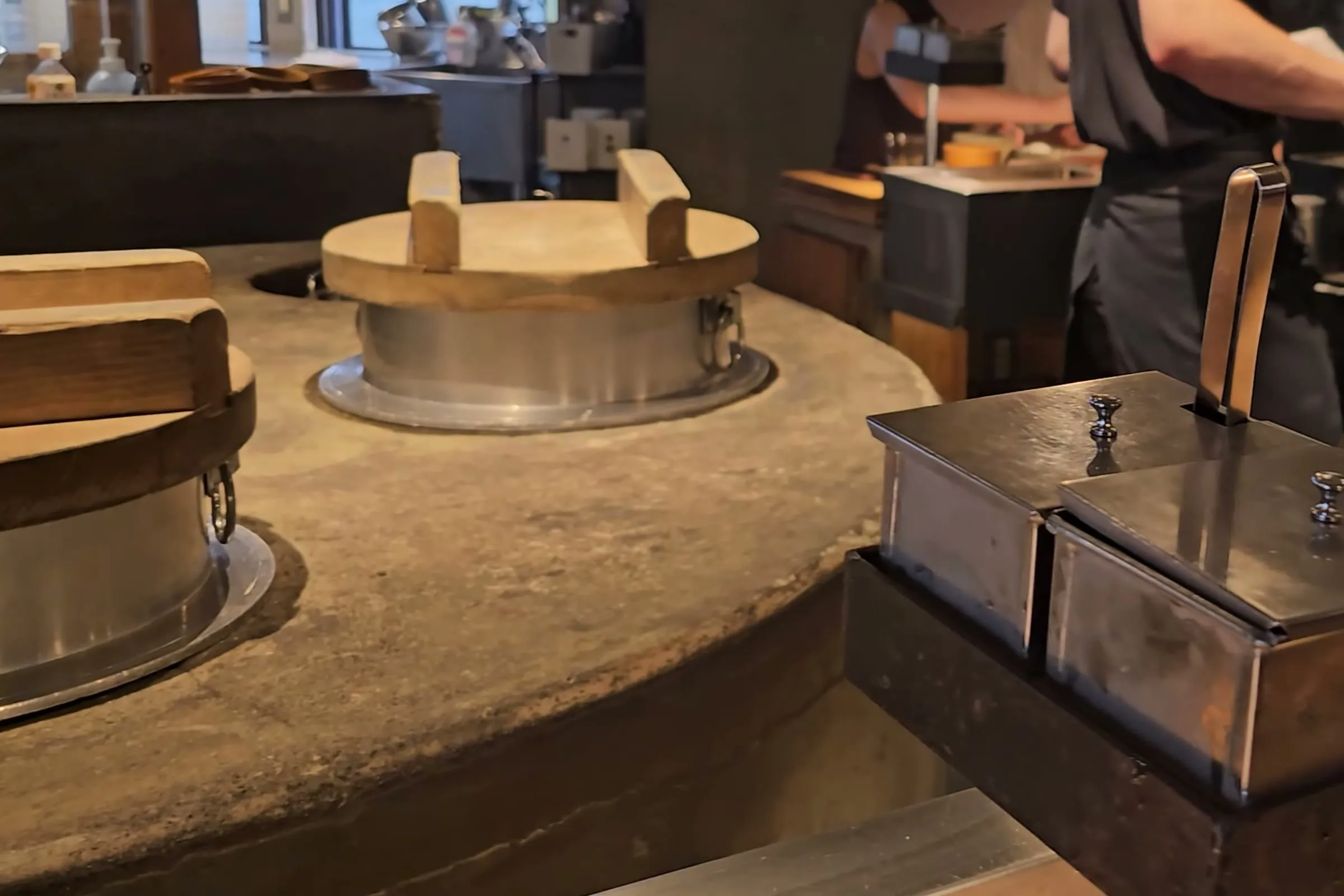
Ground meat and rice
The name is 挽肉と米, ground meat and rice, and the room leans hard on the rice. Iron rice pots sit on the counter, sacks of rice are piled up behind glass in the wall, and a sign tells you where today’s rice is from.
Hiki sounds like the draw shot in billiards, where you pull the cue ball back. The kanji they use is the one for grinding, like a millstone. So hikiniku is minced meat.
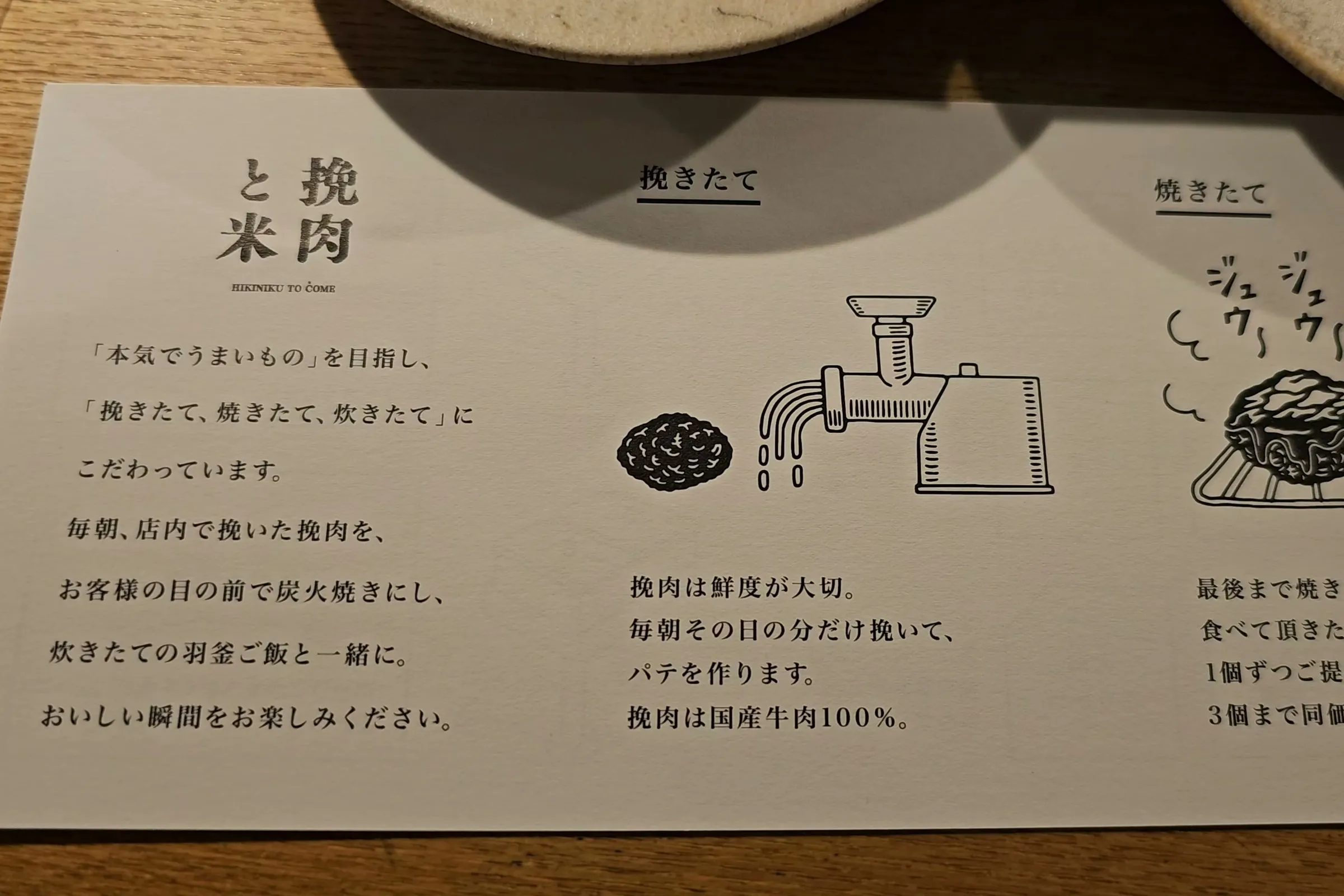
Ground, grilled and cooked fresh
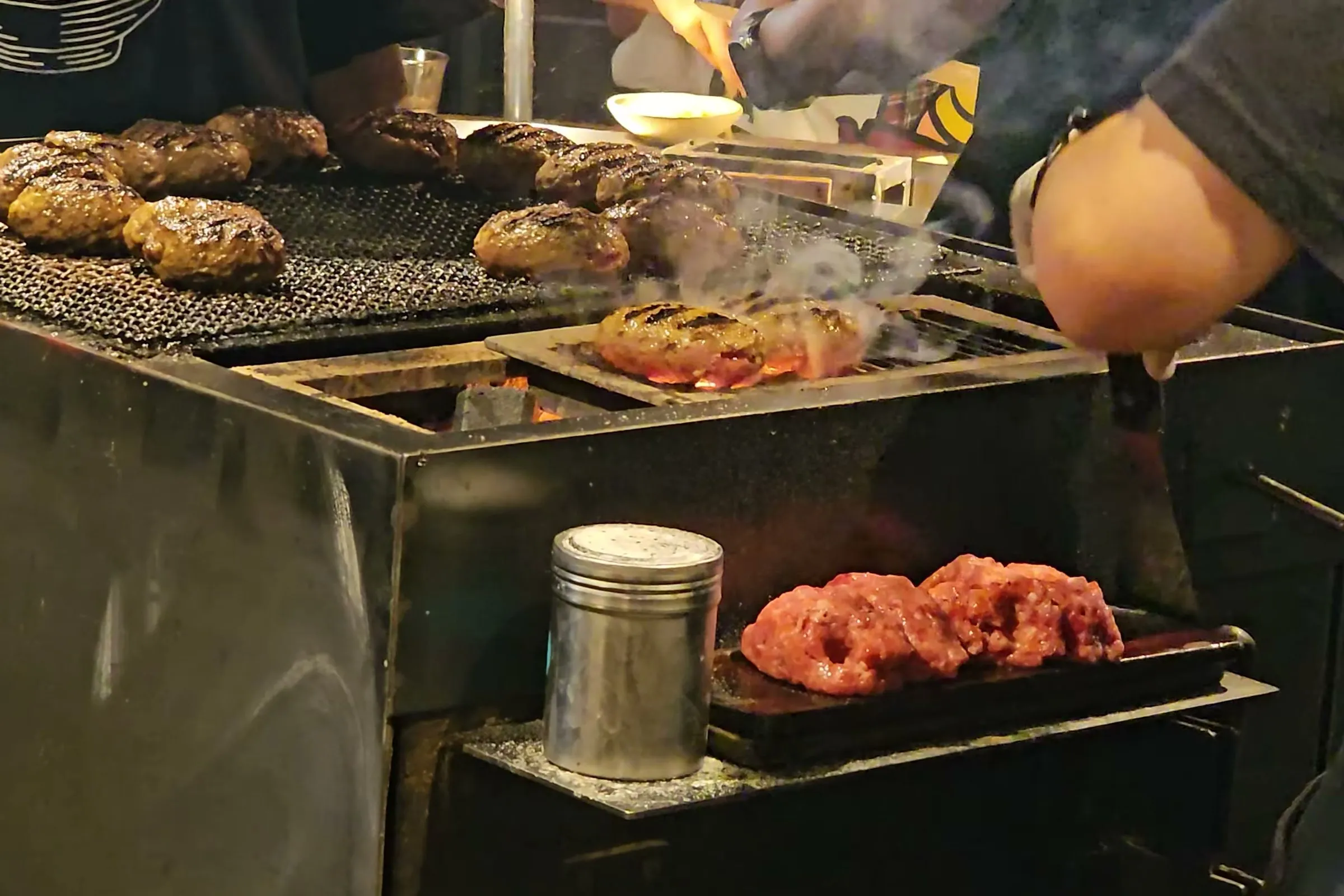
The card in the drawer spells out the idea. Hikitate, yakitate, takitate. Freshly ground, freshly grilled, freshly cooked. They grind the meat in the shop every morning, only as much as that day needs, and it’s 100% Japanese beef. The patties go over charcoal in front of you, and the rice is cooked in hagama, iron pots, batch after batch.
You get three patties, one at a time, so each one is hot off the grill. More than three was ¥550 a patty (2024/09). Rice refills are free.
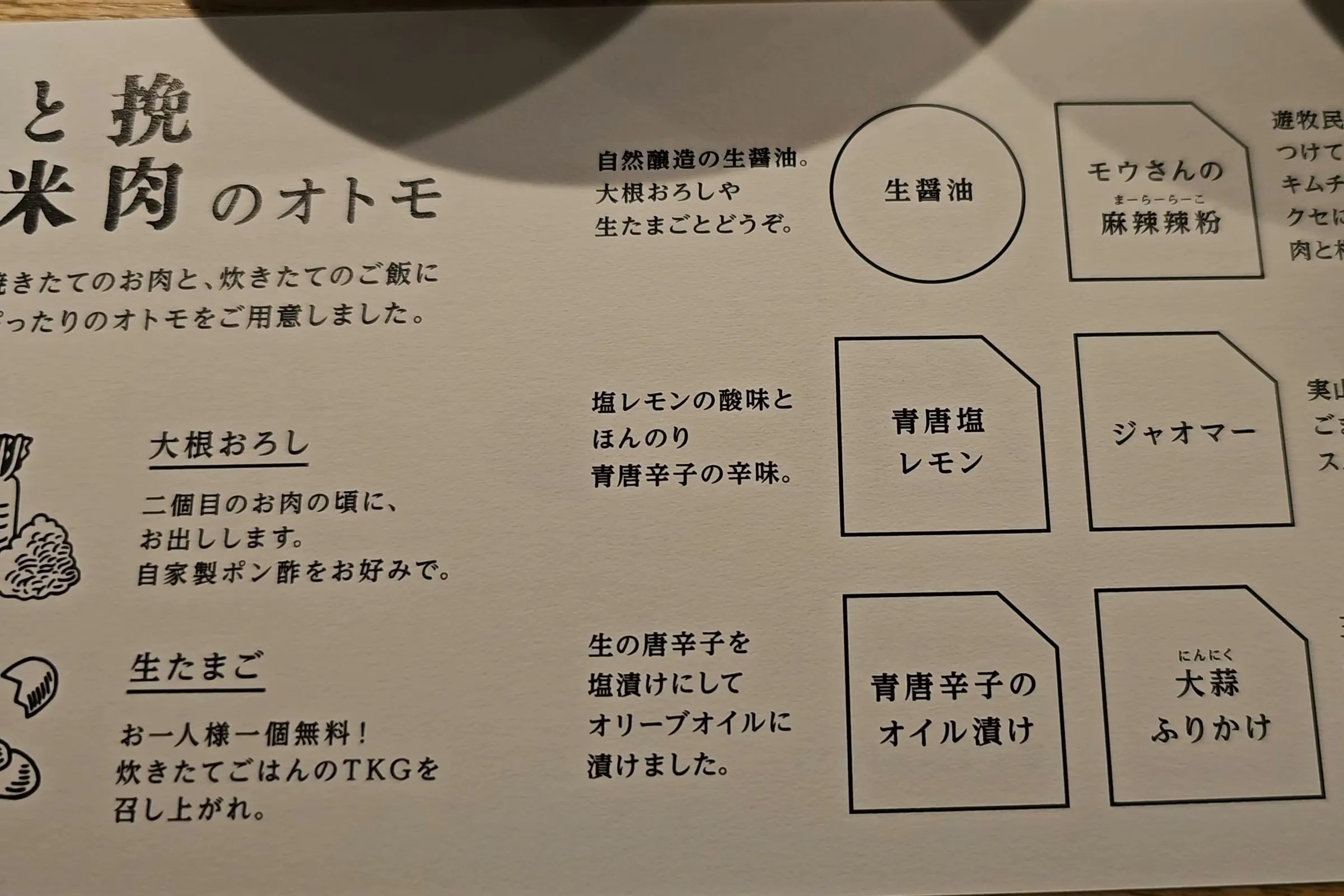
A map of the condiments
Every seat has a row of little lidded tins. I had no idea what was what, so I started opening them one by one. Turns out the card from the drawer has a mini map, drawn to match the shape of each lid and where it sits.
The six small ones are raw soy sauce, green chili with salt and lemon, a mala chili powder, jiaoma (green sansho, scallion, ginger and sesame oil), green chilies in olive oil, and fried garlic flakes. The two big tins hold napa cabbage pickled in ume vinegar, for between bites, and taberu shoyu, a soy sauce full of crunchy bits that’s meant for TKG, raw egg on rice.
Whose patty will I get?
They knead the meat, shape it into balls and grill it over charcoal right in front of you. The size depends on who’s shaping it. One of the guys made clearly bigger ones, and in person the difference is obvious.
The counter wraps around the grills, and I was sitting right between two of them. So the whole time I was hoping mine would come from the big-patty side.
A long wooden die by your seat keeps count. It gets turned after each one, so they know if you’re on your first, second or third.
Rice like a tonkatsu shop
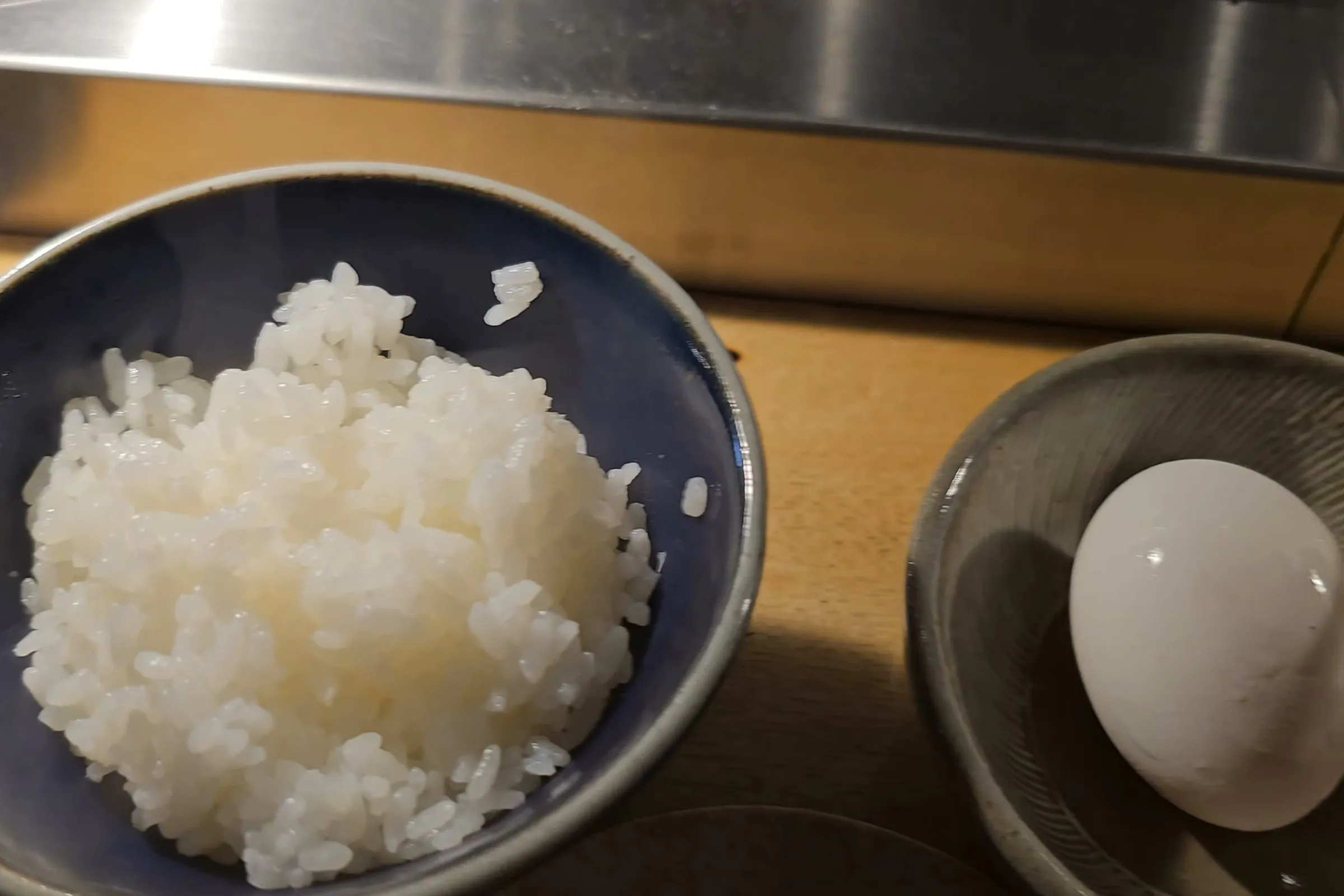
Like at a tonkatsu shop, rice and miso soup come on the side, and you grab your own raw egg. For a place with rice in its name, I expected more. It isn’t bad. Rice at almost any casual restaurant in Japan is good. It just isn’t better than those, and the tonkatsu places I go to do better rice.
That day the board said Koshihikari from Kyoto.
The juice is real
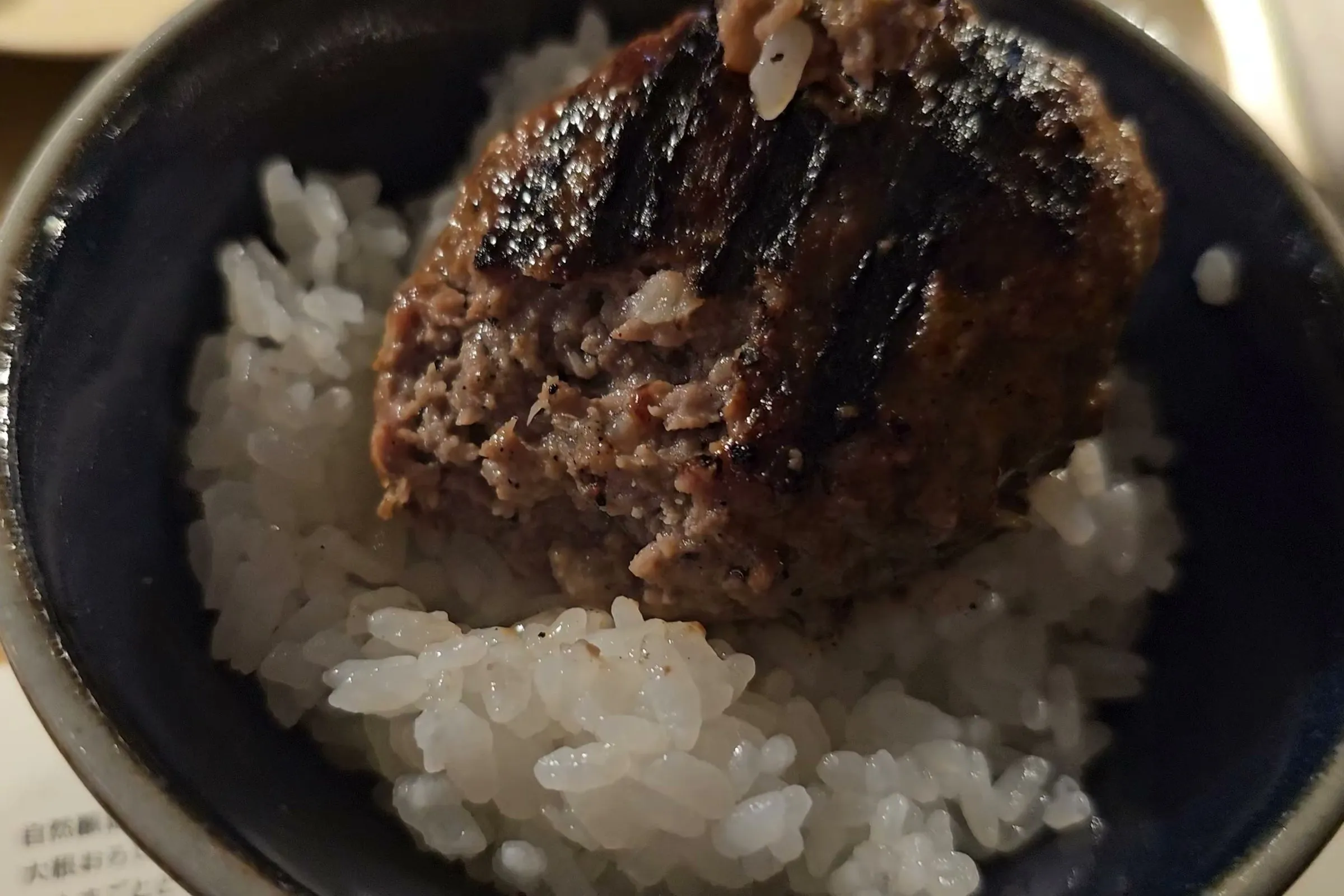
The first one came, from the smaller side. I tried it on its own before the rice. The juice is amazing. I get why people love it. But it’s not my style.
I like smashed burgers, and I like something to chew. This is ground very fine and kneaded until it’s a bit sticky, and I don’t love that. Not every hamburg is like this. Some have chunky bits you can bite into. And if it’s going to be that fine, I’d rather it be fluffy like a cloud than sticky.
My friend kept squeezing his with the chopsticks so the juice would run for the camera. It wasn’t as dramatic as he hoped.
Salty, greasy, then the daikon
I put sauce on right away. Why? It mostly tastes salty. With yoshoku, Japanese Western food, I think the sauce is the point. Japanese tonkatsu has juicy, good pork, so salt is enough. Korean-style donkatsu is pounded thin and drowned in sauce, and it’s better that way. Hamburg steak should be built around a sauce too. This one isn’t.
The patty is already seasoned hard, so why add sauce? You’ve probably had this happen. Dip a salty pajeon in soy sauce and it somehow tastes less salty. It’s greasy too, and salty plus greasy wears you out. One patty looks small. By the third, you’re full and you’re tired of it.
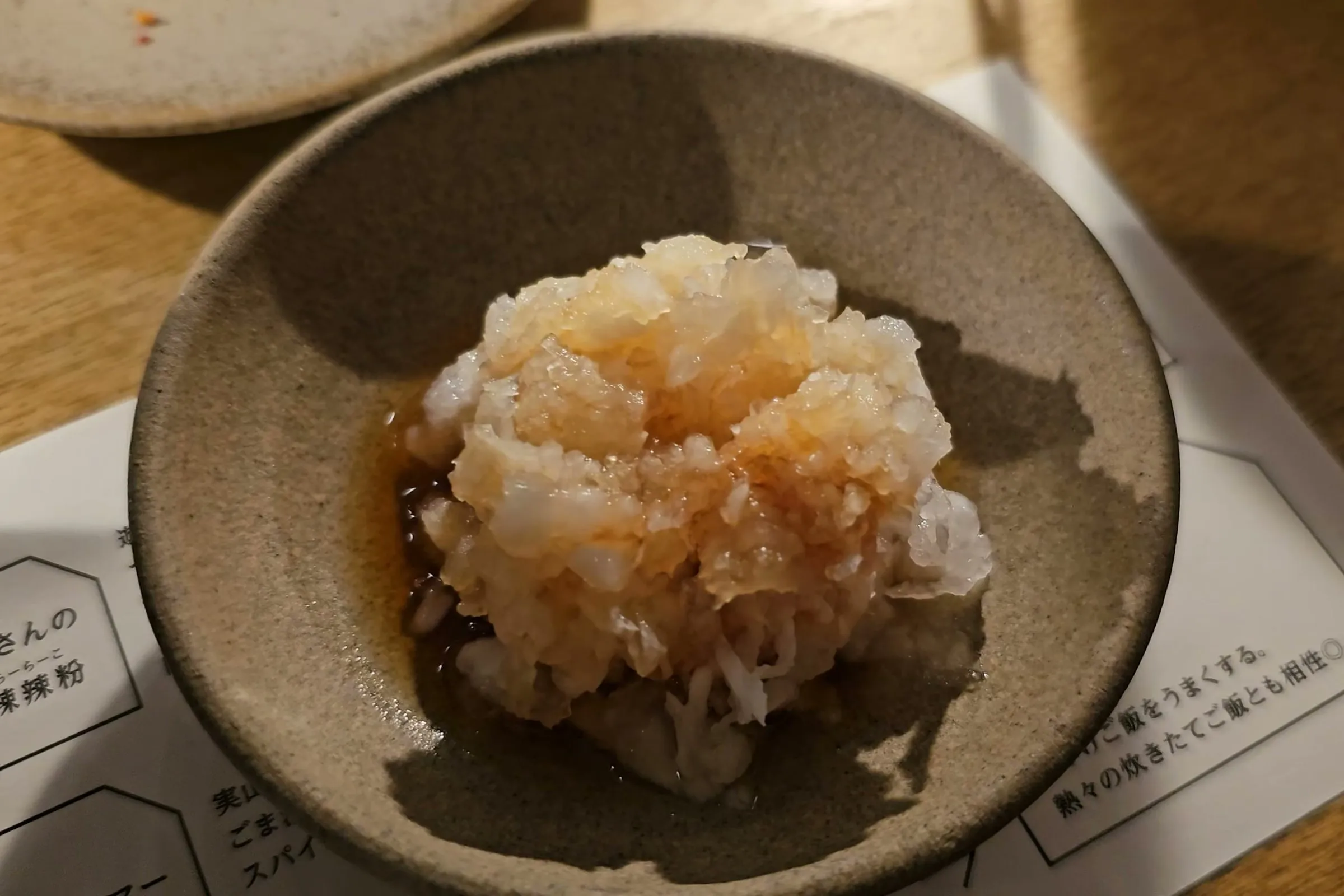
So I kept going back to the grated daikon with house ponzu that comes with the second patty, and I kept switching toppings.
Eat it like lamb skewers
After trying everything, I had favorites, and you can tell from what I filmed. I only stopped eating to shoot now and then, so whatever shows up most is what I liked.
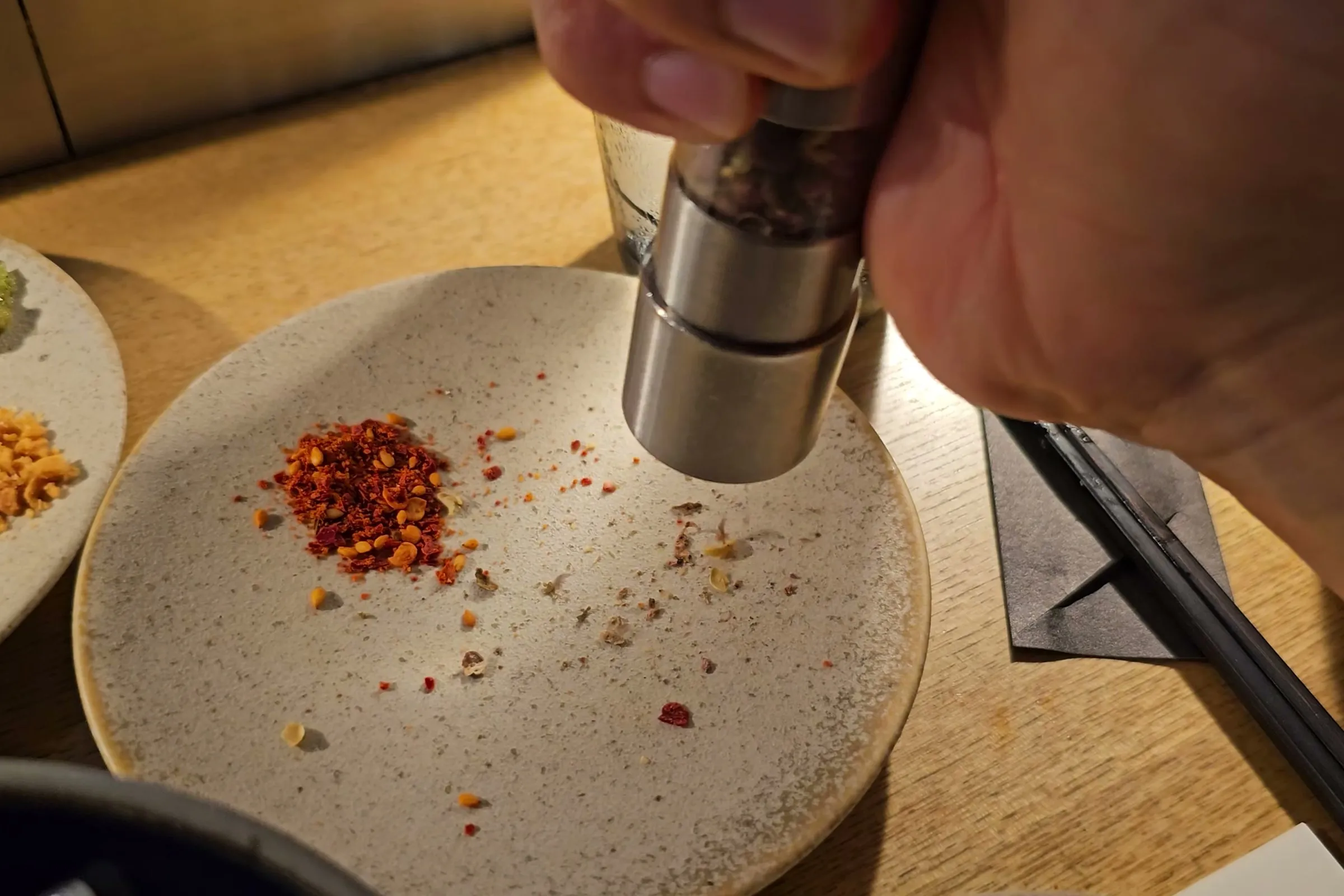
The mala powder won. It tastes almost exactly like the spice powder you dip lamb skewers in at a Chinese skewer place. Then I ground huajiao, Sichuan pepper, over it from a mill like black pepper. Those two were the ones I used most. Something tingly cuts salt and grease really well.
With all that salt, I kept eating rice even though the rice isn’t special. Refills are free, so I got more and basically ate it like lamb skewers.
TKG, my way
Same patty, same rice, same sauces. It gets old. That’s when you make the TKG, tamago kake gohan.
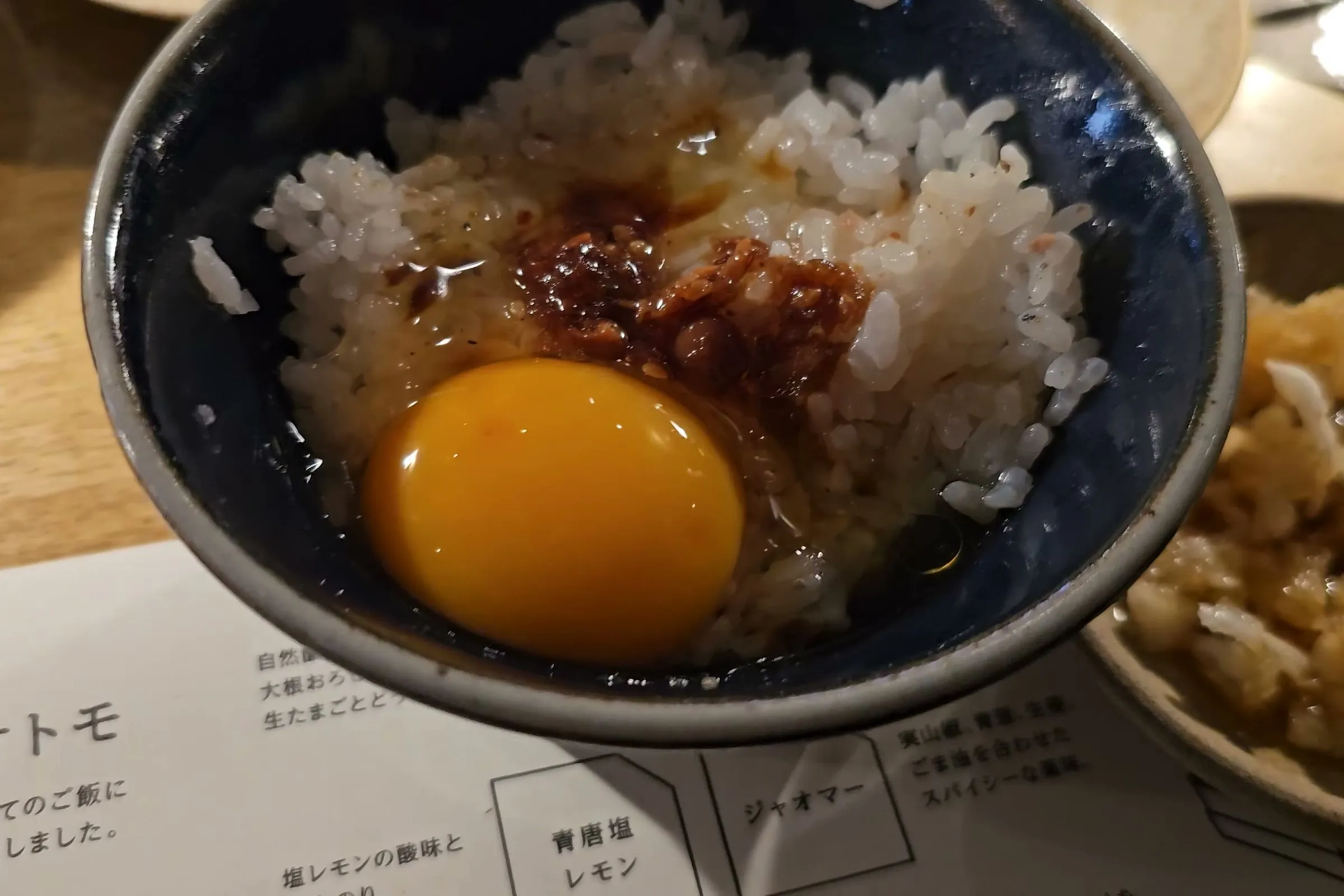
In Japan people just crack the whole egg in, white and all, and mix. So I told my friend to do that. Way too much egg for that much rice. It went loose, like rice in water. So I cracked mine into a small bowl first and used the yolk and a little of the white, then raw soy sauce and the taberu shoyu with the crunchy bits.
I love soy sauce egg rice in every version, Korean, Japanese, even an American one. KATUSAs, Korean soldiers who serve with the US Army, will know. The DFAC, the base dining hall, does breakfast like a hotel. Eggs any way you want, over easy for me, sausage patties like the ones in a breakfast muffin, and rice set out for the Korean soldiers. You eat the fancy omelets at first and get sick of them. By the end every KATUSA is eating rice with soy sauce, butter and an egg.
Japanese TKG with a hamburg patty on it took me straight back there. It got a bit old, but I finished every grain.
There’s one in Seoul now
Hikiniku to Come has opened in Korea. The official site calls it the Seoul Dosan shop, on the second floor of 21 Seolleung-ro 155-gil in Gangnam-gu, in the Apgujeong Rodeo area. Bookings go through CatchTable, the Korean booking app the official site links to.
I went to the Seoul shop recently too. Honestly, it wasn’t much different from the one in Shibuya. So if you’re curious and you’re in Seoul anyway, you don’t have to save it for a Tokyo trip.
Korean listings I found in 2026/10 put the set at ₩29,000.
I forgot to film the price
The prices only show on the kiosk, and I was sure I’d filmed it. Not one clip. From memory it felt a bit expensive for what it is.
The card in the drawer said the set comes with three patties and an extra one was ¥550 (2024/09). When I checked TableCheck in 2026/10, the set was ¥1,980 with tax, about US$13, paid when you book. With an Advance Priority Ticket it came to ¥2,980, about US$19.
Would I go back?
No. I’d rather walk into a casual yoshoku place, nothing fancy, and order a hamburg steak there.
If juice is what you want from a hamburg, you’ll probably love it. Book ahead, go hungry, play with the condiments, and make the TKG with just the yolk. The end.
How to book
How I booked
My friend sorted it. In 2024/09 they had just moved to an online waiting list, and the sign out front said there were no seats left that day. We waited, went in and ordered at a kiosk.
- TableCheck
The official site says Shibuya takes bookings online only, through TableCheck, never by phone or social media. A regular booking opens 7 days ahead, and the ¥1,980 set is charged when you book. For 8 days to 2 months ahead there’s a limited Advance Priority Ticket, ¥1,000 a seat on top (¥2,980 in all), released on the 1st of each month through the end of the next. Cancel on the day and you pay the whole set, 1 to 7 days before it’s ¥500, plus the ticket if you bought one.
- House rules
From the official page: lunch 11:00 to 15:00, dinner 17:00 to 21:00, closed Wednesdays. Third floor up a narrow staircase, no elevator. There’s no waiting space inside, so you wait on the stairs or at their Veranda waiting bar. Up to 6 people per booking, everyone seated orders a set, and if you’re more than 10 minutes late the booking may be cancelled. Fully cashless. Tabelog lists 31 counter seats.
- CatchTable (Seoul)
The Seoul Dosan shop, 2F, 21 Seolleung-ro 155-gil, Gangnam-gu, in the Apgujeong Rodeo area. The official site’s booking button for it goes to CatchTable. The TableCheck rules and house rules above are for Shibuya.
Checked 2026/10. Booking rules change, so look at the official page before you go.
Where it is
- Address
- 3F, 2-28-1 Dogenzaka, Shibuya-ku, Tokyo東京都渋谷区道玄坂2-28-1 椎津ビル 3F
- Nearest station
- Shibuya, 3 minutes from the Hachiko exit
Plan the Tokyo trip
The boring bits I’d sort before flying, so the eating days stay free.
- Hotels in Tokyo*
Pick the room by where you eat, not by the sights. After a long dinner, a short ride back is the real luxury. This place is in Shibuya, Tokyo.
- Japan eSIM*
Data from the moment you land, no counter and no SIM swap. Set it up the night before.
- Keisei Skyliner from Narita*
Narita to Ueno in about 40 minutes. Buy it ahead and walk straight to the platform.
- Haneda airport limousine bus*
Landing at Haneda instead? The limousine bus drops you at the big hotels and stations with no transfers.
- Tsukiji Outer Market food tour*
A market morning with someone who knows which stalls are worth the line.
- Sushi-making class at Tsukiji*
Shape nigiri yourself once and the counter makes a lot more sense.
Links marked * are affiliate links. If you book through them I may earn a small commission, and you pay the same. How it works
Guides that mention this place
More places I have eaten at
All of Tokyo → Hanzomon, Tokyo
Sushi Mizukami
Sour rice, great shellfish, smoked tuna that tasted like spam.
¥22,000 2020/03 video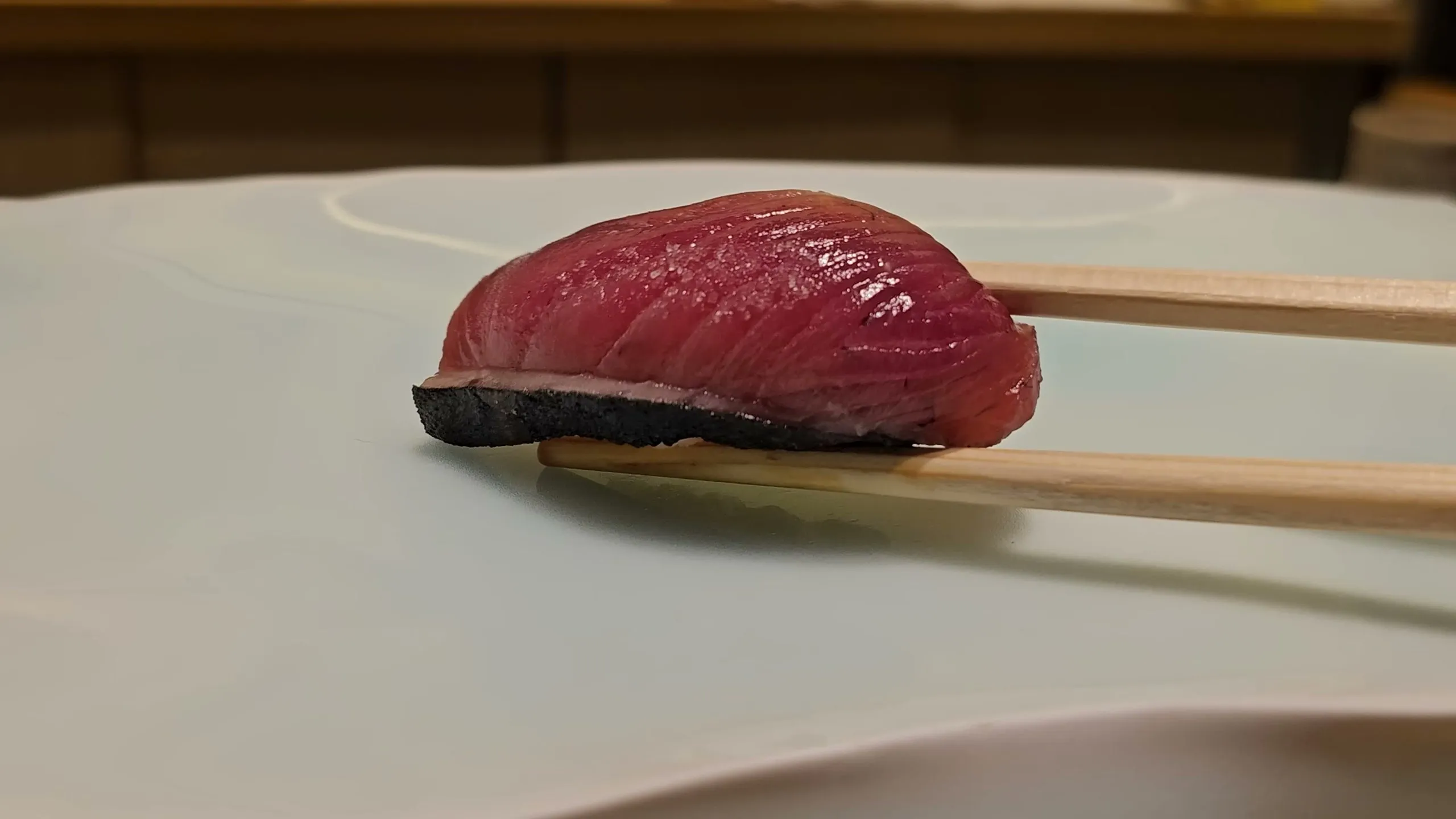 Hibiya, Tokyo
Sushi Namba
Cotton-candy octopus, tiny nigiri, a menu with temperatures.
¥45,000 2023/11 video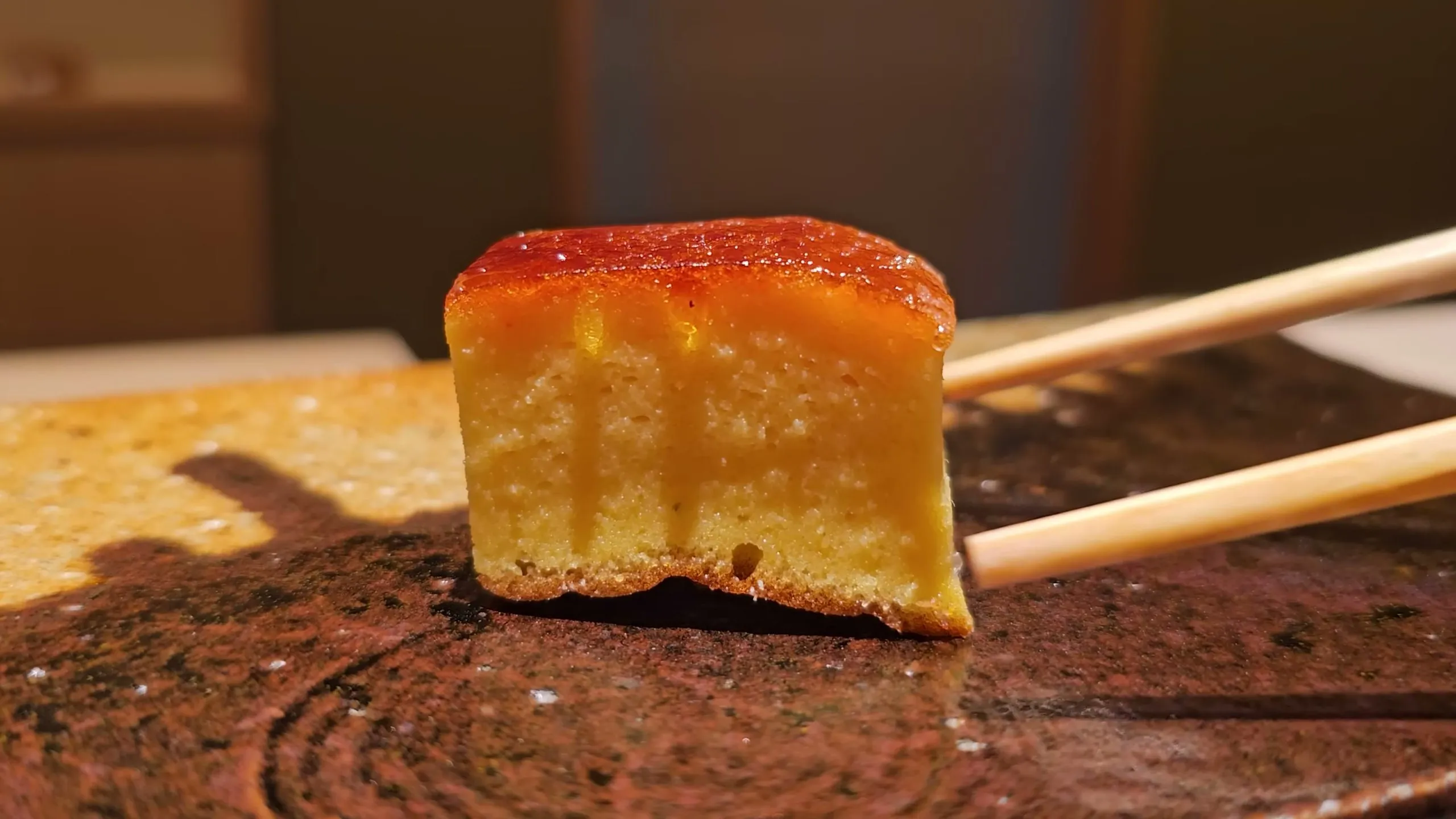 Akasaka, Tokyo
Sushi Miura
Kikunoi soup, Namba sushi, half the price. Then a star.
¥25,000 2023/12 videoSources
- Shibuya | Visit Hikiniku to Come
- 挽肉と米 渋谷 TableCheck
- 挽肉と米 渋谷 Tabelog
- Seoul Dosan Store Hikiniku to Come