The broth that made me worship a kaiseki counter
Matsukawa (松川) is a kaiseki restaurant in Akasaka, Tokyo, right behind the US Embassy, and it’s the peak of Japanese cuisine for me. My bill on the last visit was ¥84,200 for the food alone, about US$530 (2026/08), and they take cash only. Would I go back? Tomorrow, if I could. The catch is getting in: Tabelog lists it as referral and reservation only, and I’ve been twice, both times through friends who are regulars. For years it sat at No.1 on Tabelog across every genre in Japan. What hooked me is the broth: dense, sharp and so clean it’s like a blade of ice. The misses are real too, and they’re further down.
monster gourmetFrom my 2024/09 video
- My share
- ≈ ¥80,000
- about US$560, my share for the food, handed over in cash; ¥84,200 food only on the 2026/08 visit, 2024/09 video
- Highlight
- Every clear broth, and the rice with karasumi and sansho jako at the end
- Skip
- Expecting the sashimi to beat a top sushi counter
- Video
- 20:49
- 2024/09
- Where
- Akasaka, Tokyo
- Roppongi-itchome (Namboku Line), exit 3, about 10 minutes on foot
¥84,200 for the food, and bring cash
My last bill at Matsukawa was ¥84,200, about US$530 (2026/08). I don’t drink, so that’s food only. The price isn’t the problem. The problem is that Matsukawa takes cash only, and who walks around with that much cash these days?
On my first visit a friend tried to quietly pay for the three of us before I noticed. You can’t do that here. With cash only, someone has to count the money, and I could see him behind us counting notes with the staff. It came to around ¥400,000 for three with their drinks. He said the food alone usually runs about ¥70,000 a head, so I handed him ¥80,000 in yen I’d brought, because I knew it was cash only (2024/09).
I don’t know the exact course price either time. Both nights the menu was changed for the regulars at the table, and I’ve only ever paid a combined bill. Tabelog’s own budget band in 2026/11 says ¥60,000 to ¥79,999 for dinner, and its reviewers say ¥80,000 to ¥99,999.
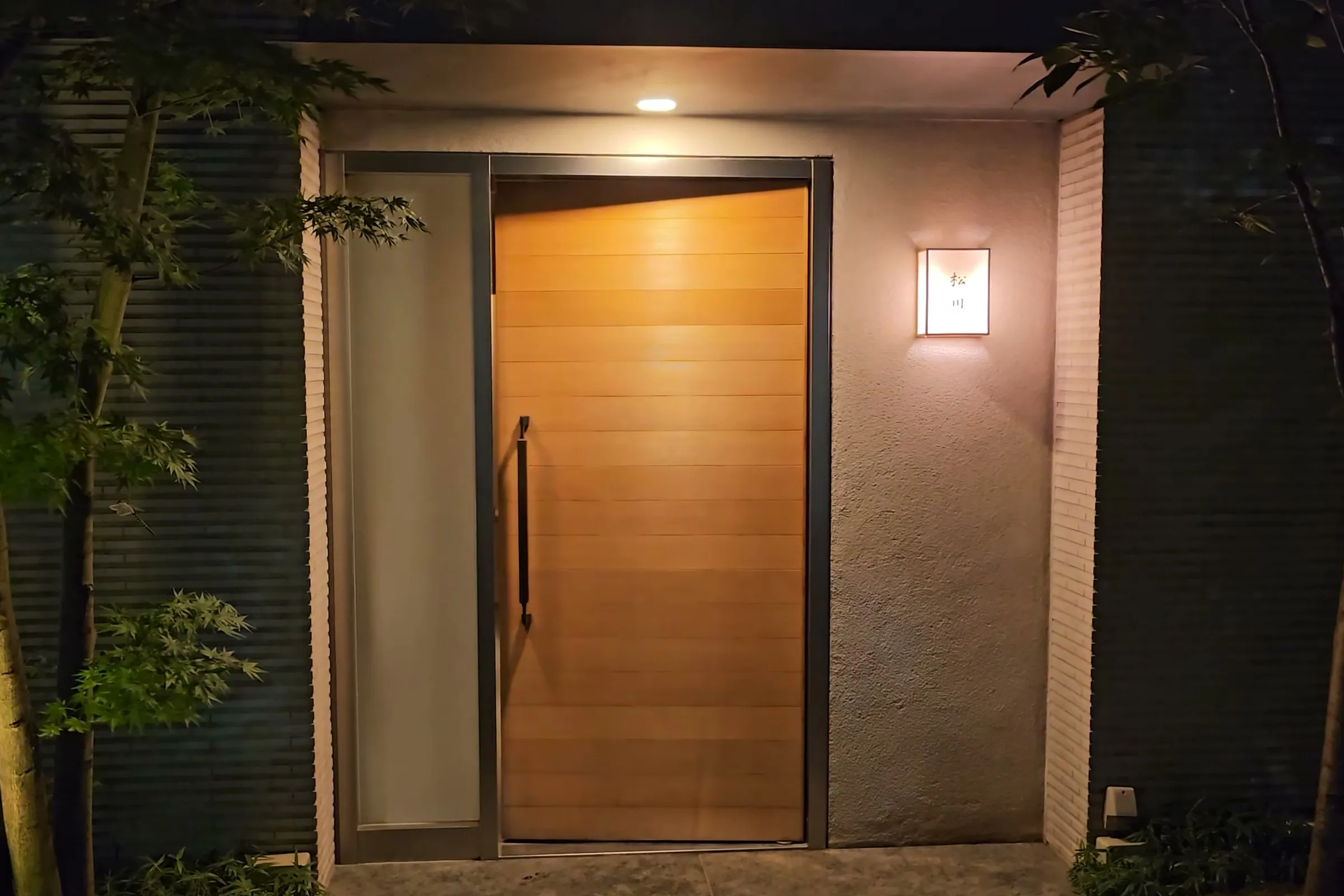
You can’t just book Matsukawa
Matsukawa is right behind the US Embassy in Akasaka. It opened in 2011. When I checked Tabelog in 2026/11, it said complete referral and reservation only: you come with a regular or you don’t come. 22 seats: 6 at the counter, a tatami room for 4 and private rooms for 12. Dinner Monday to Saturday, lunch on Thursday and Saturday, closed Sundays and holidays.
I hate asking people to take me places, because people ask me that all the time. I almost never do it. My first time, a friend who can get in anywhere took me. I told him I’d only come back if it was good, since a hard booking doesn’t buy my opinion. I spent the whole meal saying I had to come back (2024/09).
Second time, a friend from Osaka invited me, then said he couldn’t make it because a typhoon was coming. His other friends from Shizuoka dropped out too. I flew in anyway and ate in a private room with a table of older gentlemen I’d never met (2026/08).
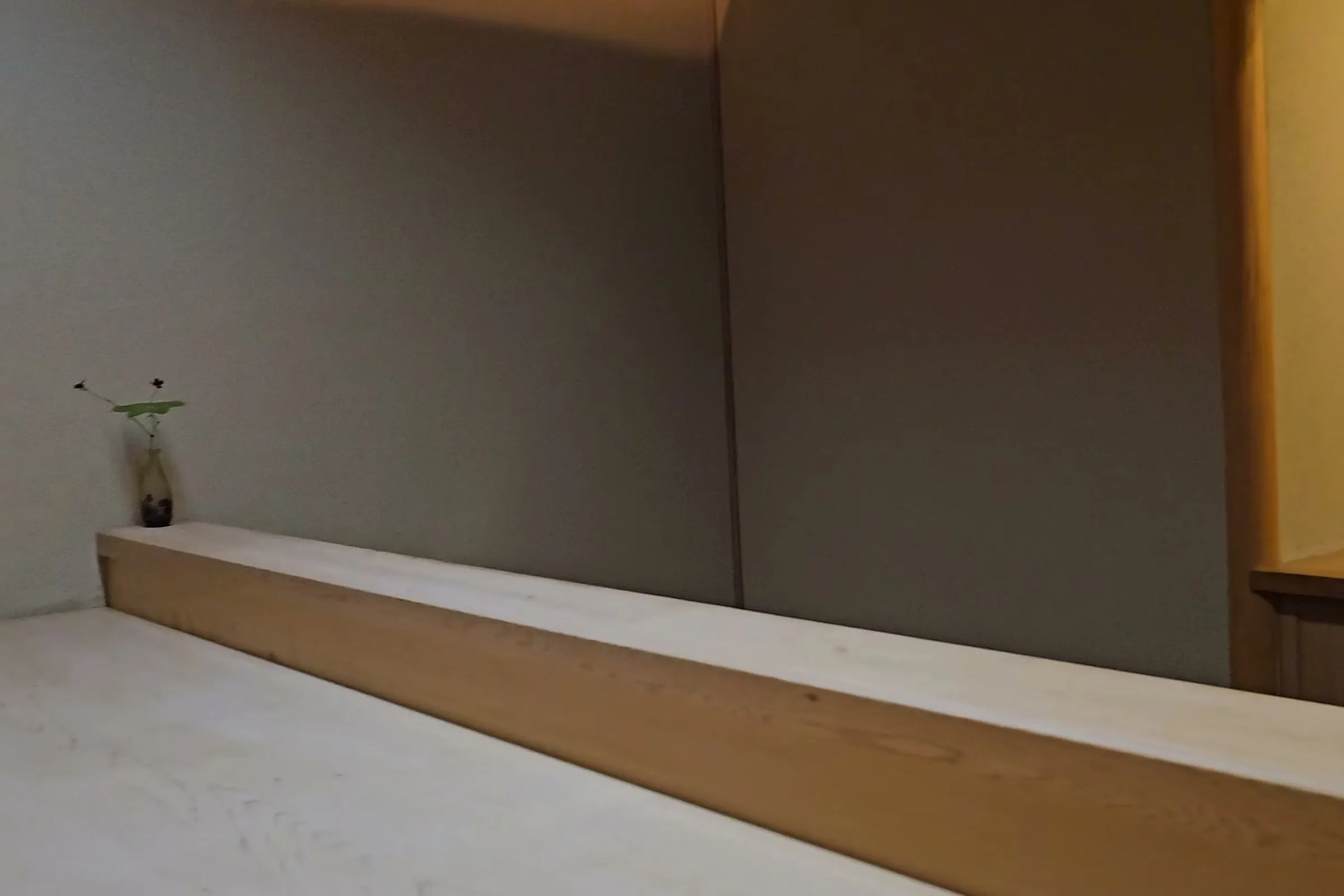
Alone at the counter with chef Matsukawa
Most photos of Matsukawa you’ll find online are from the private rooms. The counter is where you’re normally not supposed to film. My friends were regulars, and our booking turned out to be 8:30, when the other guests were leaving. Then they showed up more than 30 minutes late. So I sat at an empty counter, face to face with Matsukawa-san, awkward and alone (2024/09).
Then he told me to go ahead and film. If you’ve only seen him in photos you’d picture someone stern and a little scary. He’s shy. And he barely explains the food, which some people might not like. I loved it.
At a lot of fine dining places the chef tells you what went in, what he meant, and what you should feel. Then I spend the meal thinking, do I feel that? Usually I don’t. Really good food doesn’t need the speech. You eat it and you go, oh, so this is what it is. Matsukawa says it with the food.
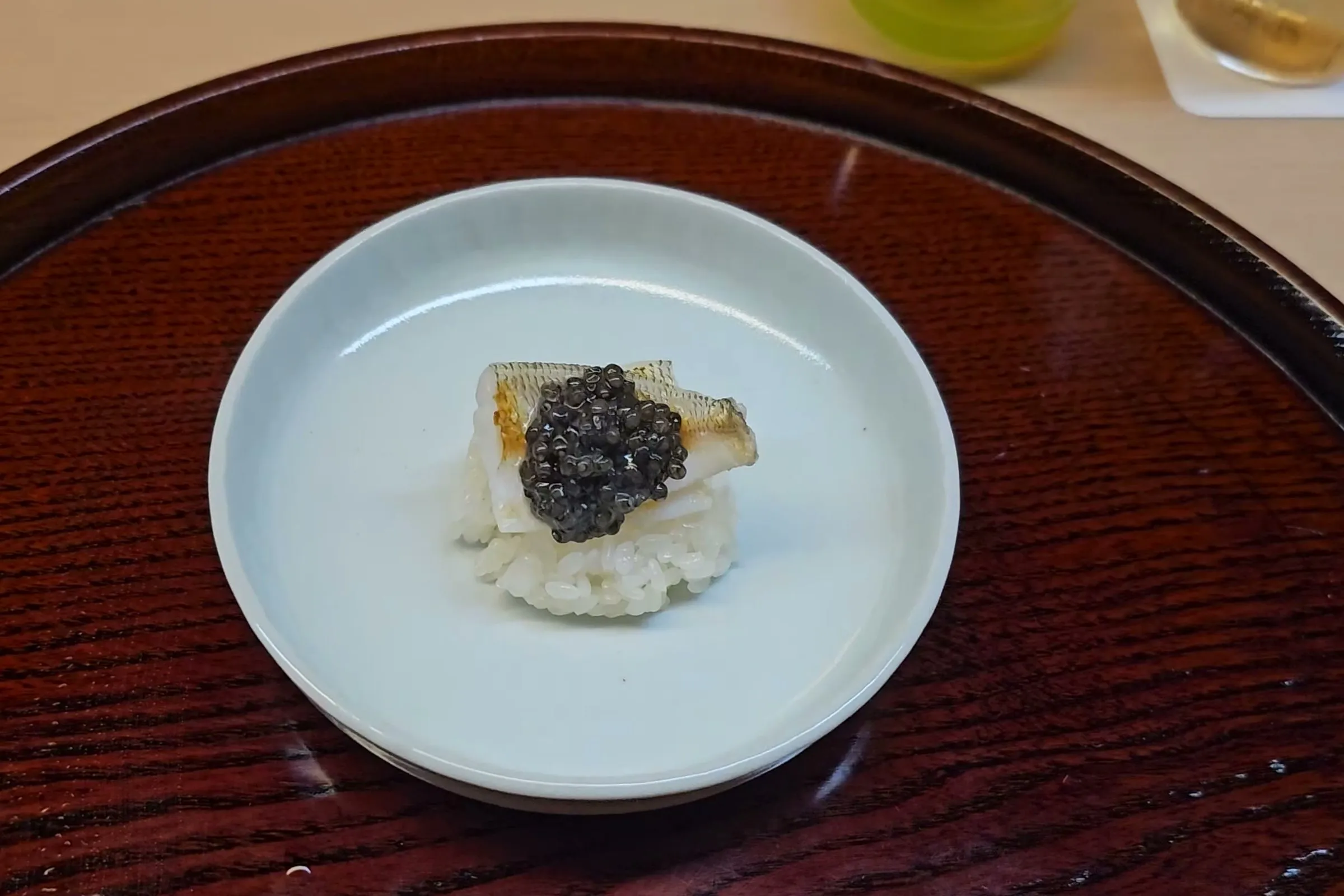
The kisu with caviar that turned the meal
I walk into places like this a little hostile. Years at No.1 on Tabelog, and I’m thinking, fine, show me. That usually makes me harsher. The first dish was nothing special. From the second one on, the dishes were flying, and I fell for Matsukawa completely (2024/09).
That second dish was kisu, Japanese whiting, with caviar on top. The fish tasted deep, like the half-dried, grilled okdom, tilefish, Koreans eat with rice. And the caviar was the first caviar I’ve ever found delicious. I asked another Matsukawa regular later which caviar they use. Usually Kazakhstan, he said (2024/09).
Plenty of people love this dish. In 2026 one of the older gentlemen ordered a drink to go with it the moment it arrived and waited for the drink before touching it. I nearly stole his (2026/08).
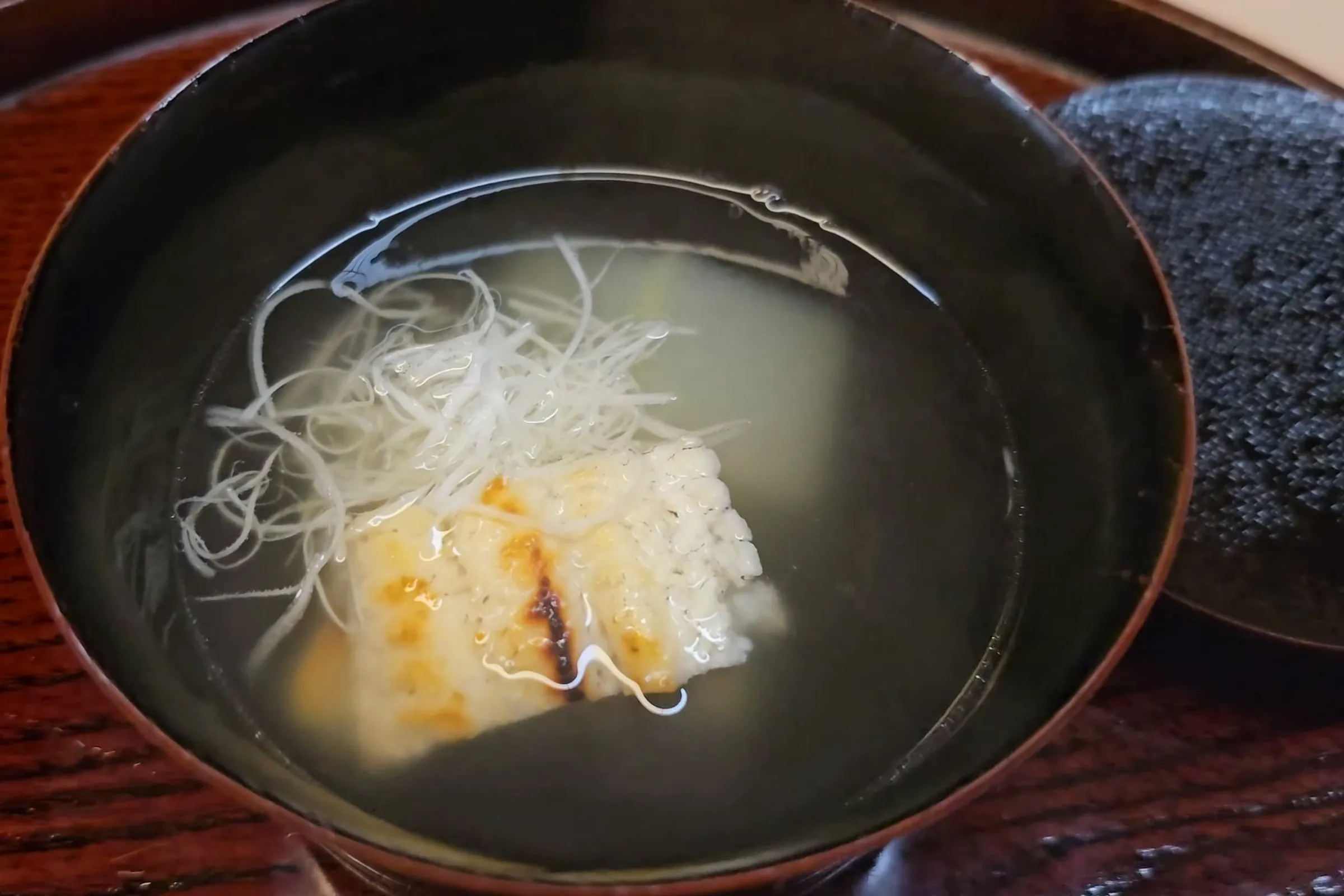
A broth like a blade of ice
This is where I knew Matsukawa was on another level. When I like a broth at a Japanese restaurant, it’s for one of two things: a sharp seasoning, or a heavy, direct hit. Tenjimon in Seoul has the style I like. Kasumicho Yamagami’s broth is heavy and direct, but not sharp (2024/09).
Matsukawa’s is dense, and also perfectly clear, like a blade of ice with no frost on it. Sharp and clean. I haven’t eaten at that many top Japanese restaurants, but I’ve been to a few three-star places and a few that ranked No.1 or No.2 on Tabelog. Next to them, Matsukawa is one level higher again. There’s technique in it I can’t even measure.
Matsukawa-san said the course was different from what the other guests got. One of my friends loves soups, so he made a tai head simmered in broth. It wasn’t on camera, but I lifted the bowl and drank every drop. A sharp broth that doesn’t tire you out. He cooked the tai separately too, so the skin was crisp and the flesh was a little dense, almost half-dried.
Another bowl was suppon, soft-shell turtle. Bite down and the juice and fat burst out. The texture beats Yamagami’s. The suppon smell is stronger, though, so I still prefer Yamagami’s suppon, which turns all of that into pure umami. When I told Matsukawa-san my favorite Japanese restaurant was Yamagami, he looked surprised. He said Yamagami is the best to him too (2024/09).
Hamo shabu-shabu, three plates of it
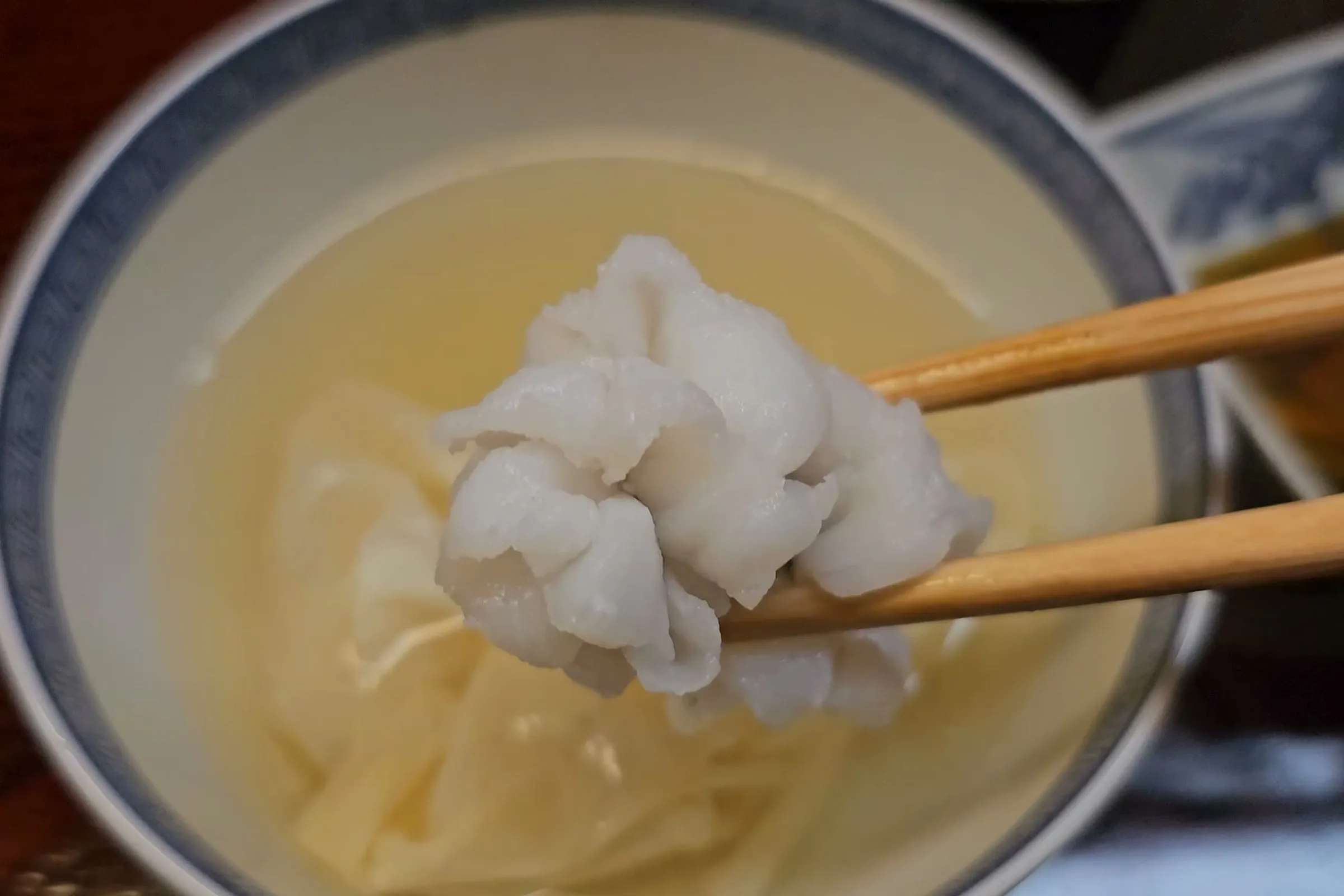
Hamo, pike conger, gets cut in front of you, and the knife sound is so satisfying I filmed it for no reason. Then a grilled fig, dried on the outside like a roasted sweet potato, and a small burner for each of us. The hamo is for shabu-shabu, sliced so thin it’s see-through, and it opens up in the broth like a flower (2024/09).
Matsukawa-san doesn’t explain, remember. My friends go once or twice a month and just started cooking. Before I could copy them, he quietly showed me how.
My friends had come from drinks, ate one piece of everything and passed the rest to me, so I had nearly three servings of the whole course. With hamo it shows something odd. You’d think the broth gets better as more fish goes in. Here it goes the other way: the base dashi is so good that the hamo makes it cloudy and pulls it away from the taste I liked. On my third plate Matsukawa-san took a piece, grilled it, and gave it to me separately. He didn’t say why. I think he guessed I was getting tired of it.
Bear meat soup, the weakest bowl of the night
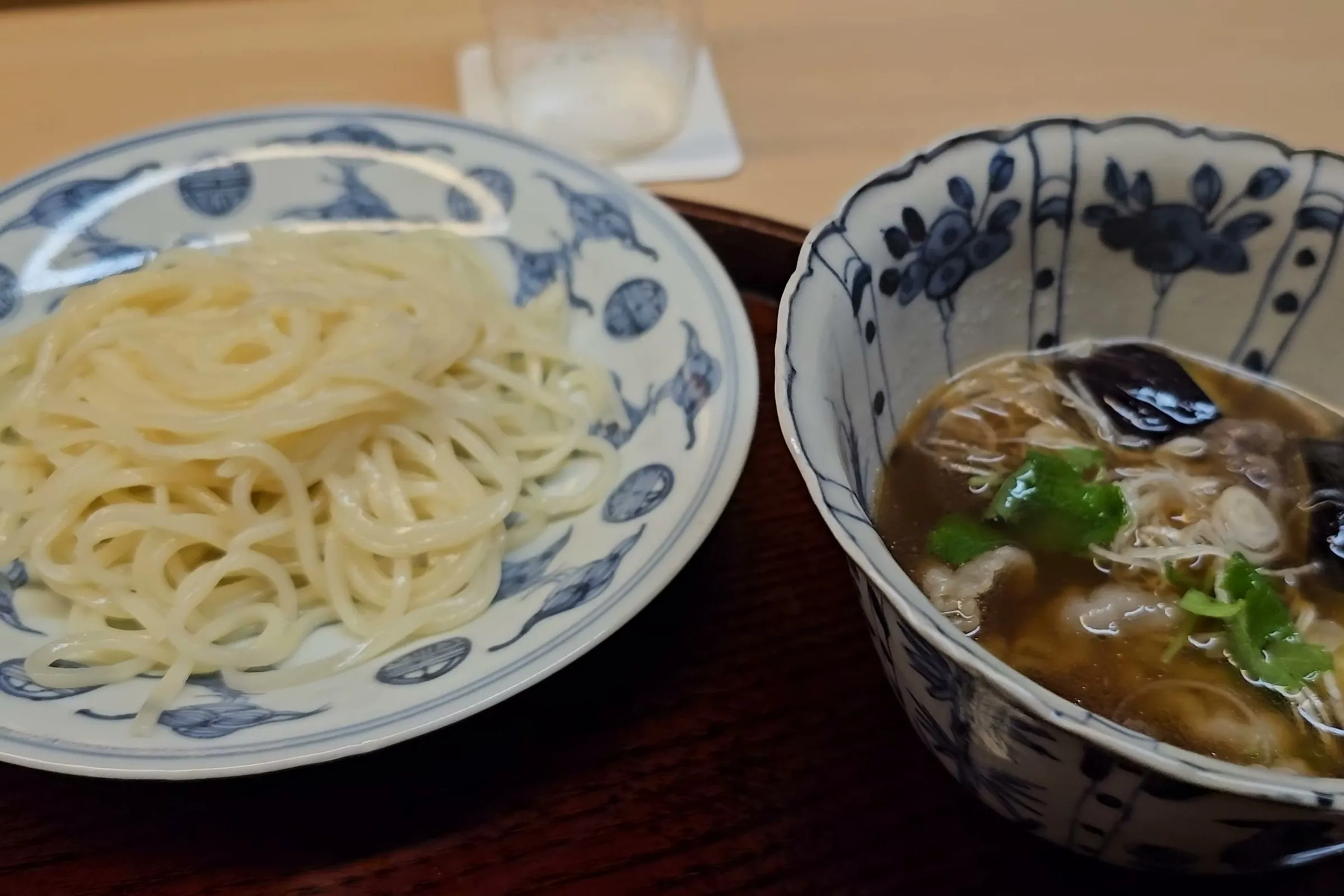
Next came noodles, which were a special too. Matsukawa’s signature noodle comes in a big, heavy, crystal-clear ice bowl, and all the other guests got it. I wanted that one. We got a hot soup with bear meat instead, with mitsuba and scallions to add yourself, and noodles to dip like tsukemen (2024/09).
Bear is supposed to be famous for its strong smell. I couldn’t find it. The soup was sweet and salty and rich, and the meat ate like fatty beef brisket. It reminded me of sweet galbi noodles in Korea. Sweet gets old fast, so I added a lot of the spicy condiment, which my friend said I’d need.
Was it bad? No. But of all the broths that night, this was the worst, because the others moved me so much that it couldn’t stand next to them.
The rice at the end is my favorite thing here
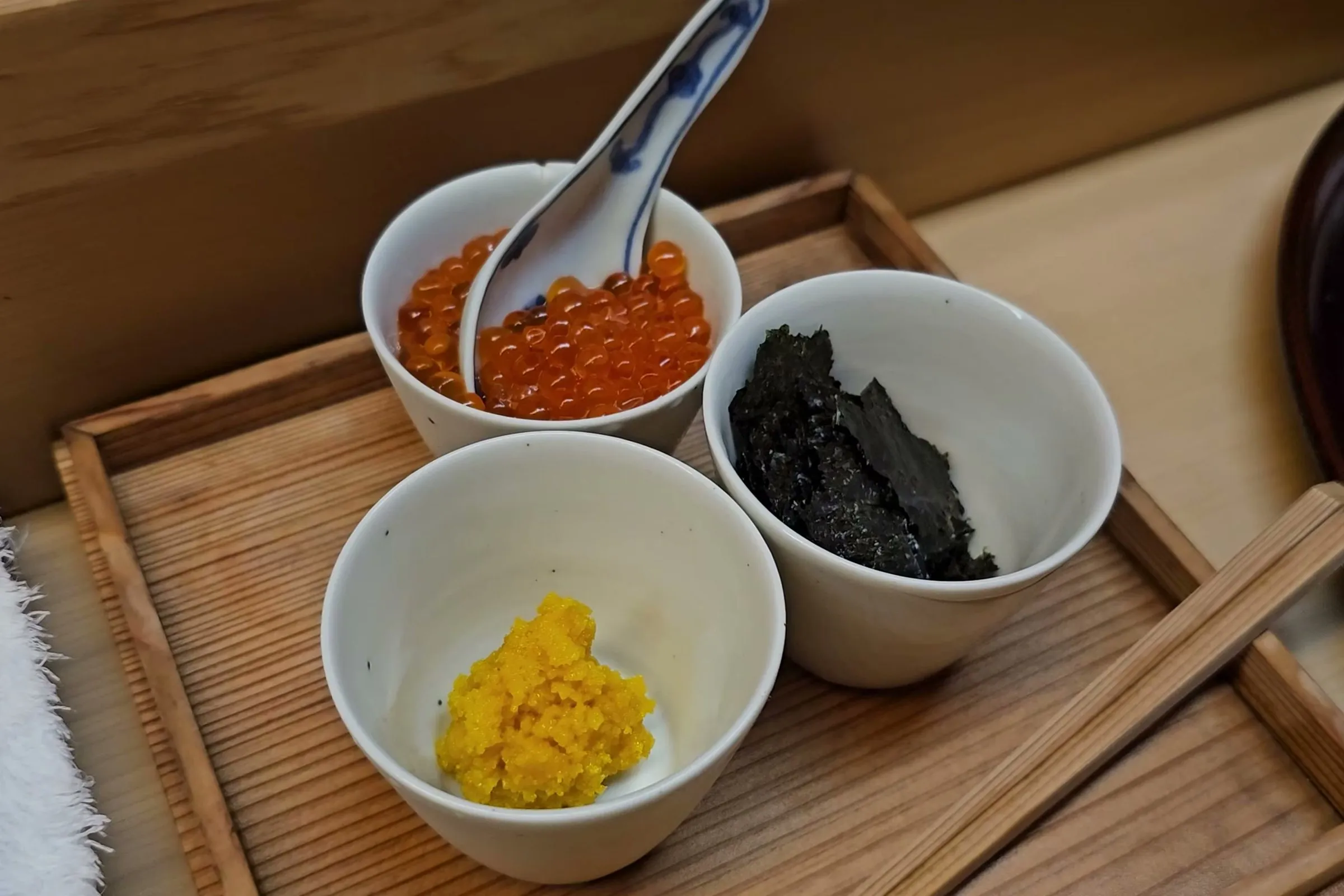
Matsukawa ends with plain white rice and a set of toppings to add yourself: crumbled nori, ikura, karasumi (cured mullet roe) and jako, tiny dried fish cooked with sansho berries. The jako is the real main. The sansho smell is wild. On my first visit, as regulars, we also got side dishes, and a little jar of the jako to take home. I ate it with two bowls of microwave rice at once, in the middle of a diet (2024/09).
It’s the thing I like most at Matsukawa. The trick: go light on the ikura and heavy on the karasumi and jako. Not too much karasumi or it gets salty. If I had to pick one, it’s the jako. Every topping is great except the ikura, which isn’t bad, it’s just ikura. The white rice itself is delicious (2026/08).
One of the older gentlemen always asks for miso, umeboshi and the like on the side, so I tried those with another bowl. Tasty, and exactly what old men ate with rice back in the day. Not what I come to Matsukawa for. So I got a refill and went back to my toppings. Refilling rice at a Japanese restaurant is one of my favorite things. At Ginza Ugai I had four extra bowls of the soy egg rice (2026/08).
A dessert like cutting air
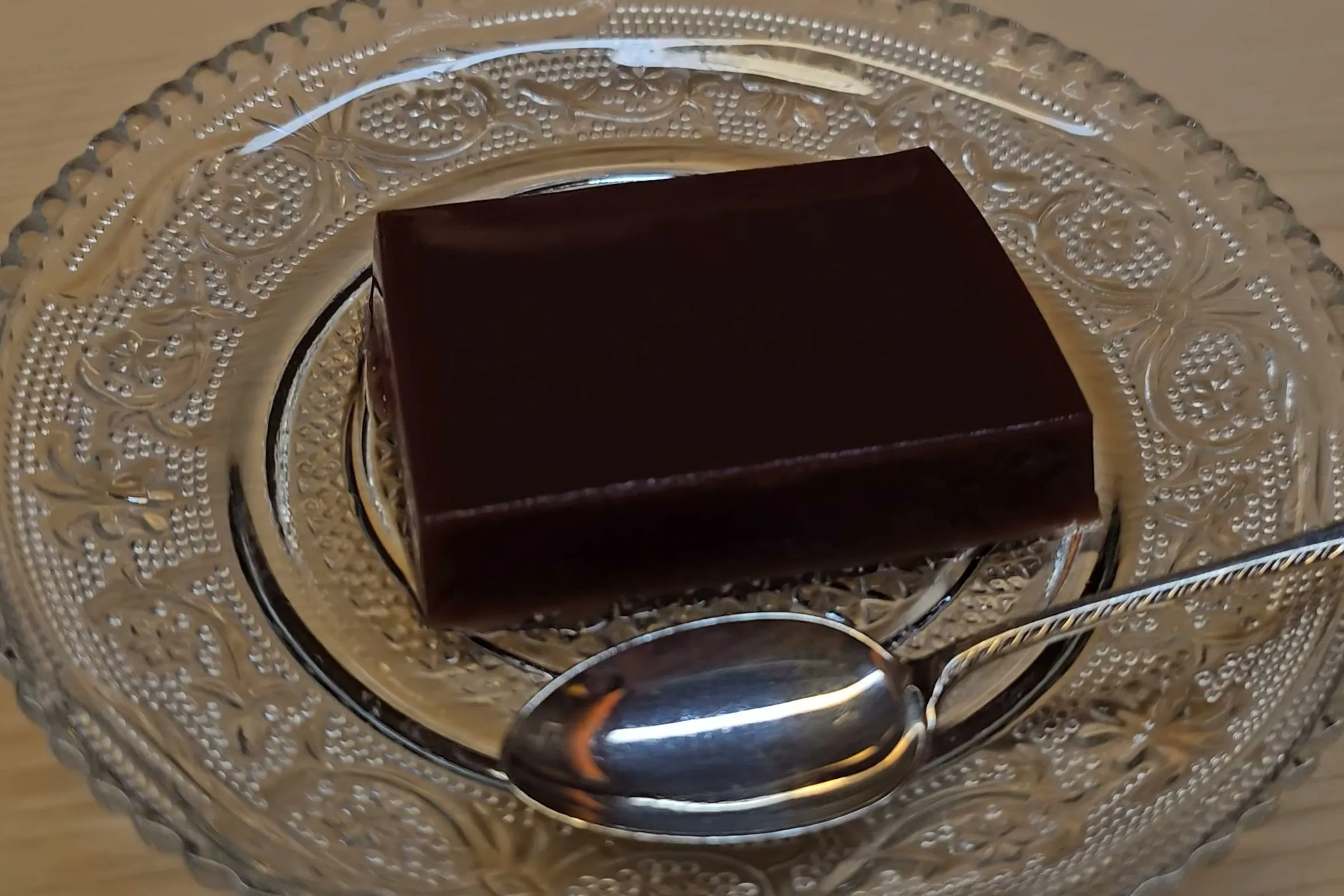
Then Matsukawa’s signature dessert, a yokan-like sweet. Watch the spoon go in. It’s like cutting air. I’m not exaggerating: anyone who’s put a spoon in it knows. Everyone has eaten yokan and mizu yokan. I’d never seen this texture (2024/09).
In your mouth it scatters and disappears the same way it did under the spoon. Not too sweet. The meal starts and ends with the same tea, a welcome cup before the first dish and the same one at the end.
Summer in a private room
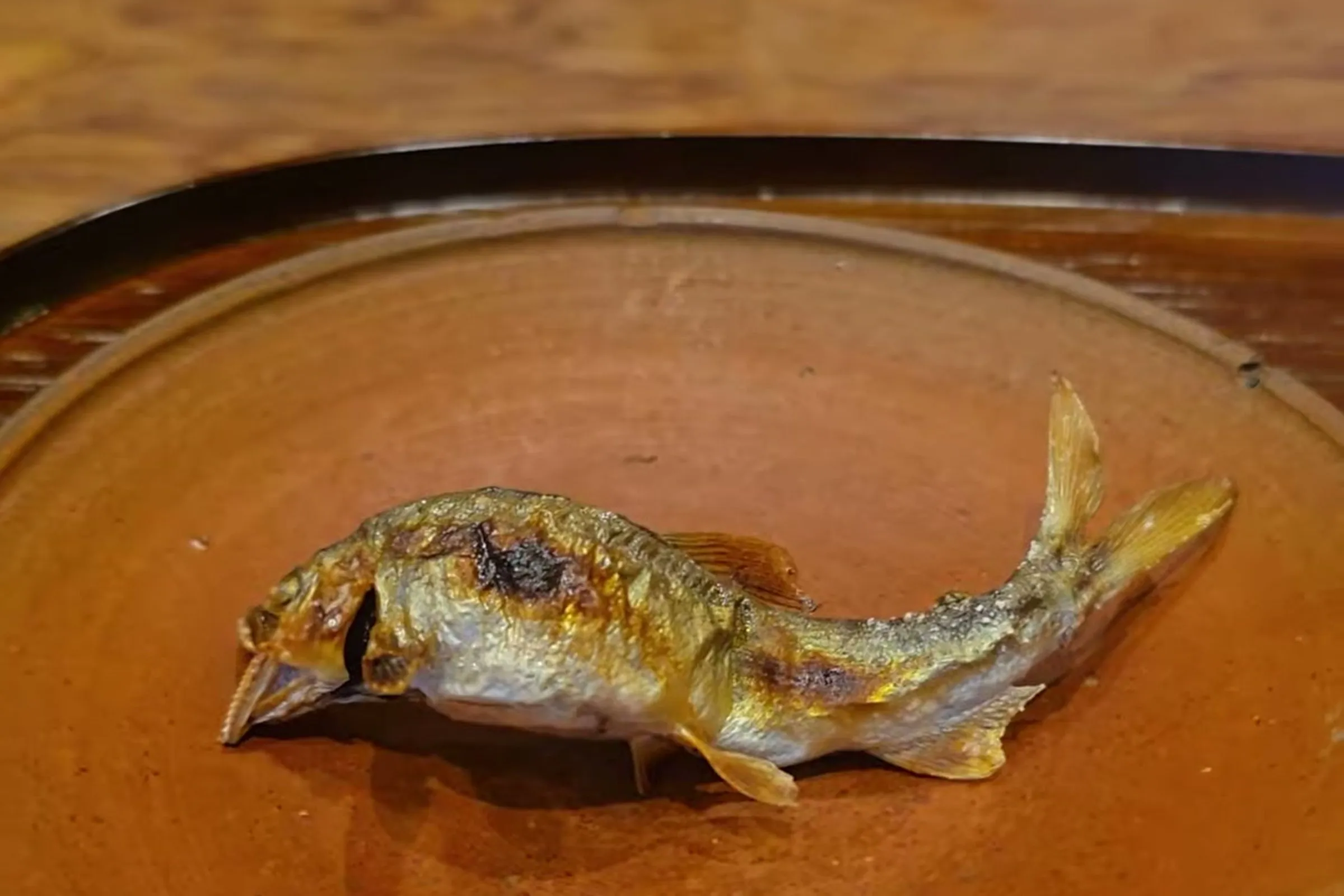
Matsukawa changes with the seasons, but if you go in the same season you’ll get much the same dishes. They’ve served many of them for years, and they’ve all become signatures. In summer you feel the season more: aka uni, ayu, hamo, corn (2026/08).
The cold abalone had an amazing aroma with no fishy edge, so good on its own that I skipped the kimo sauce, which I usually love. That night the sauce was the fishy part. The clear soup had okoze, a scary-looking fish with flesh a bit like monkfish, and eggplant so sweet it was heading toward chestnut. The broth was lighter than I like, and the vegetables’ sweetness carried it. The grilled ayu came with a tade vinegar sharp enough to remind me of salsa verde.
And the famous noodles in the carved ice bowl, which I missed the first time. Forget the broth. The soba itself is the point: the buckwheat aroma and the texture were overwhelming, better than at places that do nothing but soba.
Where Matsukawa fell short for me
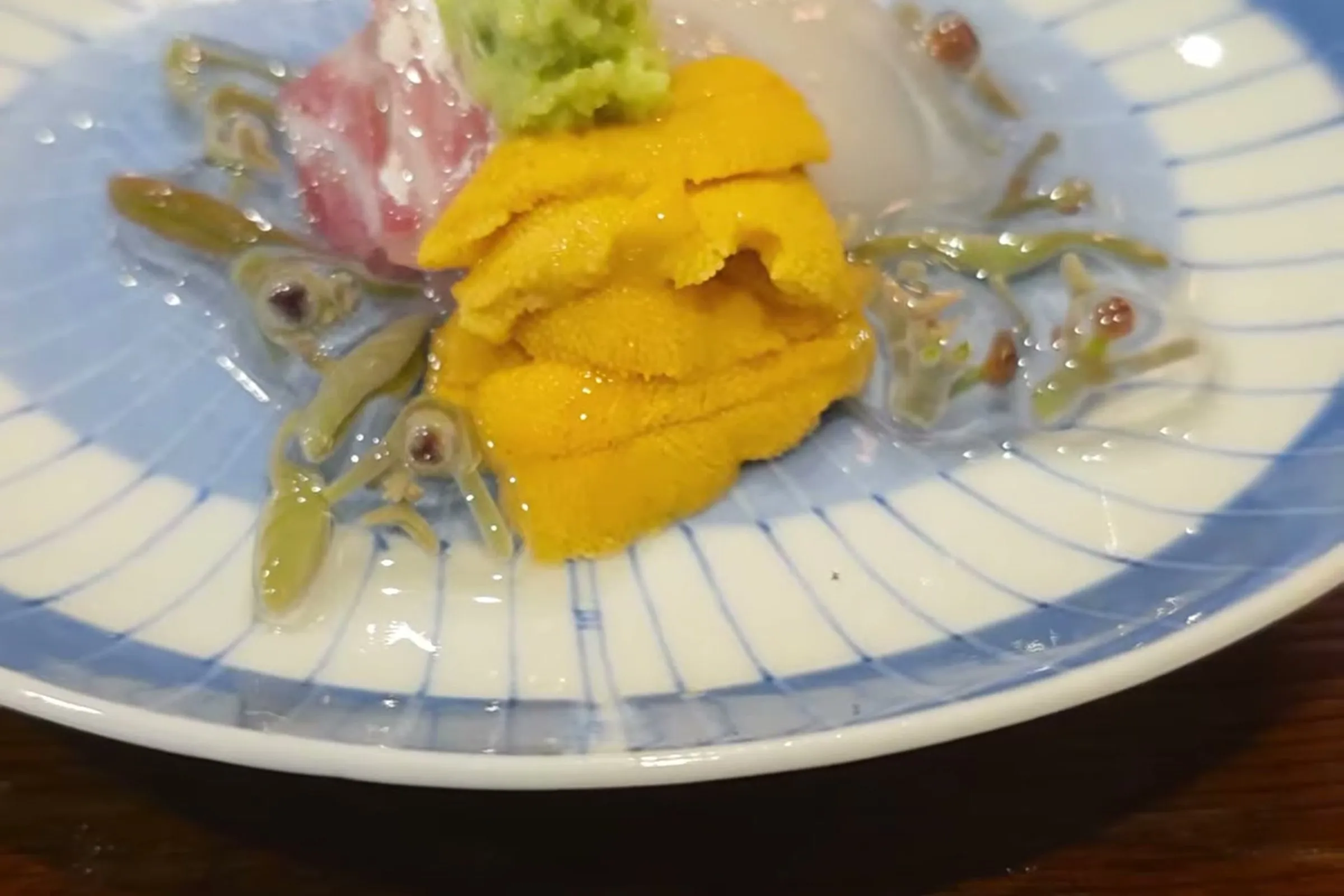
Sashimi. At top Japanese restaurants the white fish sashimi is usually a level above what sushi counters serve, and I always find that strange, since sushi chefs are the raw fish specialists. My first visits to Ishikawa and RyuGin gave me that feeling. At Matsukawa the sashimi was that good, but not a level beyond it (2024/09). In 2026 the tai sashimi didn’t give me that edge at all, and the aka uni was just clean, when I love it for its rich taste (2026/08).
The broths in summer were sharp but not as deep and punchy as on my first visit. The first time, Matsukawa felt like a step above everything I love, depth plus an edge on top. This time the edge was there and the depth wasn’t (2026/08). And the bear soup in 2024, as above.
¥80,000, then ¥84,200, cash only
2024/09 video
Last visit: ¥84,200 for my food, no drinks, about US$530 (2026/08). Paid in cash, because that’s all they take.
First visit: about ¥70,000 a head for the food according to my friend, and I gave him ¥80,000, about US$560 (2024/09). He paid around ¥400,000 for the three of us, drinks included, in cash.
What Matsukawa has cost me, visit by visit
2 visits where I said the bill on camera. ¥80,000 in 2024/09, ¥84,200 in 2026/08. Up 5%.
Food only, per person, no drinks (I don’t drink). Each point is what I said on camera, dated by the month the video went up. 2024/09 is the cash I handed my friend for my share; he said the food alone usually runs about ¥70,000. Each month is when that video came out.
Would I go back
Yes. It isn’t sushi, and I still worship it. The broths alone are a level I can’t explain.
It’s too hard to book for me to tell you to go. But if anyone ever offers you a seat, even by accident, take it. And bring cash.
How to book
How I booked
Both times I went with friends who are regulars. The first time, a friend who can get in anywhere took me to the counter. The second time, a friend from Osaka booked a private room and then couldn’t come because of a typhoon.
- Referral from a regular
Tabelog (checked 2026/11) says Matsukawa is complete referral and reservation only, with no online booking. The phone number, 03-6277-7371, is on Tabelog and Google Maps, but a first-timer without a referral won’t get a seat that way. Cards, e-money and QR payments aren’t accepted, so bring cash. Dinner Monday to Saturday, lunch Thursday and Saturday, closed Sundays and holidays.
Checked 2026/11. Booking rules change, so look at the official page before you go.
Where it is
- Address
- 1F Akasaka Terrace House, 1-11-6 Akasaka, Minato-ku, Tokyo東京都港区赤坂1-11-6 赤坂テラスハウス 1F
- Nearest station
- Roppongi-itchome (Namboku Line), exit 3, about 10 minutes on foot
Plan the Tokyo trip
The boring bits I’d sort before flying, so the eating days stay free.
- Hotels in Tokyo*
Pick the room by where you eat, not by the sights. After a long dinner, a short ride back is the real luxury. This place is in Akasaka, Tokyo.
- Japan eSIM*
Data from the moment you land, no counter and no SIM swap. Set it up the night before.
- Keisei Skyliner from Narita*
Narita to Ueno in about 40 minutes. Buy it ahead and walk straight to the platform.
- Haneda airport limousine bus*
Landing at Haneda instead? The limousine bus drops you at the big hotels and stations with no transfers.
- Tsukiji Outer Market food tour*
A market morning with someone who knows which stalls are worth the line.
- Sushi-making class at Tsukiji*
Shape nigiri yourself once and the counter makes a lot more sense.
Links marked * are affiliate links. If you book through them I may earn a small commission, and you pay the same. How it works
More from this restaurant on the channel
- The peak of Japanese cuisine | Matsukawa10:022026/08
More places I have eaten at
All of Tokyo →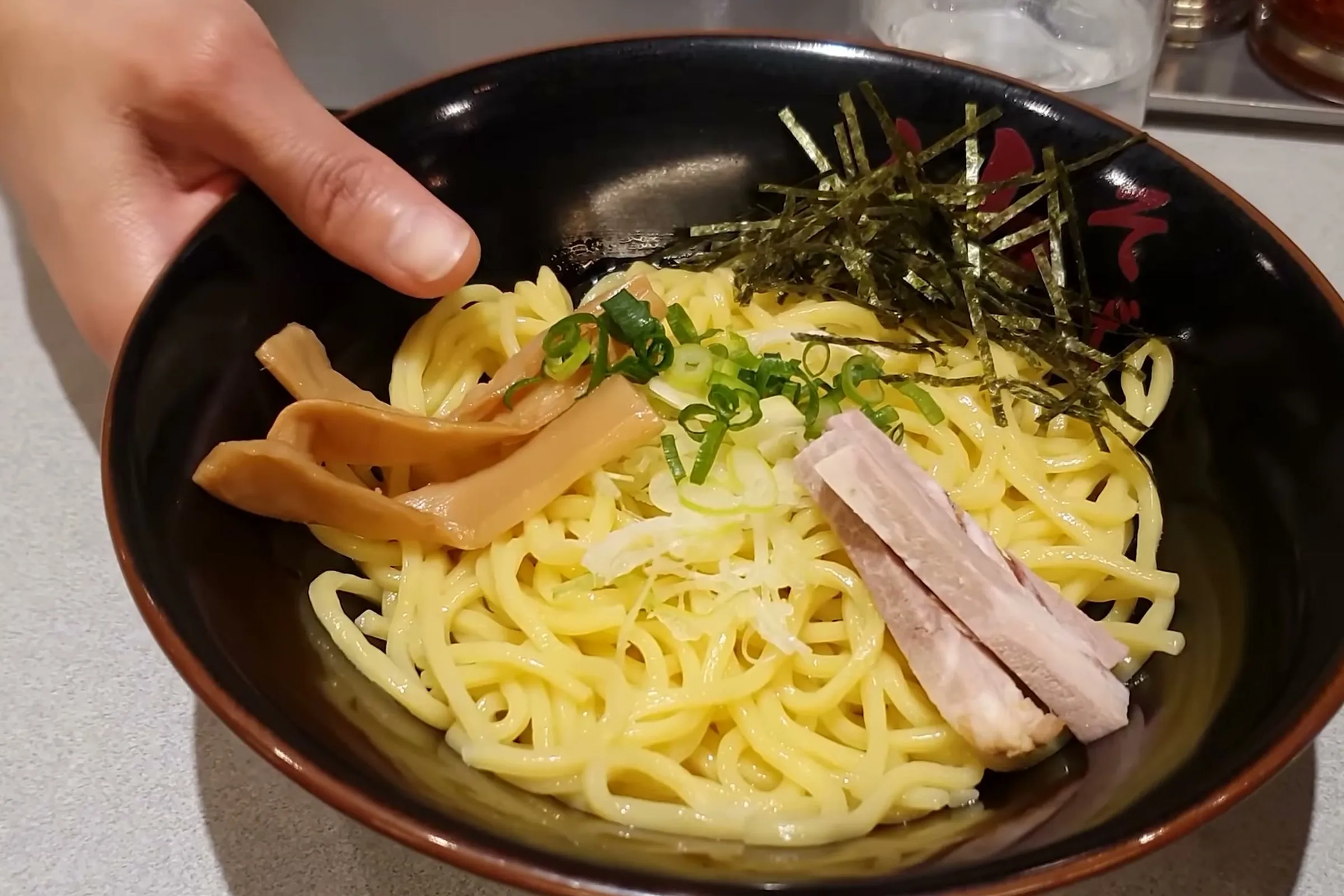 Ginza 6-chome, Tokyo
Tokyo Aburagumi Sohonten Ginza (Tokyo Abura Soba)
Soupless ramen in Ginza, same price for every size, open till 4 a.m.
¥760 2019/06 video Azabu-Juban, Tokyo
Sushi Meino
Chef Mei came up behind Arai. Her tsumami beat her rice.
¥66,700 2026/11 video Honmachi, Shibuya (Nishi-Shinjuku side), Tokyo
Ramenya Shima
Tabelog’s top ramen, one chef, a slow line, a lot of salt.
¥1,700 2022/12 videoSources
- Matsukawa (松川) Tabelog
- Japanese Yen to U.S. Dollar Spot Exchange Rate (EXJPUS) FRED, Federal Reserve Bank of St. Louis