My favorite ramen in Ginza has no soup
Tokyo Aburagumi Sohonten Ginza (東京油組総本店 銀座組) is the abura soba shop most people just call Tokyo Abura Soba. Abura soba is ramen with no soup: thick noodles in a little soy-based sauce that you finish yourself with vinegar, chili oil and whatever is on the counter. It’s in Ginza 6-chome, three minutes from Ginza station, and a bowl was ¥760, about US$7, the same for regular, large and double (2019/06). The official menu has it at ¥880, about US$6, still one price for every size (2026/11). No booking, you buy a ticket at the machine and wait for a counter seat, and it’s open until 4 a.m. most nights. I don’t like Japanese ramen much. This is my favorite ramen place in Tokyo. Would I go back? Every trip.
monster gourmetFrom my 2019/06 video
- My share
- ¥760
- about US$7, abura soba, any size, on the ticket machine, plus boiled dumplings I never priced; ¥880 on the official menu, 2026/11, 2019/06 video
- Highlight
- The chopped onions, poured on until it looks wrong
- Skip
- The spicy miso button. Order the regular and make it hot yourself
- Video
- 5:19
- 2019/06
- Where
- Ginza 6-chome, Tokyo
- Ginza (Hibiya Line), exit A4, or Higashi-Ginza, exit A1, about 3 minutes on foot from either
Ramen for a guy who leaves the soup
First Tokyo video, and I picked a ramen place. Funny, because I don’t really like ramen in soup. Japanese ramen is too greasy and too salty for me. So this one has no soup at all.
Everyone calls it abura soba, and the sign out front says 油そば in big red letters. The real name is Tokyo Aburagumi Sohonten, and this is the Ginza branch, Ginza-gumi. Abura means oil. The noodles sit in a bit of soy sauce tare at the bottom of the bowl, you mix, you eat.
The brand calls the noodles house-made from a special flour, and the company behind it says it has been making noodles for 78 years. Tabelog has the Ginza shop opening in February 2010, with eight counter seats (checked 2026/11).
Every size costs the same
You order at the ticket machine by the door, and here’s the good part. The price is the same for every size. Regular on the left, large in the middle, and W on the right, which means double. All ¥760 (2019/06). The row below is the spicy miso version, ¥820 then.
Don’t press the spicy row. Order the regular and make it spicy yourself at the counter. More on that below, it’s the whole point.
I had a dinner booked later that night, so I got the regular size and a plate of boiled dumplings. Today the official menu lists abura soba at ¥880 and spicy miso at ¥980, still 160 g, 240 g or 320 g of noodles for the same price, and three dumplings at ¥200 (2026/11).
Open till 4 a.m., and a sushi chef’s nightly bowl
This is a great late-night place, because it’s open until 4 in the morning. The official page lists Monday to Saturday 11:00 to 4:00 the next morning, and Sunday 11:00 to 21:00, until the noodles run out (checked 2026/11).
Remember Kim Seong-bok, my favorite sushi chef in Korea, behind the counter at Sushi Ito in Seoul back then? He worked in Tokyo for a while, at Sushi Namba, and he came here every single night. It’s his favorite ramen place, and he still comes whenever he’s in Tokyo. Whenever I post a photo of this bowl, he says he wants to come.
We waited a little for seats, and I ended up sitting away from the people I came with.
Plain, it’s too salty
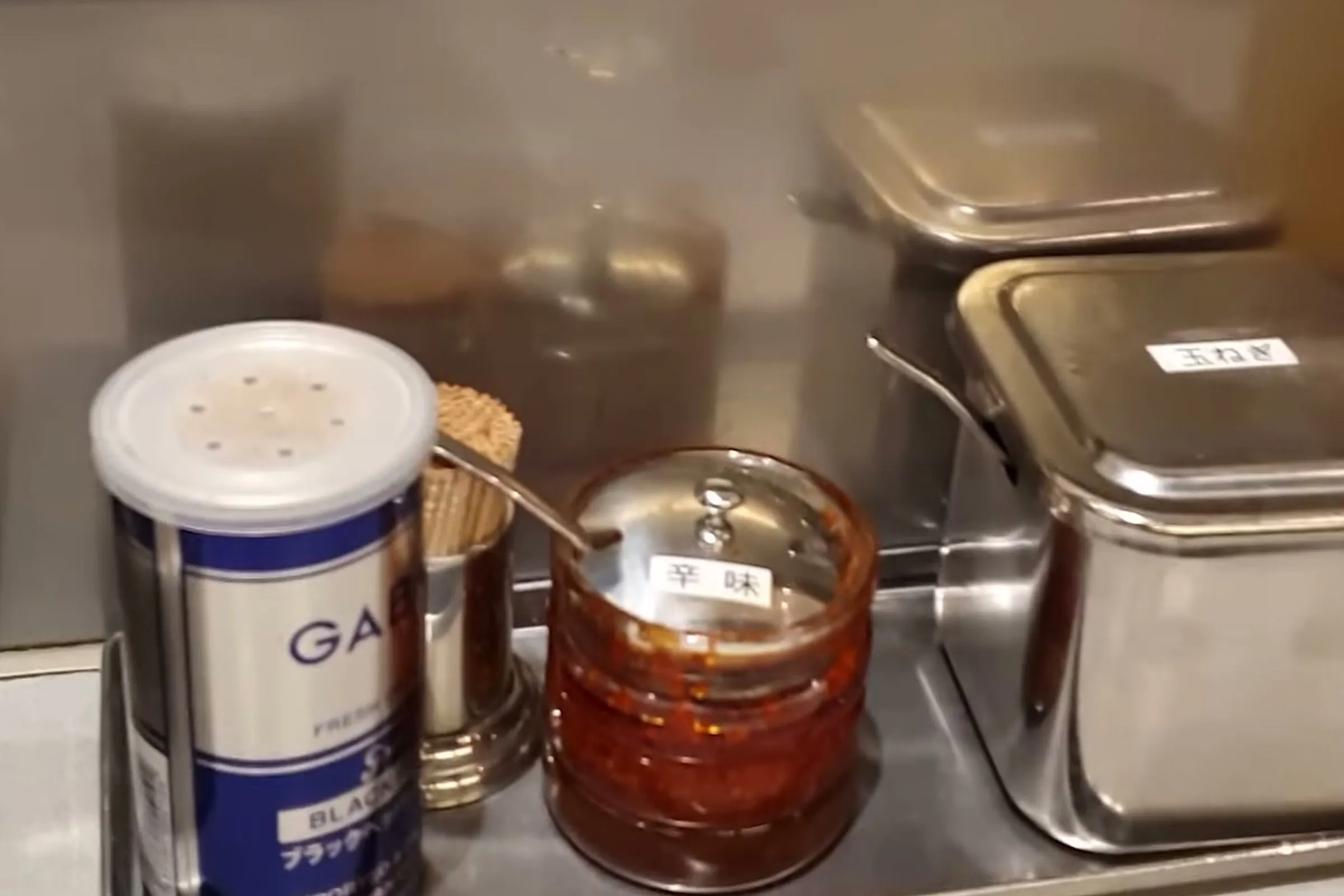
On the counter in front of you: black pepper, karami (the spicy paste), chopped onion, vinegar and chili oil. There’s a card on how to eat it. Pour vinegar and chili oil around the bowl, two times round for a regular, three for a large, four for a W. Another one says a soft-boiled egg on top is great. The last one says it has two thirds the calories of ramen and half the salt, so it’s healthy. If you want to be healthy, just don’t eat ramen.
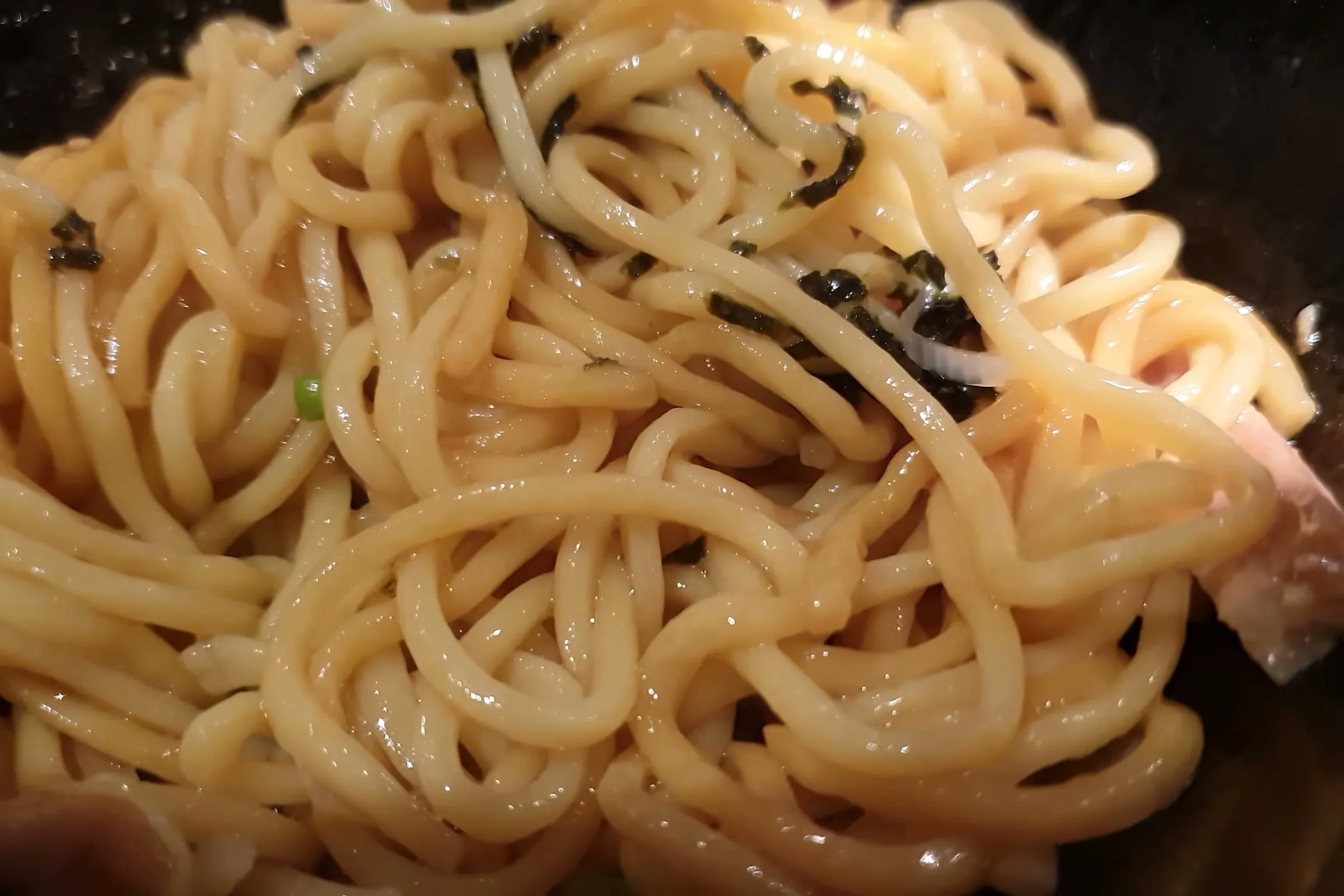
The bowl comes out. It looks so plain, right? Noodles, a little nori, menma, a few slices of chashu that eat more like ham, green onion.
Mix it and you find the soy-based sauce at the bottom. Eat it like that, mixed with nothing added, and it’s salty. Same reason I don’t like most Japanese ramen. I had one bite plain so I could tell you. My friends had never been, so I had to give them a demo anyway.
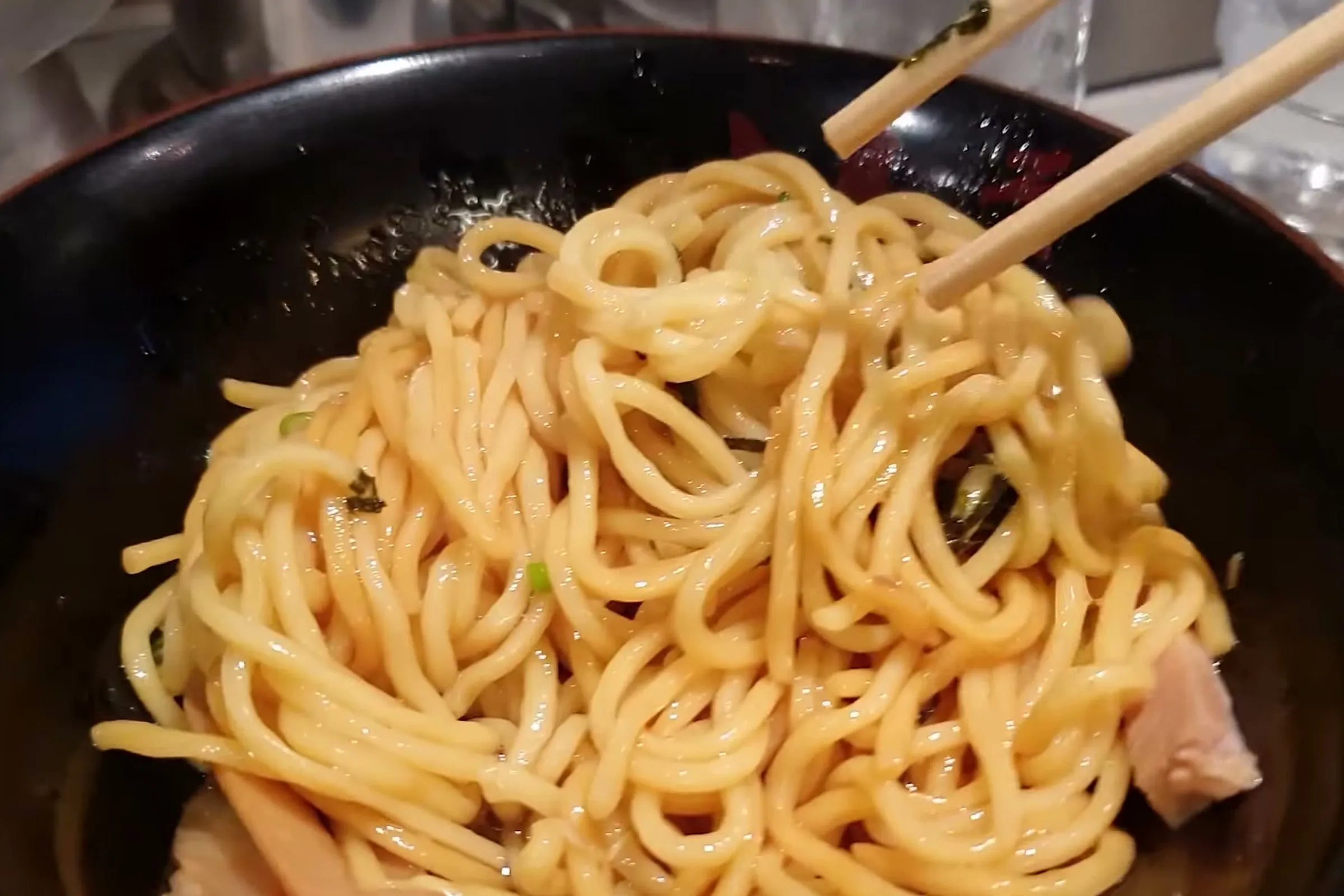
The noodles are pretty thick, right?
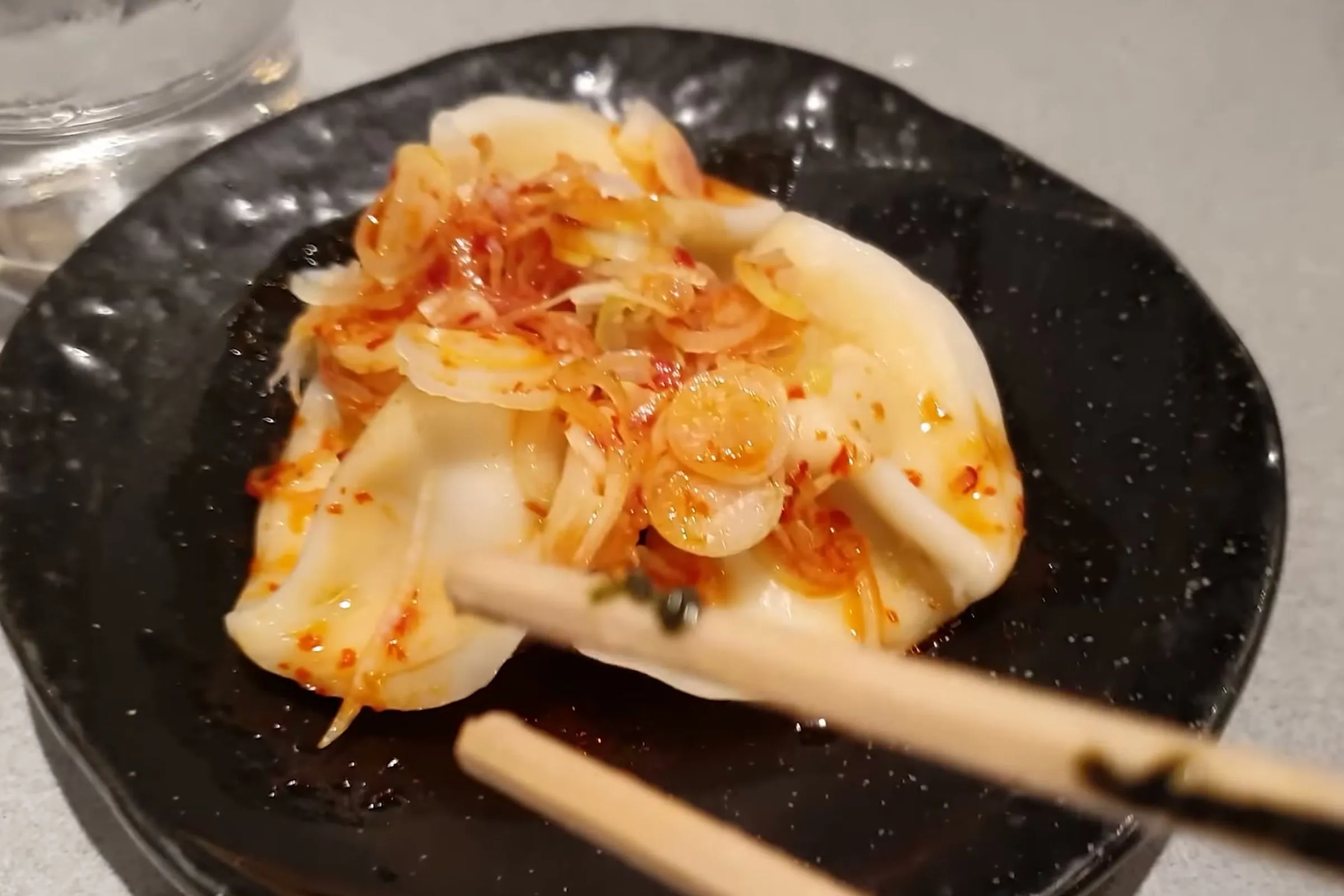
Boiled dumplings, take the negi sauce
When you order the boiled dumplings, they ask which sauce you want: gomadare or negidare. Gomadare is the sesame sauce. Negidare is this one, green onion in a seasoned sauce. Ask them what they recommend and the answer is always negidare.
They’re a little salty and sweet, a bit Chinese style. That’s how I like dumplings, so they were good.
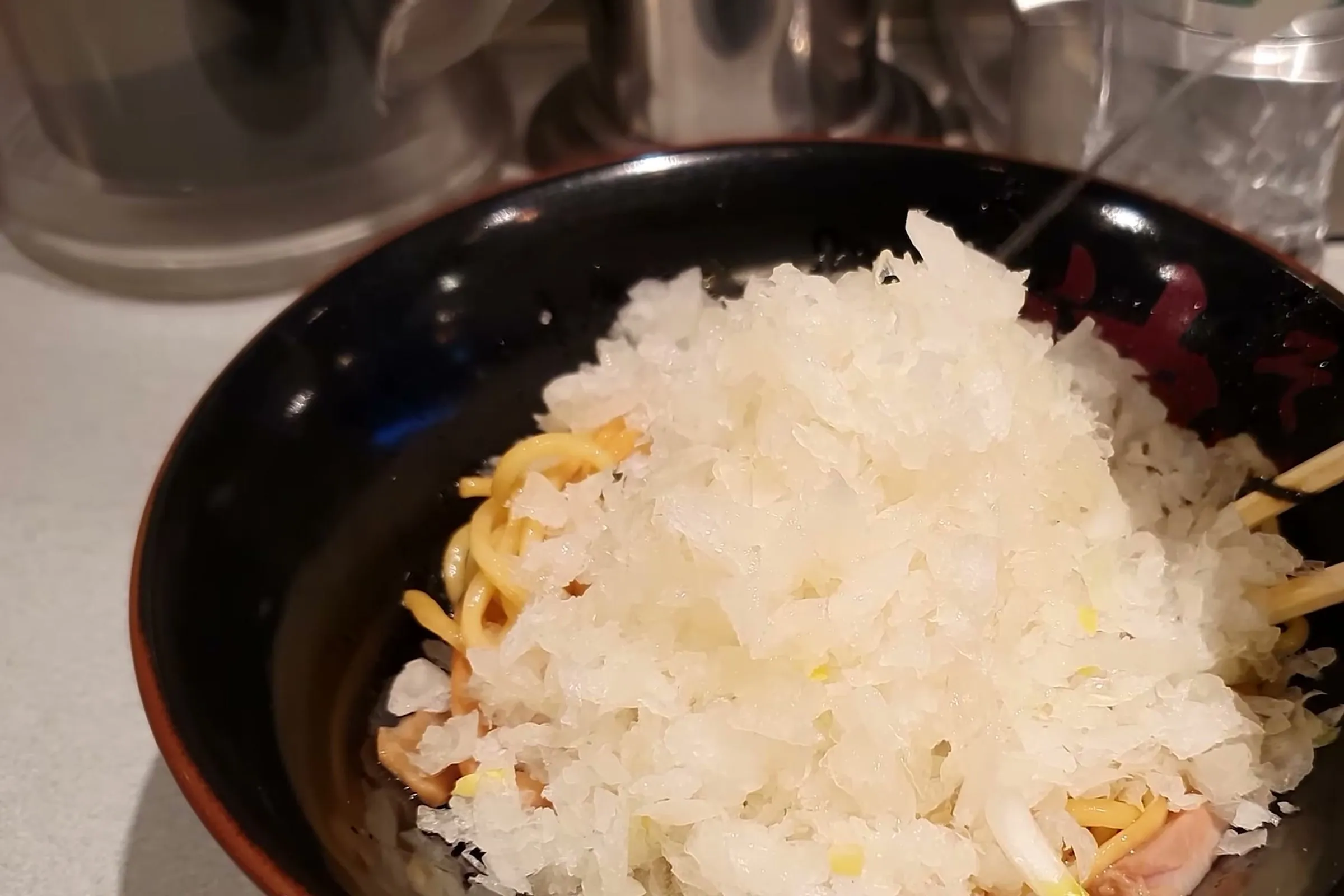
My custom bowl starts with onions
Now I make my custom abura soba. Onions first, and you pour them on until you think, is this okay? If I weren’t holding a phone in my left hand, I’d tip the whole tub over the bowl. I put in almost all of it. I like strong flavors, and remember how the soy sauce was salty? The onions water it down.
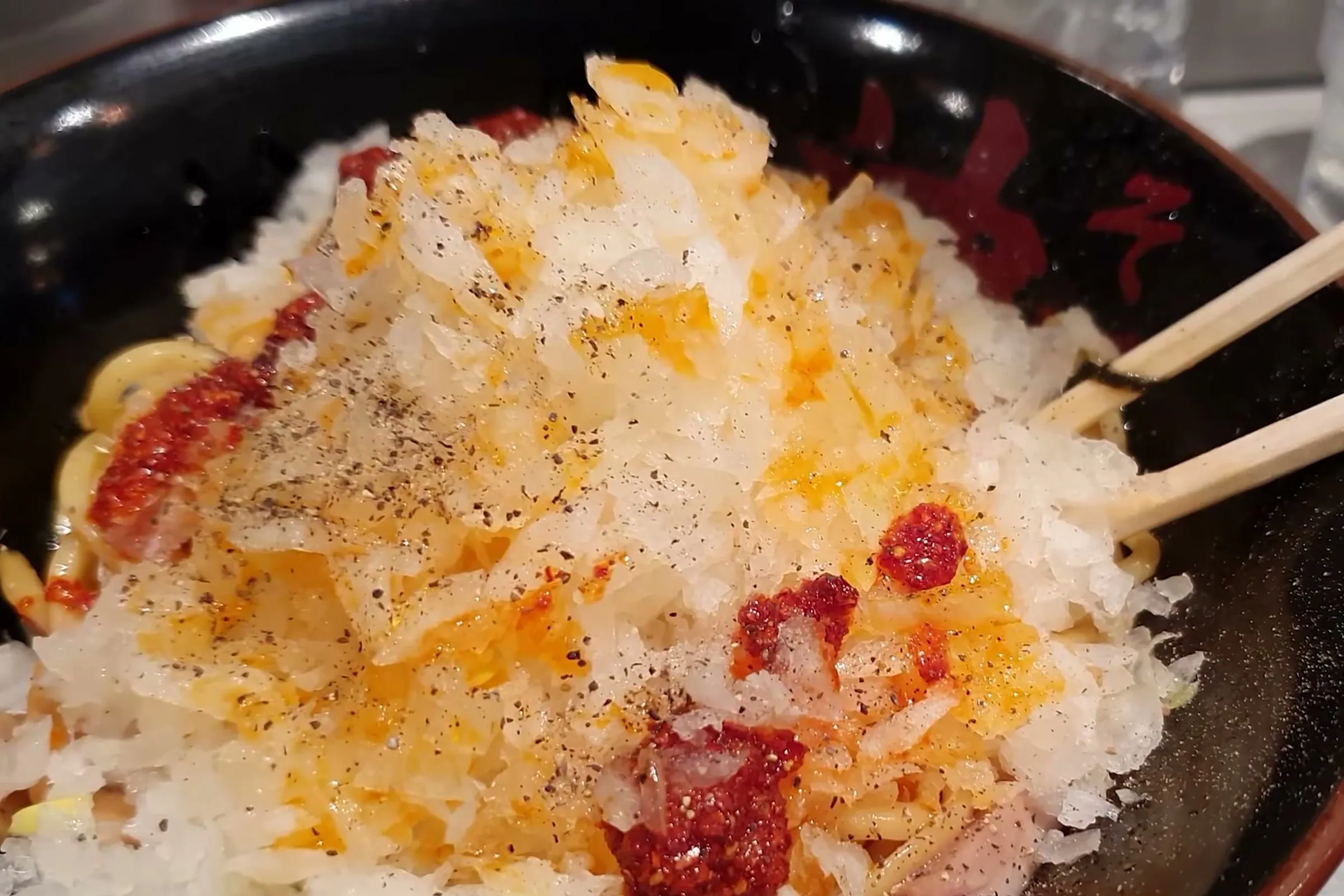
Then the vinegar and chili oil. The card says two rounds for this size. I did double, four rounds each.
Make it spicy yourself
I’m Korean, so the karami goes in. It’s pretty hot. If you copy me exactly, it can end up too spicy and too salty. But if your palate is as dirty as mine, and you don’t care at all about the essence of Japanese ramen, you just want something fiery, then go ahead and dump in three spoons. Still not enough for me, so pepper too. I always eat it like this, bright red.
You might ask, then why not order the spicy one? Chef Kim Seong-bok, the regular who came here every night, says skip the spicy button, always order the regular and make it hot yourself. Chef Kim’s pick. That’s the answer.
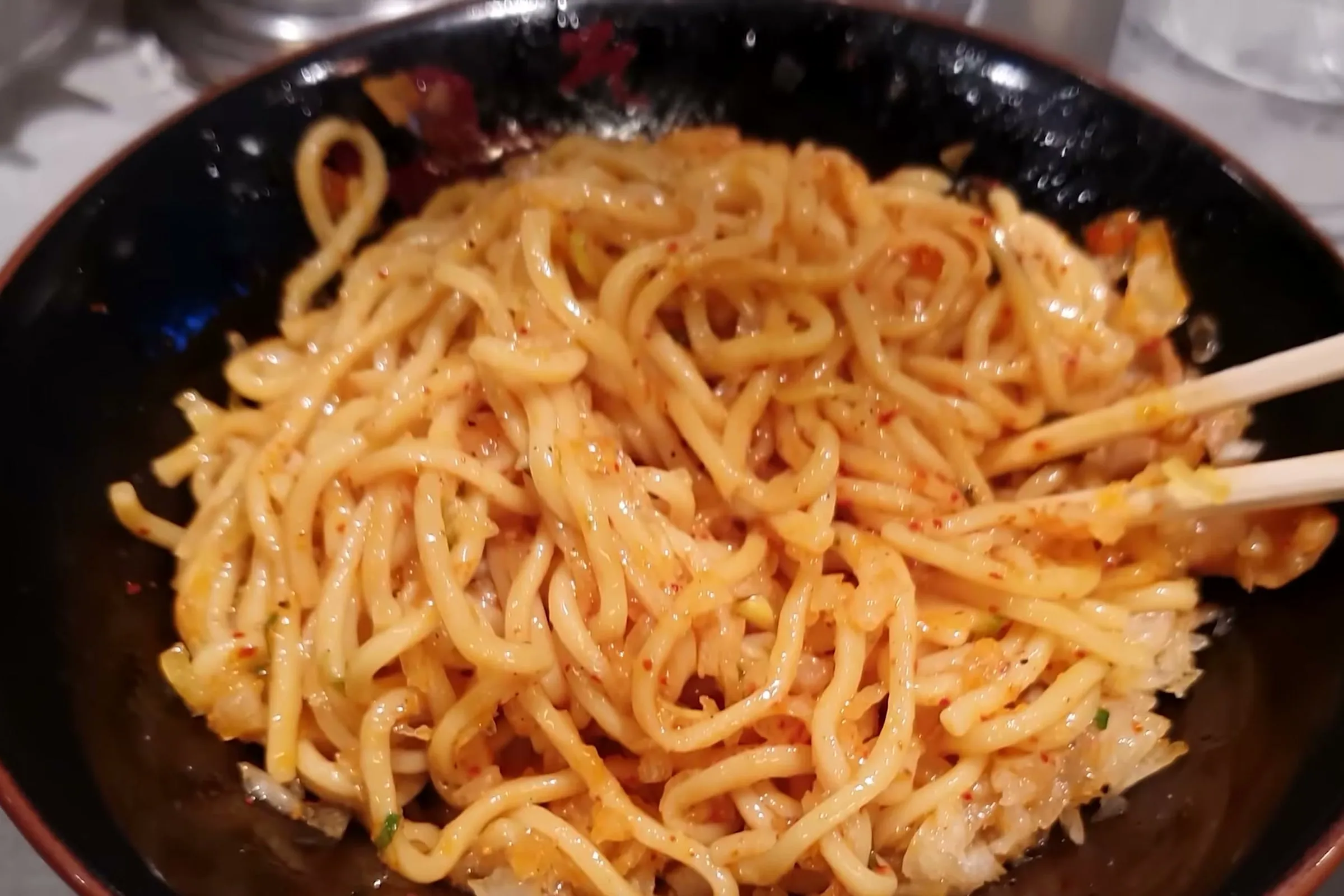
Abura means oil. It didn’t taste oily.
Mix it well and eat. The toppings look thin, I know, all you can see is onion. If I didn’t have that dinner, I’d have ordered the large and loaded it up. There’s chashu in there, or something like ham, and menma, like any ramen.
Abura soba, abura means oil. And it doesn’t feel greasy at all. Sure, I dumped in the spicy stuff and all those onions, so maybe that’s why.
With that many onions, there’s still a pile of topping left after the noodles are gone. I don’t leave it. Korean meat buffets fine you for leftovers, and I’ve never paid that fine in my life, because I hate leaving food.
Under ten dollars, any size
2019/06 video
No receipt here. The ticket machine had abura soba at ¥760, about US$7, for regular, large or double, and spicy miso at ¥820 (2019/06). I added the boiled dumplings. A soft-boiled egg topping was ¥100 on the counter card.
Now the official menu lists abura soba at ¥880, about US$6, spicy miso at ¥980, the egg at ¥100 and three dumplings at ¥200 (2026/11). The Tabelog listing takes cards and e-money like Suica, but no QR payments (checked 2026/11).
My Tokyo ramen, no soup
If you love the essence of Japanese ramen, this isn’t it, and you won’t care. If you’re like me, too much salt, too much grease, then order the regular, pour on the onions, make it red, and mix.
Late night in Ginza, there’s nothing I’d rather eat. Would I go back? Every Tokyo trip.
How to book
How I booked
No booking. We waited a little for seats in the evening and got split up along the counter (2019/06).
- Walk in
The official shop page lists Monday to Saturday 11:00 to 4:00 the next morning and Sunday 11:00 to 21:00, closing early if the noodles run out, and no regular closed day. Tabelog says reservations aren’t taken and lists eight counter seats, closed only over New Year. You buy a ticket at the machine inside the door.
- Menu and how to eat
The official how-to: pour vinegar and chili oil over the noodles, two rounds for a regular, three for a large, four for a W, mix well and eat it hot. Regular 160 g, large 240 g and W 320 g cost the same.
Checked 2026/11. Booking rules change, so look at the official page before you go.
Where it is
- Address
- Katagiri Bldg II 1F, 6-12-16 Ginza, Chuo-ku, Tokyo東京都中央区銀座6-12-16 片桐ビルII 1F
- Nearest station
- Ginza (Hibiya Line), exit A4, or Higashi-Ginza, exit A1, about 3 minutes on foot from either
Plan the Tokyo trip
The boring bits I’d sort before flying, so the eating days stay free.
- Hotels in Tokyo*
Pick the room by where you eat, not by the sights. After a long dinner, a short ride back is the real luxury. This place is in Ginza 6-chome, Tokyo.
- Japan eSIM*
Data from the moment you land, no counter and no SIM swap. Set it up the night before.
- Keisei Skyliner from Narita*
Narita to Ueno in about 40 minutes. Buy it ahead and walk straight to the platform.
- Haneda airport limousine bus*
Landing at Haneda instead? The limousine bus drops you at the big hotels and stations with no transfers.
- Tsukiji Outer Market food tour*
A market morning with someone who knows which stalls are worth the line.
- Sushi-making class at Tsukiji*
Shape nigiri yourself once and the counter makes a lot more sense.
Links marked * are affiliate links. If you book through them I may earn a small commission, and you pay the same. How it works
More places I have eaten at
All of Tokyo →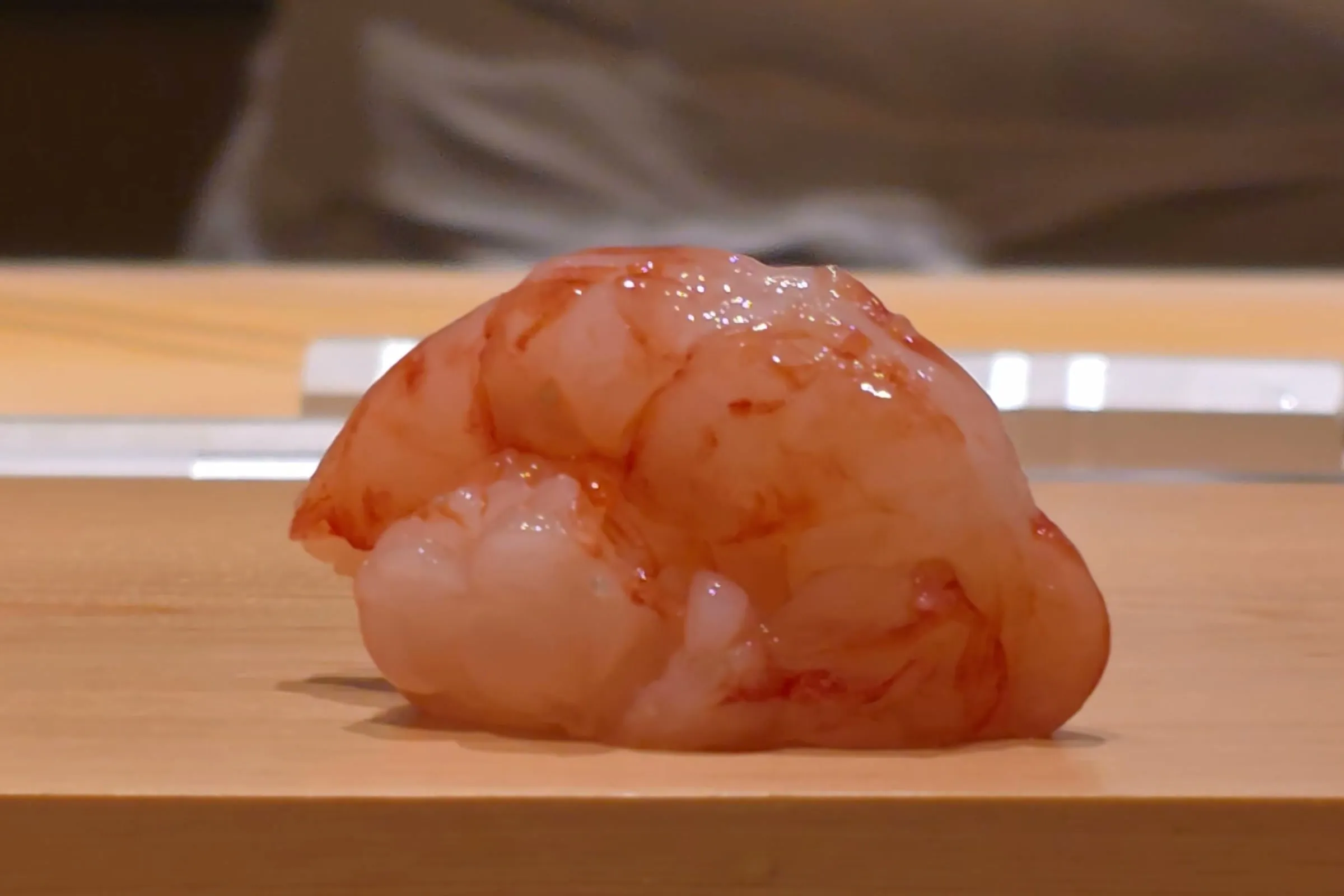 Azabu-Juban, Tokyo
Sushi Meino
Chef Mei came up behind Arai. Her tsumami beat her rice.
¥66,700 2026/11 video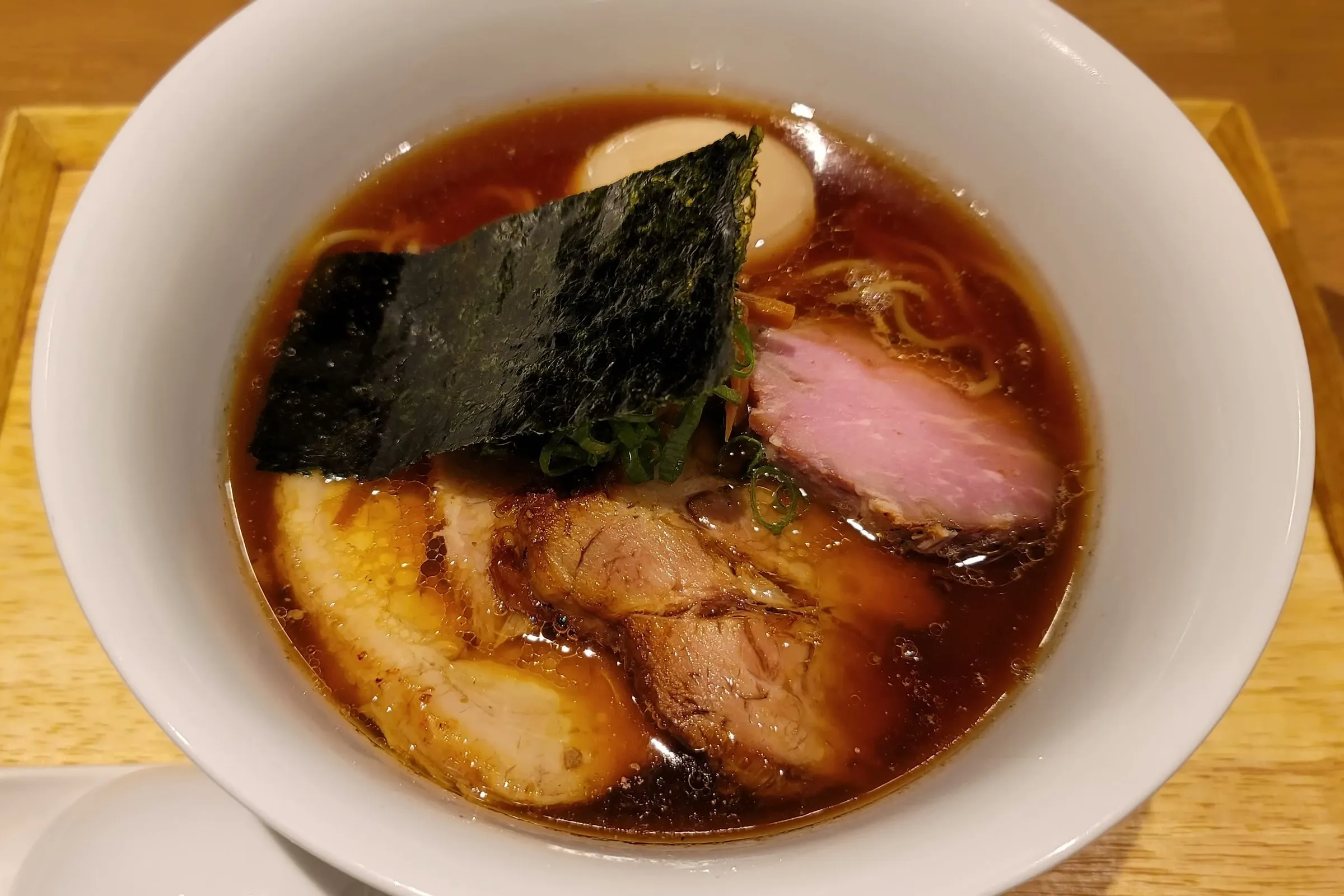 Honmachi, Shibuya (Nishi-Shinjuku side), Tokyo
Ramenya Shima
Tabelog’s top ramen, one chef, a slow line, a lot of salt.
¥1,700 2022/12 video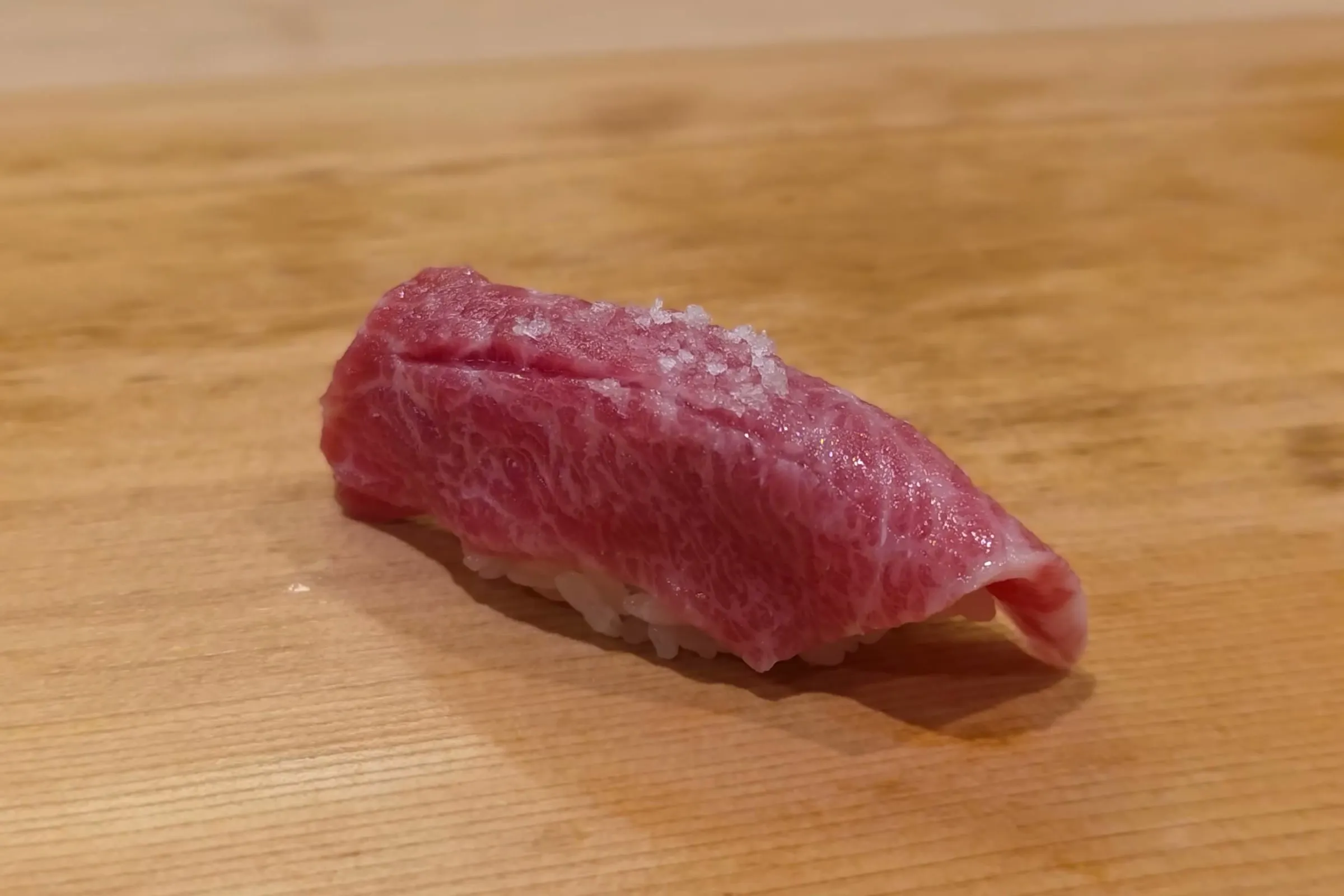 Gaienmae, Minami-Aoyama, Tokyo
Gaienmae Takemoto
Rice like old Arai by the end, ¥44,000 to find out.
¥44,000 2025/12 videoSources
- 東京油組総本店 店舗案内 Tokyo Aburagumi Sohonten
- 東京油組総本店 お品書き Tokyo Aburagumi Sohonten
- 美味しい食べ方 Tokyo Aburagumi Sohonten
- 東京油組総本店 銀座組 Tabelog
- Tokyo Abura Gumi Sohonten Ginza Gumi Tabelog