Sushi Ikko isn’t my style, and nobody does it better
Sushi Ikko (鮨 一幸, also spelled Sushi Ikkou) is an eight-seat counter on the third floor of a building in Ginza, Tokyo, two minutes from Higashi-Ginza Station. Chef Junya Kudo moved it from Sapporo in 2024. Dinner cost me ¥70,000 a person on both visits (about US$450, 2025/01, and about US$460, 2025/10). The rice isn’t my type, and I’d still go back any season I can get a seat, summer first. The only way to book is OMAKASE, and when I checked in 2026/11 the next round of seats was still TBD.
monster gourmetFrom my 2025/01 video
- My share
- ¥70,000
- about US$460, dinner, per person, the same on both visits, 2025/01 video
- Highlight
- Seared mayoi katsuo, and abalone with aka uni
- Skip
- The shirako in dashi
- Video
- 22:54
- 2025/01
- Where
- Ginza, Tokyo
- Higashi-Ginza, 2 minutes from Exit A1; Ginza, 4 minutes from Exit A1
Sapporo’s champion moved to Ginza
Sushi Ikko started in Sapporo. Chef Junya Kudo took the counter over from his father. byFood and the furniture maker Time & Style report two Michelin stars from the Sapporo days, in the Michelin Guide Hokkaido 2017. It closed in Sapporo early in 2024 and opened again in Ginza in August 2024.
Right now it’s about the hottest sushi counter in Japan. Tabelog gave it Gold in The Tabelog Award 2026. Since the move it gets a lot more of the spotlight.
The move also made it flashy. A big lounge out front, then the counter room. The counter wood, the dai, the dishes, the painting on the wall, all of it came down from Hokkaido, they told me. Kudo-san is the second generation, and his father works here too, prepping fish in the corner.
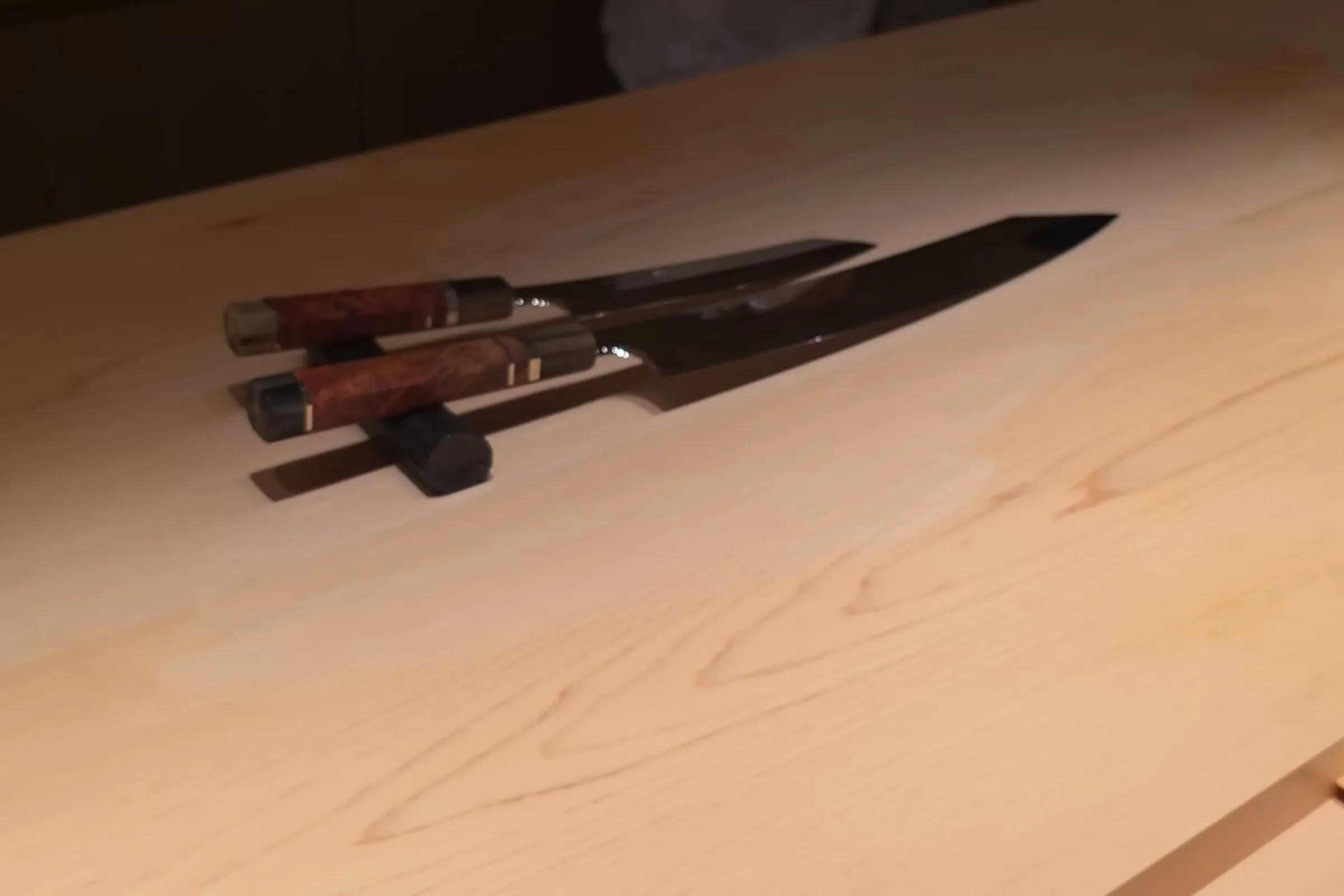
Then the knife. For the move Kudo-san had a black knife made to order by Yu Kurosaki, the knife maker. His old knife in Sapporo was famous too, so he clearly cares. People say this one cuts so clean it doesn’t crush a single fiber, and the surface of the fish feels different. I think my tongue is pretty sensitive to texture. I couldn’t feel it.
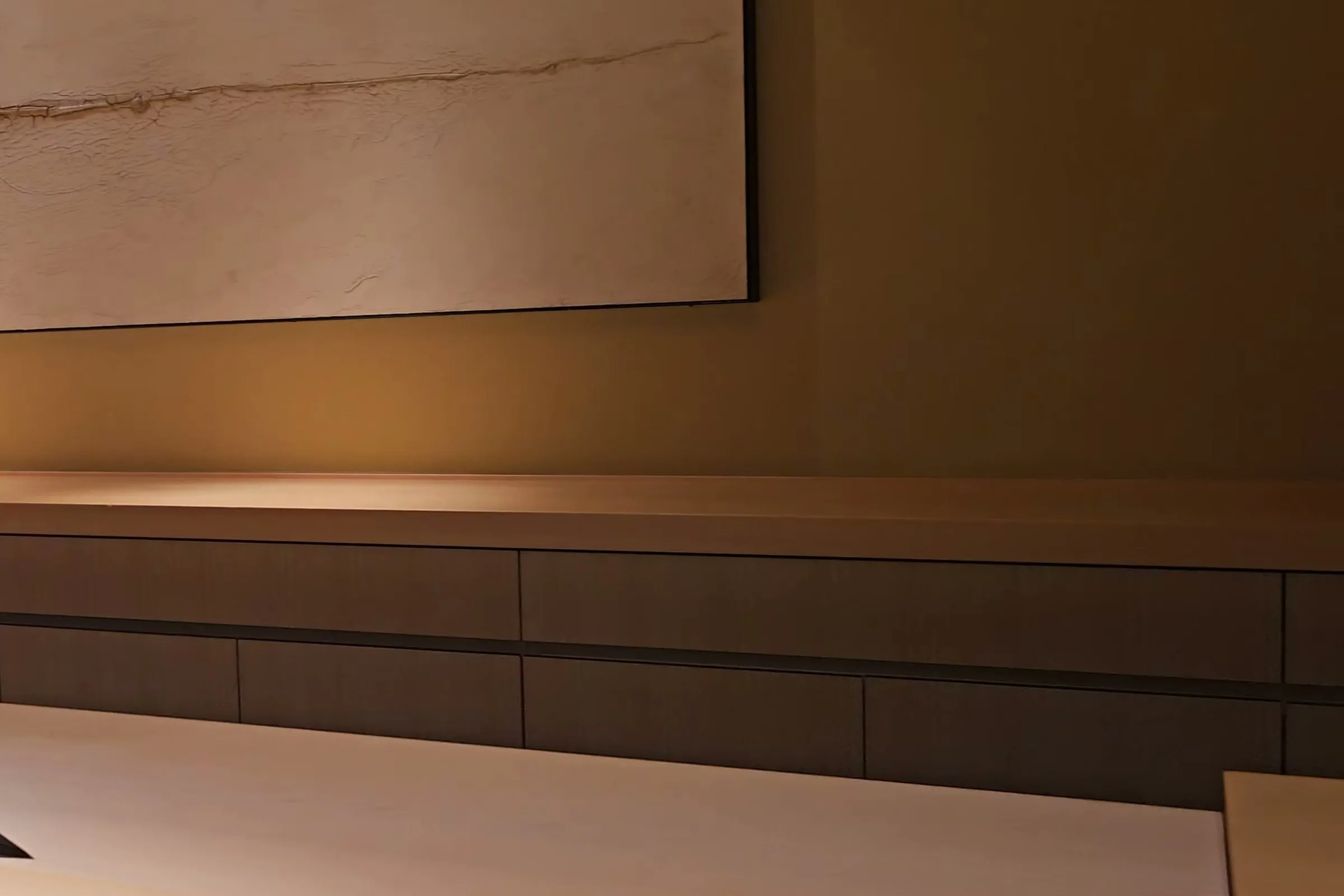
I don’t have a booking. A friend does.
The only way in is OMAKASE. The shop’s own Tabelog page says so, and when I checked OMAKASE in 2026/11 there were no open dates and the next round was TBD. One booking a quarter, no proxies, no handing your seat to a friend.
I got in because a friend is a regular, and he took me. Both times. The second time I flat out asked him to take me in summer.
A tip nobody else will give you. Ikko is on the third floor, and the elevator is on your right as soon as you walk into the building. My booking was at 5:30. My flight landed at an awkward time, so I showed up around 5:00 and pressed 3. Nothing. The button doesn’t take you up until it’s close to your time. I wandered around outside, came back at 5:20 something, and up I went.
Upstairs there’s a big, slick lounge. Some people start drinking right there. I don’t drink, so I had tea and waited until they called us into the counter room.
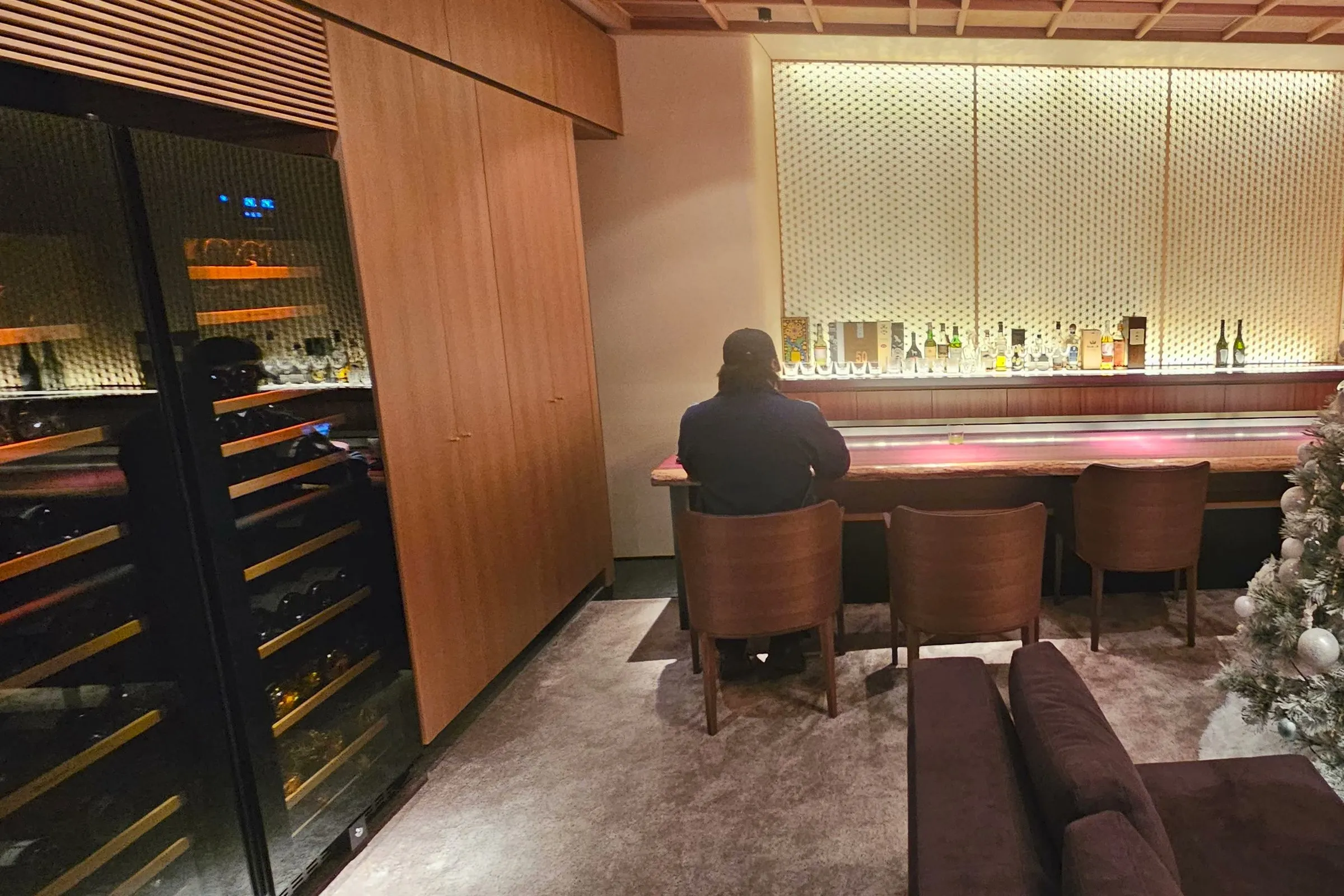
Great fish, and I got worried
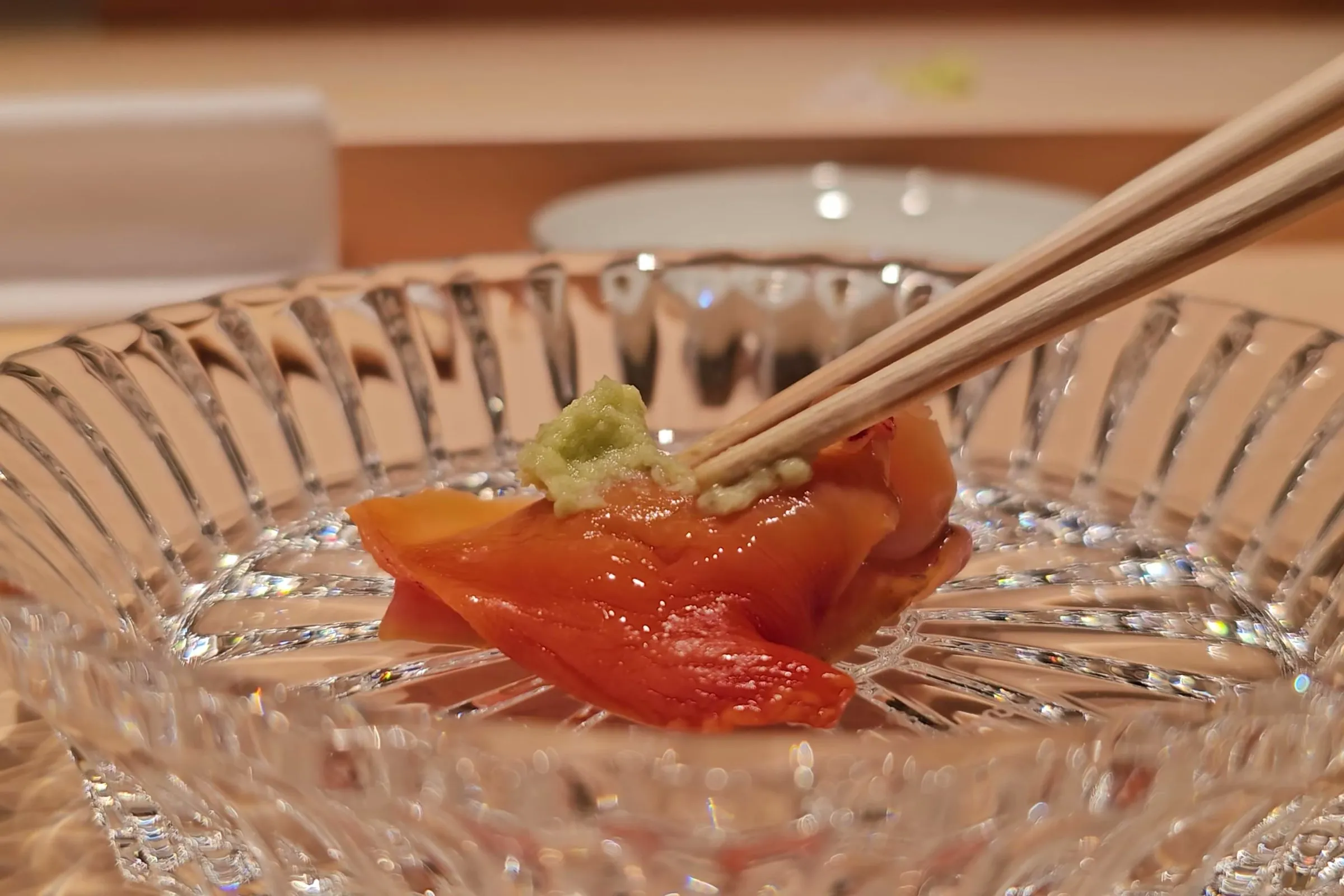
First came tai, sea bream. Not my kind of sweet. Not umami, not the sweetness of fat either. The nutty side came forward. The soy sauce sits on the counter here, and you pour your own.
Kudo-san sharpened his knife, so to speak, when he moved to Ginza. He’s going for the top, he says. Michelin three stars, Tabelog number one, I have no idea which top. You see it in the room and the knife. And in the fish.
He doesn’t brag about his fish himself. The talk comes from Japanese sushi chefs and foodies. Gossip, but from people who’d know. Sushi chefs in Japan say they can’t get the best fish at Toyosu anymore, because of Kudo-san. Whatever they bid on something he wants, he bids more.
So after the tai, and then akagai, ark shell, that just tasted like akagai, I had a thought. I don’t like places that coast on ingredients. Great product put out almost raw, nothing done to it, money doing all the work. I was starting to file Ikko under that.
The bonito that changed my mind
Then the twist. A katsuo, bonito, so big you’d sooner take it for a young tuna. Mayoi-gatsuo. Mayoi means lost. Picture a big, slightly dim kid who wandered off from the school and kept eating.
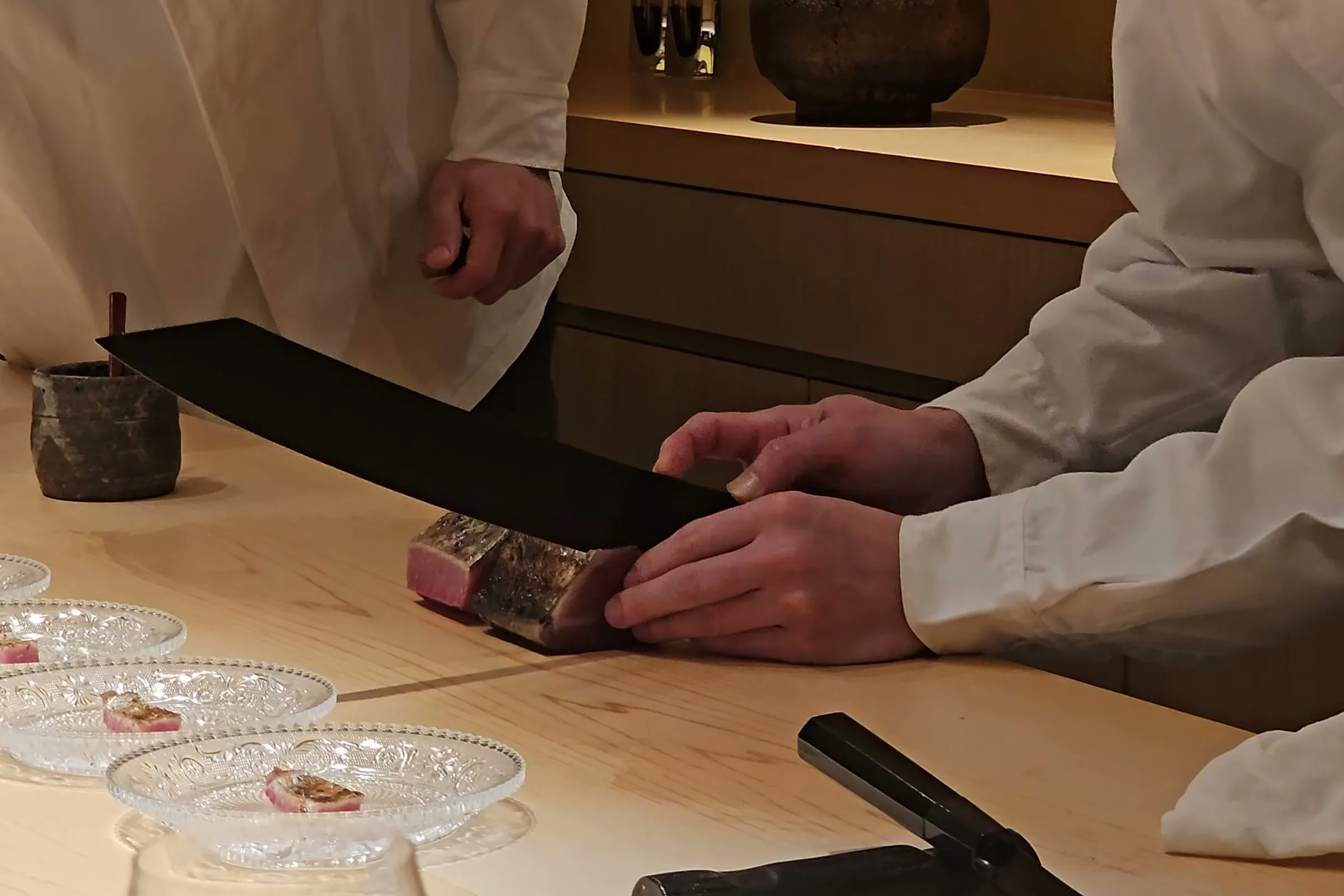
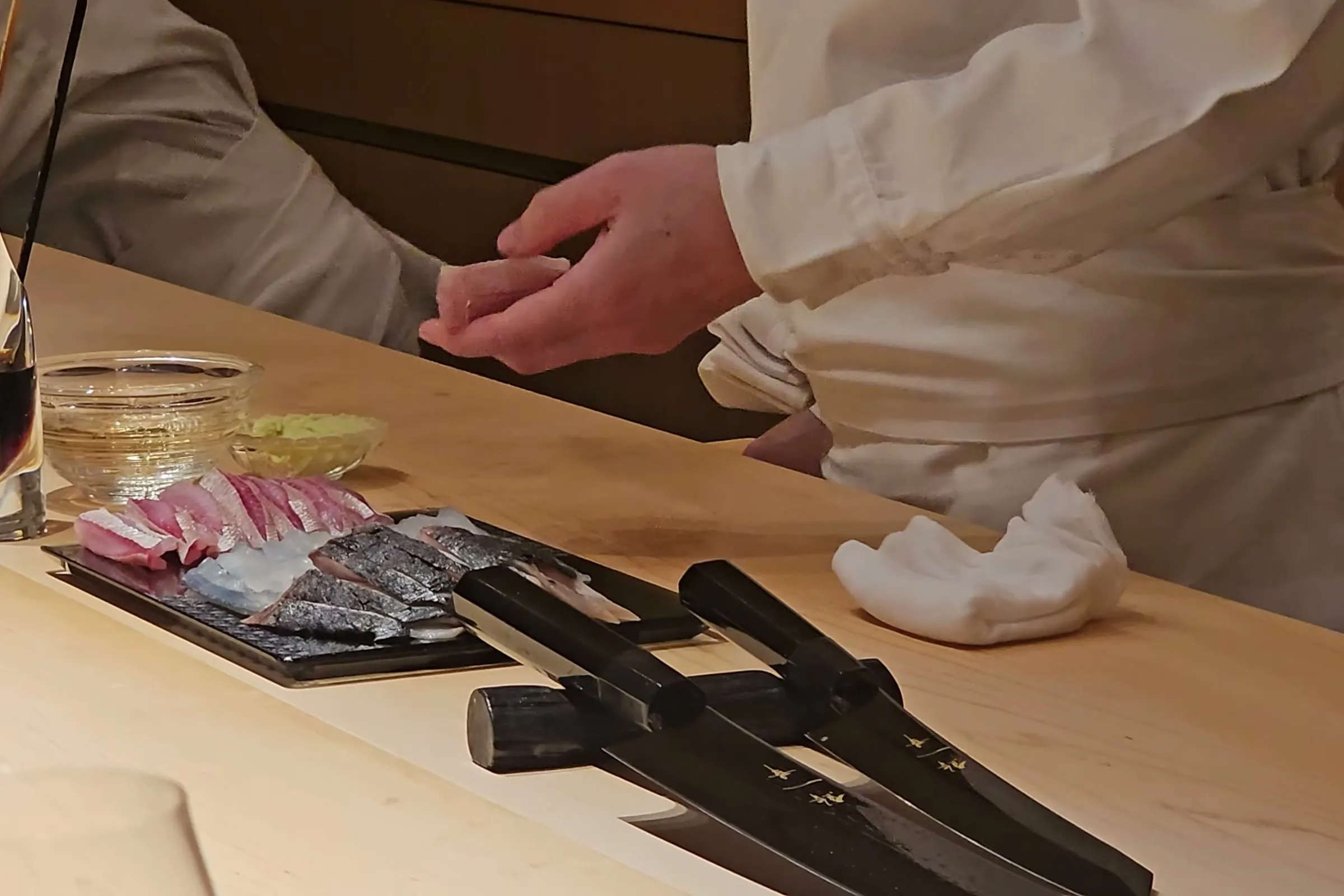
The skin gets a light sear and turns crisp, and when that black knife goes through it there’s a sound. A crackle. It’s sort of the signature sound here. I zoomed in 3x and filmed it forever to catch it. Played back, you can barely hear it. At the counter it was loud. Then it’s sliced thin and gets a dab of nori paste on top, a pretty standard combo. Watching him cut is satisfying anyway, like one of those videos you can’t stop watching.
One bite and my theory was dead. Best katsuo I’d had in about three years. The cooked layer is much thinner than anywhere else and still really crunchy. The flesh has a density I’ve felt only once before, the first time Sugita served me katsuo as tsumami. Different style, same shock.
That chew means he’s good with salt too. Knife, fire, salt. There’s nothing this place can’t do.
Up, down, up again
Kudo-san kept lifting me up and dropping me. The katsuo lifted me. Then shirako, milt, cooked, with dashi poured over and sudachi squeezed on. Not much flavor. Plain shirako with ponzu would have beaten it. Down.
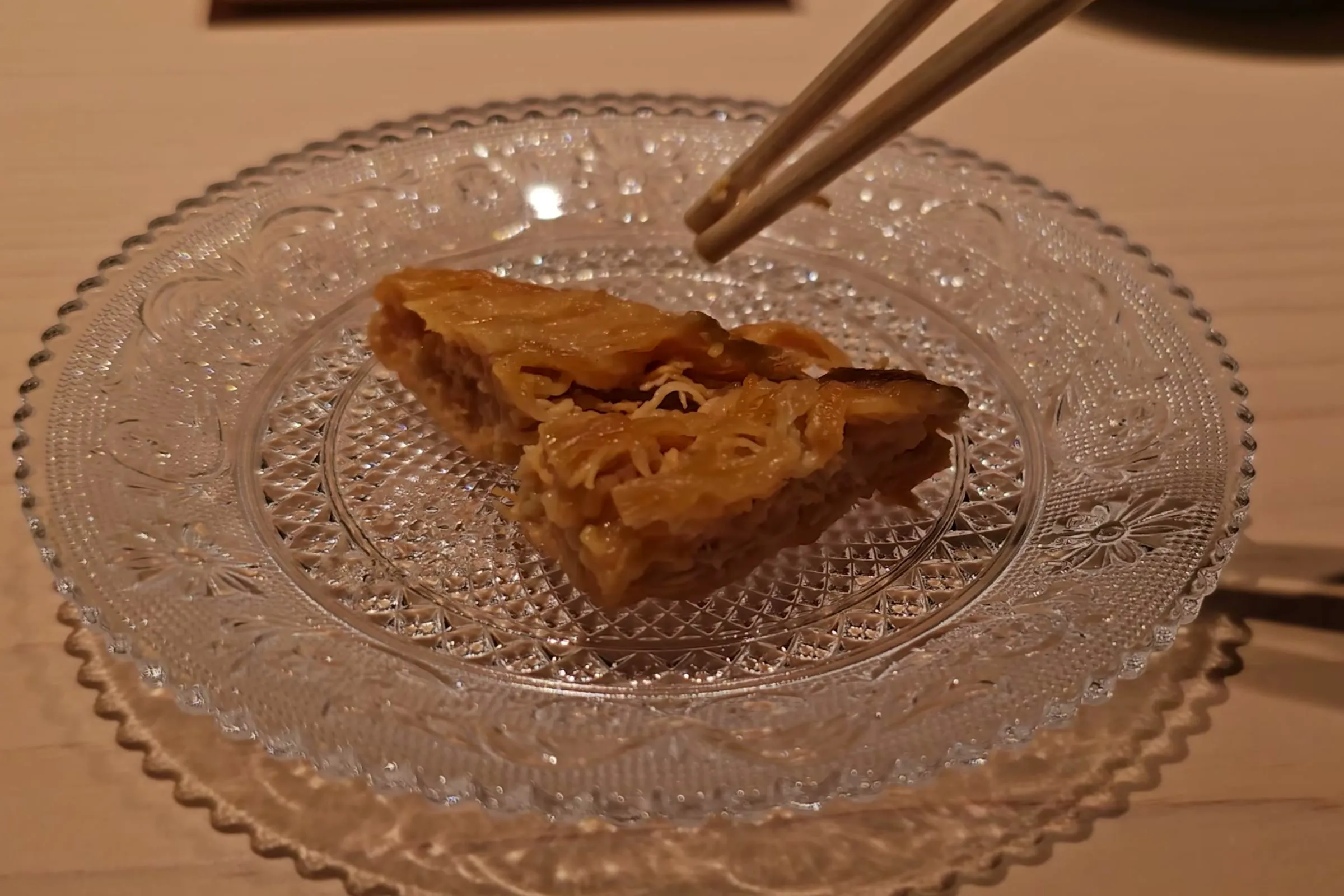
Then bachiko, dried sea cucumber roe. He doesn’t push his ingredients at you, but he doesn’t hide them either. When he saw the guy next to me and me trying to film it from far away, he just held it up for a second. No show for the whole counter.
He sliced it thicker than I’d ever seen. I don’t like sea cucumber. Not as sashimi, not konowata, the guts. Bachiko I’d loved once, at Sugita. This was close to that. The texture, the deep flavor, almost like cheese. Up.
Then he cut sawara, Spanish mackerel, the skin lightly cooked again. After that katsuo, I was already excited.
Not my rice, and he still won
Then nigiri. No rice at all during the tsumami, so this was my first taste of it. I’d gone in knowing nothing about the place, so no big hopes and no grudge either. I’m a rice guy. Watching the first piece settle on the counter, the grip looked fine.
First piece, kasugo, baby sea bream, another of Kudo-san’s signatures. Delicious. Not sweet and sour, not bland either. Sweet the way only really good fish is. I’d never had kasugo like it.
The problem was the rice. Sweet, and sticky on the surface. Not my type at all. It falls apart fine in the mouth, though, and the grains are cooked the way I like.
And still. Not my style, and I can tell he’s the best. The knife, the product, the fire, the salt, the vinegar. Of all the chefs I’ve eaten from, he’s the best I know at each one. The fire most of all. Once it’s in your mouth, nothing I’ve had comes close. My style doesn’t matter. His skill just wins.
Tuna on Arai’s level
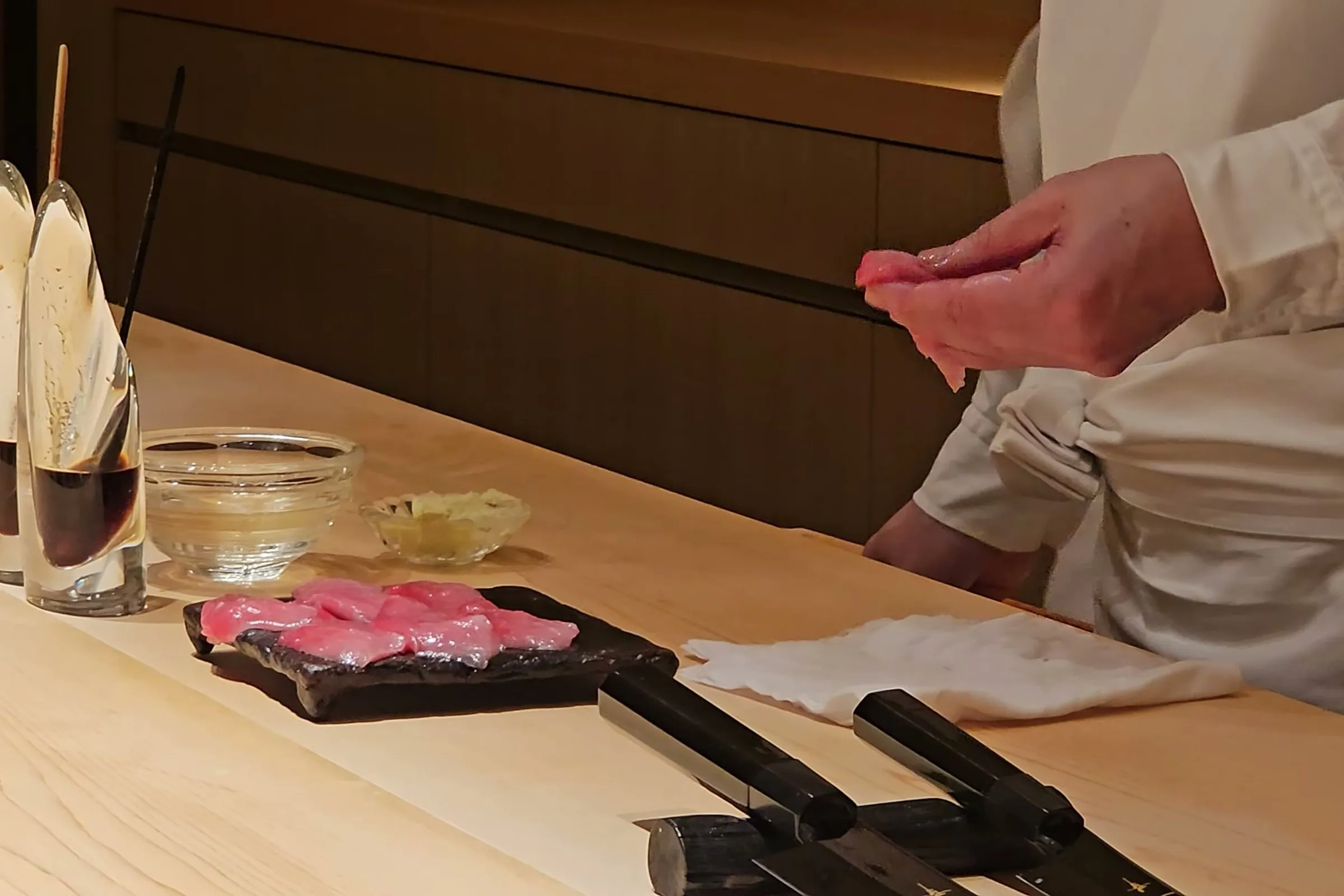
The tuna holds up next to Sushi Arai. Every place varies night to night, Arai too, but the flavor runs the same way. And like Arai-san, Kudo-san doesn’t brag about his tuna unless you ask.
His father prepped it. He cut the otoro parallel to the sinew so it comes out with none, then pared the sinew off like apple peel. You lose a lot of fish that way, so few places bother. It looked like hard going, and I had a mean thought. Kudo-san gets a custom knife and his dad gets a dull one?
The rice is neither cold nor warm. Fatty fish like tuna wants rice a little warmer, with more acid. Here sugar comes before acid and salt, so the tuna is great and the rice doesn’t suit it. This rice would suit squid or sweet prawns. That night’s nigiri had no squid.
The uni did suit it. Clean, light and sweet, my kind, and it coated the rice. Then kinmedai, grilled and laid on rice, the kind you see in Korea all the time. Plain grilled, ingredient first. I like the skin basted so the sweetness comes through. Here the rice brought the sweetness, so it worked. A lucky accident.
Kohada I finally get
He showed off a buri, yellowtail, huge and loaded with fat, then it was kohada time. Shinko, the baby kohada, is supposed to be another signature, in its season.
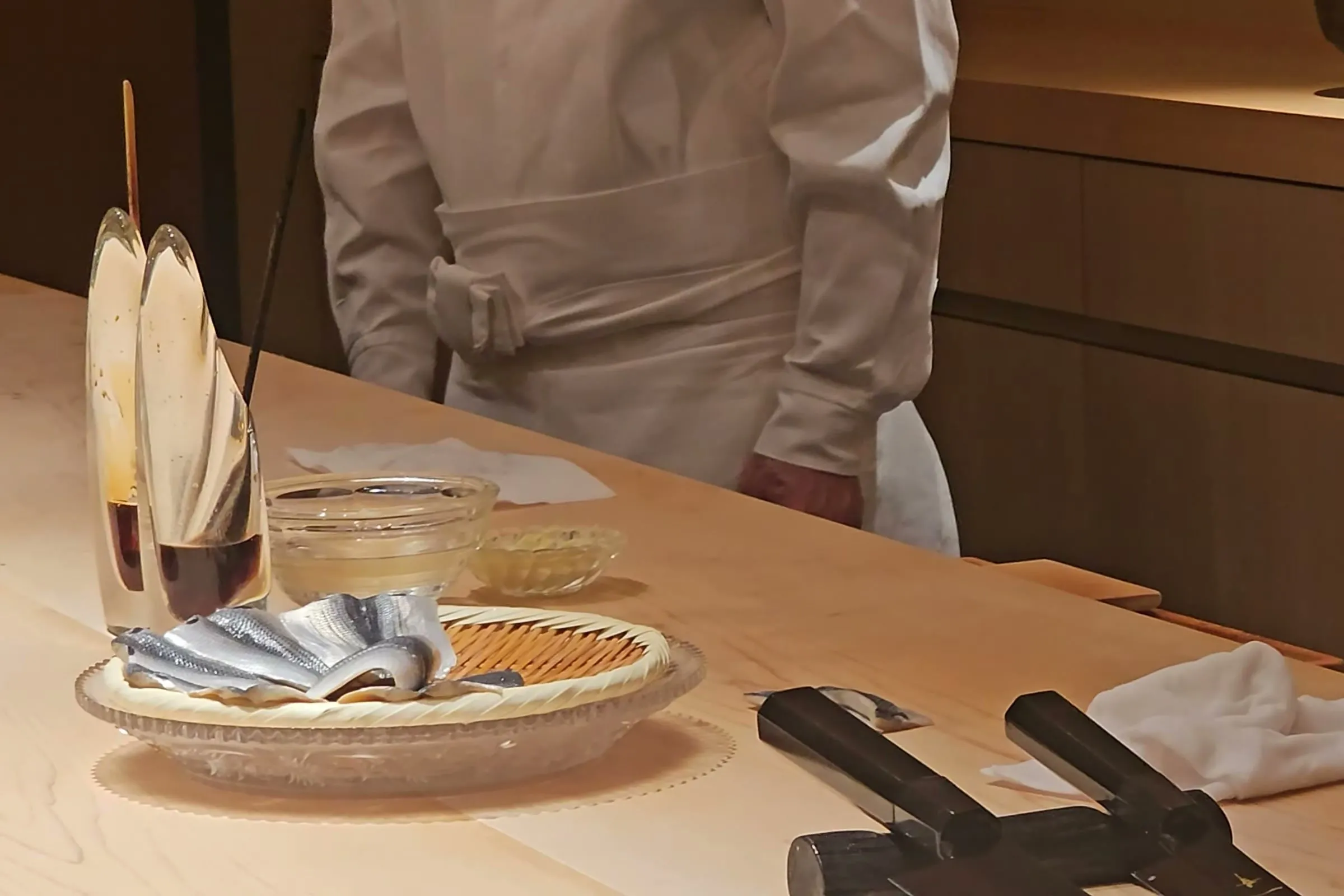
I’ve said it until you’re sick of it. I don’t like kohada. The kind I put up with is sweet and juicy, no fishiness, no bitterness, no anchovy smell. This one was very juicy, with some fish umami and a hint of anchovy. Not my kind. But kohada like this goes with sweet rice. Here I get it.
That buri came back sliced thin, marinated briefly in soy and folded in half over the rice. Buri has no strong taste beyond its fat, and I don’t like it thick. Thin and in soy it became something else. Still buri, though.
Oni-aji, a big horse mackerel. Delicious, because aji follows the quality of the fish and Ikko buys the best. Of all the aji I’d had in about a year, second, behind a ki-aji at Shimazu. Then anago. The small bones bothered me. Usually you see them and don’t feel them. These I felt exactly as they looked.
I felt awful that night, so I ordered only one extra piece. My friend passed me a piece of his kanpyo maki. Nothing special.
Back in summer for the ayu
I wanted the summer season. Ikko has a few summer signatures, and one is ayu, sweetfish, grilled and made into nigiri. I’d seen it on Instagram for ages. I love ayu, and summer has a lot of what I like. So I asked the same friend to take me again.
I got there early and had the lounge to myself. The black knife I’d raved about was sitting out there, for sale, secondhand, with a price I had to read twice.
At the counter Kudo-san had a new one. Same shape, different color, same maker, Yu Kurosaki, the brand you’ve probably seen on shorts with a bartender hacking at ice. No idea why he switched. The painting behind him had changed color too. I didn’t notice. They swap it every season.
My seat was in the center this time. And the night was lucky. Ikko has five summer signatures, mizugai, torigai, ayu, shin-ika and shinko. Usually two or three are on, one ending as another starts. All five overlap on two or three days a year, and this was the last of them. The ayu ended the next day, and the shinko had two days left.
The best torigai of my life
Akashi tai first, sea bream from the Akashi Strait, famous enough to have a sake named after it. The skin side looked shiny and fatty, the flesh clear. It had less fat than it looked and wasn’t sweet. And I got only the tail end. The belly went somewhere else, nigiri maybe.
Torigai, the big cockle, cooked, and thicker than any I’ve seen. The usual torigai taste, slightly fishy, the one I don’t love, wasn’t there at all. Closer to hokkigai, surf clam. I got scared and squeezed a lot of sudachi on it. Didn’t need to. Best torigai of my life, and I don’t even like torigai.
The father cleaned a kinki, a fatty rockfish, and Kudo-san cooked it shabu-shabu style, snapped it by hand and warned us it was hot. Oil floated on the sauce. Really good. Firm flesh, strong sweetness. The sauce was the one miss, a flat sweet and salty soy. Give me the kinki with salt and wasabi instead. Watching his father clean it, I took back last time’s crack about his knife. It cuts fine.
Mizugai, raw abalone in cold dashi with mozuku and junsai. I’ve hated raw abalone since I was a kid. Still do. The junsai, water shield, crunched like watercress, which was fun. The grilled bachiko tasted like smoked cheese. That one I like.
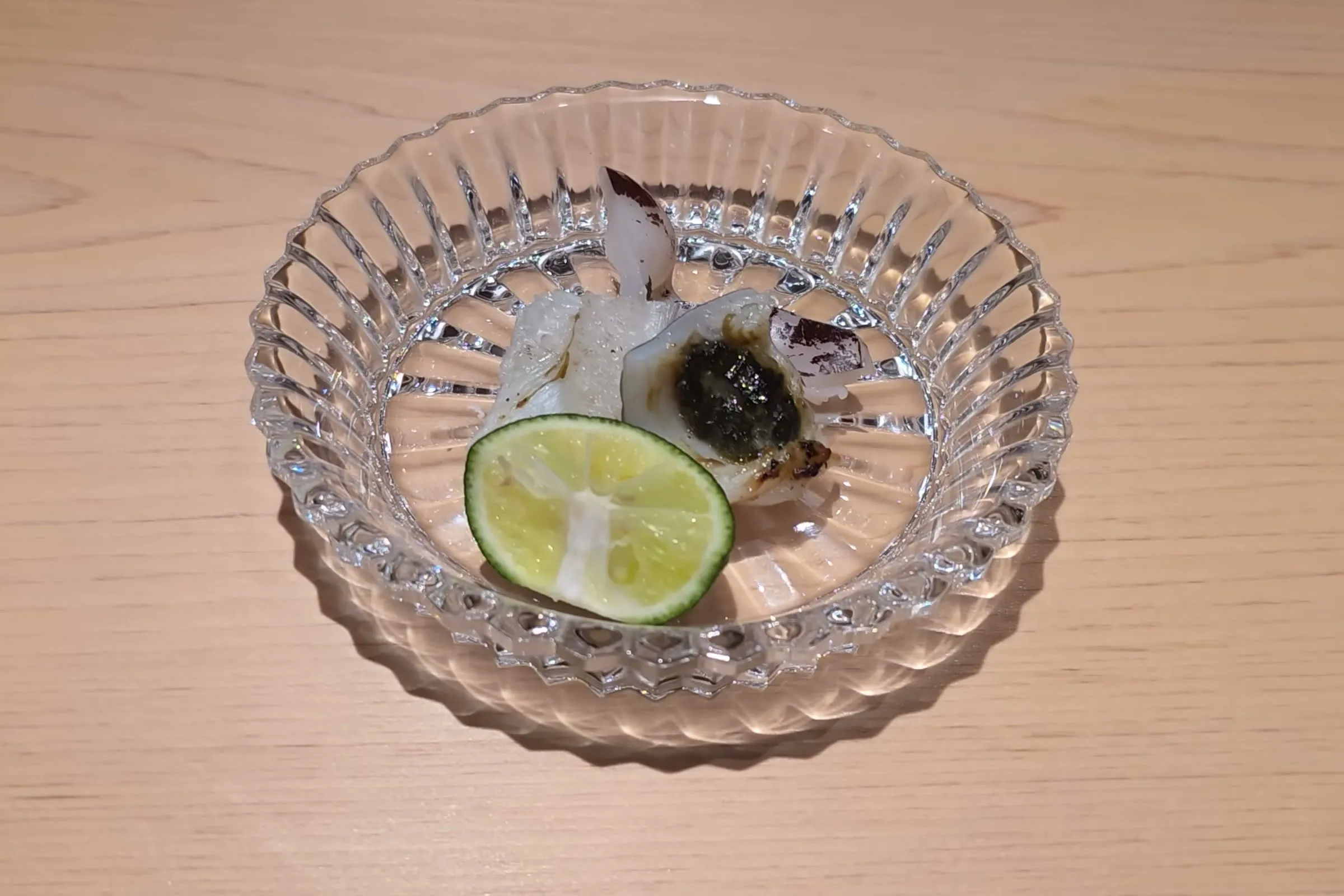
The ayu I came for
Nigiri started with kasugo again, a signature people get excited about. I don’t get it. Soft, nice texture, and that’s all. And the rice, sticky and sweet, took me straight back to my first visit.
Then shin-ika, baby cuttlefish, one of my favorite things. This one was a teenager. I like them so young the body pops like a thin skin around jelly. This one still had some squid chew. Funny thing, from here on the rice stopped bothering me. Sweet and sticky suits squid.
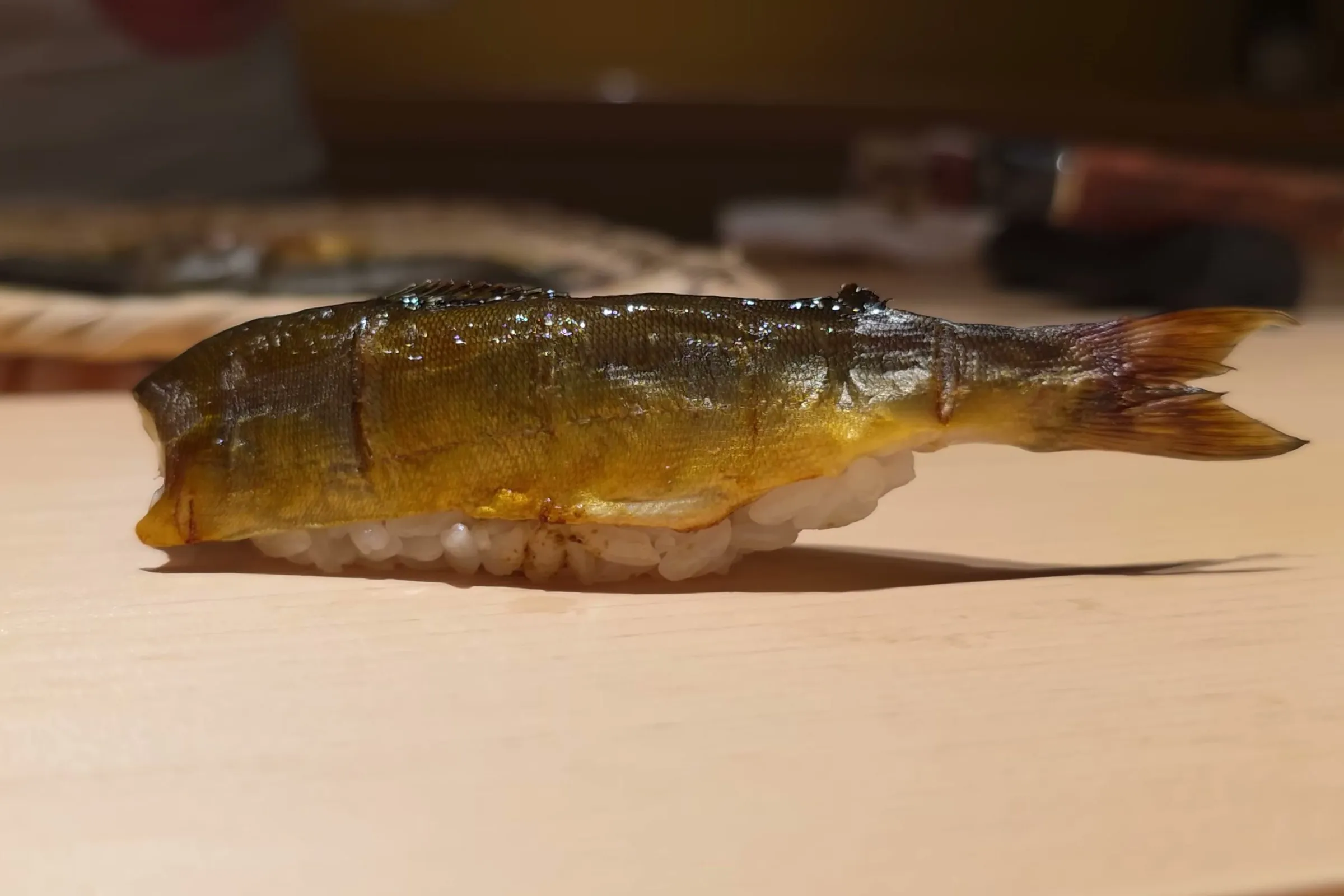
Then the ayu. Usually ayu means Lake Biwa or the Shimanto River. This one was from Hokkaido, which they said is rare. Ikko came from Hokkaido, and Kudo-san loves Hokkaido fish. He explained at length how it differs from other ayu. I couldn’t taste it.
He opens the grilled ayu over the rice and uses a paste of its guts where the wasabi would go. I had huge hopes. Grilled ayu flesh is nutty and the guts are bitter, a kick like spring greens that makes you want another bite. The bitterness was there. The nuttiness mostly wasn’t. Well below what I’d hoped.
Shinko, baby kohada, three tiny fish stacked on one piece. The counter buzzed. I don’t love kohada, and the great shinko I’ve had were all at Sugita. Same style, a step below. Right about what I expected. And the katsuo came as nigiri this time. Better texture than ever with this rice, but the seared tsumami tasted better.
A new life uni, and tamago twice
A huge abalone came out. The broth in the mizugai came from cooking this one. Cooked is how abalone should be. Better texture, better flavor.
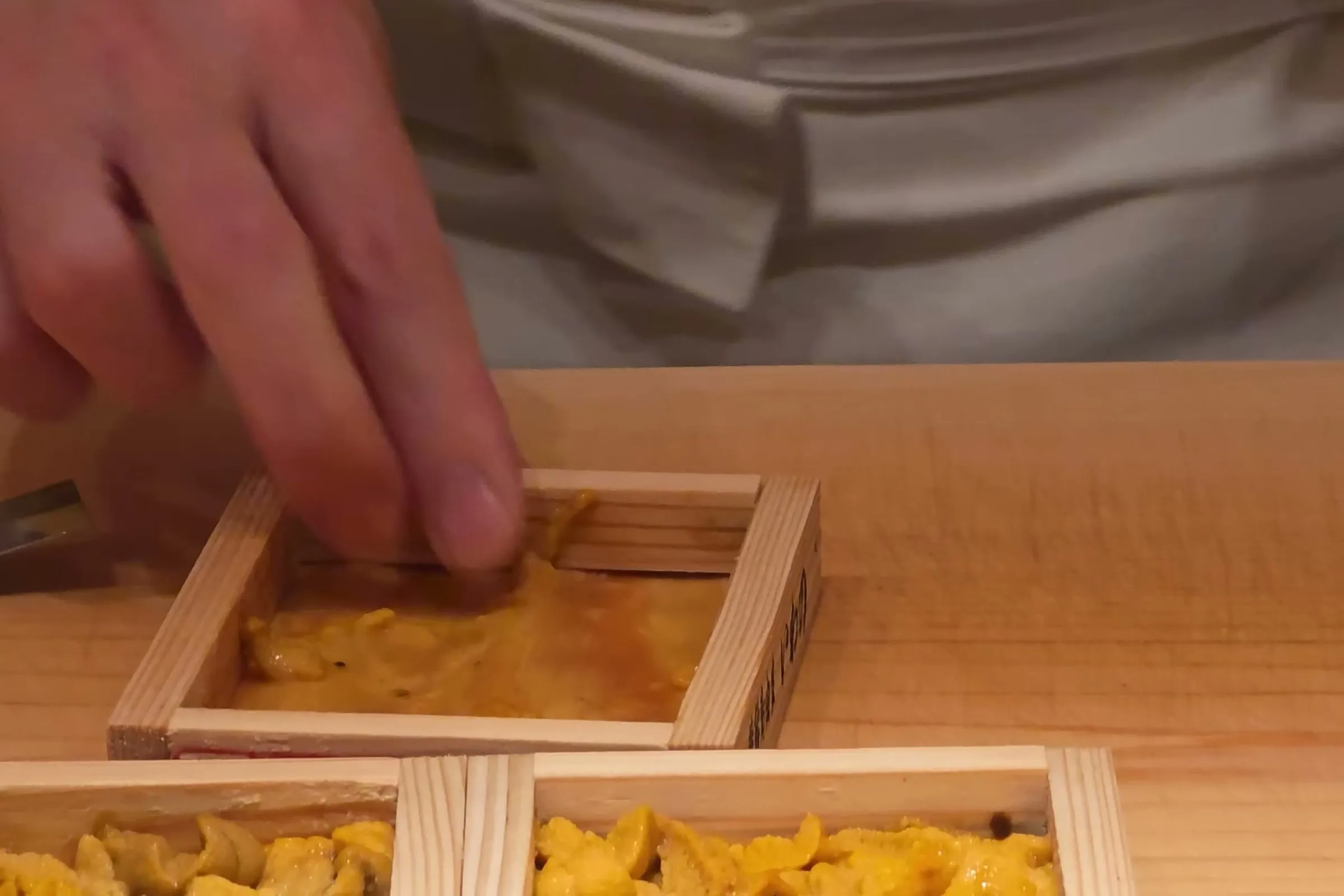
He sliced it thin, made nigiri and put aka uni on top. Best thing of the night, tsumami and nigiri together. It isn’t a summer signature. Abalone and uni can show up any time, and in Korea it’s a tired combo even entry-level counters do. A few days earlier I’d seen someone on Instagram losing it over this exact piece, so I was ready to scoff.
Then the aka uni. From Yura on Awajishima, in Hyogo, like the Akashi tai. It became my new life uni. My old one was an aka uni at Sugita, and this beat it after years. The uni brought all the depth. The abalone added a heavy aroma and a soft chew.
Then oni-aji again, much better than the winter one, and anago to finish, salty and savory, barely sweet, a little crisp. At the end I ordered extras. Shin-ika again, because you only get it now. The aka uni as nigiri on its own, like I’d promised myself. Still my life uni without the abalone. Aka uni has a short season, and good ones are rare.
And tamago, served as dessert. Runny in the middle like a Basque cheesecake, like really good scrambled eggs. Egg first, with a faint sweetness and a little shrimp in the back. Not candy sweet, not fishy. I ordered another.
¥70,000, both times
2025/01 video
Dinner was ¥70,000 a person in 2025/01, about US$450, and the same ¥70,000 in 2025/10, about US$460. I don’t drink. A scary number, and the product makes sense of it.
When I checked OMAKASE in 2026/11, the Omakase Tasting Course was ¥60,500 tax included, plus a ¥390 booking fee per seat.
What Sushi Ikko has cost me, visit by visit
2 visits where I said the bill on camera. ¥70,000 in 2025/01, ¥70,000 in 2025/10. Up 0%.
Per person, the dinner price I said on camera, ¥70,000 both times. No drinks (I don’t drink). I ordered one extra piece on the first visit and three on the second. Each month is when that video came out.
Would I go back
Normally, if a place isn’t my style, I go once and that’s it, however famous and however hard to book. Ikko broke that rule. Not my style, ridiculously good, and I wanted to come back in another season before I’d even left. I get why it’s the hottest counter in Japan, and why Kudo-san says he’s going for the top. He’ll get there.
It hit me like my first Sugita, nine years earlier. Different direction, same level of shock. Then summer was even better. I rarely get in myself, so it’s a bit rich to say, but if you get the chance, take it. Summer if you can. ¥70,000 well spent.
How to book
How I booked
I’ve never booked it myself. Both times a friend who’s a regular took me, and the second time I asked him for a summer seat.
- OMAKASE (omakase.in)
The only route. The shop’s own Tabelog page says bookings are taken through OMAKASE only, and lists no phone number. When I checked: one Omakase Tasting Course at ¥60,500 tax included, a ¥390 booking fee per seat, seatings at 17:30 and 20:30, closed Wednesdays, eight seats. Reservation period irregular, next round TBD, one booking per quarter. No proxy bookings, no booking in someone else’s name, no giving your seat to a friend. They ask you not to film video or record audio. Cancelling costs 30% from 7 days before and 100% from 3 days before. OMAKASE also listed a past one-night lottery for Diners Club Premium cardholders, same ¥60,500 course.
Checked 2026/11. Booking rules change, so look at the official page before you go.
Where it is
- Address
- 3F Nisso No. 26 Bldg., 5-11-12 Ginza, Chuo-ku, Tokyo東京都中央区銀座5-11-12 日総第26ビル 3F
- Nearest station
- Higashi-Ginza, 2 minutes from Exit A1; Ginza, 4 minutes from Exit A1
Plan the Tokyo trip
The boring bits I’d sort before flying, so the eating days stay free.
- Hotels in Tokyo*
Pick the room by where you eat, not by the sights. After a long dinner, a short ride back is the real luxury. This place is in Ginza, Tokyo.
- Japan eSIM*
Data from the moment you land, no counter and no SIM swap. Set it up the night before.
- Keisei Skyliner from Narita*
Narita to Ueno in about 40 minutes. Buy it ahead and walk straight to the platform.
- Haneda airport limousine bus*
Landing at Haneda instead? The limousine bus drops you at the big hotels and stations with no transfers.
- Tsukiji Outer Market food tour*
A market morning with someone who knows which stalls are worth the line.
- Sushi-making class at Tsukiji*
Shape nigiri yourself once and the counter makes a lot more sense.
Links marked * are affiliate links. If you book through them I may earn a small commission, and you pay the same. How it works
More from this restaurant on the channel
- A ray of light in this summer27:372025/10
More places I have eaten at
All of Tokyo →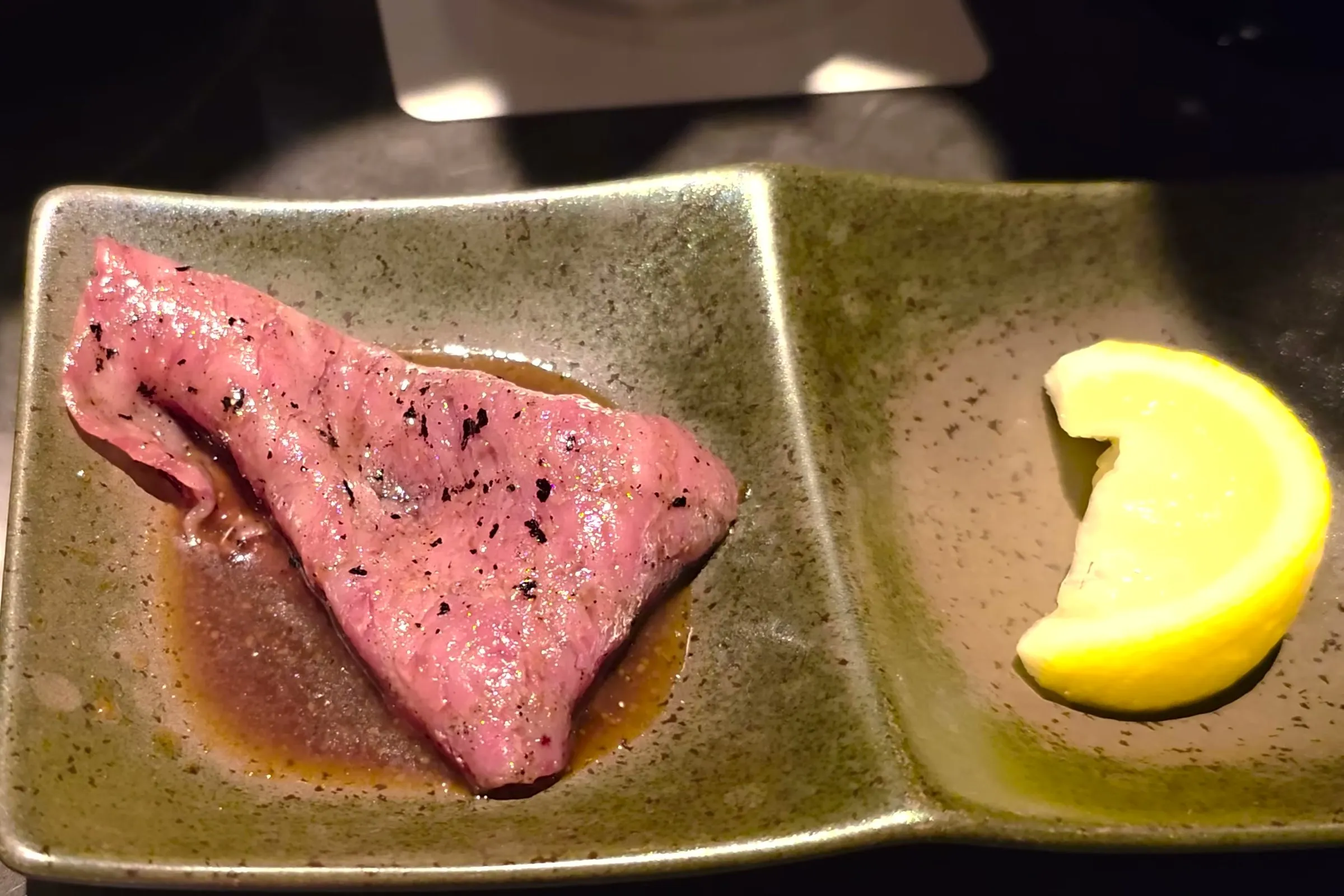 Azabudai Hills, Tokyo
Yoroniku Azabudai Hills
Private rooms, the Silky Loin, truffle sukiyaki, and egg rice that beats the beef.
≈ ¥15,000 2025/05 video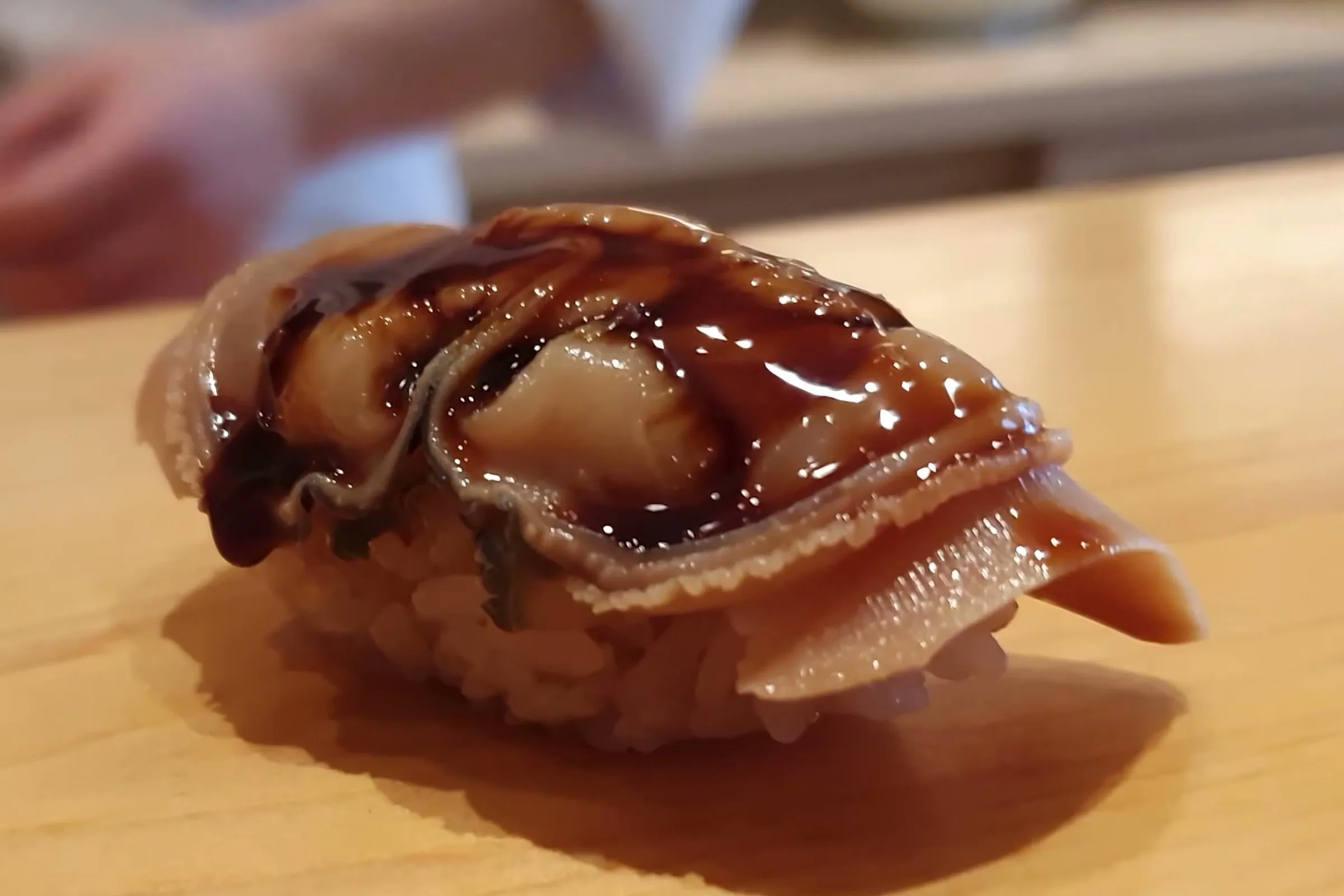 Nihonbashi, Tokyo
Takagaki no Sushi
Cheap lunch, then a Michelin star, then I was done.
¥9,000 2019/08 video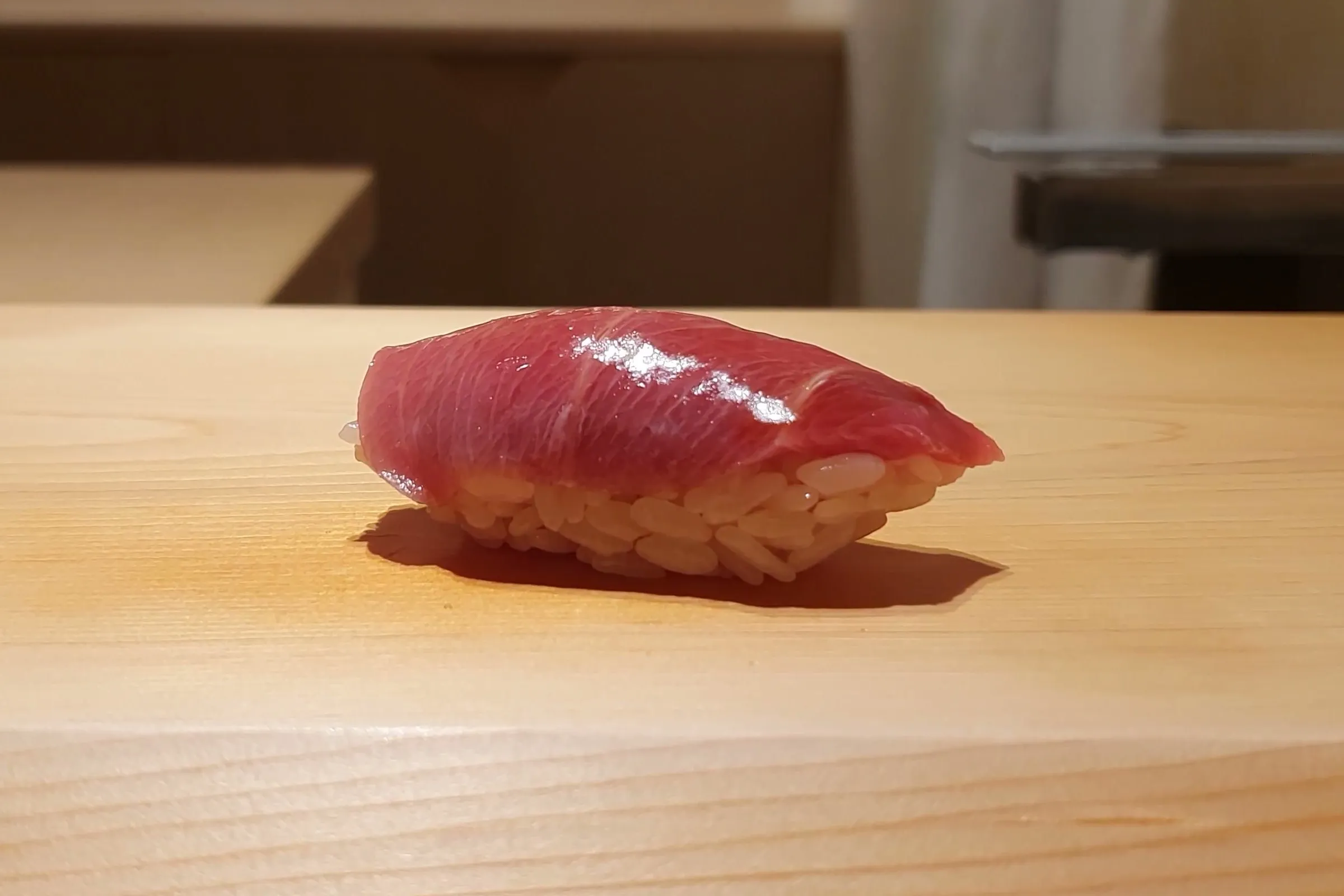 Higashi-Azabu, Tokyo
Sushi Sugaya
Arai’s old sous-chef, Yamayuki tuna, sharp rice and a giant tuna roll.
≈ ₩400,000 2019/10 videoSources
- 鮨 一幸 Tabelog
- Sushi Ikko OMAKASE
- Sushi Ikkou (relocated, Sapporo listing) Tabelog
- Sushi Ikko byFood
- Sushi Ikko, furniture for projects Time & Style