Can’t book yakiniku in Tokyo? Go to Yoroniku.
Yoroniku Azabudai Hills is a newer branch of Yoroniku, the yakiniku house from Minami-Aoyama. It’s on the third floor of Tower Plaza in Azabudai Hills, Tokyo, and every table is a private room. Four courses and a few drinks came to a bit over ¥60,000 (2025/05), about ¥15,000 a seat (2025/05) or roughly US$100, and booking was easy. I’d go back, and it’s where I send anyone who wants yakiniku in Tokyo and couldn’t get into the famous places. The chateaubriand let me down. The Silky Loin and the truffle sukiyaki didn’t, and the best thing on the table was a bowl of egg rice.
monster gourmetFrom my 2025/05 video
- My share
- ≈ ¥15,000
- about US$100, a bit over ¥60,000 for 4 courses and drinks, split by 4 seats (3 of us ate, ≈ ¥20,000 each), 2025/05 video
- Highlight
- The egg rice after the truffle sukiyaki, and the Silky Loin
- Skip
- Raw vegetables with the yuk sashimi
- Video
- 25:10
- 2025/05
- Where
- Azabudai Hills, Tokyo
- Kamiyacho (Hibiya Line), exit 5 connects straight into the building. Roppongi-itchome (Namboku Line) exit 4 does too.
Every table is a private room
Yoroniku started in Minami-Aoyama. I’d already been to the Ebisu branch for an earlier video, and Ebisu is fairly new too. This time it was the Azabudai Hills one, YORONIKU TOKYO, on the third floor of Tower Plaza. Tabelog says it opened in 2023/11 as the third Yoroniku, after Minami-Aoyama and Ebisu, and the first that’s all private rooms.
That’s the part I liked better than Ebisu. No tables out in a dining hall, every party gets its own room. It’s also a maze. Watch me follow the staff down the corridor. Go to the bathroom halfway through and good luck finding your room again.
Still, to me that’s the biggest reason to pick this branch.
Booked for four, three showed up
Honestly, I didn’t book this because I was dying to go. A younger friend who hadn’t been to Tokyo in ages wanted yakiniku, and he couldn’t get into Jumbo Hanare. For me, yakiniku in Tokyo means Jumbo Hanare, no question. But the Azabudai Hills branch had a table, so I took it.
I booked for four without thinking too hard about who was coming. One friend was supposed to bring his wife, forgot to tell her until late, and by then she couldn’t make it. So three of us ate four courses.
Luckily the friend who wanted yakiniku in the first place eats a frightening amount. Lunch was unagi and it ran late, so we sat down here less than two hours after eating. He still ate two full courses on his own and, if you ask me, could have gone for more.
Was the taxi driver in Daegu right?
Like any Korean BBQ place, kimchi and three kinds of namul come out first. Yakiniku gets greasy, sweet and salty, so you’d think I’d want them. For some reason I never reach for them. Not my style. The baguette toasting on the grill is for later.
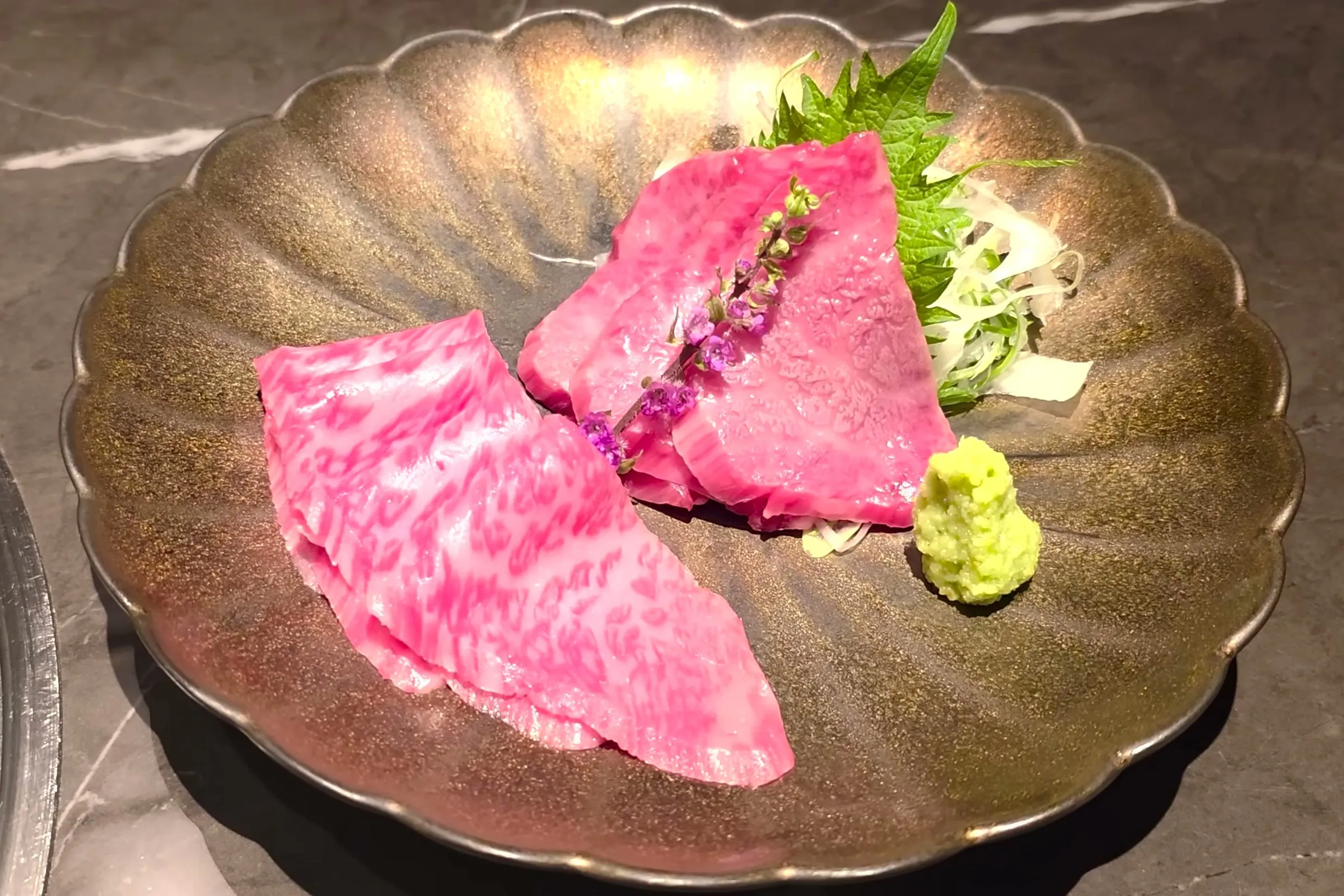
The first meat was yuk sashimi, raw beef sliced like sashimi. I honestly don’t remember the cut. The color is insane, though. In my phone’s video it looks almost purple, and in photos it’s more like this. It’s one piece each, and since we’d booked four, I handed them out from my end of the table and gave the big eater two.
It isn’t bad, but the sauce matters a lot. Over a long holiday I went down to Daegu a few times, and there was no mungtigi, Daegu’s thick-cut raw beef, because it only comes on slaughter days. I complained to a taxi driver and asked where to go. He said yuk sashimi, mungtigi, doesn’t matter, you’re eating it for the sauce. I thought that was ridiculous. Eating this, I started to think he had a point.
The second yuk sashimi was a different cut, and the outside was lightly blanched. Dip it in the sesame soy sauce, or add the vegetables and wasabi, your call. The vegetables didn’t work for me. They’re raw, unseasoned, not wilted, still sharp. With ssamjang or a proper yuk sashimi sauce, maybe. With that soy sauce, no. This one isn’t for eating with vegetables. The whole course is very close to the Ebisu one, and I felt the same there.
Yukhoe on toast
In Korea, yuk sashimi can let you down at a lot of places. Bad sauce, odd beef. Yukhoe, Korean beef tartare, almost never fails. At a cheap buffet or a first-birthday party hall, the yukhoe is often the best thing there.
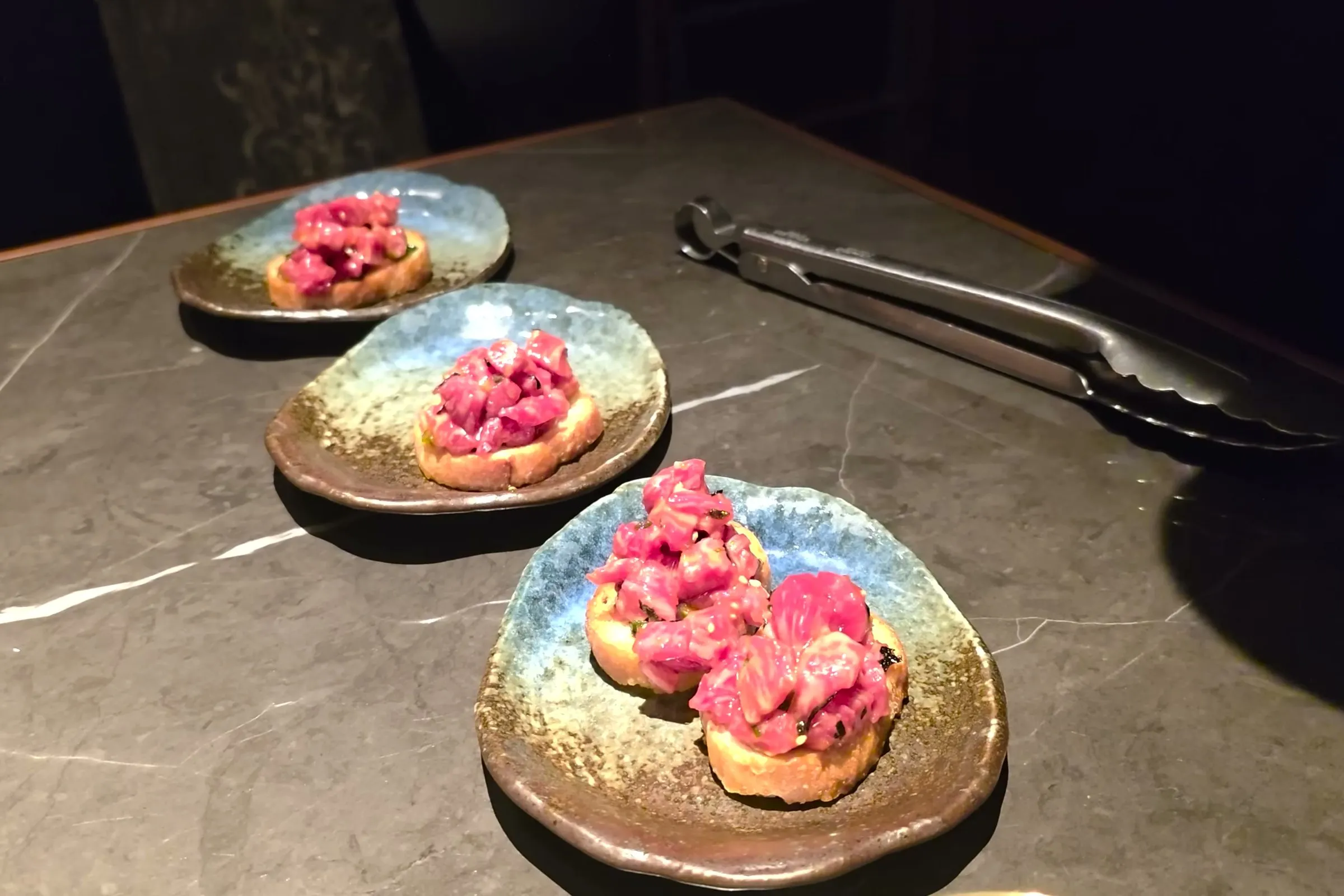
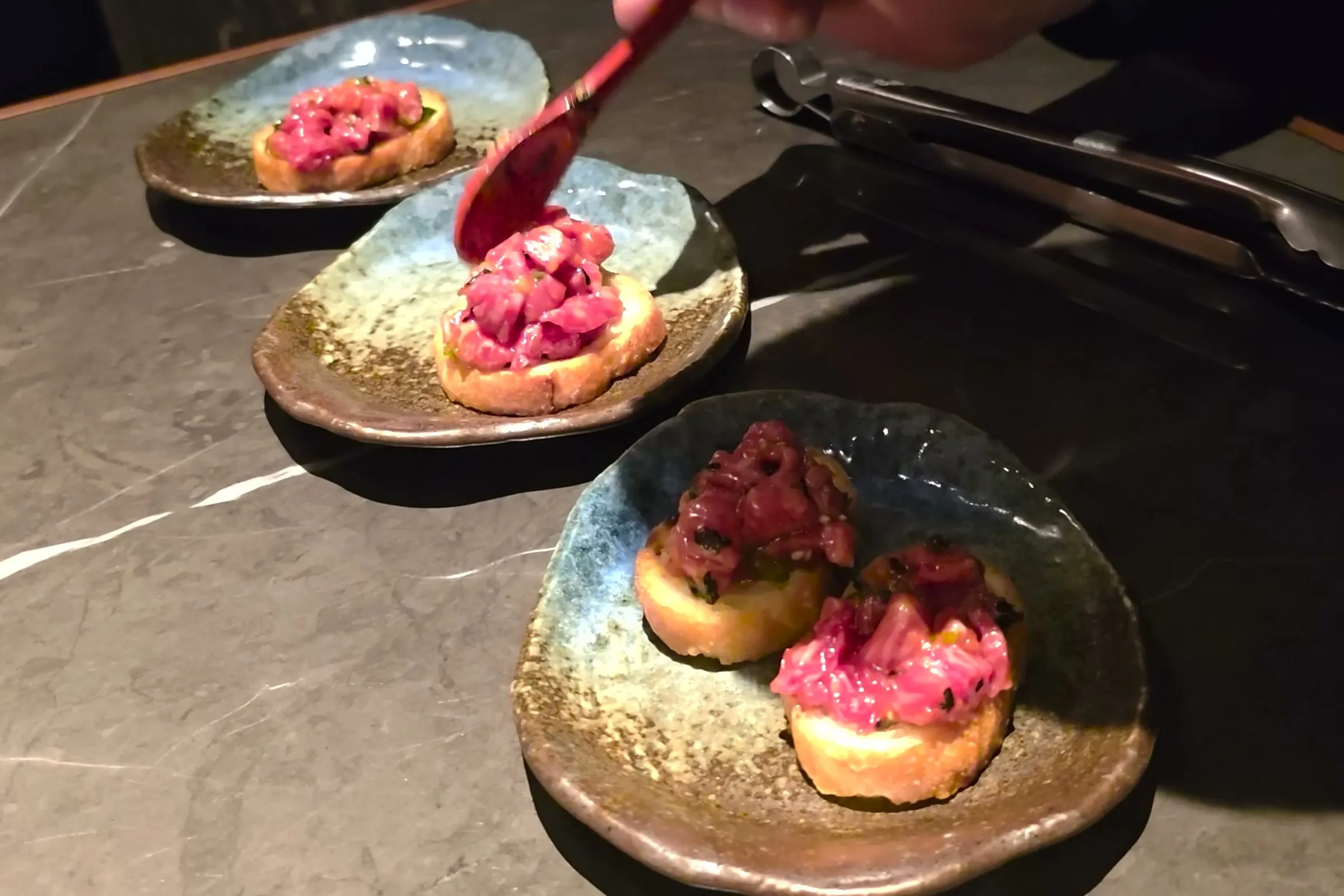
Right after the yuk sashimi came yukhoe, piled on the baguette they’d been toasting on the grill. Bruschetta style, I guess. Come to think of it, I’ve still never had Yoroniku’s own signature, the chateaubriand katsu sando. It isn’t really katsu. It’s grilled beef in bread, and they toast the bread over the grill.
I’m not sure what the bread adds. I’d rather eat it with a spoon. The yukhoe is good, of course it is, but the bread doesn’t make it better. The seasoning is a little different from Korean yukhoe, too. It looks soy-based like ours, but the savory part seems to come from somewhere else, and it tastes much closer to a beef tartare.
Thinking about it now, maybe the bread isn’t about taste. It’s the spoon. Metal spoons are a pain to look after, and the chopsticks are disposable wood anyway.
Thick tongue, same size
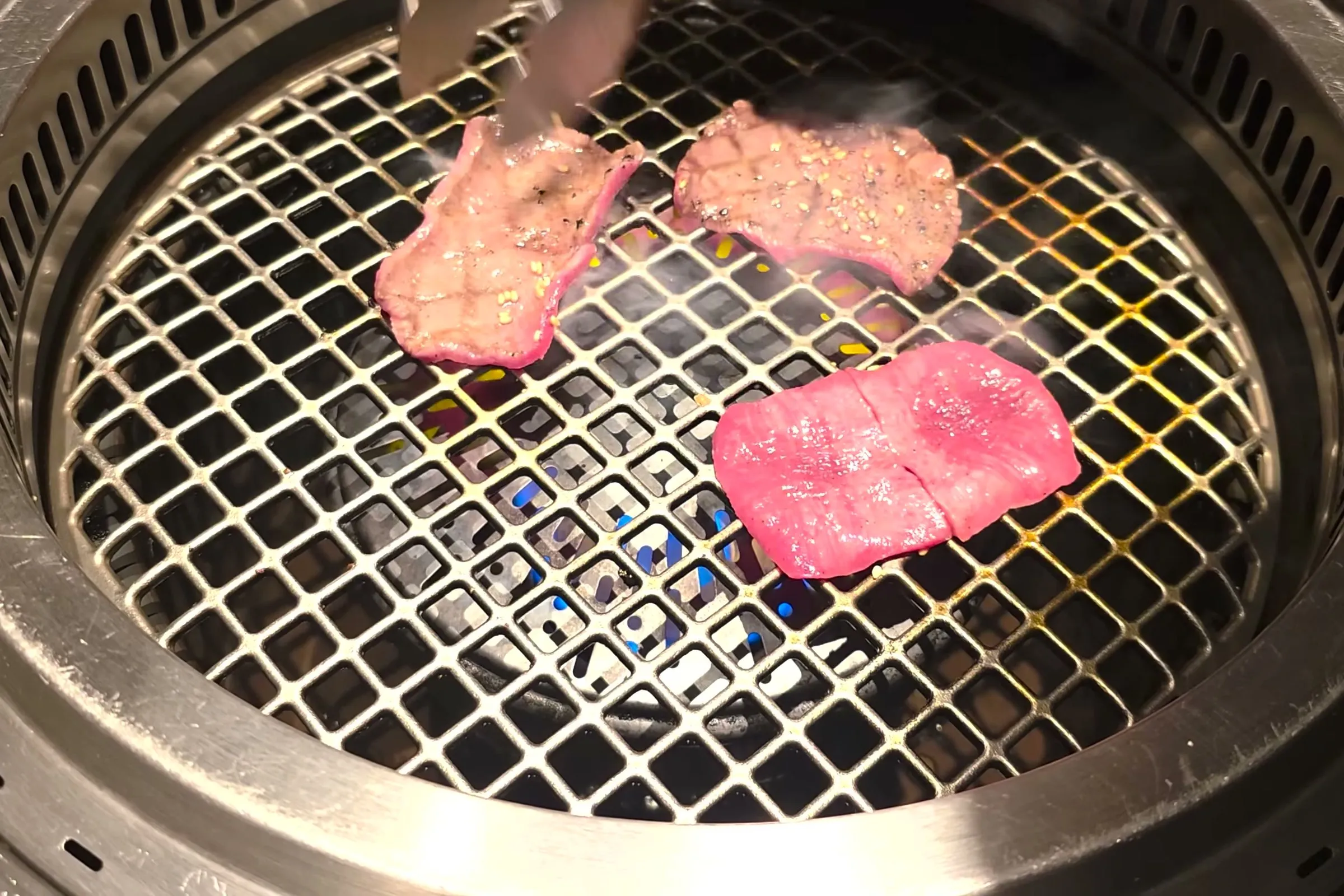
After a few raw things, the first plate for the grill. Two kinds of tongue and some harami, outside skirt. Yakiniku menus usually grade tongue. The thin slices are the regular or jo, upper, and tokujo, top grade, is the thick one.
In Korea and Japan both, thin tongue can be frozen, so the quality can drop. Thick tongue means a better, pricier animal, and the price of a cow tracks its size. That’s a big part of why tongue is more developed in Japan. Compare expensive cattle with expensive cattle, and Japan’s are much bigger.
Hanwoo are raised big. Wagyu are raised even bigger. Bigger is better, more fat and more meat to sell, but feeding them longer costs money, so a lot of cattle get slaughtered before that. Fish are the same. Wild fish aren’t prized for nothing. The ones you catch survived long enough to get huge.
So when you order tokujo tongue, it’s usually wider as well as thicker. This one wasn’t. It felt like the same tongue, only cut thick. Neither was bad, though. I only eat tongue at a few places in Korea, and this was better than those.
Just give me white rice
Right after the tongue came the harami, the stronger-flavored cut first. Calling it wagyu flavor is a stretch, though. The wagyu you get at places like this is fatty, not deep and beefy, so harami going first makes sense.
This course reminded me why I don’t like Hanwoo omakase, the Korean beef course places. Small fussy dishes keep coming between the meat, and honestly none of them taste that good. If the point is to show off cooking skill, the food isn’t impressive enough. Drop all that, keep the well-grilled meat coming, and give me what goes best with it. White rice.
From pretty early on I was thinking, wouldn’t this be better with rice? Watch Kodoku no Gourmet. The guy eats yakiniku with mountains of white rice. At Jumbo Hanare people order rice like crazy. Course structure, build-up, all of it, forget it. Grilled beef and white rice wins.
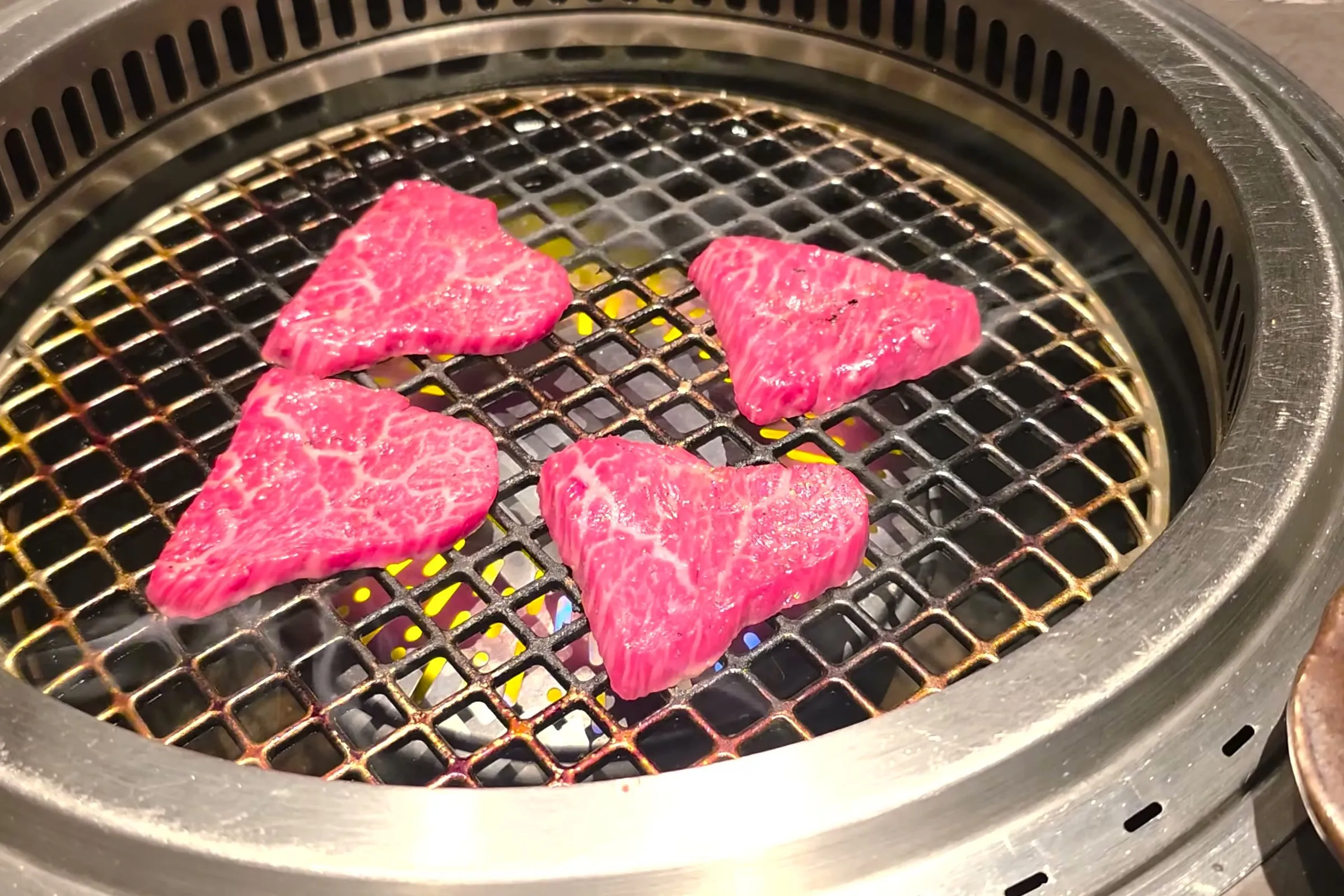
The next cut I couldn’t name. It was a little dry next to everything else that day. Then tenderloin.
Gyu nigiri I liked
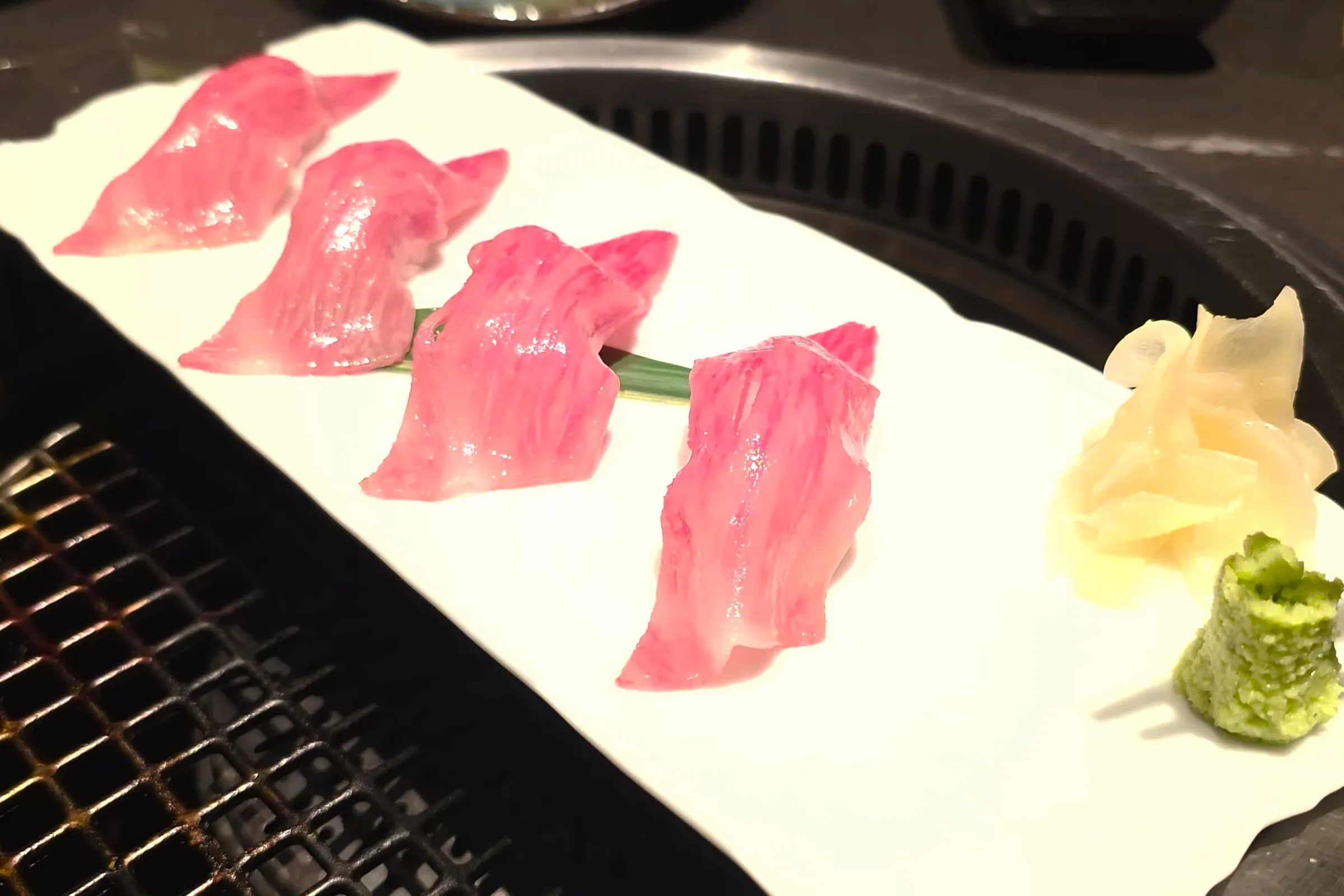
If you looked at the menu card at the start and checked it against what came out, they don’t really line up. One thing does: when the soup arrives, you’re into the second half. And the second half starts raw, like the first. The menu says wagyu nigiri. Gyu nigiri, beef sushi.
I’ve never been a gyu nigiri guy. This one won me over. The shari tastes good, and the beef on top is much thinner and softer, so it comes apart in your mouth. The best gyu nigiri I’ve had.
Chateaubriand like a gift-set ham
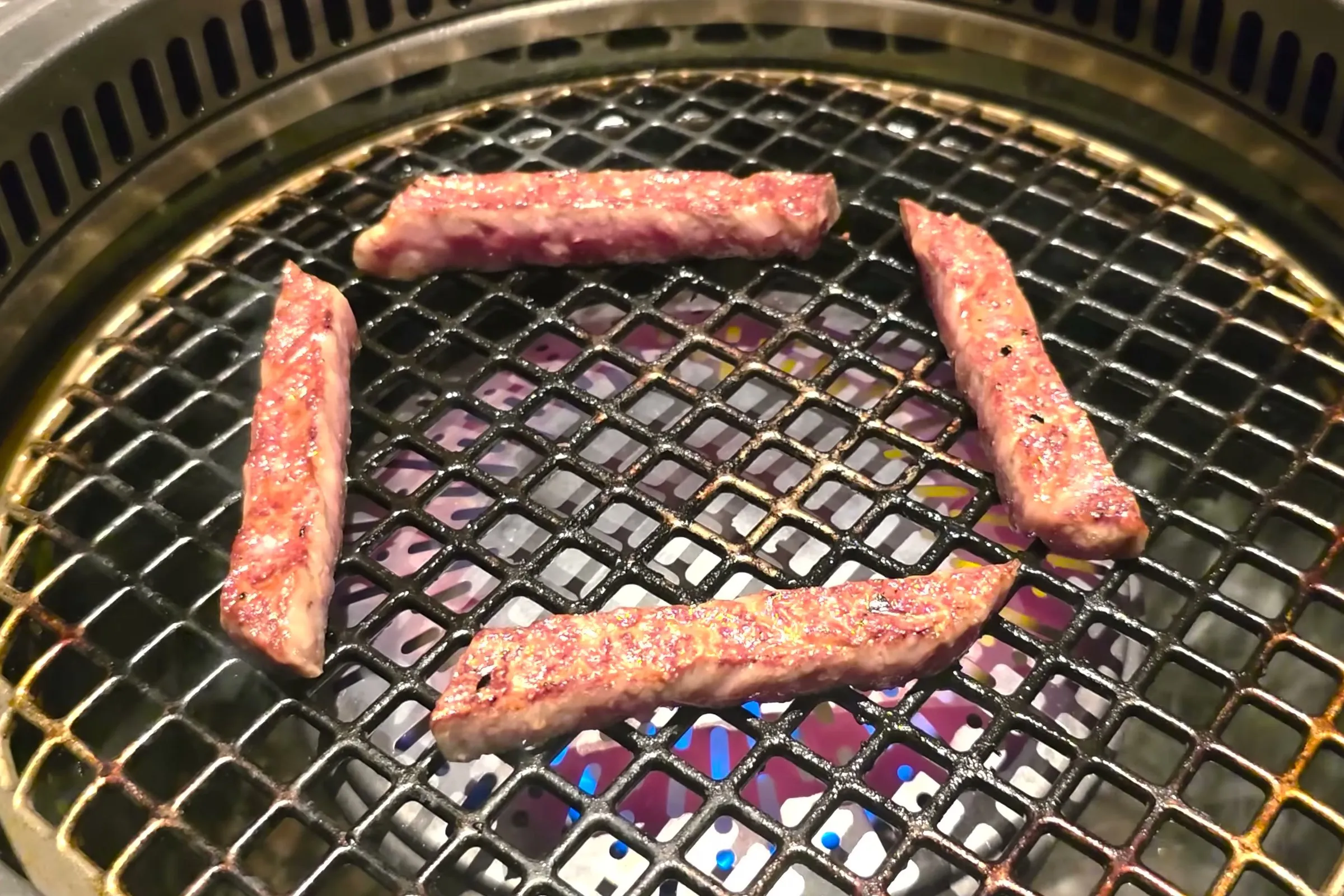
Then chateaubriand, from the tenderloin, so a wider slice. Look at the grill. You can barely see the fire. They keep it on very low heat and grill it slowly and carefully for a long time.
The end result looks almost the same as it did raw. The color and shape are like a handmade ham, and the grill bars even leave lines like the string on a tied ham. You know the string-tied ones from Korean brands like Konkuk Ham. Unusual, I’ll give it that.
But my yakiniku benchmark is Jumbo Hanare, where they cut it thick and tear it with a toothpick to show you how soft it is. I like that better. It tastes better in your mouth. Better than both, for me, is the tenderloin at Miu in Seoul. This one, for all the care, didn’t taste like much. It doesn’t bring out what’s great about tenderloin, and you can get better tenderloin at just about any Korean barbecue place. Why turn good beef into ham?
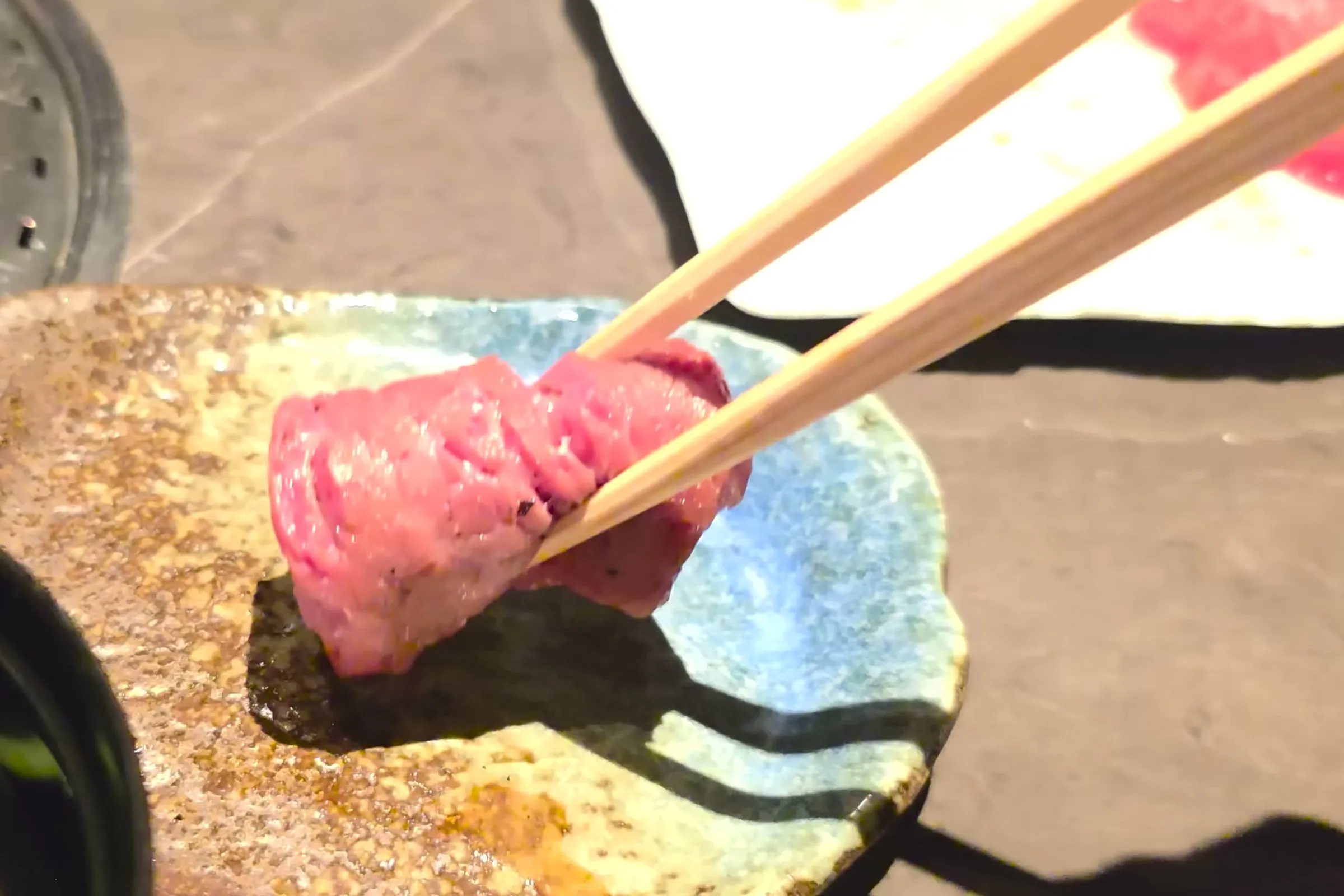
It turns into ham because every cut at this place is seasoned fairly hard, so even a short time on the grill makes it taste a bit like ham. They roll it into one bite, then tell you to eat it in two. First bite with only the tare, the sauce. Second bite with wasabi and tare.
That reminds me. I said I never reach for the kimchi, so why is it always on my plate? The guy across from me was eating it so fast I’d never have tasted it otherwise. He’s been to Miu with me many times, where I order ramyeon just to eat more kimchi, and I never saw him go at it like this there. Nobody I know loves Japan more, and he eats more kimchi in Japan than in Korea.
The Silky Loin is my kind of dish
Next came the one Yoroniku calls its signature, the Silky Loin, as the English menu has it. It’s plain sirloin sliced thin, cooked very lightly and eaten with rice.
Looking at the rice, you might ask how that’s different from the gyu nigiri. First, it isn’t nigiri. Nobody pressed it. If it were nigiri, my standards would go up. Second, it’s cooked. And what have I said since the start? With beef, rice is all I want. So for me this was one of the best dishes of the night.
Then more sirloin, cut a different way, the kind that looks delicious before it touches the grill. Look at the fat. Every drop that falls sends a flame shooting up.
Truffle sukiyaki, and you don’t lift a finger
This is why I picked this course. It looks obvious, but at the Ebisu branch it was really good, and this time a friend new to Yoroniku was with us. I wanted him to taste it. I got the head count wrong, but I got this right.
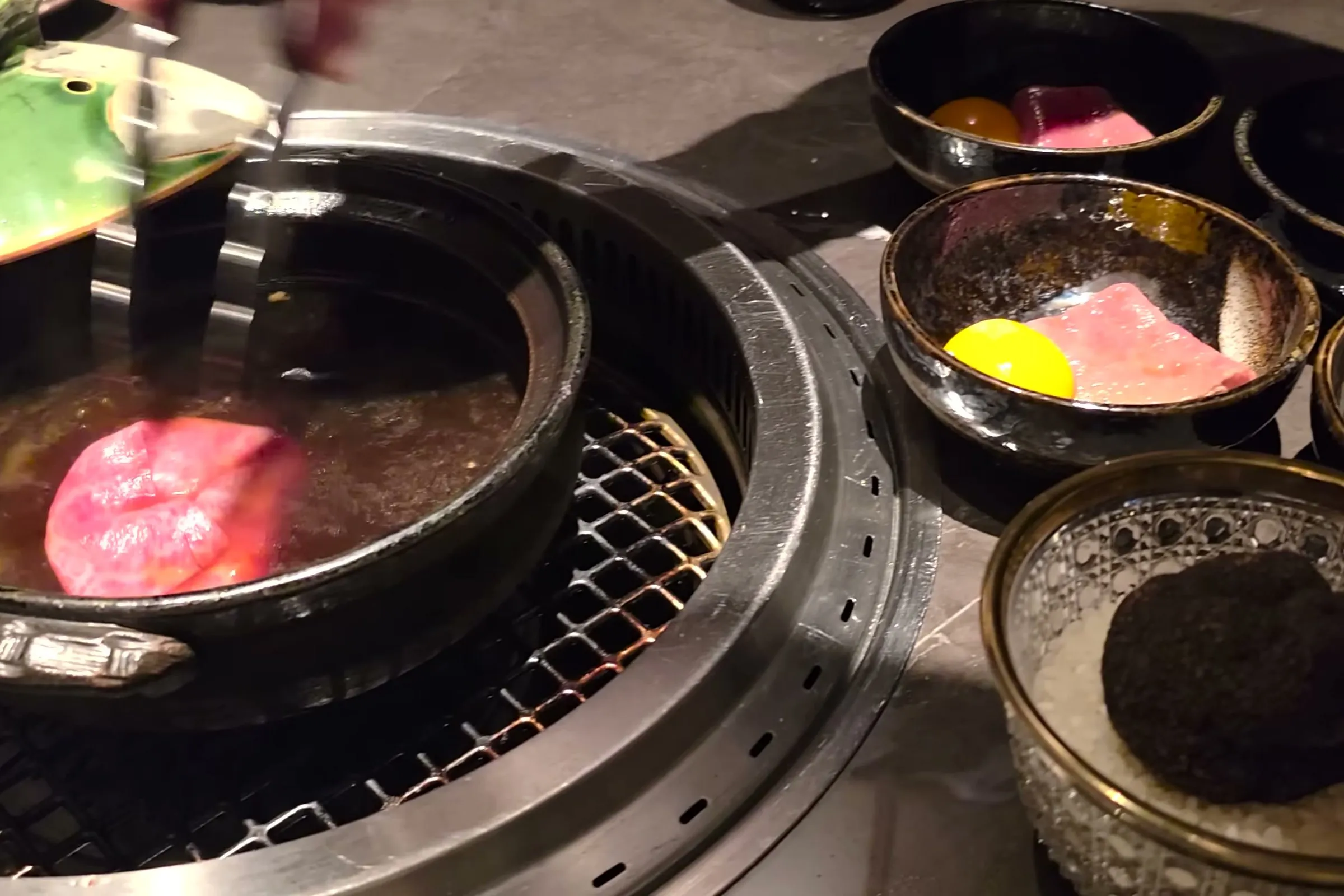
It’s the high point of the course and the last meat, dessert aside. They warm broth in the middle of the grill, swish thin slices of beef through it sukiyaki style, and lay them, barely cooked, in each person’s bowl of egg yolk. The menu calls it zabuton sukiyaki with truffle. Zabuton is chuck flap, a marbled cut from the shoulder. The broth sits there a while as they get it ready, so the meat keeps cooking slowly, and by the end it’s a lot more done than when it first went in.
It’s no grand dish, but it takes technique, so this is the kind of thing worth eating at a restaurant. I think beef tastes about the same when I grill it myself. I’m lazy, though, so I like places that grill for me, and here you don’t lift a finger. The course is a truffle something course, so they even grate truffle on top.
At Jumbo Hanare or most yakiniku places, they hand you a bowl and an egg and you beat it yourself. Here they do that too. So easy. The taste is what you’d guess. Sweet and salty sukiyaki sauce, very thin beef poached until it’s soft, egg yolk, truffle. Of course it works.
The egg rice is the main event
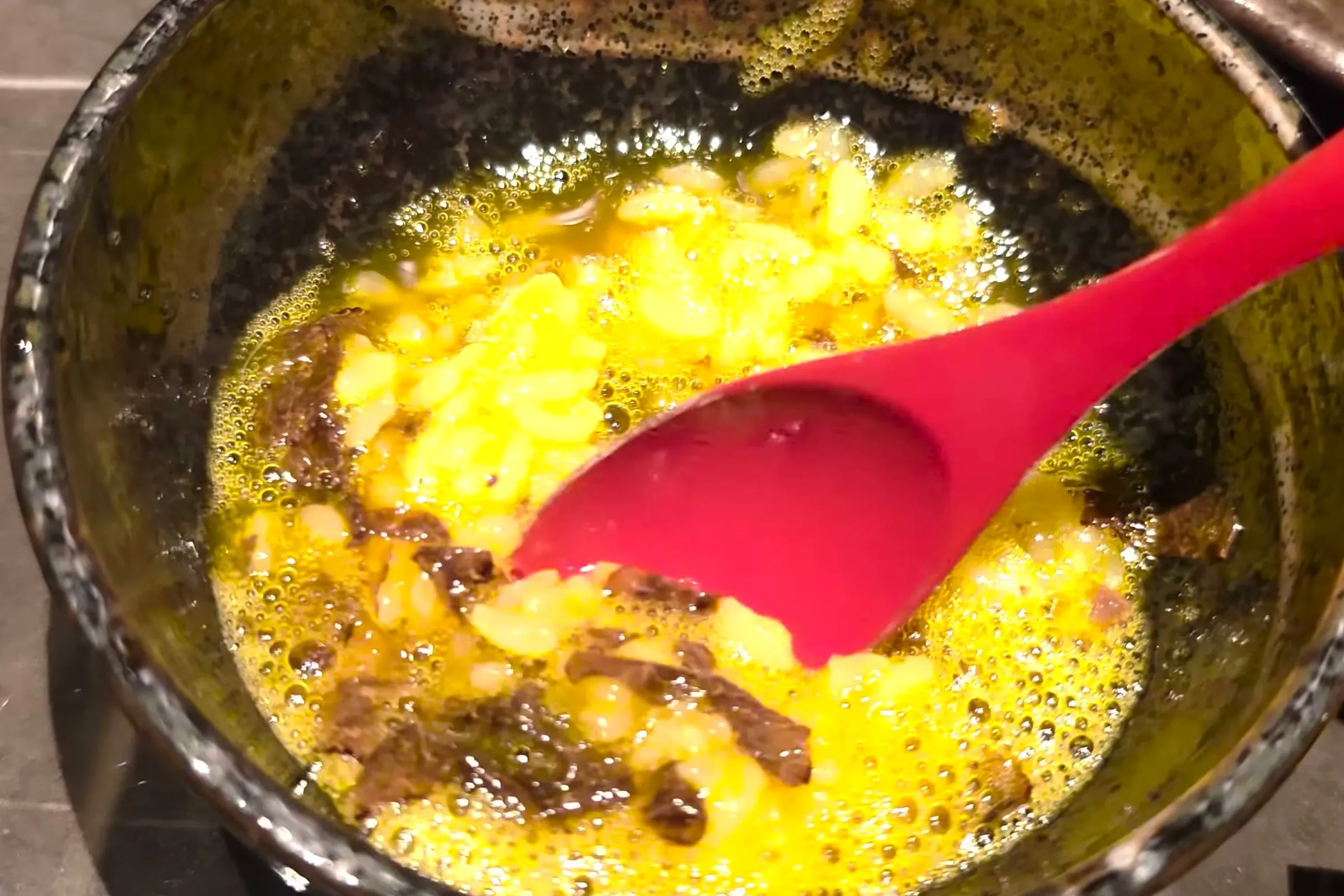
The real point of this dish comes after you fish out the meat. Rice goes into the bowl with the leftover sauce and egg, with truffle on top. Call it gyeran-bap, soy sauce egg rice. I love it. Not every day, but at Tenjimon in Seoul I’m always begging them to make it.
So the sukiyaki is really a launch pad for egg rice. The meat goes into the broth for a moment to make the sauce taste better. The rice is the main.
At Ebisu too, the best thing I ate in the whole course was this egg rice.
Noodles, then a frozen sewer
Take the meat out of the picture and this course isn’t that much food. Even with the noodles, it isn’t huge. My big-eater friend still looked short after the unagi and two courses. I was full by the noodles, but that’s the late lunch, not the course.
The noodles were hand-pulled somen from Awa, says the menu. My expectations for what Japanese yakiniku places call naengmyeon are very low. Maybe that’s why these were fine. Perfectly edible.
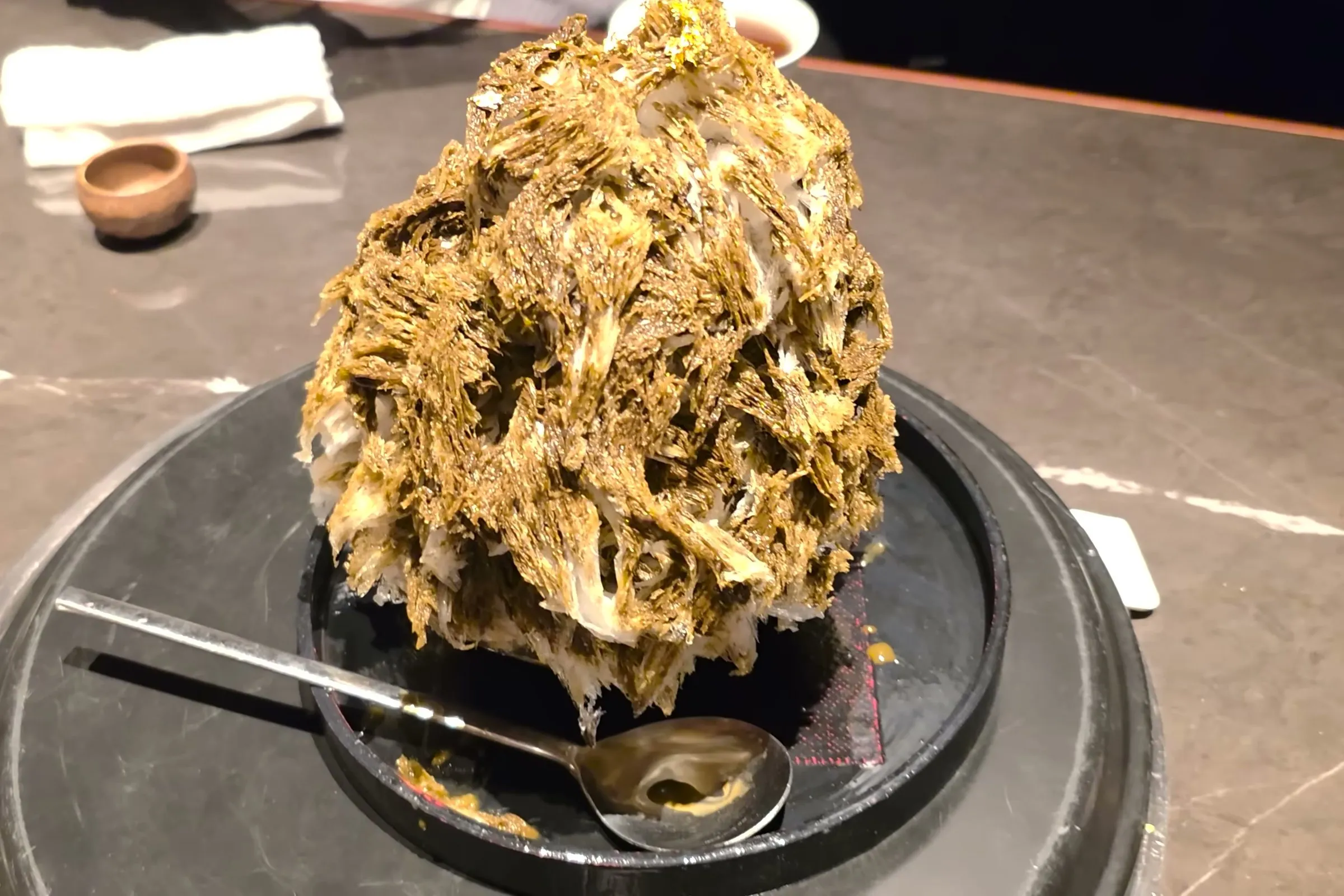
Dessert is kakigori, shaved ice. Since we’d booked four, they let us pick two kinds. Does this look like dirty water to you? A frozen sewer? It’s hojicha, roasted green tea. I spilled some and cleaned it up inside five seconds. When it melts it looks like abalone liver sauce.
Then the milk kakigori. Like at Ebisu, as I remember, there’s fruit hidden inside. Fruit aside, I liked the milk one better than the hojicha. Then again, dessert could be there or not and I wouldn’t care.
Four courses, three of us, one bill
2025/05 video
Four courses plus a few drinks came to a bit over ¥60,000 (2025/05), about US$410. The menu on the table put the Limited Truffle Course at ¥13,400 a person with tax (2025/05), about US$90, plus a 10% service charge, so that adds up. I only said the table total, so the rest is division. Four seats makes it about ¥15,000 a seat (2025/05), around US$100. Only three of us ate, so each of us really paid about ¥20,000 (2025/05), around US$140.
When I checked TableCheck in 2026/10, the same Limited Truffle Course was ¥14,900 a person with tax, about US$90, plus a 10% service charge. The other course was ¥13,300, with no nigiri and a sukiyaki made with zabuton, chuck flap, instead of truffle.
Would I go back? Yes
Yoroniku Azabudai Hills gets a strong yes from me. What makes it better than Ebisu is that every table is a private room, so it’s an easier place to send people. The price is no different. The building is new, so the interior is cleaner too.
The price doesn’t hurt, and booking is easy. Going to Tokyo, want yakiniku, and the famous places are all booked out? Just go here. The end.
How to book
How I booked
In 2025/05 a friend wanted yakiniku and couldn’t get Jumbo Hanare, so I booked this branch for four. Booking was easy. One friend’s wife couldn’t make it, so three of us ate four courses.
- TableCheck
Bookings for the next month open at 0:00 on the 1st of each month. Parties of 2 to 6, course only, about 2 hours. A credit card is needed to book, and debit cards aren’t taken on the day. Limited Truffle Course ¥14,900, or a ¥13,300 course, tax included, plus a 10% service charge. Cancel from 48 hours before and it’s 50%, within 24 hours it’s 100%, and changing the head count on the day counts as a cancellation. No children under 7, and the person who books has to be there.
- Phone
Tabelog lists 03-5549-4629 (+81-3-5549-4629 from abroad), but in 2026/10 it said phone lines were closed and to book online.
- Hours
Dinner only, from 17:00, last order 22:00. Tabelog says closed over the New Year holidays. Every table is a private room, and there’s an English menu.
Checked 2026/10. Booking rules change, so look at the official page before you go.
Where it is
- Address
- 3F Tower Plaza, Azabudai Hills, 1-3-1 Azabudai, Minato-ku, Tokyo東京都港区麻布台1-3-1 麻布台ヒルズ タワープラザ 3F
- Nearest station
- Kamiyacho (Hibiya Line), exit 5 connects straight into the building. Roppongi-itchome (Namboku Line) exit 4 does too.
Plan the Tokyo trip
The boring bits I’d sort before flying, so the eating days stay free.
- Hotels in Tokyo*
Pick the room by where you eat, not by the sights. After a long dinner, a short ride back is the real luxury. This place is in Azabudai Hills, Tokyo.
- Japan eSIM*
Data from the moment you land, no counter and no SIM swap. Set it up the night before.
- Keisei Skyliner from Narita*
Narita to Ueno in about 40 minutes. Buy it ahead and walk straight to the platform.
- Haneda airport limousine bus*
Landing at Haneda instead? The limousine bus drops you at the big hotels and stations with no transfers.
- Tsukiji Outer Market food tour*
A market morning with someone who knows which stalls are worth the line.
- Sushi-making class at Tsukiji*
Shape nigiri yourself once and the counter makes a lot more sense.
Links marked * are affiliate links. If you book through them I may earn a small commission, and you pay the same. How it works
More places I have eaten at
All of Tokyo →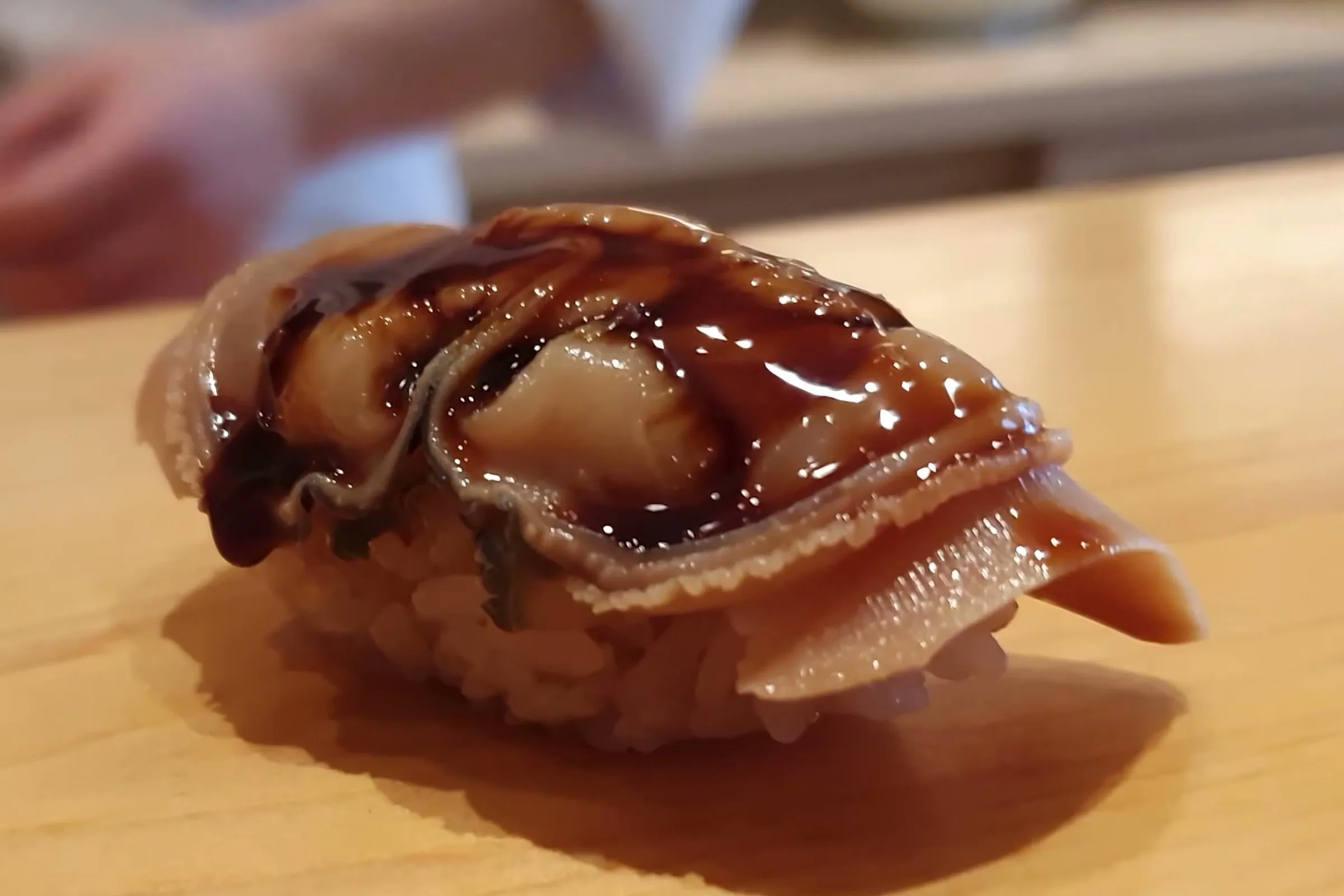 Nihonbashi, Tokyo
Takagaki no Sushi
Cheap lunch, then a Michelin star, then I was done.
¥9,000 2019/08 video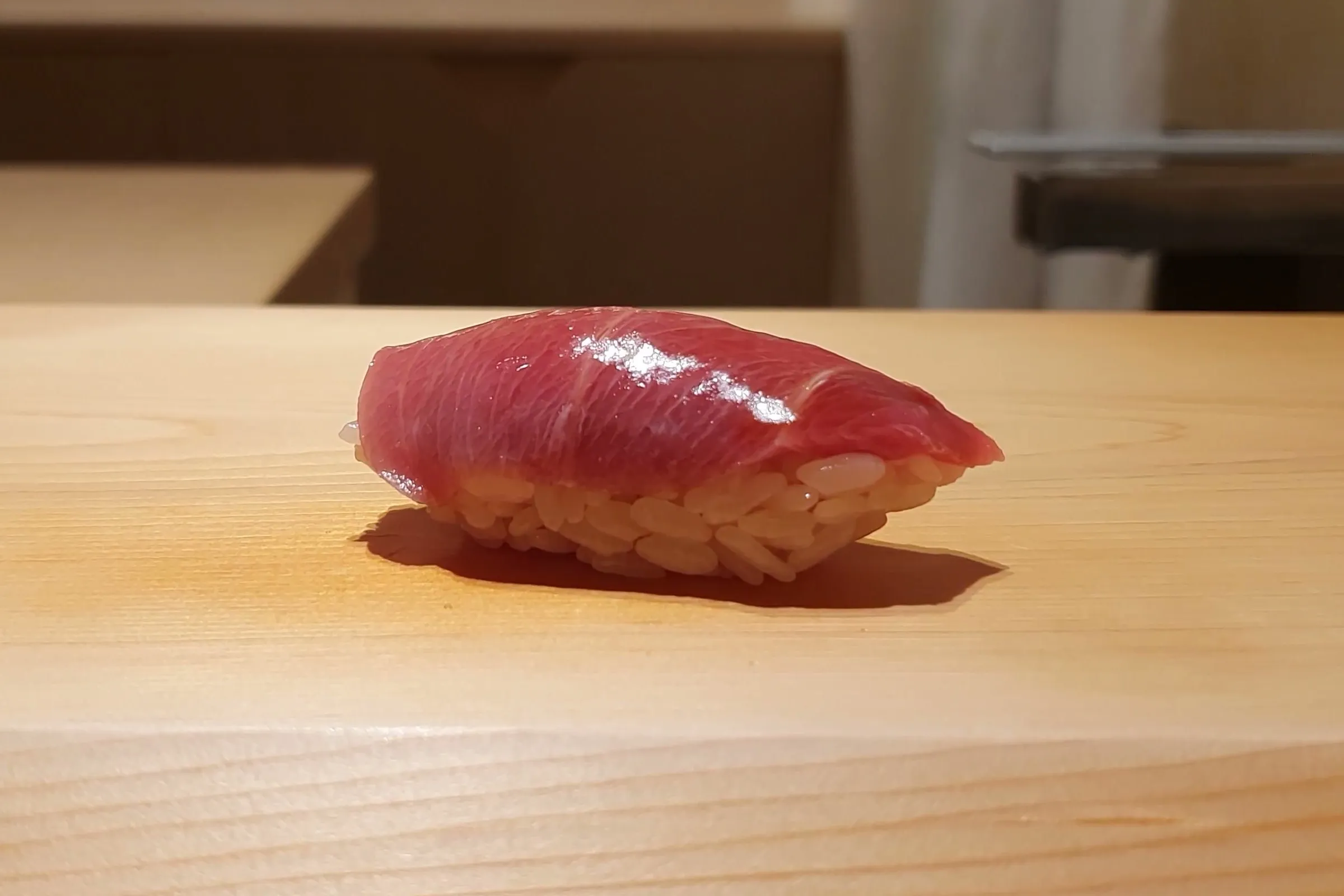 Higashi-Azabu, Tokyo
Sushi Sugaya
Arai’s old sous-chef, Yamayuki tuna, sharp rice and a giant tuna roll.
≈ ₩400,000 2019/10 video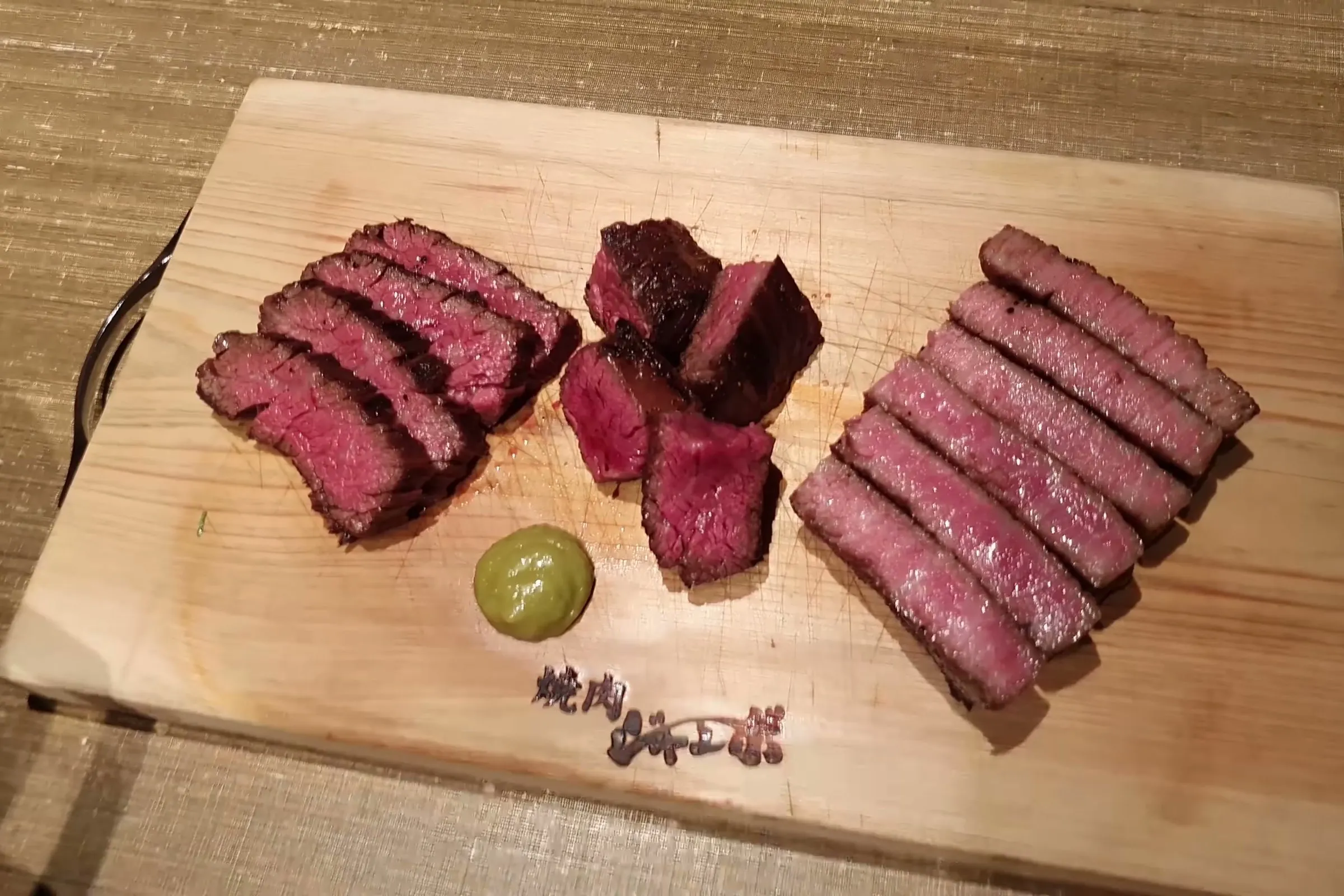 Hongo, Tokyo
Yakiniku Jumbo Hanare
Thick harami, a tenderloin rice pot, and a naengmyeon to avoid.
≈ ¥10,000 2019/10 videoSources
- YORONIKU TOKYO AZABUDAI HILLS TableCheck
- YORONIKU TOKYO AZABUDAIHILLS Tabelog
- YORONIKU TOKYO AZABUDAIHILLS Tabelog (English)
- YORONIKU TOKYO Azabudai Hills